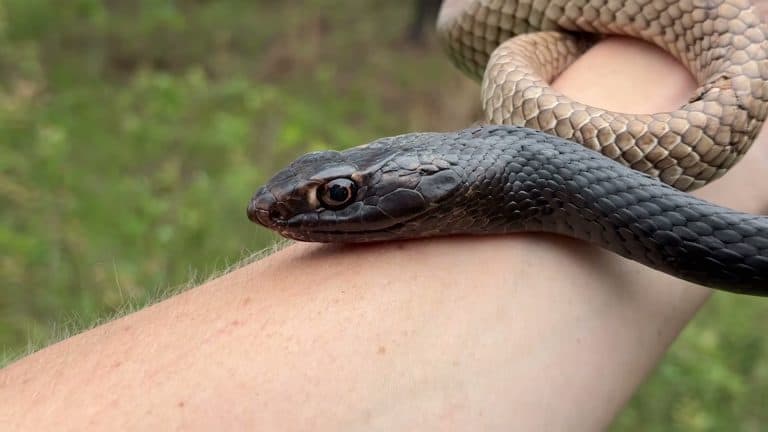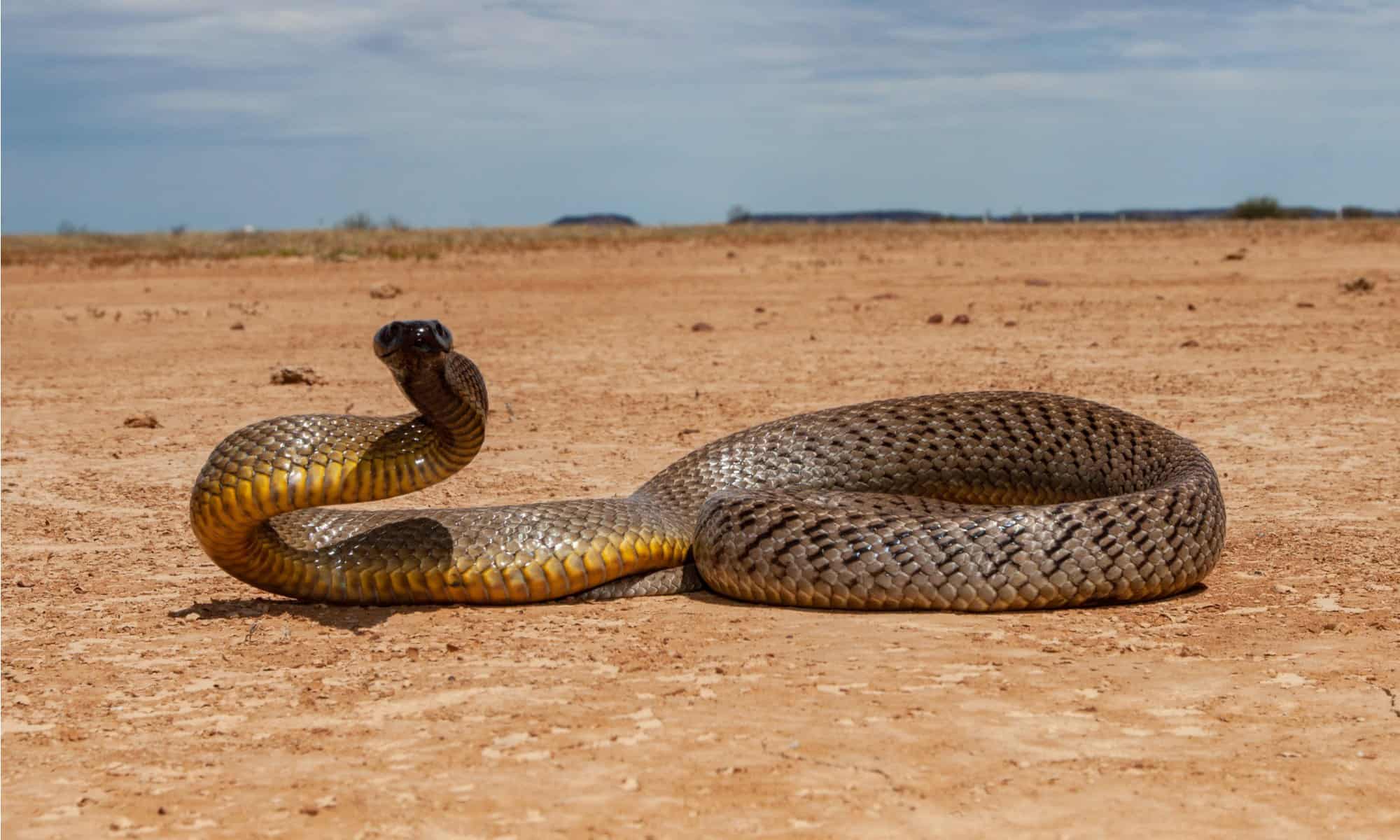

Quick Take
- The Inland Taipan’s venom is 10 times more deadly than the King Cobra’s.
- The Inland Taipan is a reclusive and shy snake.
- Australia has made the Inland Taipan a protected species.
The Inland Taipan is a venomous snake with the world’s deadliest bite. With venom capable of killing a human in minutes, this seasonally color-changing snake is feared. Unfortunately, because the public is not well informed about the Inland Taipan, it has been persecuted. Consequently, the snake requires conservation to survive.
The Inland Taipan Is the World’s Deadliest Snake
There are many snakes around the world that strike with deadly venom. But of those snakes, the deadliest is the Inland Taipan.
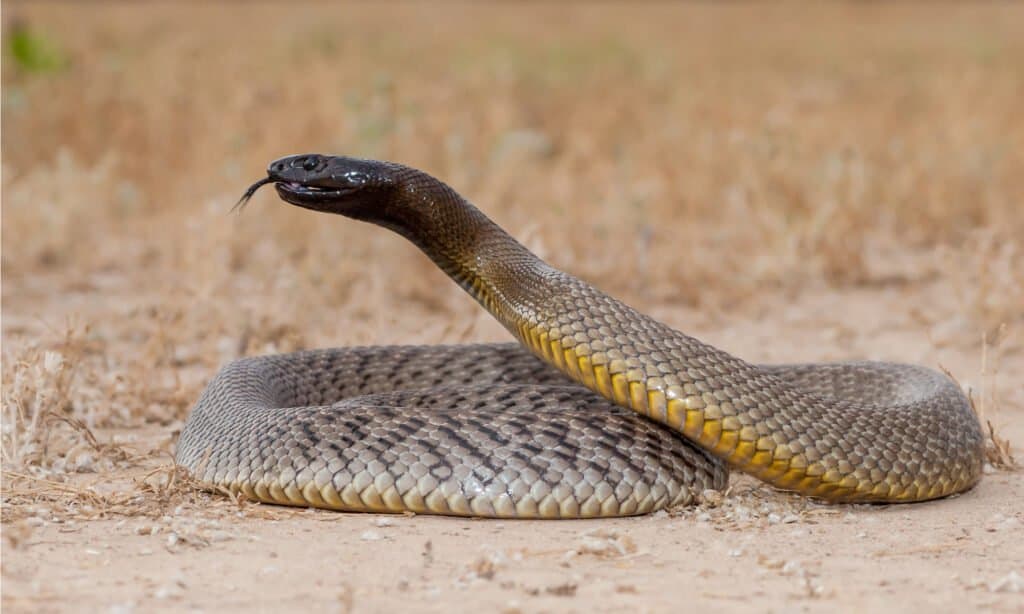
Inland Taipan snakes are the deadliest in the world.
©Ken Griffiths/Shutterstock.com
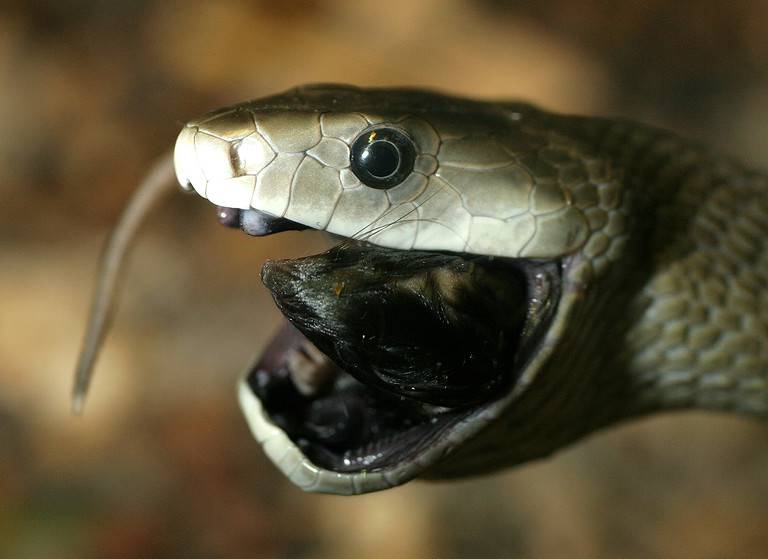
The Inland Taipan’s venom is incredibly toxic. One bite from the snake contains enough venom to kill 200,000 mice or 100 people. To put this in perspective, the Inland Taipan’s venom is 10 times deadlier than the King Cobra’s and 13 times deadlier than the Black Mamba’s.
When the Inland Taipan strikes, it strikes multiple times. As it does so, its fangs—and therefore its venom—go directly into the prey’s circulatory system. The venom works instantaneously to incapacitate prey. This allows the Inland Taipan snake to use as little energy as possible when pursuing its prey.
Why the Inland Taipan’s Venom Became So Toxic
The Inland Taipan snake feeds nearly exclusively on mammals. Because of this, generations of the Inland Taipan have evolved the most toxic venom of any snake, enabling them to take down prey within moments of being bitten.
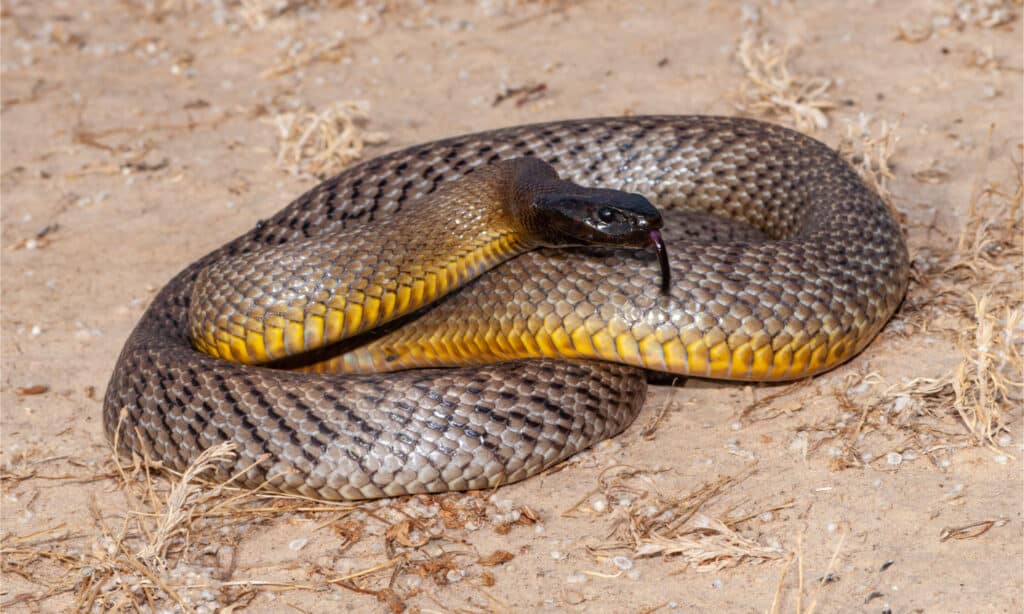
Inland Taipan snakes need deadly venom to target the mammals they prey on.
©Ken Griffiths/Shutterstock.com
The small mammals that the Inland Taipan targets, such as the long-haired rat, the plains rat, and house mice, all have high metabolic rates. With less toxic venom, the prey’s metabolic rates allow it to get away when bitten. Inland Taipans would then have to follow the prey into its burrow, potentially get injured, wait for the prey to die, or let the prey get away.
To avoid this scenario entirely, the Inland Taipan’s venom not only paralyzes its prey immediately through a mix of myotoxins and neurotoxins, but its procoagulants also cause the blood to stop clotting. As a result, the prey hemorrhages internally. Within moments of the strike, the prey is dead or immobilized and dying, making it an easy meal for the Inland Taipan to swallow whole.
Inland Taipan Snakes Are Shy
Despite the Inland Taipan being the world’s deadliest snake, it is incredibly shy. Consequently, due to its reclusive nature, very few people have been bitten by one.
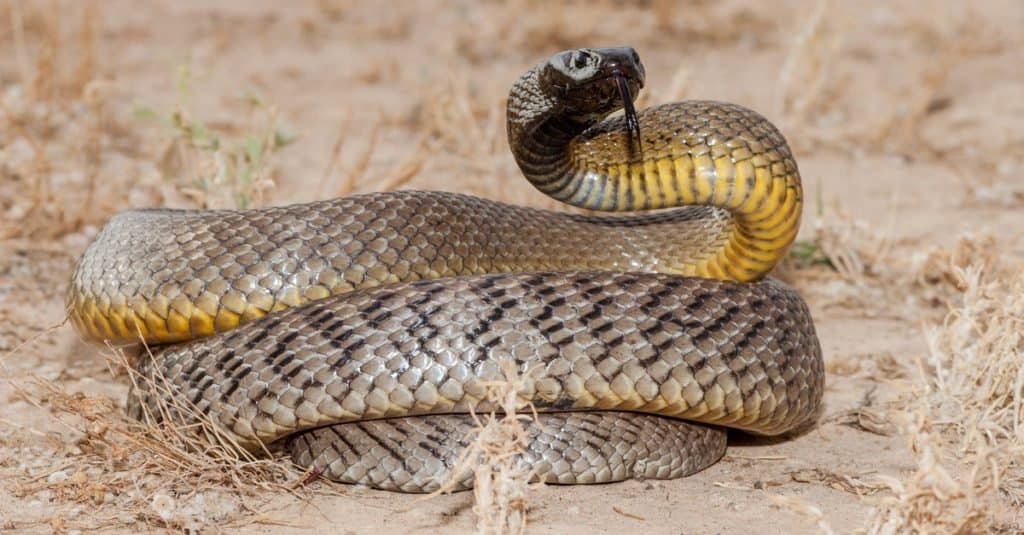
Inland Taipan snakes prefer to be reclusive rather than indiscriminately attack.
©Ken Griffiths/Shutterstock.com
According to a 2017 study published in Toxicon, “There have been 11 previously well-documented envenomings by O. microlepidotus, but only 2 were inflicted by wild snakes.” The others who were bitten were herpetologists or handlers studying the species to learn more about the snake. Incidentally, since the antivenom was created, there have been no deaths from Inland Taipan bites since the 1950s.
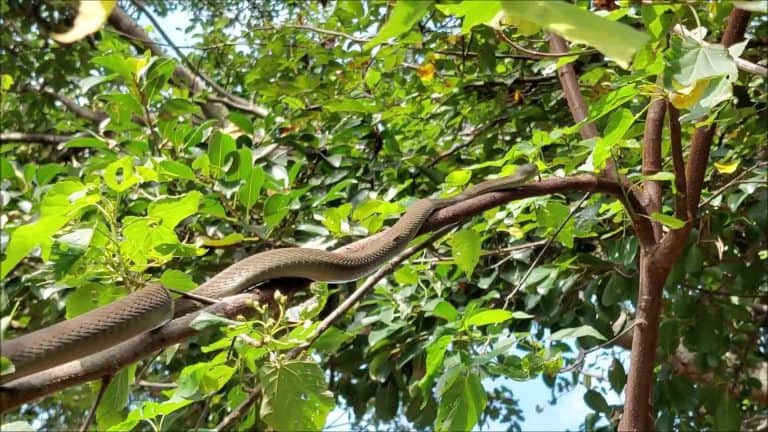
Inland Taipan snakes live in the semi-arid areas of South Australia and Queensland. In these regions, the environment is harsh, and hiding from predators is necessary. Therefore, the snakes look for places to burrow, live in rock cracks, or find shelter in clay fissures. This makes the Inland Taipan a solitary and shy creature that prefers to run from danger rather than face it head-on.
Inland Taipans Are Necessary for Healthy Ecosystems
Given the toxicity of the Inland Taipan’s venom, many wonder why it is a protected species in Australia. But if the Inland Taipan were removed from its habitat, it would be detrimental to the ecosystem.
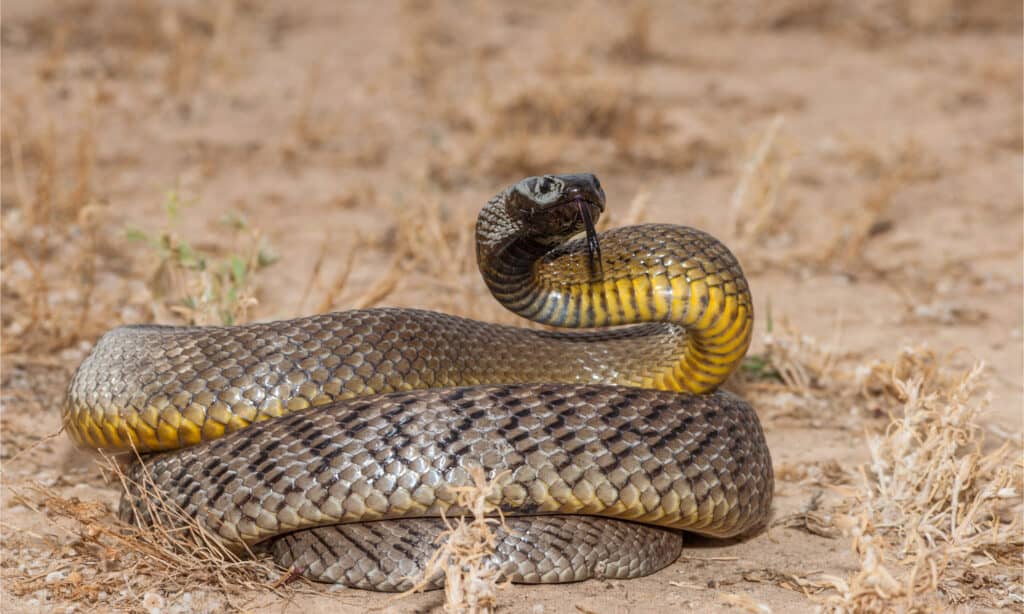
Without Inland Taipan snakes, the ecosystems they inhabit would suffer.
©Ken Griffiths/Shutterstock.com
The largest part of the Inland Taipan’s diet is the long-haired rat. This rat is also known as the plague rat, given its propensity to spread the plague. Were the Inland Taipan not around to keep this species in check, the population would quickly grow out of control. The fleas that live on the rats would spread disease to the rats, which in turn would spread the plague to other mammals.
The Inland Taipan is incredibly misunderstood. For years, it was persecuted as an indiscriminate killing machine. But as more was learned about the snake, the Inland Taipan was found to be a shy snake that would rather flee from danger than fight. Yes, the Inland Taipan is the world’s deadliest snake, but the odds of coming into contact with one, let alone being bitten by one, are slim.