Quick Take
- One of these predators goes beyond simply looking like a leaf. It can actively change its appearance to match whichever environment it's hiding in. See the color-changing gecko →
- A deadly coral reef ambush hunter hides in plain sight as floating marine debris, so convincingly that even experienced divers swim right past it. Meet the reef ambush predator →
- These animals evolved the same disguise for two completely opposite survival reasons, and hunting is only one of them.
- One leaf-mimic turns the water current itself into part of its hunting strategy, all while its prey never suspects a thing. Watch the current-drift hunter →
Nature’s best-known predators depend on speed, strength, or venom to catch prey. However, others take a much sneakier approach by disguising themselves as harmless leaves. These masters of camouflage wait patiently for an unsuspecting victim to wander too close. They blend so perfectly into their natural surroundings that even experienced researchers can miss them. In addition to giving them the upper hand while hunting, their leaf-like appearances also help them avoid predators. Here are some remarkable ambush hunters that look a whole lot like leaves.
Dead Leaf Mantis
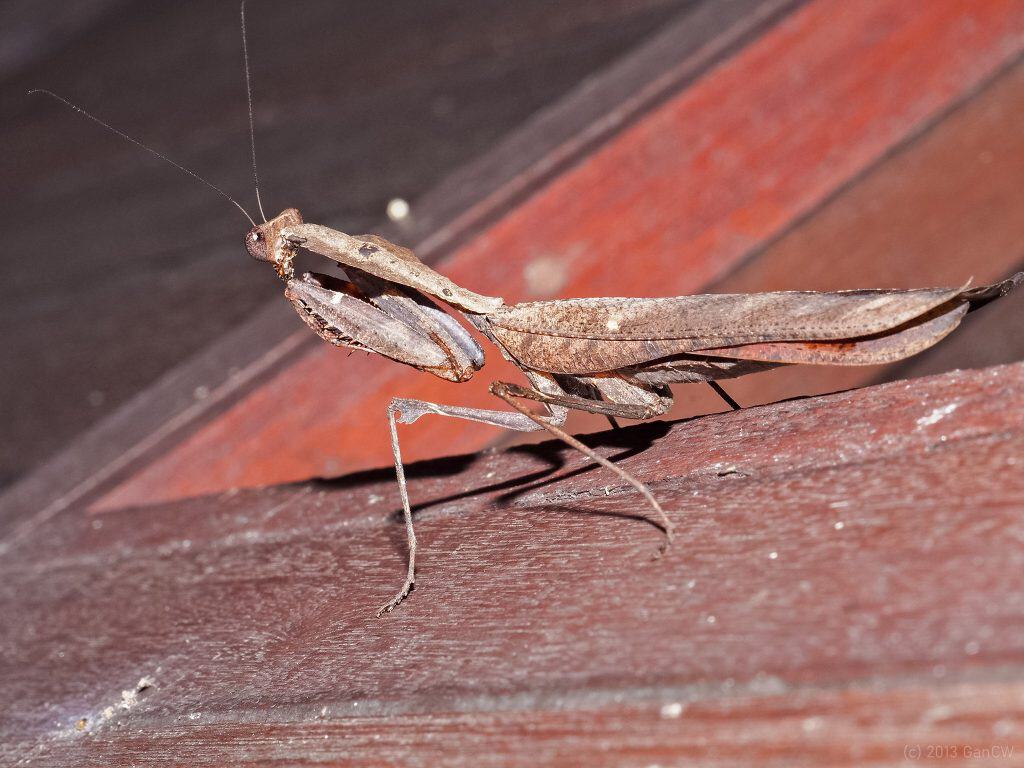
©"Deroplatys desiccata" by Cheongweei Gan is licensed under BY 4.0. – Original / License
The dead leaf mantis is one of the most convincing leaf impersonators in the insect world. Its brown, flattened body resembles a dried leaf lying on the forest floor. Even its wings have markings that look like leaf veins or decay spots. The mantis is incredibly patient, remaining motionless for long periods while waiting for insect victims to approach. When potential meals come too close, the mantis strikes with lightning-fast speed.
Amazonian Leaf Fish
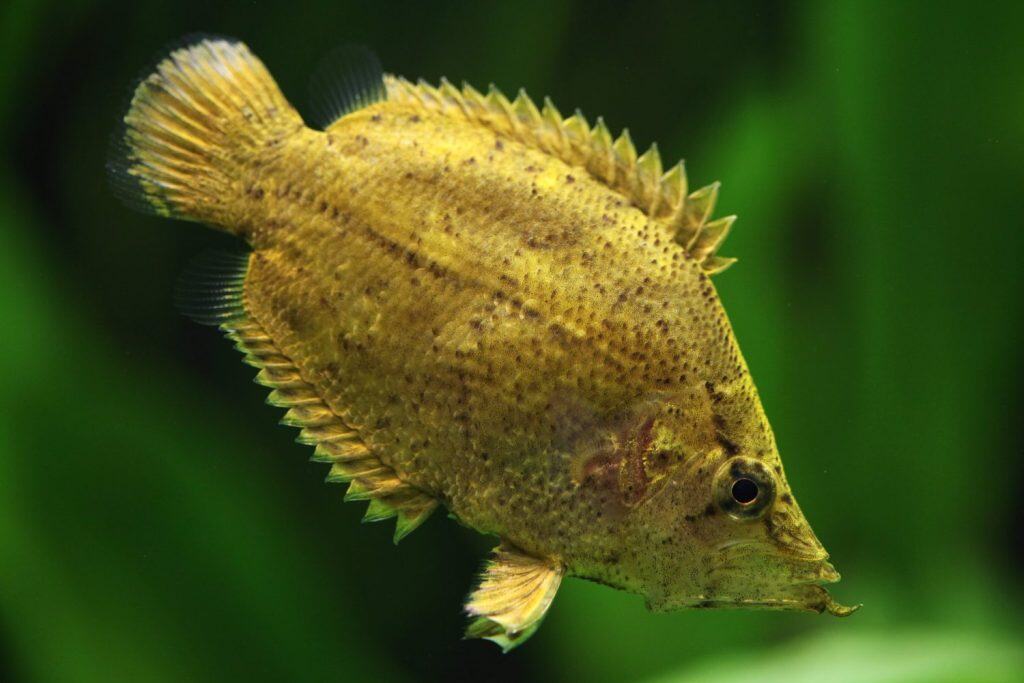
©Vladimir Wrangel/Shutterstock.com
The Amazonian leaf fish survives by pretending to be a drifting leaf in South American waters. Its flattened body, mixed coloration, and slow movements make the act quite convincing. The fish often drifts with the current as though it is simply a harmless piece of vegetation on the water’s surface. Small fish and aquatic insects do not suspect danger from what they assume to be a decaying leaf. When a target comes close enough, the leaf fish comes to life, opening its enormous mouth and swallowing the prey.
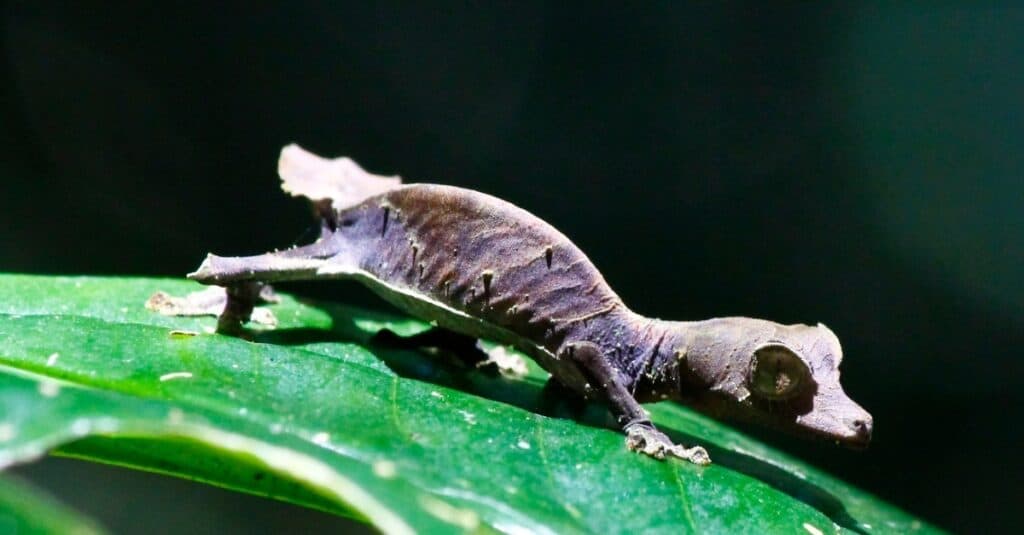
Satanic Leaf-Tailed Gecko
©iStock.com/dr322
The satanic leaf-tailed gecko may have a scary name, but its hunting success is due to simple camouflage. Its tail resembles a partially decomposed leaf with inconsistent jagged edges and all. As an added disguise, the gecko‘s coloration can change to match different environments. By remaining perfectly still, it becomes virtually undetectable, blending in with surrounding foliage. Insects that wander by become an instant meal.
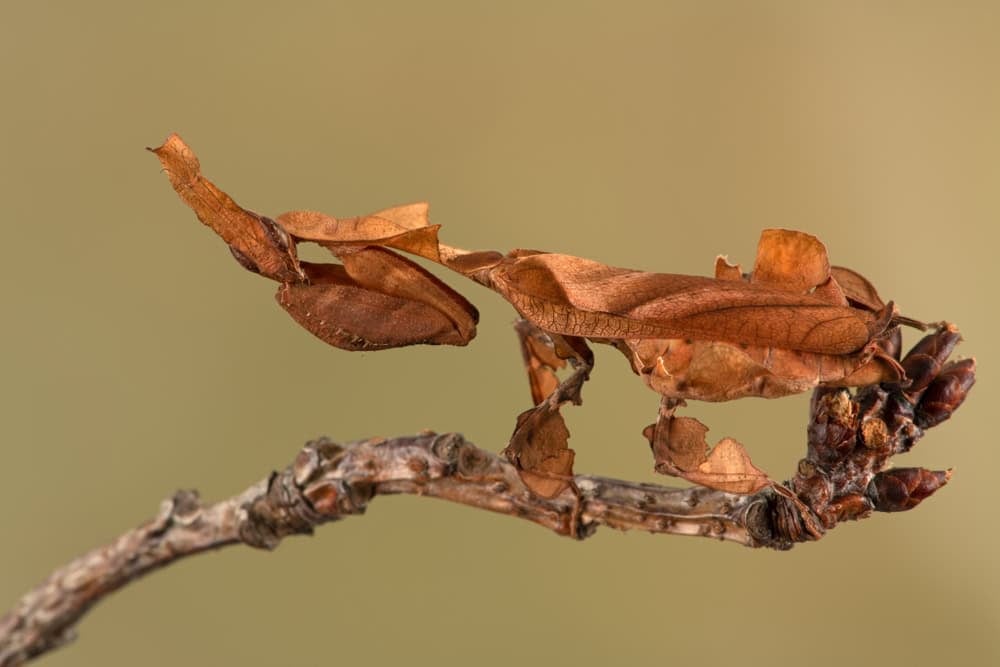
Ghost Mantis
©davemhuntphotography/Shutterstock.com
The ghost mantis looks like a combination of a dead leaf and a broken twig. Its body features unusual lobes and projections that mimic dried vegetation. This effective disguise helps it stay hidden in African bushes and shrubs. Like other critters on this list, the mantis relies on patience when hunting. Once prey is nearby, it attacks rapidly and precisely.
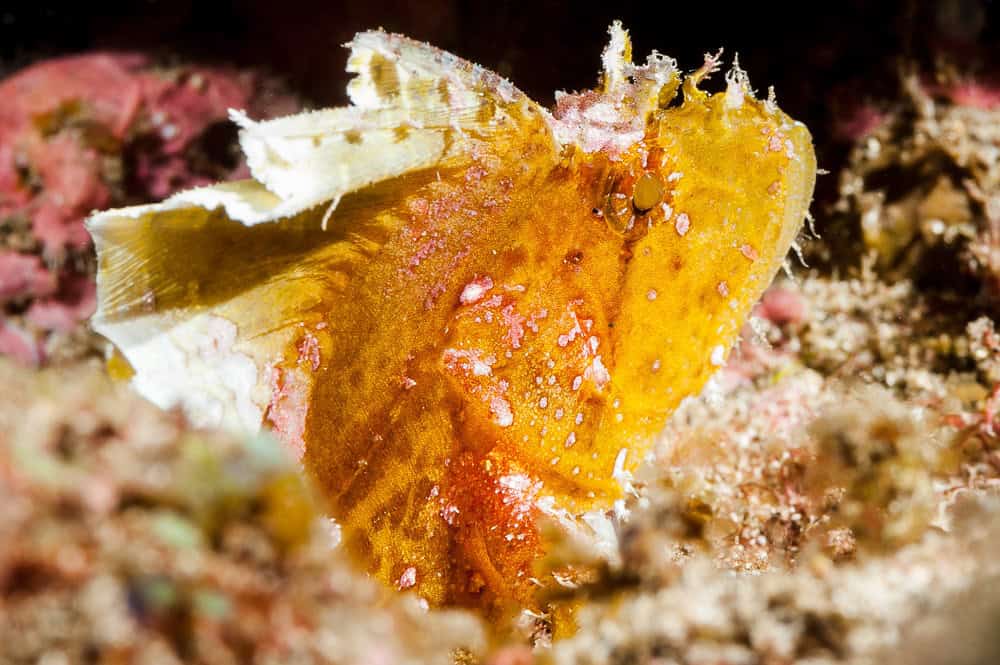
Leaf Scorpionfish
©"Leaf Scorpionfish – Taenianotus triacanthus" by zsispeo is licensed under BY-SA 2.0. – Original / License
At first glance, the leaf scorpionfish looks like a floating piece of marine plant matter. No one would guess the disguise hides a dangerous predator. Its almost entirely flat body and leaf-like fins are fully capable of tricking prey. The fish expertly blends into reefs and underwater vegetation. This ambush fish remains remarkably still while for an opportunity to feed Small fish mistaking the scorpionfish for harmless plant debris never hesitate to swim right by it. A sudden burst of speed is all it takes for the fish to secure lunch.
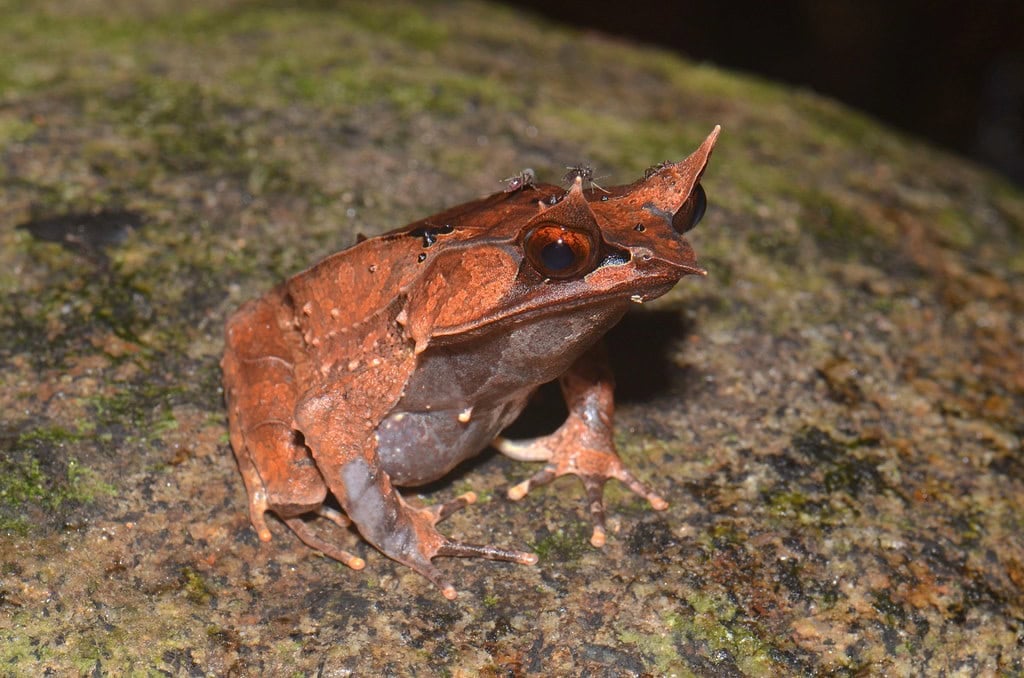
Giant Dead Leaf Frog
©"The long-nosed horned frog with three mosquitos" by Pasha Kirillov is licensed under BY-SA 2.0. – Original / License
The giant dead leaf frog is well-named, as this amphibian is almost indistinguishable from fallen leaves littering the rainforest floor. Its irregularly shaped body in shades of brown and pointy projections above the eyes complete the illusion. Remaining still allows it to avoid detection from both predators and prey. Insects navigating through the leaf litter inadvertently come within striking distance. The frog then launches its sticky tongue in their direction, capturing prey before it can react.