Silkworms and spiders aren’t the only arthropods that can produce silk. Scientists know of at least 23 groups of insects that have evolved to produce silk. One of these is the raspy cricket, which is found in Australia. One fascinating video on Instagram from Explaining Nature shows a small cricket in the palm of someone’s hand as it carefully spins a silken web to create a shelter. Unfortunately for the cricket, once the person opens their hand, all of its hard work will be undone.
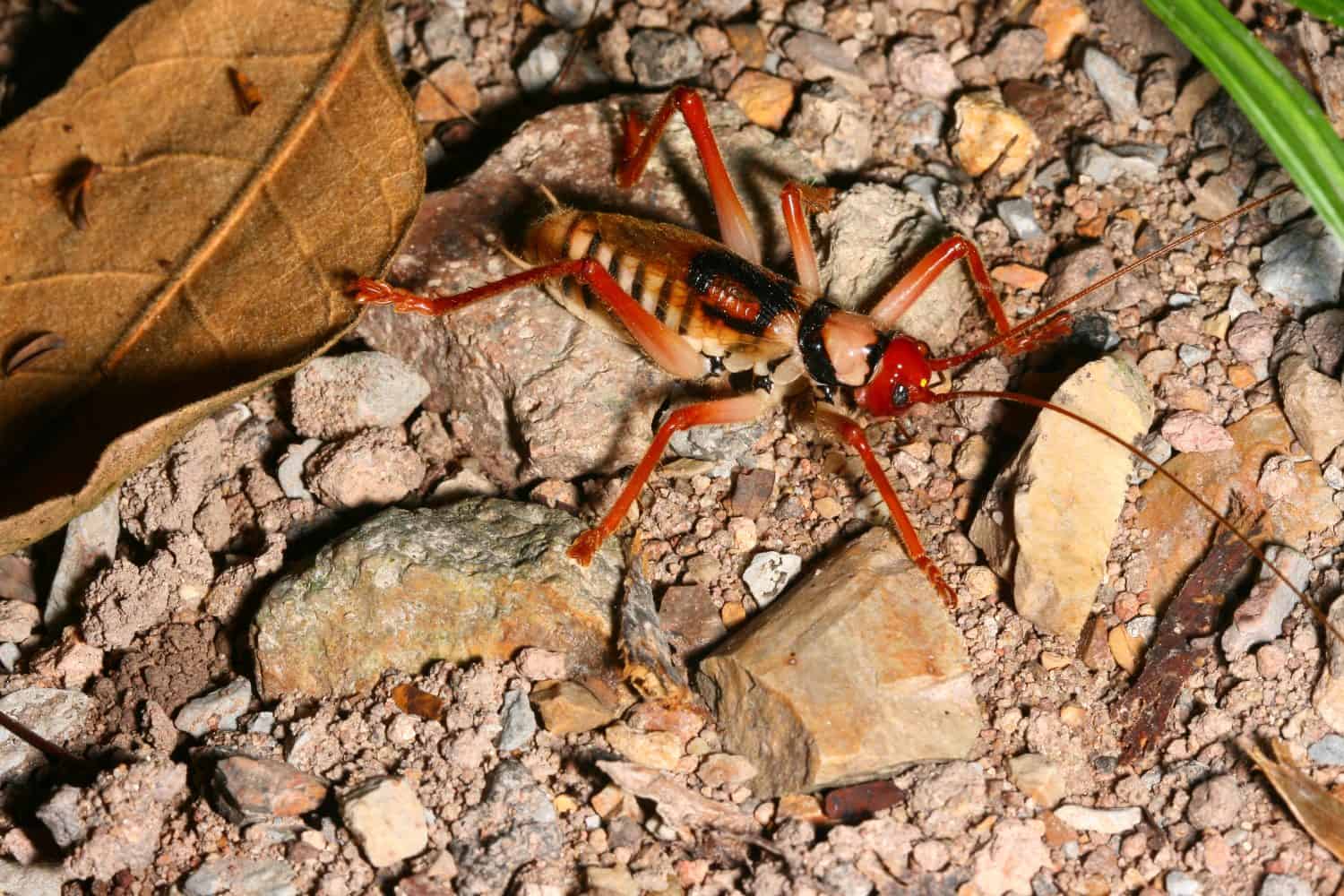
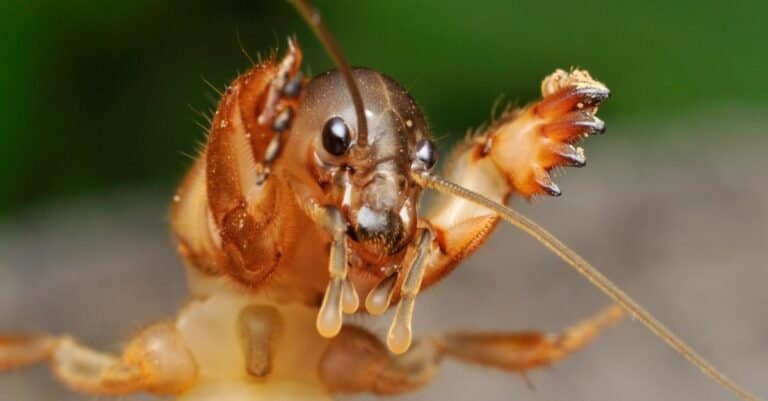
The Capnogryllacris sakaera is a member of the Gryllacrididae family of raspy or leaf-rolling crickets.
©Pong Wira/Shutterstock.com
What Is a Silk-Spinning Raspy Cricket?
Depending on the species, raspy crickets may grow to around two inches long and can be a variety of colors, including brown, gray, or green. They are crickets in the order Orthoptera and in the family Gryllacrididae. These unique crickets produce silk to build shelters. Their habitats include forests and grasslands.
Which Species of Raspy Cricket Is in the Video?
Since the Instagram post doesn’t specify, we can’t be certain exactly which species is making the silken web in the video. However, we know it’s in the family Gryllacrididae, and it may be from the genus Chauliogryllacris or Hyalogryllacris.
These crickets make rasping sounds by rubbing their wings together. There are over 600 species in the Gryllacrididae family, with many living in Australia. In addition to raspy crickets, they are also known as leaf-rolling crickets. Most species in the family are non-jumpers and live in the southern hemisphere. Only one species in the family, the Carolina leaf-roller cricket (Camptonotus carolinensis), can be found in the U.S.
Raspy Crickets Use Their Silk to Build Shelters
Raspy crickets are nocturnal. They spend their days hidden away inside burrows and emerge only at night to hunt for food. Raspy crickets are opportunistic feeders and will eat a variety of plants and insects. They use the powerful bite force of their mandibles to feast on insects with tough exoskeletons.
A research study from 2015 examined the material makeup of the cricket’s silk webs for the first time. Researchers found that the silk is made of protein and forms cylindrical fibers and flat films. The crickets use glands in their mouths to produce silk fibers to bind leaves together, to line burrows, or to secure shelters inside tree hollows.
According to scientists in the study, raspy crickets return time and again to their silken burrows. In the study, most crickets built their burrows within a day, although they often added silk layers over several days. The crickets would seal their access holes during the day when they retreated to their shelter, keeping them safe from predators. Each night, the cricket cuts an opening using its mandibles, which it must repair each time that it reenters its shelter.
How Do Raspy Crickets Find Their Way Home?
Raspy crickets can wander far from their burrows, but still return to the same shelter each day. Scientists believe they use pheromones (chemical signals) to mark their homes.
Even Nymphs Can Produce Silk
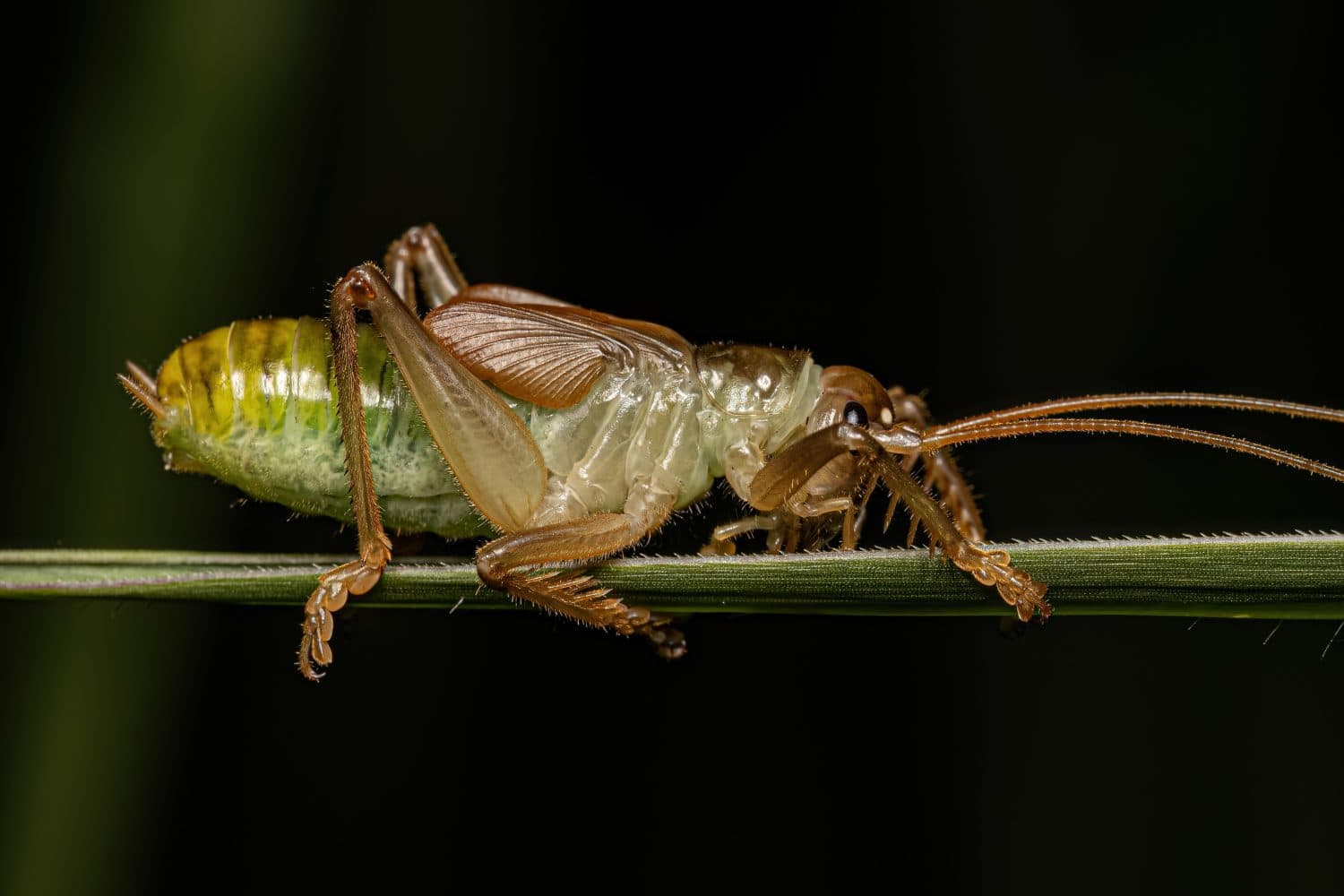
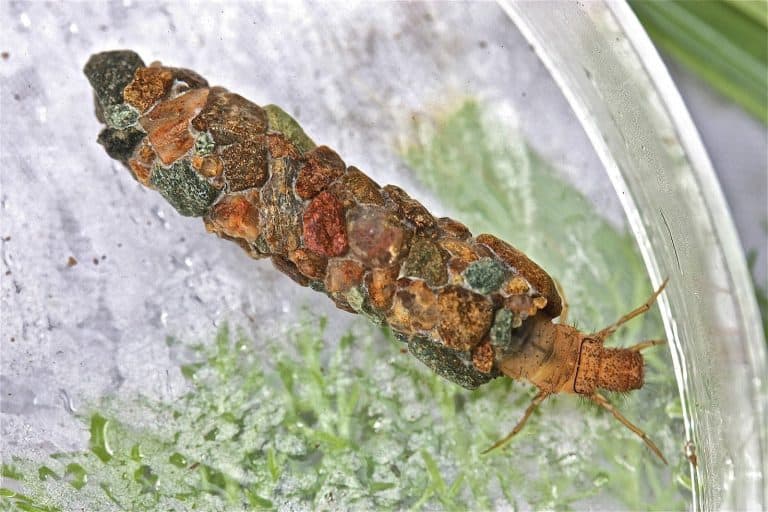
Within a few hours of hatching, raspy cricket nymphs are already capable of spinning silk to create a safe shelter.
©Vinicius R. Souza/Shutterstock.com
Both males and females produce silk webs for shelters. The crickets can begin producing silk to create their homes shortly after hatching.
Why (and How) Do Raspy Crickets Make Their Raspy Sounds?
The rasping sound is a line of defense for the raspy cricket. While many crickets rub their wings together to make chirping sounds, the raspy cricket rubs its hind leg across bumpy parts of its abdomen to create a rasping noise when it feels threatened.
Raspy Crickets Can’t Hear Their Own Noise
Interestingly, raspy crickets make sounds that they can’t actually hear. Raspy crickets don’t have auditory organs for hearing. For this reason, experts believe the sounds the crickets make are not to communicate with each other, but to warn away threats.
Do Any Other Cricket Species Produce Silk?
Although within the Orthoptera order, Gryllacrididae is the only family that produces silk, crickets in the genus Cnemotettix (within the family Anostostomatidae) also produce silk and live in silk-lined burrows.
Other Raspy Cricket Species
About one-third of all the raspy cricket species in the world live in Australia. The U.S. has only one species, and most raspy crickets can be found in the Southern Hemisphere. Here are a few examples of species of raspy crickets:
- Striped raspy cricket (Paragryllacris combusta): Also known as tree crickets, striped raspy crickets are found in Australia and make their nests on trees.
- Bulldog raspy cricket (Chauliogryllacris acaropenates): This raspy cricket species was studied by scientists and found to have the strongest bite force out of 654 other insects.
- Carolina leaf-roller cricket (Camptonotus carolinensis): As the only North American raspy cricket, Carolina leaf-rollers live in the southeast and are only about 1/2 an inch long.