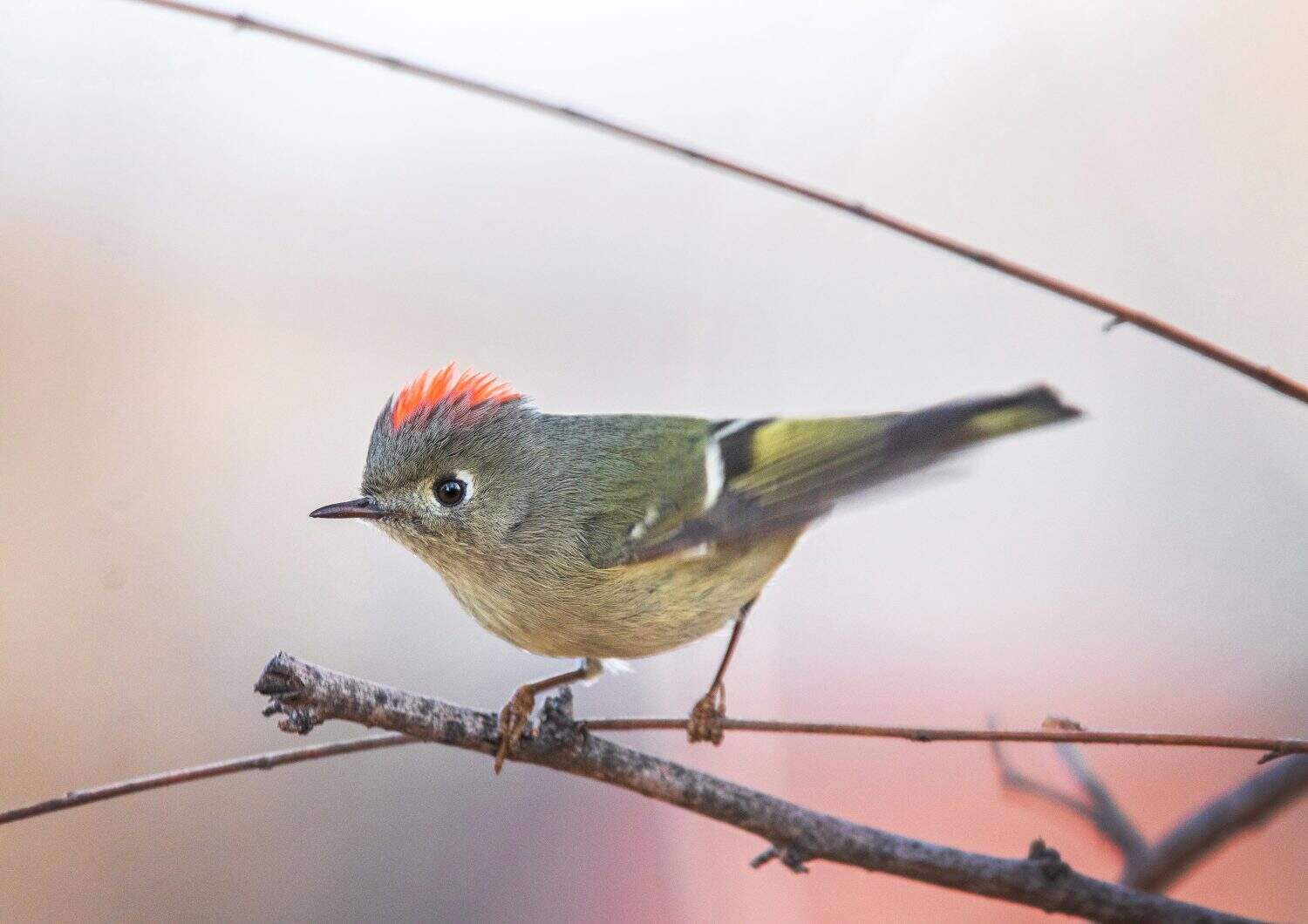

Imagine you’re walking through the forest or your local park when you hear a songbird singing a lovely song. You look up to find the source, and there it is— the lovely bird from this YouTube video! At first, you can’t believe your eyes. That lovely bird looks a lot like the cooking legend Guy Fieri. While they do share a similar resemblance, what you’re really looking at is the ruby-crowned kinglet. Today, we’ll tell you all about this majestic bird, including more about its unique markings, where you can find one, their conservation status, and more interesting facts.
About the Ruby-Crowned Kinglet
Yes, what appears to be Guy Fieri’s bird brother is actually the ruby-crowned kinglet. The bird is a tiny songbird that is recognizable for its large head, relatively absent neck, and super-thin tail. The birds are so small that you could blink and miss them. Both the male and female kinglets typically only grow to about 4.2 inches long. They have a wingspan of approximately 7 inches, and they weigh about 0.3 ounces.
This species is not to be confused with the golden-crowned kinglet. While their crown is mostly yellow, it can also be orange and resemble that of the ruby-crowned kinglet. However, the golden-crowned kinglet is also a bit smaller, and it has a different singing voice. They also differ in their hunting and feeding behaviors: the ruby-crowned kinglet hovers while searching for food, whereas the golden-crowned kinglet often hangs upside down to eat.
Where to Find Them
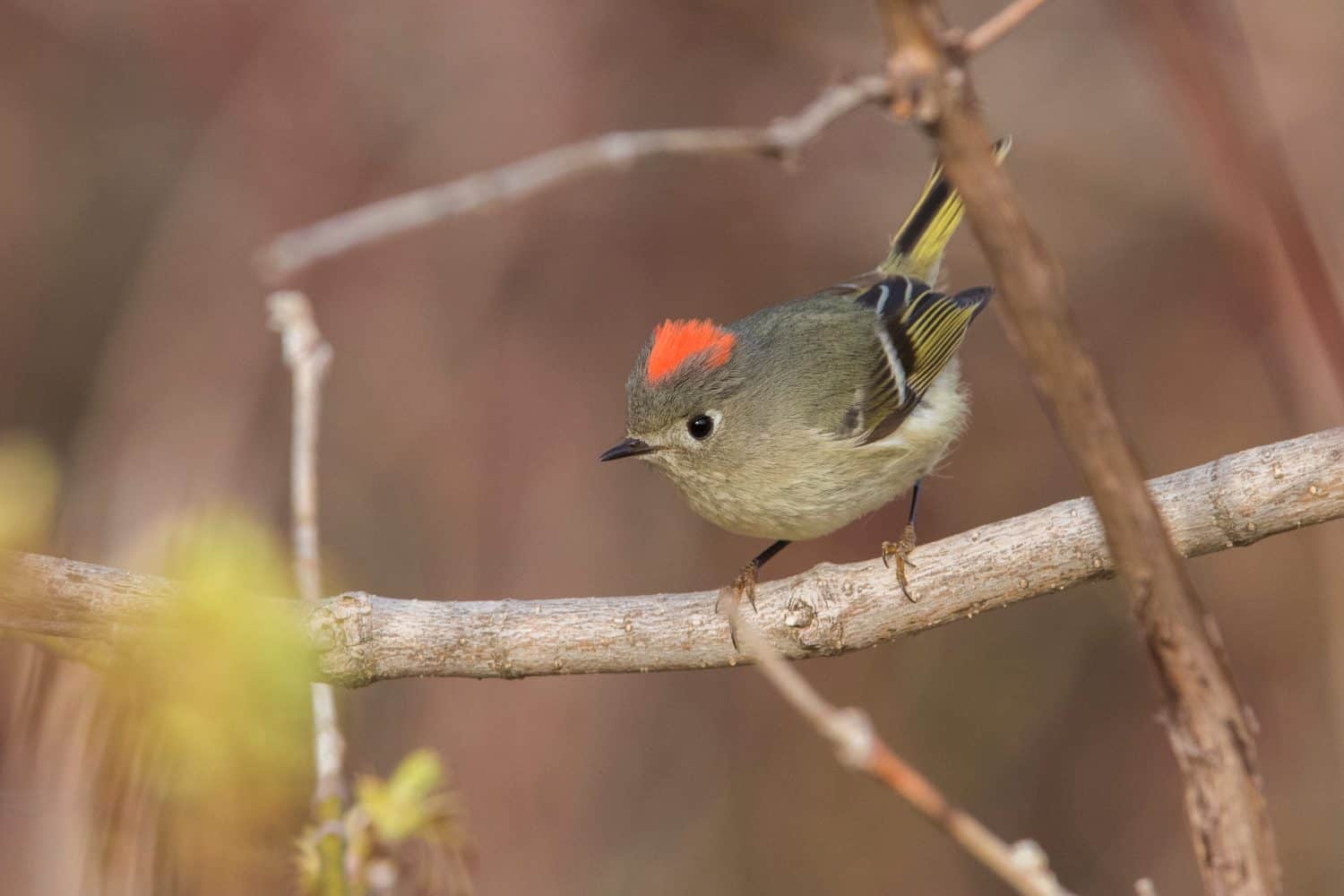
The ruby-crowned kinglet is a constantly moving species that makes a beautiful noise.
©Mircea Costina/Shutterstock.com
You’re most likely to find ruby-crowned kinglets making their homes in the forests of northern and western North America, while they can also be spotted in Mexico and the southern U.S., especially when they migrate during the winter. The birds in these areas are slightly larger and lighter in color than the kinglets found in Alaska and British Columbia.
The birds often make their homes in deciduous and coniferous forests, but it’s not uncommon for them to venture into your yard. You’ll often hear them before seeing them when you hear the series of low trills, phrases, and high-pitched notes that emit from their beaks.
What They Eat
The ruby-crowned kinglet is always looking for its next meal. The birds are mostly insectivorous, so they feast on a variety of insects, including beetles, flies, wasps, and spiders. However, they are also known to eat berries and even poison ivy. They’ll also drink tree sap during months when insects are hard to find. This species is always on the lookout for something good to eat and will often rush from tree to tree in search of its next meal. The birds are very quick. They’ll often hover above trees to catch insects as they fly by.
What’s with the Guy Fieri Hair?
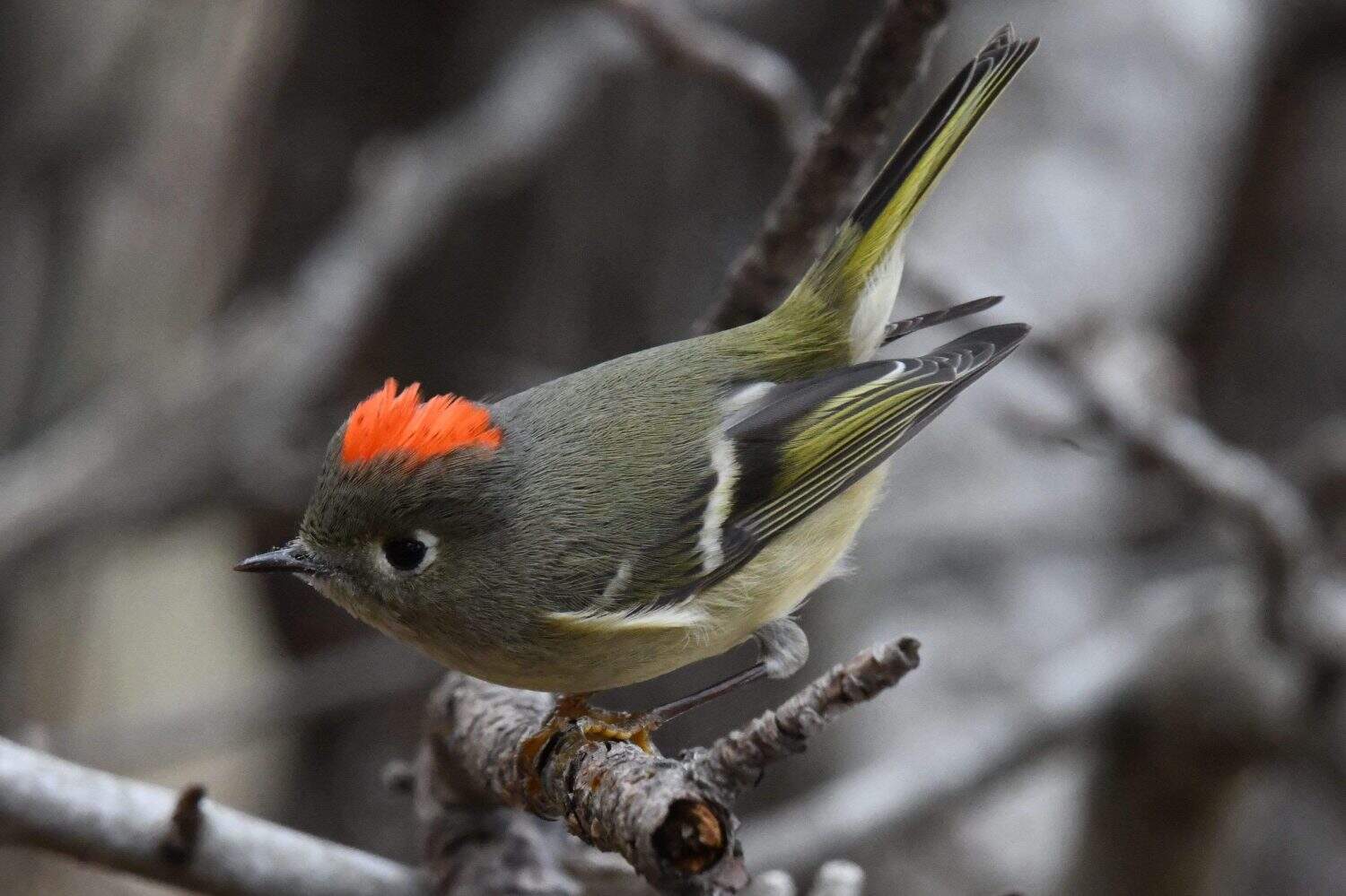
The red hair on the male bird’s head is useful for mating rituals and settling territorial disputes.
©Wirestock Creators/Shutterstock.com
If you look up and see a kinglet with Guy Fieri hair, it means you’ve spotted a male. The birds are olive green and can be identified by their black legs and white wing bars. The males have the red crown from the time they’re juveniles. Though the red feathers are always present, they are not always visible. Typically, they’re hidden under their other olive feathers. However, the red feathers can be displayed quickly and serve several important purposes:
Mating Season
To start, the red feathers can be used when courting a mate. Kinglets are often solitary birds, but they come together during mating season. The male will spot a desirable mate and hop around her while dancing, singing, and showing off his fancy red cap. After mating, the female goes off to find or build a nest. The nests are typically dual-layered structures made from twigs, moss, spiderwebs, and plant materials. When completed, the nest is globe-shaped and typically located about 40 feet above the forest floor.
Interestingly, kinglets lay more eggs at a time than most other songbirds—sometimes up to 12 per nest—and raise all the chicks together. During the early stages, the male kinglet brings food to his mate and later helps feed the chicks after they hatch. Along the way, both adults will defend the territory from common predators, which include squirrels and hawks.
Settling Territorial Disputes
If predators or rival males approach during the nesting period, the male kinglet will display his red feathers and sing loudly to deter them. They’ll also constantly flick their wings until the predator leaves. This usually does the trick and is much safer than chasing or fighting a predator and risking injury.
Conservation Status

Ruby-crowned kinglets can live in a variety of environments, and the population numbers are quite strong.
©Natalia Kuzmina/Shutterstock.com
Though you may not always see them sporting the Guy Fieri red feathers, ruby-crowned kinglets are quite common. Although the population can fluctuate due to die-offs during colder years, there are currently about 90 million ruby-crowned kinglets. Since they can live in a variety of habitats, they are well-suited to survive.
Keep an eye out for that red flash the next time you’re out bird watching. If you live where the birds can be found, you can attract them to your yard by providing high-energy foods like mealworms and suet. You can also plant trees that invite a large insect population. Avoid pesticides to create a healthy environment. Do it right and you’ll be serenaded by a sweet song in no time.