
Quick Take
- To human eyes, male and female blue tits look identical, yet to each other they are broadcasting information we cannot even begin to see. See how UV reveals differences →
- A male's bright feathers aren't just attractive. They indicate the bird’s health. Discover what feathers expose →
- Female blue tits run the toughest pre-mating inspections in the bird world, a fact that comes down to a biological reason they can afford to be pickier than males. See how females evaluate mates →
Blue tits (Parus caeruleus) are beautiful birds and inhabit woodlands throughout the U.K. Spotting one is a treat for birders, who love their bright blue and yellow plumage. And while these colors look bold to our eyes, they look even more vibrant through the eyes of other birds.
Humans aren’t capable of perceiving UV light, but blue tits are. And when it comes time to mate, male blue tits use this to their advantage. The brighter the color, the more likely they are to find a female — but it’s not always that simple.
Blue Tit Feathers Reflect UV Light
As a sexually monomorphic species, blue tits all share the same colors and feather patterns. To the human eye, they all look similar, if not the same. While this is nature’s way of differentiating them from sexually dichromatic species, there’s an entire world unseen to the naked eye. We may not be able to tell males from females, but blue tits can tell immediately.
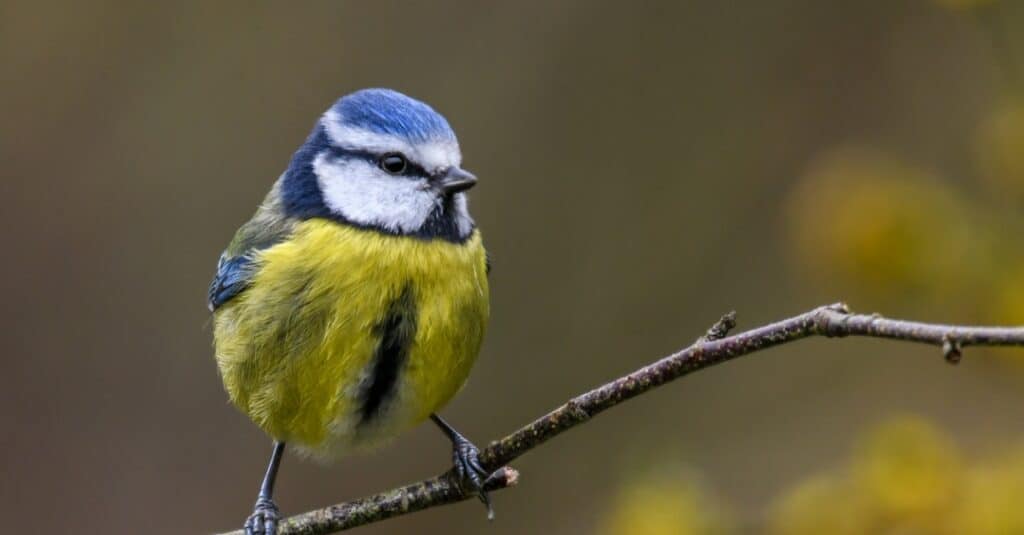
The crown feathers on a blue tit glow under UV light and indicate their overall health.
©bearacreative/Shutterstock.com
The crown feathers of a blue tit reflect UV light, causing their neck plumage to glow in the right conditions. This spectrum is invisible to us, but it is a quick way for birds to identify one another. Most have four types of cones in their retinas, allowing them to see beyond the traditional color spectrum. This makes them sensitive to wavelengths beyond our visible range, such as UV light at roughly 300-400 nanometers.
Blue tits reflect especially high levels of UV light, with peak reflectance around 352 nanometers. This strong UV reflection highlights certain physical characteristics, but also exposes any flaws a bird may have. When it comes time to reproduce, this is something both male and female blue tits rely on when choosing a mate.
UV Shines a Light On Every Imperfection
Similar to how humans appreciate certain features in their own significant others, blue tits have their own preferences. Males with feathers that glow brighter under UV than others are more likely to draw attention. Females prefer brighter plumage because it signifies that a male’s feathers are healthy. These birds are typically the first to pair off.
The level of glow emitted from males also indicates their overall health. Females appear to use UV plumage as a cue that correlates with parasite load and overall condition. Birds that are sick are not likely to find a mate and are passed by for those with a brighter feather glow. If a blue tit has an infection, illness, or any other type of disease, its plumage typically appears dull with a lack of shine.
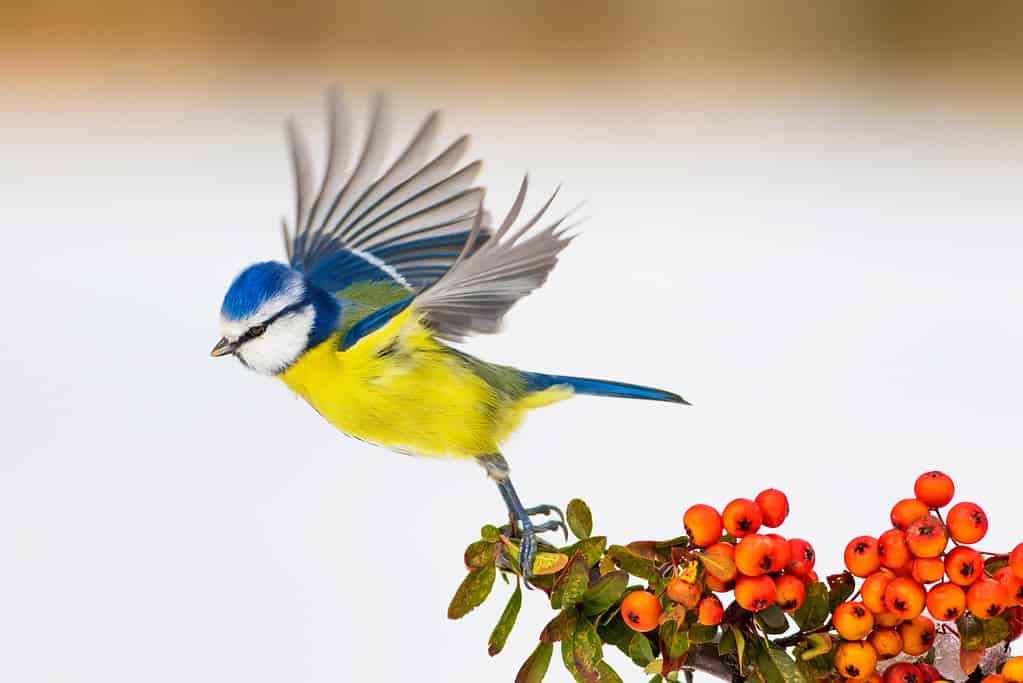
To the naked eye, humans can only see blue and yellow, but blue tits see feathers with various glow levels.
©serkanmutan/iStock via Getty Images
However, males aren’t the only ones inspecting other birds before choosing a mate. Males also observe females carefully before making their decision. A female blue tit won’t have feathers that glow as brightly as a male’s, but their UV levels are still indicative of overall health. Females with brighter feathers are considered to be healthier, which means they’d be more successful when reproducing. By the end of mating season, the blue tits with the brightest feathers are typically paired off first, while those with duller feathers pair up later. This process helps boost the species’ chances of survival.
Why Healthy Birds Shine Brighter
This process is one of the most effective ways blue tits ensure the survival of their species. This species is susceptible to blood parasites, such as Plasmodium and Haemoproteus. Both of these parasites cause malaria-like infections, which can sicken the bird and eventually lead to death. Haemoproteus typically infects between 47% and 92% as of 2021 in blue tits, making it highly prevalent within bird communities.
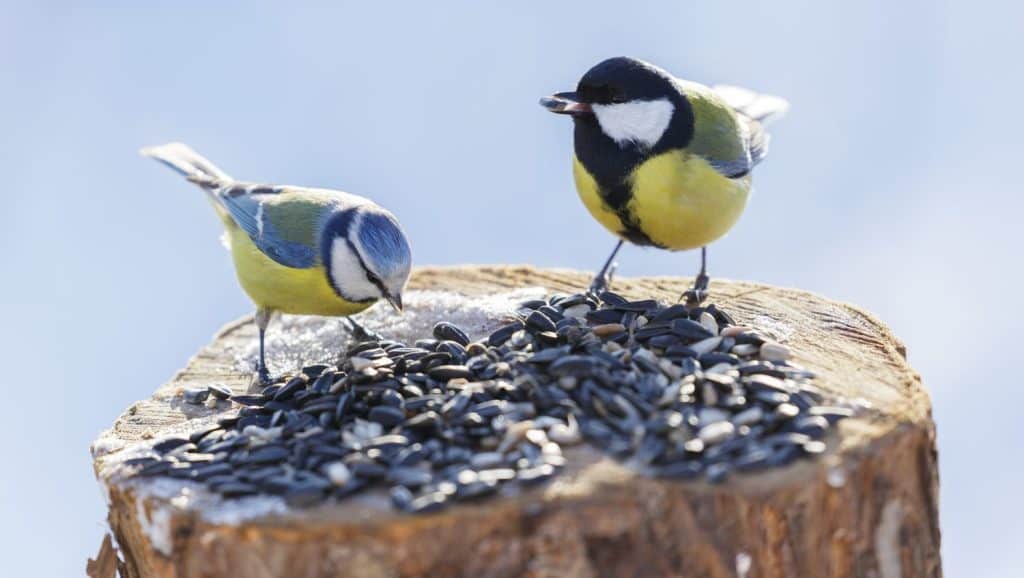
If a bird is free of parasites and diseases, it typically has brighter plumage, indicating higher reproductive rates.
©Nitr/Shutterstock.com
Since blue tits have no way of running blood tests as humans can, they use the next best thing: UV reflections. Each colored feather on a blue tit utilizes spongy keratin nanostructures to emit a glow. Parasites can reduce feather quality and condition, leading to weaker UV reflectance. Mites are another common ailment for blue tits.
Without enough preening, this pest problem spirals, sickening the bird and causing the same dull luster. To prevent this, females often ‘de-parasitize’ their nests by searching for and removing pests. This makes females less likely to catch parasites than males.