
Have you ever wondered how giraffes fight? Given their long necks and lack of arms, is it even possible for giraffes to fight? Surprisingly enough, giraffes do fight with their necks in a battle called “necking.” This video by Latest Sightings shows two giraffes fighting it out “neck and neck.” If you’re curious about learning why giraffes fight this way, keep reading below!

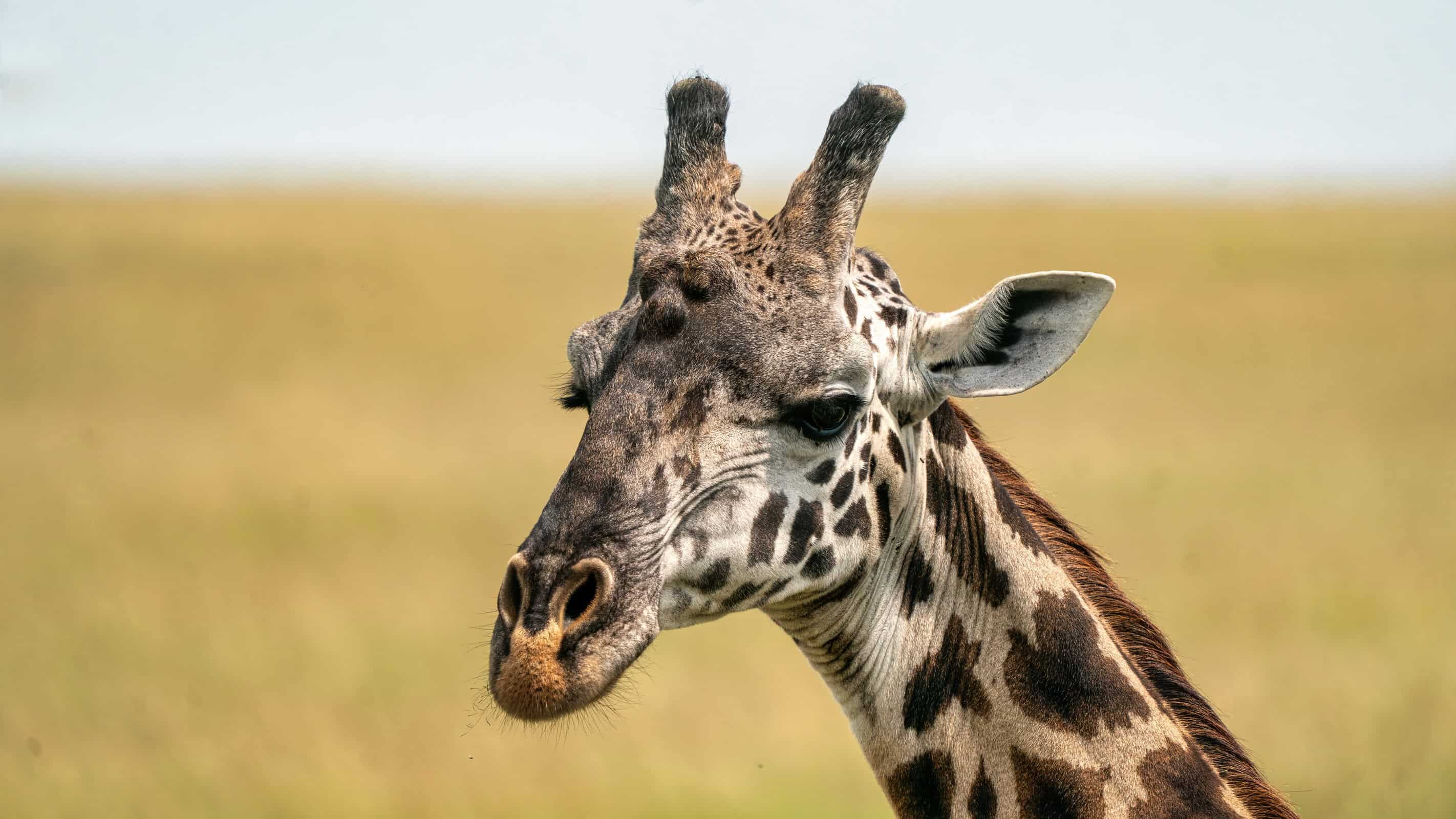
Giraffe necks are surprisingly flexible.
©Damian Kuzdak/Shutterstock.com
What is “Necking?”
As seen in the video, the giraffes are participating in necking. Necking is a behavior mostly seen in adult males as a way to assert and establish dominance. Using a wide stance with their long legs for balance, the giraffes swing their necks in a sweeping motion, using their heads almost like a hammer. They hit each other using their heads, which are topped with ossicones—bony protrusions between their ears that add weight and can cause additional injury during these fights. Biologists describe two different types of necking: low-intensity and high-intensity. Low-intensity necking is often performed by younger male giraffes as a way to size each other up. High-intensity necking, seen in adults, is much more violent and aggressive, going beyond simple assessment. So why do giraffes do this in the first place?
There are a few reasons for these fights, with important results for the males. Some of these reasons include mating, status, and access to feeding areas. Achieving a higher status demonstrates to female giraffes that a male has strength and access to resources. Males with longer and stronger necks tend to have greater reproductive success, making it important for them to challenge other males.
While necking does not often lead to death, in rare cases where it goes a step too far, giraffes may succumb to their injuries. Most of the time, necking results in minor injuries such as bruising, though in rare cases, more serious injuries like broken bones can occur. The reason they don’t escalate to death often is because of a certain “etiquette” for fair fights. As seen in the video, the giraffes are taking turns swinging, and it’s been observed that they don’t fight when the other loses balance.

Giraffes will fight to compete for a mate.
©TK166/Shutterstock.com
Giraffe Anatomy
Giraffes’ long necks are composed of strong, flexible bones and muscles, including elongated vertebrae. Like humans, giraffes have seven neck vertebrae, but theirs are much larger, at around ten inches long. The muscles around their shoulders and neck are large and powerful. This anatomy allows giraffes to deliver controlled yet powerful swings at their opponents. Another important structure is the nuchal ligament, which connects the skull to the back and supports the giraffe’s neck-swinging behavior. This ligament connects the skull to the back and helps support the giraffe’s neck-swinging behavior. While bashing their necks and heads together may seem strange, this unique behavior is important for the social communication of giraffes.