

Quick Take
- A group of crows has a name so unsettling it sounds made up, and the behavior behind it reveals just how calculated these birds really are. See their group behavior →
- Crows and ravens look nearly identical, but one overlooked difference makes telling them apart surprisingly easy. Spot the key difference →
- Crows originated in a place most people would never associate with them, and that unlikely starting point explains how they conquered nearly every continent. Trace their origins →
- Despite facing hawks, disease, and deliberate poisoning, crow populations are moving in a direction that defies what you'd expect. Check their survival status →
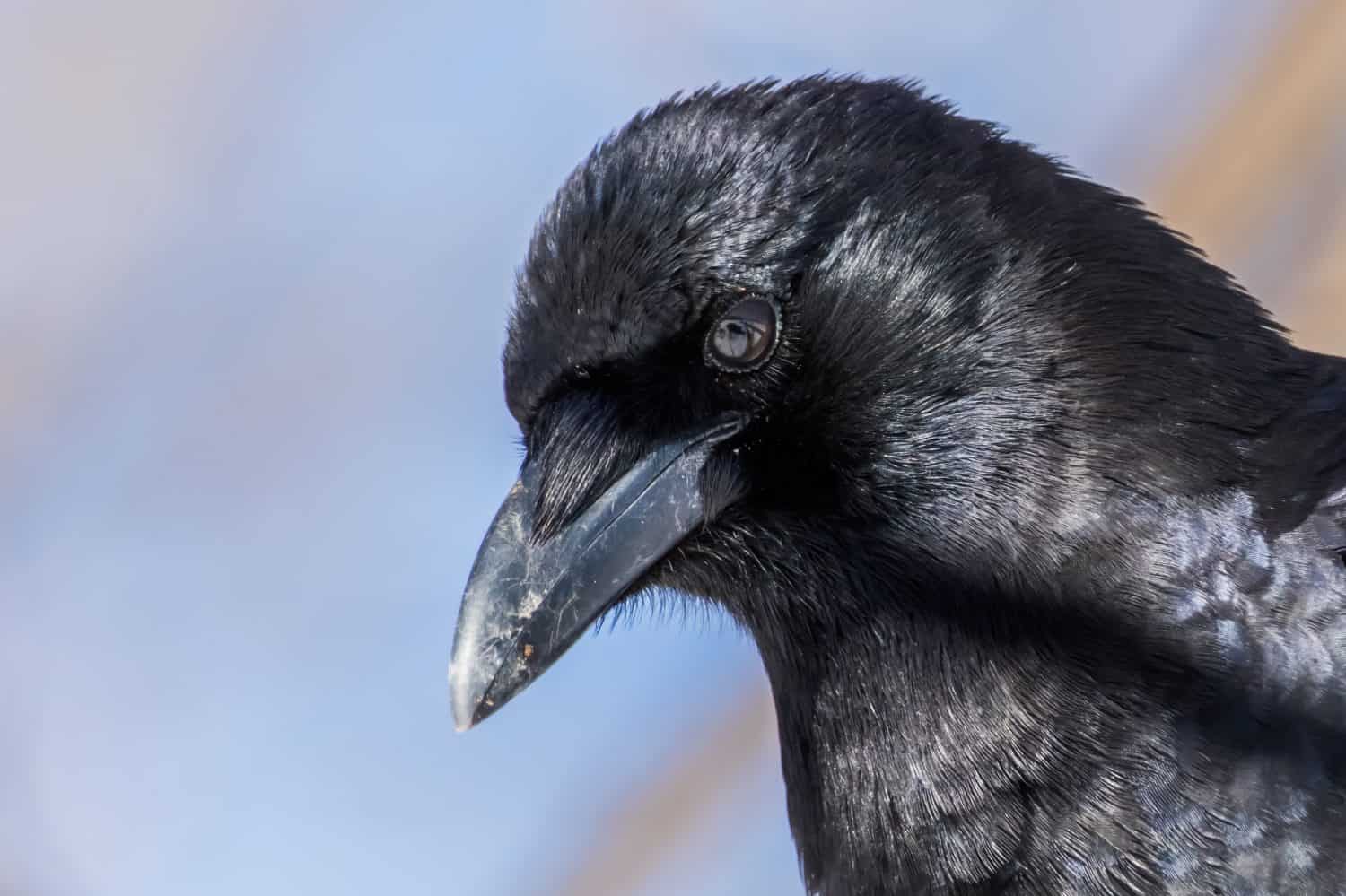
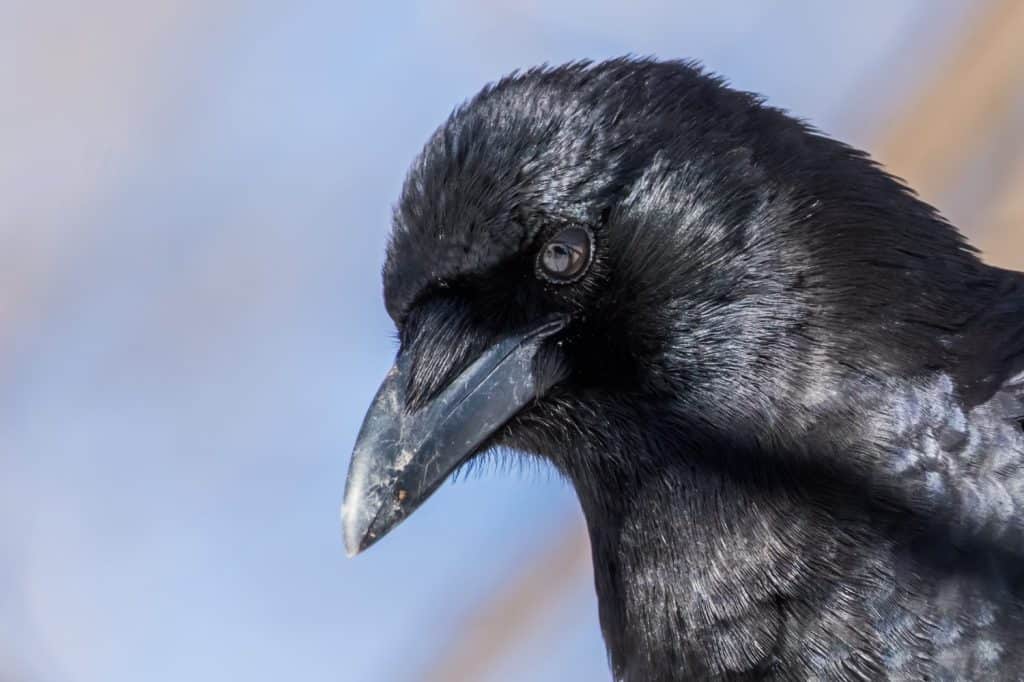
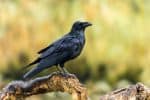
Crows are best known for their solid black feathers and signature ‘caw’ sound. These birds are omnivores, eating everything from insects to seeds. They’re highly intelligent birds.

Where to Find Crows
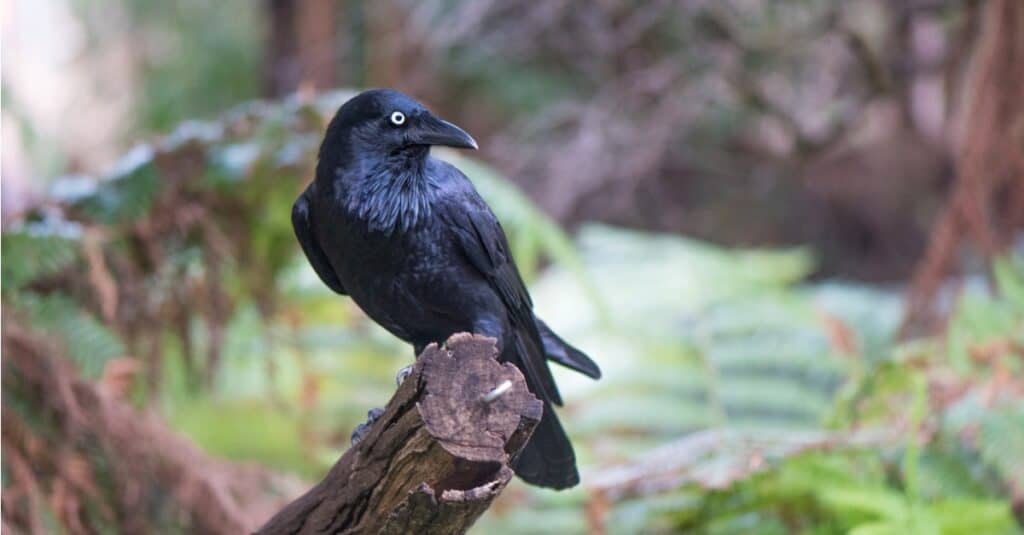
Crows live all around the world, wherever a temperate climate can be found.
©iStock.com/jodie777
They live in areas across the United States, Canada, Africa, Europe, Asia, the Middle East, and Australia. Birdwatchers can spot them throughout the year in most of the United States.
They’re likely to be seen flying over open areas, including fields and grasslands. While some birds are fairly quiet, these black birds are known for their loud sounds. While their most notable sound is a caw, they can coo or even rattle. Its sound makes identification even easier.
Many of these birds are adaptable to living in a temperate climate. Alternatively, some migrate a long distance to reach warmer temperatures. Spring and summer are the best seasons to see them.
Nests
They have their young in the springtime. Both males and females construct a cup-shaped nest made out of sticks. They are usually found about 20 feet up in a tree.
Scientific Name
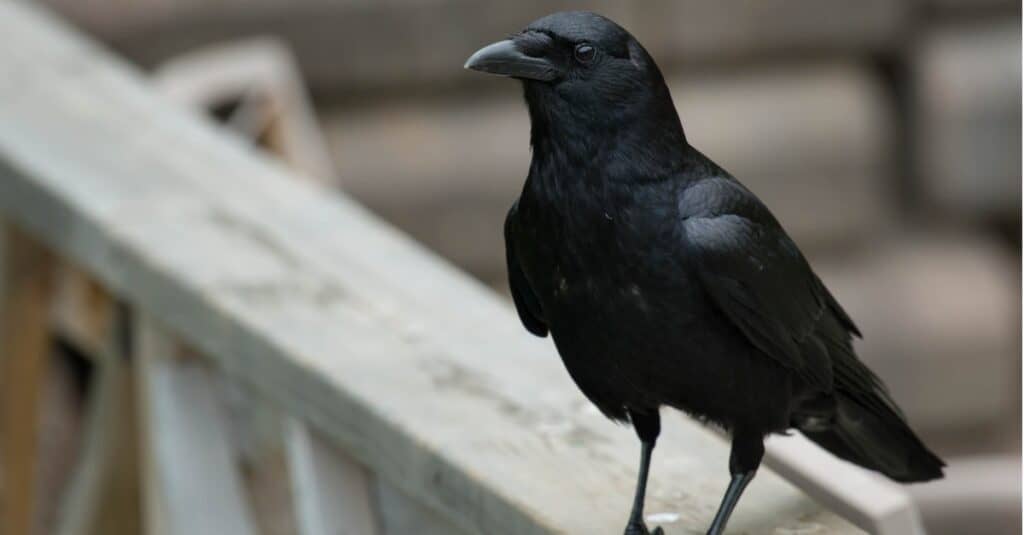
The American crow is one of many species of crow found throughout the world.
©iStock.com/PaulReevesPhotography
The scientific name of the American Crow is Corvus brachyrhynchos. The Latin word Corvus refers to its genus, while the word brachyrhynchos means short-billed. They belong to the Corvidae family and the Aves class.
Evolution
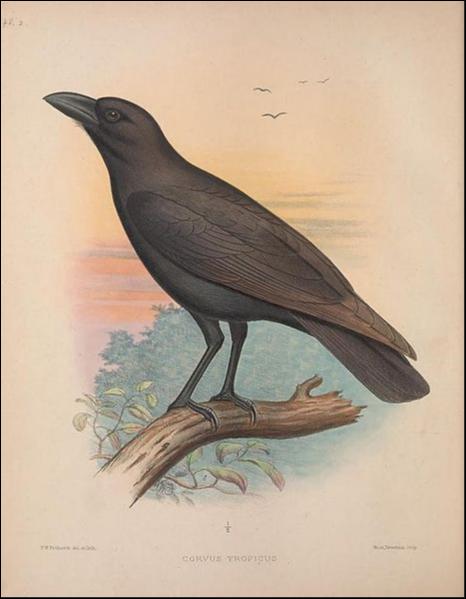
Crows and Ravens have been an important part of art, literature, and culture since the dawn of human civilization.
©Frederick William Frohawk (1861–1946) / public domain – Original / License
Scientific evidence tends to point towards Australia or Asia as the place of origin for the first crows, sometime close to 30 million years ago. It was not until these birds began to migrate to Europe and North America that they began to rapidly evolve and diversify into the plethora of species we know today. Because of their large brains and wings relative to most other birds in their biomes, early crows were able to hone their skills for hunting and habitation so that they were able to consistently find food and shelter in almost any environment. It is this tenacious tendency to mold their behavior to best suit their surroundings that has ensured the survival of crows throughout the years.
Humans have consistently depicted crows and ravens as being wise, mysterious, prescient of future events, or otherwise imbued with magical powers in mythology, art, and literature. Perhaps the best-known example is Edgar Allan Poe’s poem “The Raven”, published in 1845.
Types of Crows
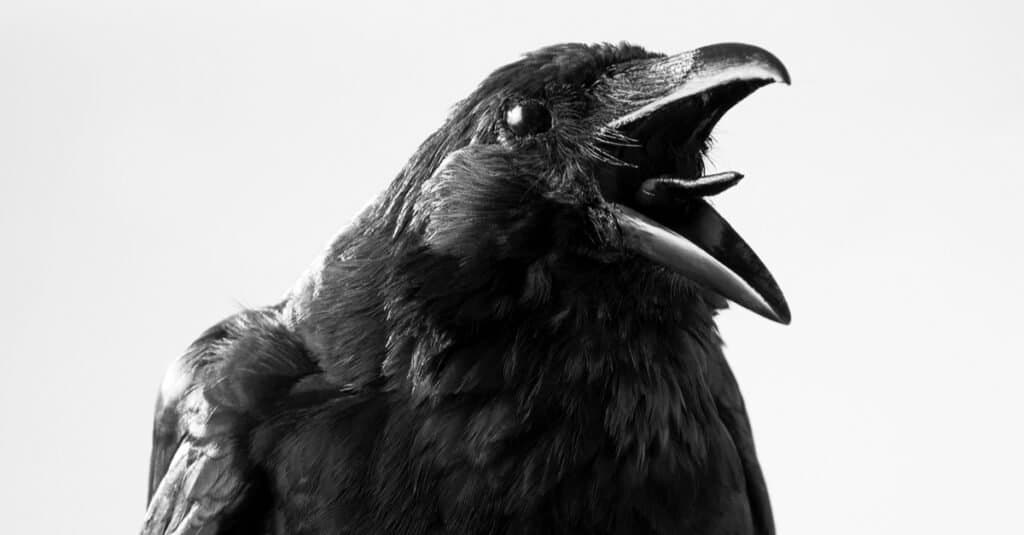
There are about 42 to 43 recognized species in the Corvus genus.
©redpip1984/Shutterstock.com
There are about 42 to 43 species of crows living throughout the world. Below you can find a complete list of every member of the genus Corvus.
| Pied Crow | Corvus albus |
| White-necked Raven | Corvus albicollis |
| Little Crow | Corvus bennetti |
| American Crow | Corvus brachyrhynchos |
| Northwestern Crow | Corvus caurinus |
| Cape Crow | Corvus capensis |
| Common Raven | Corvus corax |
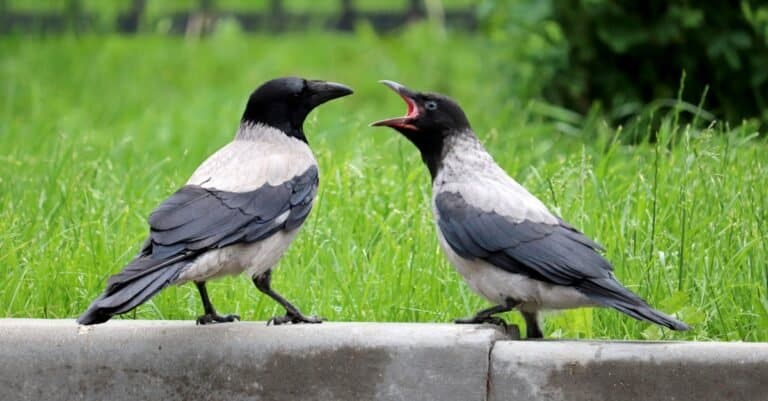
| Hooded Crow | Corvus cornix |
| Carrion Crow | Corvus corone |
| Australian Raven | Corvus coronoides |
| Thick-billed Raven | Corvus crassirostris |
| Chihuahuan Raven | Corvus cryptoleucus |
| Indian Jungle Crow | Corvus culminatus |
| Somali Crow | Corvus edithae |
| Slender-billed Crow | Corvus enca |
| Flores Crow | Corvus florensis |
| Rook | Corvus frugilegus |
| Brown-headed Crow | Corvus fuscicapillus |
| Hawaiian Crow | Corvus hawaiiensis |
| Tamaulipas Crow | Corvus imparatus |
| Bismarck Crow | Corvus insularis |
| Jamaican Crow | Corvus jamaicensis |
| Mariana Crow | Corvus kubaryi |
| White-necked Crow | Corvus leucognaphalus |
| Eastern Jungle Crow | Corvus levaillantii |
| Large-billed Crow | Corvus macrorhynchos |
| Bougainville Crow | Corvus meeki |
| Little Raven | Corvus mellori |
| New Caledonian Crow | Corvus moneduloides |
| Cuban Crow | Corvus nasicus |
| Torresian Crow | Corvus orru |
| Fish Crow | Corvus ossifragus |
| Palm Crow | Corvus palmarum |
| Palawan Crow | Corvus pusillus |
| Fan-tailed Raven | Corvus rhipidurus |
| Brown-necked Raven | Corvus ruficollis |
| Small Crow | Corvus samarensis |
| Sinaloa Crow | Corvus sinaloae |
| House Crow | Corvus splendens |
| Forest Raven | Corvus tasmanicus |
| Collared Crow | Corvus torquatus |
| Grey Crow | Corvus tristis |
| Piping Crow | Corvus typicus |
| Banggai Crow | Corvus unicolor |
| Long-billed Crow | Corvus validus |
| Violet Crow | Corvus violaceus |
| White-billed Crow | Corvus woodfordi |
Size, Appearance & Behavior
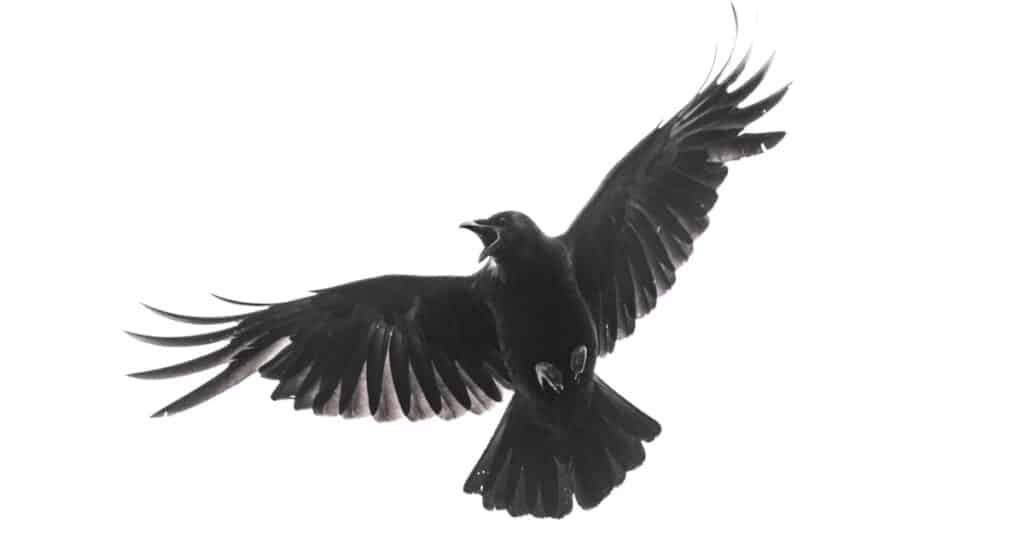
Carrion crows have a wingspan of 33-39 inches.
©retofuerst/Shutterstock.com
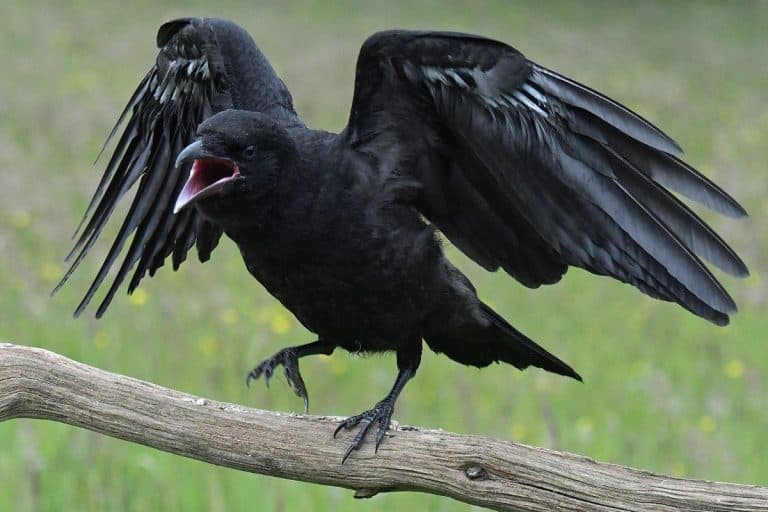
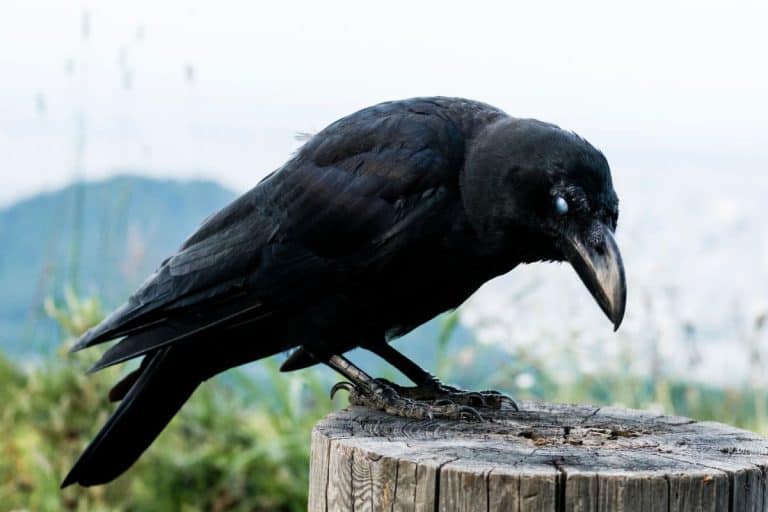
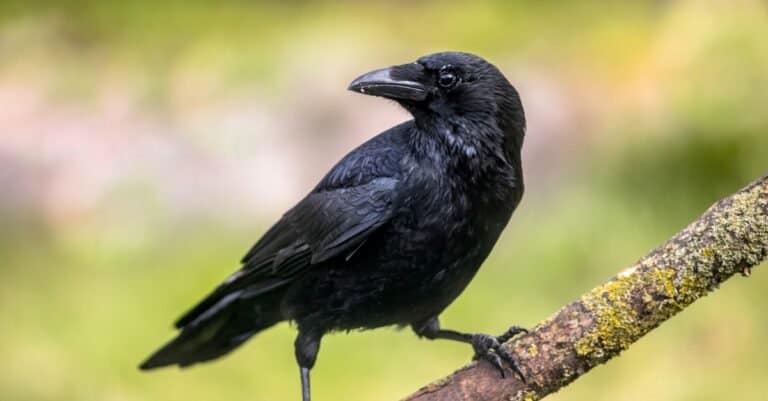
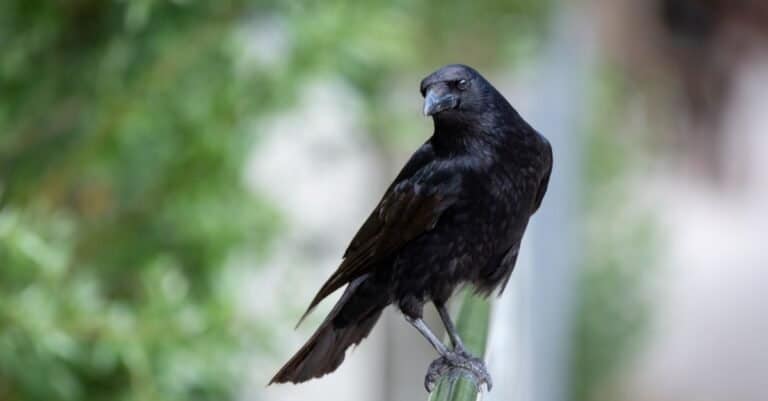
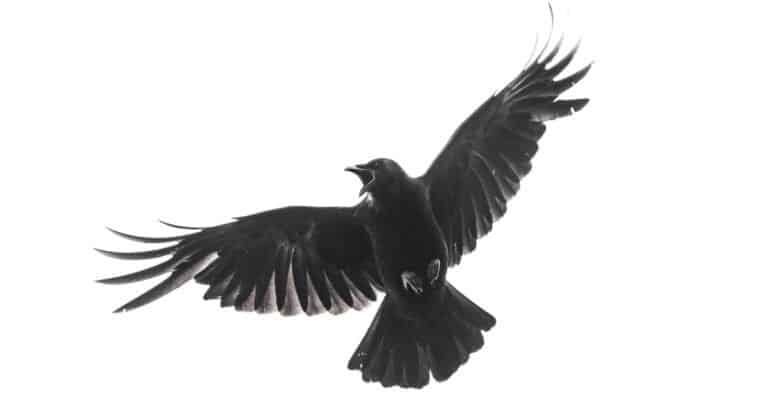
Its solid black feathers make crow identification fairly simple. They also have two black eyes, a black beak, and dark legs. Its 36-inch wingspan means this bird prefers to fly in open areas. They measure from 16 to 20 inches from the tip of the beak to their tail feathers. They weigh 11 to 21 ounces.
This bird’s black feathers make it highly visible. Fortunately, they have ways to protect themselves from predators. These birds travel in a group sometimes called a Murder. Normally, a group contains around 10 birds, but there can be a lot more. They use different calls to alert others of predators in their habitat.
Another way they protect themselves is by having a sentry. A sentry is one crow in the group that watches for predators while the others eat. So, if danger is near, there’s always a bird on guard to send up a warning sound.
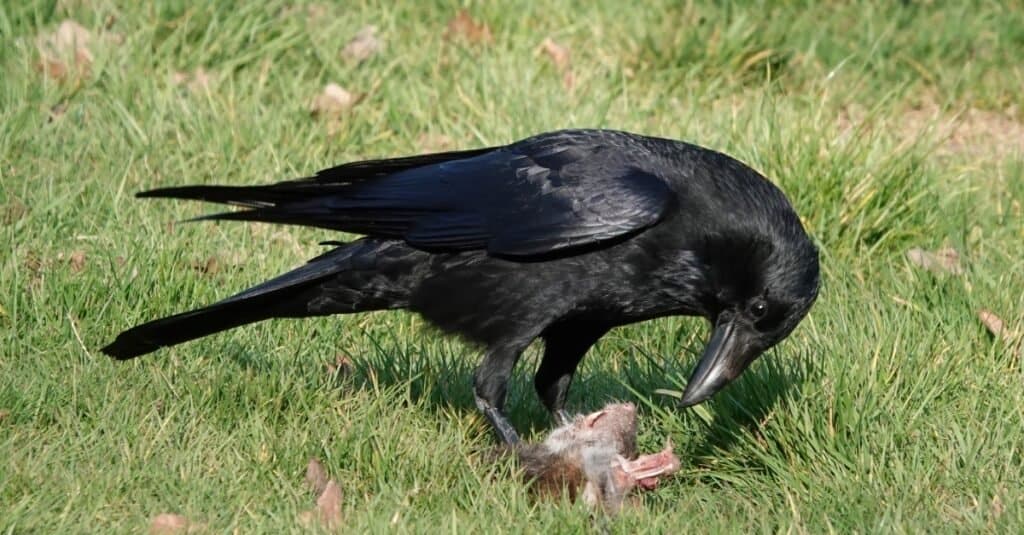
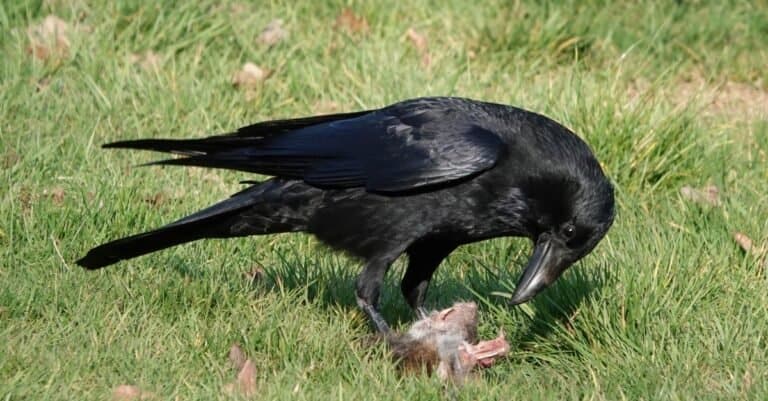
A crow on the ground is eating the remains of a dead rat.
©iStock.com/Nigel Harris
Crow vs Raven
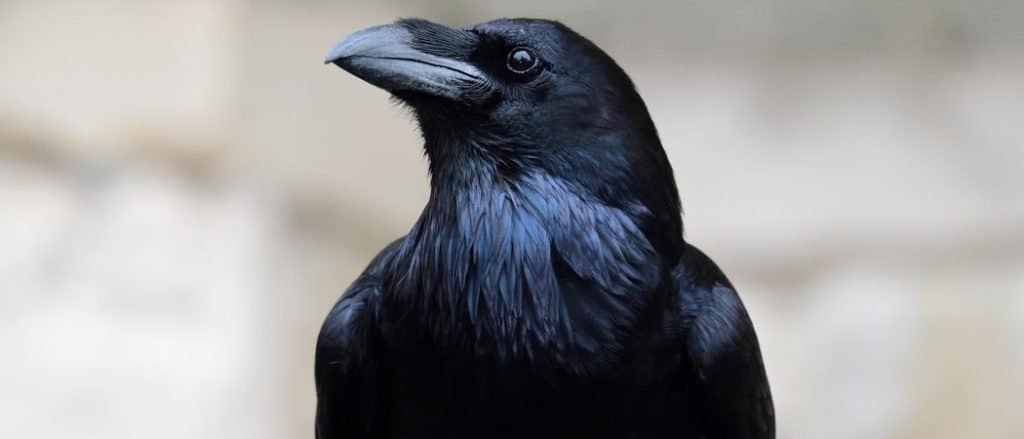
Ravens are often mistaken for crows, and it’s easy to see why- both belong to the genus Corvus.
©Tom Meaker/Shutterstock.com
Observe a crow and a raven side by side, and they look very similar. It’s not unusual for the two to be mistaken for one another. Both birds have solid black feathers. In addition, they have black eyes as well as a black beak and legs. Plus, both of these birds have a distinctive call. But, despite their commonalities, there are some basic differences between them.
The most obvious difference is size. Ravens are larger than crows. Ravens are 22 to 27 inches long and weigh 24 to 57 ounces. A raven also has a larger wingspan of up to 46.5 inches. A raven’s beak is longer and more curved than a crow’s beak.
Looking at the behavior of these birds also helps with identification. Crows move around in groups of ten or more, whereas ravens are less social, traveling in pairs. A crow makes a cawing sound, whereas a raven makes a harsh gurgling sound. In terms of diet, ravens eat carrion and insects. They don’t have a taste for fruit.
Crow Migration Pattern and Timing
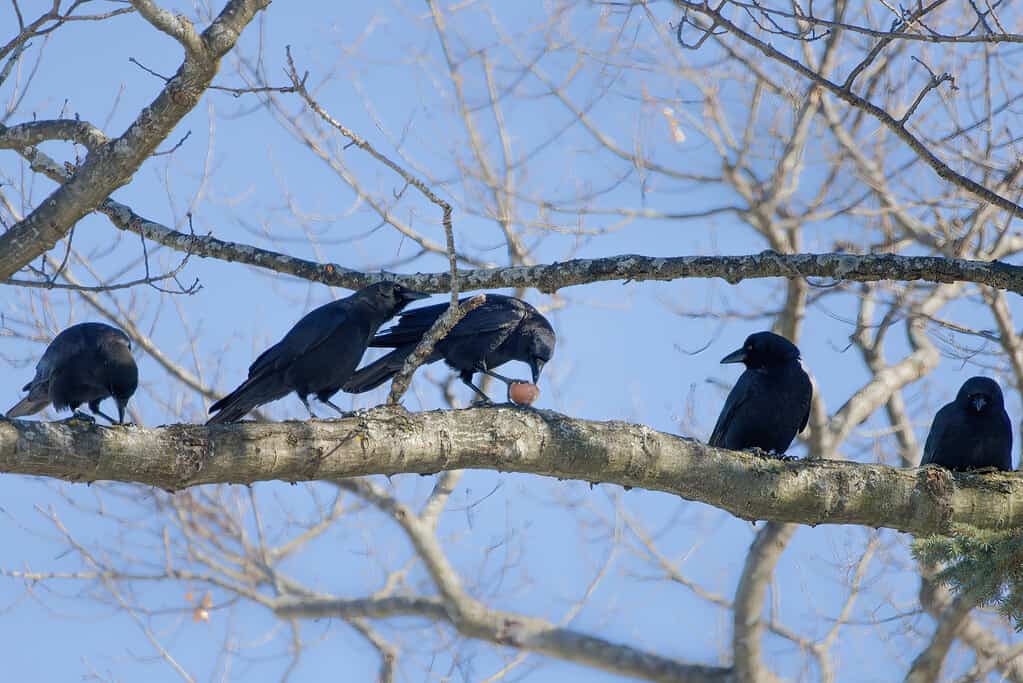
Crows travel in groups called murders.
©iStock.com/Karel Bock
Some species migrate while others stay in the same place year-round. Migrating crows travel in large groups, sometimes containing dozens of birds. They start to move out of a cold-weather climate in the fall and return in the spring.
Not only do some of these birds migrate to escape the cold weather, but they also leave in order to breed in a place with a larger food supply available.
Diet
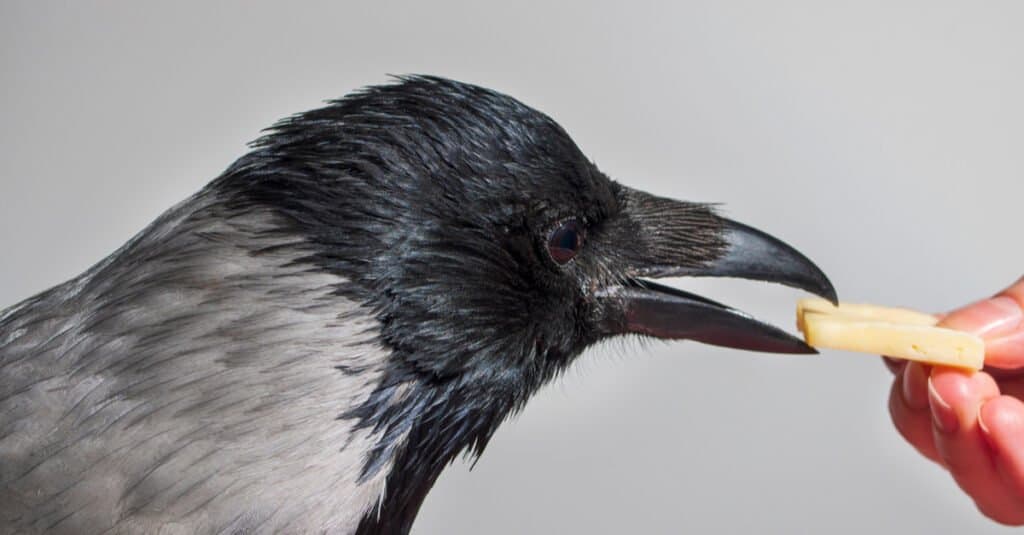
Crows are well adapted to find food in urban and rural environments.
©Andre1_ns/Shutterstock.com
Crows have an omnivorous diet. These birds can find food in almost any environment.
What do crows eat?
They eat insects, seeds, fruit, fish, and carrion. They also eat leftover human food from trash cans. For a complete analysis of the crow’s diet, make sure to read ‘What Do Crows Eat: 15-Plus Foods They Love.’
Predators, Threats, and Conservation Status
What eats crows?
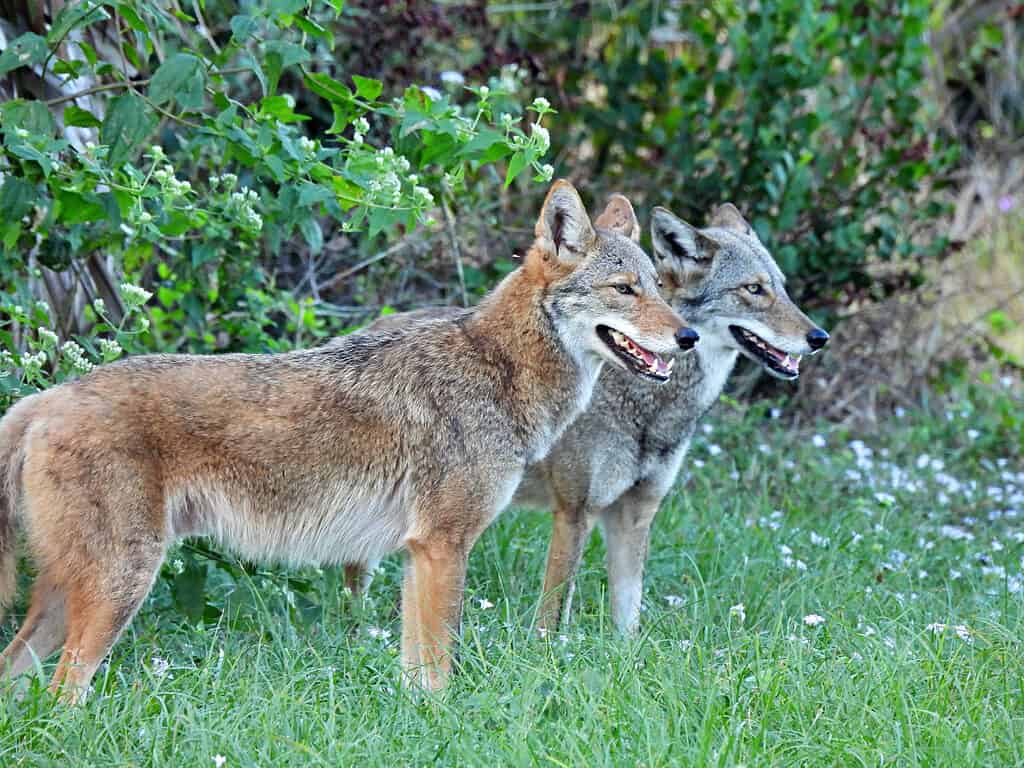
Coyotes are one of the crows’ common predators in the wild.
©iStock.com/passion4nature
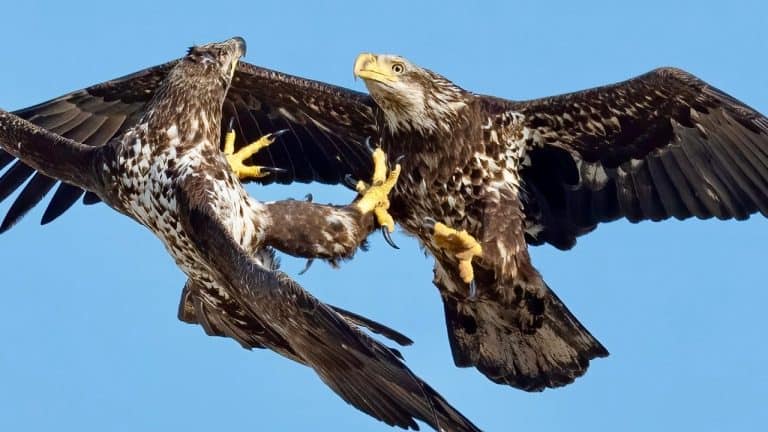
They have a few predators, including hawks, owls, eagles, and coyotes. Many of its feathered predators are larger and faster than the crow. Also, these birds of prey steal eggs.
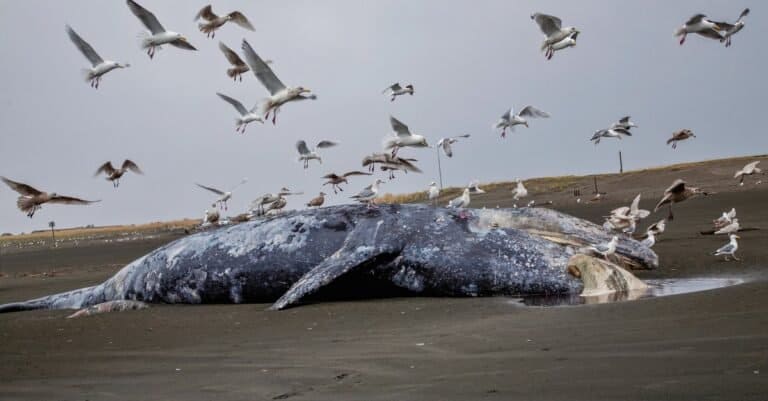
Crows are known to eat animals that have been killed on the road. This puts them at risk of being attacked by coyotes. Humans are also considered predators of these birds. They’re sometimes poisoned by farmers who think the birds are stealing seeds.
Another threat to these birds is the West Nile virus. The disease is spread by infected mosquitoes, and some birds die within a week of getting it.
Despite these threats, this bird’s population is increasing. It’s displayed as Least Concern by the IUCN Red List of Threatened Species.
Reproduction, Babies, and Lifespan
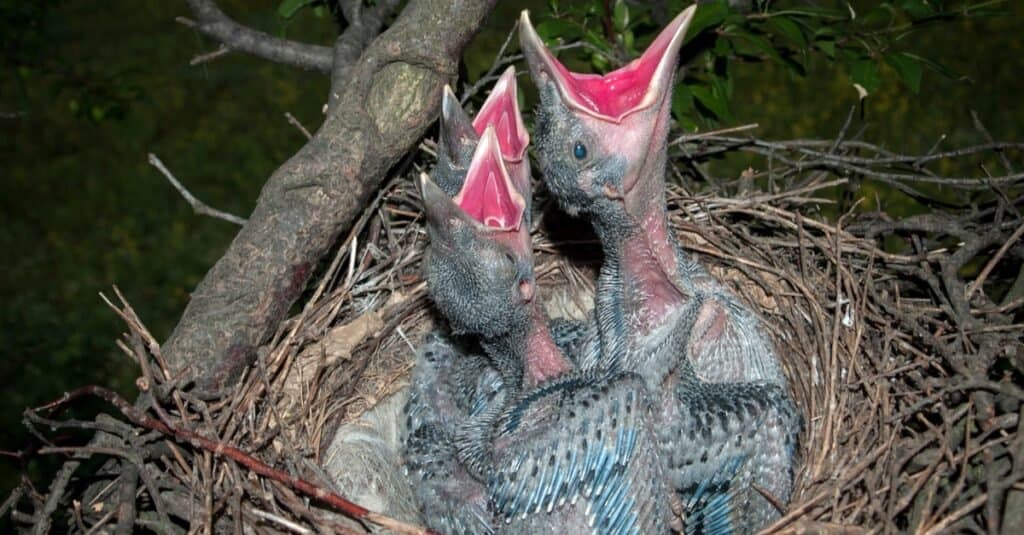
Baby crows are also known as chicks.
©Moisieiev Igor/Shutterstock.com
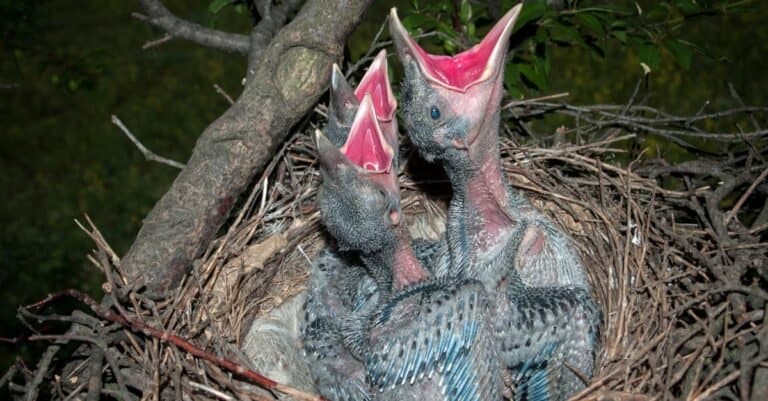
These birds lay their eggs in the spring. A female lays three to seven eggs. During the 18-day incubation period, the male brings food to the female. The baby birds can start to fly at four to five weeks old. At two months old, the baby birds, or chicks, leave the nest.
The lifespan of this bird is six to ten years, but some have lived much longer.
Population

Crow populations are stable throughout their native habitats.
©Tiffany Sims/Shutterstock.com
Their population is listed at 27 million. The IUCN reports this bird’s population is increasing and has categorized them as being of the Least Concern.
Crow Pictures
View all of our Crow pictures in the gallery.

Rudmer Zwerver/Shutterstock.com
Sources
- Only Zoology / Accessed December 16, 2021
- Cornell / Accessed December 16, 2021
- Nature Mapping Program / Accessed December 16, 2021
- Wikipedia / Accessed December 16, 2021
- Corvid Research / Accessed December 16, 2021
- Bird Fact / Accessed December 16, 2021
- The Humane Society of the United States / Accessed December 16, 2021
- Petkeen / Accessed December 16, 2021