
Quick Take
- The parasite doesn't just disguise the snail. It hijacks a hardwired survival instinct and flips it completely against the snail. See how instincts get hijacked →
- Up to 250 larvae squeeze into a single eyestalk, and the external appearance of that is genuinely hard to believe. See the eyestalk transformation →
- A bird eating the snail's eyestalk isn't necessarily the end for the snail, and that twist is part of what makes the parasite even more effective. See what happens after the bite →
- The whole nightmare begins with something the snail does every day without a second thought. Trace the infection's starting point →
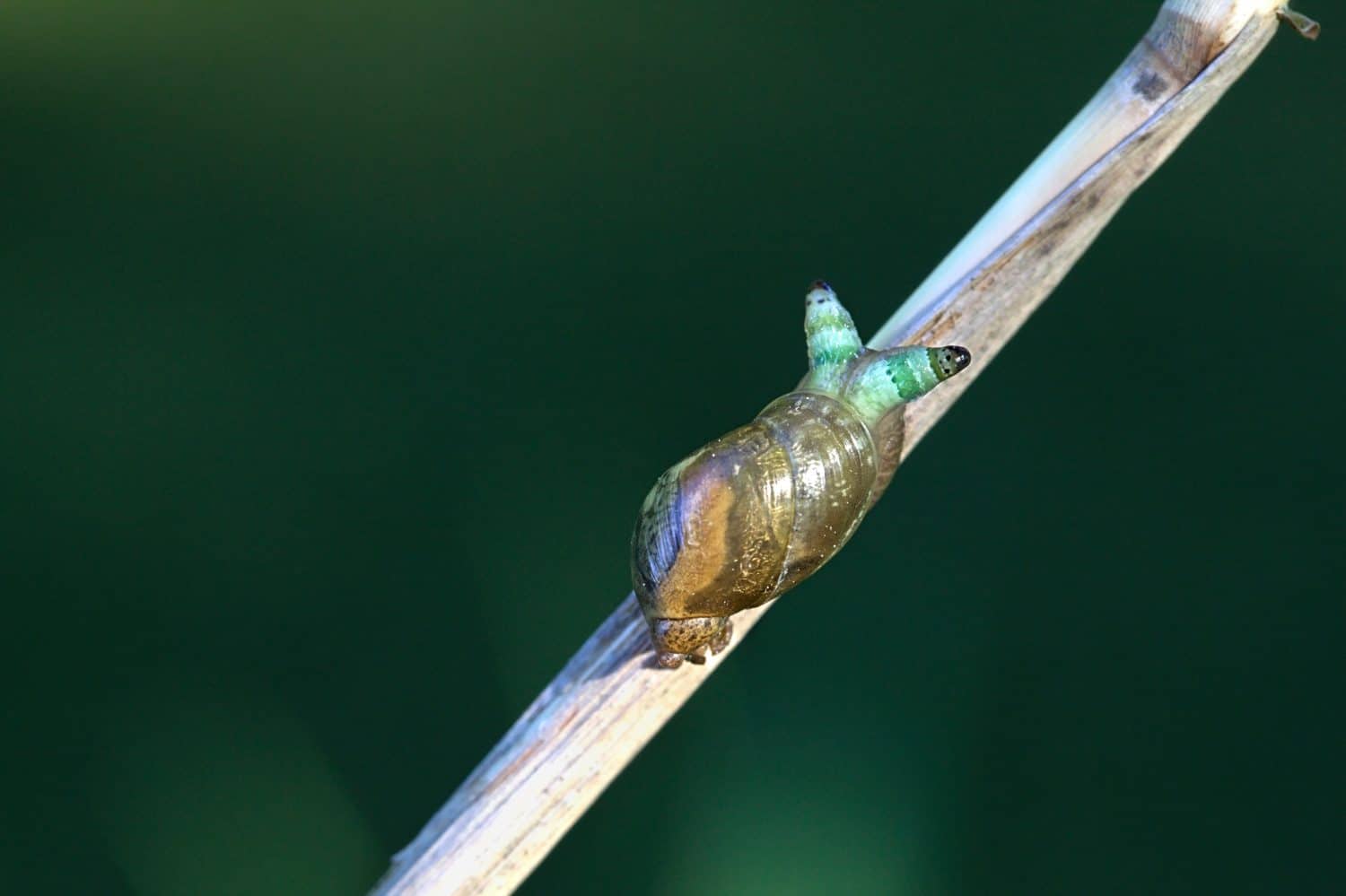
The normally shy amber snail faces a grisly outcome when infected by the green-banded broodsac parasite. The parasitic flatworm not only changes the snail’s appearance, but also alters its behavior. With brightly banded, pulsating eyestalks that resemble juicy caterpillars, the snail emerges from its dark hiding places and moves into open, sunlit areas where hungry birds can peck off the eyestalks.
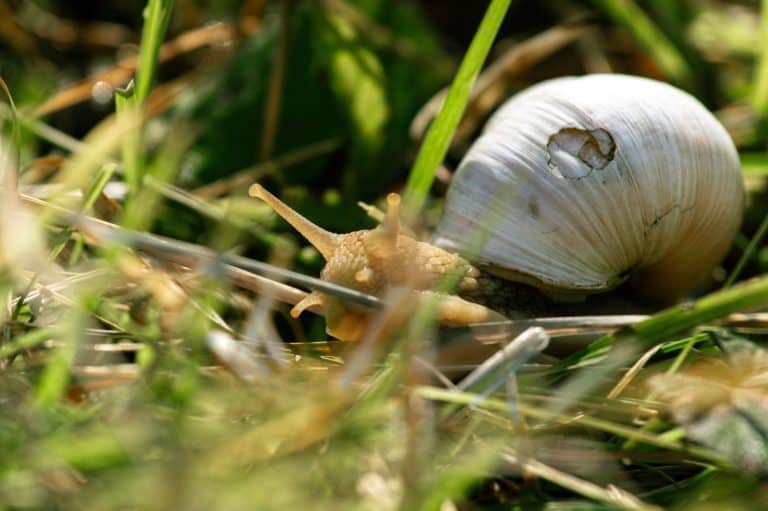
Snails infected with the green-banded broodsac parasite alter their dark-seeking behavior and climb up into well-lit open spaces.
©D. Kucharski K. Kucharska/Shutterstock.com
The Parasite Turns Eyestalks Into Fake Caterpillars
The green-banded broodsac (Leucochloridium paradoxum) is a parasitic flatworm known as a trematode. It has a two-host lifecycle involving both birds and land snails (in the family Succineidae) known as amber snails.
The cycle begins when a snail eats bird droppings that contain the parasite’s eggs. The eggs hatch inside the snail and transform into sporocysts. The sporocysts (or broodsacs) form a branch-like network inside the snail’s body, and some of them invade the snail’s eyestalks.
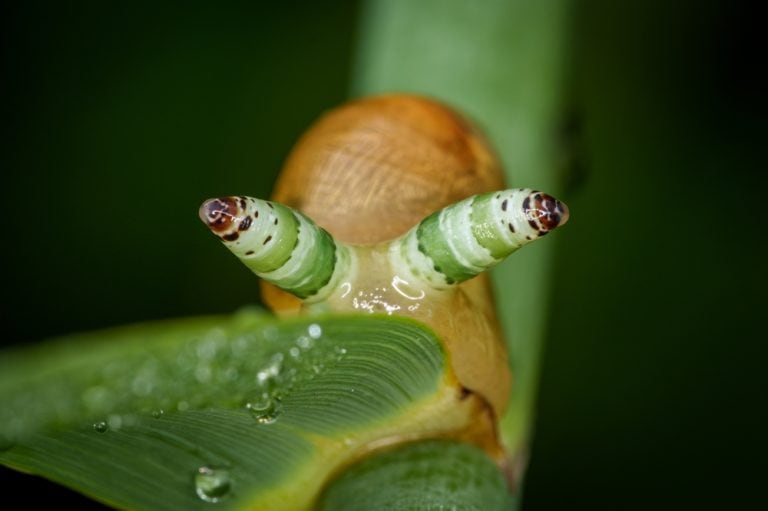
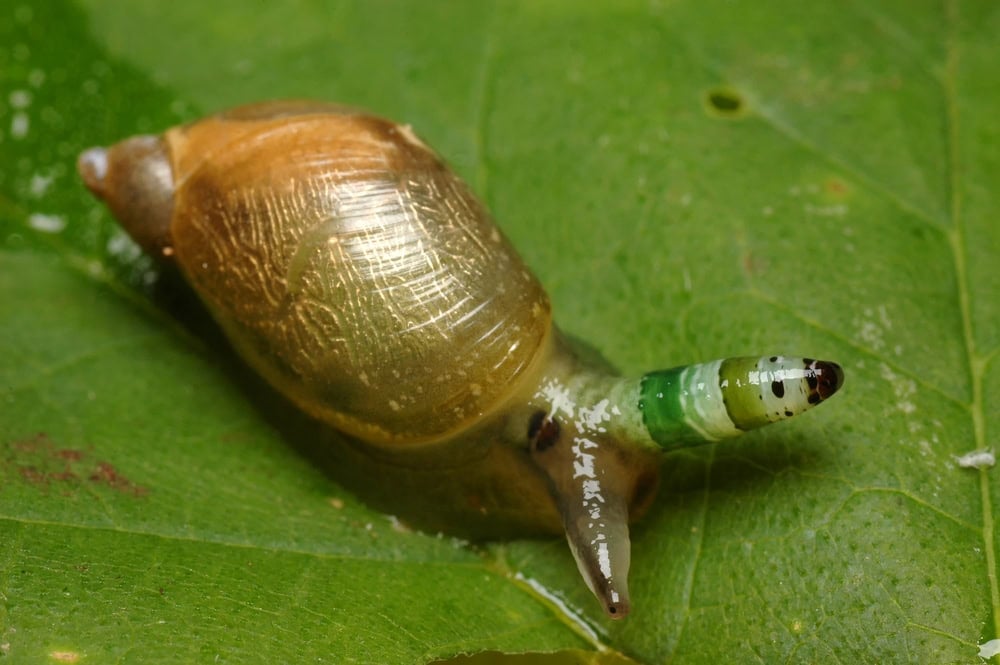
A single broodsac can contain up to 250 larvae. The broodsac fits tightly and swells as it fills the eyestalk. The snail’s skin becomes stretched so thin that the brightly colored parasites can be seen through it. With pulsating eyestalks of vivid banded colors, the amber snail closely resembles a creature with one or two fat, juicy caterpillars protruding from its head.
How the Parasite Manipulates the Snail
Unfortunately for the amber snail, the pulsating broodsac’s purpose is to attract birds. However, simply resembling a caterpillar is not enough to attract a bird; the snail must also be in a location where birds are likely to see it.
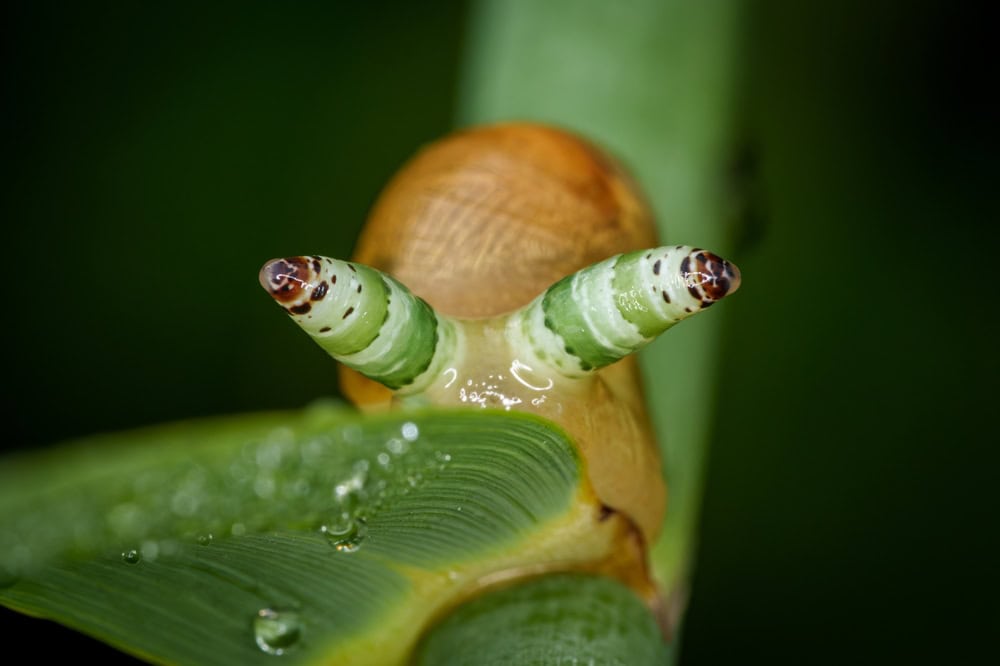
The green-banded broodsac parasite changes the amber snail’s appearance, making its eyestalks look like juicy caterpillars.
©JoostP/Shutterstock.com
Snails naturally avoid daylight, a behavior known as negative phototaxis. This survival mechanism helps them avoid predators and prevents dehydration from exposure to the sun. Researchers have observed that snails infected with the parasite exhibit reduced negative phototaxis.
Scientists believe the flatworm alters the snail’s typical light-avoidance behavior. Infected snails climb into exposed, well-lit locations where birds can easily find them, instead of hiding in their usual dark habitats.
Birds Complete the Parasite’s Life Cycle
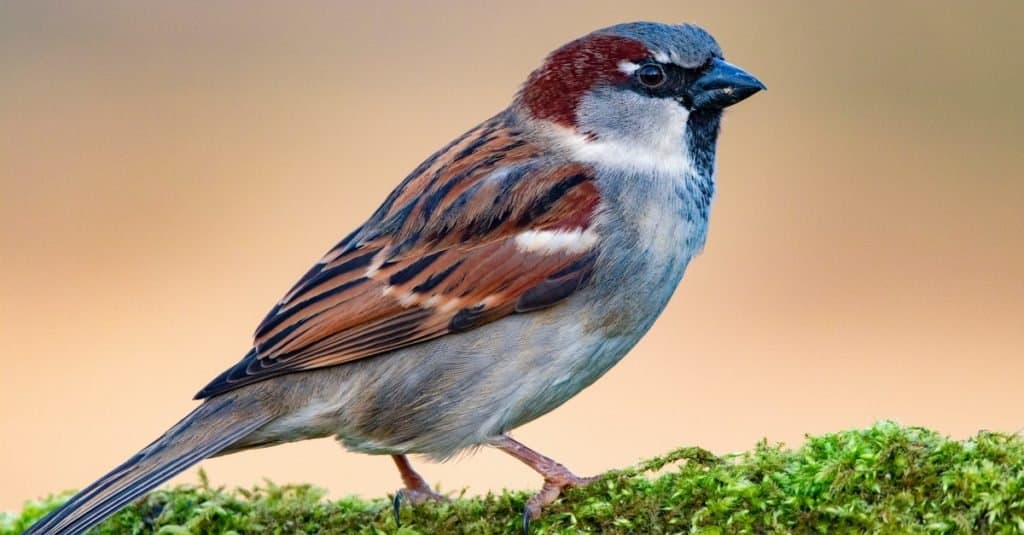
House sparrows are common hosts for the green-banded broodsac parasite.
©Craig Howman/Shutterstock.com
The next step in the parasite’s life cycle occurs when a bird eats the snail’s eyestalk, consuming the broodsac full of larvae. Some snails survive if the bird only removes the eyestalk, leaving the rest of the snail alive. This allows the infected snail to potentially infect additional birds.
Once inside the bird, the larvae move into its digestive tract, where they develop into sexually mature adult flukes. These adults reproduce, and their eggs are released in the bird’s droppings. The cycle continues when another amber snail consumes the contaminated droppings.