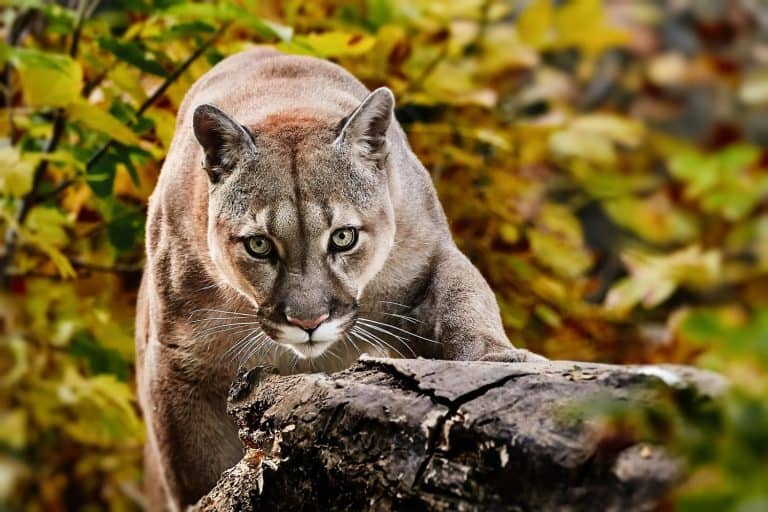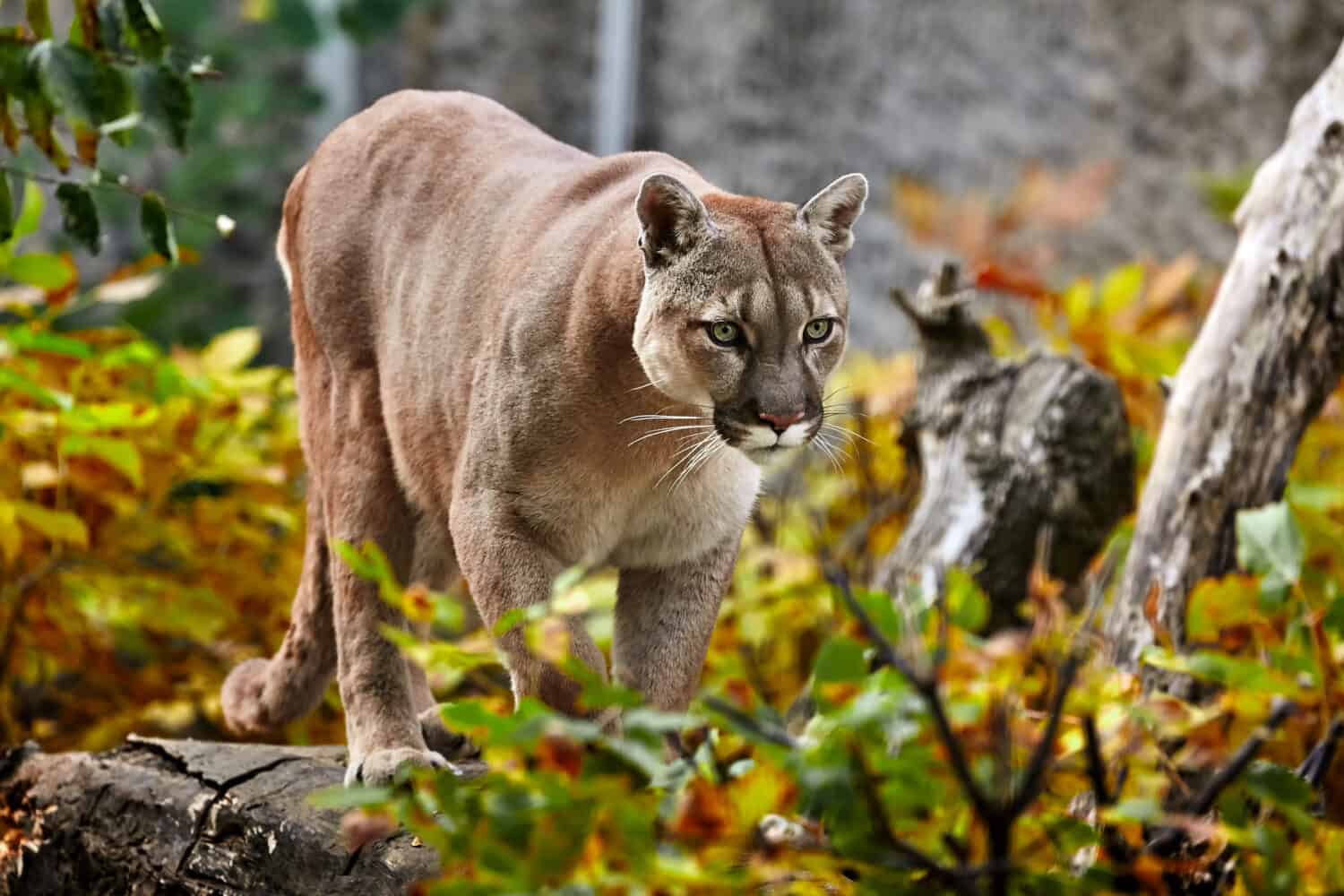

Mountain lions are one of North America’s most beautiful feline predators. These big cats are known by many names, including cougar, puma, and panther. Mountain lions survive on stealth, roaming an enormous variety of habitats, from dense forests to mountains and even deserts; yet these large kitties are rarely seen in the wild. Despite their elusive nature, mountain lions play an important role in maintaining healthy ecosystems. The more fascinating facts we learn about them, the more remarkable they seem.
Mountain lions possess impressive athletic abilities, unique communication methods, and adaptable survival strategies. They are not only impressive hunters but also complex, intelligent animals with behaviors that set them apart from any other species in North America. Here’s a look at some of the most extraordinary mountain lion facts.
1. Mountain lions have more names than any other animal in the world
©Ultrashock/Shutterstock.com
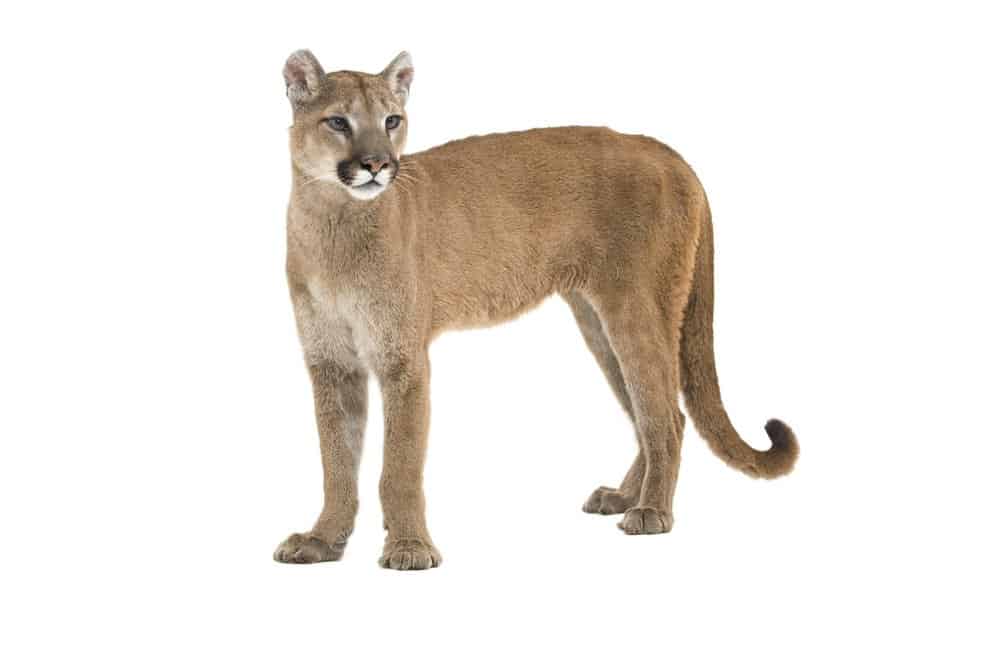
Did you know that mountain lions, pumas, and cougars are all the same animal? As of now, mountain lions hold the record for having the most names with 40 different nicknames. Some of the most common mountain lion alternative names are:
- Puma
- Cougar
- Panther
- Catamount
- Painter
- Mountain screamer
- Mexican lion
- Red lion
- Ghost cat
- American lion
While you may see it known mostly as a mountain lion in day-to-day life, often scientists prefer to call these stealthy predators ‘pumas.’ This is because of their scientific name, which is Puma concolor.
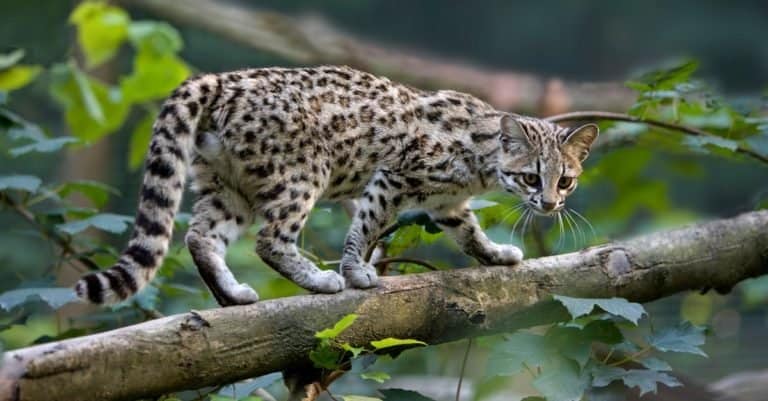
Mountain lions have lots of names, but it’s important not to get them confused with other American cats, such as bobcats or lynxes. While still cool cats, these are different animals from the mountain lion.
2. Mountain lions don’t roar

©Chris Alcock/Shutterstock.com
They may not roar, but that doesn’t mean they don’t communicate in plenty of other ways! Mountain lions have a different larynx than most of the big cats you may be used to, such as tigers and lions. As a result, they communicate in different ways, such as chirping, growling, shrieking, and even purring.
3. Mountain lions live in nearly every ecosystem in America
©Ipatov/Shutterstock.com
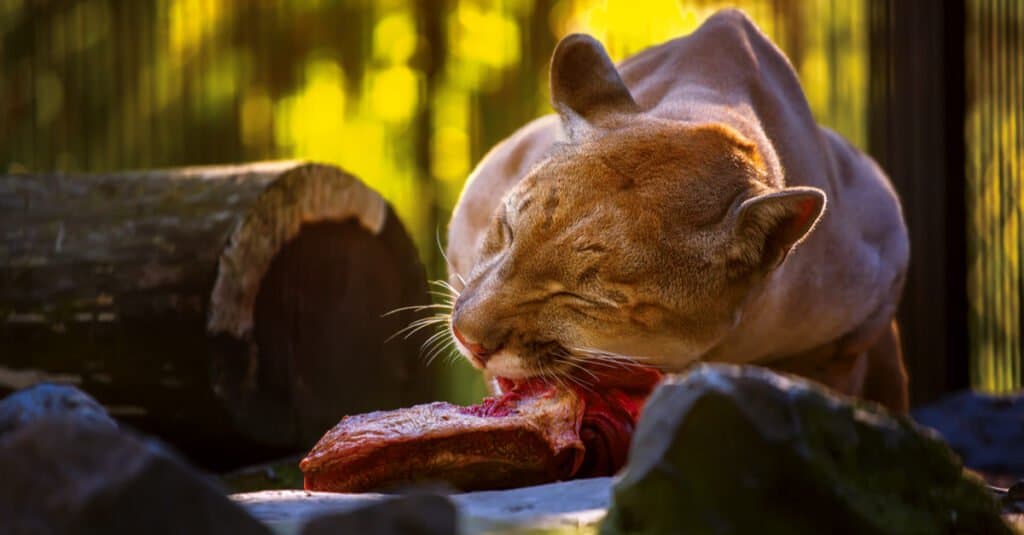
With a diverse diet and the ability to live everywhere from rainforests to deserts to snowy mountains, you’ll be able to find mountain lions in almost every ecosystem in North and South America.
4. The largest mountain lion ever recorded weighed 276 pounds
©Jim Cumming/Shutterstock.com
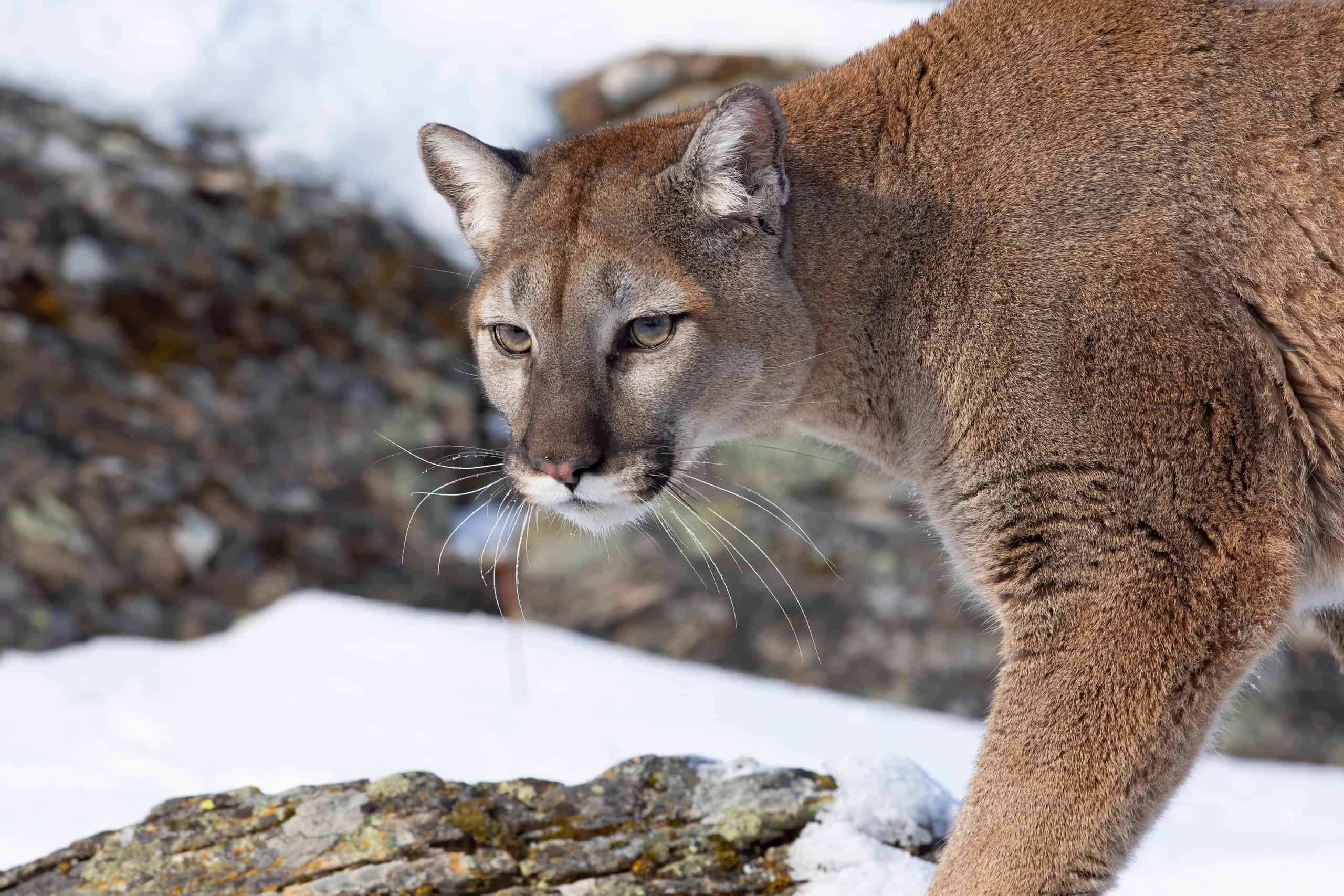
While mountain lions rarely weigh more than 200 pounds, one record-holding ghost cat weighed in at 276 pounds! For comparison, that’s more than a giant panda, which averages about 245 pounds. It’s also about the average size of a female lion, which weighs about 280 pounds.
5. Mountain lion cubs have blue eyes and spots
©J.NATAYO/Shutterstock.com
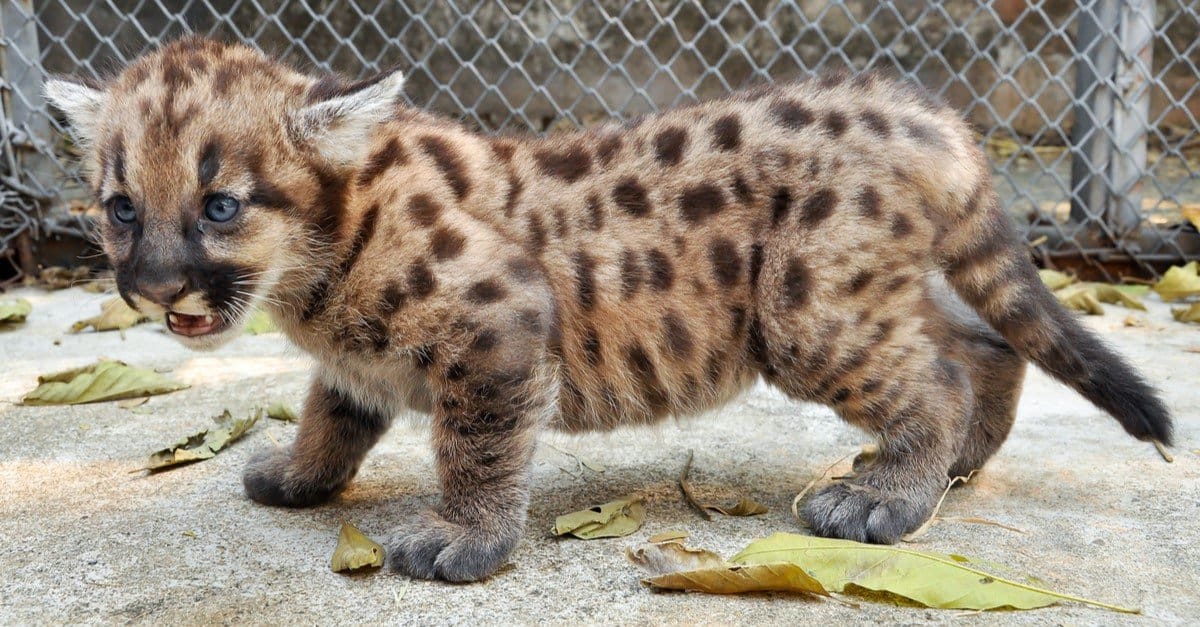
If you ever found a mountain lion cub out in the wild, you probably wouldn’t recognize it!
When mountain lions are first born, and even while they’re growing up, they look vastly different from their adult counterparts. The most noticeable differences? Their blue eyes and dark spots on their fur. As they mature, their eyes will shift to yellow and their spots will fade into their iconic tawny coat, becoming almost unrecognizable over the course of just a few weeks. If you enjoyed this fun fact, baby lions exhibit the exact same traits!
6. One subspecies of the mountain lion is highly endangered
©jo Crebbin/Shutterstock.com
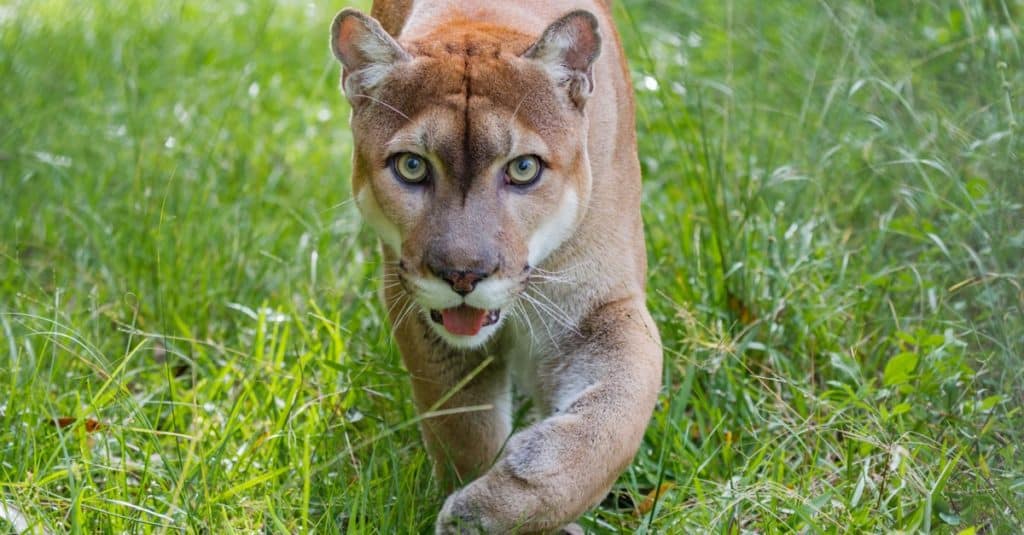
While mountain lions are known for their ability to live in almost every ecosystem found in North and South America, one subspecies has been endangered for several decades.
The Florida panther, a subspecies of the mountain lion, has been listed as endangered since 1967. One of the main causes identified has been human development, which is destroying the mountain lion’s habitat and making it more difficult for them to access food.
Roads also pose a large threat to mountain lions, especially since the animals tend to roam at night when they may not be seen by drivers until it’s too late.
However, decades of conservation efforts have helped the population increase from a few dozen to 120-230 adult mountain lions currently alive as estimated by Florida Wildlife Control in 2021.
7. Mountain lions can run up to 50 mph
©Holly S Cannon/Shutterstock.com
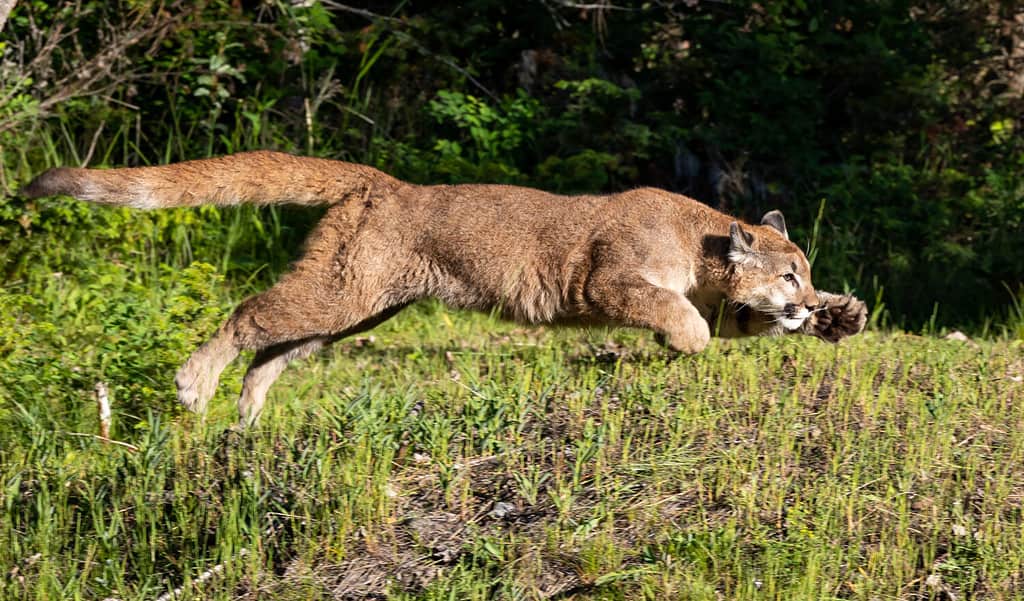
One of the coolest facts about mountain lions? Proportionally, they have the largest legs out of all of the members of the feline family. This helps mountain lions adapt to a variety of situations and terrains — but most importantly, it helps them reach impressive speeds of up to 50 miles per hour!
Even though they can only maintain this top speed for a short period of time, they are able to maintain speeds up to 10 mph for long-distance sprints.
This is one reason why if you ever encounter a mountain lion, you should never run away — after all, at 50mph, they won’t let you get too far.
Instead, stay calm, stay upright, and back away slowly. Making yourself as large and loud as possible can also help since mountain lions are opportunistic hunters and most likely won’t want to put up a fight.
8. Mountain lion attacks are rare
©iStock.com/gatito33
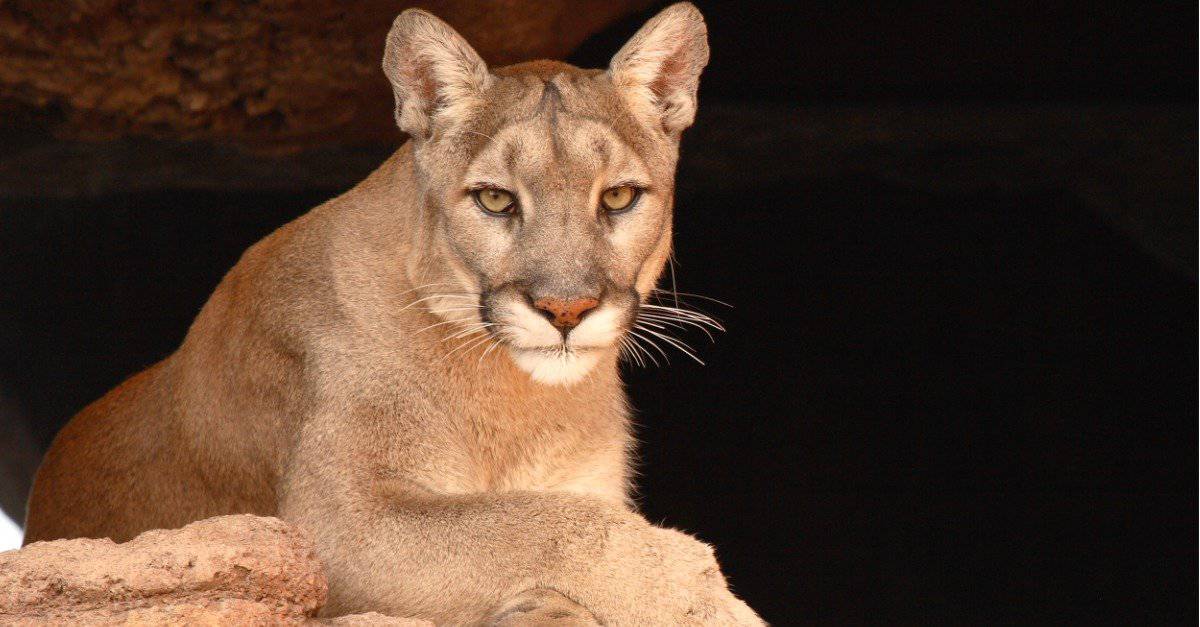
Mountain lion attacks are so rare that many statistic experts say that you’re more likely to be struck by lightning than suffer a mountain lion attack. This is mainly due to the fact that human and mountain lion encounters are so rare, and when they do occur, mountain lions are easily startled.
9. Mountain lions are great at jumping

©Christina Moraes/Shutterstock.com
Mountain lions’ large legs allow them to do more than just run fast — they can also jump up to 18 feet off the ground! This is important for hunting, especially since mountain lions rely on ambushing their prey for success.
Lucky scientists got to glimpse a puma and make a 10-foot leap into a tree. But what was truly impressive was the fact that the feline actually had a deer in its jaws at the time.
Their athletic skills don’t stop there either. Mountain lions are capable of leaping 45 feet horizontally.
Their forelegs which are connected to their shoulder blades making it supremely easy for them to swerve, play a role in their impressive athleticism. So do their vertebrae, which rely on muscles rather than ligaments.
10. Mountain lion tracks don’t have claw marks

©Pi-Lens/Shutterstock.com
One of the easiest ways to identify a mountain lion track compared to other animals? Look for claws, or rather, the lack thereof.
Like most other species in the cat family, mountain lions have the neat ability to retract their claws. This means that, unless you’re looking on particularly rough terrain, you won’t usually see the sign of claws in their tracks.
Another way to tell if the tracks you’re dealing with are mountain lions or not is to look for the notable “M” shape of their main paw pad. Remember: “M” is for mountain lion!
11. Mountain lions are an important part of indigenous culture
©Geoffrey Kuchera/Shutterstock.com
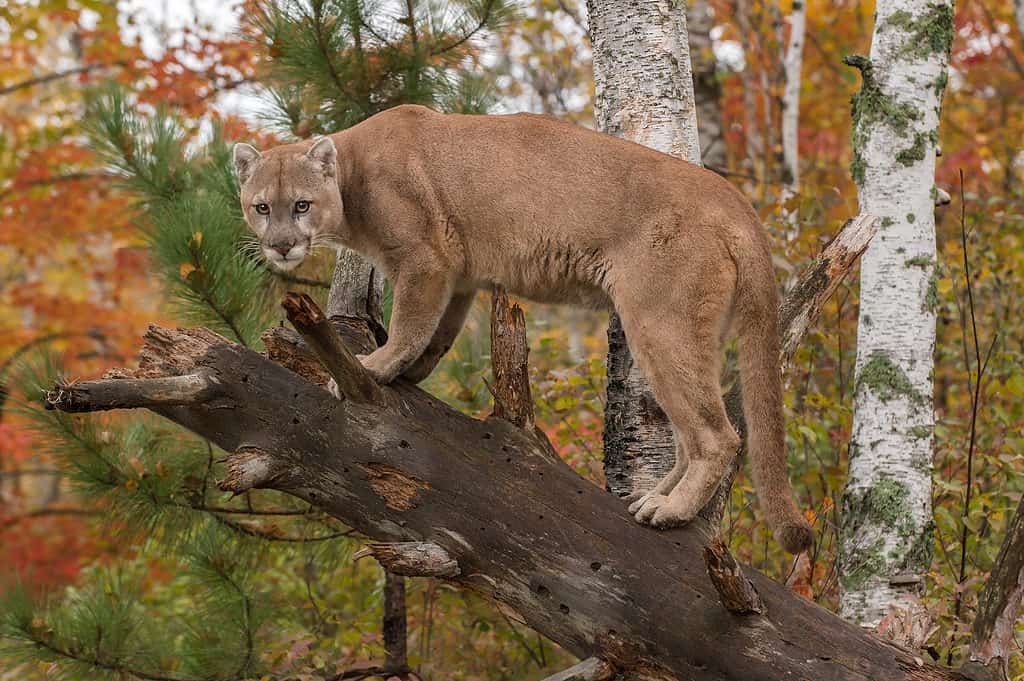
Known for their power and grace, mountain lions are common symbols in indigenous American culture, from mythology to art. While some indigenous peoples view mountain lions as symbols of bad omens, many see these apex predators as sacred and revered animals, such as the Inca people and the Cherokee people.
Mountain Lion Behavior
©Kwadrat/Shutterstock.com
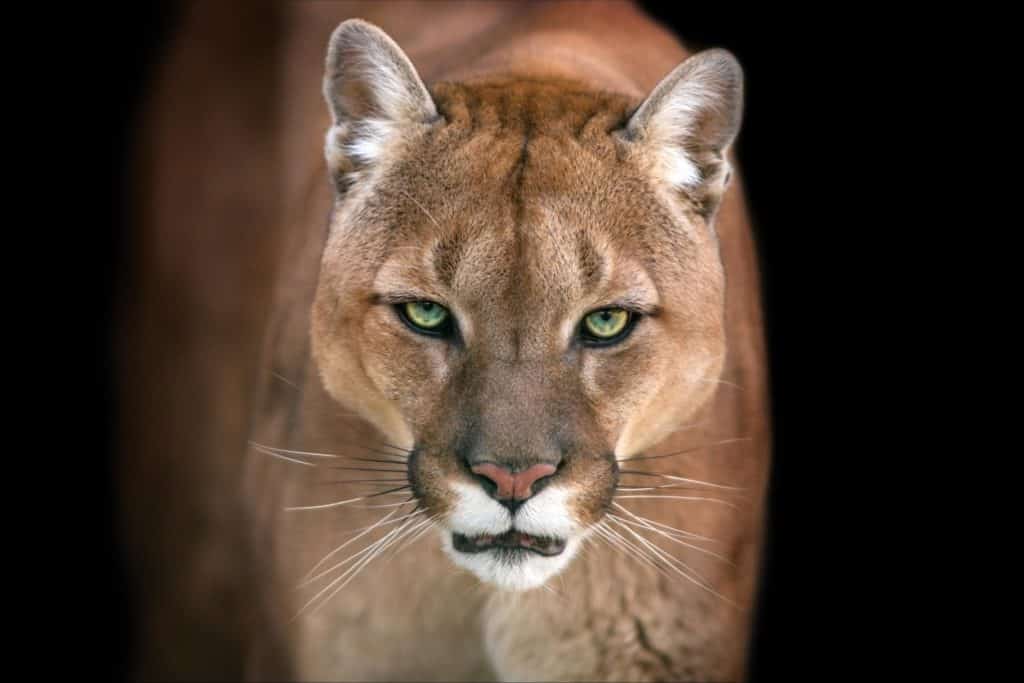
Mountain lions, also known as cougars or pumas, are large carnivorous cats that are native to the Americas.
Mountain lions are:
- Solitary Predators
- Territorial Creatures
- Opportunistic Feeders
- Shy and Secretive.
Mountain lions are solitary animals that typically hunt and live alone. They prefer to hunt at night and are known for their stealthy and elusive behavior. However, in some cases, mountain lions have been observed hunting in pairs, particularly during mating season.
Mountain lions are territorial animals that mark their boundaries with urine and scratch marks. They have large home ranges that can span hundreds of miles, depending on the availability of prey and other resources. These cats are known to aggressively defend their territory against other mountain lions and potential threats.
Mountain Lion Behavior (cont.)
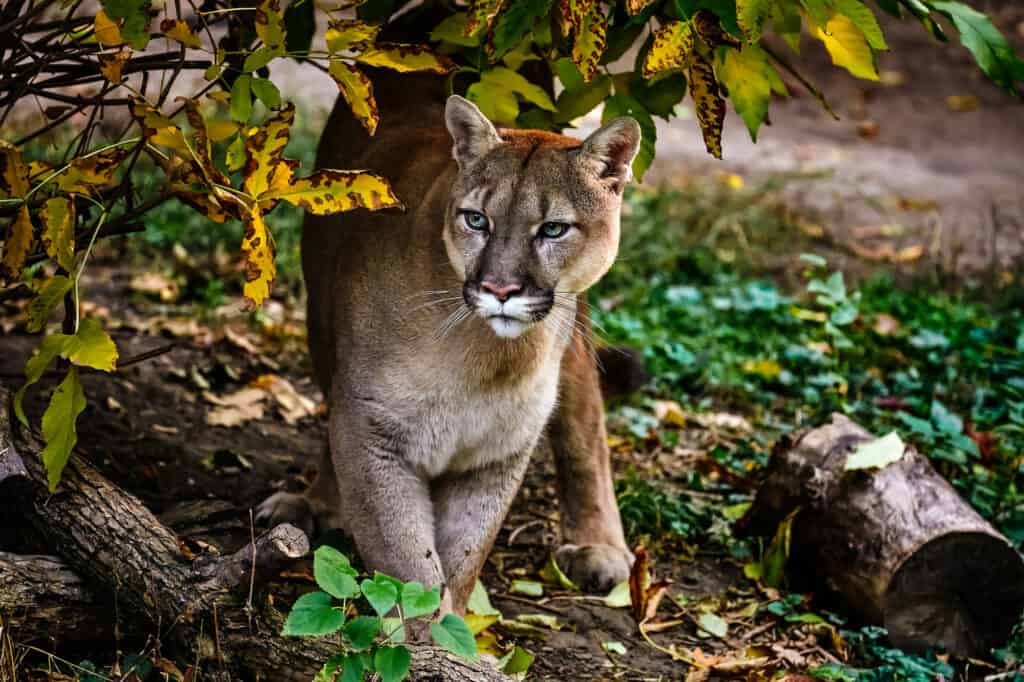
©Evgeniyqw/Shutterstock.com
Mountain lions are opportunistic feeders that prey on a variety of animals, including deer, elk, and small mammals such as rabbits and rodents. They are also known to hunt domestic livestock, particularly in areas where their natural prey is scarce. Mountain lions are capable of taking down prey that is much larger than themselves, and will often drag their kill to a secluded area to feed.
Mountain lions are shy and secretive animals that are rarely seen by humans. They are known for their elusive behavior and are typically more active at night when they are less likely to be seen. In areas where humans and mountain lions overlap, people need to be aware of their surroundings and take precautions to avoid potential encounters.