
For working dogs like the German shepherd or toy breeds like the Pomeranian, it is obvious what practical or aesthetic purpose their unique features serve. Then there are dogs so unusual that it can be hard to imagine the reason for their appearance. Some of the strangest-looking dogs have a practical reason for their unique characteristics. But many of the world’s strangest dogs have developed their unique looks by chance. Continue reading to learn about eight of these strange dog breeds.
8. Bull Terrier
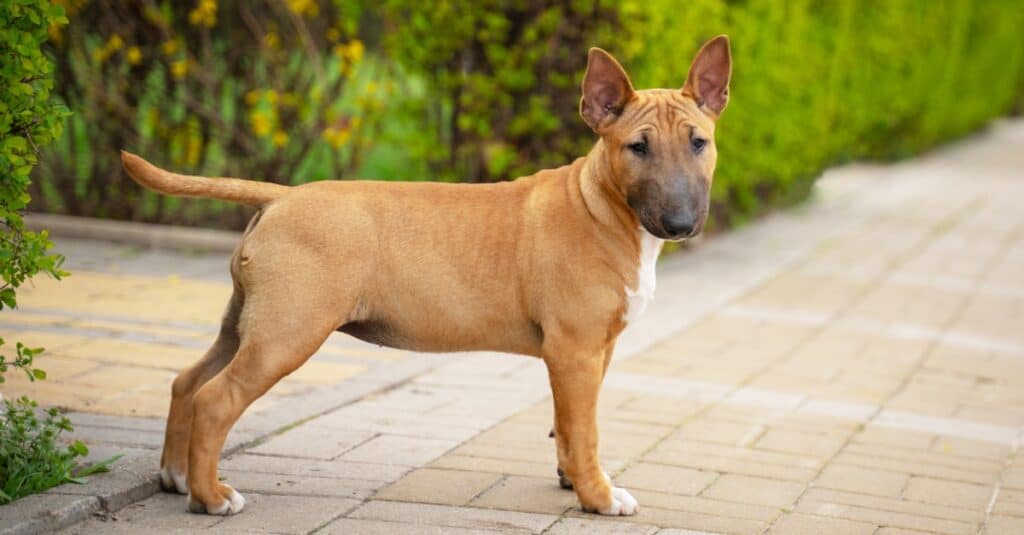
The egg-like shape of the bull terrier’s head is its most distinctive feature.
©iStock.com/Ирина Мещерякова
The bull terrier is a widely recognized breed, but that does not stop it from being one of the strangest-looking dogs out there. Most of their uniqueness is in the face, which has a distinctive egg-like shape and a pair of high-set eyes. This is because of a century-long selective breeding program.
Originally bred as a ratter hunting dog, the bull terrier eventually became a popular choice for dogfighting. However, this would all change when the breed became favored by breeder James Hinks. Despite their past as fighting dogs, they have chipper and vibrant personalities, much like young children, and can be affectionate companions.
Bull terriers are known to chase their tails or spin when anxious, leading many experts to believe there is a genetic predisposition. Not all bull terriers spin, but there is evidence to suggest that making their environments as stress-free as possible will help genetically at-risk dogs avoid this compulsion.
7. Telomian
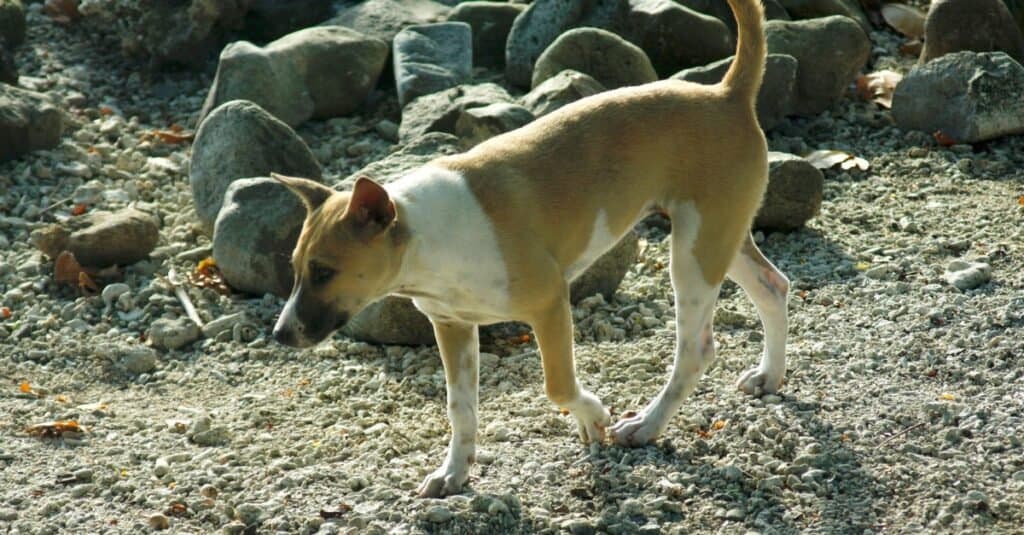
The Telomian dog is a rare breed originally bred by the Orang Asli people of Malaysia.
©antoni halim/Shutterstock.com
The Telomian is a rare breed developed by one of Malaysia’s smallest and most remote indigenous groups. Although they are classified as a spitz, like Pomeranians and shiba inus, they are also believed to be closely related to dingoes. What is most fascinating about these dogs is how they have adapted not only to the jungles they inhabit but also to the demands of their human companions.
Telomians were bred to protect homes from snakes and vermin, and they also adapted to important tasks like fishing, hunting, and herding. Their most interesting adaptation is their paws, which allow them to climb ladders. This adaptation is necessary because their human companions lived in stilt houses to protect against predators.
6. Chow Chow
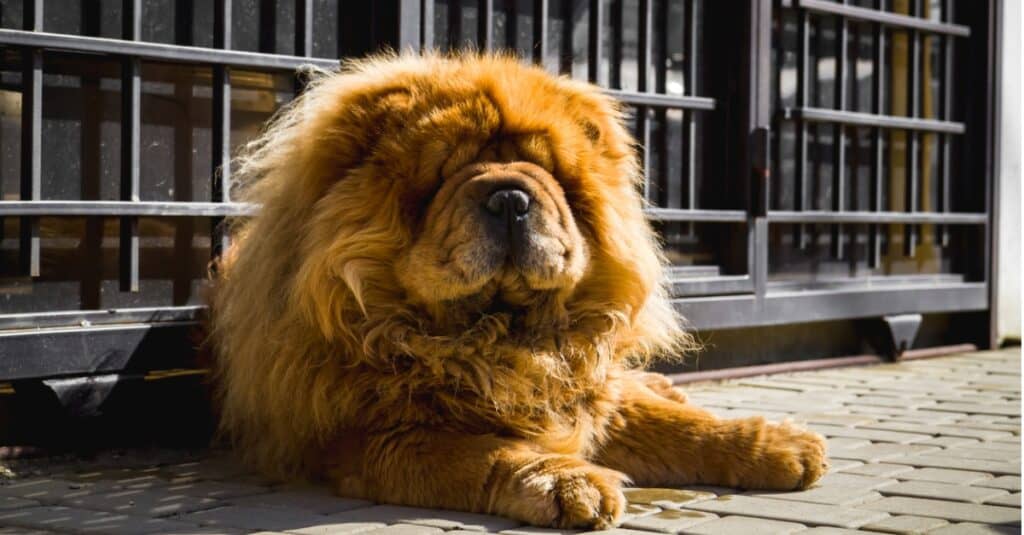
The chow chow resembles a lion because of its fluffy mane.
©iStock.com/Andrey Danilov
The chow chow has earned the sobriquet of lion dog because of its fluffy mane, and its personality is often compared to that of cats. They have an independent streak and a general unwillingness to engage in undignified or silly acts. This is fitting for a working breed that is among the oldest on earth. Archaeological evidence, such as bas-reliefs from the Han Dynasty (around 150 BCE), depicts dogs resembling the chow chow being used as hunting dogs in ancient China. Some believe that their history may even trace back to the Arctic Circle. Their fluffy coats make them great for cuddling and provide excellent insulation during winter.
5. Chinese Crested Dog
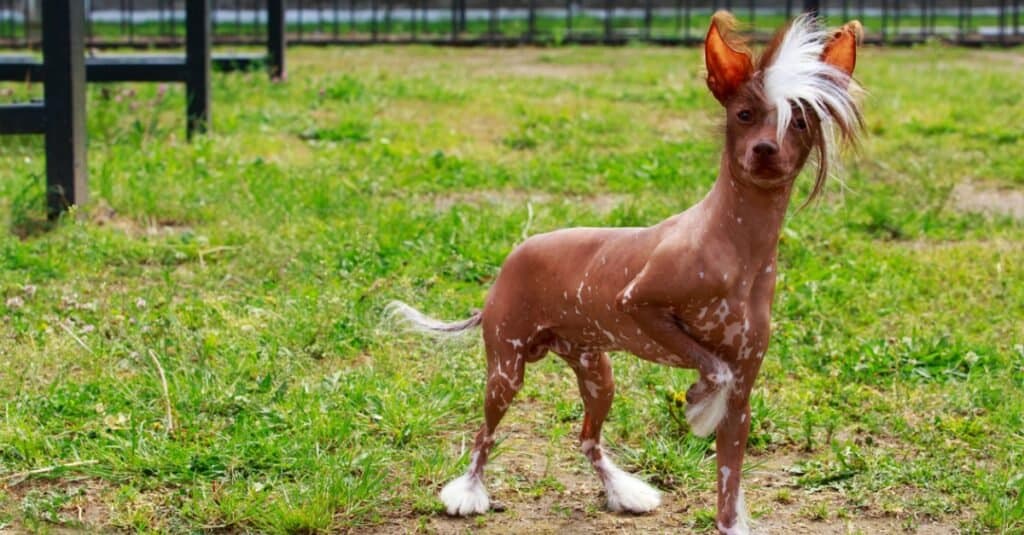
The Chinese crested dog has wild tufts of fur around its legs, tail, and face.
©iStock.com/DevidDO
The Chinese crested dog is not entirely hairless, making it look even stranger. Wild tufts of fur sprout out around its legs, tail, and face, causing a resemblance to a pony. The origins of the Chinese crested dog are uncertain, but it is believed they descended from African hairless dogs and were primarily bred for companionship and vermin control. These dogs are incredibly loyal companions who build strong bonds but are slow to warm up to strangers. Generally inactive and well-tempered, they are great companions for people who prefer an inactive lifestyle.
4. New Guinea Singing Dog
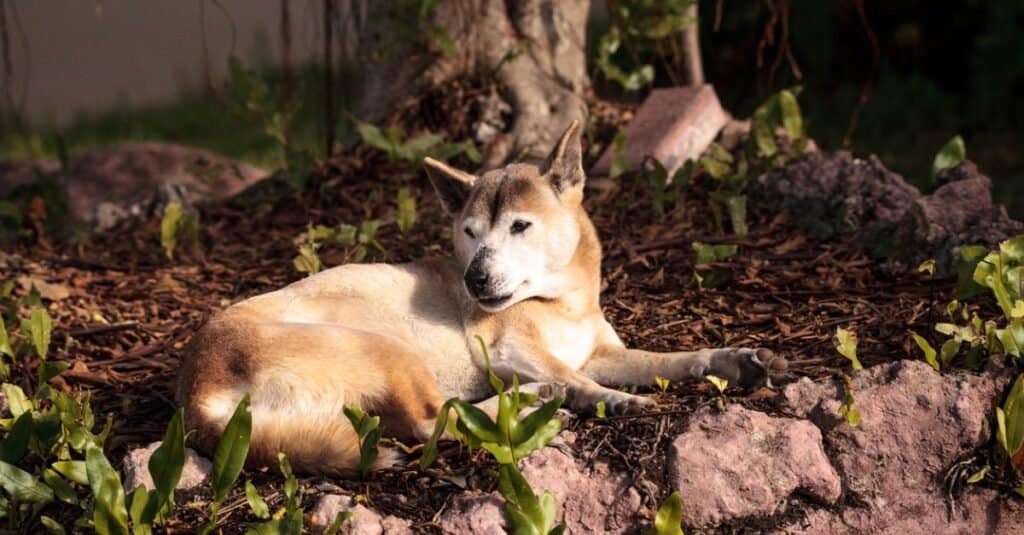
The cry of a New Guinea Singing Dog sounds like a mix between whale song and yodeling.
©iStock.com/LagunaticPhoto
The New Guinea singing dog is not visually strange, having a shape and features similar to many spitz breeds. However, when it opens its mouth, its uniqueness is apparent. The dog’s cries include a range of vocalizations, described as a mix between whale songs and yodeling. Their vocalizations allow them to communicate while hunting together in groups. For decades, it was believed that all wild members of this breed were extinct. However, a small population was rediscovered in the highlands of New Guinea in the late 2010s, but the species remains critically endangered, with only a handful of individuals confirmed in the wild as of the early 2020s. This remote highland habitat has transformed them into expert climbers. These are wild animals and should not be kept as pets.
3. Bergamasco Shepherd
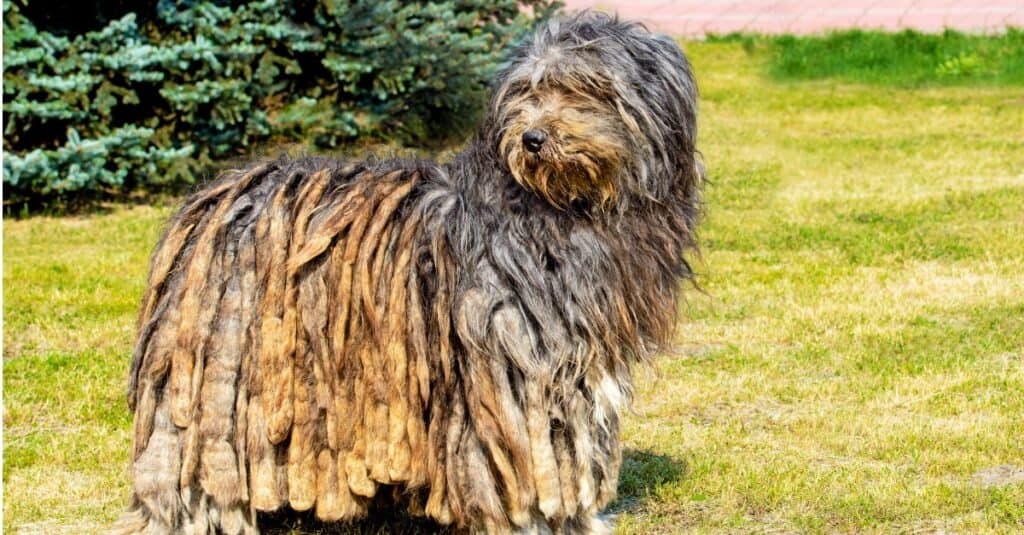
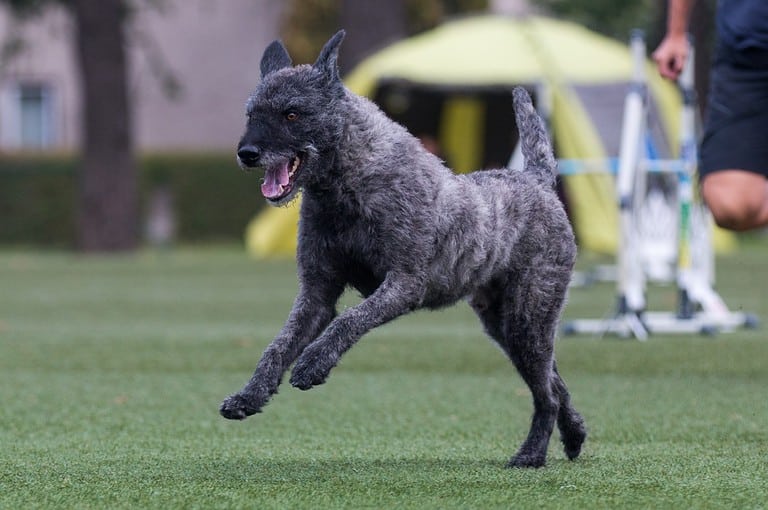
The Bergamasco shepherd is easily mistaken for a weird-looking sheep.
©iStock.com/volofin
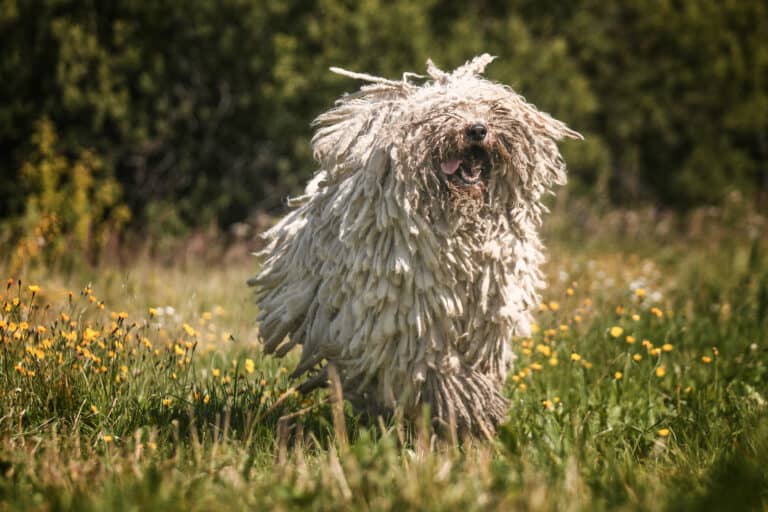
The Bergamasco shepherd’s uniquely matted fur makes it especially well-suited to herding, even in extreme weather conditions. These locks are formed by three different hair textures twining together, helping regulate internal body temperature in the summer and providing a thick layer of insulation in the winter. In the wild, this coat protected them from livestock predators such as wolves.
Despite the unique hair, the Bergamasco shepherd does not require regular grooming. The breed’s large size and working heritage mean they require plenty of exercise and space, but their easygoing personalities allow them to get along with both children and adults.
2. Brussels Griffon
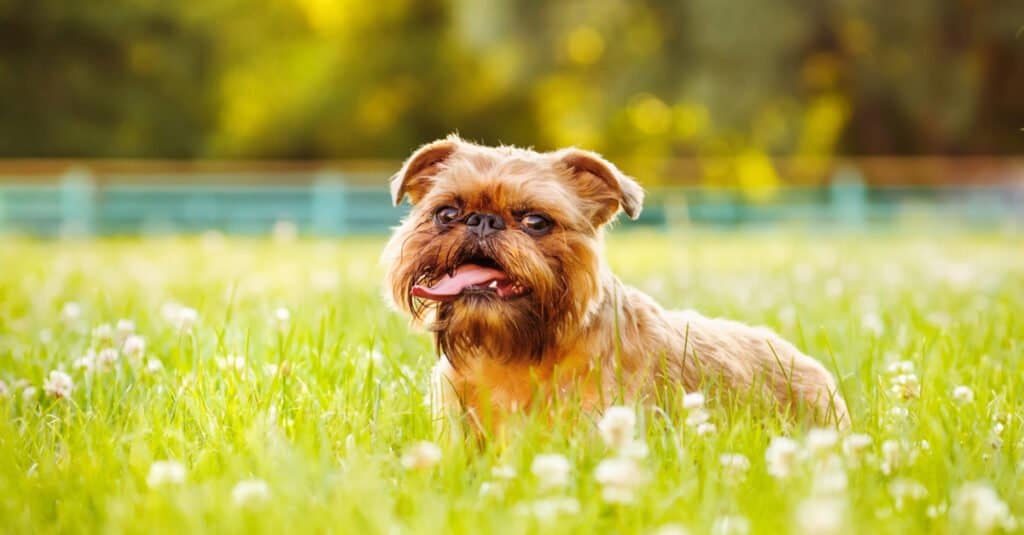
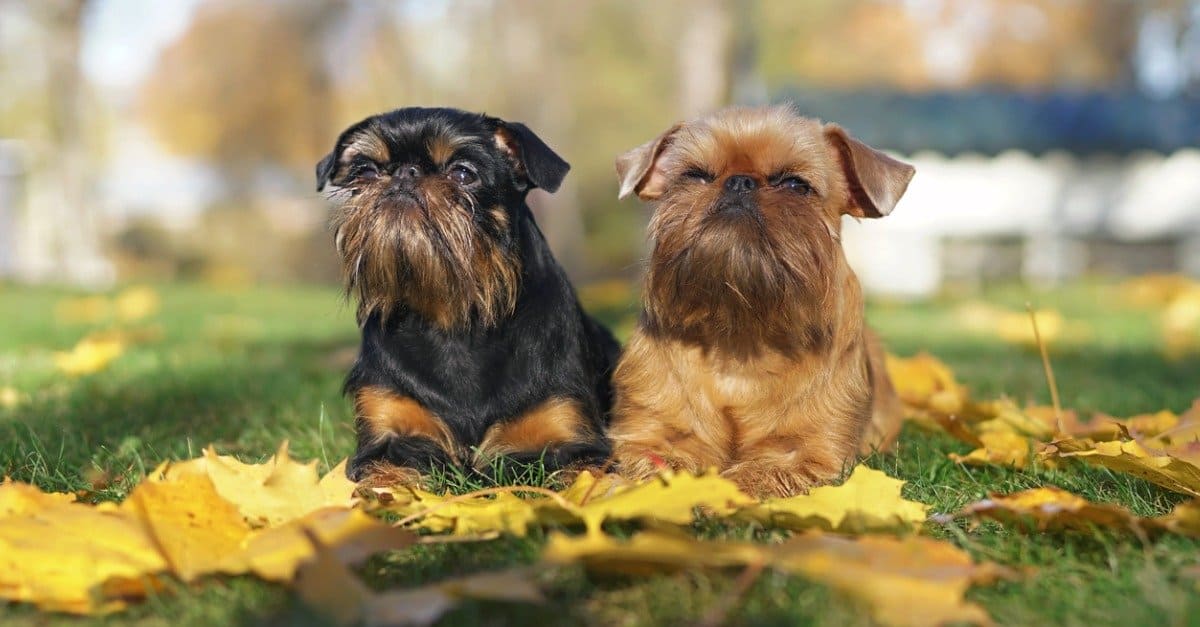
The most distinctive feature of the Brussels griffon is its bearded face.
©Ann Tyurina/Shutterstock.com
The Brussels griffons’ wizened and bearded faces are the result of concentrated breeding. The German affenpinscher and Belgian street dog were originally bred together to create a perky and agile terrier that could excel at hunting for rats. The addition of pugs into the breeding pool created the griffon we know today.
The Brussels griffon is defined by its vibrant personality. Bright, chipper, and sometimes bossy, these dogs can be quite vocal. Good training is necessary to minimize their dominant and territorial tendencies. Though physically active, they do well in a small yard. As a highly sociable breed, they need human companionship or the company of another dog.
1. Xoloitzcuintli
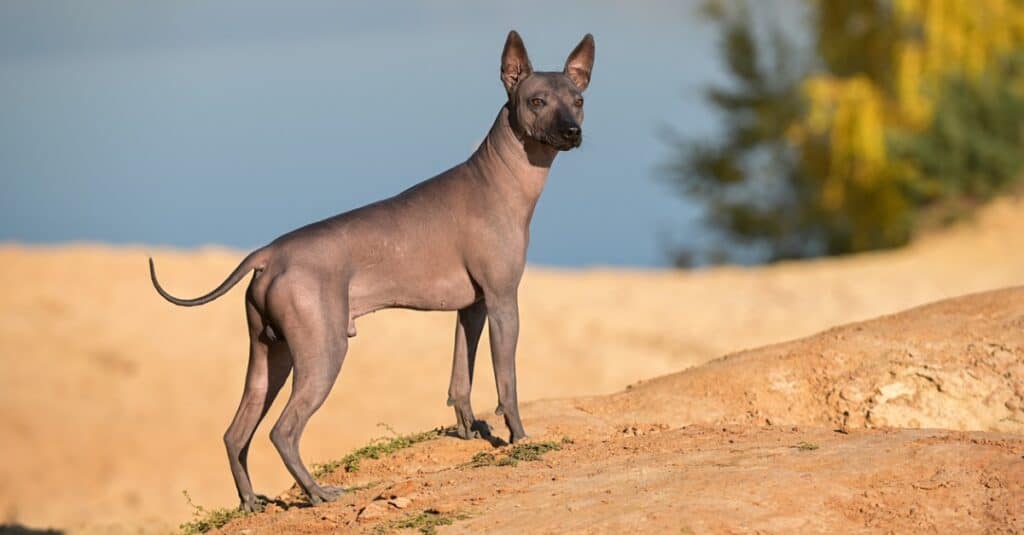
Not only do Xoloitzcuintlis not have hair, but they also don’t have molars.
©art nick/Shutterstock.com
The Aztecs believed Xoloitzcuintlis to be guides to the underworld, but the Xolos of today are cuddly companions. While their alert nature makes them adept guard dogs, they are also mild and loving. Though generally healthy, caregivers need to monitor their exposure to direct sunlight, as they lack a protective fur coat.