
Quick Take
- Slugs are gastropod mollusks without shells. They move using a mucus slime.
- Slug slime is 90% to 99.7% water, with mucin, hyaluronic acid, and minerals.
- Slime trails lubricate movement, protect against drying, help locate food, and enable communication.
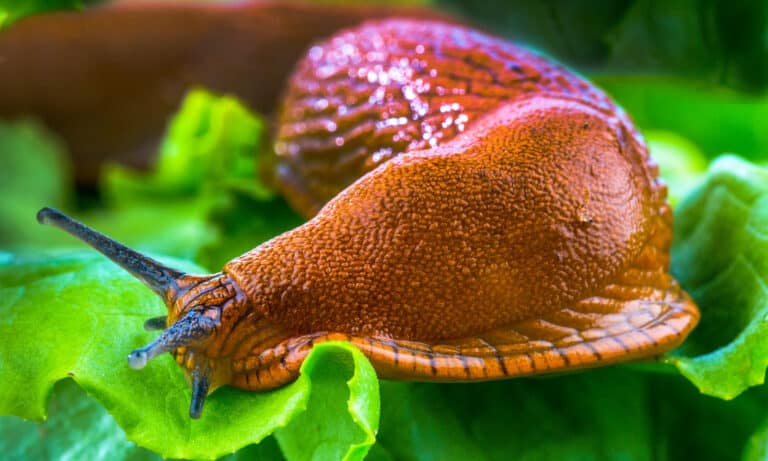
As slugs move easily through the garden, many people wonder what kind of creatures these shell-less snails are. Are slugs insects? They are not insects. Instead, slugs are gastropod mollusks—mollusks without shells. Like mollusks, slugs have a muscular foot that helps them to move. Unlike some other mollusks, it is easy to see the path slugs make by following their trail. Why do slugs leave shimmering slime trails everywhere they go? As it turns out, the trail a slug leaves behind serves several important purposes, all of which help slugs of various sizes survive.
Why Slugs Leave Slime Trails
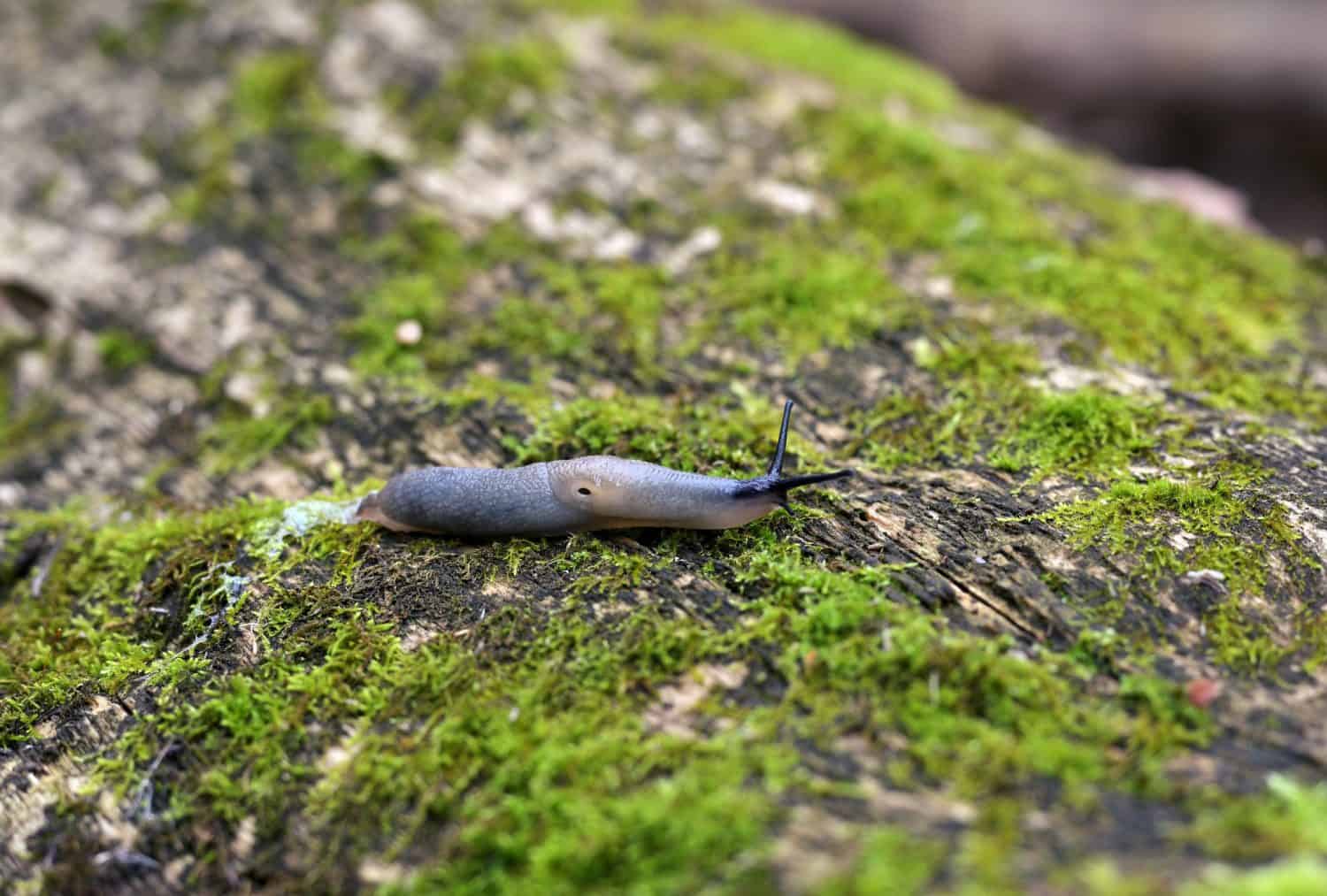
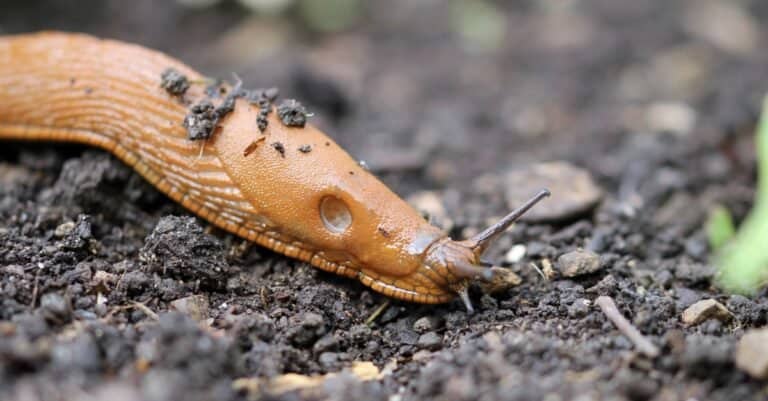
Slime trails are created for a multitude of reasons, from facilitating the smooth movement of slugs to communicating, and everything in between.
©Anatoly Meleshchuk/Shutterstock.com
When slugs leave slime trails, it is not by accident. The slime trails are produced for a variety of reasons, all of which benefit the slug creating them. The reasons slugs produce slime trails include:
- Smooth movement – Slugs produce slime so they can easily move over a host of surfaces, including those that would harm them without the slime, with ease.
- Protective barrier – Slugs are protected in their habitat by a protective slime barrier that keeps them from drying out in warm to hot, arid conditions.
- Navigate – Slugs use slime trails to return to their preferred environments. They can follow their previous paths both during the day and at night.
- Communication – Slime trails contain hormones. Slugs use these hormones not only for mating purposes but to find other, familiar slugs in a habitat.
The slime that slugs create is incredibly multifunctional. This is why it is so essential to their survival and, much to the dismay of gardeners, why slugs often return to the same spot to eat plants repeatedly.
What Is Slug Slime Made From?
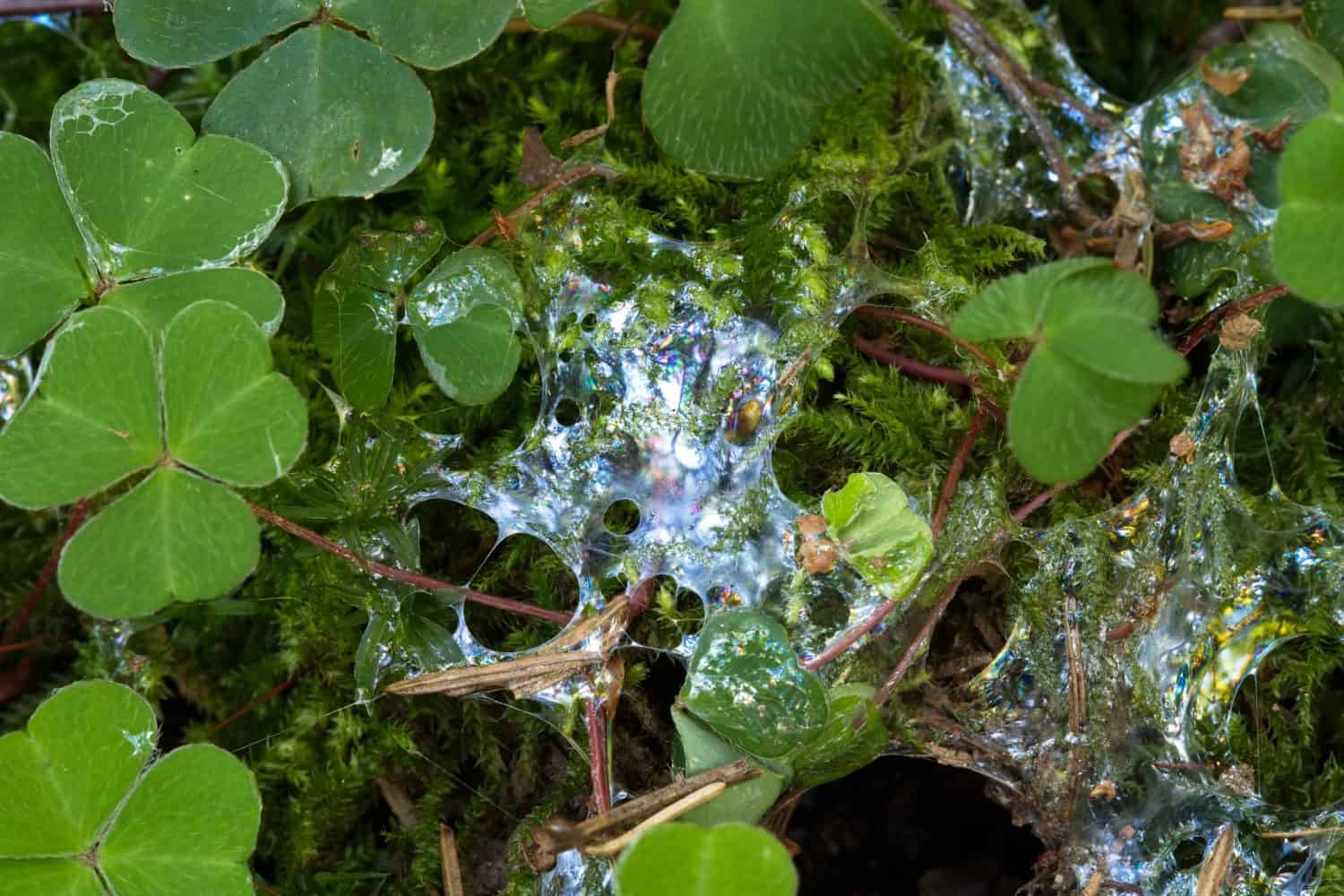
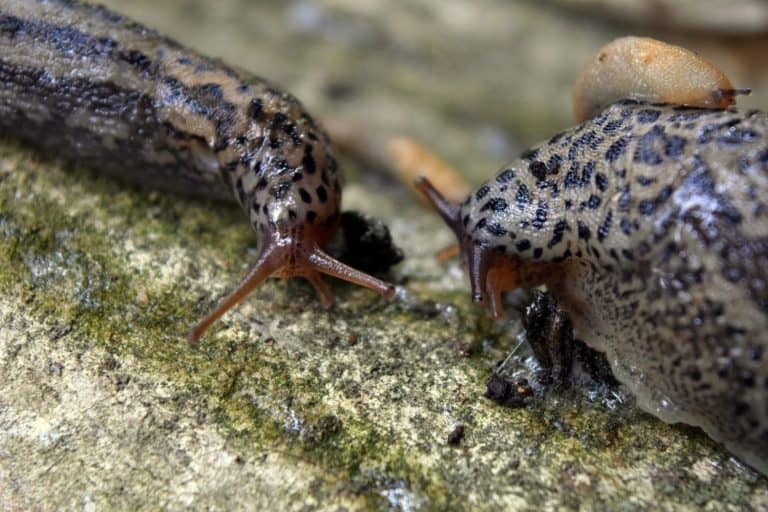
Water is the primary substance in slug slime.
©Octavian Lazar/Shutterstock.com
It is possible to track slugs simply by following their silvery, glistening paths as they move over a multitude of surfaces with ease. But what is fascinating about slug slime is that it acts both as a lubricant to help the slug move and as a glue to help it stick to surfaces. What exactly is slug slime made of that allows it to both move and stick to surfaces at the same time? The majority of the slime is, surprisingly, made from water. Three other substances make up the slug slime. The total percentage of each substance is as follows:
- Water – 90% to 99.7%
- Mucin – 10% to 0.3%
- Hyaluronic acid – <1%
- Minerals and salts – <1%
The slime can easily change from a lubricant to a glue. This phenomenon is known as viscoelasticity. Viscoelasticity occurs when a substance exhibits both liquid and solid properties. The liquid portion of the slime is used as slugs move themselves along over fairly even terrain. It is when they come to a stop that the slime acts like a glue. The slime will stay in this state until slugs decide to move again.
Slug Slime Is a Protectant Against Predators
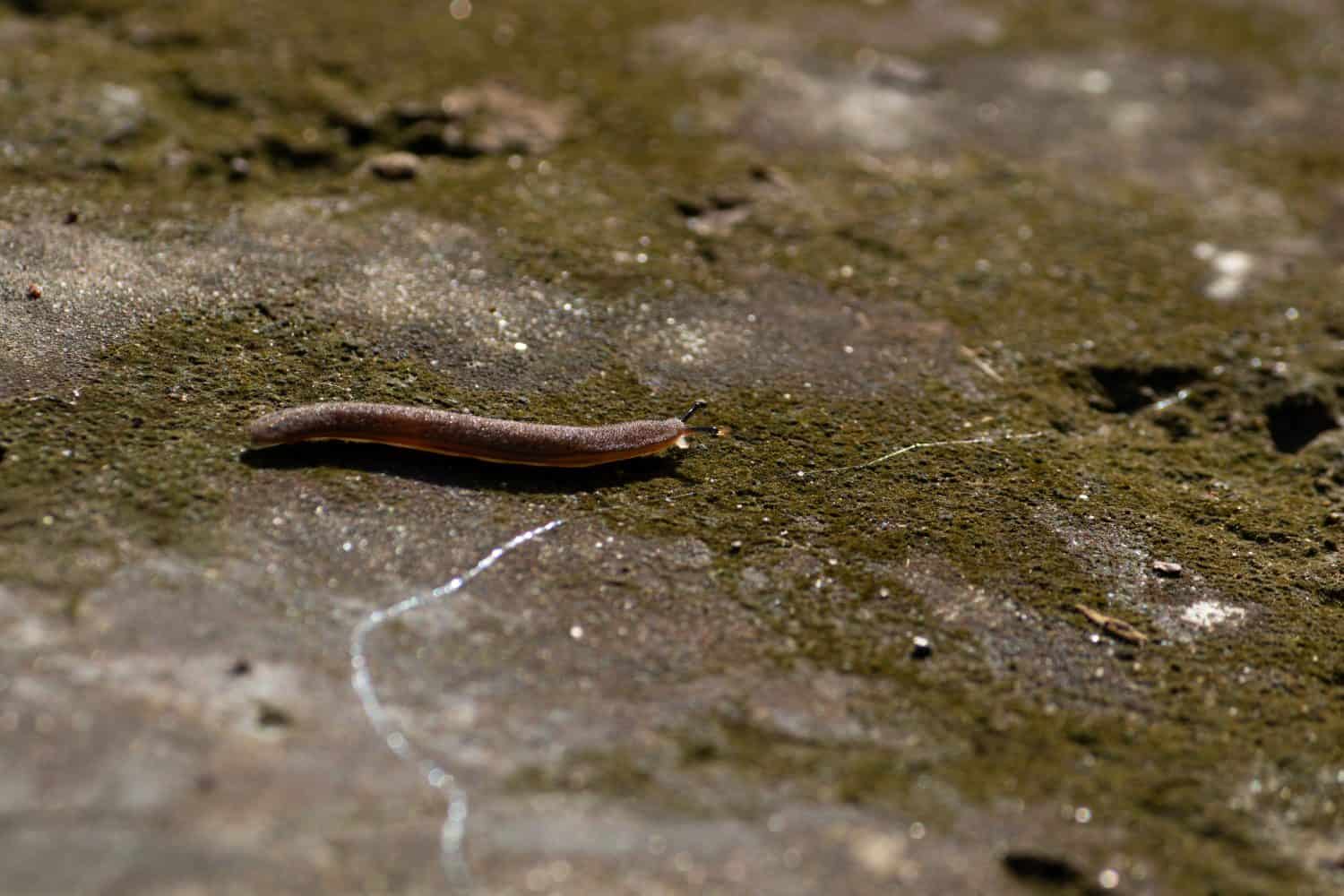
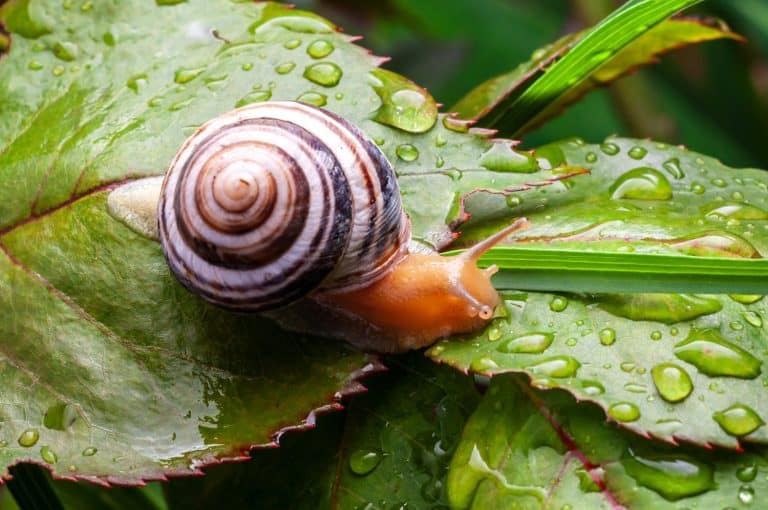
Slugs produce slime to protect themselves from predators.
©Anh Tuan Ng/Shutterstock.com
While slugs produce slime for movement and to anchor themselves, the slime also serves as protection. This is because the slime that is produced makes it difficult for predators to pick up slugs. If a predator does manage to eat a slug, it will encounter an unpleasant taste. Consequently, slug predators, such as birds, frogs, and beetles, may choose to pursue another creature if one is available rather than slugs.
In some circumstances, slug slime is actually toxic. This is not because the slime itself is chemically poisonous, but because it can carry bacteria and parasites that may make predators sick. Additionally, the slime can irritate the skin. All these defensive tactics are necessary given that slugs lack a shell. But does this mean that slugs have to produce slime continuously?
Slugs Continuously Produce Slime
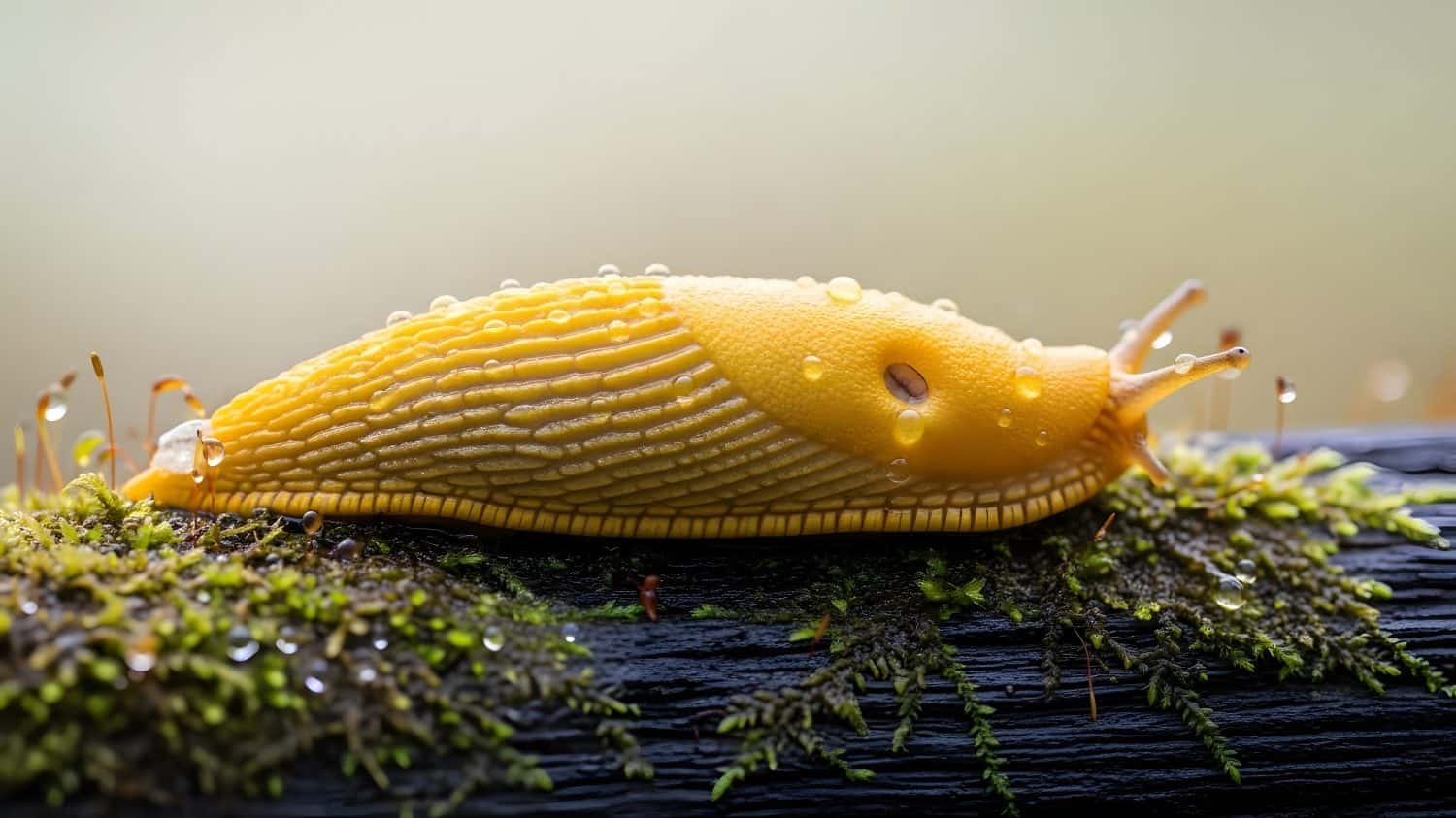
Slugs have to keep producing slime to move from one location to the next in search of food and a moist place to shelter from the heat of the day.
©MDigitalArtStudio/Shutterstock.com
Slugs continuously produce slime. This has to be done if slugs are to move to feeding locations. Every time slugs expel their mucus to move, it depletes their overall body moisture. Consequently, slugs are very reliant not only on the water they ingest from their food sources but also on the environment.
The slime that slugs produce is mainly water. Therefore, water consistently needs to be replenished in a slug’s body. To help reduce water loss, slugs tend to come out at night. Not only is there no sunlight, but the humidity is also higher. This is why the majority of slime trails are seen in the early morning hours, unless there has been recent rain with cloudy skies. If there has been no rain, the trails you see are from slugs returning to a protected spot out of the sun and heat to conserve moisture.
What Can Cause a Slug to Lose Its Sliminess?
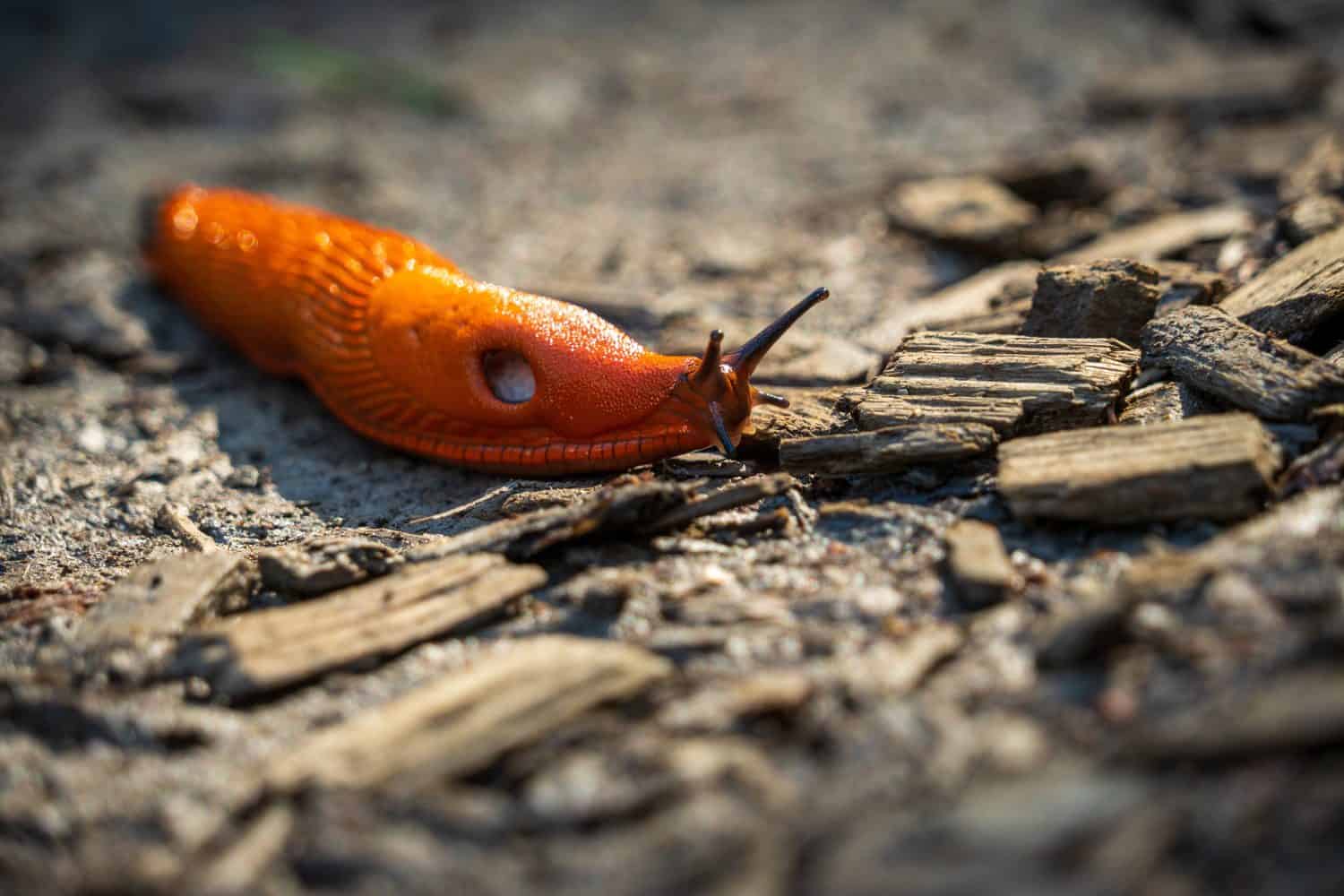
Slugs can lose their sliminess when under stress or in habitats that are too dry.
©Zack Frank/Shutterstock.com
Despite slugs relying on their slime for survival, they can sometimes lose some of their sliminess. As long as slugs can replenish their moisture levels, this is generally not life-threatening. However, if the slime levels are low for too long, this can lead to dehydration and eventually, death for the slug.
There are two main reasons that slugs lose their sliminess. The first reason slugs lose their slime is exposure to hot temperatures and dry environments. If slugs find themselves in a region that has not received significant rainfall for a long time and the habitat is arid, they will struggle to survive without water sources.
The second is stress. Stress goes hand in hand with slugs becoming dehydrated in a dry environment. Additionally, if slugs have recently secreted a large amount of mucus to escape a predator, they experience stress and reduced slime levels. Slugs must find sources of water either via food or the surrounding environment to increase their moisture levels. If they do not, they will perish.
Slime trails are often seen as paths created by garden pests on their way to eat produce and plants. However, a slug’s slime trail is much more than that. It is a means of communication. It demonstrates determination as the slug moves from one point to another across different types of ground. Slime trails also help slugs find one another to mate.
So, the next time you see a slug’s silvery, sparkly trail, take a moment to appreciate the effort that went into creating it. Slugs use a significant portion of their body’s water to create these trails, and if your garden is their destination, these little creatures mean no harm—they are simply trying to replenish their moisture reserves to survive.