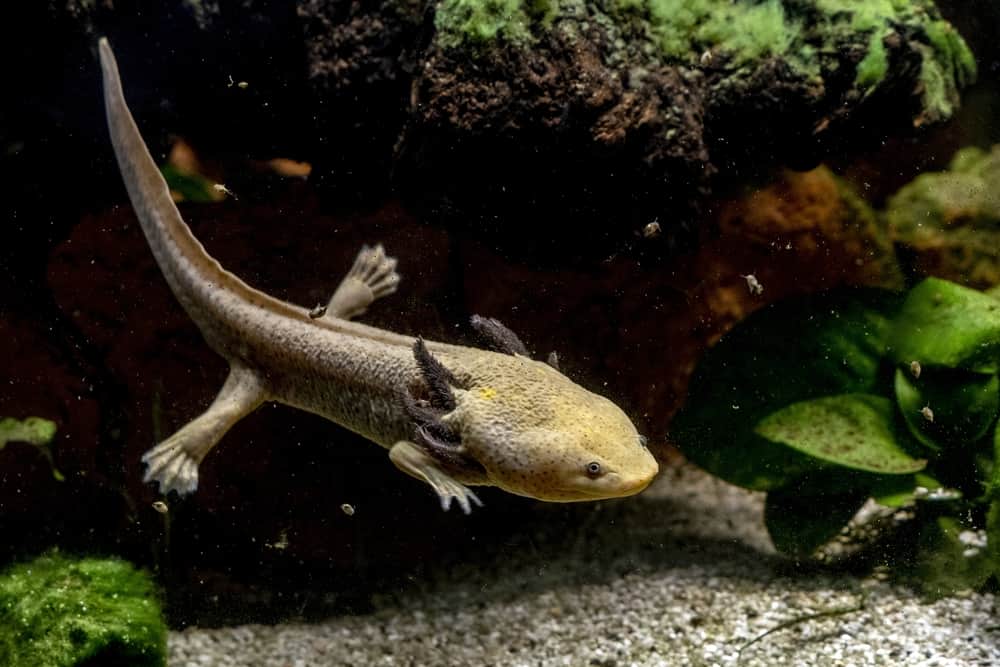

Animals are incredibly adaptable creatures that have developed a variety of survival mechanisms throughout their evolution. Many amphibians, like frogs, axolotls, and caecilians, can breathe through their skin via a process called cutaneous respiration. This involves absorbing oxygen through the skin and into the bloodstream.
These animals have developed cutaneous respiration for several reasons, including the ability to survive in harsh living conditions. Keep reading to learn how these amphibians breathe through their skin—and how climate change affects this process.
Amphibian skin has a lower concentration of oxygen than the water surrounding it, and, since the capillaries are so close to the surface, oxygen can easily cross the thin barrier between the water and the cells.
Eric Lyons, PhD candidate at the University of Montana
What Is Cutaneous Respiration?

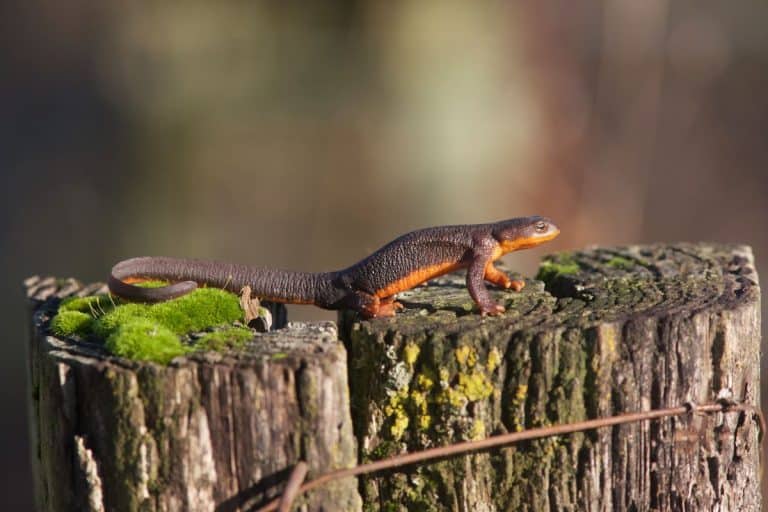
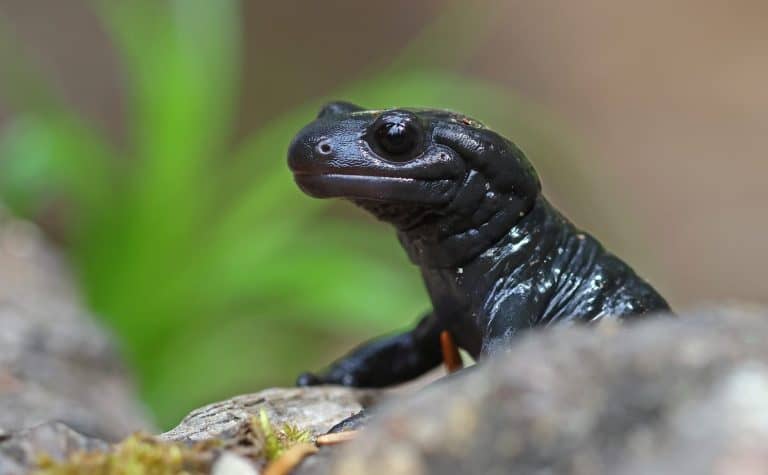
Newts are just one example of an amphibian that can breathe through its own skin.
©Rudmer Zwerver/Shutterstock.com
Cutaneous respiration is a breathing process that involves gas exchange through the skin. Essentially, animals that use cutaneous respiration absorb oxygen through their moist skin and into their bloodstreams.
“Cutaneous respiration is common in amphibians, and works in much the same way as other forms of respiration,” says Colin Walker, Assistant Curator of Fishes, Herpetology, & Invertebrates at the Virginia Aquarium. “Gases such as oxygen and carbon dioxide will move from an area of high concentration to an area of low concentration. A liquid medium allows dissolved gas molecules to diffuse along this concentration gradient through a biological membrane.”
Once oxygen reaches the lungs, it diffuses into the bloodstream, while at the same time, carbon dioxide in the blood diffuses back into the lungs, Walker explains.
“[Cutaneous respiration] is a bit like opening the bottom of a balloon,” adds Eric Lyons, PhD candidate at the University of Montana and researcher at Hubbard Brook. “The concentration of helium is greater outside of the balloon than inside the balloon, so the gas rushes out and the balloon deflates.”
How Do Animals Breathe Through Their Skin?
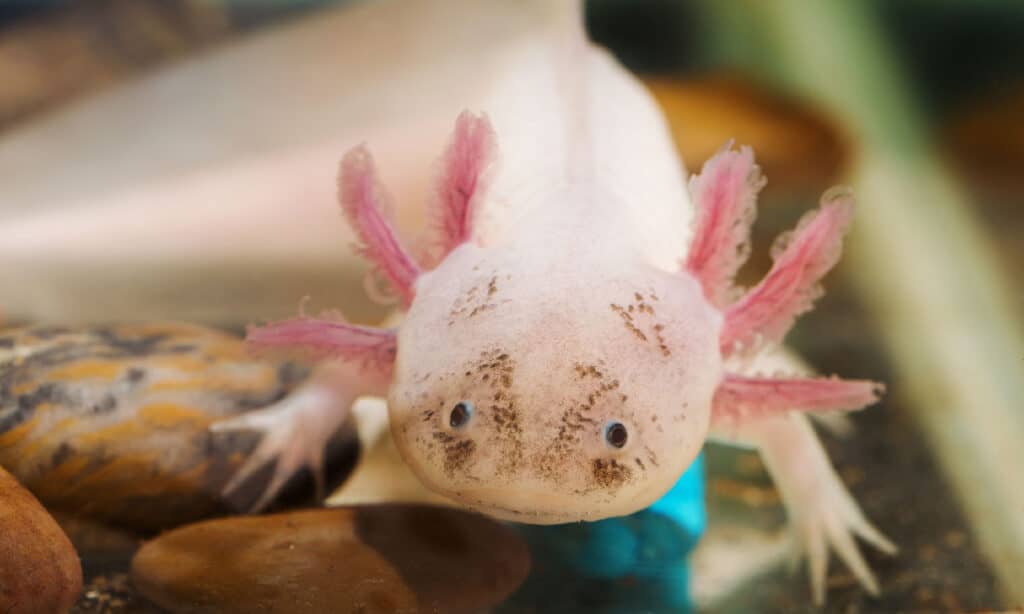
The axolotl is another prime example of an amphibian that can breathe through its skin.
©iStock.com/Argument
As explained above, some amphibians have thin, moist skin with a vascularized network of capillaries just below its surface. These features allow oxygen to enter the bloodstream while diffusing carbon dioxide out of the body. Sometimes, this is for supplemental oxygen. In some cases, such as with aquatic amphibians, cutaneous respiration is their primary method of breathing.
“When we talk about amphibians breathing through their skin, we don’t mean that their skin is literally inflating and deflating like our lungs do,” says Lyons. “Amphibian skin has a lower concentration of oxygen than the water surrounding it, and, since the capillaries are so close to the surface, oxygen can easily cross the thin barrier between the water and the cells, giving amphibians the oxygen they need to survive.”
Of course, human skin is far too thick for us to “breathe” through—a feature that also keeps us safe from absorbing unwanted pathogens. In amphibians, having thin, permeable skin helps them adapt to a variety of environments.
“In many amphibians, fish, and several other taxa (notably sea snakes, bats, and some newborn marsupials), the epidermis—the outer layer of skin, which is made up of similar squamous epithelial cells to what we find inside the lungs—is much thinner and less complex than what we find in most mammals, birds, and reptiles,” adds Walker. “So thin, in fact, their skin is permeable, and the physics that allow gas exchange in the lungs also allow fluid to travel through their skin in search of lower concentrations.”
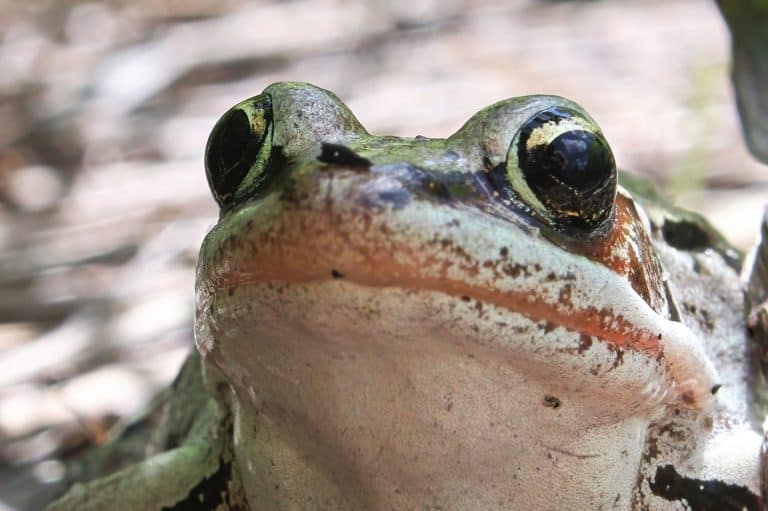
This is how frogs, for instance, “drink” through their moist, permeable skin. Many amphibians also have “wrinkled” skin, which actually aids in their breathing.
“Just like in the lungs, surface area is a major factor,” Walker says. “So, for species that utilize cutaneous respiration for a higher ratio of their gas exchange, their skin tends to be frilly, folded, or wrinkled to create as much surface contact as possible.”
Pollution and Climate Change Threaten Skin-Breathing Amphibians

Unfortunately, pollution can negatively impact amphibians’ ability to breathe through their skin.
©seamind224/Shutterstock.com
Many external factors, like temperature, can influence cutaneous respiration in amphibians. Consider frogs, for instance. These small amphibians stay hydrated by “drinking” through their moist skin. However, they also risk dehydration and even death if exposed to harsh environments that dry out their skin.
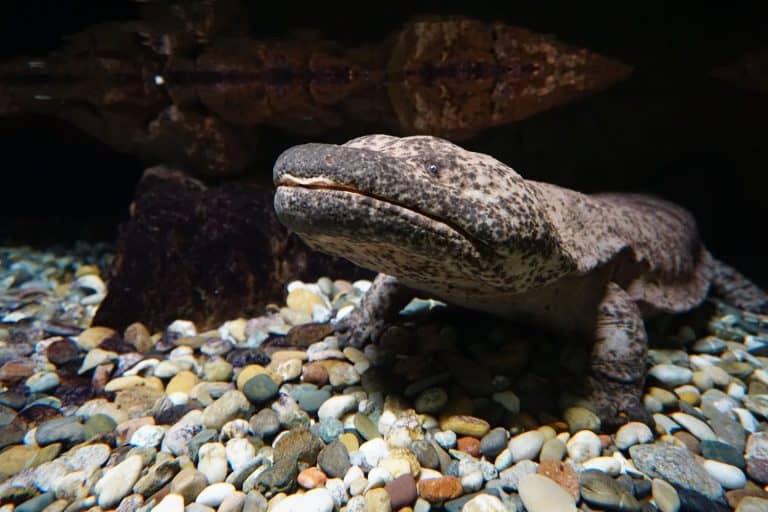
“Colder water can maintain a higher dissolved oxygen concentration than warm water, so cutaneous-breathing species tend to be more frequent in cold water environments, such as the Axolotl, Hellbender, Lake Titicaca water frog, and giant salamanders of China and Japan, where the water temperature rarely exceeds 65 degrees F,” Walker adds. “Due to the need for cooler temperatures and very specific ranges for many species, warming due to climate change can have significant impacts on their population.”
Additionally, pollution can be devastatingly harmful to amphibians, whose permeable skin allows for easy absorption. Such amphibians also risk absorbing harmful pollutants and pathogens directly into their bloodstream, Walker says.
“This is one of the many reasons that we are seeing global declines in amphibian populations,” Lyons explains. “Pollutants like pesticides can cross the barriers in their skin and enter their blood cells much more easily than those same pesticides could enter our cells … Imagine touching a puddle of bug spray versus breathing in a large quantity of it. For us, one is clearly more likely to cause health problems. For amphibians, those exposure levels are much more similar.”