
Quick Take
- Maintaining a healthy 12,000 black bear population required reversing a near-extinction total of 500.
- House Concurrent Resolution No. 6 highlighted the failure of a 1954 poll to provide legal protection.
- Spotting a black bear is counter-intuitive because Ursus americanus often displays cinnamon or blonde fur.
- The DNR initiated a 1954 poll among sportsmen and students to capture the state’s tenacity.
For West Virginians, resilience in the face of adversity is a defining characteristic. As industry and settlers encroached on the Mountain State’s vast, dense forests, both people and animals had to adapt. Black bear populations dwindled to near extinction, but eventually recovered to healthy numbers. The bear’s tenacious spirit resonates with West Virginians and earned it the title of West Virginia’s state animal.
When Was the Black Bear Chosen as the Mountain State’s Official Animal?
In 1954-1955, the West Virginia Department of Natural Resources (DNR) conducted a poll to select an official state animal. Until then, the state didn’t have one. West Virginia students, teachers, and sportsmen were asked which animal best captured the state’s spirit. The black bear, Ursus americanus, won the poll hands down.
However, the black bear did not receive official recognition until decades later, when the West Virginia Legislature formalized its status. In 1973, House Concurrent Resolution No. 6 officially recognized the black bear as West Virginia’s state animal.
Black bears represent tenacity and perseverance, strengths representative of the West Virginian people.
©Freaktography/Shutterstock.com
Why Was the Black Bear Selected as West Virginia’s State Animal?
As the proclamation naming the black bear as the official state animal noted, “The black bear typifies the spirit of all West Virginians in their ability to survive despite the adversity of people and industry encroaching upon their natural habitat.” West Virginians saw the black bear as the ultimate symbol of the state’s rugged perseverance. However, a proclamation alone was not enough to save West Virginia’s dwindling black bear population.
The Black Bear’s Comeback in West Virginia
Between the 1950s and early 1970s, the black bear population in the state plummeted to fewer than 500. Bears could only be found in ten eastern mountain counties. Extensive logging and farming development in the 1800s and early 1900s was one cause of population loss. Bears were also considered dangerous pests and were often shot on sight.
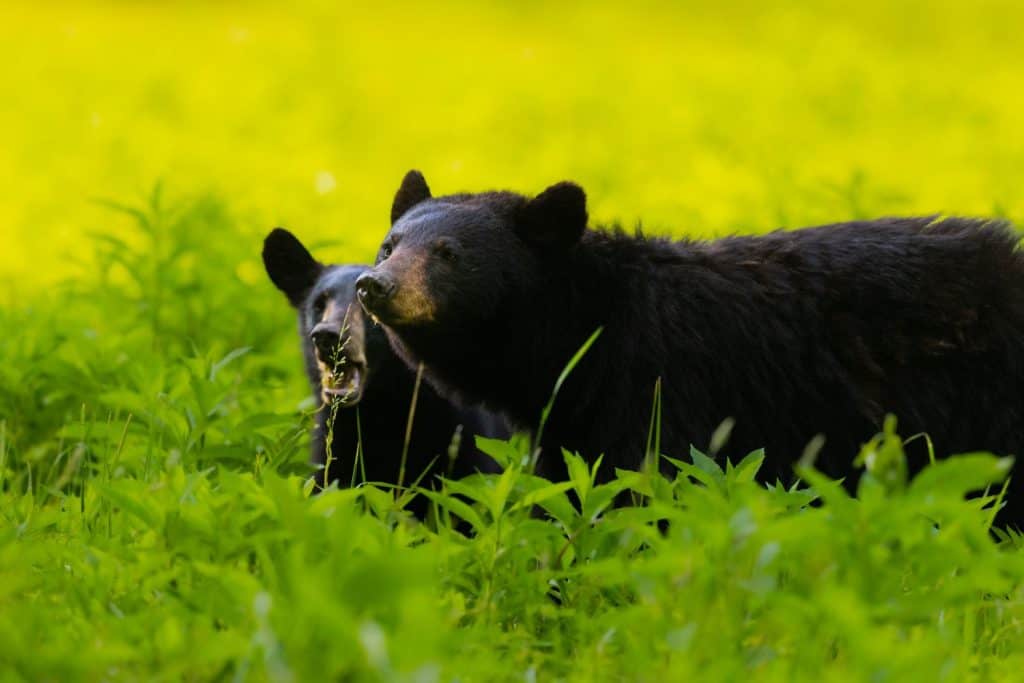
Black bears were officially designated as the state animal of West Virginia in 1973.
©Wirestock Creators/Shutterstock.com
After black bears were officially recognized, the West Virginia DNR implemented population management procedures. These efforts, combined with reforestation, new hunting regulations, and public education, led to a steady increase in black bear populations. Today, between 10,000 and 12,000 black bears call the West Virginia forests home.
More About the Black Bear
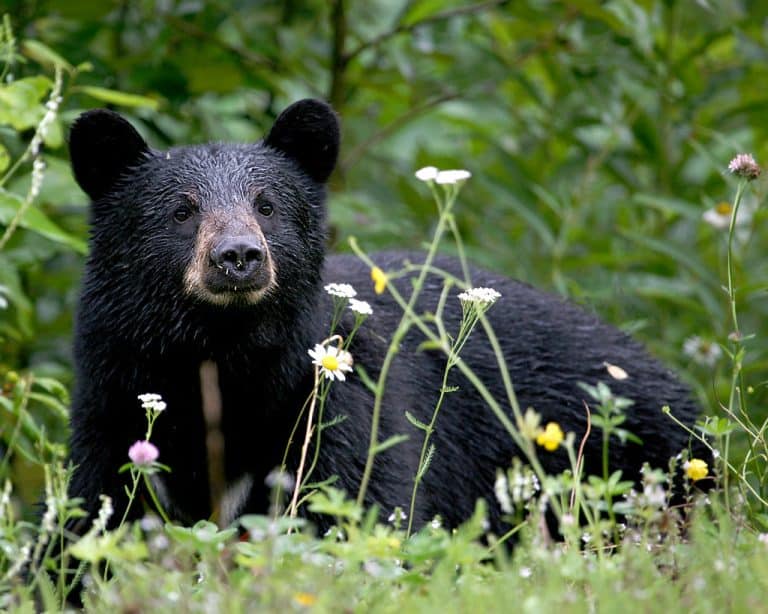
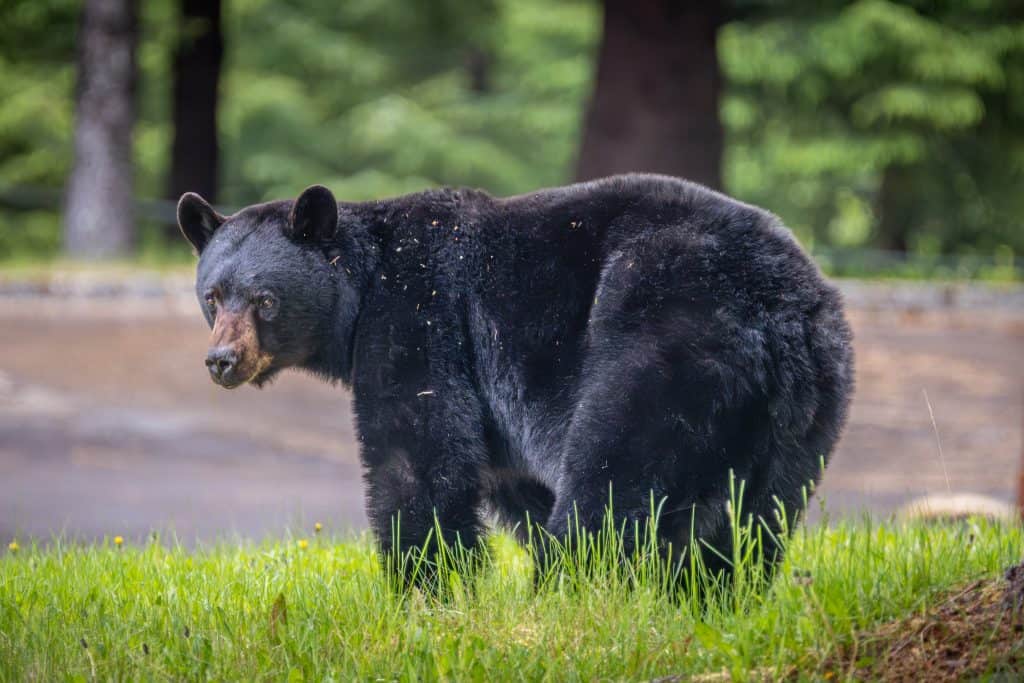
One fun fact about black bears is that they are the only bear species found in West Virginia. So if you see a bear while in the state, you can be sure it is a black bear, not a brown (grizzly) bear. Another fun fact is that, despite their name, black bears aren’t always black. The term “black bear” refers to the species overall, not the bear’s fur color.
Some are very dark brown, while others can be cinnamon, red, light brown, or blonde. Some black bears can even be bluish-grey or white, though these color variations are typically found in places like Alaska and British Columbia. Most black bears found in West Virginia are black with a brown muzzle, though some individuals may be dark brown.
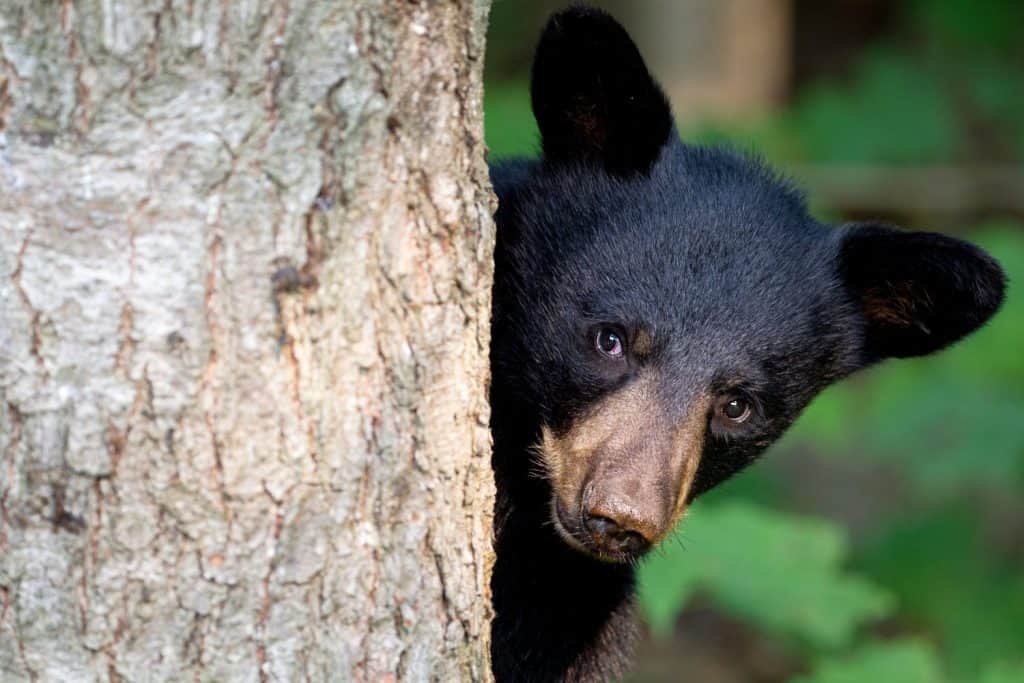
Black bears come in a variety of colors, and aren’t always black.
©Christopher MacDonald/Shutterstock.com
Adult black bears are about six feet long and are between two and three feet tall at their shoulders. Adult males weigh between 150 and 400 pounds, but some in West Virginia have weighed in at more than 600 pounds. Females weigh less, usually between 100 and 300 pounds.
Black bears are omnivores, meaning they eat both plants and meat. Their long claws can grow as long as five inches, which is as long as an average whiteboard eraser. Black bears also have an excellent sense of smell, and they can climb trees and swim distances of up to a mile and a half. They can run up to 35 miles per hour, making it unlikely that a person could outrun them.
Black bears hibernate in dens during the winter. Before they hibernate, they eat as much as possible to build up their fat reserves. Then, once they climb in for the winter, their heart rate drops and breathing slows down. They live off their fat reserves, so they don’t have to leave the den until warmer weather arrives.
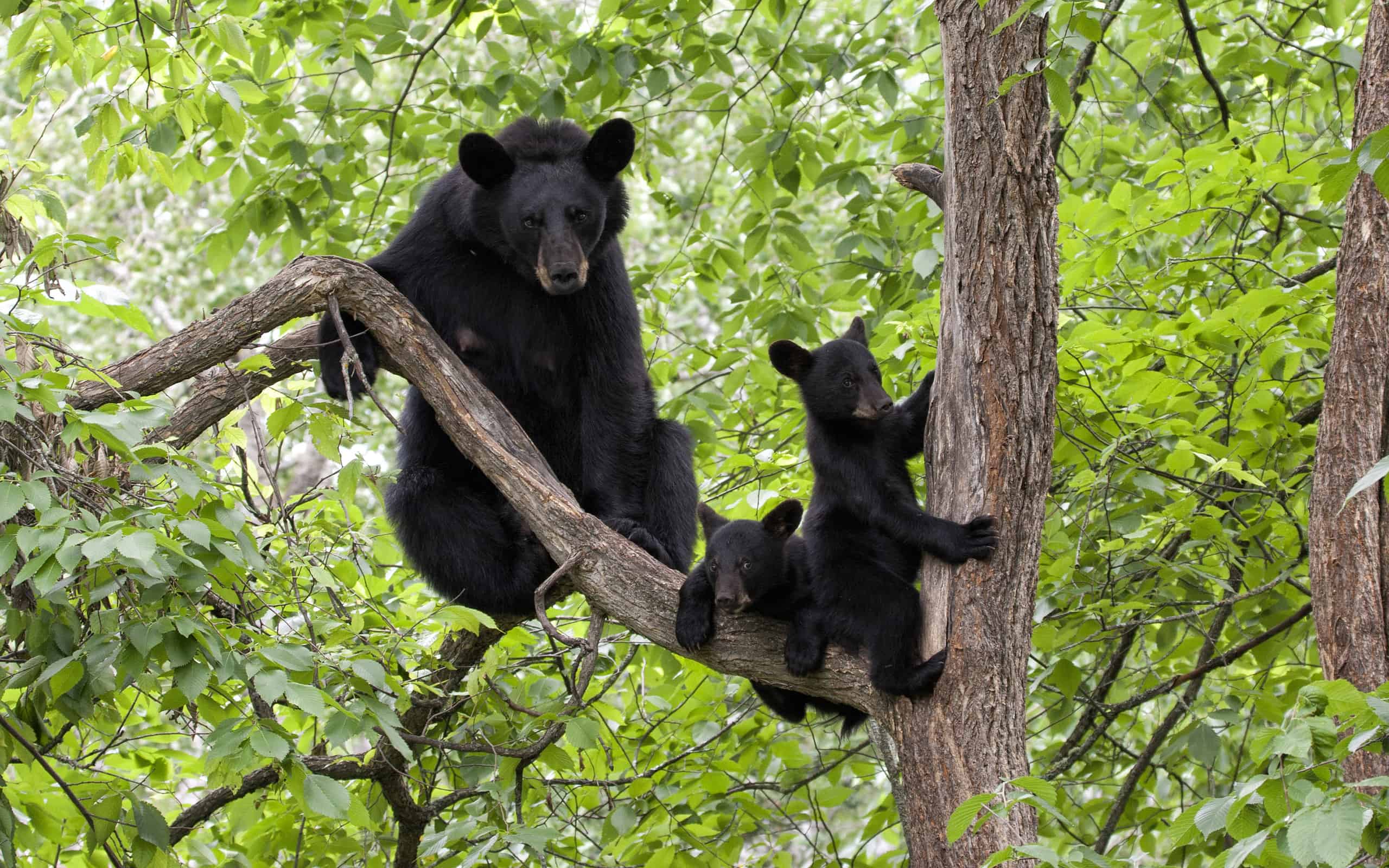
Black bear cubs are born in January, while their mother is still in her winter den. A cub weighs less than one pound at birth, but quickly gains 20 to 30 pounds before emerging in early spring. The cubs stay with their mother for up to three years while she teaches them the survival skills they’ll need as adults.