
Quick Take
- Researchers from Virginia Tech and Arizona State University recently published findings in Science Advances tying specific bee brain chemicals to learning ability.
- The two neurotransmitters, octopamine and tyramine, showed a direct relationship in bees that learned conditioned responses.
- Other neurotransmitters, dopamine and serotonin, were also studied.
- The findings have potential applications for human brain studies and treatment.
What can a honey bee tell us about human learning? According to researchers at Virginia Tech and Arizona State University, more than you might think.
Their findings, published in Science Advances on February 11, 2026, shed light on how bees learn to associate sensory stimuli with rewards. The discovery may go a long way toward understanding how chemicals in the human brain impact learning.
What Did the Study Find?
The study was led by Read Montague, a professor at Virginia Tech’s Frail Biomedical Research Institute at VTC, and Brian Smith, a professor and behavioral neuroscientist at Arizona State University. For the first time, scientists identified brain chemical activity patterns that predict how quickly a honey bee can learn something new. In this case, it was associating specific odors with sugar rewards.
The research team identified two neurotransmitters, octopamine and tyramine, that were key to the speed with which bees could learn. The balance between these two neurotransmitters predicted not only how quickly a bee could learn, but also whether it could learn at all.
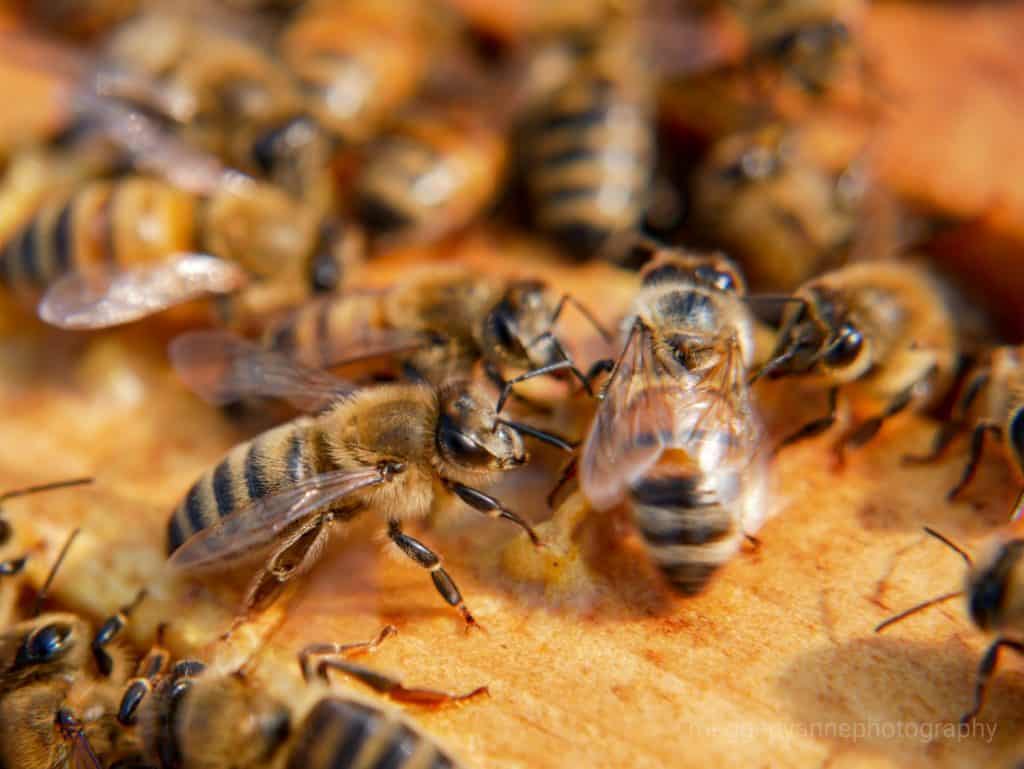
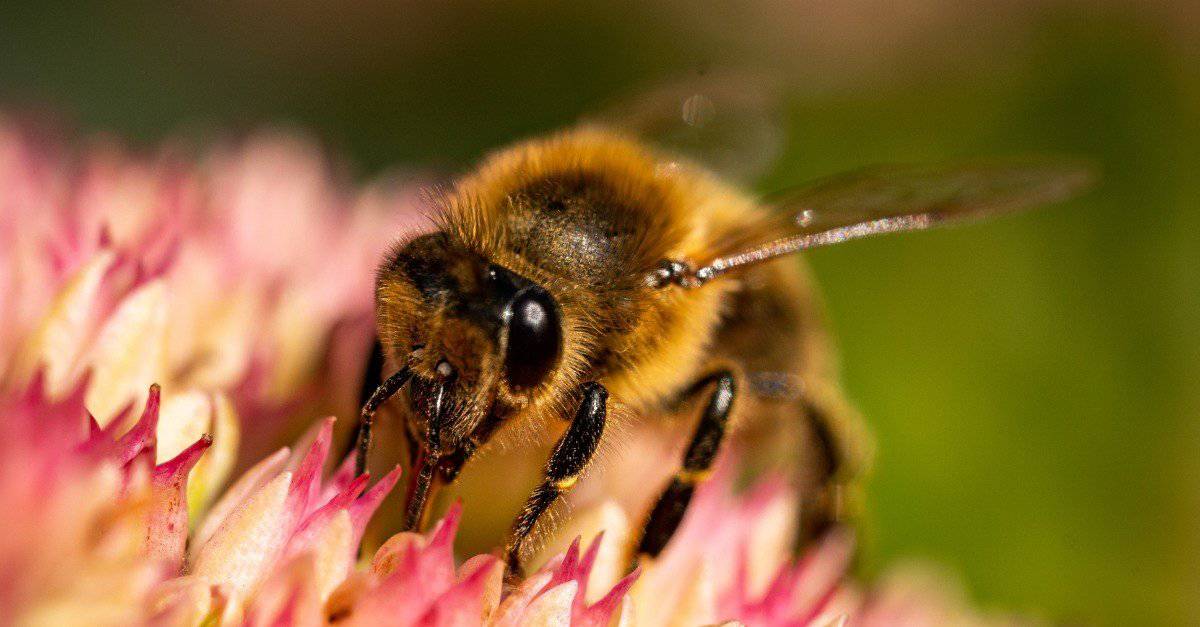
Researchers studied honey bee brains to determine the relationship between brain chemicals and learning behavior.
©MeggedyannePhotography/Shutterstock.com
Their research was built on previous bee learning work conducted by Montague. In an earlier published study, Montague created a computer model that predicts how individual neuron signals help bees forage in new environments. The bees’ success or failure relies on how quickly they can identify the sights and smells that deliver rewards.
The researchers already knew bees are capable learners, thanks to earlier work by the late neuroscientist Martin Hammer. His research helped advance scientific understanding of how insect brains function to help them learn. The most recent study was the first to directly measure the bees’ brain activity during laboratory tests.
Did Researchers Actually Test the Bee’s Brain?
While bees may be able to quickly form associations between stimulus and reward, until this study, researchers had no way to identify what specifically was happening in the insect’s brain to support that learning.
They adopted a novel approach to obtain the data they needed, drawing on Montague’s groundbreaking work with human patients undergoing deep-brain stimulation treatment for Parkinson’s disease.
In those studies, electrodes were implanted to make real-time, sub-second measurements of monoamines—a group of neurotransmitters that serve as chemical messengers in the human nervous system.
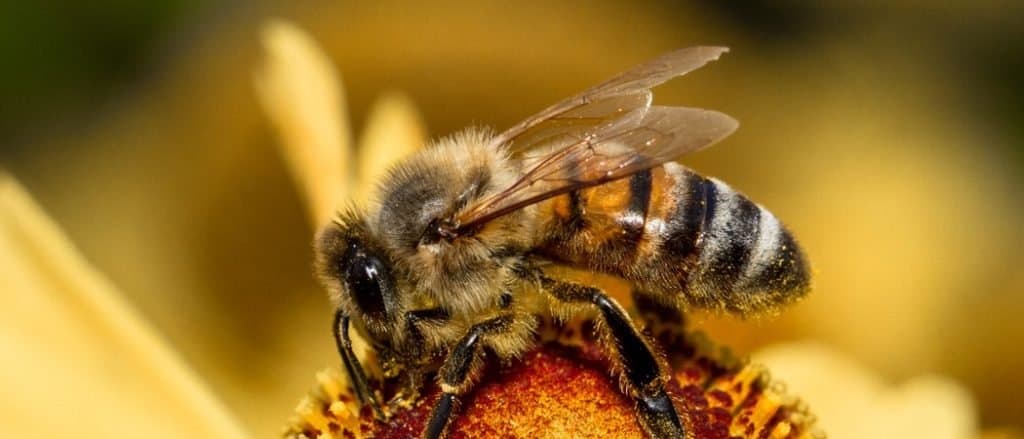
The researchers inserted tiny electrodes into the honey bee’s brain to collect data.
©Dmitri Gomon/Shutterstock.com
Smith asked Montague if it would be possible to insert similar micro-sized electrodes into a bee’s much smaller brain. Montague said it would. The researchers focused on the bee’s antennal lobe, the part of the bee’s brain responsible for smell. They used the tiny electrodes to collect the data, then used machine learning to process multiple chemicals at the same time. The chemicals they focused on were dopamine, serotonin, tyramine, and octopamine.
They combined this data with observations of the bee’s proboscis extension—the feeding tube bees use to extract food. Researchers measured its extension response when subjected to various stimuli. Once testing standards were established, the researchers began studying the bees.
How Did Scientists Test the Bees?
They divided the bees into two groups based on their initial performance when exposed to an odor. The ‘learners’ showed the ability to develop a conditioned response to odor. The ‘non-learners’ could not.
Once researchers had their ‘learner’ bees, they began studying differences within that bee group. Within the ‘learners’ group, bees varied in how quickly they responded to an odor. Some reacted in as few as three exposures to the odor; others took up to eight.
Scientists determined that the variation in learning speed was linked to signals being exchanged between two of the four chemicals, octopamine and tyramine. The two chemicals exhibited an antagonistic, push-pull relationship that changed depending on how quickly a bee formed the association.

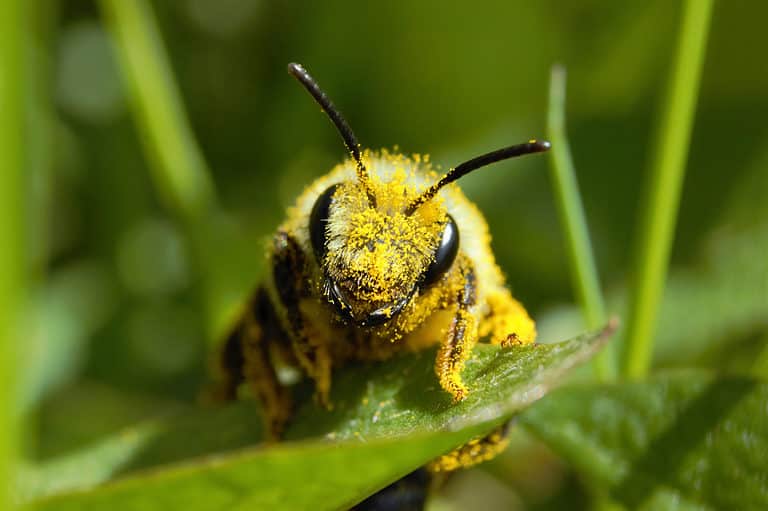
The researchers divided their test group into ‘learner’ and ‘non-learner’ bees.
©Martin Pelanek/Shutterstock.com
Then researchers added rewards to the mix. The fastest learners maintained their rapid learning ability even after the sugar reward was introduced. The same push-pull relationship between octopamine and tyramine continued as the bees kept learning.
Eventually, the ‘learner’ bees mastered the new skill, completing the learning process. Researchers noticed that once the bee fully learned the response, the relationship between octopamine and tyramine dropped off. But what happened with dopamine and serotonin during the study? For ‘learners,’ the levels of these chemicals gradually decreased as the study progressed.
What about the ‘non-learner’ bees? For them, none of the tested chemicals showed much change over time at all. This study is the first to link the relationship between octopamine and tyramine to learning ability.
Why Bees Are a Good Model for Human Brains
The research team believes that studying bees and their brain performance can have a big impact on understanding human behavior. The chemicals present in the bee’s brain, which were studied by Montague and his team, are also involved in human conditions such as addiction, attention deficit disorder, major depression, and other disorders.
“These are evolutionarily very, very old systems that we still have in our brains. You can condition the bee on stimuli in the world that are relevant to a person,” Montague said in a news release.
“I’ve always been interested in being able to measure these neurochemicals as they’re released in real time to understand what kind of signals they give rise to that cause a neural network to go into one state or another,” Smith added.