
Quick Take
- Sand dollars chew their food for 15 minutes.
- Sand dollars can take in nutrients through suspension-feeding or deposit-feeding.
- Hair-like projections called cilia aid the sand dollar’s ability to find food.
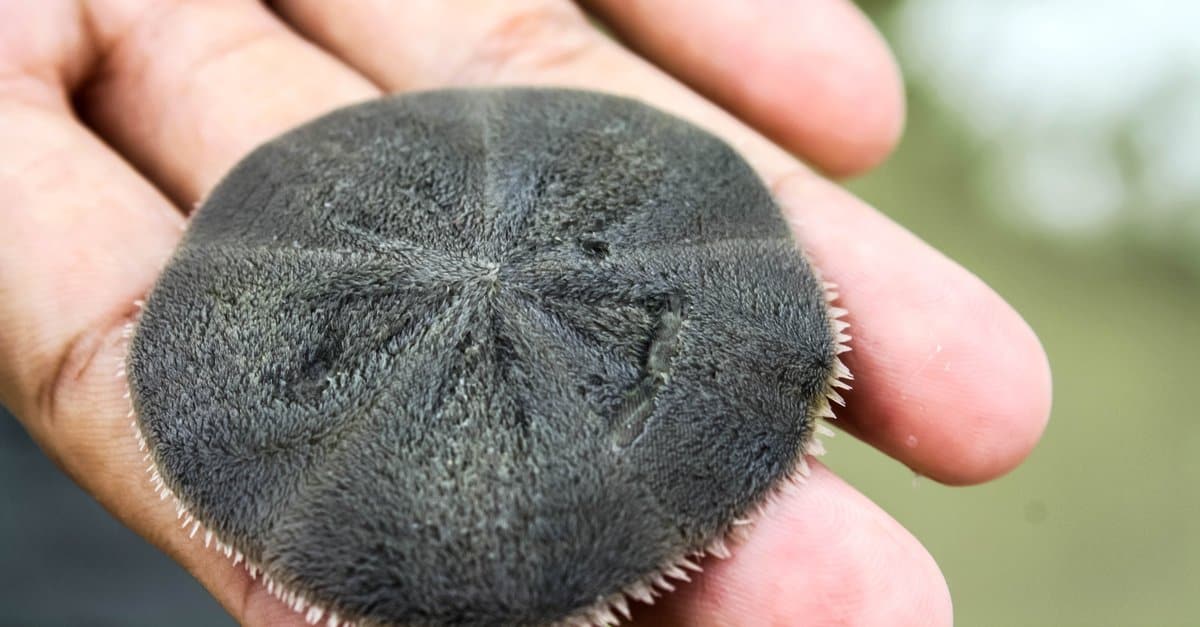
There are around 250 species in the order Clypeasteroida, which includes sand dollars. About 11 of the most common types are found in the Atlantic and Pacific oceans. Sand dollars (Echinarachnius parma) are flat invertebrate marine animals whose close relatives are sea urchins, sea cucumbers, and starfish. A sand dollar’s rigid, circular skeleton, known as a test, features a distinct five-petaled, star-shaped pattern. A living sand dollar is covered by velvet-like spines with projections of hairs known as cilia. The cilia aid in feeding by moving food to the mouth, which is located in the center of the underside of the sand dollar. Continue reading to discover what food sand dollars eat.
What does a Sand Dollar Eat?
Sand dollars are omnivores that eat both animal and plant matter. They eat debris, small copepods, diatoms, microscopic algae, crustacean larvae, and aquatic insects.
Sand dollars eat a variety of foods including:
- Flies
- Plankton
- Small copepods
- Diatoms
- Sponges
- Microscopic algae,
- Bivalves (such as clams and mussels)
- Aquatic insects
- Crustacean larvae
- Kelp
- Detritus
- Crustacean larvae
- Shrimp
How Do Sand Dollars Eat?
A sand dollar’s diet varies based on whether it is feeding on particles in the water column (suspension feeding) or organic matter on the seafloor (deposit feeding). They are opportunistic eaters that change their position to capture different food sources, according to a study in the Journal of Experimental Marine Biology and Ecology.
It takes sand dollars two days to digest what they eat
©Reptilian/Shutterstock.com
Live sand dollars are covered in a fine, velvety mat of spines and tiny hair-like structures called cilia. These cilia are essential for the animal’s survival, serving as a multifunctional system for locomotion, sensing the environment, and, critically, for capturing and consuming nutrients.
The cilia, along with mucus-coated spines, trap food particles. Once food is captured, the cilia move in a rhythmic, coordinated, and wave-like motion, creating currents that ferry the particles along the body toward the mouth on the underside.
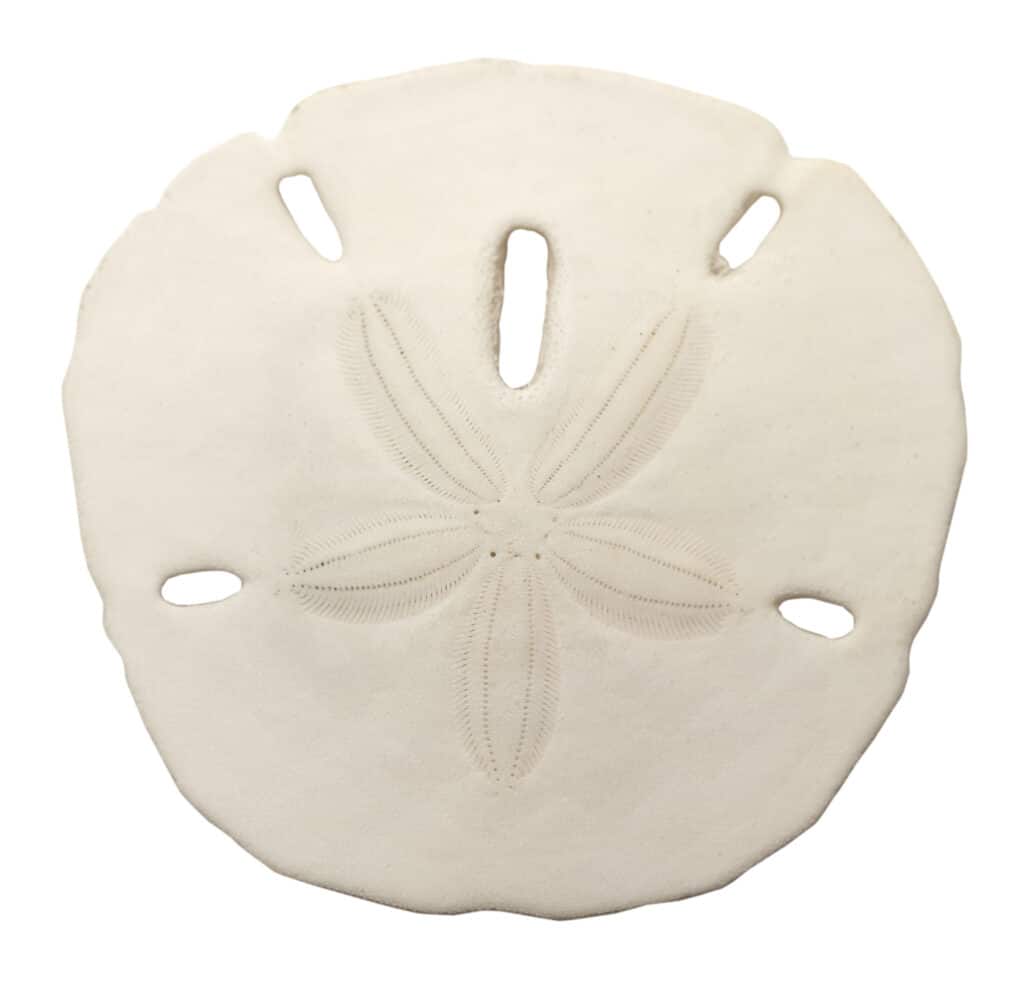
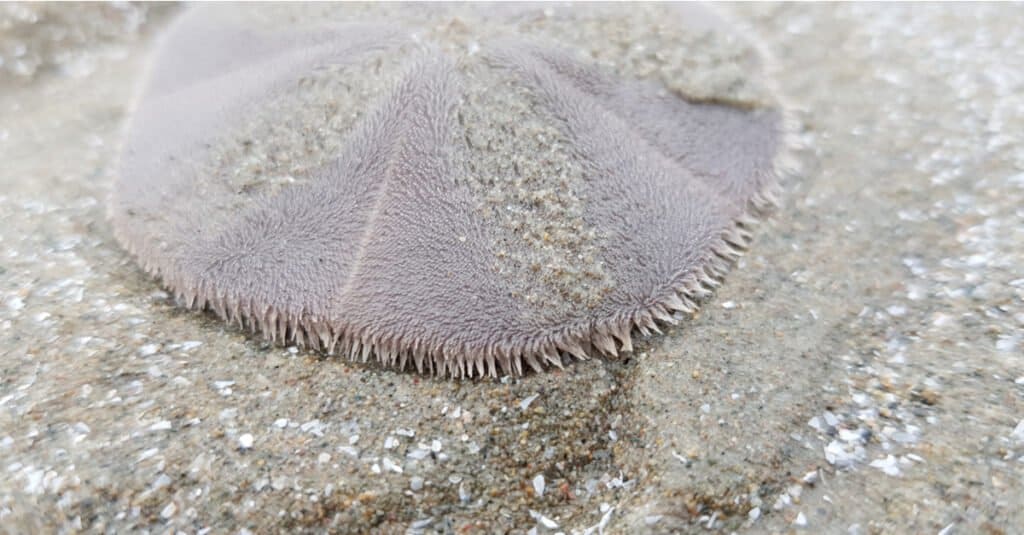
When found on the beach, sand dollars are dead. They are bleached white, and the cilia are no longer visible
©Megapixel/Shutterstock.com
Sand dollars have a specialized jaw structure with five tooth-like sections used to grind up food. These five white, V-shaped teeth are located in the center of their underside and help them ingest plankton and detritus. Sand dollars use their specialized jaw structure to grind food before swallowing, a process that can take several minutes.
The sand dollar takes approximately two days to digest what it consumes. They also ingest sediment to help weigh them down. This adaptation ensures they are not swept away by the ocean current or eaten by predators.
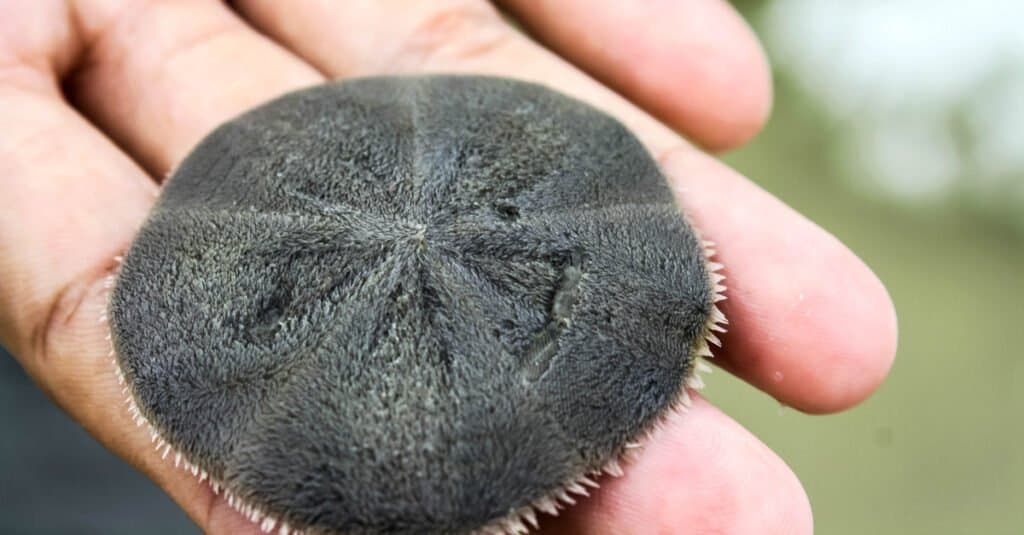
Sand dollar’s larvae eat mostly plankton
©k_lmnop/Shutterstock.com
What Do Sand Dollar Larvae Eat?
Sand dollar larvae eat mostly plankton. With no parental protection or provision, these tiny larvae must fend for themselves in the open ocean, where they often clone themselves to escape predators and survive. They spend weeks drifting as plankton before settling on the sea floor.
What Eats Sand Dollars? A List of Their Predators
Sand dollars are not considered a major food source for most predators due to their hard, thin, calcium carbonate skeleton and limited edible parts. However, they are occasionally eaten by specific predators, including:
- Fish: species including cod, wrasses, triggerfish, Californian sheepshead, haddock, and flounder
- Crab: sand crab, king crab, hermit crab, and stone crab
- Sea stars
- Otters
- Octopus
- Snails
- Sunflower starfish
- Ocean pout
- Nurse sharks