
When most of us picture a veterinarian, we imagine someone giving vaccines to a golden retriever or listening to a tabby cat’s heartbeat. But for Dr. Laurie Hess, DVM, Diplomate ABVP (Avian Practice), the patients are anything but ordinary. From parrots and bearded dragons to sugar gliders, gerbils, and even the occasional capybara, her exam rooms look more like a scene from a nature documentary than your average pet clinic.
As the owner of the Veterinary Center for Birds & Exotics in New York, Dr. Hess has built a career around caring for creatures that many vets only see in textbooks. She’s also the author of Unlikely Companions: The Adventures of an Exotic Animal Doctor and serves as Editor-in-Chief of the Merck Veterinary Manual, so it’s safe to say she knows her way around a hedgehog’s eye surgery and a hamster’s diet plan.
We talked to Dr. Hess about what drew her into this wild corner of veterinary medicine, the surprising bonds people form with their not-so-typical pets, and the myths she wishes she could bust about exotic animal care.
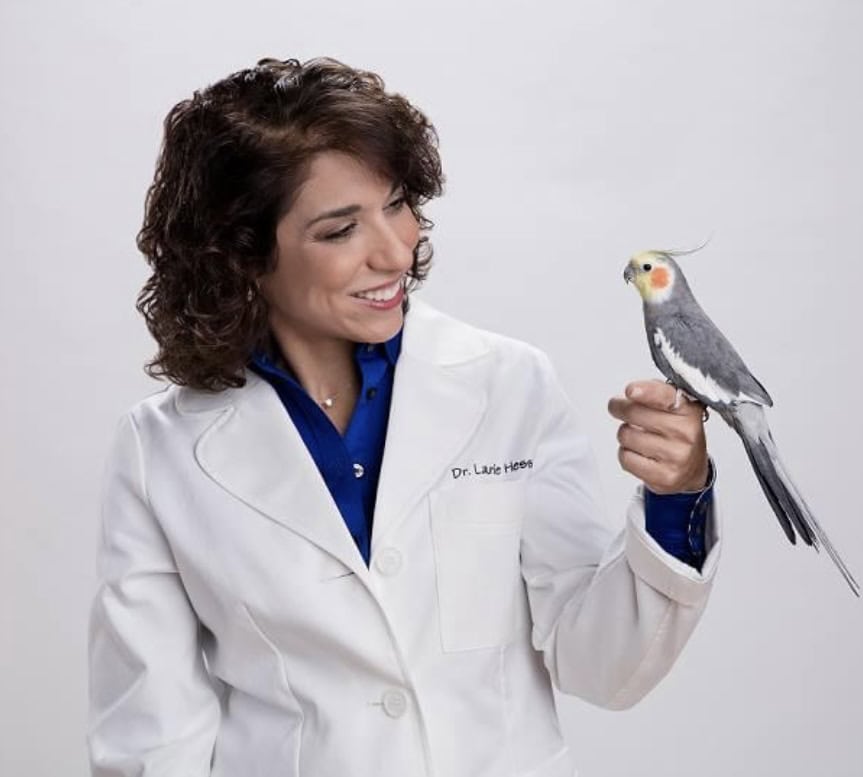
Meet Dr. Laurie Hess, whose experience with exotic animal care goes back decades.
©Dr. Laurie Hess
What drew you into this field in the first place?
I had wanted to be a veterinarian since I was 15 years old, and didn’t appreciate how much I loved exotic animals until after I had graduated from veterinary school. In the first year out of school (during my internship at the big Animal Hospital in New York City), where you rotate through different departments, I rotated five weeks in the exotic animal division.
I was amazed by all these incredible animals coming into the hospital. They had so many different problems! In veterinary school, depending on which school you go to, there are very few places that really teach exotic animal medicine and surgery well. I had a little smattering of it, but not a lot. And I thought, Here I’m going out to practice now that I have a license, I’m expected to know how to care for these animals, and I’ve literally had two weeks of training in all these different species.
We do things like major surgeries, CAT scans, acupuncture, laser therapy … And we’re able to do so much more for exotic animals now, because we know a lot more about them.
Dr. Laurie Hess, DVM, Diplomate ABVP, and owner of the Veterinary Center for Birds & Exotics
I knew that if I were going to be a really good, well-rounded veterinarian, I needed more experience. So I applied for an exotic bird and animal residency. I ended up staying on for 10-plus years there, helping run their exotic animal department, and it’s been really fulfilling and amazing.
In 2005, I left because I had young children, and it was far from where I was living. I worked out of other people’s animal hospitals. Finally, I realized I wanted to do it on a different level, so I opened my own hospital about 15 and a half years ago. It now employs 19 people, we have five veterinarians, and we cater 100% to exotic animals. We don’t see dogs or cats; we do everything medical, surgical, and boarding-related for exotics, and we offer the same level of medicine that’s done for dogs and cats.
Exotic pets can range from parrots and reptiles to small mammals. Which is the most challenging to treat?
They’re all challenging, because they’re all different! We see birds of all kinds. Before bird flu, we were also treating wildlife. But we treat a lot of chickens, and small mammals can range from common things like rabbits and guinea pigs to chinchillas. We’re removing an eye on a hedgehog today here at my hospital. We see sugar gliders and pet mice and rats and hamsters and gerbils … Occasionally, we see some very strange things, like a capybara.
We treat animals that are kept legally as pets. That’s very important. We don’t want people to bring in illegal or dangerous animals or wildlife that shouldn’t be owned.
The fun of being an exotic animal vet is that no day is ever the same. You never really know what’s walking in the door. You have to stay on your toes because there are so many different species, and they all have different behavioral, nutritional, and environmental needs.
What are the most common illnesses you treat?
A lot of the illnesses we see are because people don’t learn what these animals’ needs are. They try their best, but they may not provide the right temperature or nutrients, and animals get sick. It’s our job to educate people about how to care for these animals properly so they can prevent illness. It’s normal pet mentality to bring a dog or cat to a vet annually for a checkup, just like you go to the doctor yourself. But no one ever says, “I need to bring my pet frog in for a checkup.”
We’ve seen birds that are 30, 40, 50 years old coming in for the first time. We’ll ask, “Have you ever brought your bird in to see a vet?” And the owner will say, “No, I’ve never needed to.” Think about that. What if you were 50 years old and you’d never gone to a doctor? Those animals are aging, and their bodies are breaking down, and their needs are changing, and they develop a lot of illnesses.
We see a lot of heart disease, strokes, and atherosclerosis in older parrots. It’s a matter of preventative medical care — the same way you would bring in your dog or cat for heartworm testing and vaccinations.
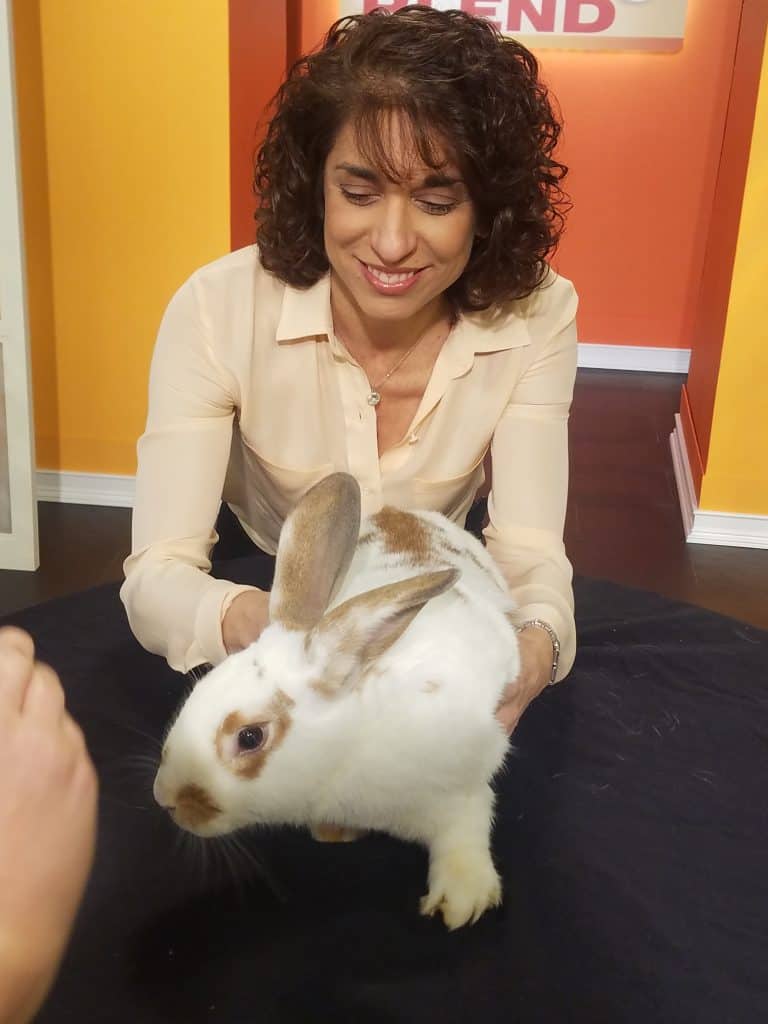
“We do a lot of preventative medical care that’s not part of the normal repertoire of exotic pet owners, and we try to change that mentality. Unfortunately, we meet them for the first time when their animal is in crisis and having a horrible emergency. Hopefully, we get through that and teach them to come back, at least annually, for checkups.”
©Dr. Laurie Hess
What are some of the most common pitfalls or mistakes you see people make with their exotic pets?
Nutrition is a really big one. The range of nutritional needs is huge, depending upon what species we’re talking about. We have herbivores — many of whom are small mammals like guinea pigs and rabbits — and a lot of people think, Oh, I’ll give them one of those high-fat seed treat sticks. Well, rabbits, chinchillas, and guinea pigs in the wild don’t eat seed. They are equipped to eat high-fiber diets. So we may be well-intentioned and think we’re giving them treats that are marketed for them, but a lot of things out there are not really appropriate for them.
A lot of reptiles have to eat prey items like mice and rats. If you’re squeamish about that, don’t get that animal. Before you’re blown away by a colorful parrot or a really cool reptile or a cuddly chinchilla, learn about what their needs are, and think, Does my lifestyle match that animal’s needs? Can I provide them with the proper amount of space and time? Do I have the amount of money to provide the proper caging, lighting, and veterinary care for these animals?
We treat animals that are kept legally as pets. That’s very important. We don’t want people to bring in illegal or dangerous animals or wildlife that shouldn’t be owned.
Dr. Laurie Hess, DVM
What would people be most surprised to learn about your job?
A lot of pet owners (and even a lot of veterinarians!) don’t realize that we can provide the level of care for exotic animals — medically and surgically — that we do for cats and dogs.
We do things like major surgeries, CAT scans, acupuncture, laser therapy … And we’re able to do so much more for exotic animals now, because we know a lot more about them.
I’ve been an exotic animal vet for more than 30 years now, and I’ve definitely seen more studies, research, medication, and therapies that used to just be for dogs and cats or even horses. But now they’re used for animals you wouldn’t think about. The level of care that we can provide, and the longevity resulting from this level of care, is amazing. We know so much more about them than we used to.
But people have to be willing. It’s unfortunate, because people think, Oh, it’s small; it’s a hamster. The care should cost less. It doesn’t cost less. The same surgical instruments and procedure that we use with a dog or a cat are used for a hamster, and fewer people are trained in how to do surgery on a hamster. If you’re going to have one of these pets, the goal is to keep it as healthy and happy for as long as possible so you can enjoy that animal. And part of that is veterinary care and making sure you have finances to support that.
Also, you would think you can’t bond to an exotic animal (such as a bird or a lizard) in the same way you bond to cats and dogs, but people do. And the bonds are phenomenal. That’s one of the most wonderful parts about my job.
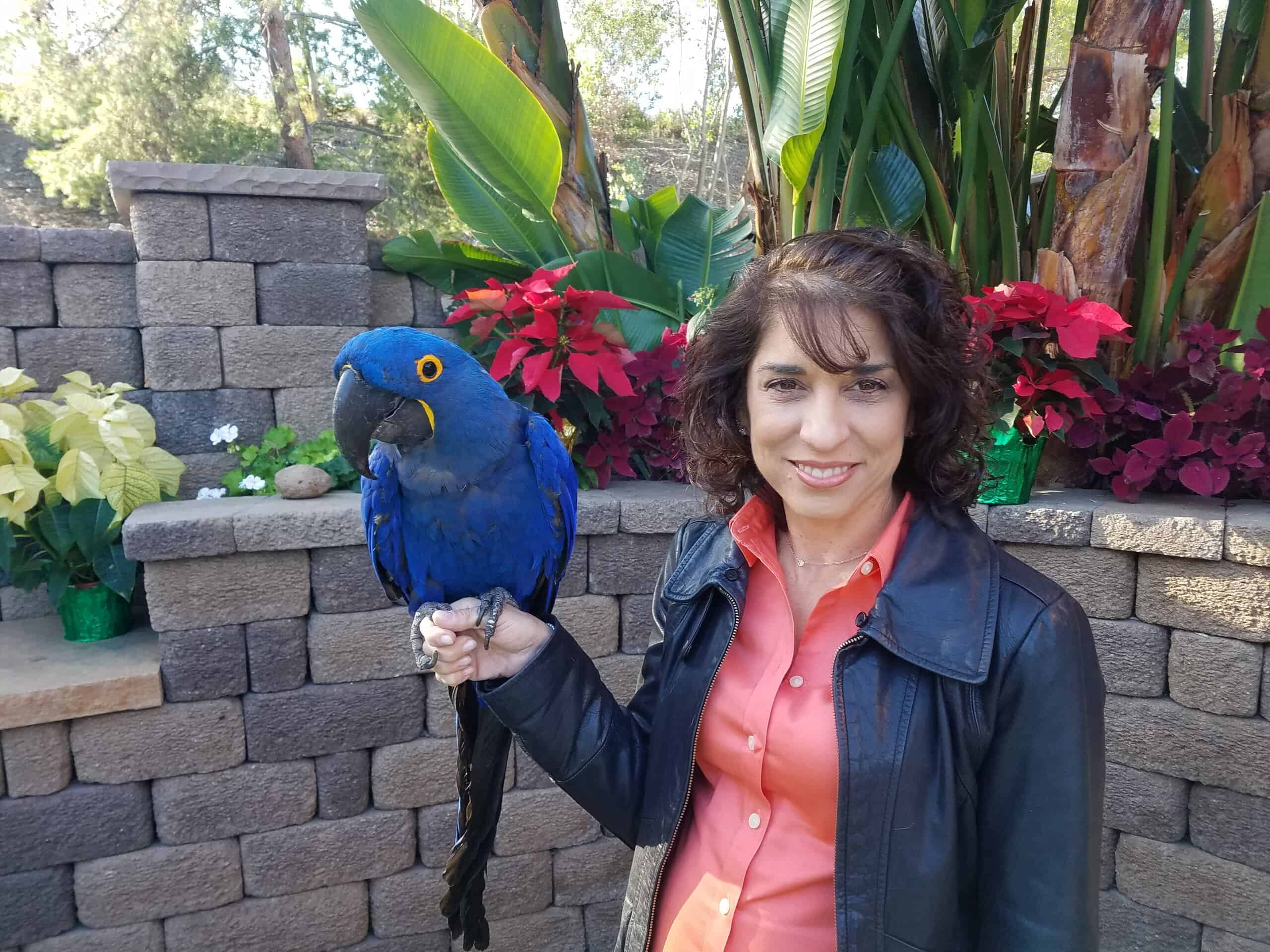
I own a parrot that’s almost 30. I have kids in their 20s, and I’ve had this bird longer than I’ve had my kids. He’s been part of my life every single day. Some exotic animals — birds and reptiles in particular, because they live a really long time — are passed from generation to generation. They really become part of the family. I’ve heard, “This is Grandma’s turtle.” That’s something most dog and cat people don’t get to experience.
What is the most surprising animal that has come through your door?
I used to see monkeys. I don’t see primates anymore, because I think they’re really inappropriate pets. But in various jobs I’ve had, I’ve had to see them. Unfortunately, people think of them as child substitutes in many ways. That’s really not healthy for the animal or the person.
I had a Nile monitor (which is a really huge lizard that’s like five or six feet long) come into my practice once that was in kidney failure. That was quite a surprise.
I wrote a whole book called Unlikely Companions. The Adventures of an Exotic Animal Doctor. It’s based on all of this; I have story after story.

“People love exotic animals because they’re different and fun. They’re exciting and a conversation piece. Unfortunately, a lot of exotics are impulse purchases or adoptions, and it doesn’t work out for anybody. If you’re not happy, they’re not happy, and they’re a disappointment to you, so they end up at the shelter.”
©Dr. Laurie Hess
Are there any memorable cases you can share?
There are so many! There was a woman who was very, very wealthy, and she came in dressed to the nines in her very expensive car. She was always extremely concerned about this little, teeny hamster. She would bring it in, no matter what. It would sneeze, and she’d bring it in. And it was just a really weird match — this very well-to-do woman with a little hamster. At one point, the hamster did get very, very sick, and it passed away. She was hysterical. I subsequently learned it was her daughter’s hamster, and she’d lost her daughter. So this was her tie to her daughter. There’s always a backstory.
I’ve had snakes with 30 or 40 eggs inside them when we’ve spayed them. I had a crazy story of a macaw. It was a good client of mine who now has multiple birds. Her husband got sick with cancer on his face at the same time his Macaw happened to get sick with cancer on its face. It was very odd. The husband went through chemo and radiation therapy, and the bird went through chemo and radiation therapy. The husband died, and a couple of days later, the bird died. I think the bird held on for her husband.
There have been a lot of very emotional and incredible stories — happy things and sad things and odd things and crazy things. But the bonds that people make, and the relationships they have with exotic pets, are truly amazing. That’s not to minimize cats and dogs, but it doesn’t just stop with cats and dogs.
Do you have any advice for spotting early signs of trouble?
When you first get an exotic pet, establish a relationship with a veterinarian. Learn from that veterinarian and talk to breeders or knowledgeable people about what is and isn’t normal behavior for your animal.
For example, baby rabbits nurse once a day. That’s a normal thing. You might think that’s weird, but that’s what they do. So, if you’re seeing them nursing once a day, you know that that’s okay. But in another species, that’s not okay. So learn what the normal behavior is for your pet, and learn your pet’s idiosyncrasies.
When I first got my 30-year-old parrot, I was a resident. I was working all kinds of crazy hours, and my bird was very reliant on television; he sat in my apartment in New York City and watched TV all day.
At one point, I moved to suburbia, and I didn’t have my TV hooked up yet. We had a few days when he had to sit in the house by himself while I was at work, and he just completely stopped eating. I had no idea why. I thought, Oh my gosh, I killed this bird when I moved him. He’s in shock, and he’ll never eat again.
It was the TV.
He didn’t have company. The minute the TV went back on, he was fine. He has a very specific routine.
A lot of these animals are very habitual, and they like it how they like it. If you screw up their routine, it’s stressful to them. So I tell people, “Learn about your pet. Know what’s normal and what’s not, and then don’t hesitate. If you see any abnormal signs, don’t wait. By the time you’re seeing those signs, they’ve probably been there for a while, and that animal is probably sicker than you think. The longer you wait, the harder it is for us to treat.”
If you could correct one major misconception about exotic pets or exotic veterinary medicine, what would it be?
Unfortunately, I see a lot of vets who don’t have much exotic animal training. They’re well-intentioned, but they say, “Here are some antibiotics; let’s hope it gets better. We can’t really do much else to help.” But we can — it just may not be what they do.
I don’t treat dogs and cats, so I’m not the most up on what we can do for them [medically]. But we can do these amazing things for exotic pets — things beyond what a lot of vets who were trained 10 years ago might know about. So, if an animal is sick, and you’re a veterinarian, please refer them to somebody who has more training. And if you have an unusual pet, don’t think there isn’t a vet out there who can help you.
There are also some great resources. There’s an Association of Avian Veterinarians, an Association of Exotic Mammal Veterinarians, and an Association of Reptile and Amphibian Veterinarians. Most of us exotic pet vets are members of at least one (if not all) of those organizations. We learn, keep current, share ideas, and discover new treatments and therapies and surgeries, all by being members of those associations.
If you live in an area where you can’t find someone who will treat your bird, hamster, snake, or whatever, you can go to any one of those organizations’ websites and put in your zip code or state to find someone who’s a member of one of those organizations. They’re invested in staying current, and they will help you.
There are a lot of great vets out there who can provide a lot of great care. It’s just a matter of finding the right person.
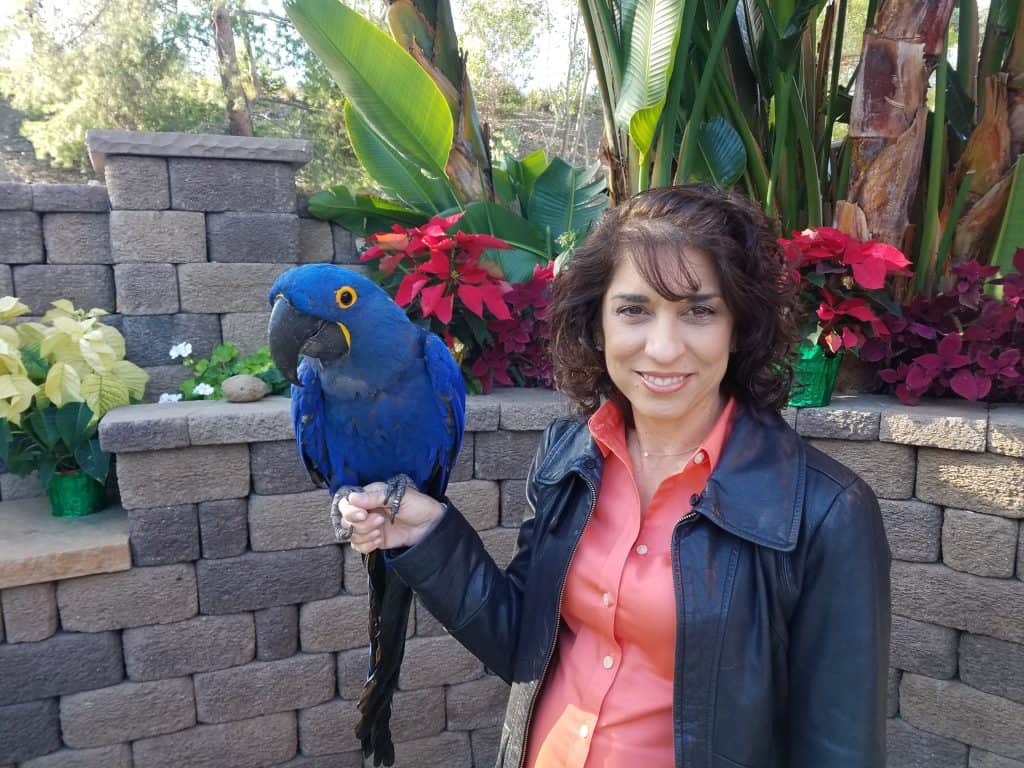
“A lot of times, people just think, I have enough money to buy that ,000 parrot. You need to think beyond that, because that parrot might live 40 years. Are you going to be around that long to give time to an animal like that? Do you travel? Who will take care of that animal when you’re gone? You can’t bring your parrot to the cat and dog boarding clinic near you. These are all things that people really need to think about.”
©Dr. Laurie Hess
What advancements or emerging research and exotic animal medicine are you most excited about right now?
There are so many! We have so many more therapeutic-type things that we can do. In my practice, for example, we do acupuncture on exotics. We do cold laser therapy, electroshock therapy … There are so many things that can help.
Older animals get arthritis just like older people get arthritis, and they don’t have to live in pain. If you’re a 50-year-old parrot, you probably have arthritis. There are many therapies we can do that help. There are medications that slow the progression of atherosclerosis (cholesterol deposits in major arteries that we see in a lot of older birds).
When I first started as a vet three decades ago, we weren’t focused on pain. It was like, “Give them an antibiotic to get better.” But there’s a lot more focus on pain and making an animal’s quality of life much better — not just keeping them alive.
There’s also a lot more focus on enrichment and providing psychological stimulation. For example, birds are so smart, and they will mutilate and pick at themselves when they’re bored, because they need company and psychological stimulation.
There’s also a big focus on this fear-free movement — the idea that it shouldn’t be stressful to go to the veterinarian. Most cats and birds don’t ever go to a vet because their owners don’t handle them regularly, and they can’t get them in a carrier. There’s been a focus on how to handle them appropriately in a less stressful way — on trying to educate pet owners and even the way we handle the animals in the vet hospital, so that the experience of going to the vet is not horribly stressful for an animal.
These are all developments that have happened over the past couple of decades, and they all contribute to offering a better quality of life for an animal — living longer, but also living happier and healthier.
If you could add one game-changing tool, resource, or innovation to the world of pet ownership, what would it be?
It’s actually one of the things that we’re working on at Merck! We’re revamping and rewriting a whole section in the Merck Veterinary Manual in more of a pet-owner-friendly way. There’s pet owner information on lots of different species; it’s not all just for veterinary professionals! Of course, that’s how the manual is known, but there’s a lot of really great pet owner information, too!