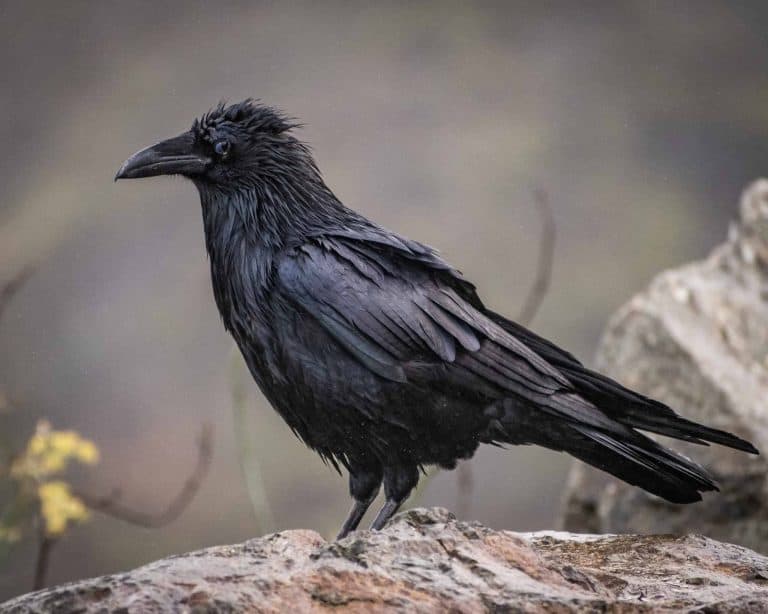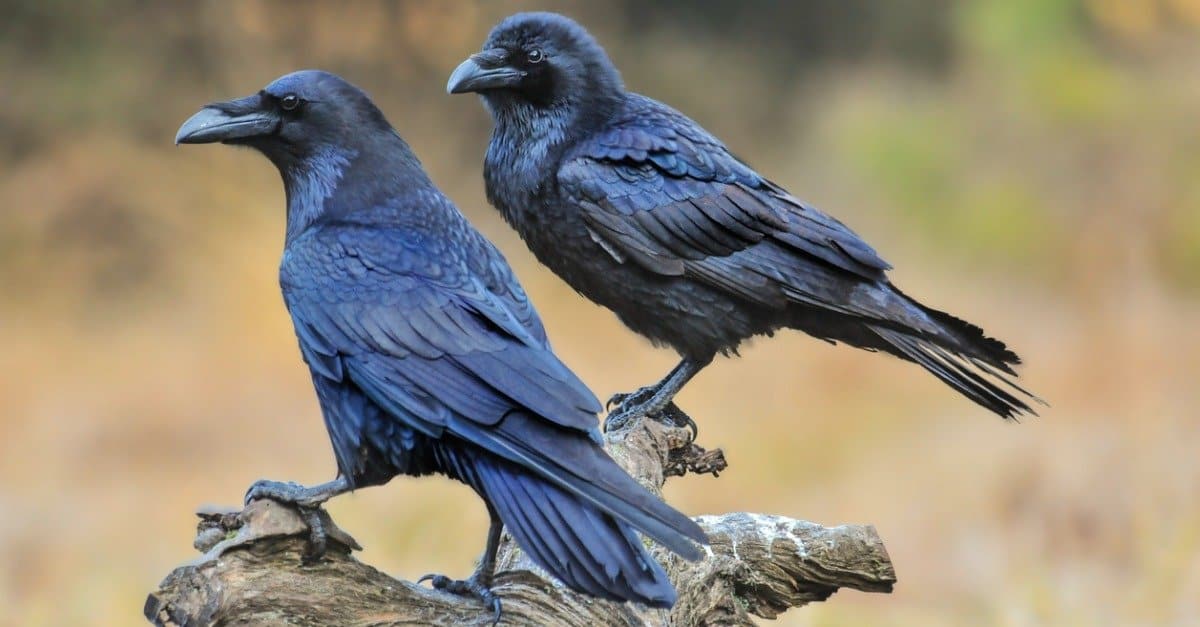

If you have ever spotted a large black bird and wondered, “Is that a crow or a raven?”, you’re not alone. At first glance, these two birds look frustratingly similar, but there are subtle yet distinct differences that separate them.
Size and Body Shape
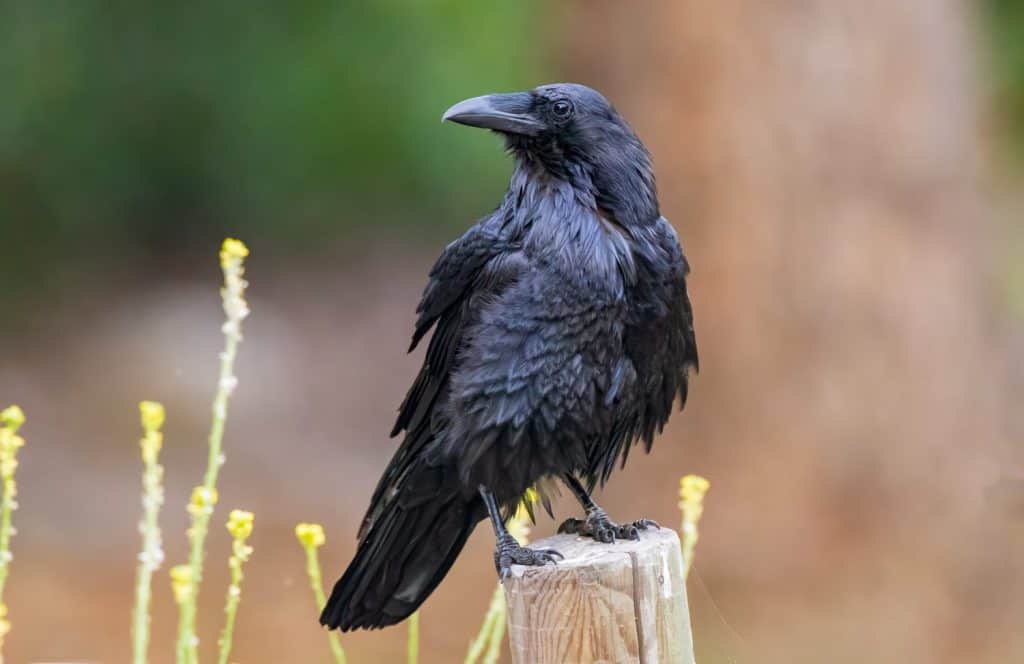
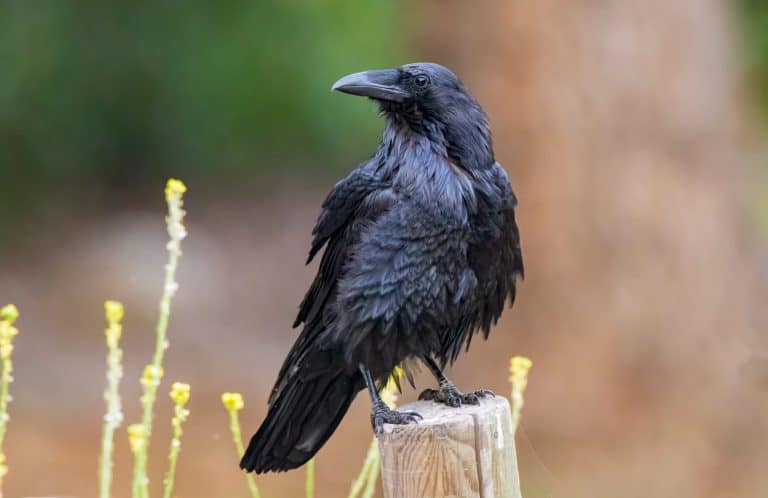
Ravens are larger than crows and have rugged, muscular bodies.
©Matt Krofcheck/Shutterstock.com
The most noticeable difference between a crow and a raven is their size and build. Ravens are much larger, heavier, and more robust than crows.
| Raven | Crow | |
|---|---|---|
| Length | 22 to 27 inches | 17 to 20 inches |
| Weight | 24 to 57 ounces (about 1.5 to 3.5 pounds) | 11 to 12 ounces (about three-quarters of a pound) |
| Wingspan | 45 to 46 inches | 30 to 36 inches |
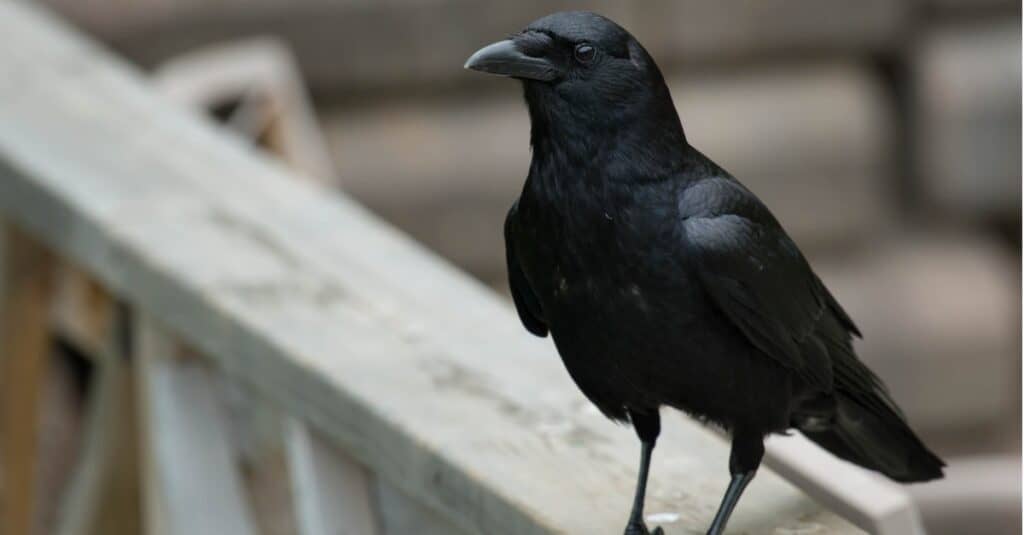
A group of crows is called a “murder.”
©iStock.com/PaulReevesPhotography
Another key factor is the bird’s body shape. Ravens appear rugged, heavy, and muscular, with a build similar to a small bird of prey, such as a hawk or falcon. In contrast, crows look sleek, slender, and smooth, resembling an oversized songbird.
In short:
- If the bird looks like a black bird of prey, it’s likely a raven.
- If it looks like a very large, sleek blackbird, it’s probably a crow.
Head and Beak
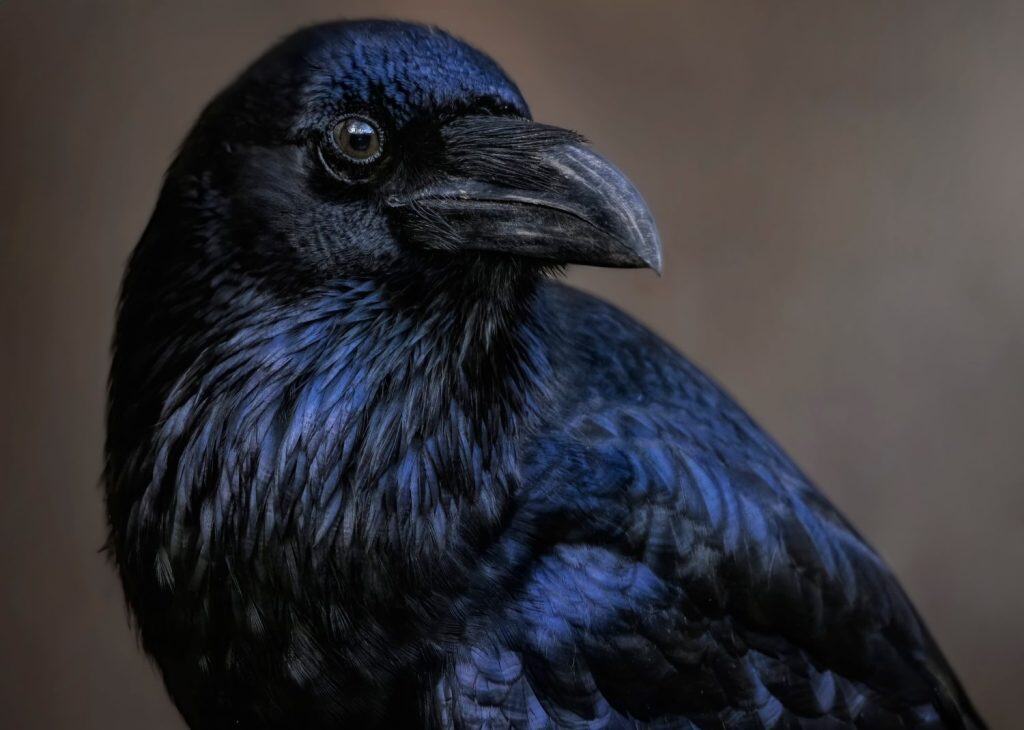
Ravens have large heads and thick, robust beaks.
©ambquinn/Shutterstock.com
Beyond their size, a close look at the bird’s head and beak can be a helpful way to tell a raven from a crow. Not only are ravens the larger of the two, but they also have larger, blocky heads with a rugged, powerful appearance. Their beaks are large, thick, and robust, with a slight curve like a miniature raptor beak. In addition, a raven’s throat often appears shaggy due to its thick, ruffled feathers.
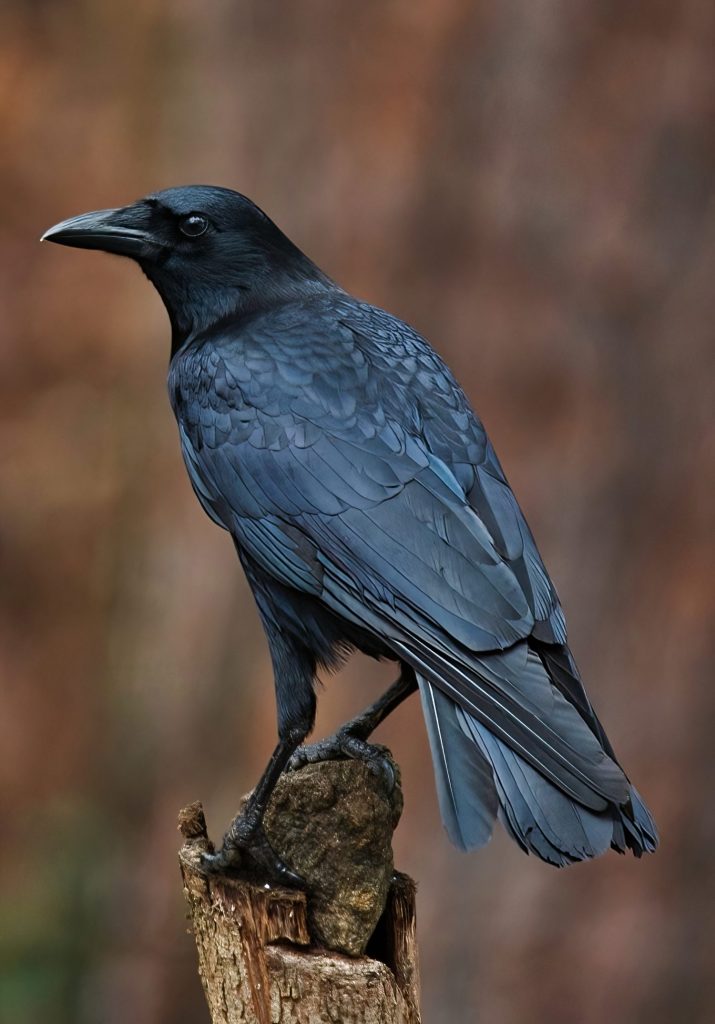
Crows have smaller heads and finer beaks.
©del13/Shutterstock.com
Crows have a cleaner and more streamlined shape and appearance. Their heads are smaller and more rounded, and their beaks are also smaller and less imposing. A crow’s beak is also straighter and more delicate than that of a raven, and their throat feathers are smooth and neat.
In short:
- Think of the raven as having a heavy, blocky head and a thick, curved beak.
- The crow has a smaller, rounded head and a sleek, straight beak.
Do Ravens and Crows Look Different in Flight?
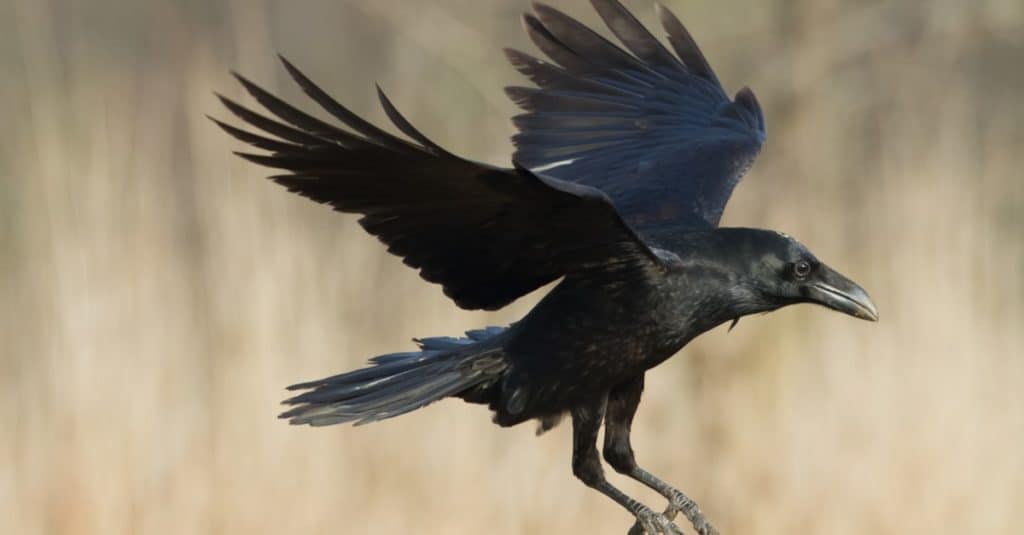
Ravens commonly soar and glide high overhead.
©Marcin Perkowski/Shutterstock.com
When a crow or a raven is flying overhead, the easiest way to tell them apart is by looking at their tail shape and flight style.
Ravens have uneven tail feathers, giving their tails a wedge shape when they fly. Their tails come to a point in the middle, similar to a diamond or a triangle. Crows, in contrast, have fan-shaped tails that are rounded or straight across, appearing even and flat at the end.
In flight, ravens often soar and glide on thermals for long periods, particularly in open spaces. Their wings are narrower and longer, with distinctive, long, thin feathers that look like elongated “fingers.” Their larger bodies and unique feathers make ravens better suited for high-altitude soaring.
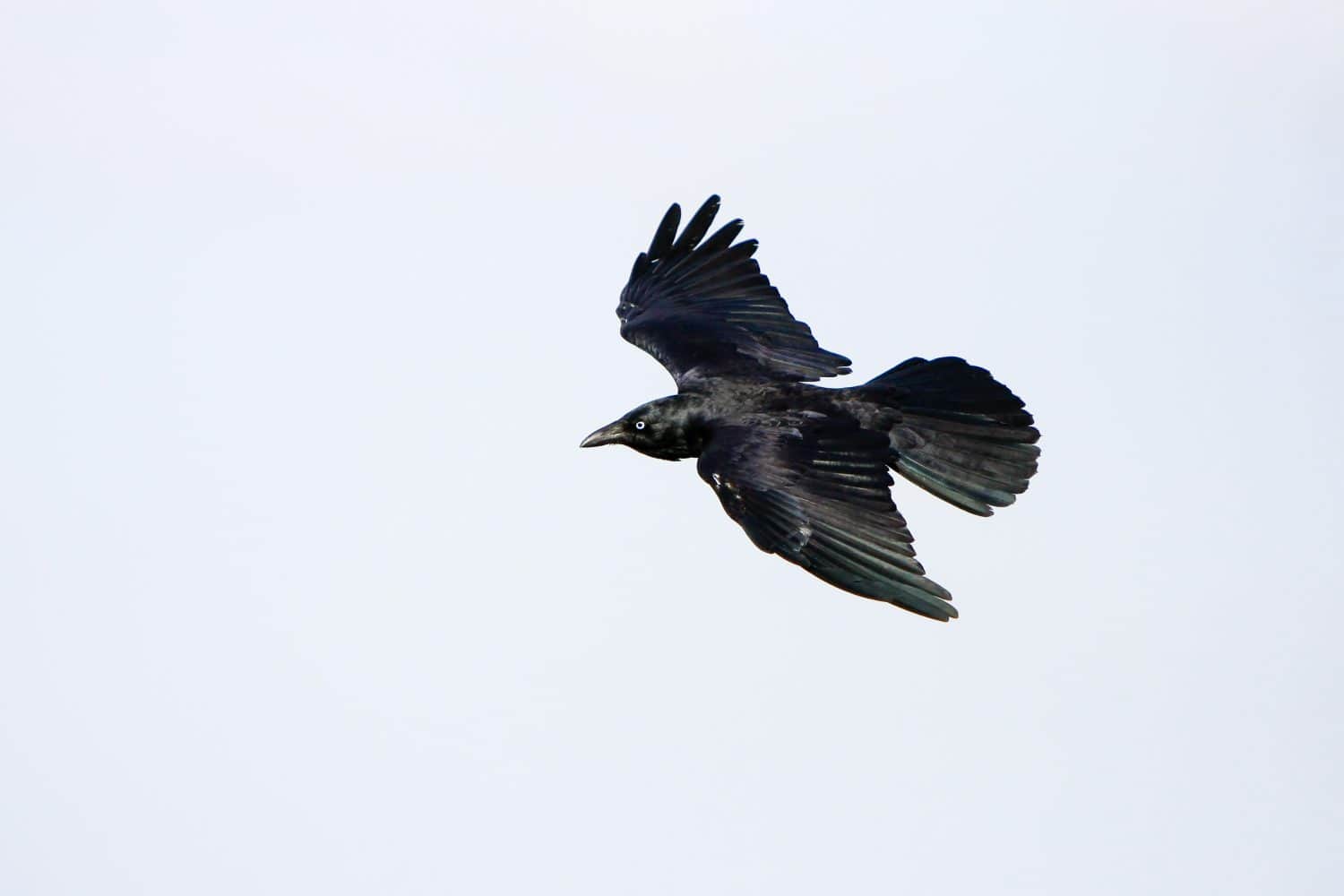
Crows typically do not soar for long periods.
©G Tipene/Shutterstock.com
Crows, in contrast, have shorter and broader wings. They are often seen actively flapping with quick bursts of flight, and are agile at darting through trees and urban areas.
In short:
- If you see a large black bird effortlessly gliding high above with a pointed tail, it’s likely a raven.
- If you see a black bird flapping frequently with a fan-shaped tail, it’s probably a crow.
Identifying Crows vs. Ravens by Sound
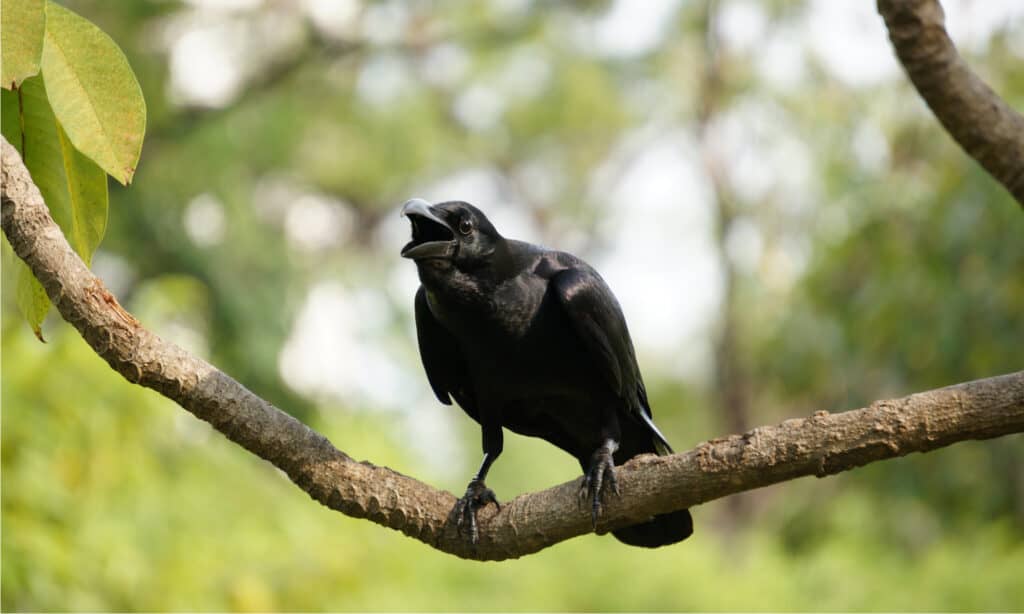
Crows are omnivores and can find food in almost any environment.
©Tomorrow36/Shutterstock.com
If visual identification is difficult, the sound of the bird’s call is another reliable way to tell a crow and a raven apart. The two birds make very different sounds, largely due to their different body sizes.
Ravens, with their larger bodies, produce deeper and more resonant sounds. Their calls are throaty, low-pitched, and often described as “guttural.” A raven’s call can sound mournful, mystical, or simply like a deep, powerful croak from far down the throat. They also learn
Crows make sounds that are higher-pitched, quicker, and more distinct. Their calls are quick, direct, and often described as nasal. The classic, loudly repeated “caw-caw!” sound is exclusive to the crow’s call. Crows frequently use these loud, quick calls to gather family members or warn of intruders.
In short:
- If the call is a deep, throaty croak, it’s a raven.
- If it is a loud, repeated caw-caw! sound, it’s a crow.
Crow vs. Raven: Quick Comparison
| Feature | Raven | Crow |
|---|---|---|
| Size | Larger (22 to 27 inches) | Smaller (17 to 20 inches) |
| Weight | Heavier (1.5 to 3.5 pounds) | Lighter (about three-quarters of a pound) |
| Build | Rugged, powerful, and muscular | Sleek, slender, and streamlined |
| Beak | Large, thick, and curved | Smaller, thinner, and straight |
| Head and Throat | Large, blocky head with shaggy or ruffled feathers | Small, rounded head with smooth and neat feathers |
| Tail Shape in Flight | Wedge-shaped (comes to a point) | Fan-shaped (rounded or straight across) |
| Flight Style | Glides and soars frequently | Flaps frequently. |
| Wing Tips | Distinctive, separated “fingers” | Sleek, slender, and streamlined |
| Call | Deep, throaty croak | Loud, repeated caw-caw! |
FAQs
What is the easiest way to tell a crow from a raven?
Ravens are larger and have wedge-shaped tails, while crows are smaller with fan-shaped tails.
Are ravens bigger than crows?
Yes. Ravens are larger and heavier than crows.
Do crows and ravens make different sounds?
Yes. Ravens have deep, throaty croaks while crows produce high-pitched, sharp “caw-caw” sounds.
Can crows and ravens live in the same areas?
Yes, but crows prefer urban areas and ravens favor open or remote landscapes.
Are ravens more intelligent than crows?
Both are highly intelligent, but ravens show more complex problem-solving behaviors.