
Quick Take
- Porcupines' most dangerous weapon can turn against them, but their bodies have a surprisingly clever countermeasure built right in. See the built-in protection →
- Scientists discovered just how often porcupines fall, with the evidence hiding in their bones. Discover the fall evidence →
- A porcupine quill does something to wounds that no one would expect from a weapon designed to cause pain. Explore the antibiotic effect →
- Porcupines are skilled climbers, yet one simple misjudgment keeps sending them crashing to the ground. See why they keep falling →
Porcupines are known for having painful quills. These quills easily pierce the skin of would-be predators, creating a life-threatening situation if left in place.
Even porcupines are not immune to their quills. They, too, can be stuck by them, particularly during a tumble from a tree. Fortunately, porcupines have evolved to protect themselves from their own quills during falls, ensuring that being stuck by a quill does not become deadly.
Porcupines’ Lifestyle Leads to Being Impaled by Their Own Quills
Porcupines spend a portion of their lives at great heights above the ground. This is because the adorable rodents climb trees to eat cambium (the inner bark), leaves, flower buds, fruit, and twigs. Unfortunately, climbing carries a risk of falling. This happens more often than many people realize, and from time to time, porcupines can be impaled by their own quills.
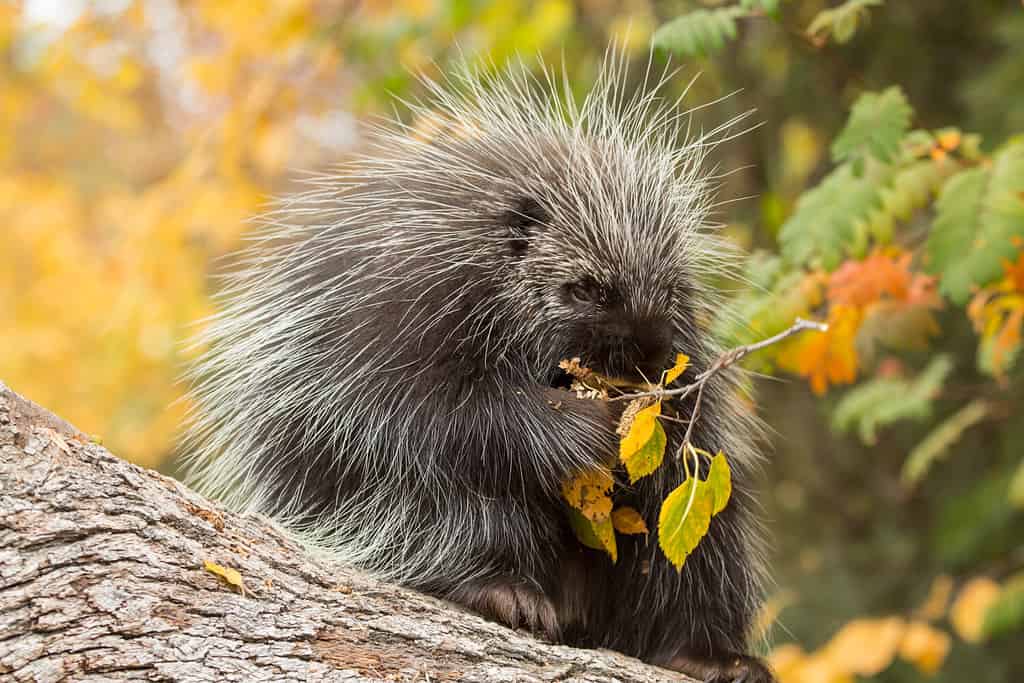
Porcupines are not immune to being stuck by their own quills.
©Warren Metcalf/Shutterstock.com
A porcupine’s quills are not firmly attached to its skin. While this is beneficial for defense, it also means there is a risk that a barbed quill could stick into the porcupine itself during a fall. Because puncture wounds from quills can become infected, it seems odd that porcupines would have a defensive mechanism that could also hurt them.
Interestingly, while porcupines can be injured from falling, it is not the quills that cause the most damage. Instead, the keratin quills are equipped to help heal porcupines if they are stuck by them.
How Porcupines Are Protected from Their Quills
It was not clear how often porcupines fell until their skeletons were studied. With one-third of deceased porcupines having broken bones that never properly healed, porcupines fall far more often than anticipated. When porcupines fall, they can and do become impaled with their quills. Fortunately, their bodies protect them, reducing the risk of infection.
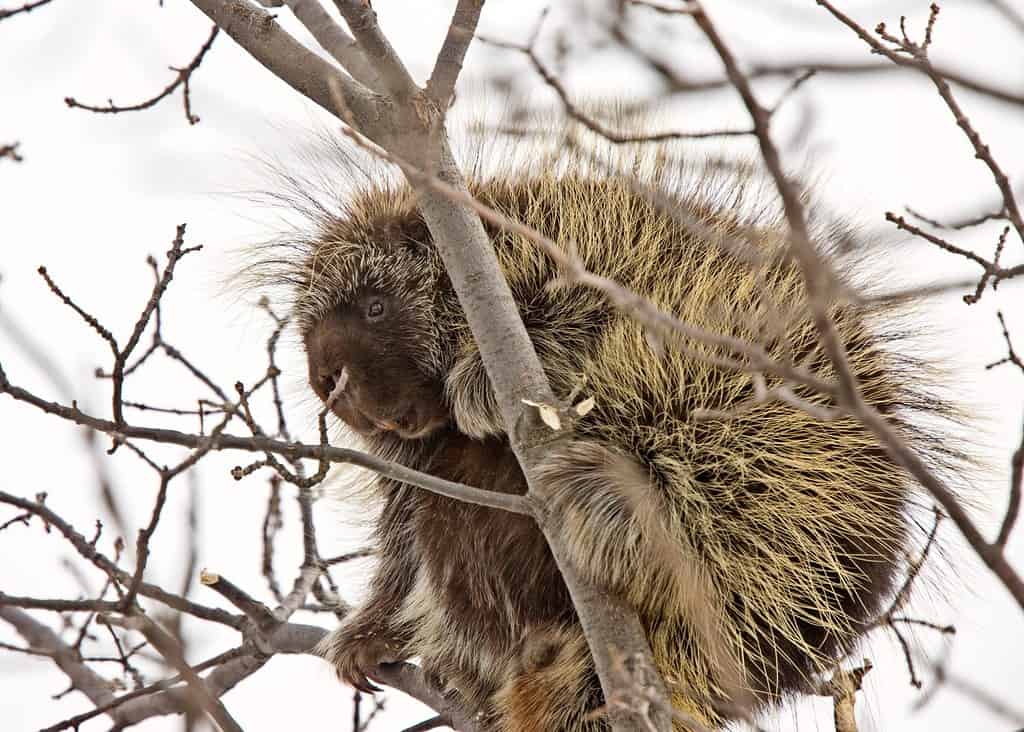
Porcupines falling from trees can get stuck by their quills. Thanks to the antibiotics that coat the quills, impalement injuries do not get infected.
©Pictureguy/Shutterstock.com
Porcupine quills possess antibiotics. The antibiotics, in the form of free fatty acids, coat the quills. The fatty acids have been shown to inhibit the spread of gram-positive bacterial strains, such as Staphylococcus aureus, which can lead to bloodstream infections, pneumonia, inflammation of the inner lining of the heart, and more if left untreated. The antibiotics do not appear to have any effect on gram-negative bacterial strains.
This means that while it may hurt to have a quill embedded in the skin, the likelihood of infection is low. Given how painful the quills are, at least porcupines do not have to worry about wounds getting worse once the quill is removed.
How Often Do Porcupines Fall?
Porcupines are very skilled climbers. Problems occur when their approximately 20-pound bodies reach their destinations high above the ground. This is because porcupines may not be as good at judging whether a branch can hold their weight as they are scaling up to it.
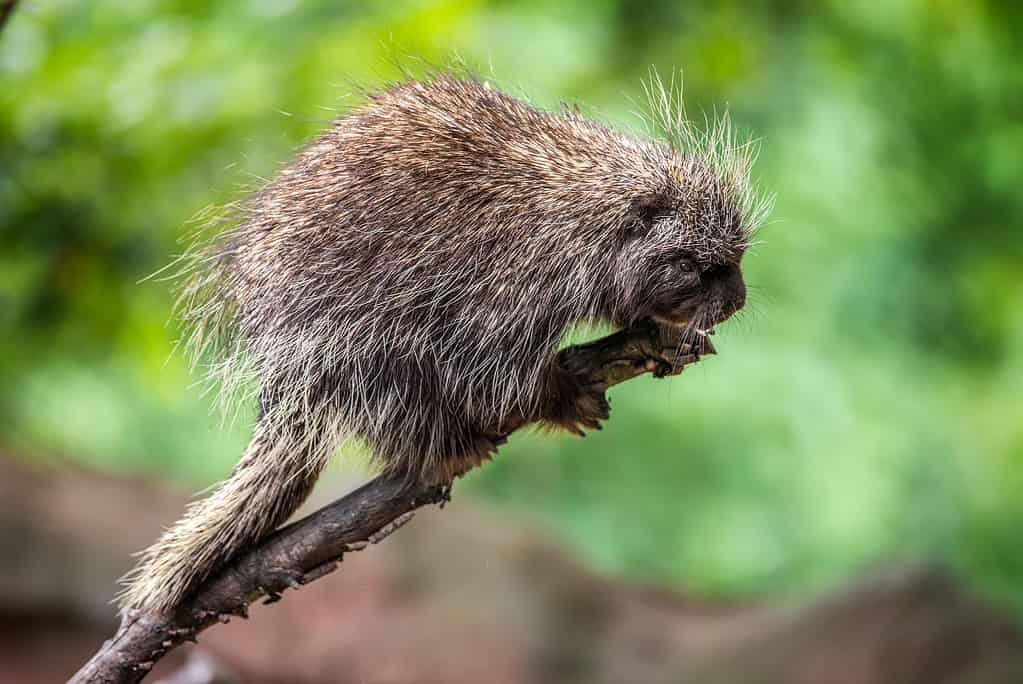
Porcupines are skilled climbers but are not as good at judging whether a branch can support their weight, which contributes to their falls from trees.
©miroslav_1/iStock via Getty Images
With their long claws and strong gripping hands, porcupines are adept climbers and will attempt to climb almost any tree. While there are no statistics as to how often porcupines fall, there are some common reasons why porcupines fall from the trees they masterfully ascend. Those reasons include:
- The branch cannot support the porcupine’s weight
- Porcupine becomes startled and loses grip
- Icy or wet surfaces interfere with the porcupine’s ability to balance itself
Given that porcupine quills are coated with antibiotics, porcupines are pricked by their own quills often enough to make this adaptation necessary. Therefore, porcupines fall often enough that climbing trees can be a risky business. Yet, because of their love for bark and tree foliage, porcupines continue to climb trees to feed on their favorite foods in their habitats.