

Quick Take
- Blue jays carry zero blue pigment, which raises the question of what is actually making them one of nature's most vivid blue animals. Discover the blue secret →
- Blue jays deliberately rub ants on their feathers, and the reason behind this bizarre habit is even stranger than it sounds. Uncover the ant-rubbing habit →
- A legend claims the blue jay you see today is only a fraction of its original size, with humans allegedly to blame for the change. Explore the size legend →
- Blue jays are fiercely aggressive and territorial, yet something about their social life makes them a surprising symbol of romantic longevity. See their monogamous bonds →
Mark Twain, a fan of the beautiful and elegant blue jay, once said, “There’s more to a jay than any other creature. You may call a jay a bird. Well, so he is, in a measure, ’cause he’s got feathers on him and he don’t belong to no church perhaps, but otherwise, he’s just as much a human as you and me.”
A passerine bird, the blue jay is native to North America and can also be found in the eastern and central parts of the United States. Some of the populations of this bird are even known to be migratory. These birds are forest dwellers and are highly adaptable as well as intelligent in nature. They are known to be able to imitate hawk calls and are especially famous for their “jay jay” call.

Five Incredible Blue Jay Facts
- These birds carry a brown pigment in their feathers. However, they are blue. Blue is the least common color in nature, making it a rare blue animal.
- These birds are known to rub ants on their feathers.
- Blue jays also collect paint chips.
- They can imitate hawk calls.
- They are known to turn noisier when the fall sets in and mellow down during the spring and summer months.
Classification and Scientific Name
The blue jay goes by the scientific name Cyanocitta cristata and belongs to the family Corvidae. It comes from the class of Aves and the kingdom Animalia. They get their name blue “jay” from the noises that they are known to make that sound exactly like it.
Evolution And History
This feathered animal has been around for a long time. Belonging to the corvid family, they have an ancient lineage that dates back 25 million years ago to the Miocene era, when fossil remains were discovered. Like all birds, they are considered avian dinosaurs and most likely evolved after the extinction of dinosaurs. It was originally believed that birds were derived from the ancient bird-like creature Archaeopteryx that lived in the Jurassic period, but after the discovery of the fossils of small feathered birds, this ancient creature may just be a relative.
Types Of Blue Jays
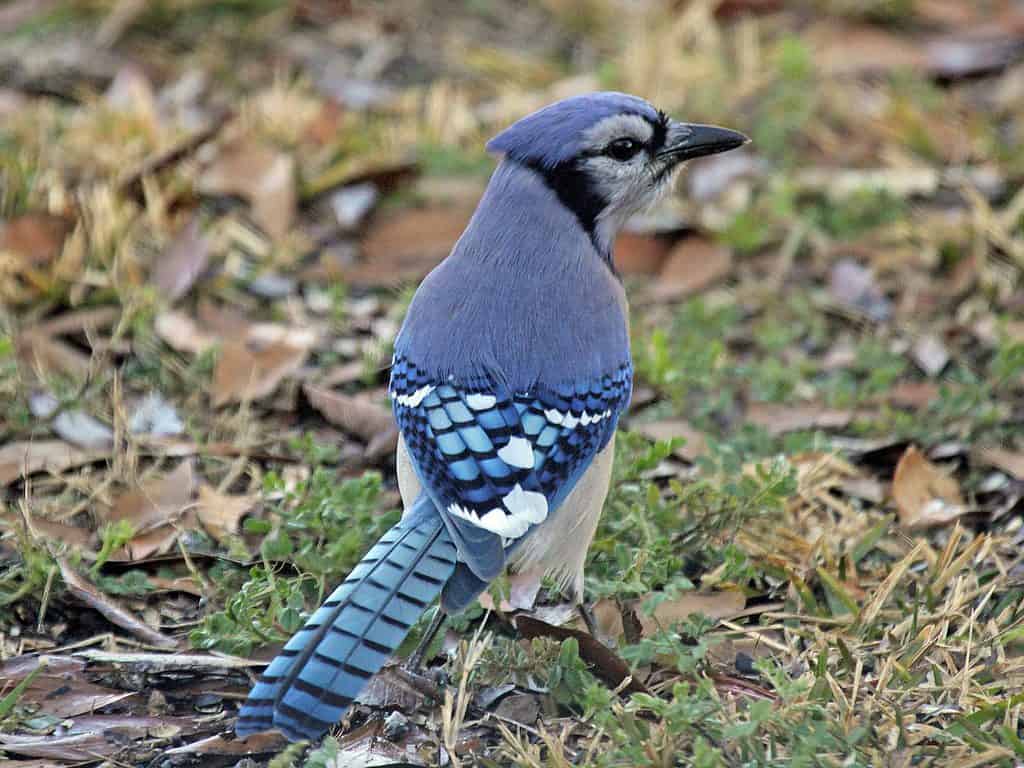
The coastal blue jay is one of four subspecies of the blue jay.
©DickDaniels (http://theworldbirds.org/), CC BY-SA 3.0 – Original / License
Two jays belong to the family Cyanocitta — the blue jay and the Stellar’s jay (Cyanocitta stelleri), which is found to the west of the Rocky Mountains. The blue jay then branches further with an additional set of subspecies that includes several blue jays. These are:
- Interior Blue Jay (Cyanocitta cristata cyanotephra) — primarily found within the southeastern United States in Nebraska, Kansas, Oklahoma, and some parts of Wyoming and Texas.
- Northern Blue Jay (Cyanocitta cristata bromia) — found in parts of the central United States, though it is also found in the southern region of Canada.
- Coastal Blue Jay (Cyanocitta cristata cristata) — native to the eastern side of the United States
- Florida Blue Jay (Cyanocitta cristata semplei) — exclusively found in Southern Florida.
Symbolism Of A Blue Jay
The symbolism of the blue jay bird is vibrancy, intellect, and clarity. They are known to be songbirds who love singing in their free time, and their creativity is well-known, too. These birds are often used as a totem, but it doesn’t quite have the symbolism that Old World birds do since they are native to the northern hemisphere. Still, in the Sioux, Chinooks, and Coast Salish tribes, it has found a home in many myths and stories.
European folklore has a special place for blue jays as well. Many people believe that the bird is tricky, imitating other creatures and preserving the secret location of its own nest. One story, which is told by Europeans and Americans alike, suggests that the original blue jay was much bigger than the bird known today. As the legend goes, the large Jay was once kept captive by people who used it to help them plow their lands. To avoid ever being entrapped and enslaved again, the bird urged the Great Spirit to make him a fraction of his size. The details of his chest are allegedly the remnants of the marks he received while plowing for humans.
They have also been linked to Great Oak trees for the seeding they perform, leading many Celtic people to see them as a reincarnated soul of the Druids. As a spirit animal, the blue jay stands for longevity in relationships, whether they are of a romantic or platonic nature. Perhaps this is due to their monogamous habits.
Appearance And Behavior
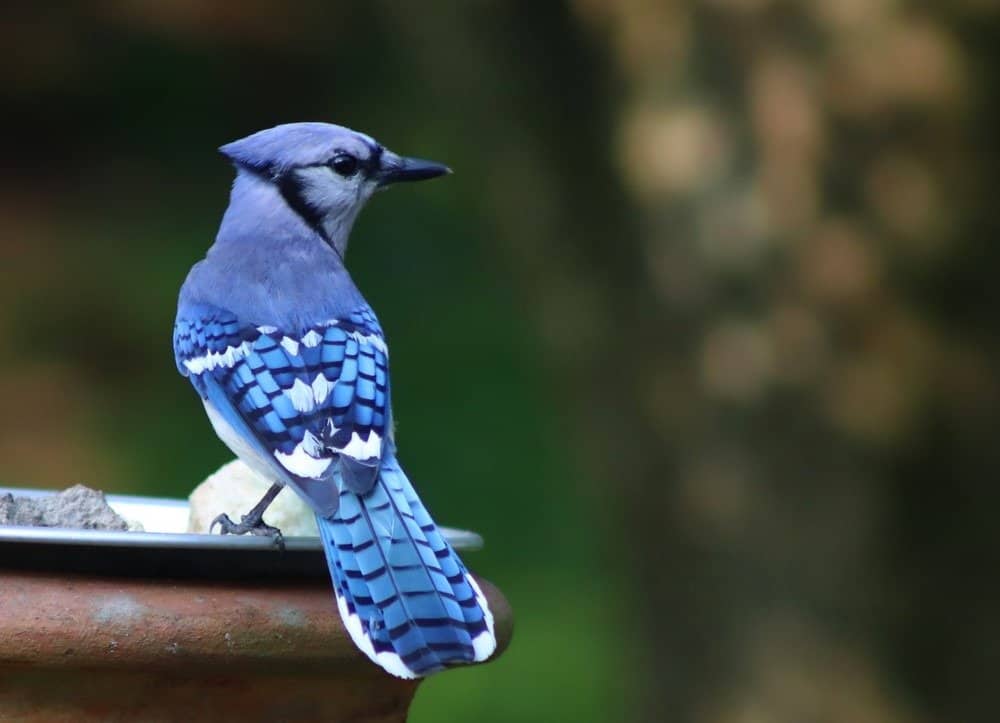
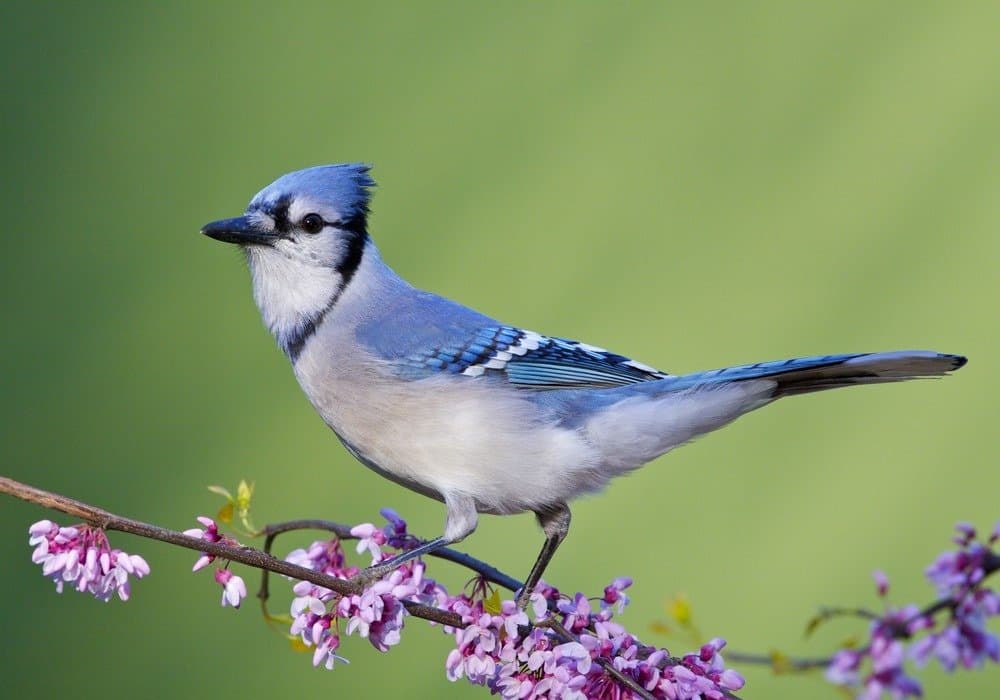
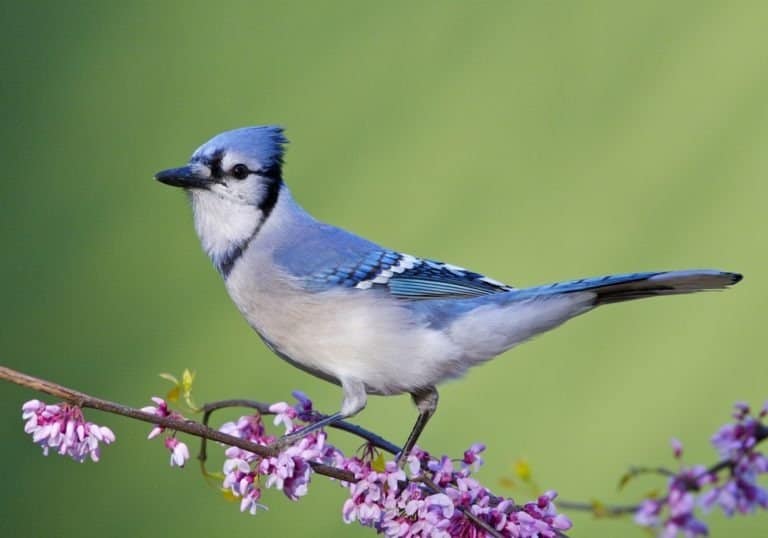
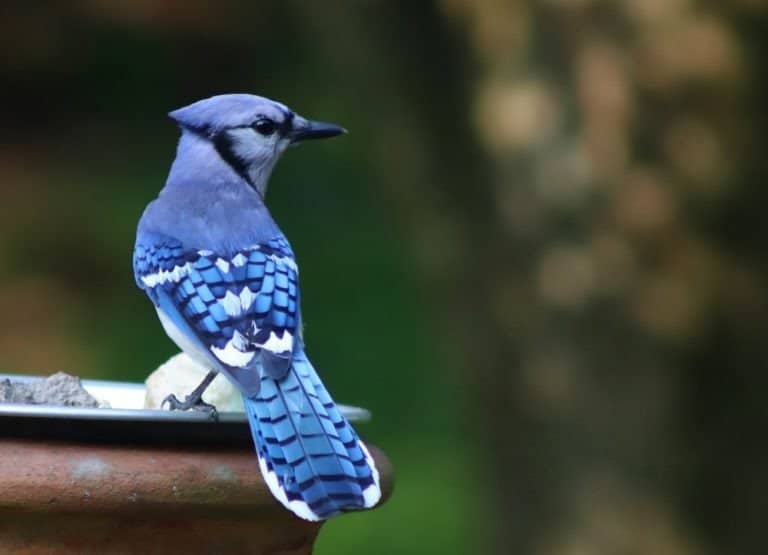
The Blue Jay is a rare example of a blue animal.
©Eleanor McDonie/Shutterstock.com
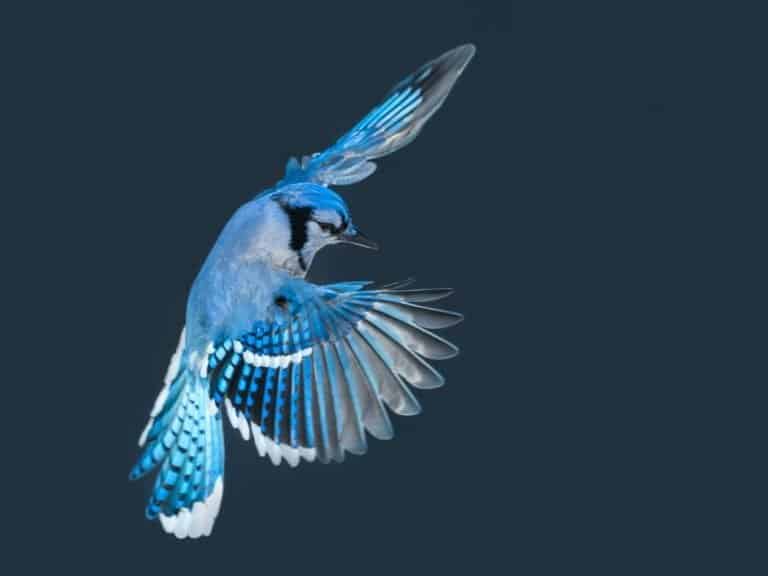
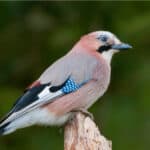
As the name suggests, this bird is blue. These birds have a brown pigment (melanin) in their feathers, but their blue color is actually due to microscopic feather structures that scatter light, not blue pigment. Blue is one of the least common colors in nature, making the blue jay a rare example of a blue animal. The bird is approximately 9 to 12 inches in height and weighs around 2.5 to 3.5 ounces.
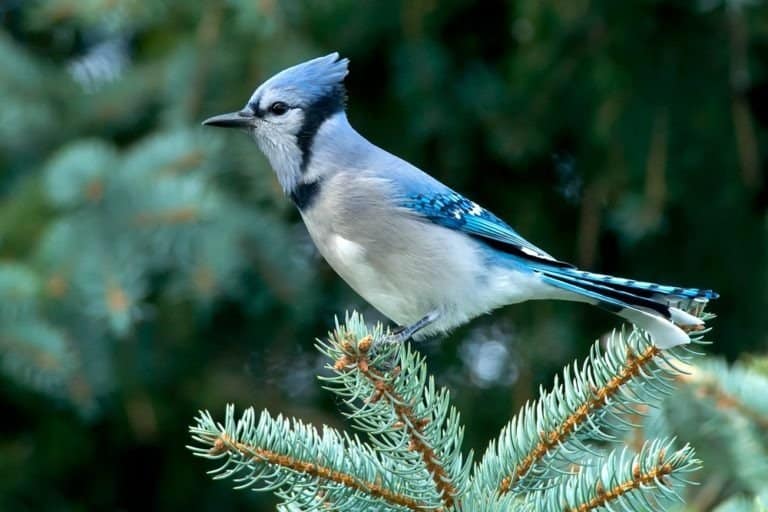
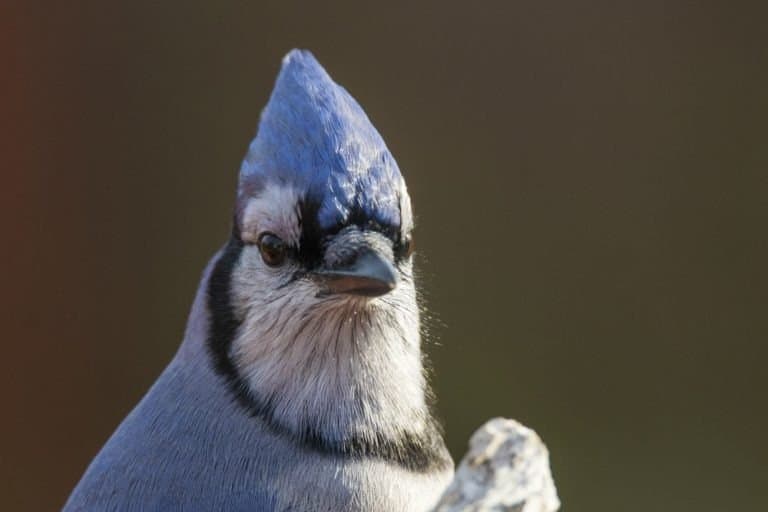
The peak of its head is blue, while the color of the feathers changes to grey or white towards the throat of the bird, and this grey or white coat continues to its chest and further to its belly. The crest on its head is greyish blue, and the bird has black and white bars on its tail and wings, which make it uniquely distinguishable. A black band that looks like a necklace runs across its lower throat.
Behavior-wise, the blue jay is known to be an aggressive creature and is a territorial bird. These birds do not shy away from attacking any possible intruders or predators that they sense any danger from. Even though they are aggressive, they are social and usually exist in groups.
This bird is also known to be very vocal and often makes different noises for the sake of communication. It is particularly famous for its ‘jay-jay’ noise, which also gives it its name. Some other noises that this bird makes include growling, chattering, and whistling.
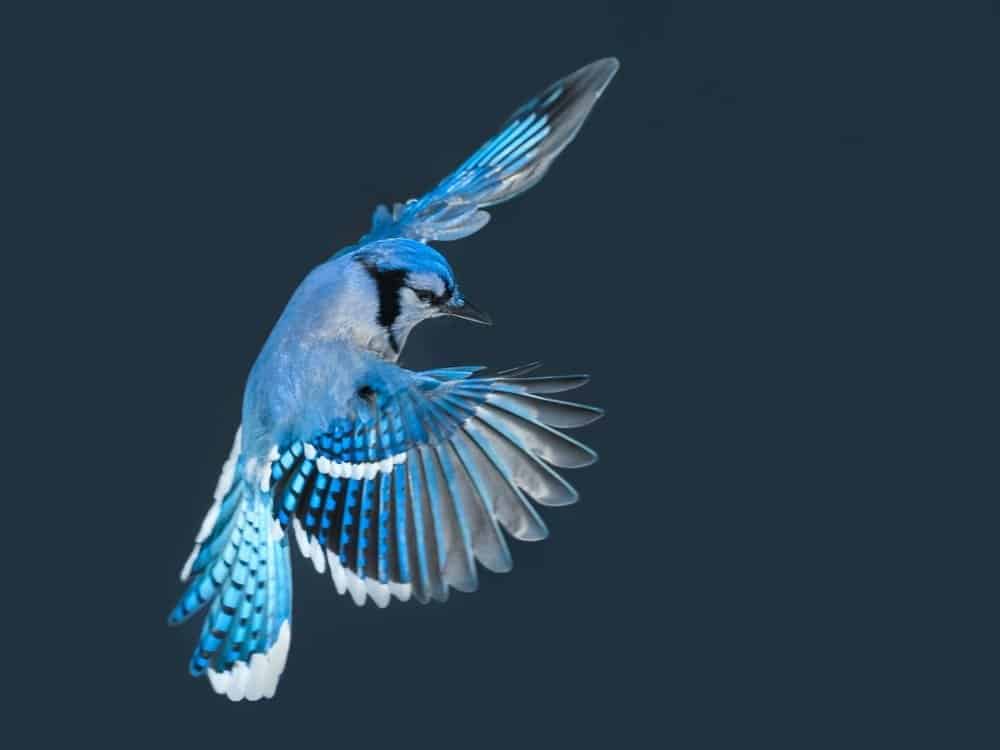
Blue Jays are aggressive and territorial birds and will not shy away from attacking when they sense danger.
©FotoRequest/Shutterstock.com
Habitat
These birds are most commonly found in the eastern and central parts of North America. However, they are also known to be extending their range to the northwest. They prefer coniferous forests and can also be found in southern Canada, besides parts of the United States.
Usually, the blue jay is found in low forest areas, and this bird likes to live in beech and oak trees. They can regularly be found in city parks and can be easily recognizable as they are one of the most colorful and loudest birds, and are usually very unlikely to miss. It is also very common to spot this bird in heavily residential areas.
Diet
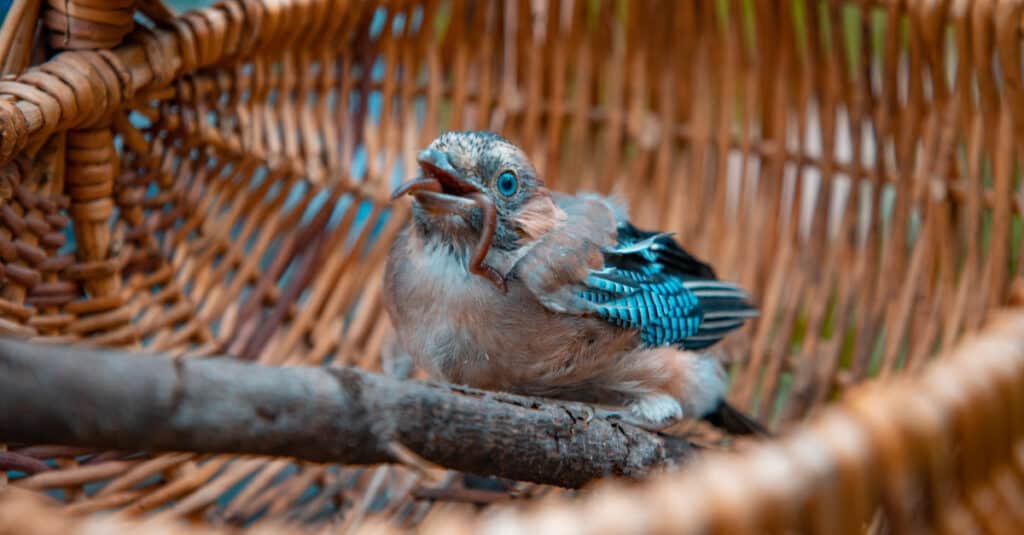
Blue Jays feed primarily on nuts, seeds, and acorns but will also eat bugs, eggs, and nestlings.
©realina/Shutterstock.com
Known to be largely vegetarian, the diet of these birds usually consists of nuts, acorns, and seeds. However, their diet also comprises beetles, grasshoppers, and caterpillars. Besides that, these birds are also known to eat eggs and nestlings. This makes them omnivorous.
Predators And Threats
Like any other animal or bird, these birds are an important part of the ecosystem. Several predators within the bird family even pose a threat to the blue jay’s existence. Some of them include falcons, hawks, and owls.
Crows, cats, squirrels, raccoons, and other birds will feed on the nestlings or baby blue jays, which is a practice the blue jays have become infamous for.
Other dangers that the blue jays are threatened by include man-made structures that these birds could collide with. Meanwhile, some viral and bacterial diseases could also be the cause of death for these birds. The IUCN has, however, put these birds under the “least concern” category.
Reproduction And Life Cycle
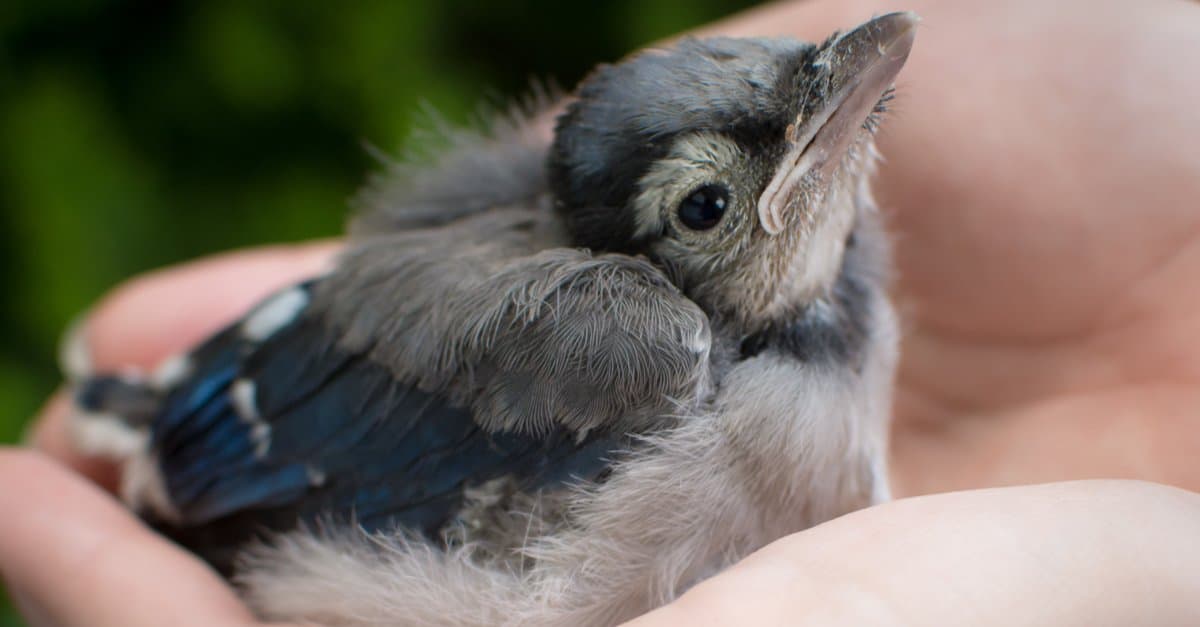
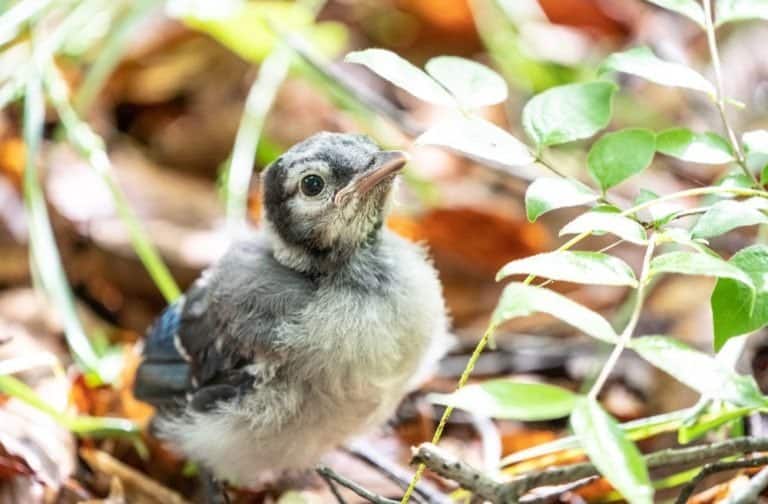
A baby jay stays in the nest for 17 to 21 days, where both parents care for it.
©Jane4of5/Shutterstock.com
Blue jays are known to be birds that form pairs that mate for life and show exemplary partnership skills in parenting their nestlings. The female jays usually pick male partners to mate with. The process starts around late winter.
After the baby has been conceived, the pair starts building multiple partially completed nests for the unborn offspring. After building a few nests, the pair usually settles in one location. The nests are finally readied with the help of moss, twigs, foliage, leaves, and bark. The incubation period in these birds usually lasts from about 16 to 18 days.
The female blue jay lays three to five eggs, after which she sits on them, incubating them for a little over two weeks. During this time, she is fed and taken care of by the male blue jay.
After the eggs hatch and the newborns are welcomed into the world, they stay in the nest for 17 to 21 days, after which the parents and the newborns go stay with the rest of the family for a while. During this time, the male and the female blue jays together take responsibility to feed and take care of the babies.
Usually, blue jays live for seven years on average. However, they are known to exist for about 17 to 26 years in captivity.
Population
About 17 million blue jays are known to exist in the world. However, their population decreased by about 28% between the 1960s to 2015. About 87% of the blue jay population is known to be living in the US, while 13% is known to be living in Canada.
The migratory habits of blue jays bring them up and down the Atlantic coast (along with the Great Lakes), but little else is known about where they go.
Blue Jay Pictures
View all of our Blue Jay pictures in the gallery.

Tom Reichner/Shutterstock.com
Sources
- National Geographic / Accessed November 6, 2020
- Wikipedia / Accessed November 6, 2020
- Tail of Birding...and Things with Wings / Accessed November 6, 2020
- Nature Canada / Accessed November 6, 2020
- Avibase - The World Bird Database / Accessed November 6, 2020
- World Birds / Accessed November 6, 2020
- Nature Works / Accessed November 6, 2020
- American Expedition / Accessed November 6, 2020
- Bio Kids / Accessed November 6, 2020
- Sciencing / Accessed November 6, 2020
- All About Birds / Accessed November 6, 2020