
Quick Take
- The results of a 60-year study on great tits in an Oxfordshire, England forest were recently published on March 11, 2026.
- The study found that the birds had adapted their spring breeding times to adjust for climate change.
- The study also found that early cold snaps combined with heavy rain adversely impacted fledgling weight, while heat waves helped boost that weight in certain conditions.
- The study’s findings have important implications for future conservation efforts.
The results of a 60-year study of more than 80,000 wild great tits, Parus major, are out and shedding light on the impact of extreme weather on this ubiquitous songbird in the UK. Researchers at the University of Oxford revealed that while cold and rain adversely impact great tit chicks, extreme heat had the opposite effect.
These findings serve as a warning that the impact of global climate change starts long before chicks leave the nest.
About the Study
This groundbreaking, six-decade study focused on Wytham Woods, a private research forest in Oxfordshire, England. The area is a popular one for bird researchers and is one of the most-studied bird habitats in the world.
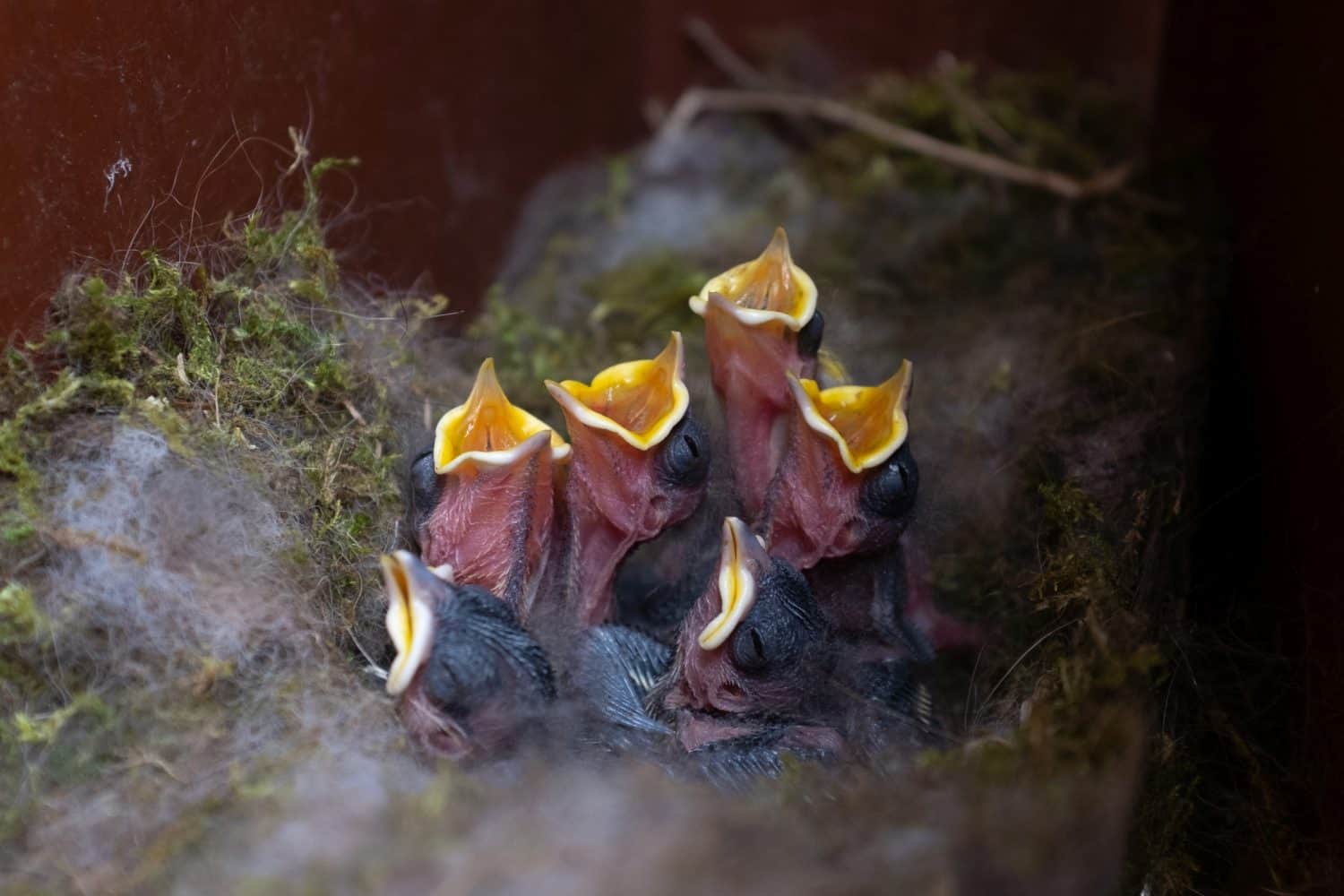
More than 1,000 wooden nest boxes have been in place throughout the forest since the late 1940s. These manmade nesting spots are a favorite of the great tit as the birds seek out cavities to build their nests. With the boxes full of breeding pairs, scientists are able to study great numbers of Great Tits each spring.
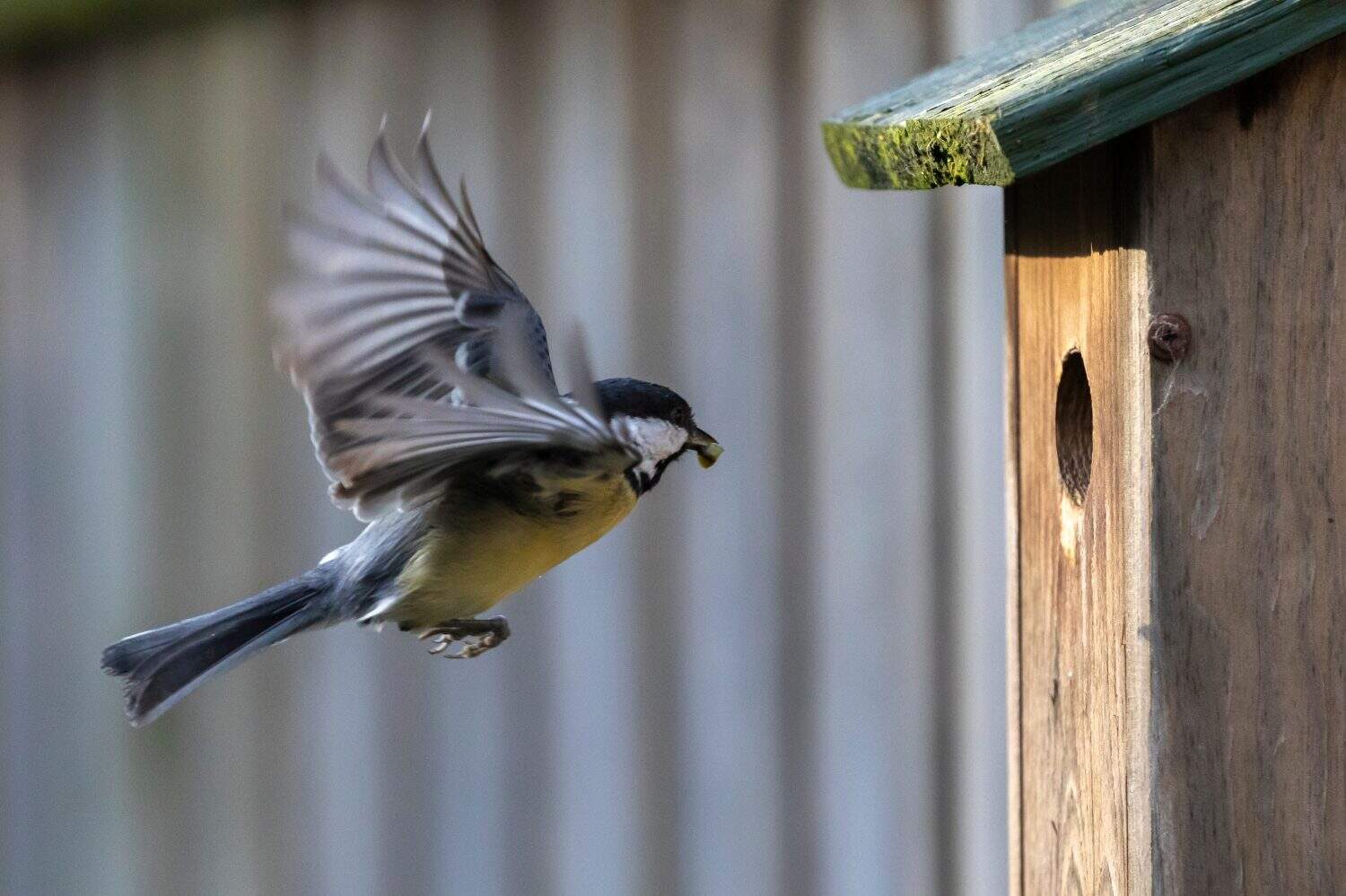
Great tits are cavity nesters, meaning nestboxes are the ideal place to breed and rear their young.
©TM Image design/Shutterstock.com
For this study, Oxford researchers began collecting data in the 1960s, tagging and tracking every mating pair of Great Tits each season. They recorded the exact day each egg was laid and the weight of each chick at 15 days old. This happened each and every year for the duration of the study from 1965 through 2024. In total, more than 80,000 individual wild great tits were involved.
Armed with the detailed bird data, researchers were then able to overlay 60 years of weather data to see how extreme weather events impacted chick survival across generations. The two data sets allowed researchers to synthesize that data and make some startling conclusions.
The study focused on fledgling mass–the weight of the bird when it first leaves the nest. Weight is the number one predictor of whether the bird will survive into adulthood.
What the Study Found
The long-term longitudinal study made a number of surprising conclusions.
Timing Matters
To survive, bird eggs have to hatch when their primary food source is abundant. In the case of the great tit, this means caterpillars. As UK springs get warmer earlier due to climate change, caterpillars arrive earlier, too. To adjust, great tit populations have adjusted by moving their own breeding cycle back earlier in the spring.
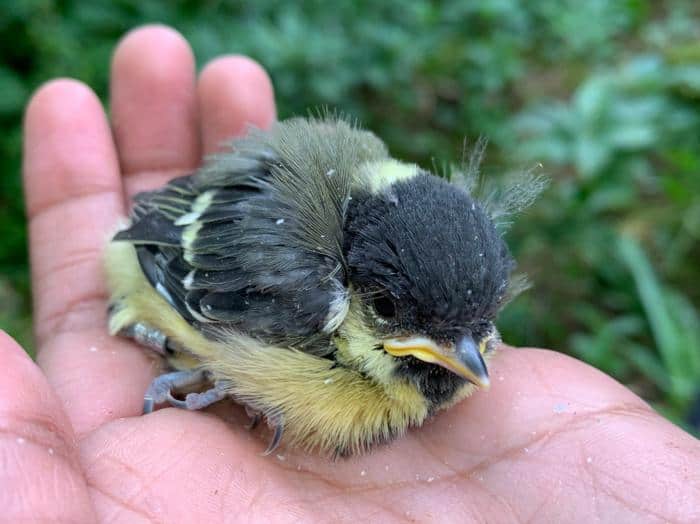
A great tit fledgling
Unfortunately, by laying their eggs earlier, the eggs and chicks are exposed to the bigger temperature swings and weather fluctuations of early spring. This includes cold spells, heat waves, and heavy rain.
The Impact of Extreme Cold and Rain
Hatchlings don’t have feathers and, as a result, cannot effectively regulate their body temperatures. This requires them to expend their limited energy to stay warm rather than grow.
Cold and rain also prevent great tit parents from effectively foraging, as they tend to stay in their protected nests during the extreme weather. The weather also dislodges caterpillars from their usual vegetation, meaning that when parents do venture out, it is harder for them to find enough food to satisfy their babies’ needs.
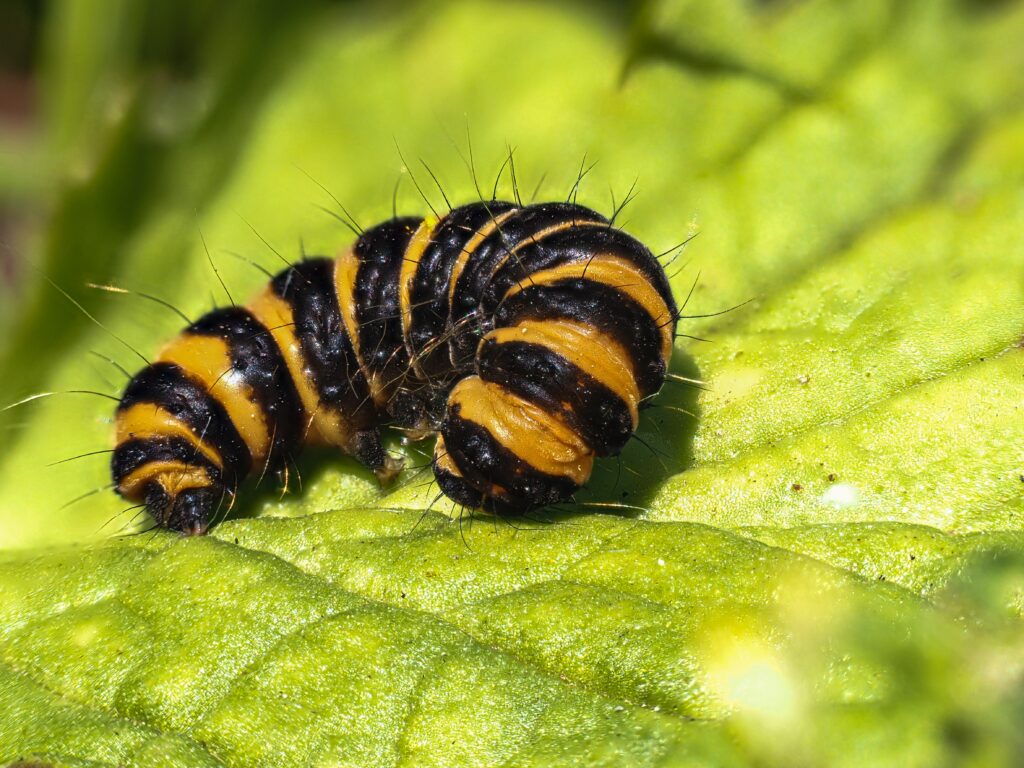
Caterpillars are a primary food source for great tits. Heavy rain in the spring often dislodges caterpillars from vegetation, making it difficult for the birds to find them.
©Signe Hoppe Fotografie/Shutterstock.com
Researchers determined that extreme cold has the biggest impact during the hatchlings’ first week of life, while intense rainfall has a bigger impact as the nestlings grow older. In both cases, fledging mass was reduced by up to three percent due to the extreme cold and rain.
The Impact of Extreme Heat
When a heat spell arrives, it often has the opposite effect. Alone, hot extremes actually increase fledging mass during the nesting stage, at least for birds born early in the season.
Lead researcher Devi Satarkar, of the Department of Biology, University of Oxford, explained in a recent press release, “Extreme weather events are affecting wild bird populations in complex ways. The level of warmth we see in these heat extremes in Oxfordshire might boost growth because it can increase insect activity and visibility, making caterpillars easier to find while letting parents forage more and reducing nestlings’ thermoregulatory costs. The high water content in caterpillars also helps against dehydration.”
The same is not true for birds born later in the breeding season who are exposed to extreme heat. Researchers found that fledglings in those conditions are about one-third lighter than their early-spring counterparts.
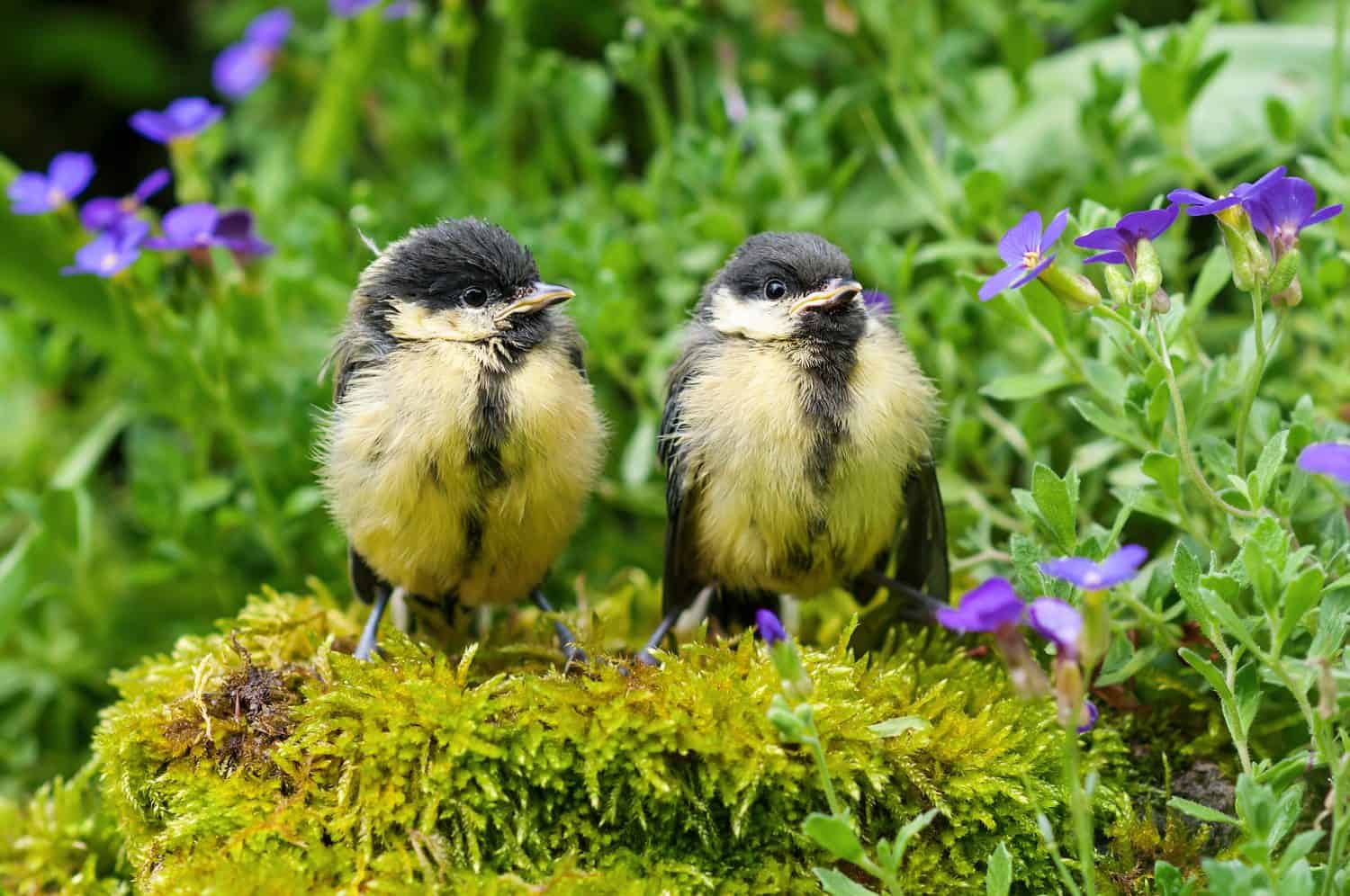
The fledging weight of great tits was directly impacted by extreme weather.
©Oksana_Schmidt/Shutterstock.com
The study notes that the ‘hot days’ experienced by great tits in Oxfordshire are milder than heat waves in southern Europe, where temperatures can reach 95°F or more. If those extreme temperatures are regularly seen in England’s great tit territory, the heat would be harmful to great tits across the board.
Final Study Conclusions
Cold weather combined with heavy rainfall, conditions typically associated with early spring weather fluctuations, has the most damaging impact on fledging growth. Extreme heat for early-season hatchlings actually boosts fledgling mass. However, for hatchlings born later in the season, that extreme heat, when combined with heavy rain, can actually reduce the fledgling’s weight by 27 percent.
The Impact of Climate Change on Future Generations
This study demonstrates that great tits are adapting to changing weather patterns driven by climate change. However, that adaptation brings new challenges and is reshaping what survival looks like long before a bird is ready to leave the nest.
The study also notes that these changing breeding habits are creating a need to better monitor conditions around species breeding and populations. Additional research can help scientists and conservationists make informed decisions about things like woodland management and nestbox placement to protect vulnerable babies and keep wildlife populations at healthy levels.