
Cats can be such elegant, elusive creatures that it makes you wonder where they get their cultivated sense of style, taste, and balance. While their outsized ears and crystalline eyes definitely factor into the equation, it is their whiskers that do the heavy lifting. Indeed, whiskers play an integral role in a cat’s sensory perception. More than just fashionable decorations, whiskers help cats navigate and assess the world.
These specialized sensory organs factor into so much of a cat’s life, whether it’s keeping them balanced, helping them navigate tricky routes and blind spots, or guiding their hunting strategies. They even use their whiskers as an appendage of emotional expression. Suffice it to say that whiskers play an important role in every cat’s interfacing with reality. Let’s learn more about cat whiskers, the biology behind them, their functions, and the role they play in survival.
Whisker Facts and Figures
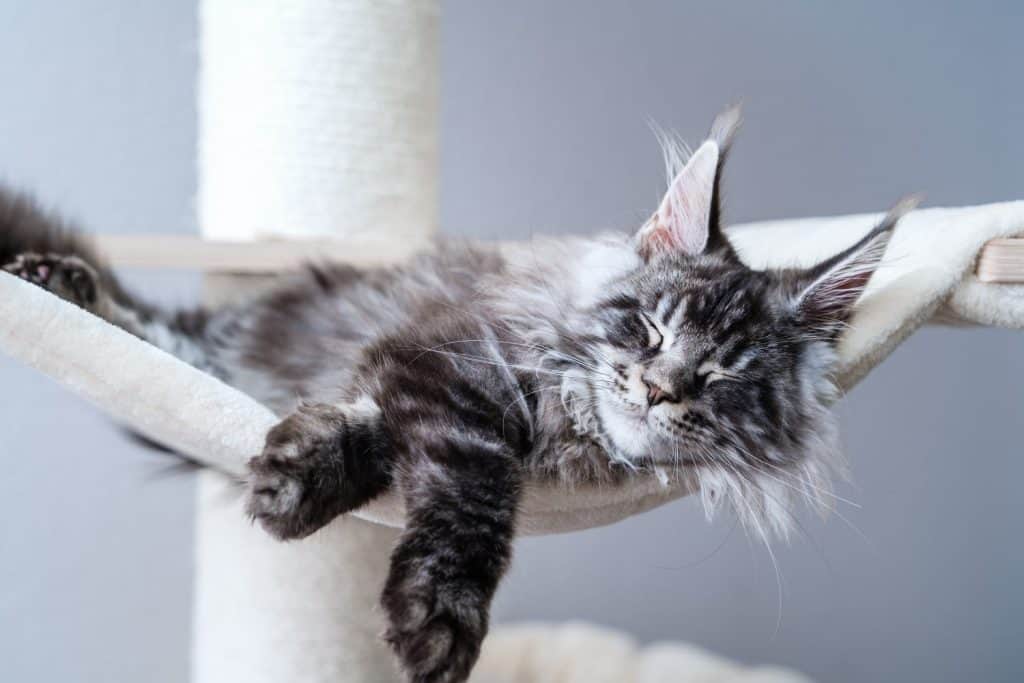
Whiskers are known scientifically as vibrissae. They are made of the same material as normal hair but are connected to specialized hair follicles containing cells that detect changes in movement, pressure, and vibration.
©Tatyana Soares/Shutterstock.com
Whiskers on animals like cats are a type of specialized sensory hair called vibrissae. While they are made of keratin, like normal hair, whiskers are more deeply embedded in the skin. At their roots, they are embedded in specialized hair follicles lined with proprioceptive and mechanoreceptor cells. These cells can acutely detect the slightest changes in movement, pressure, and vibration. Each of a cat’s facial whiskers connects to a network of nerve endings that link to the trigeminal nerve.
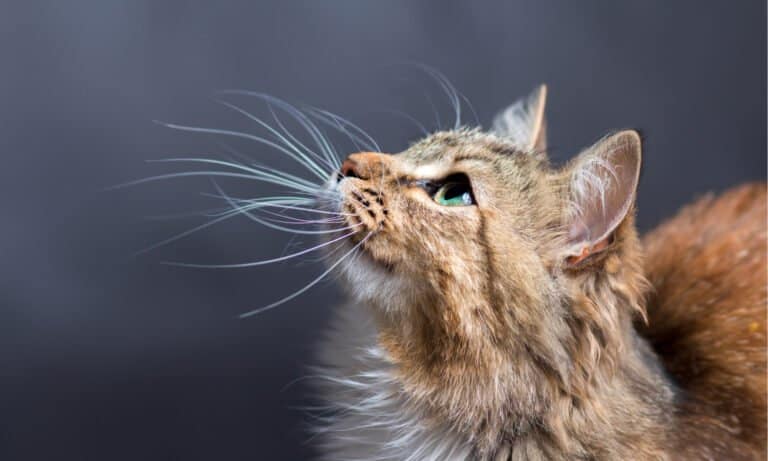
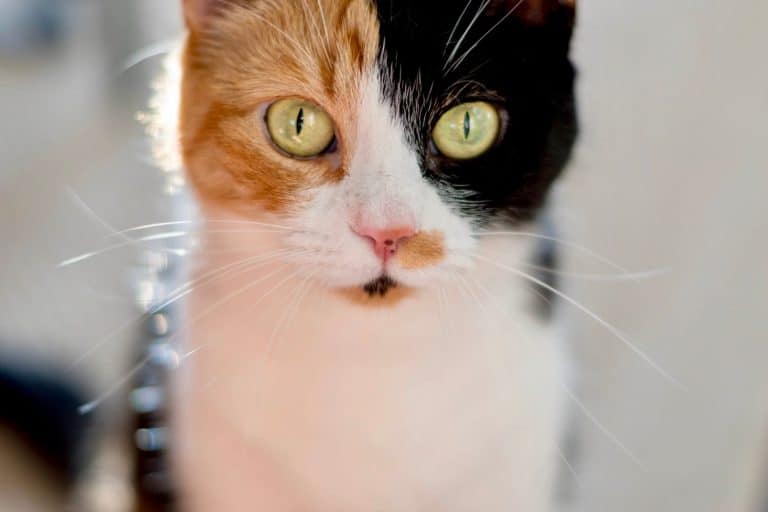
Cats usually have 12 larger whiskers on each side of their face, as well as whiskers on their chin. They also have smaller whiskers above their eyes. Remarkably, each of these whiskers functions less like an antenna and more like a radar or sonar device, providing detailed information about the environment. Each whisker group serves a specific purpose in helping cats navigate and make sense of their environment. Let’s learn more about these area-specific whisker objectives.
Spatial Awareness
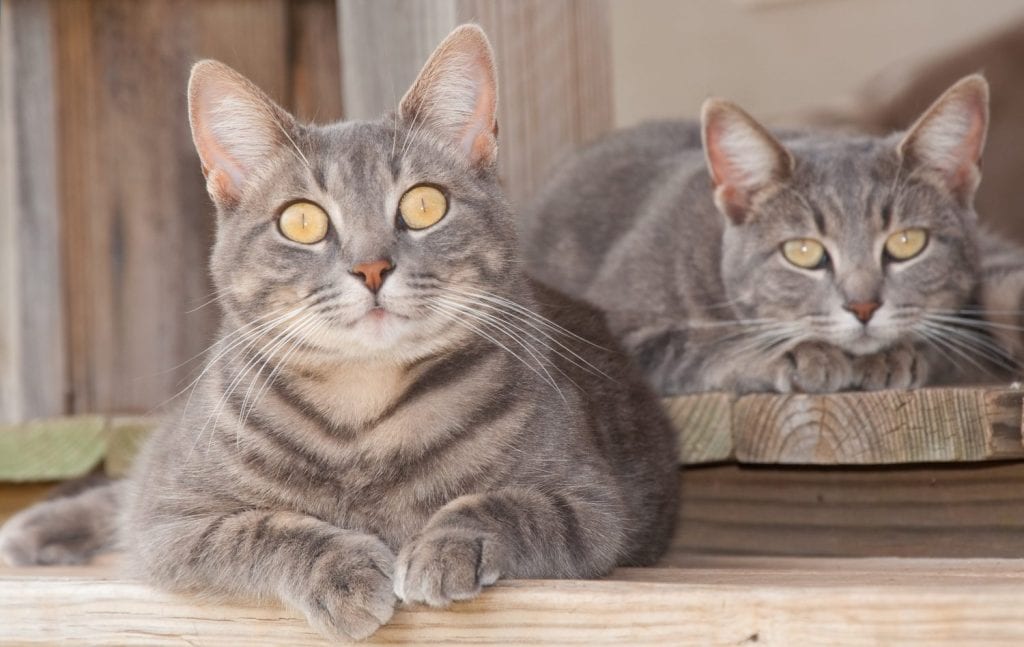
Many people think of a cat’s whiskers as functioning like antennae, but really, they are more like sonar in their ability to sense movement and calculate rough approximations of spatial dimensions of a given area.
©Sari ONeal/Shutterstock.com
Cats are slinky, stylish, and almost supernatural in their ability to keep their balance and weather any fall with grace. A large part of that ability comes from the acute awareness provided by their whiskers. They are like a built-in measuring system that allows cats to gauge how much space a passageway or opening has. The slightest brush against their whiskers instantly informs cats of an obstacle. Our hair is essentially lifeless compared to a cat’s whiskers, which function more like fingertips. Imagine having a dozen extra fingers extending from your face.
Whiskers help cats avoid getting stuck in tight spaces. They also help them navigate obstacle-ridden environments and move silently without awkwardly bumping into objects. When the day turns to night, cats come alive and so do their whiskers. Whiskers are so sensitive that they can even detect air currents. Cats use these subtle changes in airflow to navigate, functioning as a sort of sonar system. The whiskers extrapolate dimensions and allow cats to roughly map their surroundings even when they can’t fully see them. Since cats are most active at dawn and dusk, their whiskers become extra important during these times.
High Fidelity Touch
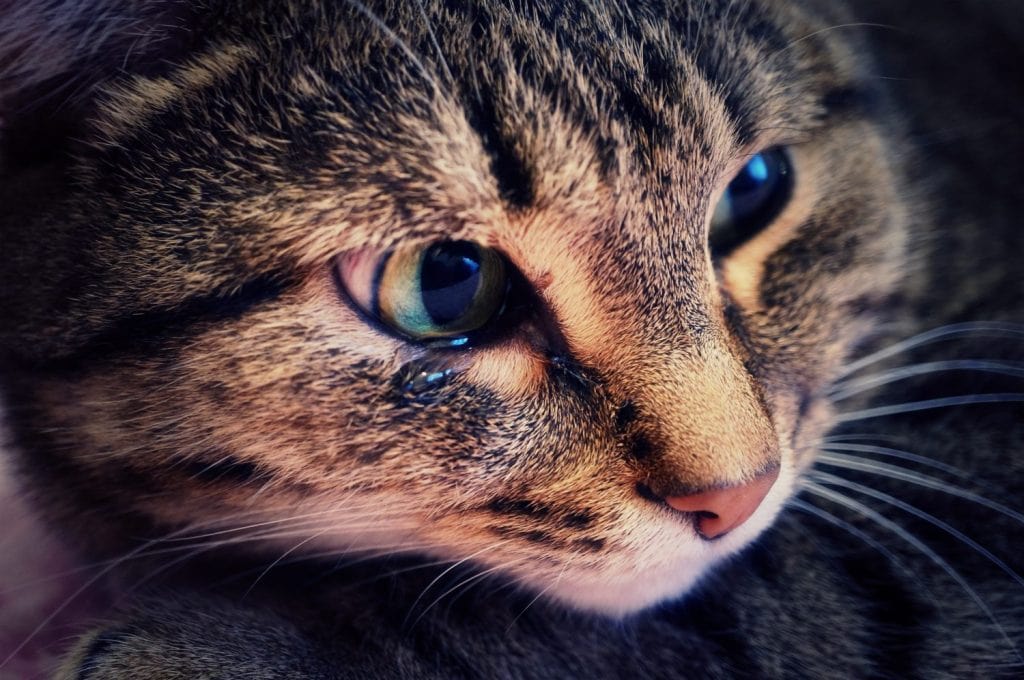
A cat’s whiskers are rooted in a structure called follicle-sinus complexes. These structures are so attuned to movement that they can sense even the slightest change in air currents.
©Scifier/Shutterstock.com
While we mentioned the tactile nature of whiskers, it bears repeating just how impressive a cat’s whiskers’ sensory capabilities can be. At the base of each whisker sits a structure called a follicle-sinus complex, which is full of blood vessels and cells. These cells include Merkel cells, which detect pressure, Pacinian corpuscles, which detect vibration, and Lanceolate endings, which sense movement.
These cells detect such subtle sensory changes that they do some impressive things. Whiskers can detect the texture and dimension of objects, the vibrations of the air, and the most minute shifts in motion. They can even sense the size, speed, and orientation of objects passing by. Cats are expert hunters, and they accomplish this sometimes preternatural skill with whiskers. Let’s learn about how whiskers helped domestic cats become some of the most efficient hunters on earth.
Hunting and Feeding
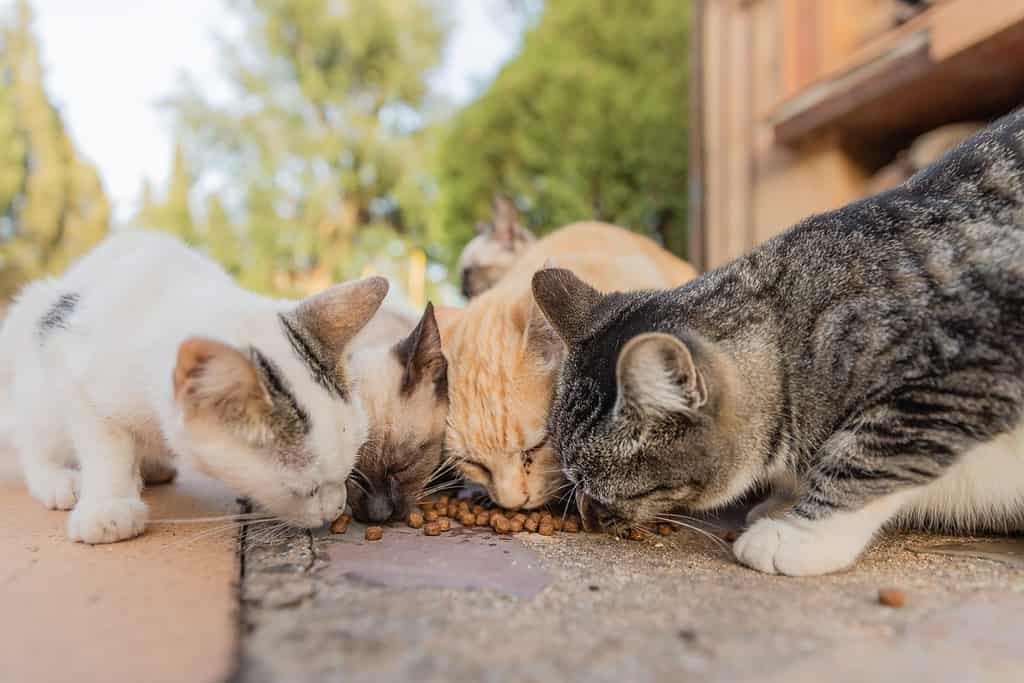
A cat uses its whiskers to hunt, sensing not only a prey’s slight movement but also its vital organs for subduing and neutralizing.
©Natalia de la Rubia/Shutterstock.com
It can be argued that cats, particularly domestic cats, are among the most efficient hunters in the animal kingdom. Some wild cat species even have higher hunting success rates than domestic cats. They earned this reputation, in part, due to their whiskers. Those little sonar-activated hairs are required for locating, tracking, and hunting down prey. It’s actually incredible how well a cat’s whiskers can pick up the slightest shift in the air.
A mouse scurrying by will trigger a cat’s whiskers by sending the slightest reverberation in the air. It doesn’t matter if the prey just murmurs or makes a full-on break for it; a cat can sense it with its whiskers. Once a prey animal is caught, cats use their whiskers to pinpoint the location of vital organs, allowing them to bite and neutralize their targets effectively. It’s actually incredible how much a cat can sense with its whiskers, whether it’s the location of a tiny, fast-moving prey animal or the location of that prey’s vital organs.
Communication
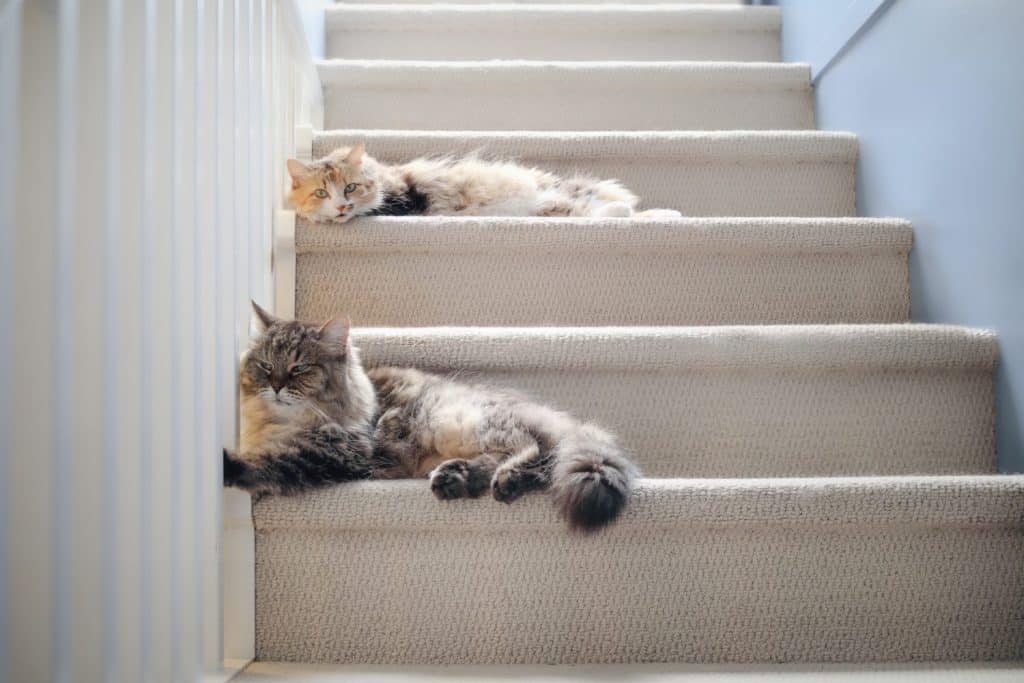
Cats have so much fur on their face that it can be hard to tell exactly what emotions they are expressing. As if to help pet owners, cats use their whiskers to express their emotions and changing moods.
©sophiecat/Shutterstock.com
The fur on a cat’s muzzle may give them something of a poker face when it comes to emotional expression. However, that doesn’t mean cats can’t show emotion on their face. They do this through the use of their whiskers. Often, cats will move their whiskers in tandem with their ears and tails to communicate. In particular, movements of the whiskers help express emotion. Cats rely on several different positions of their whiskers to express moods. Forward and fanned-out whiskers usually indicate excitement, inquisitiveness, and curiosity.
It can also signal when a cat is engaged in hunting mode. When a cat pulls back its constellation of face whiskers tightly, this signals a fear or stress response. It can also simply mean that cats are feeling more defensive than usual. As you can guess, a more relaxed position of the whiskers usually means the cat is comfortable. Cats lack dexterous hands and fingers like humans. To compensate for not having opposable thumbs, they rely on their whiskers to interpret and interact with their environment.
Whisker Fatigue and Other Problems
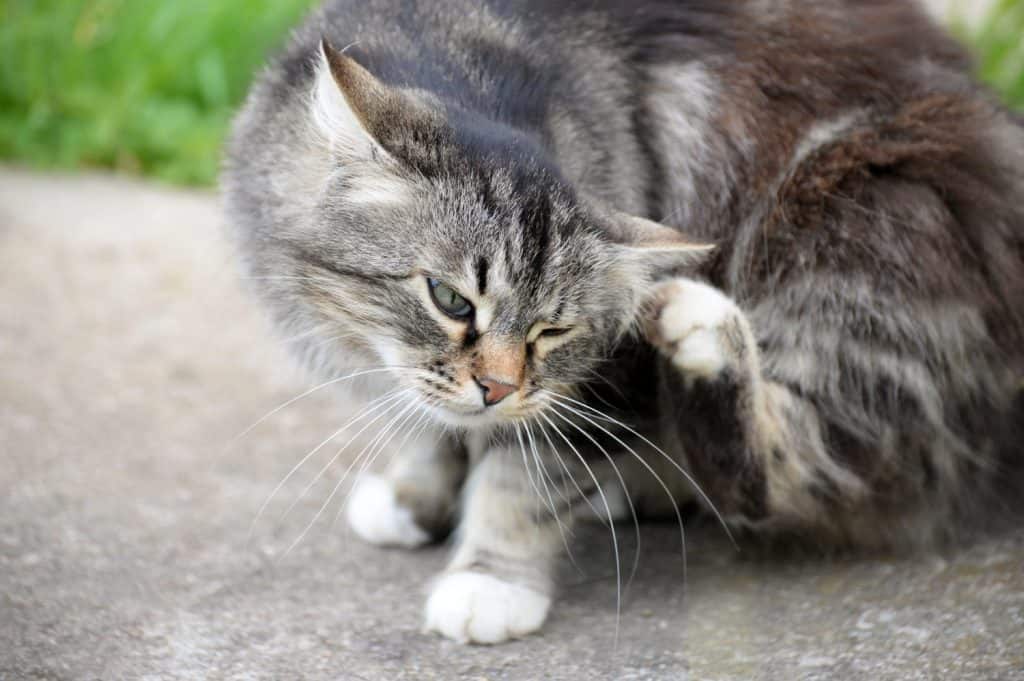
Cats that have their whiskers trimmed unnaturally often experience fear, confusion, and depression.
©Maja Marjanovic/Shutterstock.com
When cats get weird about their eating habits, such as pulling food out of their bowl with their paws or refusing to eat from certain dishes, they may have whisker fatigue. These hairs are such sensitive structures that they can easily be overstimulated. That’s why it’s important for cat owners to provide bowls that are wide and shallow enough so cats don’t feel overstimulated or crowded while eating.
On the flip side of things, cats need their whiskers to understand their environment. Some people make the cruel and careless choice to trim their cats’ whiskers. Not only does this destroy copious bundles of nerves in their follicles, but it also leaves them disoriented. Cats shed whiskers normally and regrow them, but when they are unnaturally cut, it can lead to depression, fear, and confusion.
Cat whiskers go grey as they get older, and different breeds of cats have different formations or patterns of whisker growth. All cats, however, need their whiskers to stay agile, aware, and effective. Even more than hearing, the sensory nature of a cat’s whiskers makes them easily one of their most important appendages.