
Quick Take
- Wetlands are the Earth’s most biologically diverse ecosystems and are under severe threat from development, pollution, invasive species, and climate change.
- The European tree frog vanished from the UK about 400 years ago due to wetland drainage and is now being bred for reintroduction by Celtic Rewilding.
- Previous reintroductions in Devon and the Isle of Wight were short-lived. The current project has selected release sites and awaits licenses.
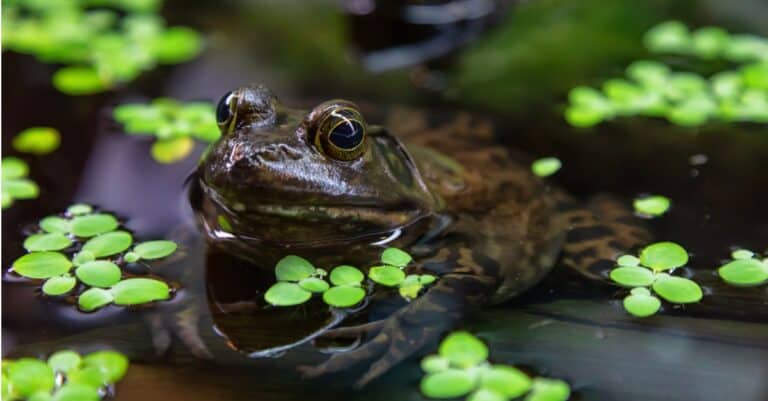
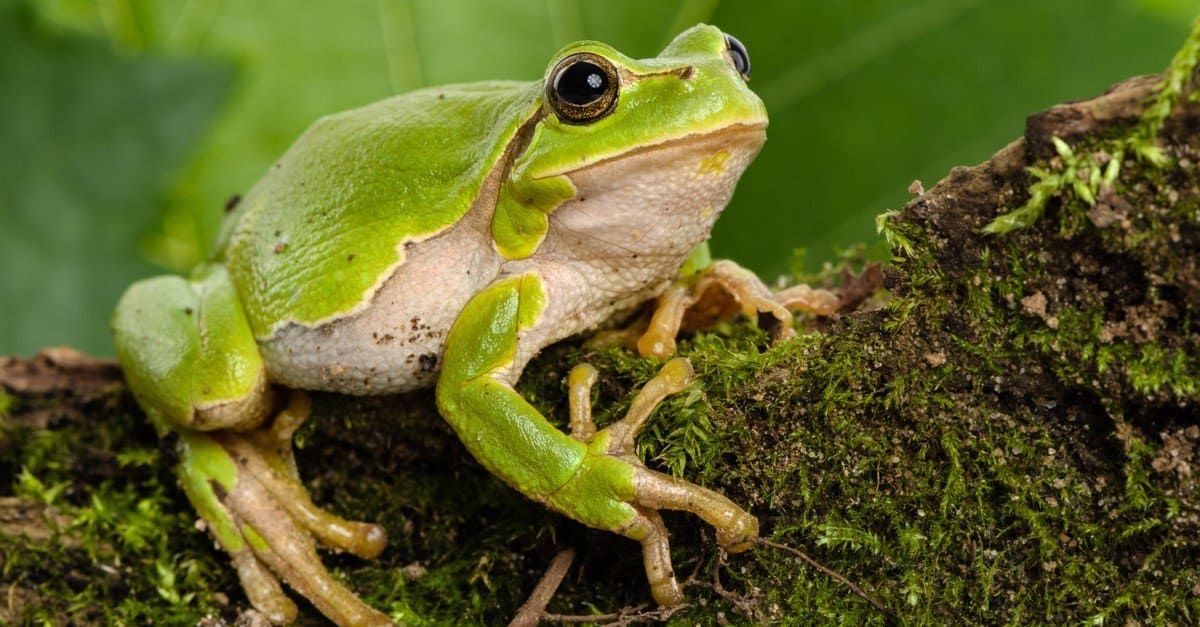
Wetlands are one of the world’s most threatened habitats. Yet, around 40 percent of species rely on them in some way. As this Instagram post shows us, one super cute example is the European tree frog (Hyla arborea). These little guys went extinct in the UK several hundred years ago. However, with a little help from an organization called Celtic Rewilding, they could soon be moving back into Britain. Let’s find out more.
What’s So Special About Wetlands?
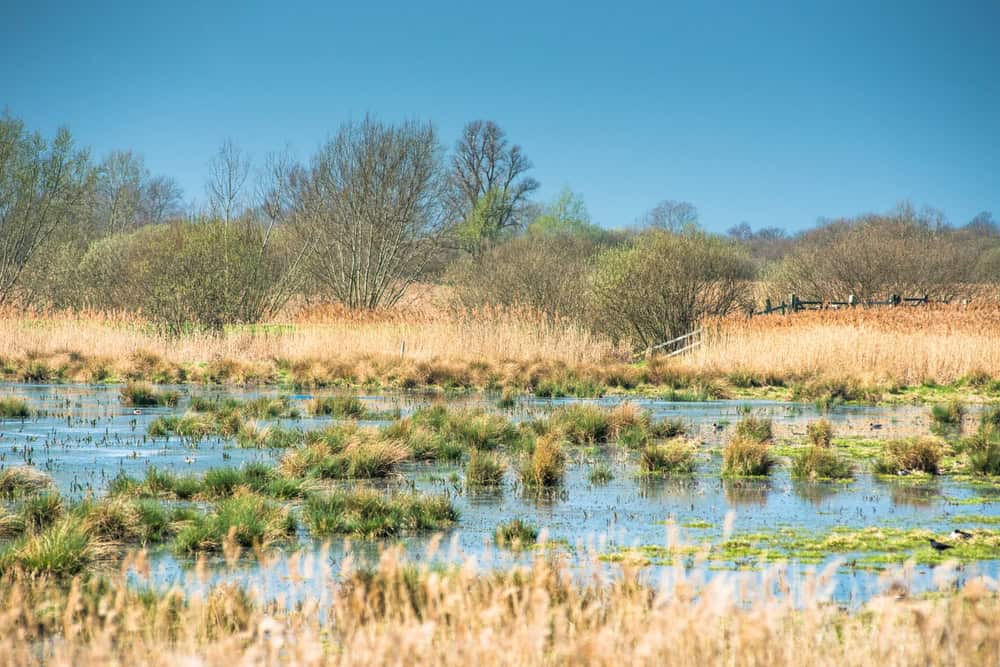
Wetlands are unique ecosystems.
©Robert Harding Video/Shutterstock.com
Wetlands are a distinct semi-aquatic ecosystem where the ground is flooded or saturated in water either permanently or seasonally. They are essentially a transition zone between water and dry land and therefore, are unique ecosystems. Importantly, they are also considered the most biologically diverse of all ecosystems on the Earth.
Sadly, wetlands globally are under huge threat from unsustainable development, pollution, invasive species, and climate change. Before the Romans arrived in Britain, as much as 25 percent of the British Isles is thought to have been covered by wetlands. Today, they cover just 5 percent of the UK landscape. As the habitat was lost, so were many species that lived there, and one was the European tree frog.
The Departure and Potential Arrival of the Tree Frog
No one is exactly sure when or why the green tree frog became extinct in Britain because it was not documented. However, we know that it was around 400 years ago, and that it was probably caused by the drainage of wetlands. Its overcollection and use in medicines probably did not help either. But now it is poised to make a return!
There have been several attempted reintroductions in the past, for example, in Devon and the Isle of Wight. Sadly, these populations were short-lived. This latest initiative is to be carried out by Staffordshire-based Celtic Rewilding, which is breeding them. They are following the example of a Belgian reintroduction project for this species, which was successful. The areas for reintroduction have been selected, so all that remains to do is obtain the appropriate licenses. Let’s hope that these gorgeous frogs become a part of UK wildlife once more.