
One look at a regal moth and you might mistake it for a type of flower, like a marigold. It is large, vividly orange, and comes equipped with wings that look like petals. Stick around long enough, however, and you’ll witness that ‘bud’ transform into a fully grown moth. As this spellbinding Instagram video illustrates, regal moths start almost shrouded and airtight. Over the course of a few minutes, their restricted bodies expand, and their brightly colored wings come to life. It’s a marvelous process, made all the more fascinating by the science behind it.
Regal moths stand out for several unique characteristics. For one, they are gigantic compared to other moths, reaching lengths equivalent to a hot dog when they are still caterpillars. Ironically, the hot dog comparison would make no sense to a regal moth, as they do not eat at all during their adult stage. Their sole purpose as adults is to reproduce before they die. Let’s learn more about this fascinating creature, its exceptional attributes, and how it transforms from crumpled to coronated.
About Regal Moths
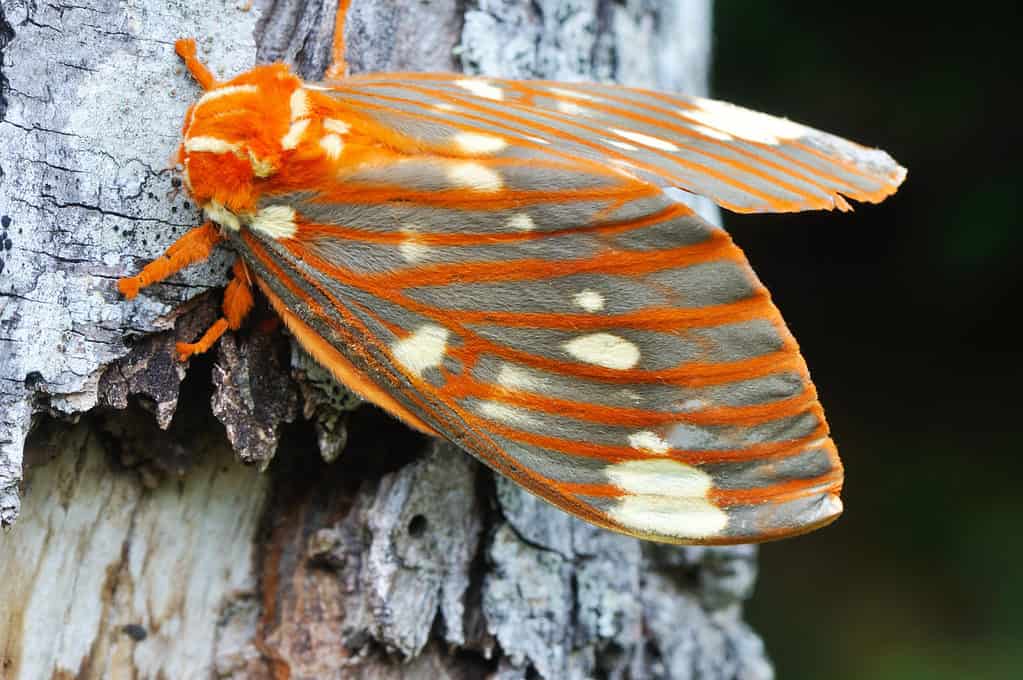
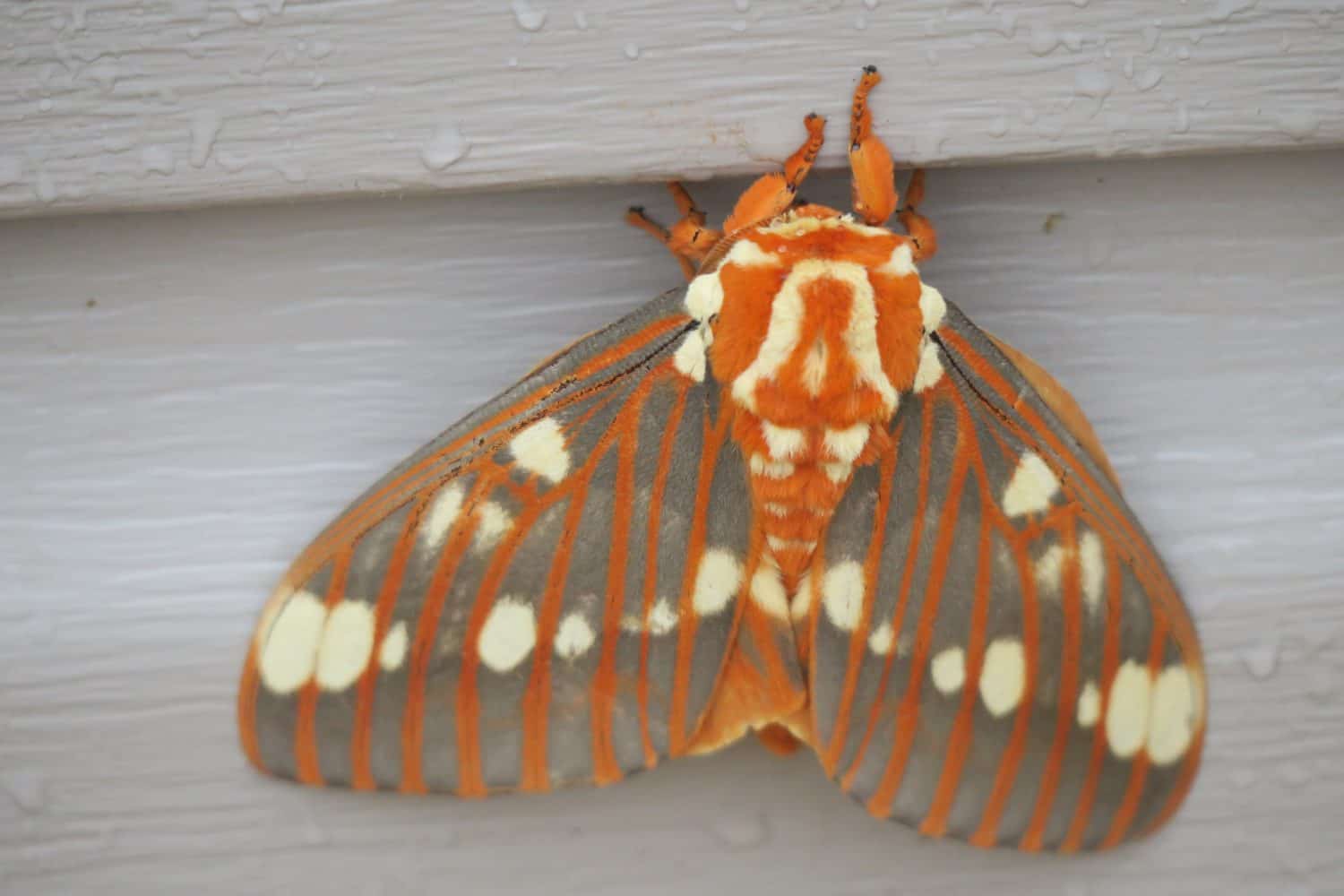
Regal moths are some of the largest silk moths that live in North America.
©Betty Shelton/Shutterstock.com
There are several large moths found in North America, but none are as striking as the regal moth. Known scientifically as Citheronia regalis, of the family Saturniidae, these moths are nocturnal and native to the eastern United States. Regal moths are distributed widely from New Jersey to Florida and west to Texas and Oklahoma. They prefer areas with deciduous forests, orchards, or locations with ample amounts of walnut and persimmon trees. They are active during the summer months, but adult regal moths typically live only one to two weeks after emerging. Indeed, regal moths live for only a few short weeks, undergoing incredible transformations from caterpillars to adults without eating once. Adult regal moths accomplish this by relying on fat stored from their earlier caterpillar stage.
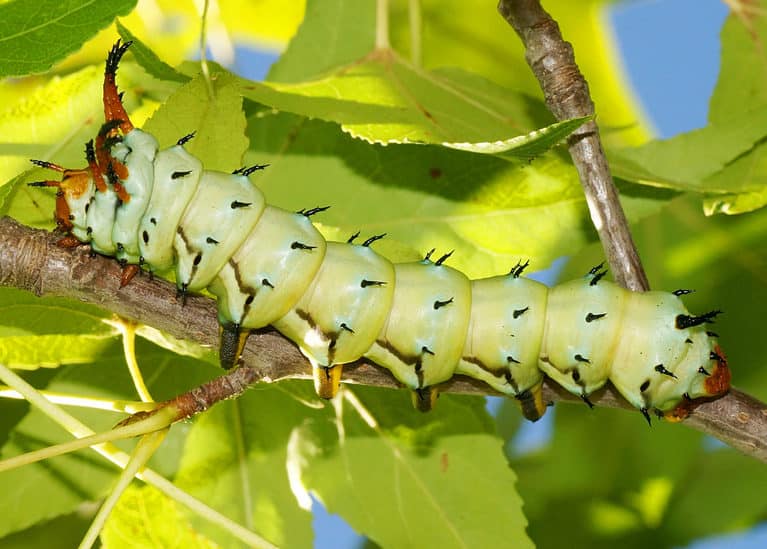
They are among the largest moths in North America, with mature bodies reaching between two and a half and three and a half inches in length, and wingspans between four and six inches. Remarkably, regal moth caterpillars are even bigger, reaching up to six inches in length before they transition into winged delights. Mature regal moths display orange-brown bands, small black stripes, and subtle eye-like markings. Females are larger than males. Due to their devilish appearance, complete with large orange and black-tipped horns, regal moth caterpillars are sometimes called hickory horned devils.
Let Freedom Wing
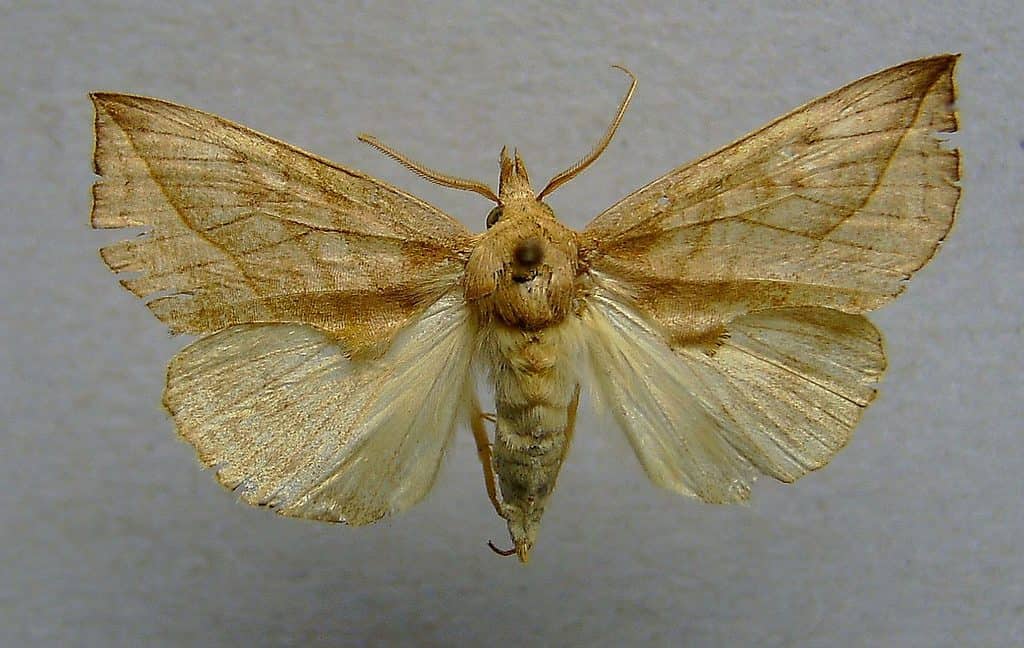
Unlike vertebrates, which use blood to circulate through their bodies, moths like regal moths rely on a similar substance called hemolymph.
In this time-lapse Instagram reel, a regal moth is pictured perched on a branch. As the sped-up seconds unfold, so do its wings. What begins as a crumpled ball of material unfolds, expands, and transforms into a stunning pair of orange and white wings. Regal moths accomplish this stretch through the use of hemolymph. This clear, slightly green or yellowish fluid circulates nutrients and other important chemicals throughout the regal moth’s body. It’s the insect equivalent of blood, but it is decidedly less versatile. That’s because hemolymph does not carry oxygen like the blood of vertebrate creatures. Instead, oxygen is delivered to the regal moth’s tissues directly through their tracheae.
After completing their transformation from larva to cocoon, regal moths emerge, sense their surroundings, and acclimate. Their wings have been crumpled for a long time, but over the course of several hours, those wings transform. As seen in this Instagram reel, the moth slowly pumps hemolymph through its wings, which makes them expand and fully harden until they are strong enough for lift-off. Though it takes a while, this steady pumping of hemolymph brings the regal moth to life. It’s a brief process with lasting results, even if ‘lasting’ in this context means only a few weeks. Let’s learn more fun facts about this fascinating creature.
Fascinating Facts
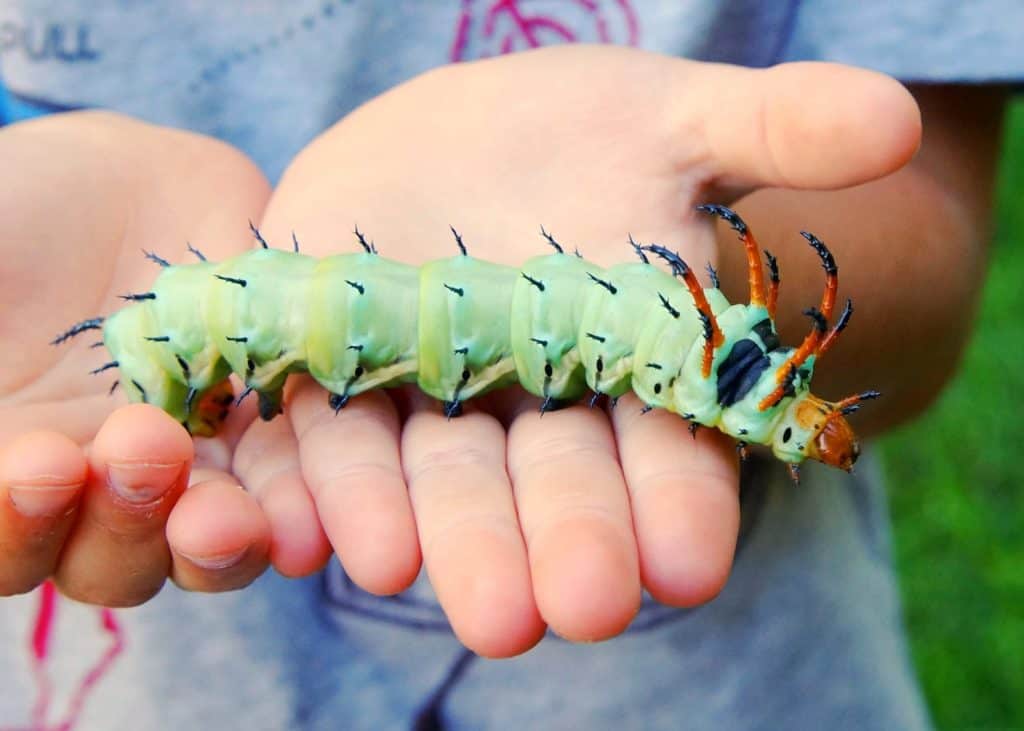
Most species of giant silk moth spin cocoons, but regal moth caterpillars pupate in the ground.
©Matt Jeppson/Shutterstock.com
Regal moths have many distinctive features. As previously mentioned, regal moth caterpillars are even bigger than mature specimens, reaching up to six inches long. They may look intimidating due to their horns, but they are ultimately harmless. Regal moths live only a few weeks as adults and do not eat during this time.
Most species in the giant silk moth family spin a silk cocoon before pupation. Regal moths, however, have caterpillars that dig down into the ground and pupate in a soil chamber instead. Once they reach adulthood (eclosion), the moths climb out of the ground and onto a perch. There, they begin pumping their bodies full of hemolympth, resulting in an impressive, expansive display as seen in this Instagram reel.