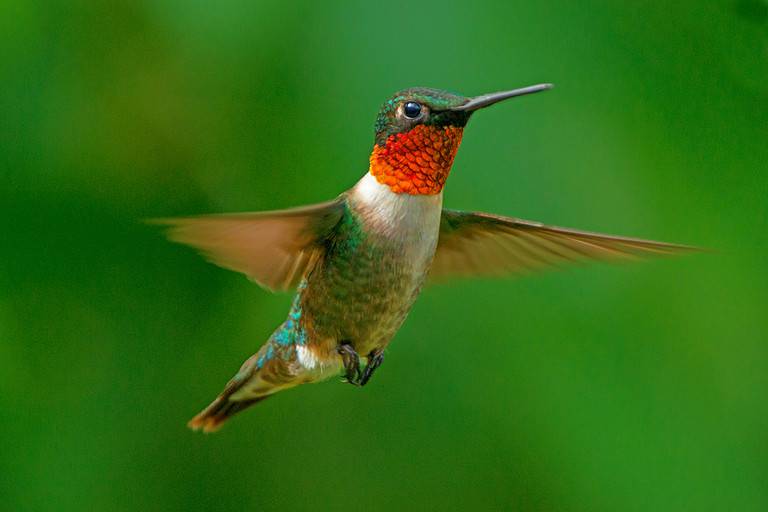
The ruby-throated hummingbird weighs about the same as a single raspberry. It can beat its wings about 60 to 80 times per second. Despite being common in backyards across the eastern U.S., there’s still much to discover about these remarkable creatures. The more we understand, the better scientists can focus their efforts on effective hummingbird conservation. Researchers in Tennessee are experimenting with a new tracking project, which may help people learn a lot more about the species. To learn more, we spoke to Cyndi Routledge, the project’s lead researcher and CEO and founder of the nonprofit Southeastern Avian Research (SEAR).
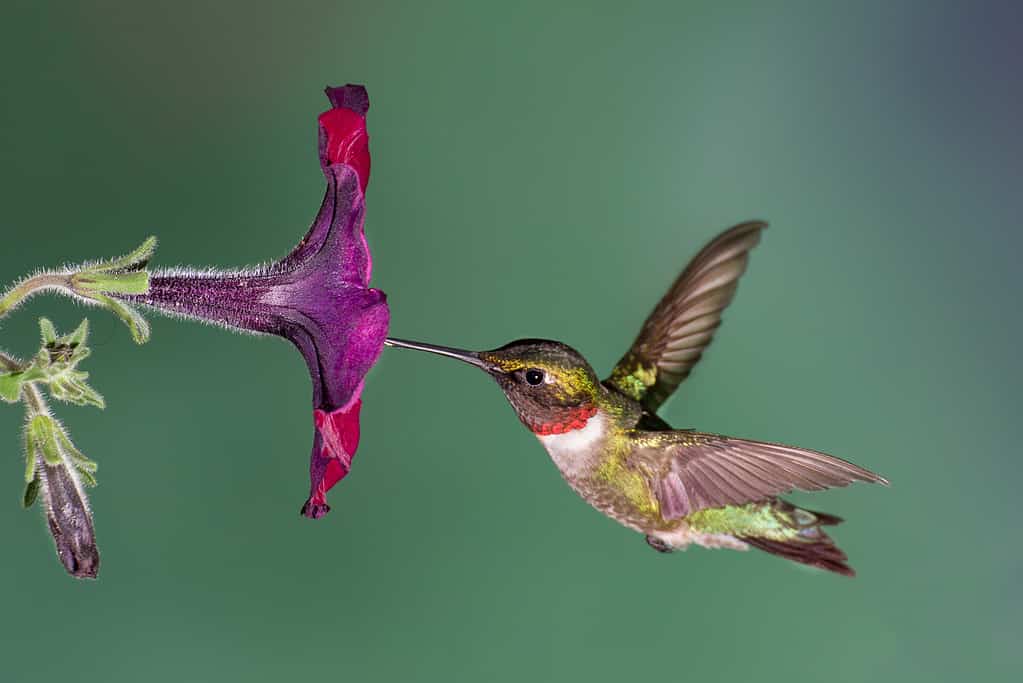
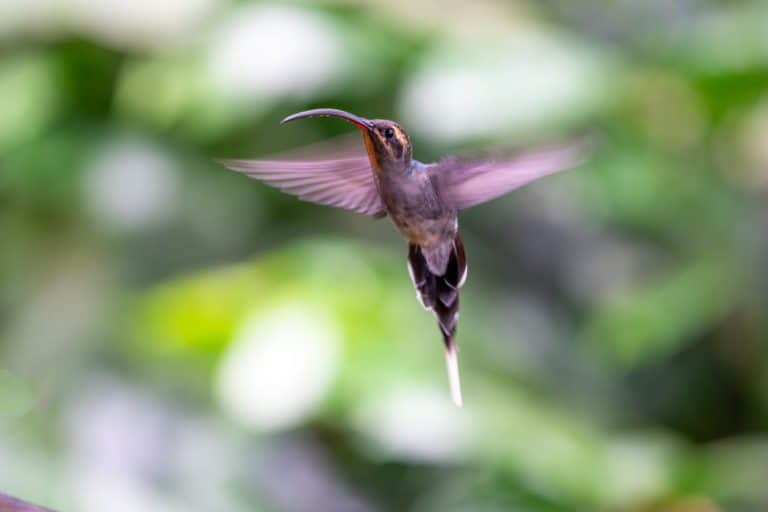
Ruby-throated hummingbirds eat tiny insects and drink nectar from flowers.
©MattCuda/iStock via Getty Images
About the Ruby-Throated Hummingbird
Ruby-throated hummingbirds live and breed in the eastern U.S. and southeastern Canada during the summer. They migrate south to Mexico for the winter. They are the only hummingbird that nests east of the Mississippi River.
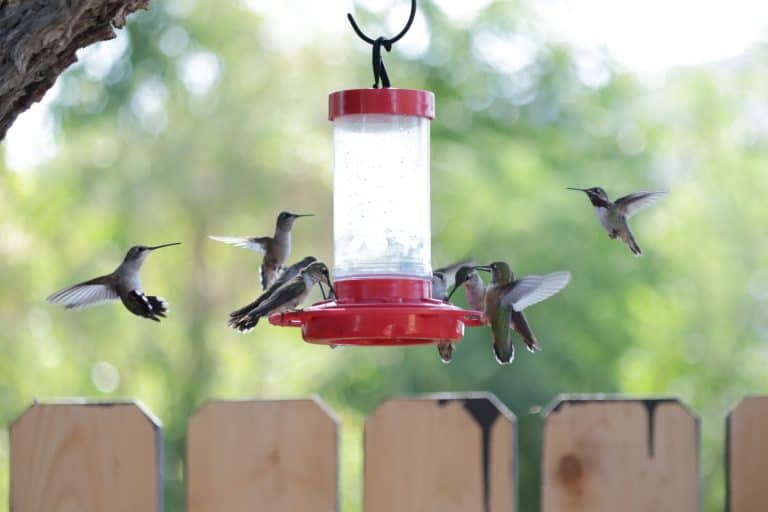
Ruby-throated hummingbirds live in gardens, forests, suburbs, and towns where flowering plants are abundant. If you’d like to attract ruby-throated hummingbirds to your yard, experts recommend planting tubular flowers (especially orange or red). Homeowners also enjoy setting out hummingbird feeders.
A New Tracking Technology Project for Tagging Hummingbirds in Tennessee
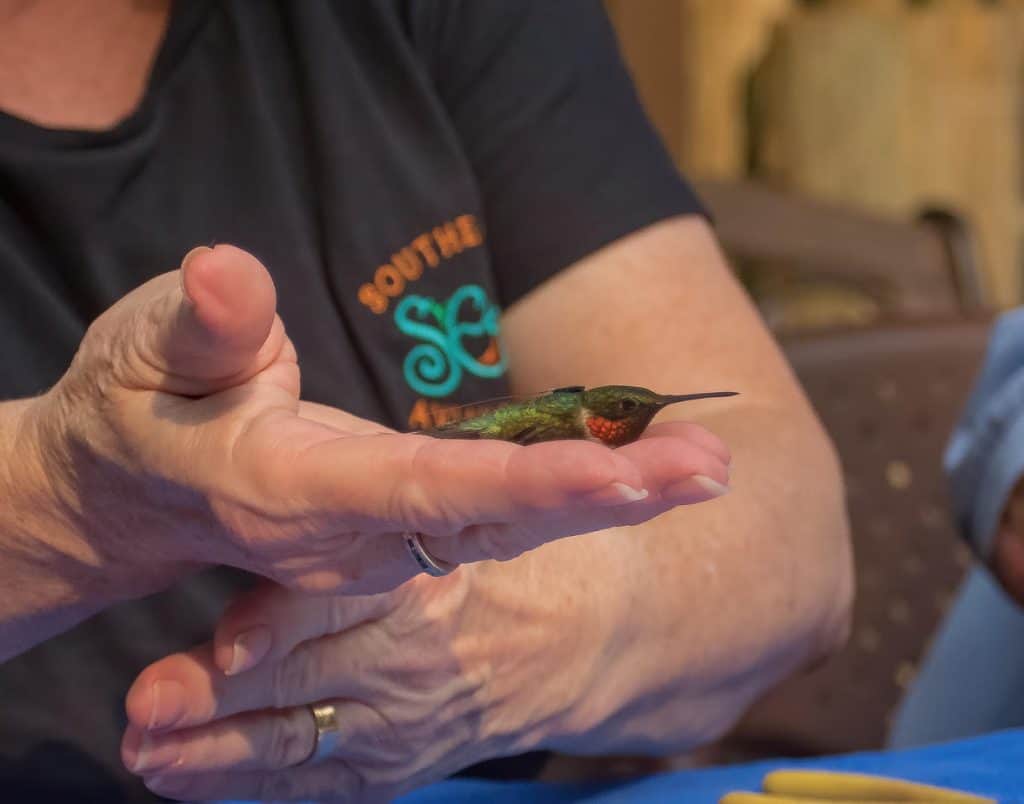
This summer, researchers tagged 15 ruby-throated hummingbirds with tiny solar-powered devices to observe their movement.
©Mel Cunningham / Southeastern Avian Research
In June 2025, SEAR announced it had embarked on a specially designed study. SEAR is an all-volunteer organization promoting the conservation and preservation of hummingbirds and other neotropical migrants through scientific study and education. In the new study, Routledge tagged 8 female and 7 male adult Ruby-throated hummingbirds using a new technology. In an experimental project, researchers tagged birds at several Land Between the Lakes National Recreation Areas located in Tennessee and Kentucky.

Cyndi Routledge has banded over 19,000 hummingbirds since obtaining her Master banding permit in 2014.
©Mel Cunningham / Southeastern Avian Research
According to Routledge, the new tags used on the birds are currently being used on monarch butterflies. She can read the output from an app on her smartphone. “The solar-powered CTT tags basically transmit a unique digital ID using modulated signals. The tag makes use of the 2.4 GHz frequency range and transmits a signal about once a second,” she says.
Hummingbird Tags Must Weigh Less Than 3% of the Bird’s Average Weight
Hummingbirds are very light, and ruby-throated hummingbirds weigh about 3.25 grams. “As a hummingbird researcher, we’d long envisioned and dreamt about a small, lightweight tag like this (0.06 grams or 60 milligrams). So the leap from monarch to hummingbird almost seemed ’natural’!” Routledge says. “But before permission from the Bird Banding Laboratory could be obtained, researchers had to prove it was first and foremost safe for the hummingbirds and that it would provide relevant information.”
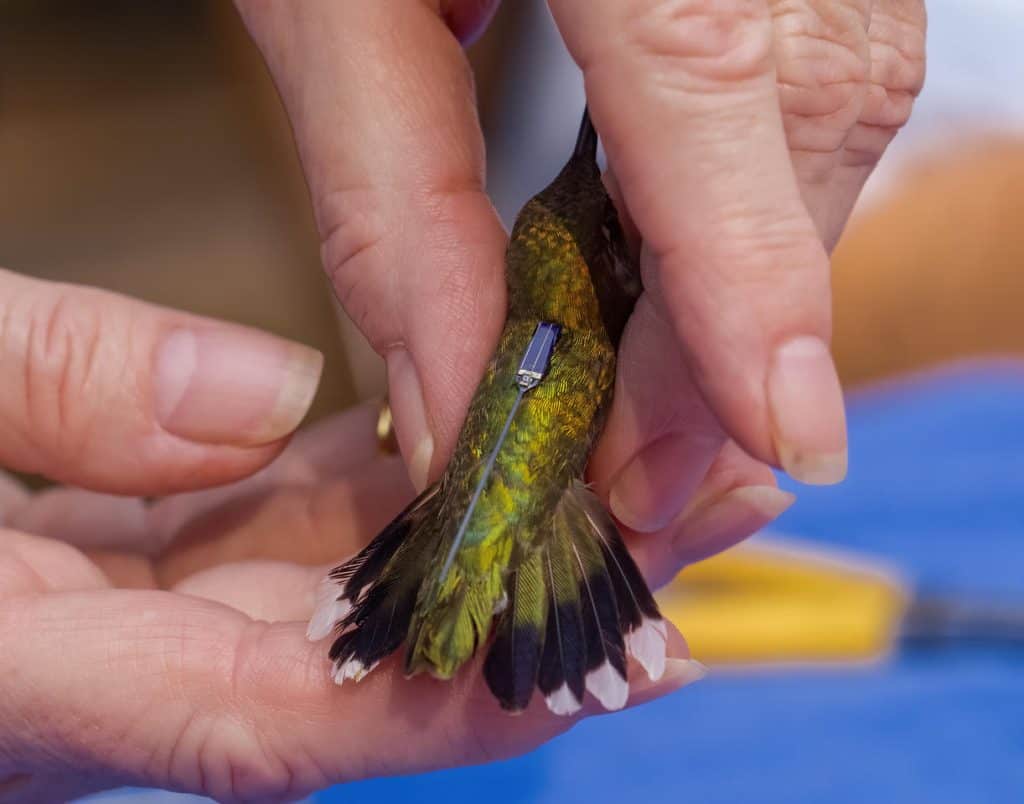
Researchers used a fast-drying, nontoxic glue to attach a tiny, lightweight solar-powered tag to ruby-throated hummingbirds.
©Mel Cunningham / Southeastern Avian Research
Before placing the new tags on the hummingbirds, researchers needed to ensure their safety. “Tests took place first on larger, heavier hummingbirds in Mexico—utilizing flight cages for observation and intervention if there was distress—eventually tagging smaller and smaller hummers using the same techniques and observing the results,” Routledge says.
When researchers band birds, Routledge says the rule is first, “do no harm.” Secondly, all devices placed on the bird must weigh less than 3% of the species’ average body weight.
Tests took place first on larger, heavier hummingbirds in Mexico—utilizing flight cages for observation and intervention if there was distress—eventually tagging smaller and smaller hummers using the same techniques and observing the results.
Cyndi Routledge, CEO and founder of the nonprofit Southeastern Avian Research (SEAR)
How Do Researchers Catch and Tag Hummingbirds?
Hummingbirds are caught much in the same way we catch them for traditional hummingbird banding, using specially designed cages. Inside these cages is a hummingbird feeder with sugar water. The hummer flies in freely to feed, and the trap door is closed, capturing the bird inside.
Once it’s time to apply the tags, researchers use eyelash glue or other nontoxic, fast-drying adhesives. They then fasten the tags to the dorsal side (on the back between the shoulder blades) of the bird. Routledge says research is ongoing to develop a harness system similar to those used with larger songbirds and radio tracking devices.
One drawback of the current glued-on tags is that they have a relatively short lifespan due to this method of attachment. Researchers have found that the glue typically lasts 30 to 45 days before it is either preened off by the hummingbird or falls off naturally as the bird molts its body feathers. Because the hummingbird tags remain attached for only about a month or slightly longer, current studies are limited to the breeding season and cannot track the birds over the long term.
“However, our hope is that once a harness is developed, we can deploy these tags on birds preparing to migrate and perhaps unravel some of the mysteries of hummingbird migration using CTT tags,” Routledge says.
She adds that they are already planning a study for next season. “What that will look like depends on funding and additional permission from the Bird Banding Laboratory,” she says.