
Quick Take
- A Brazilian man rescued an oil-covered Magellanic penguin in 2011, cleaned its feathers, and nursed it back to health before releasing it into the ocean.
- The penguin, named Dindim, returned each year to visit his rescuer on Provetá Beach from 2011 until about 2018.
- Researchers tagged Dindim in 2016 and estimated he was about six years old, though scientists still don’t know exactly where he traveled between visits.
- Dindim stopped appearing after 2018, though a penguin seen in 2022 behaved similarly—leaving open the possibility, but not confirmation, that it was the same bird.
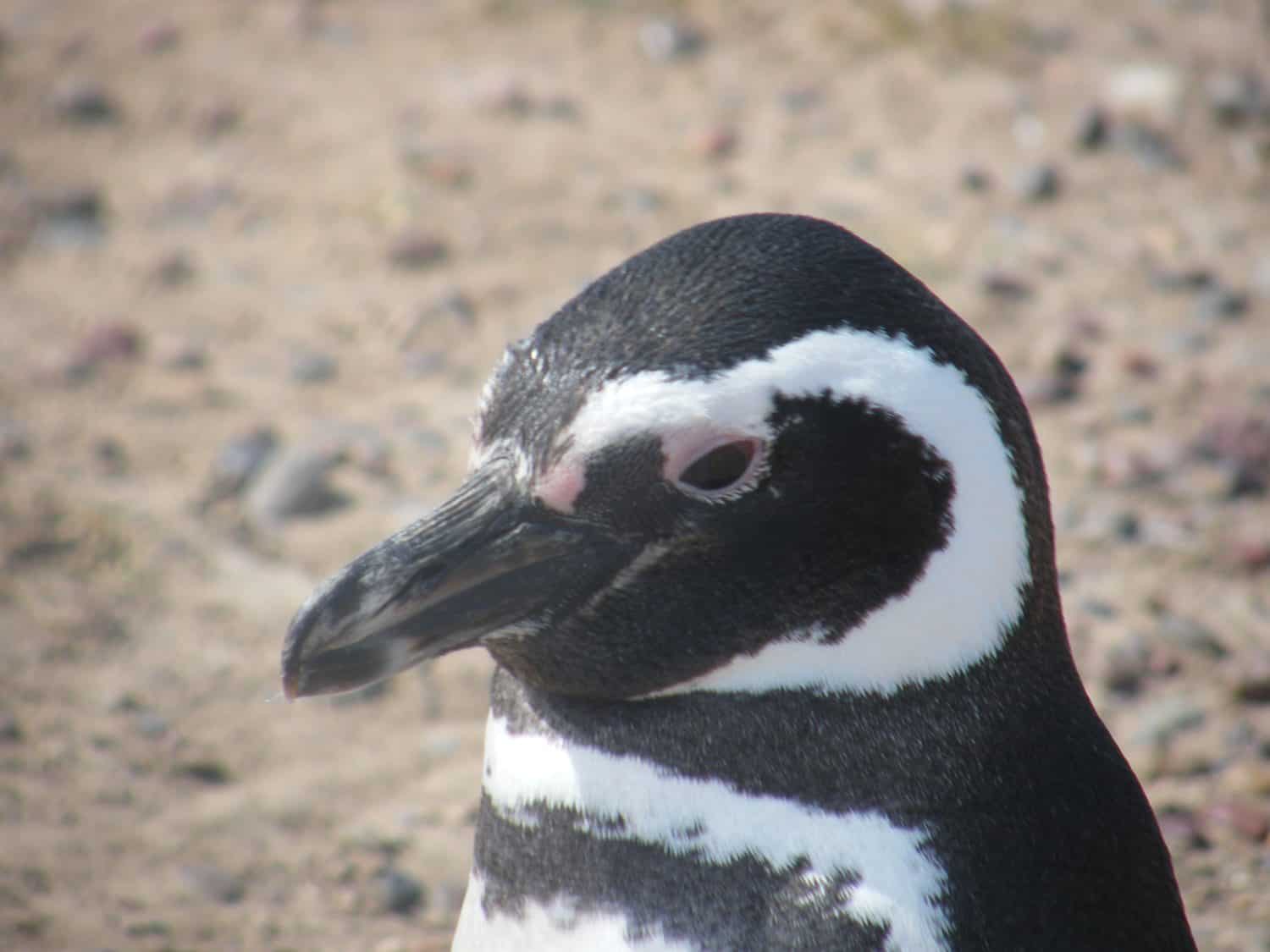
In 2011, a retired Brazilian bricklayer named Joao Pereira de Souza found an injured penguin covered in oil near his beachside home on Provetá Beach in Ilha Grande, Brazil. Pereira de Souza cleaned the penguin’s feathers and nursed him back to health. What follows is a heartwarming story about a unique friendship between a man and a wild bird.

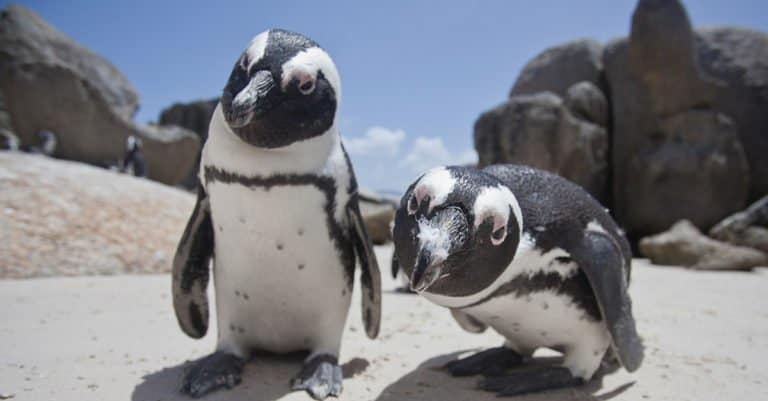
Dindim the penguin returned to Provetá Beach in Ilha Grande, Brazil, for many years.
©Luis Inacio P Prado/Shutterstock.com
Dindim the Penguin Returned Each Year to Visit His Friend
A story published in 2016 in The Independent tells the remarkable tale of a Magellanic penguin rescued by a Brazilian man in 2011. Pereira de Souza found the starving penguin so drenched in oil that it was unable to move. Penguins in the area are vulnerable to injuries from polluted water caused by ships releasing oil into the sea. Historically, chronic oil pollution killed many Magallenic penguins each year, but conservation efforts that led to strict shipping regulations have caused the number of penguins injured by oil spills to decrease in recent years. Oil destroys the penguin’s natural waterproof coating on their feathers, which can cause hypothermia and death. Pereira de Souza brought the oil-covered penguin that he found on the beach to his home, cleaned the oil from his feathers, and fed him fish.
After about a week, the penguin, whom his rescuer had named Dindim, was ready to go back to sea. Pereira de Souza said in an interview with Globo TV, “But he wouldn’t leave, he stayed with me for 11 months and then just after he changed his coat with new feathers he disappeared.” Pereira de Souza continued, “Everyone said he wouldn’t return but he has been coming back to visit me for the past four years. He arrives in June and leaves to go home in February and every year he becomes more affectionate as he appears even happier to see me.”
Dindim Returned Regularly from 2011 to 2018
Dindim’s touching story was widely circulated on social media. However, some embellishments also began to circulate. What is confirmed is that Dindim returned to Pereira de Souza’s home every year until 2018, when he stopped appearing. Joao Paulo Krajewski, the biologist who documented the story for Globo TV, spoke to CNN to explain the real story.
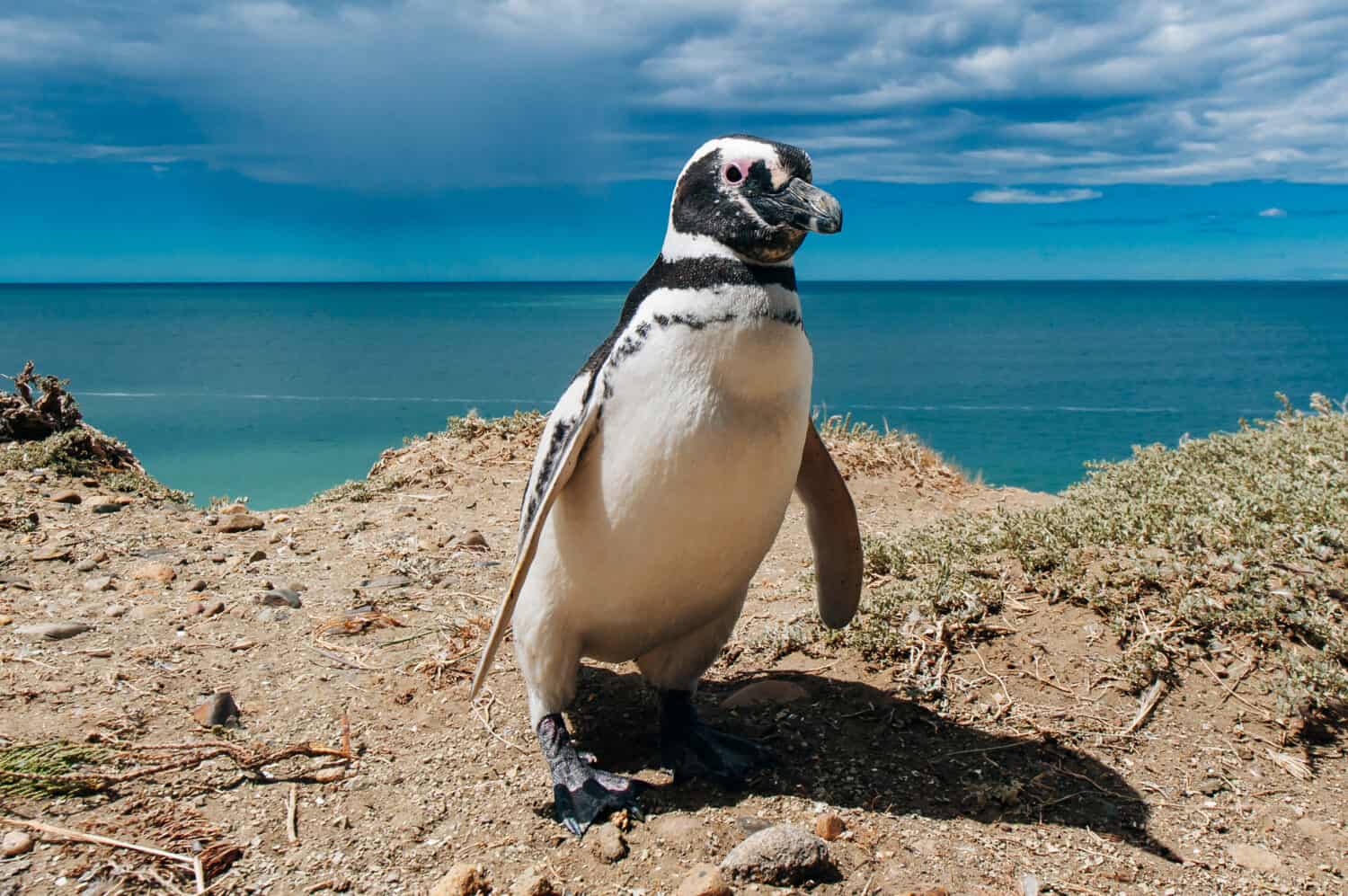
Magellanic penguins live along southern South America and eat a diet of fish, krill, and squid.
©Brester Irina/Shutterstock.com
“Because penguins are usually very loyal to their pair and breeding site, where they spend the summer, they tend to come back to the same place every year,” Krajewski said.
However, nobody knows just where Dindim goes when he isn’t with Pereira de Souza. At the time of year when Dindim is in Provetá Beach, other Magellanic penguins are breeding at sites in Patagonia and other southern islands. When the penguins are done mating and breeding, they swim out to sea, where they feed on fish.
When Dindim was visiting his friend in 2016, researchers with Brazil’s Ubatuba Aquarium took a blood sample and tagged the penguin. They estimated his age at the time to be around six years old, based on the size of his bill.
Dindim’s Regular Visits Ended in 2018
An article in a local Brazilian paper from 2022 shares that Pereira de Souza had been waiting to see if Dindim would return since he last saw him in 2018. In December 2022, the paper reports that a Magellanic penguin arrived one morning at Provetá Beach.
We can’t be sure if it was the same penguin that befriended Pereira de Souza so many years ago. Although researchers had fitted Dindim with a tag in 2016, this penguin did not wear one. Still, Pereira de Souza’s family says this penguin followed some of Dindim’s familiar routines, such as pecking at Pereira de Souza’s door and waiting in the bathroom for the shower to be turned on, suggesting it might have been Dindim.
About Magellanic Penguins
There are around 1.5 million breeding pairs of Magellanic penguins (Spheniscus magellanicus) in the world. They weigh between 7 and 10 pounds and can grow to approximately 2 feet tall. Their name comes from the Portuguese explorer Ferdinand Magellan, who was the first to document a sighting of the penguins in 1520.
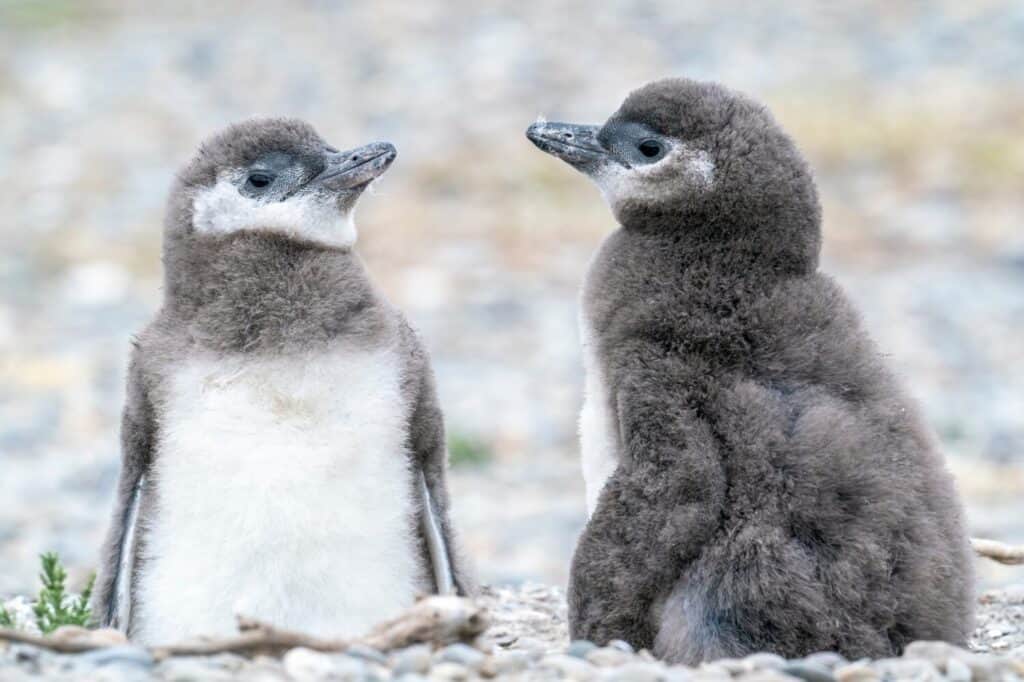
Magellanic penguins make excellent parents to their chicks.
©Rob Jansen/Shutterstock.com
Their breeding grounds are on the rocky coastlines of southern South America. Magellanic penguins tend to be very loyal to their breeding partners and will return to the same nesting site year after year. The female usually lays two eggs each year. The penguins make attentive parents, taking turns incubating the eggs and caring for the newly hatched chicks. After the chicks are old enough, all of the penguins head north to warmer seas, where they forage for fish, krill, and squid.
Why Did Dindim Return Each Year for So Many Years?
Krajewski explained to CNN that when biologists rescue wild animals, they do their best not to form bonds, so as not to disrupt the animals’ natural behavior after their release back into the wild. “But this isolated case in Brazil certainly allowed Dindim to live,” he said. “And was the best this humble and kind man could do for the penguin.”