
Quick Take
- Some birds replace feathers so aggressively they lose every single one at once, and the consequences for flight are exactly as severe as that sounds. See catastrophic molt explained →
- A molting hawk missing critical flight feathers still nails precision perching landings, and the mechanical trick it uses to pull that off is amazing. Discover the wrist adjustment trick →
- Harris' hawks take a measurable aerodynamic hit during molt, yet other species show almost no performance drop. The difference comes down to one overlooked compensation strategy. Explore compensation strategies →
- What scientists learned by filming a single molting hawk could quietly reshape how wildlife rehab centers rebuild injured birds' ability to fly. See the rehab implications →
Molting—the natural loss and replacement of feathers—is an essential process for birds, but it often leaves gaps in their wings and tails. Since these feathers are crucial for flight capability and control, how do birds manage to fly during their molt? A clever new study has used modern imaging techniques to spot the subtle but highly effective adjustments that birds introduce to compensate for feather loss.
The Importance of the Bird Molt
Molting is an important process for birds because it allows them to mitigate the effects of feather damage and degradation. Feathers inevitably deteriorate from use and exposure to environmental factors and eventually need to be replaced. As with many biological processes, not all birds molt in the same way. Some lose their primary flight feathers first, followed by their secondary flight feathers and rectrices (tail feathers). The molt typically progresses from the center of the body outward and takes about a year to complete. However, in larger birds with bigger feathers, the growth time is longer, and it is possible to find three or four generations of feathers coexisting at any given time.
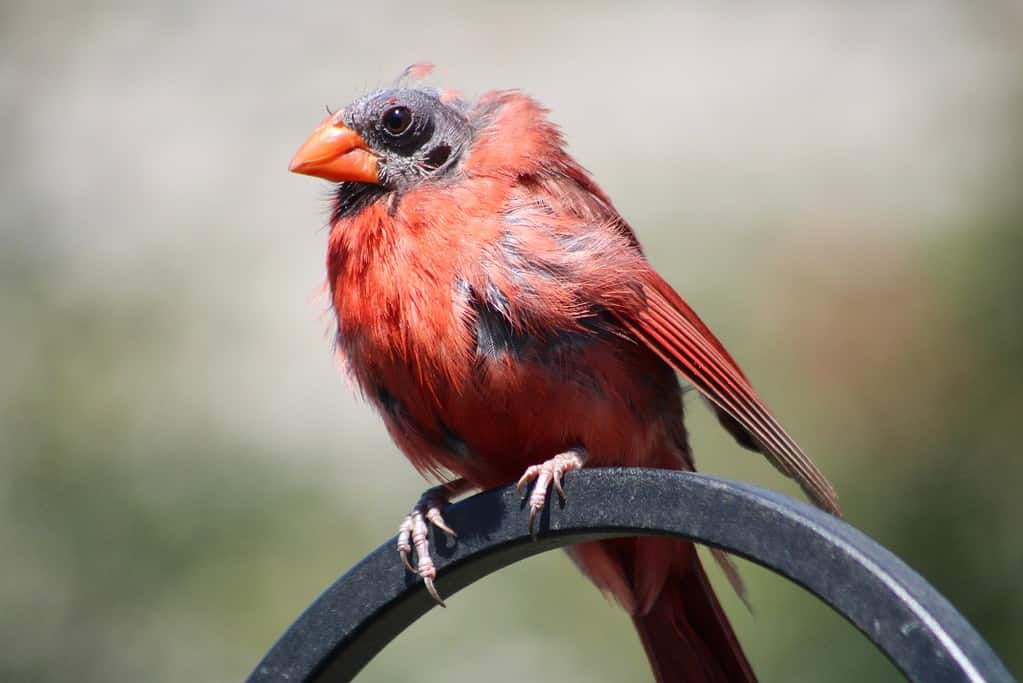
Molting is a normal part of life for birds.
©Jaclyn Vernace/Shutterstock.com
In some species, several scattered molt waves can occur simultaneously—a process known as serial molt. There are also seasonally paused molts, biannual molts, and even catastrophic molts, during which all feathers are replaced at once, leaving the bird temporarily unable to fly.
Molts and Flying Ability
Whatever molting method a bird adopts, it will inevitably leave some sort of temporary gap in its feathers. Scientists have assumed that these gaps can undermine flight control and capability. A few studies have investigated this. For example, one study showed that the Harris’ hawk (Parabuteo unicinctus) suffers a 30 percent decline in maximum lift-to-drag ratio (which indicates aerodynamic efficiency) during its molt. Also, artificially stimulated molts left tree sparrows (Passer montanus) less able to evade predators. In contrast, a study of European starlings (Sturnus vulgaris) showed that the molt did not alter their ability to take off but did increase their wingbeat amplitude.
Do Birds Adopt Coping Mechanisms During a Molt?
There is some evidence that birds adopt coping mechanisms to help them survive without a full complement of feathers. We know that ruby-throated hummingbirds (Archilochus colubris) compensate by losing weight, thus reducing the load on their remaining wing feathers. Gliding jackdaws (Corvus monedula) both lose weight and adjust wing posture. An alteration of flying kinematics during molt has also been recorded in pied flycatchers (Ficedula hypoleuca). But what about larger birds of prey? How do they cope without flight feathers during short perching flights?
Researching Molting Hawks in Flight
Scientists from the University of California, Davis, studied how red-tailed hawks (Buteo jamaicensis) adjust their flight mechanics during short perching flights. This type of flight is important for raptors, as they frequently perch for nesting and hunting. This type of flight is important to raptor species because they have to perch a lot for nesting and hunting. These hawks hunt by perching in elevated positions, then swooping down to capture prey they have spotted. Perching uses up less energy than scanning for prey when airborne. However, landing on a perch requires a complex combination of wing and tail movements, making missing feathers particularly challenging.
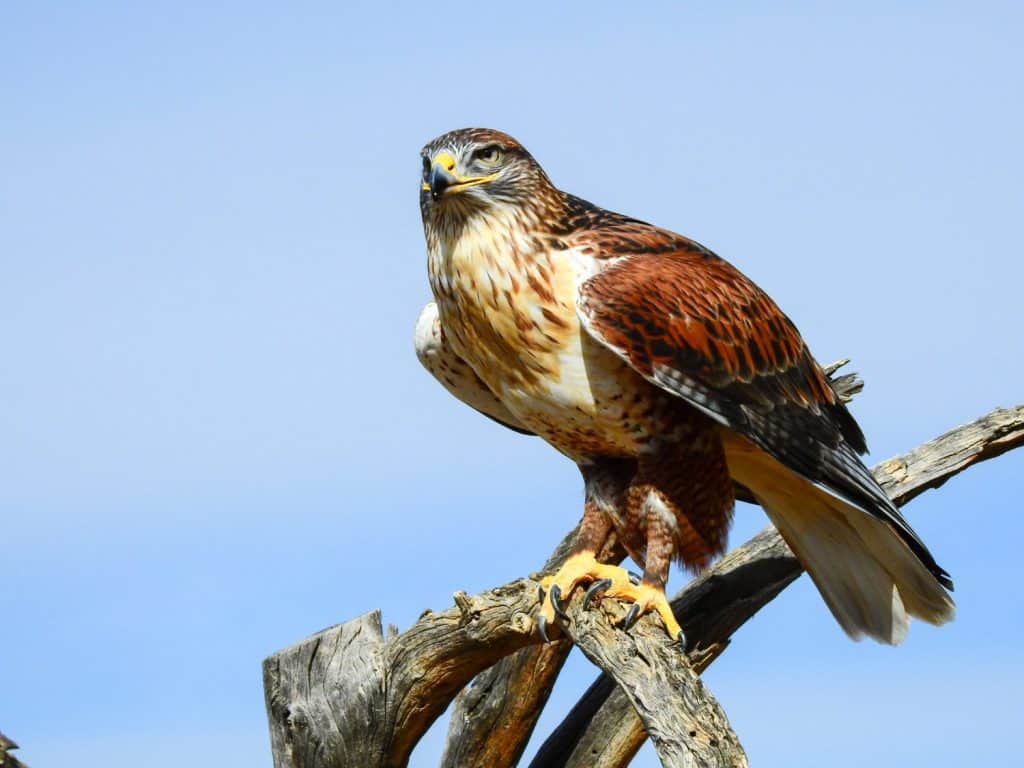
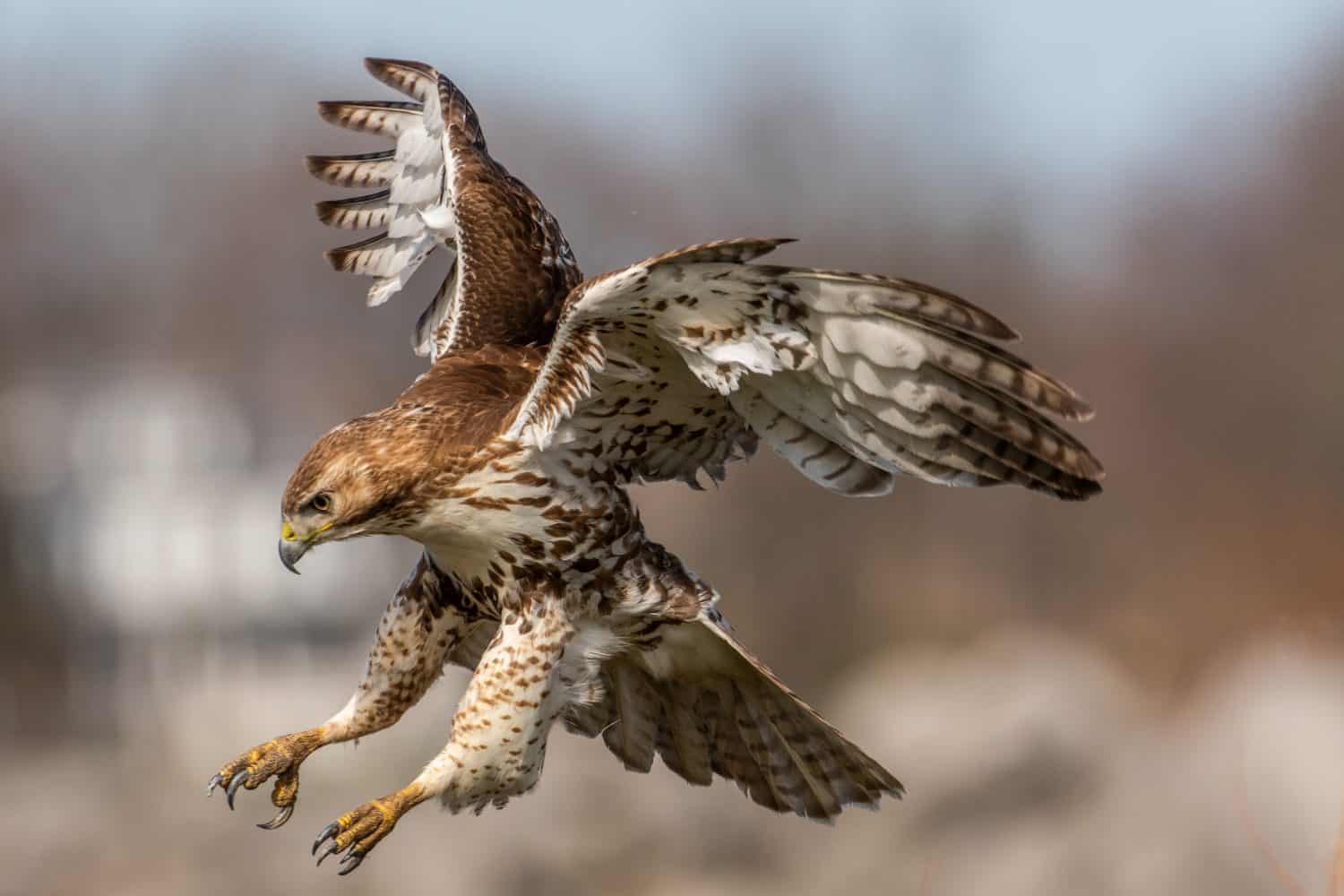
Many raptors need to land on perches with precision.
©Susan E. Viera/Shutterstock.com
The researchers used modern imaging techniques to make exact measurements of the birds in perching flight. The measurements included flight trajectories and wing and tail morphologies. They focused on the tail’s role as it was likely a critical control factor during a perching maneuver. Tail feathers enhance lift by modifying the wing lift distribution and reducing total drag. They filmed the hawks at three different heights during a natural molt and compared this footage to recordings taken when the birds were fully feathered.
How Do Molting Hawks Compensate for Flight Feather Molt?
One of the most notable adjustments hawks make during molt is changing their wrist span. By altering the position of their wrists as they land on a perch, they likely minimize the negative aerodynamic effects of missing feathers. By moving their wrists closer to the body during landing, the secondary and innermost primary feathers overlap, helping to close the gaps left by lost feathers. Additionally, the hawks adjusted the angle of their tail feathers during takeoff, possibly to maximize thrust. Interestingly, the red-tailed hawk studied had also lost close to 10 percent of its body mass during the molting period.
This research could be very useful for wildlife rehabilitation centers, as it may help them design training exercises for injured birds that target specific muscles and encourage the development of similar compensatory strategies.