
Quick Take
- Mississippi achieved a deer presence in all 82 counties despite the species nearly vanishing from the state.
- Relying on Senate Bill No. 2324 created a complex requirement to harmonize land and water wildlife symbols.
- High population density can counterintuitively diminish plant diversity by altering the survival of forest seedlings.
- Initial restocking efforts were mandatory to restore herds that had been decimated by early market hunting.
The white-tailed deer became Mississippi’s official state land mammal in 1974, but its connection to the state reaches far beyond a legislative vote. The species reflects a long history of recovery after near extinction, a deeply rooted hunting culture, and the everyday presence of wildlife across farms, forests, and rural communities. Lawmakers chose an animal that residents instantly recognized from their own land and experiences. Decades later, the deer still mirrors Mississippi’s relationship with its natural resources and working landscapes.

Mississippi’s State Land Mammal
Mississippi officially named the white-tailed deer as its state land mammal through Senate Bill No. 2324 in 1974. The designation came during a period when states across the country were formalizing symbols tied to regional identity and history.
By that time, deer populations in Mississippi had rebounded significantly after decades of careful management. The choice acknowledged this recovery and recognized a species found in every county. The same legislation also named the bottlenose dolphin as the state water mammal, creating a deliberate land-and-water pairing that reflected the state’s ecological diversity.

The white-tailed deer was designated Mississippi’s state land mammal in 1974, reflecting both its recovery and statewide presence.
©Christopher Roth/iStock via Getty Images
From Scarcity to Recovery
At the beginning of the twentieth century, white-tailed deer in Mississippi were close to disappearing. Unregulated hunting, combined with widespread forest clearing for agriculture and timber, reduced populations to scattered pockets in remote areas. The establishment of the Mississippi Game and Fish Commission in 1932 marked a turning point.
Hunting seasons were restricted, bag limits were introduced, and restocking programs brought deer from other regions into suitable habitats. Over several decades, these measures allowed herds to recover and expand. By the 1970s, deer populations were strong enough to support regulated hunting while remaining stable under long-term management plans.
Why the Legislature Chose the Deer
When lawmakers debated which animal should be the state land mammal, they sought a species that reflected daily life across Mississippi, rather than a rare or purely symbolic animal disconnected from ordinary experience. The white-tailed deer fit that role through its widespread distribution and cultural importance.
Educational materials from the period described the deer as familiar and useful, closely tied to food traditions, outdoor recreation, and land stewardship. Selecting the deer also highlighted a conservation success story. It turned a cautionary example of overuse into proof that science-based wildlife management could restore a species once nearly lost.

White-tailed deer and their fawns reflect successful wildlife recovery and responsible land stewardship in Mississippi.
©Tony Campbell/Shutterstock.com
Deer hunting has long been woven into Mississippi’s rural culture. For many families, it represents more than just recreation. Knowledge about seasons, land care, and ethical harvest practices is often passed down across generations. Hunting camps, shared processing days, and communal meals strengthen family bonds and local traditions.
State wildlife agencies estimate that deer hunting contributes more than a billion dollars annually to Mississippi’s economy through equipment sales, travel, lodging, and food processing. By naming the white-tailed deer as a state symbol, legislators acknowledged not only the animal itself but also the communities and livelihoods shaped by hunting traditions.
Deer Across Mississippi’s Regions
White-tailed deer thrive throughout Mississippi because of their ability to adapt to a wide range of habitats. They occupy bottomland hardwood forests in the Delta, pine plantations in the south, mixed woodlands in central regions, and agricultural edges across the state.
Wildlife surveys consistently show deer present in all eighty-two counties. Residents commonly encounter them along field edges, forest roads, and even near suburban developments. This broad distribution makes the species a particularly fitting symbol for a state defined by working landscapes and managed natural areas.

White-tailed deer adapt to a wide range of habitats, making them common across Mississippi’s forests, farmland, and woodland edges.
©FotoRequest/Shutterstock.com
As large herbivores, white-tailed deer play a significant role in shaping Mississippi’s ecosystems. Their feeding habits influence which plants thrive in forests and fields, affecting seedling survival and understory growth. When deer populations are in balance with available habitat, they contribute to healthy forest structure and plant diversity.
However, when their numbers grow too high, overbrowsing can limit regeneration and reduce biodiversity. Because of this balance, state wildlife managers closely monitor deer populations and adjust hunting regulations accordingly. The deer symbolizes not only abundance but the ongoing responsibility of ecological management.
Science-Based Management Today
Modern deer management in Mississippi relies heavily on research and long-term data collection. The Mississippi Department of Wildlife, Fisheries, and Parks tracks harvest records, monitors disease reports, and assesses habitat conditions statewide.
Programs such as the Deer Management Assistance Program enable landowners to submit data on herd health, age structure, and nutrition. Partnerships with Mississippi State University support studies on movement patterns, forage quality, and population trends. This information guides decisions on season lengths, bag limits, and special regulations, ensuring that deer populations remain healthy and sustainable for future generations.

Science-based management helps maintain healthy white-tailed deer populations across Mississippi.
©Michael Siluk/Shutterstock.com
Seeing White-Tailed Deer in Mississippi
White-tailed deer are among the most visible large mammals in the state, particularly in areas where forest and open land meet. Public lands provide some of the most reliable viewing opportunities. The Delta National Forest, located in the Mississippi Delta, supports healthy deer populations in its bottomland hardwood habitat.
The De Soto National Forest in southern Mississippi offers year-round opportunities to see deer along quiet forest roads, food plots, and early successional areas. State wildlife management areas are also designed to support deer and often provide access roads or trails where sightings are common.

White-tailed deer are commonly seen along forest edges in Mississippi, making them easy to observe with proper distance and care.
©iStock.com/Wirestock
State parks with a mix of forest and meadow environments can be especially productive for viewing deer. Deer tend to move between cover and feeding areas during early morning and late afternoon. In agricultural regions, deer are often visible along the edges of crop fields, particularly during cooler months. Observers who focus on transitional habitats, rather than deep woods, generally have the best chance of seeing deer.
A Symbol That Endures

White-tailed deer share Mississippi’s fields and forests, highlighting the responsibility of living alongside wildlife.
©Omar F Martinez/Shutterstock.com
Responsible deer observation requires patience and distance. Deer rely heavily on hearing and smell, so approaching quietly and staying downwind reduces the chance of disturbance. Using binoculars or a camera with a zoom lens allows close observation without physical proximity. Remaining still is often more effective than walking long distances, as deer are more likely to emerge naturally if they do not detect movement.
Timing matters. Dawn and dusk are peak activity periods, especially in fall and winter. During spring and early summer, deer are often seen near water sources or in shaded field edges. Observers should avoid approaching fawns, as adult deer may abandon areas they perceive as unsafe. Keeping dogs leashed and minimizing noise helps reduce stress on wildlife. Ethical viewing also means avoiding repeated disturbance of the same animals, particularly during winter when conserving energy is critical.
Deer Hunting in Mississippi Today
Deer hunting remains a popular and widely practiced activity in Mississippi. The state offers one of the longest deer seasons in the country, reflecting both robust populations and regional differences in breeding cycles. Hunters pursue deer using archery equipment, primitive weapons, and modern firearms during designated seasons. Participation remains high, especially in rural areas where hunting is closely tied to family tradition and land management.
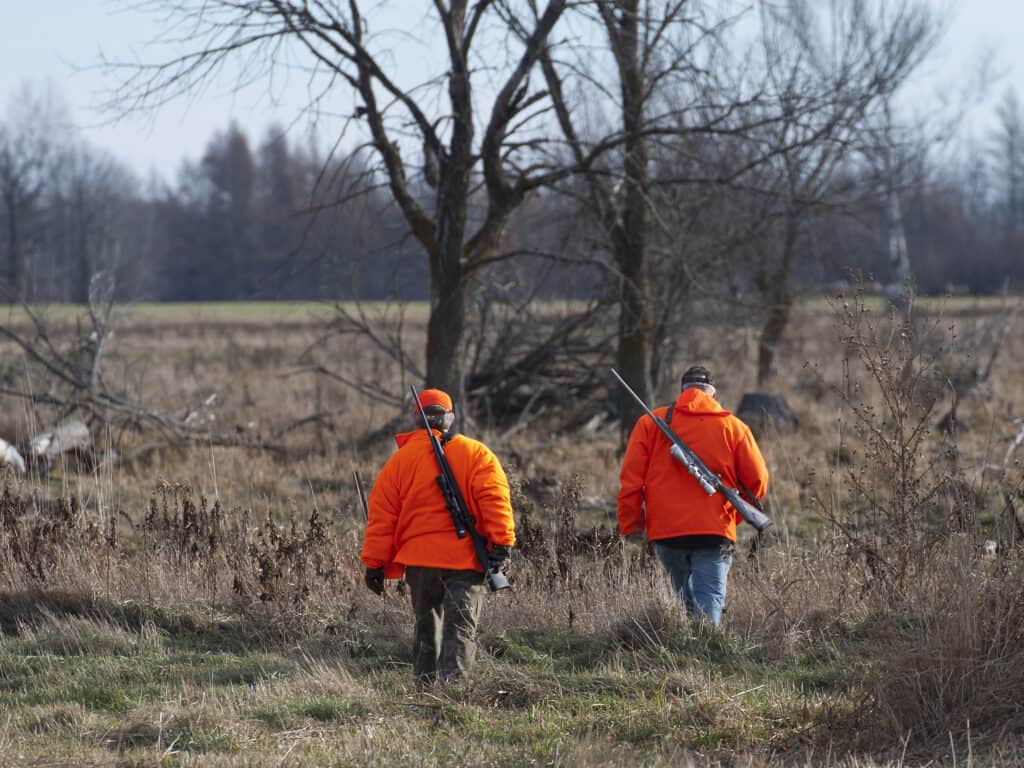
Gun hunting is still a popular sport in Mississippi.
©Steve Oehlenschlager/Shutterstock.com
While participation has declined slightly from peak decades due to demographic changes and urbanization, deer hunting continues to play a major role in wildlife management. Harvesting deer helps control populations, reduce vehicle collisions, and limit crop damage.
Many landowners view hunting as an essential tool for maintaining a balance between wildlife and human activity. Education programs emphasize ethical harvest practices, safety, and conservation awareness, reinforcing hunting’s role within a broader stewardship framework.
Challenges of Coexistence
As deer populations remain strong, Mississippi faces ongoing challenges related to coexistence. Vehicle collisions, agricultural damage, and suburban expansion increase human-deer interactions. Wildlife agencies respond through public education, targeted harvest strategies, and habitat planning. These challenges reinforce the symbolic role of the white-tailed deer as a reminder that living alongside wildlife requires thoughtful management, not neglect or exploitation.
A Living Part of Mississippi’s Identity
Mississippi’s decision to name the white-tailed deer as its state land mammal marked a moment of cooperation among lawmakers, hunters, scientists, and landowners. The species stands for restored landscapes and enduring traditions shaped by the land. A simple glimpse of a deer at the edge of a field still connects the present to that history, reminding residents that stewardship is an ongoing commitment.