
Quick Take
- Wyoming ranks among the driest states in the country, but it hides a fishing scene that rivals anywhere in the U.S. Here's why that contradiction makes total sense.
- At some of Wyoming's most popular fishing spots, catching certain fish comes with a legal obligation you probably didn't expect. See mandatory kill rules →
- One Wyoming river stretch is so densely packed with trout that the numbers per mile will make you question why you've ever fished anywhere else. See the trout density numbers →
- Showing up with a standard Wyoming fishing license isn't enough at several of these spots. The wrong assumption could ruin your trip before you cast a single line. Check special gear restrictions →
Although Wyoming is the fifth driest state in the U.S., it is home to over 70 fish species. However, it is the rainbow, cutthroat, brown, and brook trout that attract anglers from all over the country. Whether you’re fishing from the shore, wading into the river, launching a boat, or even paddling out on a kayak, explore some of Wyoming’s best spots to cast your line.
1. Flaming Gorge Reservoir
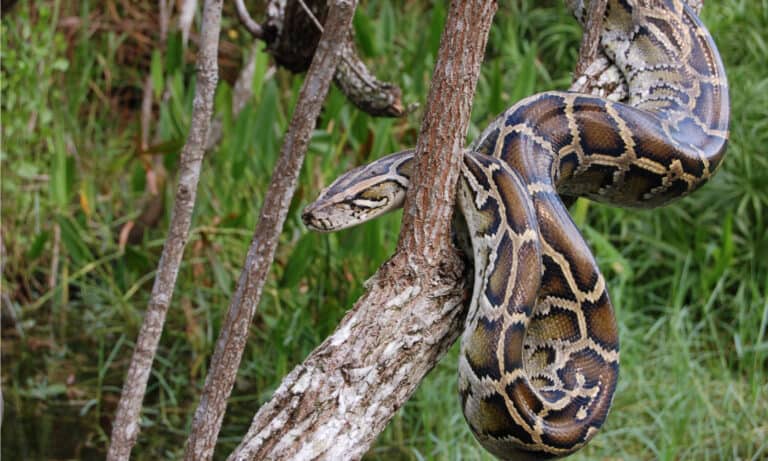
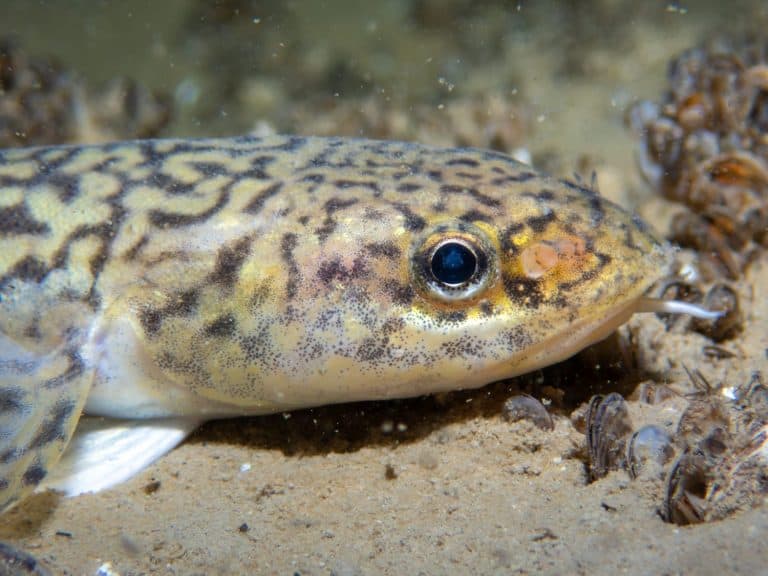
Catch record-breaking lake trout, kokanee salmon, smallmouth bass, and burbot at the most scenic destination in all of Wyoming: Flaming Gorge Reservoir. This 91-mile trophy fishery borders both Wyoming and Utah. To manage populations, there are no limits on lake trout under 28 inches. Anglers should also note that As burbot are an aggressive nonnative species, any burbot caught at Flaming Gorge must be killed per Wyoming Game and Fish Department regulations. On the Wyoming side, the Buckboard Marina is a popular access point.
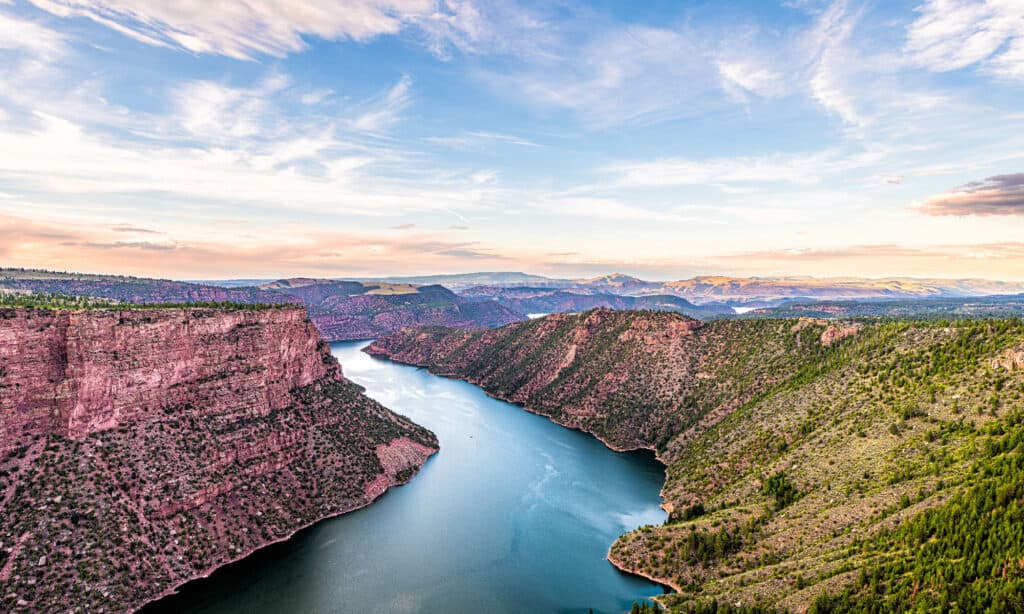
The Flaming Gorge Reservoir is known for record-breaking lake trout.
©iStock.com/ablokhin
2. Yellowstone Lake
Yellowstone Lake has strict regulations, but it offers world-class fishing for native Yellowstone cutthroat trout and non-native lake trout. Cutthroat trout, as well as mountain whitefish and Arctic grayling, must be released. However, there is no limit on invasive trout, including brown, brook, rainbow, and lake trout. Lake trout and smallmouth bass must be killed if caught. Note that state licenses are not valid; visitors must have a park-specific fishing permit. All watercraft must pass a Yellowstone AIS inspection to receive a permit prior to launching.
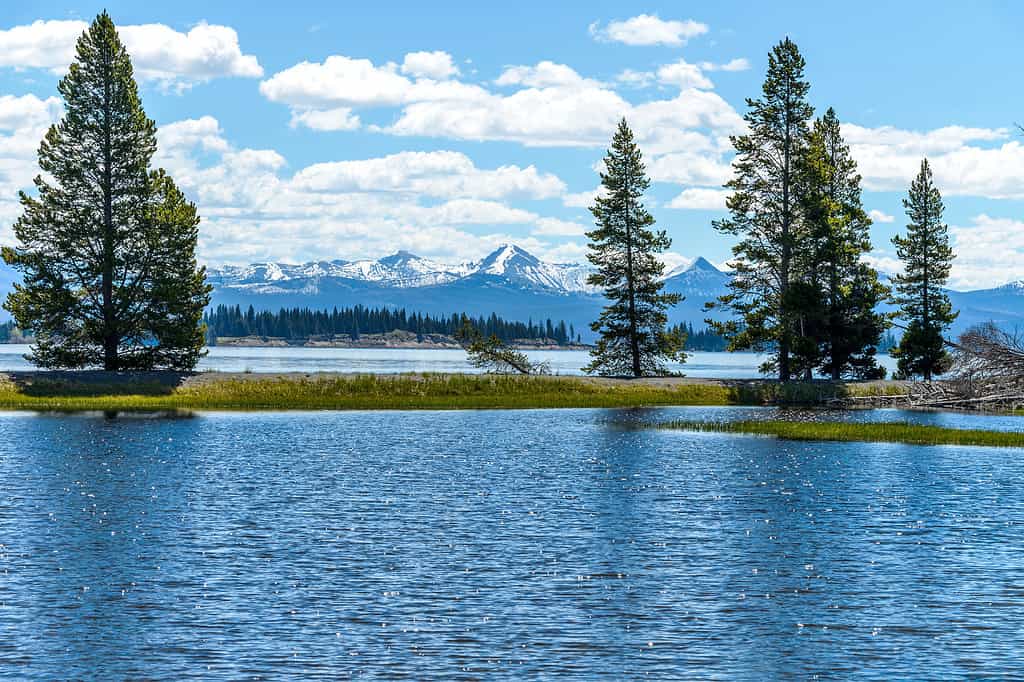
Yellowstone Lake offers world-class fishing for native Yellowstone cutthroat trout and non-native trout species.
©iStock.com/SeanXu
3. Green River
The Green River is a prime trout fishery, with world-class fly fishing and spin fishing. Anglers target brown, rainbow, cutthroat, and brook trout throughout the different sections of the river. Some popular locations include the Upper Green, the Seedskadee National Wildlife Refuge, and the Fontenelle Dam tailwaters, which are known to provide some of the largest trout in the continental U.S.
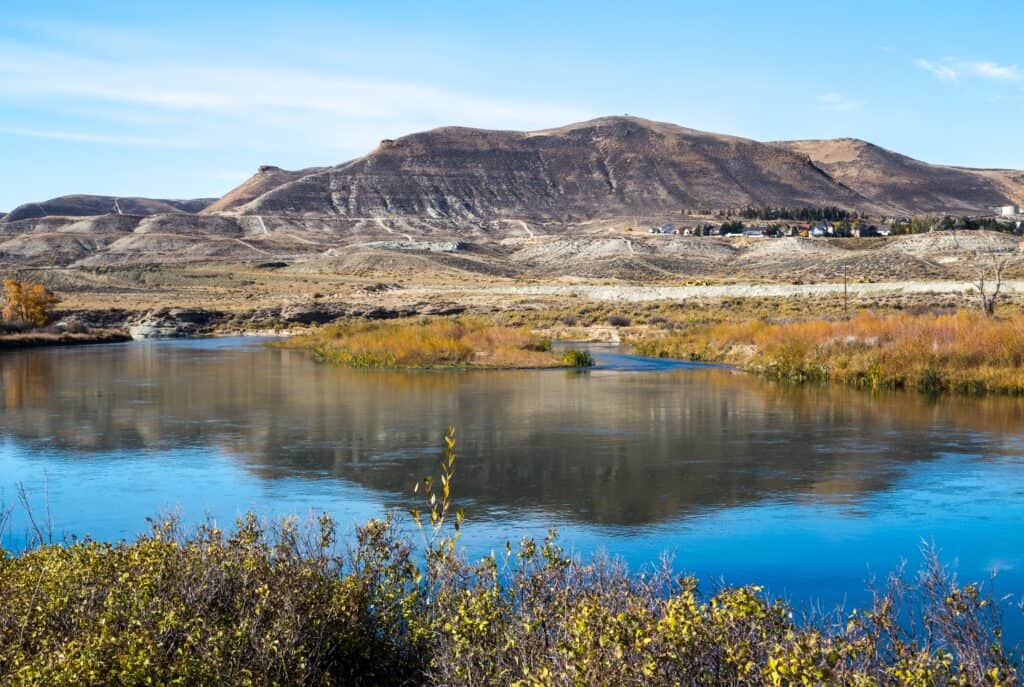
The Green River offers world-class trout fishing in a variety of scenic settings.
©Victoria Ditkovsky/Shutterstock.com
4. North Platte River
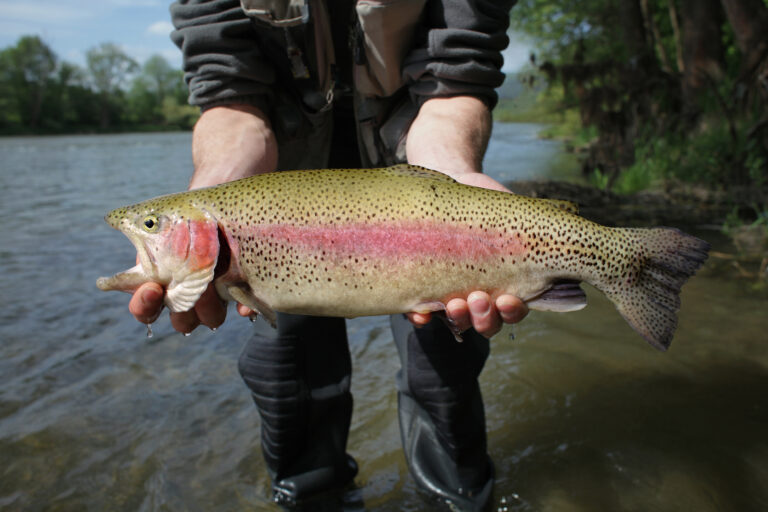
The North Platte River in Wyoming is another world-class trout fishery. It is known for both high fish counts and large migratory fish. The 40-mile tailwater below Grey Reef Dam has been reported to have up to 8,000 rainbow and brown trout per mile in the upper sections. Another popular stretch is the Miracle Mile between Kortes Dam and Pathfinder Reservoir in the high desert. This 5.5-mile tailwater is known for trophy rainbow and brown trout averaging 16-20 inches.

The North Platte River is famous for high fish counts and large migratory trout.
5. Bighorn River and Bighorn Lake
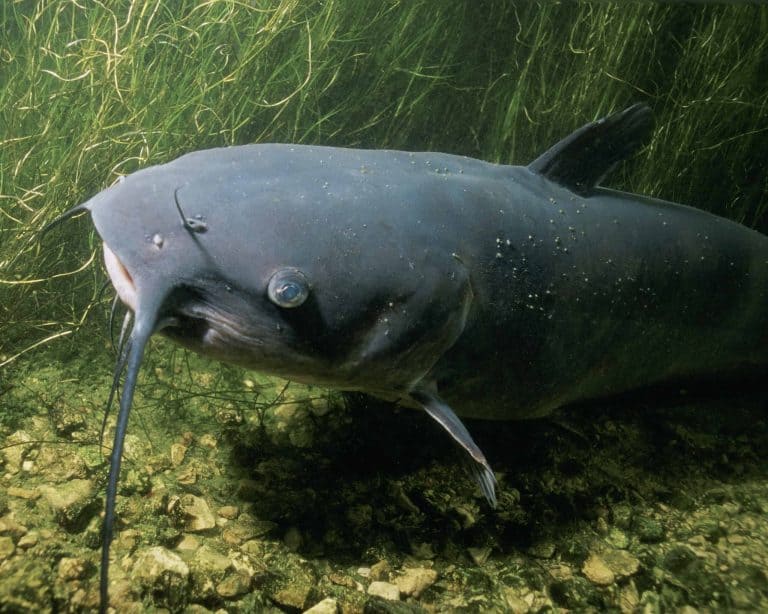
The Bighorn River is a well-known Blue Ribbon tailwater fishery beginning at the “Wedding of the Waters” where the Wind River becomes the Bighorn River near Thermopolis. Anglers can find abundant brown and rainbow trout, as well as channel catfish, sauger, shovelnose sturgeon, and burbot in the lower sections. Bighorn Lake is located within the Bighorn Canyon National Recreation Area. Popular target fish include brown and rainbow trout, walleye, carp, yellow perch, catfish, ling, and crappie.
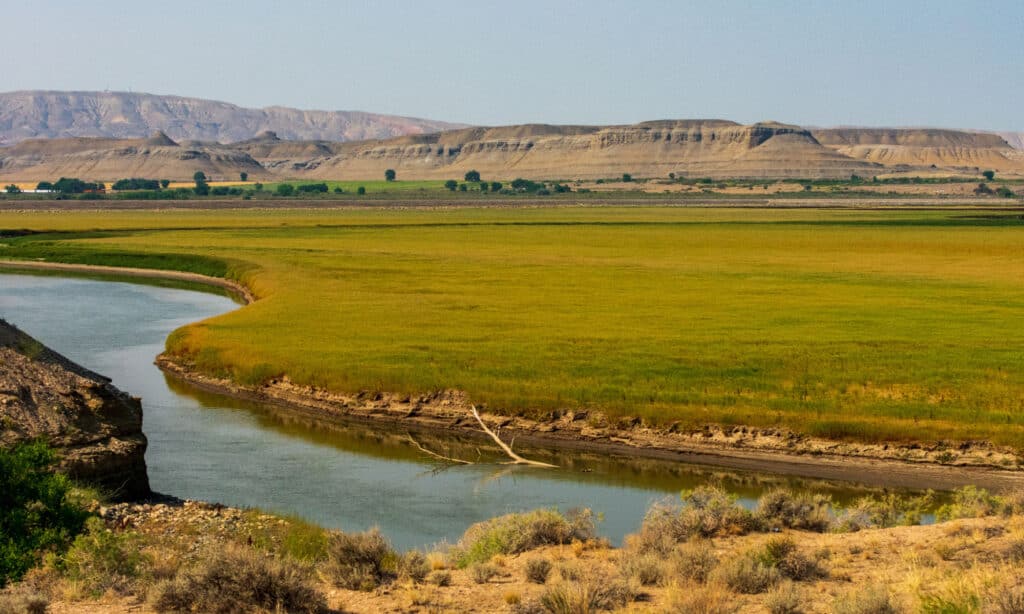
Bighorn River and Bighorn Lake are known for abundant brown and rainbow trout.
©iStock.com/T Schofield
6. Snake River
The Snake River is the place to go for world-class fly fishing for native Snake River finespotted cutthroat trout. A large part of the river, including the section inside Grand Teton National Park, is restricted to only artificial flies and lures. There are also seasonal catch-and-release rules for cutthroat trout during parts of the year. You can check current rules and regulations on the National Park Service page for Grand Teton National Park. Other top sections of the river include below Jackson Hole toward the Palisades Reservoir and the stretch from Jackson to the Wilson Bridge, which is popular for wading and floating.
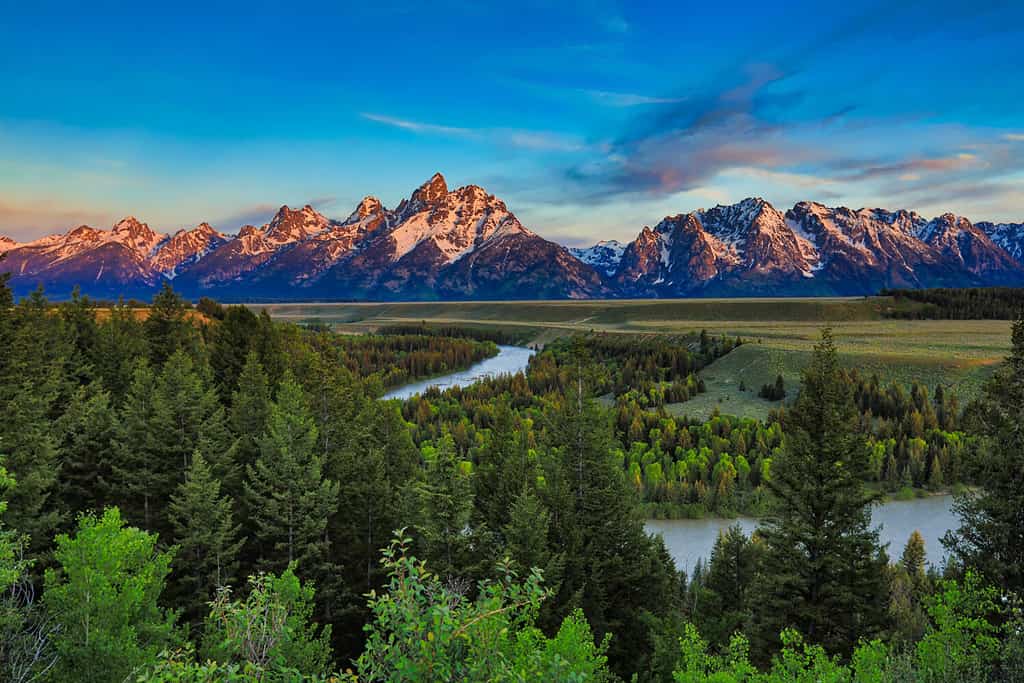
Part of the Snake River winds through Grand Teton National Park.
©aceshot1/Shutterstock.com
7. Lake Hattie
The largest lake of the Laramie Plains is Lake Hattie, a 1,500-3,000-acre reservoir (water level varies) in southeast Wyoming. The lake is known for rainbow, brown, and lake trout, as well as kokanee salmon and perch. There are no public facilities at the reservoir, but there are boat ramps, and camping is allowed on the public sections maintained by the Bureau of Land Management. There is also over eight miles of accessible shoreline.
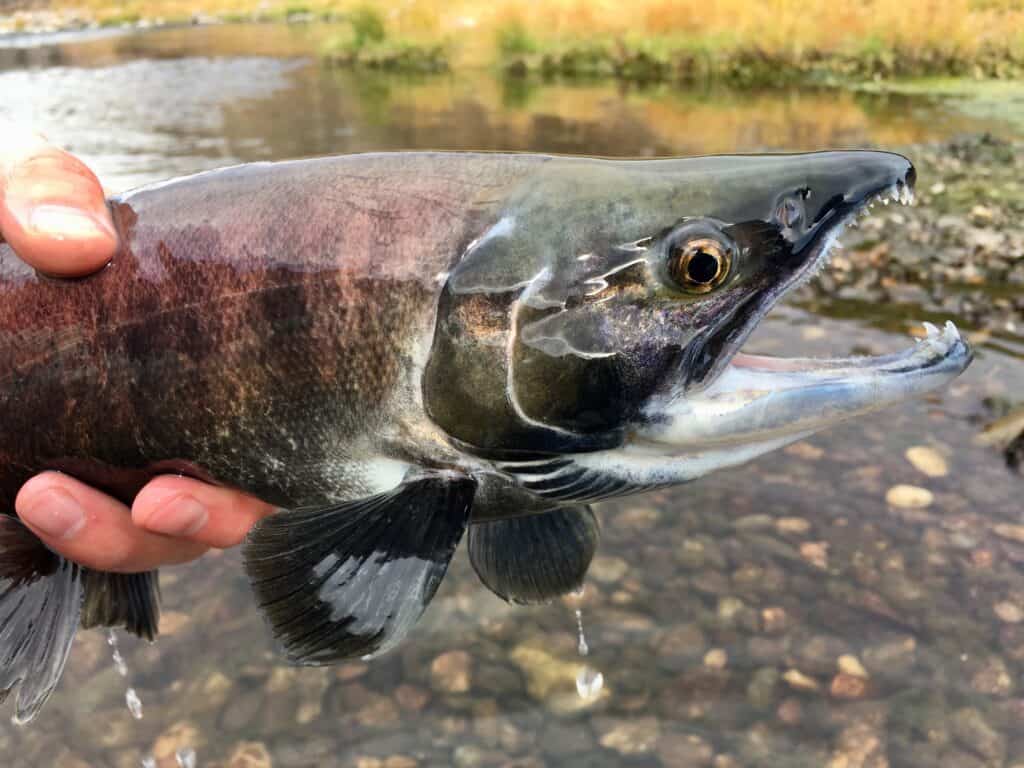
Kokanee salmon are a popular target fish on Lake Hattie.
©Ryan Cuddy/Shutterstock.com
8. Wind River Range
The Wind River Range is a popular fly-fishing destination, with over 1,000 alpine lakes and nearly 2,000 miles of streams. Top target fish include wild cutthroat, rainbow, brook, brown, and rare golden trout. Top fishing locations include Upper Wind River near Dubois, Wind River Canyon below Boysen Reservoir, and Bridger Wilderness high-country alpine lakes. Note that part of the main river runs through the Wind River Indian Reservation, which requires a separate tribal permit.
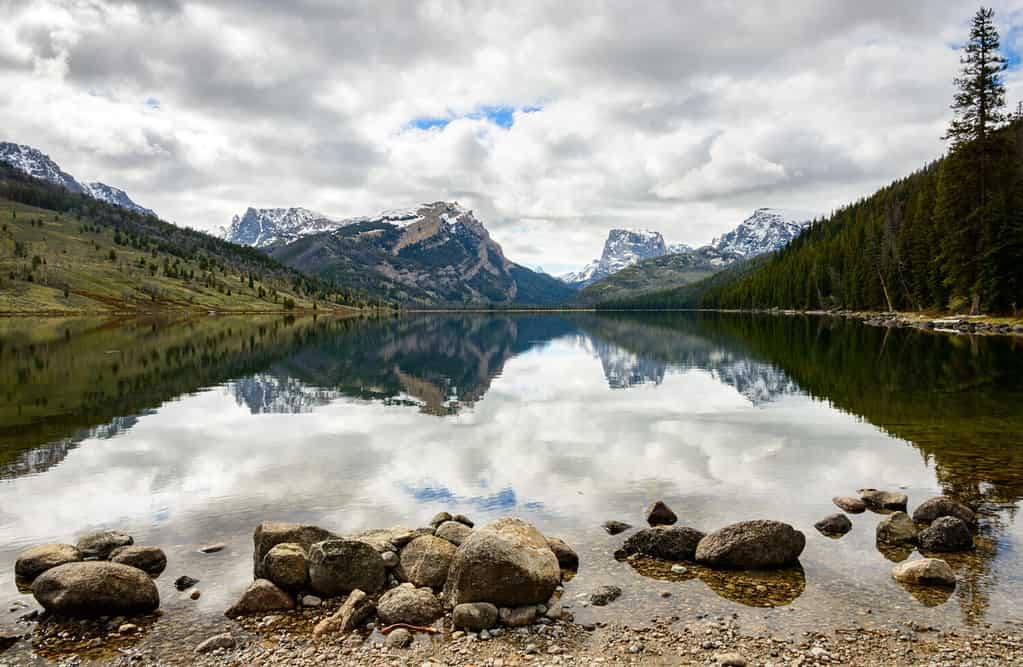
The Wind River Range has thousands of lakes and thousands of miles of streams.
©Zack Frank/Shutterstock.com