
Quick Take
- Managing 6 feet of tail feathers is a mandatory achievement for successful flight cycles.
- The broad, rounded wing structure creates a major limitation for long-distance flight.
- The tail feathers function as a counterintuitive stabilizer instead of a flight nuisance.
- Executing a running start is a necessary evolutionary stage to overcome ground-level inertia.
Peacocks are often thought to be land birds, but did you know they can fly as well? Although they usually fly only in short bursts, peacocks look graceful and beautiful in flight. This Instagram post by @explainingnature shows a group of peacocks flying together over a body of water. It is a mesmerizing sight, especially since you do not often see them fly.
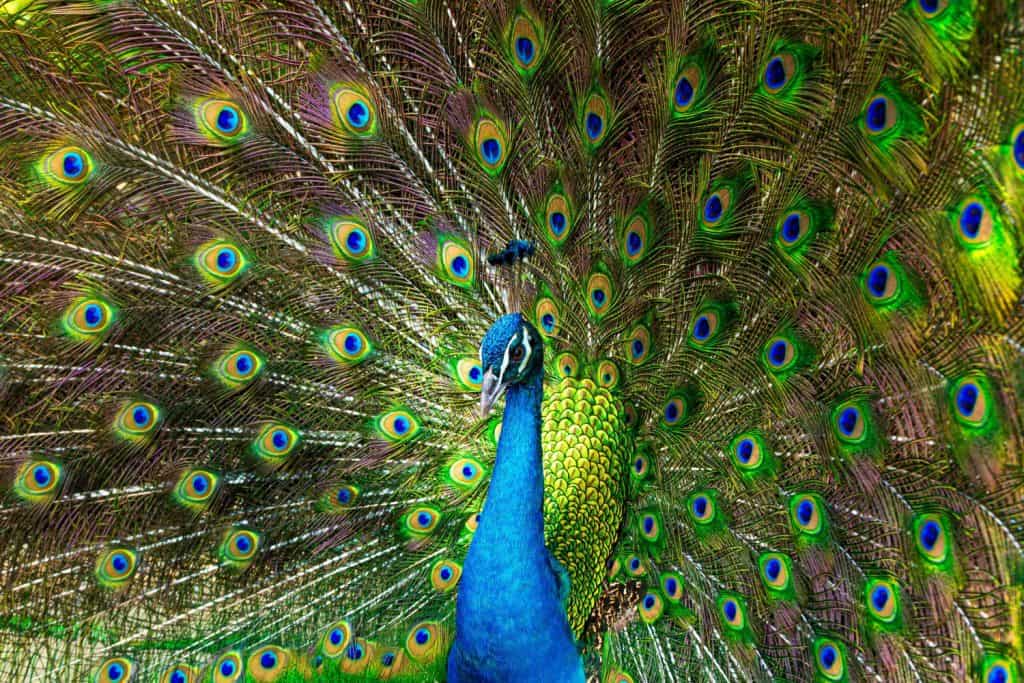
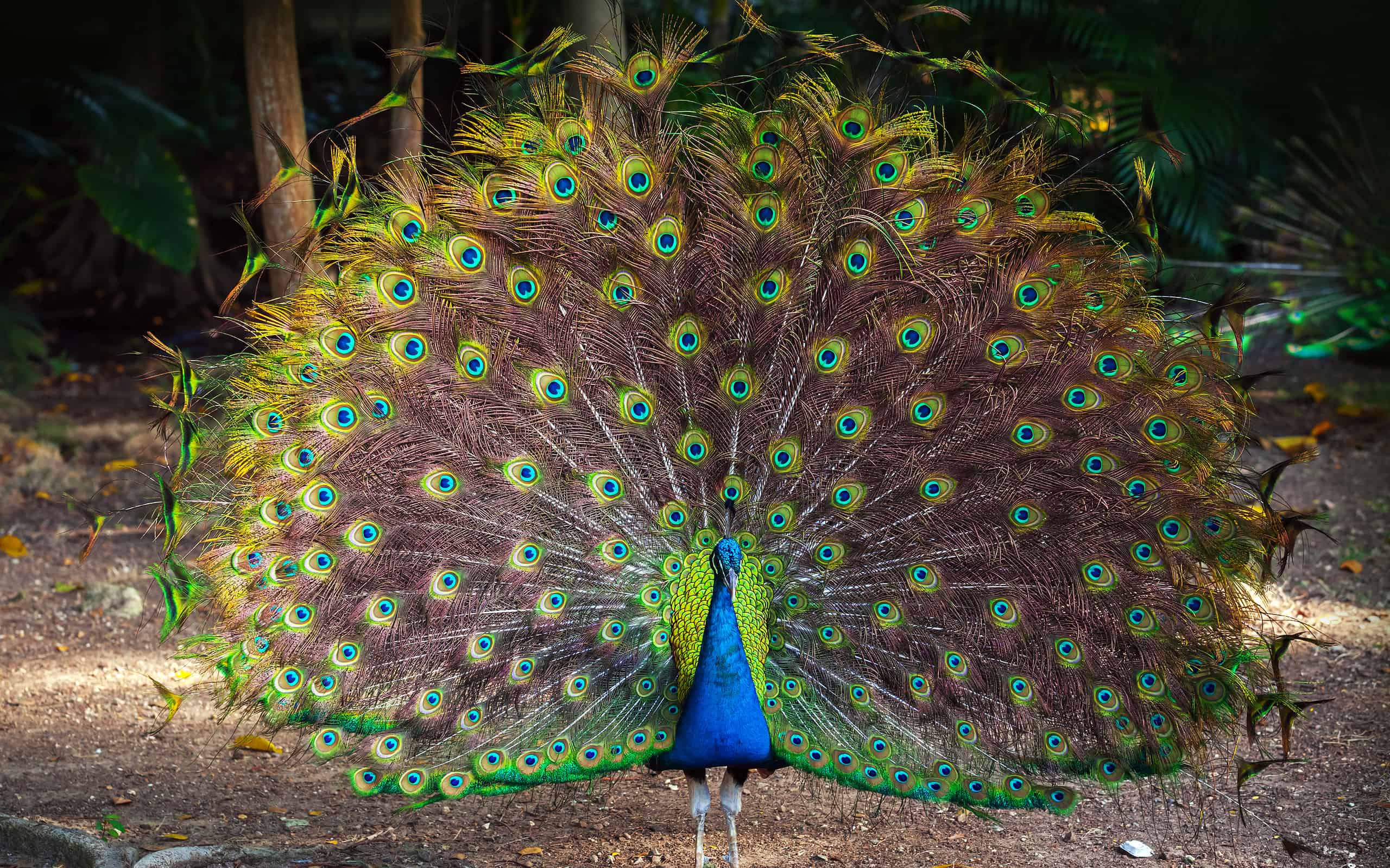
Peacocks have large tail feathers that can grow up to six feet long.
©banjongseal324SS/Shutterstock.com
A Massive Bird Takes Flight
Peacocks are relatively large birds, so it’s easy to dismiss them as flightless. However, they may fly for brief periods. The majority of the time, peacocks are either walking or running. Since they spend so much time socializing and feeding on the ground, they do not prioritize flight as a necessary skill. When they do take flight, it is a sight to behold.
They begin with a running start, then spread their wings. Their broad, rounded wings help with lift-off but are not suited for long-distance flight. Once airborne, they flap their wings rapidly to stay aloft. Because of the size of their wings, this can be quite loud. They may fly to avoid danger or to reach a high roosting point. If you ever see a peacock fly, you have witnessed an amazing behavior.
You might be wondering: with such a large tail, don’t they get weighed down? While it may seem that way, the tail does not actually interfere much with their short flights. The feathers do add some weight and drag, which would typically make flying harder. However, the tail feathers are light and flexible. This lightness and flexibility mean that the tail does not prevent the peacock from flying and may actually be beneficial. The tail can act as a stabilizer during flight, contrary to the popular belief that it is a hindrance.