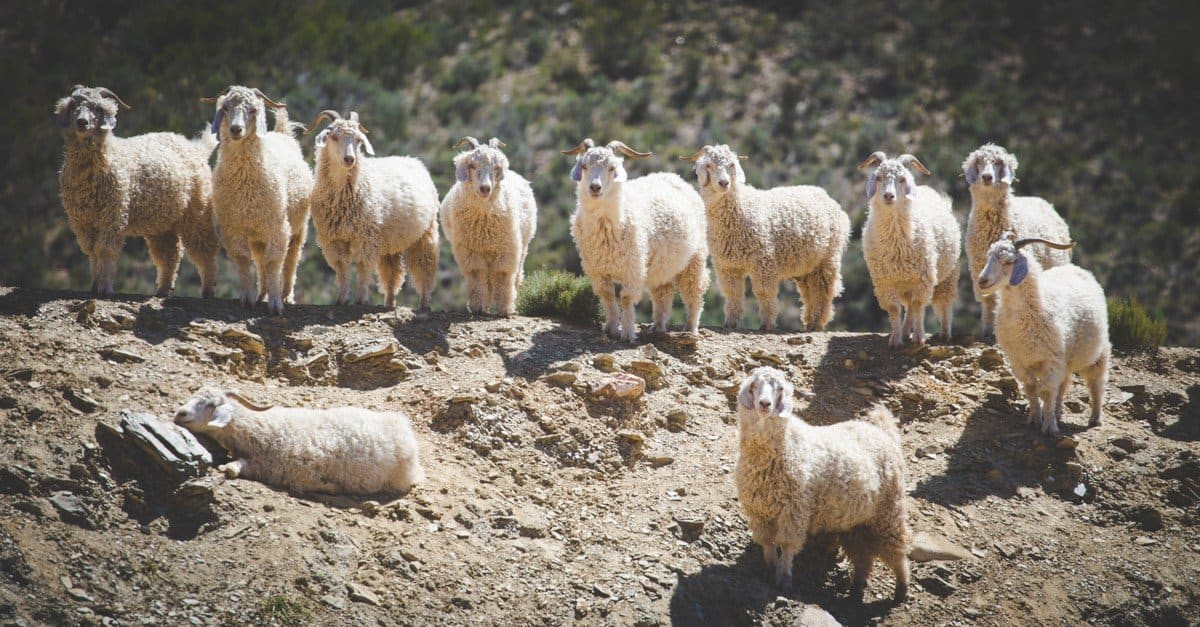

Although most people have a standard image in mind when they think of goats, these hooved ruminants actually come in an incredible variety of colors, sizes, and uses. In fact, over 300 goat breeds exist, falling under the genus Capra in the family Bovidae. Humans raise goats for everything from their hair fibers to dairy to meat to companionship. Some even make great show animals! Also, one goat breed looks so strange that you’d think someone made it up. Read on to discover 10 different types of goats from around the world.
Boer
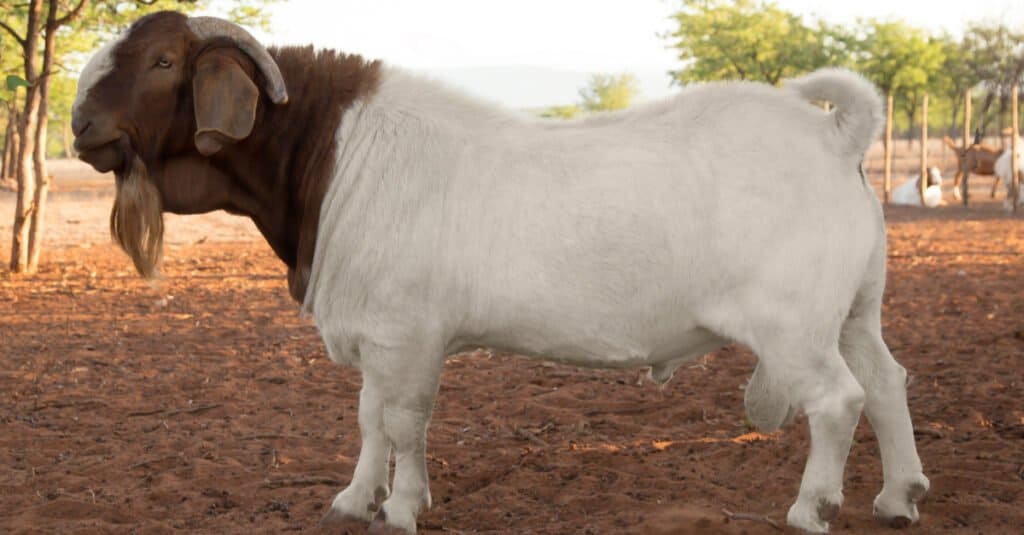
The Boer goat is one of the world’s largest goat breeds, with males weighing as much as 350 pounds.
©Africanstar/Shutterstock.com
The world’s largest goat breed is the Boer goat, a South African type famous for producing large quantities of meat. Males can weigh up to 350 pounds with females usually peaking at 250 pounds. Fully grown adults can reach up to 30 inches or 2.5 feet in height. Farmers prize them for their fast rate of growth, their prolific reproduction, and the high quality of their meat.
American Pygmy Goat
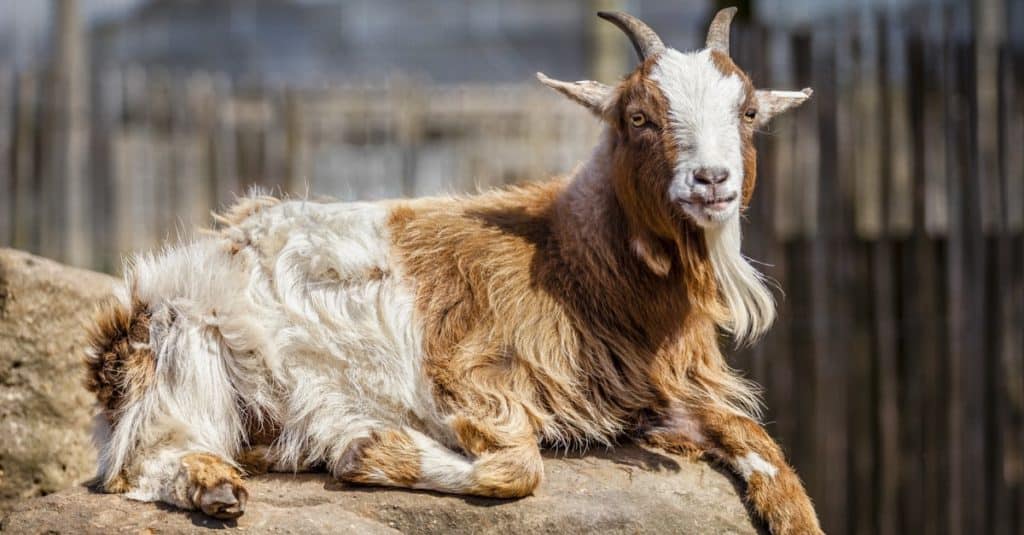
American pygmy goats only grow to be 15 to 20 inches tall.
©James Clarke/Shutterstock.com
One of the smallest goat breeds is the American Pygmy goat, which originates from the West African Dwarf group. Though they may be slightly heavier than the next goat on the list, they are shorter overall, averaging between 15 to 20 inches in height. Adults weigh between 30 and 90 pounds.
This breed makes a great pet due to its lovable, curious personality. However, farmers sometimes raise them for their meat. They also make good dairy goats. Despite their diminutive size, they can produce one to two quarts of milk a day.
Nigerian Dwarf Goat
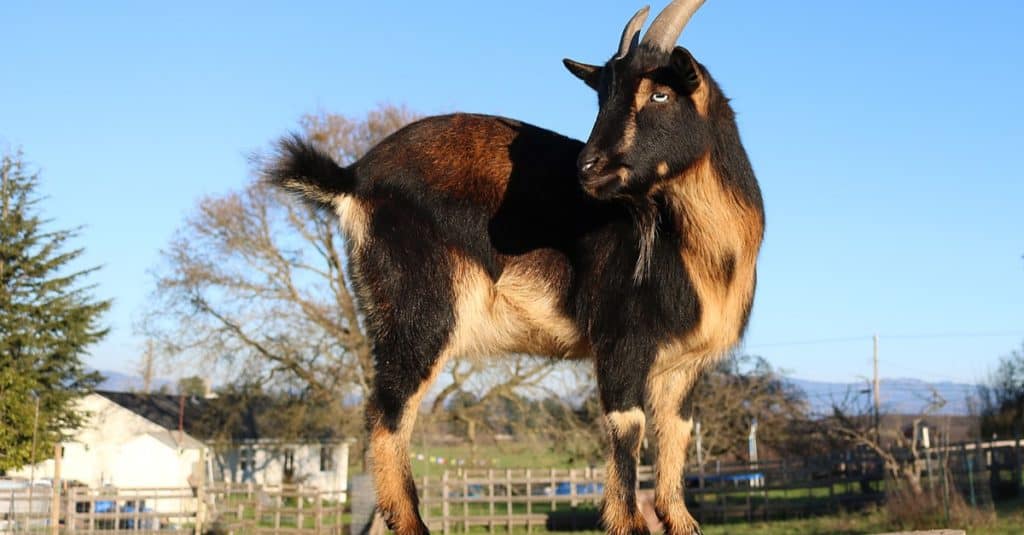
Nigerian dwarf goats typically weigh less than 80 pounds.
©Hollysdogs/Shutterstock.com
Another small goat is the Nigerian Dwarf, a West African dairy breed. Farmers and pet owners value it for its exceptionally docile temperament and high rate of milk production. A single Nigerian Dwarf goat can produce up to two quarts of milk a day with a higher-than-average butterfat content. The tallest bucks stand 24 inches at the shoulder while the tallest females reach 22 inches. They usually don’t weigh over 80 pounds. Due to their gentle, lovable personality, Nigerian Dwarf goats make outstanding pets. They require much less room than larger goat breeds and get along well with both people and other livestock.
Saanen
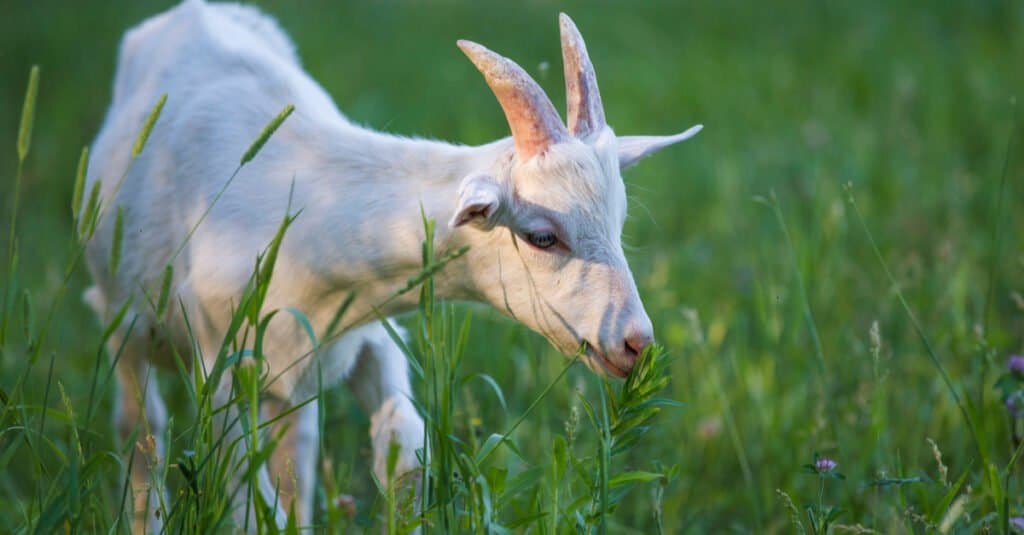
Saanen goats are raised for milk and can produce around three to four quarts per day.
©Mircea Costina/Shutterstock.com
One of the best dairy goat breeds in the world is the Saanen goat from Switzerland. The Saanen goat can produce around three to four quarts of high-quality milk a day, making it one of the highest milk-producing goat breeds. Farmers and pet owners prize the Saanen’s sweet temperament and lovely, snow-white coat. It’s the largest of the dairy goat breeds and requires a large amount of space to graze and play.
Spanish Goat
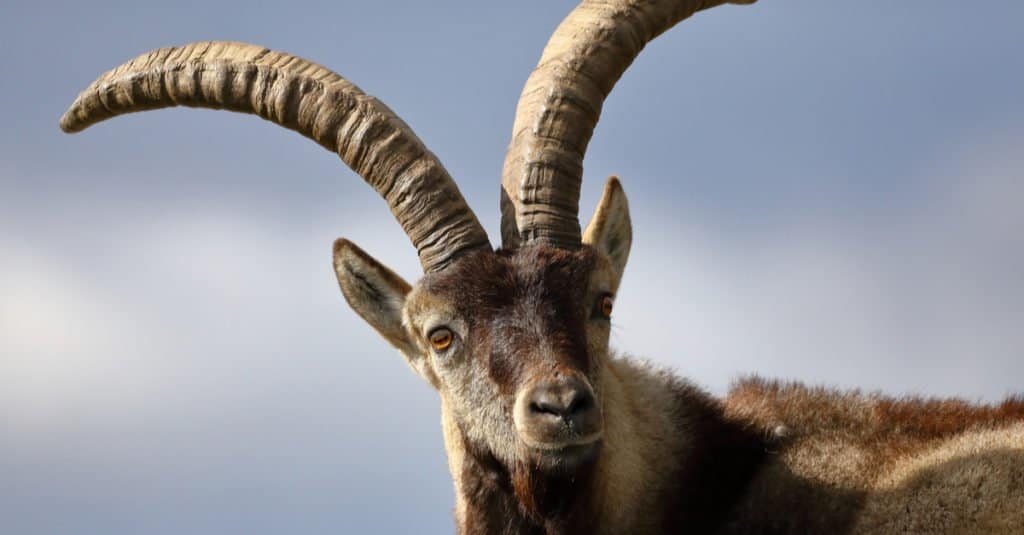
Spanish goats are raised for their meat.
©ODEBLAS/Shutterstock.com
One of the best meat goat breeds is the Spanish goat, a breed originating in Spain. It comprises six different types including the Tinerfena and Malagliena. This breed is a highly adaptable goat located all over the world. They have also earned the nickname “brush goats” for their ability to clear unwanted species of plants from large areas. Before the Boer breed was developed, breeders widely considered Spanish goats to be the best meat goats in the world.
Angora Goat
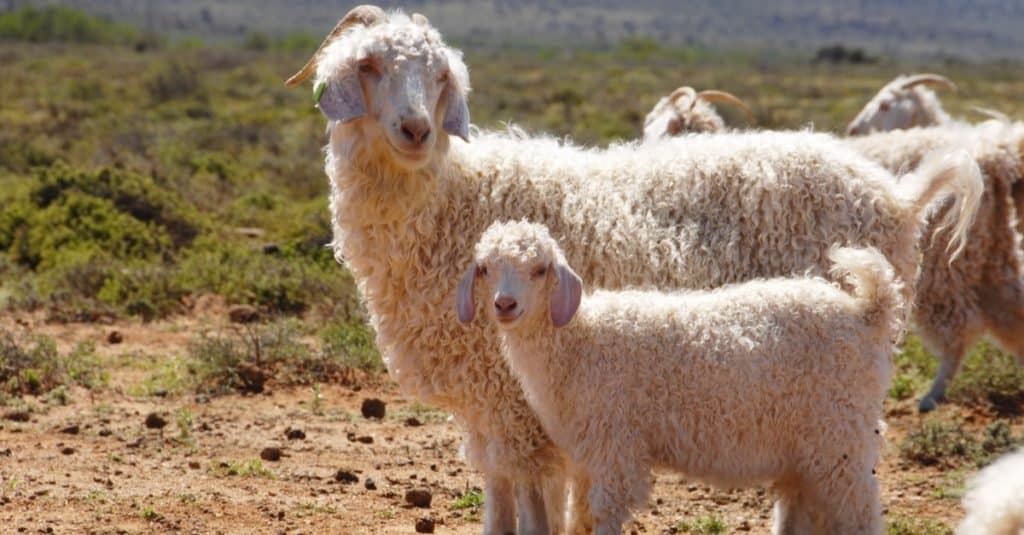
Angora goats are prized for their high-quality mohair.
©Janice Adlam/Shutterstock.com
Breeders cherish the Angora goat for its silky, luxuriant fibers. Farmers raise this breed for its high-quality mohair. It originated in Turkey, though today it has spread through many countries. It has also spawned many subtypes including the Indian Mohair and the Pygora. Despite being a relatively small goat, a single Angora can produce up to 10 pounds of fiber per year. Its hair is usually white, though some individuals are grey, brown, or black.
LaMancha Goat
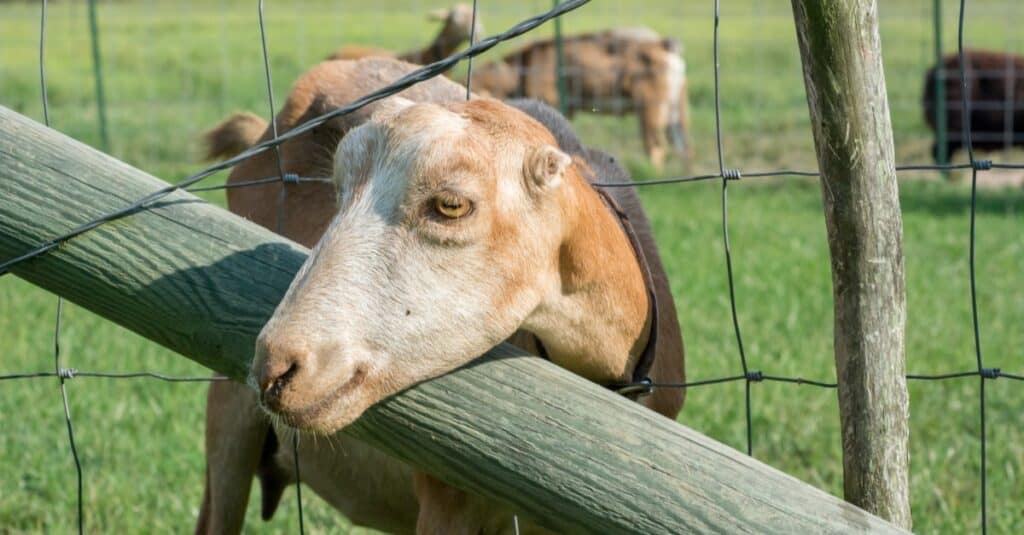
LaMancha goats are known as the only breed with no ears. Instead of full-sized ear flaps, they sport tiny nubs.
©Jonathan_Densford/Shutterstock.com
The LaMancha goat holds an interesting title: it’s the only goat with no ears! Of course, this breed still has ear holes and eardrums, so it can hear just fine. However, its external ears are limited to “gopher ears” or “elf ears,” which are just tiny nubs or flaps. Little to no cartilage is present. The LaMancha goat was developed in the United States from short-eared goats of Spanish origin. Farmers breed LaManchas for both meat and milk, but they also make excellent pets. Owners adore them for their sweet, gentle temperaments.
Arapawa
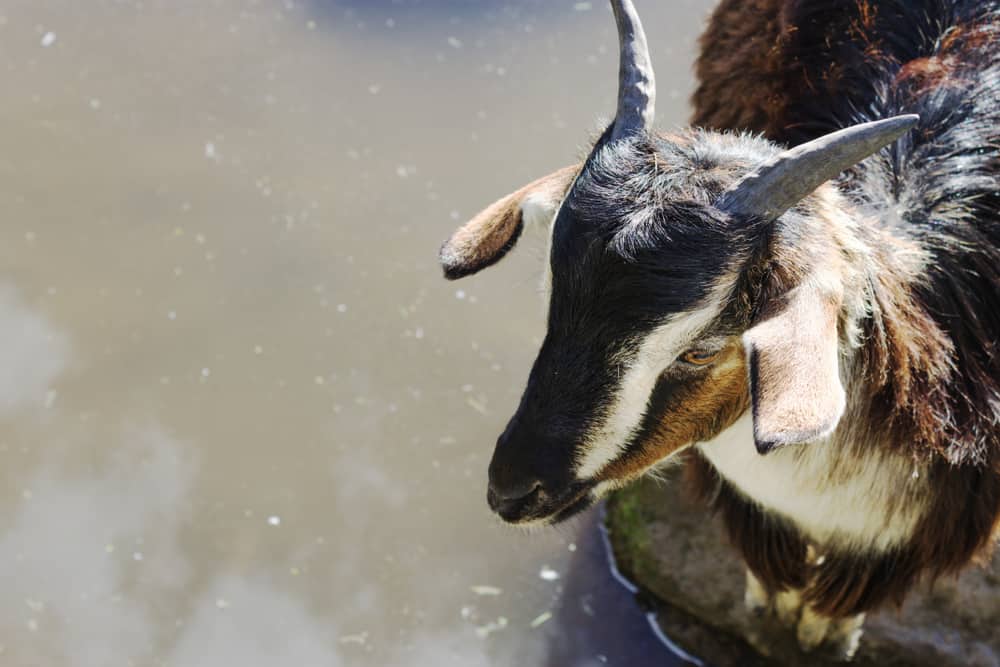
One of the rarest goat breeds in the world is the New Zealand Arapawa goat.
©Molly NZ/Shutterstock.com
Sadly, not every goat breed is abundant. Some are rarer than others, and the Arapawa goat may be the rarest of all. Originally dwelling in New Zealand, it found its way to America and gained traction as a dual meat and dairy goat. It’s a small but stubborn goat with a hardy disposition. Conservationists list the breed as Critically Endangered.
Nubian
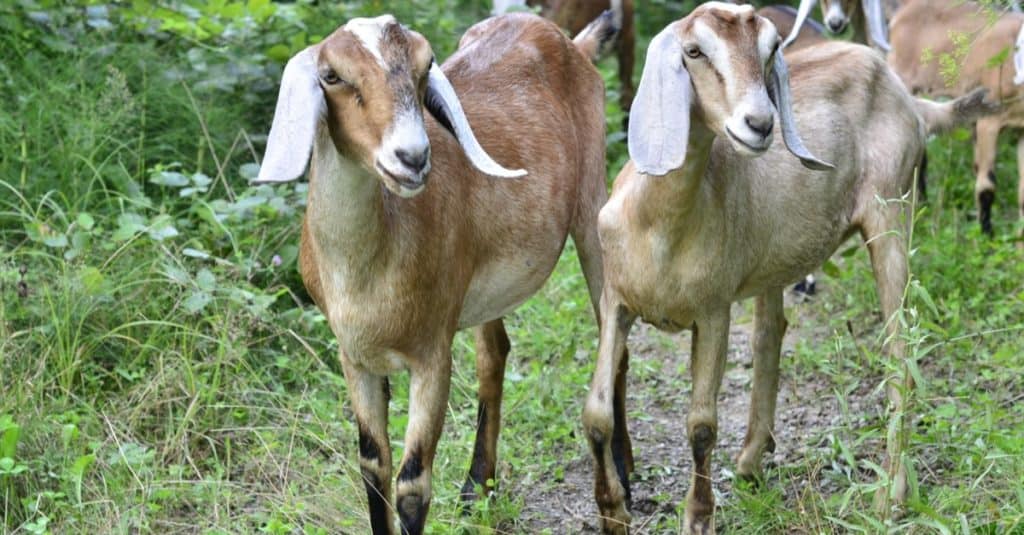
Nubian goats are known for their distinctive lop ears.
©Zhanna Shamrai/Shutterstock.com
The Nubian goat, also known as the Anglo-Nubian, originated in the UK but has since been exported to many countries around the world. Nubians are known for their distinctive lop ears and long legs. Their appearance can vary, with colors including black, brown, white, and spotted. They are dual-purpose goats and are reared for both meat and milk.
Damascus Goat
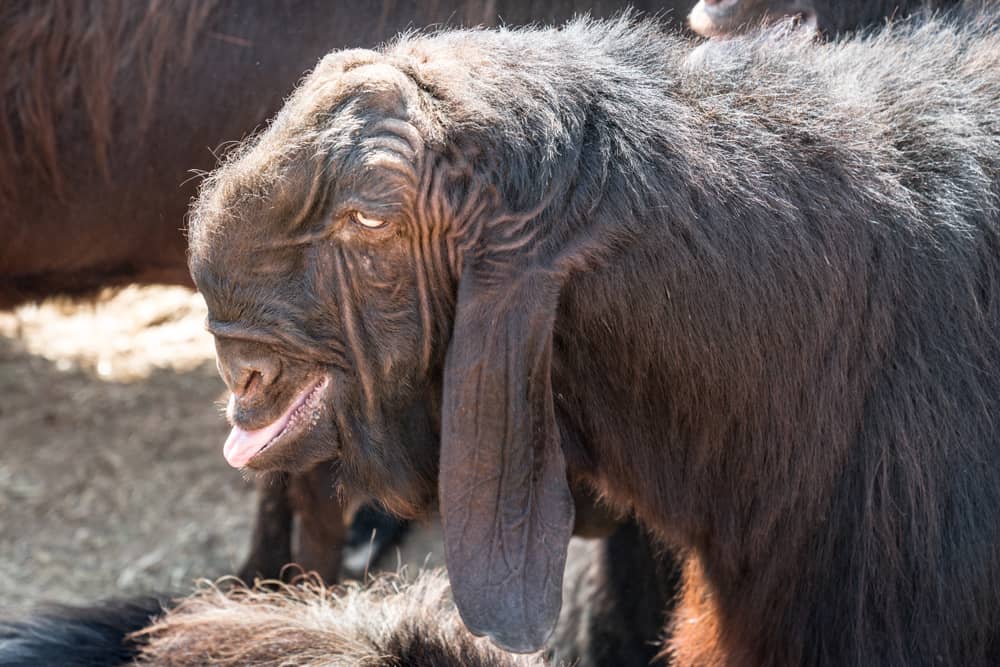
Damascus goats are one of the most interesting-looking animals in existence.
©fotopanorama360/Shutterstock.com
Dubbed the “goat monster”, Damascus goats are among the strangest-looking animals on the planet. With bulging foreheads, pendulous ears, and jutting underbites, they resemble something out of science fiction. Their outlandish appearance has made them expensive goats to purchase and own. The breed originated in Damascus, Syria’s capital, though it also lives throughout Cyprus and Lebanon. Farmers primarily raise these goats for dairy, meat, and show.
Many goat owners take the Damascus goat’s strange appearance to the next level by cutting their ears short. Though not all owners choose to do this, pictures of cropped Damascus goats are common. This is done to prevent injuries to their unusually long ears.