
Quick Take
- A 220-pound walrus calf walked himself into a stranger's cabin, and what happened next is enough to seal the deal on this rescue story. See how he was found →
- His mother was nowhere to be found, and the reason she vanished is more complicated than you'd expect. Find out what happened →
- Authorities ruled out releasing Annautaq to the wild entirely, and the reason why reveals something surprising about how walrus calves actually survive. Learn why release was ruled out →
- Even in captivity, a walrus without a herd faces a specific and unexpected threat, and it is one that changed how SeaWorld planned his future. Discover the herd's role →
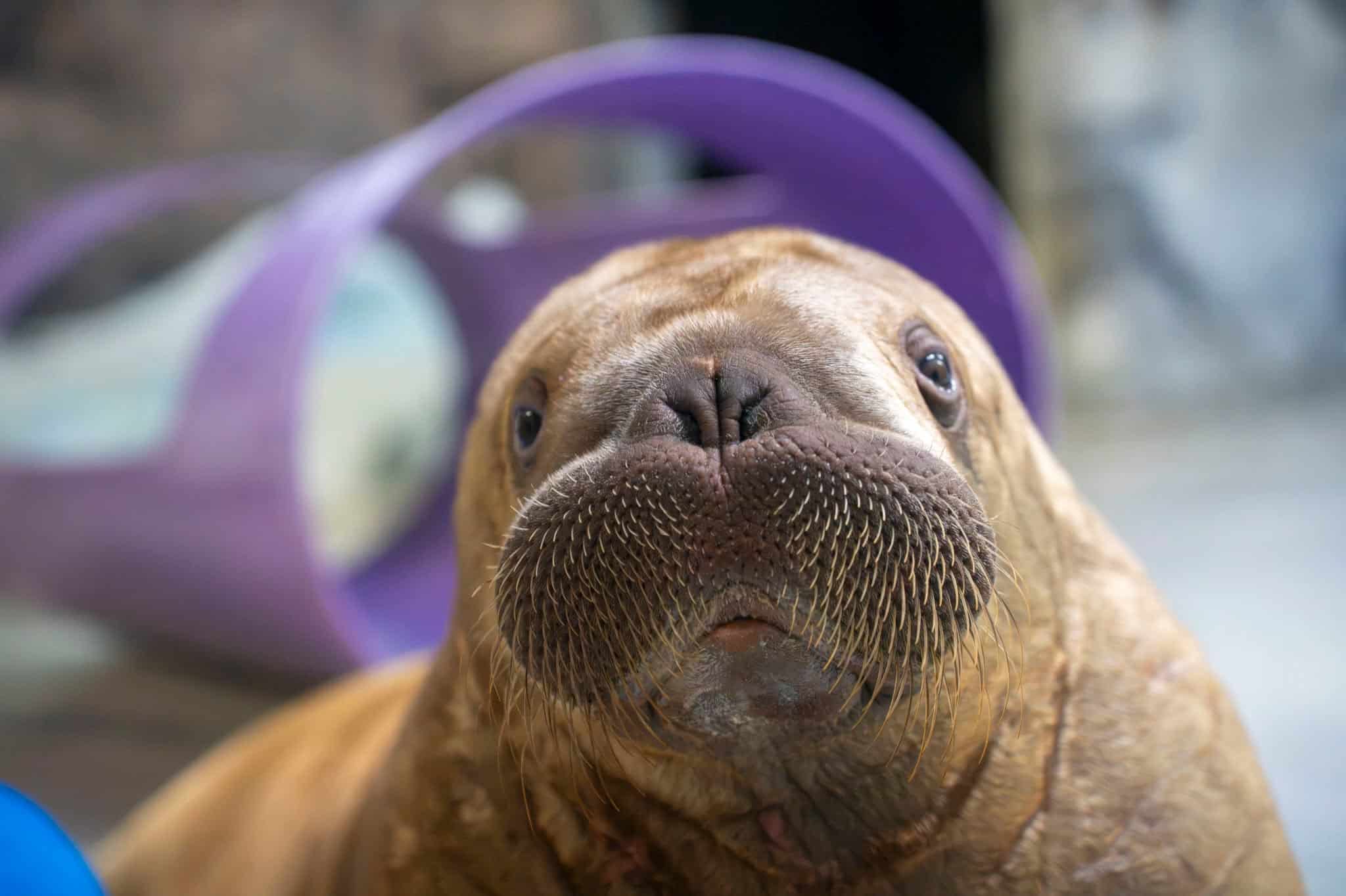
An abandoned baby walrus had luck on his side when he was found on a desolate beach in Alaska. Instead of facing certain death, the calf has a new lease on life. Not only was he saved from a remote Alaska beach, but Annautaq also has a new home at SeaWorld Orlando, complete with a new herd.
Annautaq, the Baby Walrus, Now Calls SeaWorld Orlando Home
A five-month-old walrus has gotten a new lease on life after being rescued from a remote beach in Alaska. Annautaq, which means “axe” in Iñupiaq, will now call SeaWorld Orlando home.
Researchers found the baby walrus alone in Point Lay, Alaska. Recognizing he could not survive on his own, Annautaq was cared for by those who found him for a couple of days until the Alaska SeaLife Center team arrived in Point Lay to determine the best course of action for the 220-pound walrus.
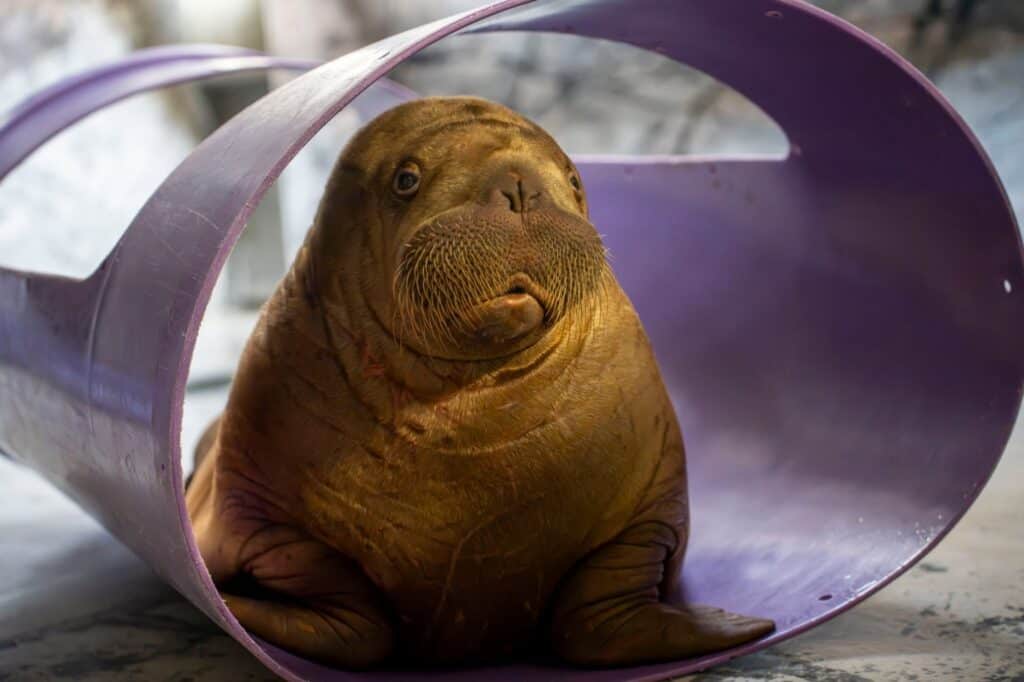
It took teamwork to bring Annatauq from Alaska to Florida, so he could receive the care he needed.
©Behind the Splash at SeaWorld Orlando / Facebook – Original
After providing Annautaq with intensive care, SeaWorld Orlando was contacted to determine if it could provide a permanent home for him. Once SeaWorld secured a spot for Annautaq, a team traveled to Alaska to help prepare the large animal for a 4,000-mile journey to Florida. According to Jane Belovarac, wildlife response curator at the Alaska SeaLife Center, it is only because of such teamwork that the baby walrus survived.
“Annautaq’s story shows why having specialized marine mammal rehabilitation capacity in Alaska is so important,” Belovarac explained to United Parks & Resorts. “When an orphaned walrus calf is found in a remote part of the state, a successful response depends on being able to move quickly from rescue to intensive, species specific rehabilitative, husbandry, and veterinary care. Our team was able to stabilize Annautaq, support his medical and social needs around the clock and prepare him for the next stage of his care. Getting Annautaq to this point took an incredible network of people, and we’re proud the ASLC could provide the specialized care that helped carry him from rescue in Alaska to his next chapter.”
Where Was Annautaq Rescued?
Annautaq was found on a beach in Point Lay, Alaska. The stretch of coastline is remote and sees very few visitors, making his discovery nothing short of a miracle.
In September 2026, Violet Anniskett, a college student, was assisting U.S. Geological Survey scientist Tony Fischbach with walrus research. While photographing deceased walruses, she discovered that the smallest in the group was still alive.
Overhead, scavenging birds were circling. Fresh bear tracks also marked the area. Annautaq was clearly far too young to survive on his own. According to Anniskett, she and Fischbach decided to bring him inside, away from the dangers of the wild.
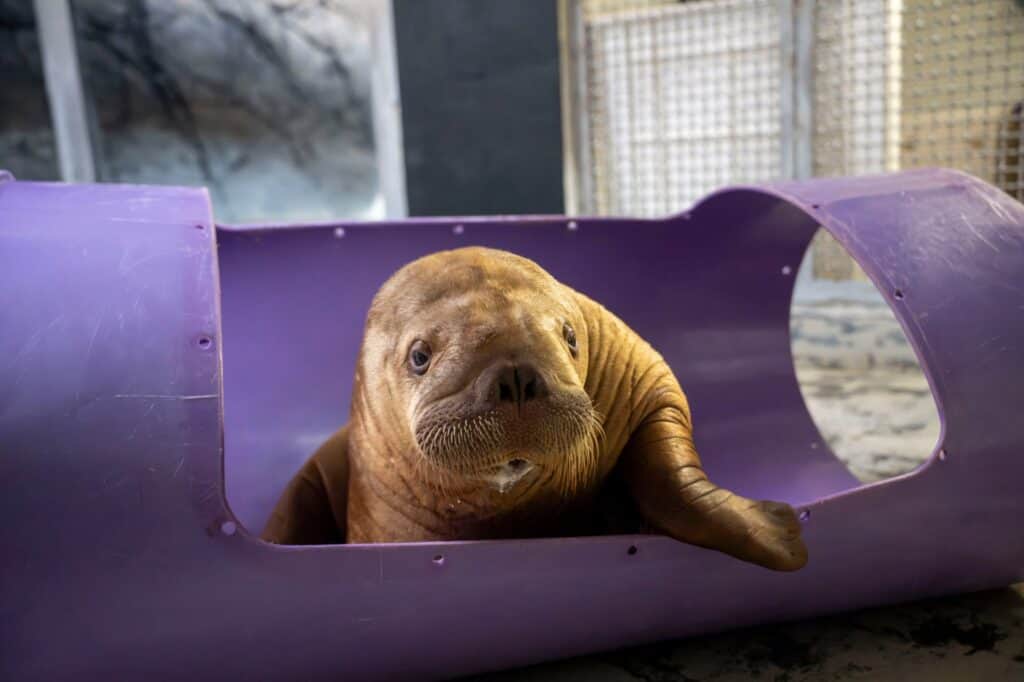
A college student and scientist rescued Annautaq from a remote Alaskan beach.
©Behind the Splash at SeaWorld Orlando / Facebook – Original
“We walked him all the way to our camp. Somehow, some way, he followed us all the way,” Anniskett explained to Alaskan Public Media. “And somehow, in some way, we got him into the cabin… Then we had to stay with him throughout the night. I think the first night was the hardest, because he was afraid of us…”
Anniskett went on to state, “After he got used to us, he would go to us, and he would lay next to us, and he’d fall asleep. And Mr. Tony was more comfortable with him because Mr. Tony’s more of a taller man, and he would cuddle and snuggle with Annautaq. It was so adorable. He was like an actual baby, the walrus.”
What Happened to Annautaq’s Mom?
When Annautaq was found on the beach in Point Lay, Alaska, he was tucked between two adult walrus carcasses. However, neither adult walrus was Annautaq’s mother. This begged the question of what happened to the baby walrus’s mother.
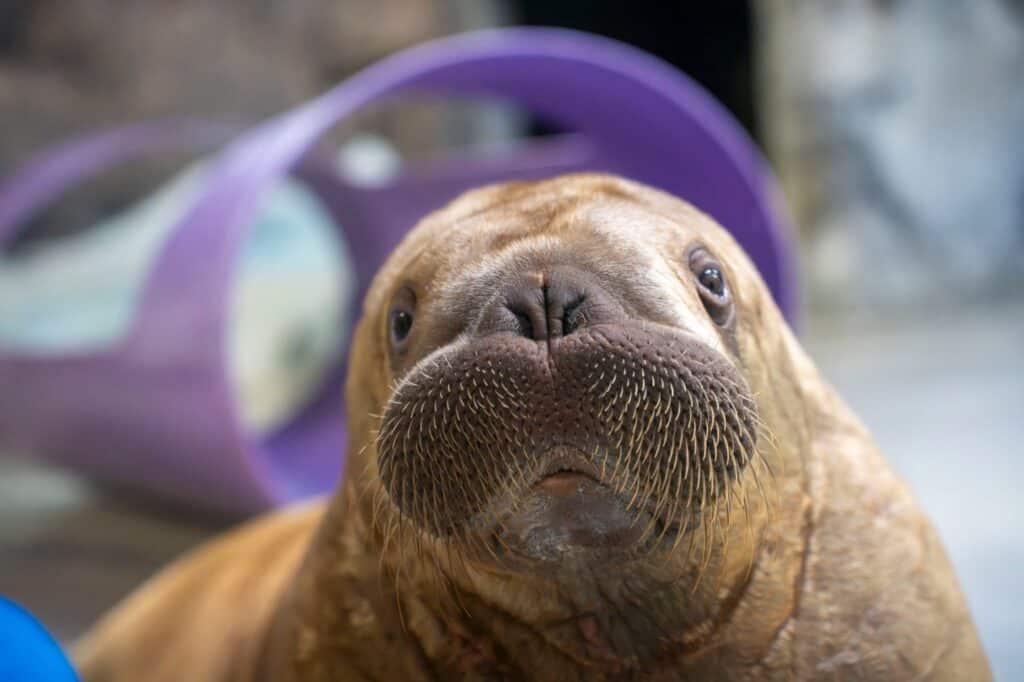
There is little information as to what happened to Annautaq’s mother.
©Behind the Splash at SeaWorld Orlando / Facebook – Original / License
It is unclear what led Annautaq and his mother to separate. In some cases, mothers and calves become separated because of illness or injury. Just before Annautaq was found, a major storm and heavy surf forced a herd to leave Point Lay. Annautaq’s mother may not have been able to find him.
There is also the possibility that Annautaq’s mother passed away, leaving the baby walrus to fend for himself. When the herd left the beach, he did not know what to do and found the only refuge that appeared safe to him: the deceased members of the dispersed herd.
Why Annautaq Cannot Be Returned to the Wild
The preferred outcome for all rescued animals is to return them to their natural habitat so they can live out their days as wild animals. Unfortunately, this is not always possible.
According to United Parks & Resorts, the U.S. Fish and Wildlife Service determined that Annautaq could not be released back into the wild because he had clearly been separated from his mother, and researchers could not tell when Annautaq and his mother last had contact.
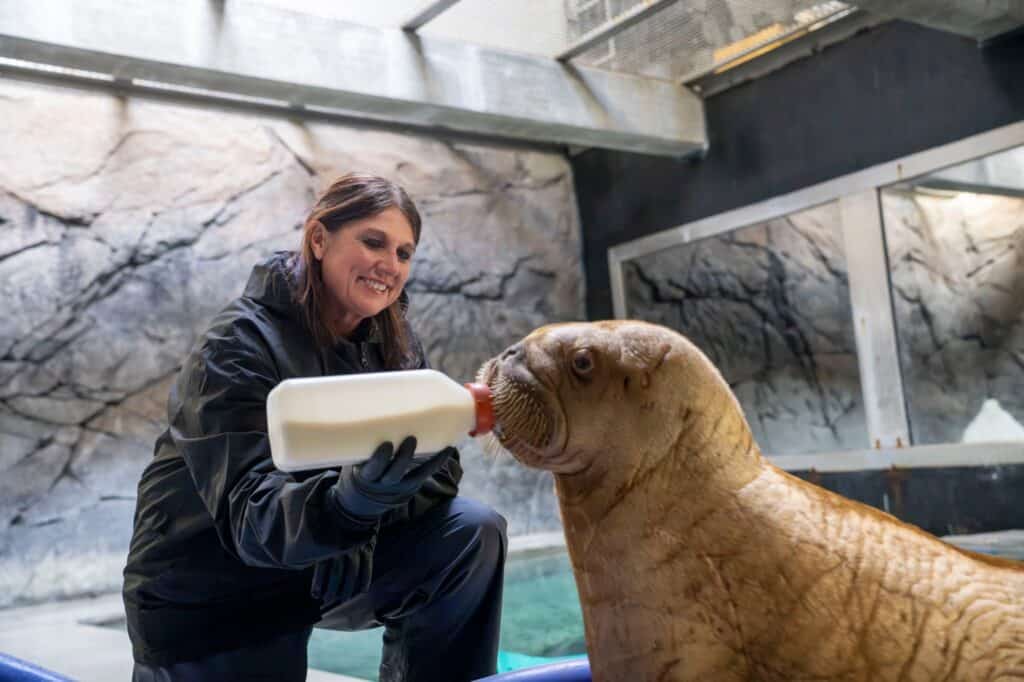
Annautaq cannot be returned to the wild because he depends on his caretakers to survive.
©Behind the Splash at SeaWorld Orlando / Facebook – Original
Baby walruses nurse on their mothers for up to 19 months. They also rely on their mothers for protection and to learn what threatens their survival. Because he was likely never taught these skills, if Annautaq were returned to the wild, he would die.
Consequently, SeaWorld Orlando became the baby walrus’s home. Annautaq has responded well to living in captivity and has imprinted on his caregivers. He now has the opportunity to grow and thrive, a stark contrast to what the future held for the abandoned baby before he was rescued.
Why a Herd is Still Necessary for Annautaq, Despite Being in Captivity
Annautaq has bonded with his caretakers, who have been caring for him around the clock. While the baby walrus needs a close bond with someone he sees as a maternal figure, Annautaq also needs a herd to belong to.
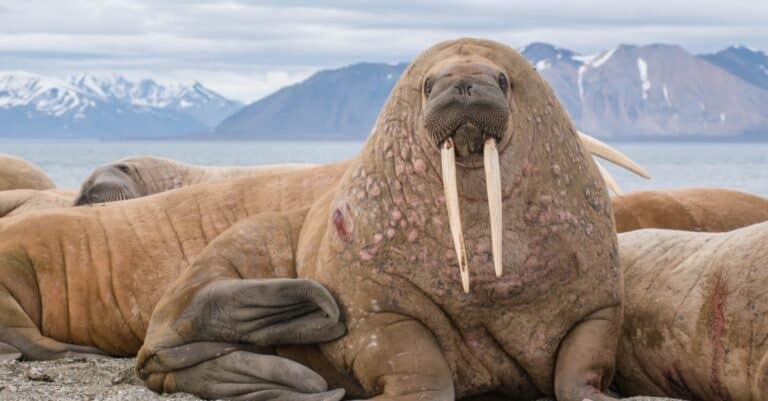
Belonging to a herd is necessary because walruses are social animals. Social interaction has been shown to reduce stress and support development in all walruses, especially babies. They learn social norms and the pecking order while receiving protection from others in the herd.

Walruses need to be in a herd to learn social skills, socialize, and feel comfortable.
©Jiri Soural/Shutterstock.com
Additionally, being part of a herd has other benefits. Those benefits include:
- Thermoregulation: While the enclosures tend to be temperature-regulated, walruses will still huddle together. This keeps everyone in the herd comfortable and provides warmth.
- Awareness: Walruses in captivity have no predators to fear. However, their instinct to monitor their surroundings for danger remains. In a herd, walruses still practice responding as a group to perceived threats to their survival.
- Practicing hierarchy: With walruses having a pecking order within a group, it brings a sense of “psychological well-being” to the animals. Without a herd, the dominant energy has nowhere to go, which can lead to aggressive behavior.
Annautaq may never return to the wild, but that does not mean he will not have a herd to call his own. SeaWorld Orlando is home to three other walruses. In time, Annautaq will meet Uki, a two-year-old female walrus that was also rescued in Alaska; Kaboodle, a 23-year-old female; and Garfield, 44, a male walrus who was also abandoned as a baby.
While this herd may be small, they will help Annautaq learn all he needs to know about being a walrus, and with any luck, the baby will thrive in his new home, becoming an ambassador for his species in the future.