Quick Take
- The island Grimshaw purchased was nearly uninhabitable, and the transformation he pulled off with almost no resources is hard to believe. See the transformation →
- Someone allegedly offered Grimshaw $50 million for his island, but his reason for refusing had nothing to do with the money. See why he refused →
- Moyenne Island holds a biodiversity record that's more impressive than parks many times its size. Explore the biodiversity record →
- Grimshaw rewilded the island with these animals, part of the reason why Moyenne was given protections as a national park. How the island was protected →
When I was younger, I heard a fable about starfish that really stuck with me. If you haven’t heard it before, the story centers around an old man who is walking on the beach. Hundreds of starfish have washed up, and a young boy is grabbing them one by one to throw them back into the ocean. When the old man asks the boy why he’s throwing them back, since it won’t make a difference, the boy tosses another into the ocean, turns, and says, “It made a difference to that one.” As I’ve gotten older, I’ve often thought of our responsibility to take care of the world around us. We often believe that our small actions aren’t enough to make a big difference. I don’t believe that’s true. If we sit back, nothing will change. But if we take action in whatever way we can, we can positively impact others.
Nothing exemplifies this more to me than the story of Brendon Grimshaw. I first learned of Grimshaw through a 2009 documentary called A Grain of Sand, where interviewers traveled to his home on Moyenne Island to discuss his conservation efforts. Immediately, I was captured. Many people dream of buying their own island. Grimshaw did so with a goal of preserving nature. His efforts show that sometimes all it takes to make a difference is the desire to help.
Who Was Brendon Grimshaw?
In 1925, Brendon Grimshaw was born in northern England. According to A Grain of Sand, he mentions that he was always deeply interested in writing. Grimshaw quit school at 15 years old to work at newspapers, eventually becoming Chief Reporter at the Batley News when he was twenty-three. Then, he continued to work in media, first at The Star in Sheffield, England, then as an editor for several newspapers in Africa, including the Tanganyika Standard and East African Standard.
In 1962, Grimshaw traveled on vacation to the Seychelles, an archipelago in the Indian Ocean. Tanzania and Kenya were well on their way to gaining independence, and Grimshaw knew his jobs might soon be replaced by local workers. His trip to the Seychelles offered an opportunity to unwind and to think about what came next.
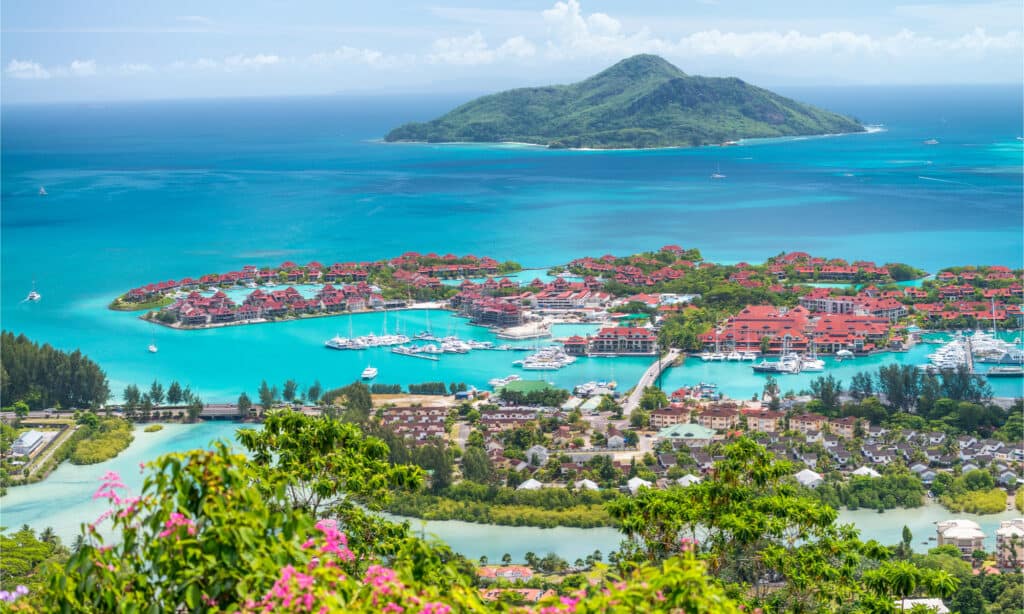
Altogether, the Seychelles consists of 115 different islands, including the one Grimshaw would come to inhabit.
©GagliardiPhotography/Shutterstock.com
Grimshaw fell in love with the natural beauty of the Seychelles and began imagining a life there. So when a man approached Grimshaw while on Mahé and offered to sell him an island, Grimshaw jumped at the chance. They traveled together to Moyenne Island, and Grimshaw immediately knew it was perfect for him. He brought the owner over for dinner that night to discuss the sale, and the owner acknowledged that Grimshaw would take good care of Moyenne. On the last official day of his Seychelles trip, after paying £8,000 (roughly $22,400 at the time), Grimshaw became the owner of his own private island.
The Issues of Moyenne Island
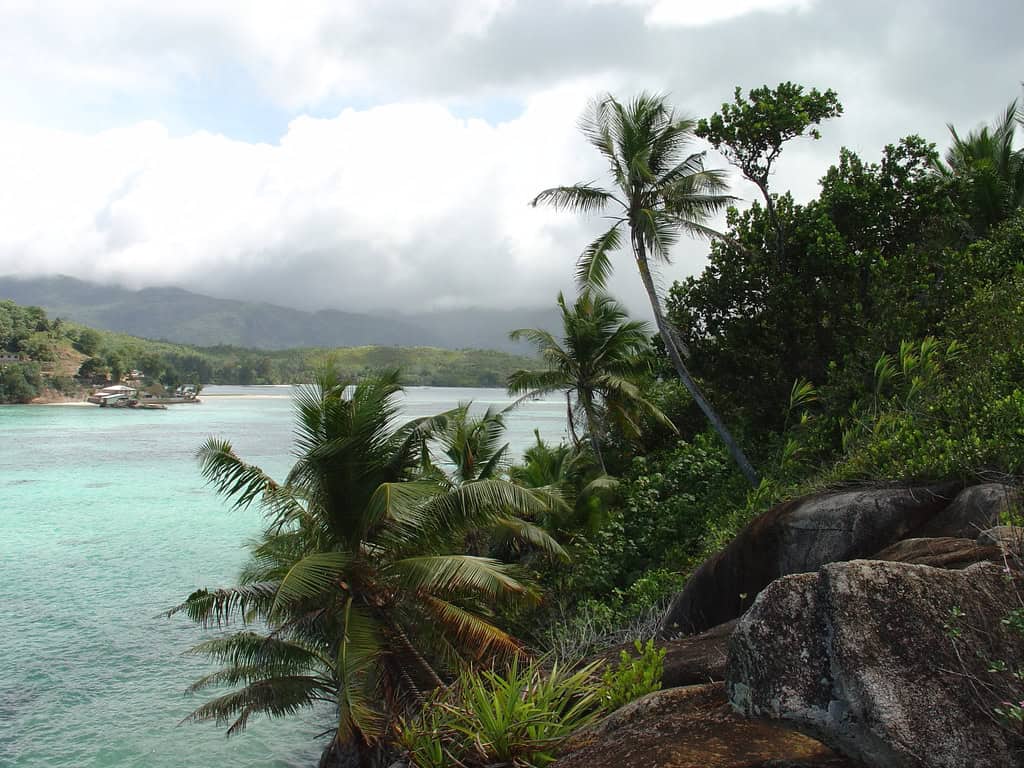
Despite having an owner, Moyenne had been abandoned for over 45 years by the time Grimshaw purchased the island.
Moyenne Island was not in good shape by the time Grimshaw purchased it. Invasive weeds were widespread, devastating native plants. Animal life had been equally devastated, with the most common animals being rats living under the dense underbrush. Over the years, Grimshaw liked to tell people that the island was so overgrown that when coconuts fell from the trees, they didn’t even hit the ground.
From 1962 to 1972, Grimshaw traveled frequently between Moyenne and Africa before officially making Moyenne his home. He knew he had quite a task ahead of him. Grimshaw had two main goals. First, he wanted to protect and restore the island’s natural beauty. He also wanted to prevent any overdevelopment of the island.
This was an enormous undertaking, but luckily, Grimshaw was not alone. He met a Seychellois man named René Lafortune (sometimes misspelled as Lafortin) who shared the same commitment to conservation, and hired him as a partner. The two then got to work.
Repairing Moyenne
Over a period of 39 to 40 years, Grimshaw and Lafortune poured their hearts into reinvigorating the island. They cleared away the choking underbrush and planted over 16,000 trees by hand. Many of those trees were fruit trees, bringing coconuts, mangoes, and breadfruit to the island. The pair also built an estimated 4.8 kilometers (3 miles) of trails across the island and irrigated it.
Perhaps most importantly, Grimshaw played an enormous role in bringing animal life back to Moyenne. Birds had been noticeably absent on Moyenne. This is a huge problem since birds are seed dispersers and pollinators, supporting the health of other flora and fauna. Without birds, the ecological health of the island fell apart. Grimshaw purchased ten birds from a nearby island, and as Moyenne’s ecosystem improved, it attracted an estimated 2,000 more birds.
Grimshaw also reintroduced Aldabra giant tortoises to Moyenne. Although these tortoises were native to the Seychelles, they faced near-extinction because of habitat destruction and over-hunting. When Grimshaw brought the tortoises to Moyenne and let them breed, the population grew. Eventually, over 120 Aldabra giant tortoises came to live on Moyenne.
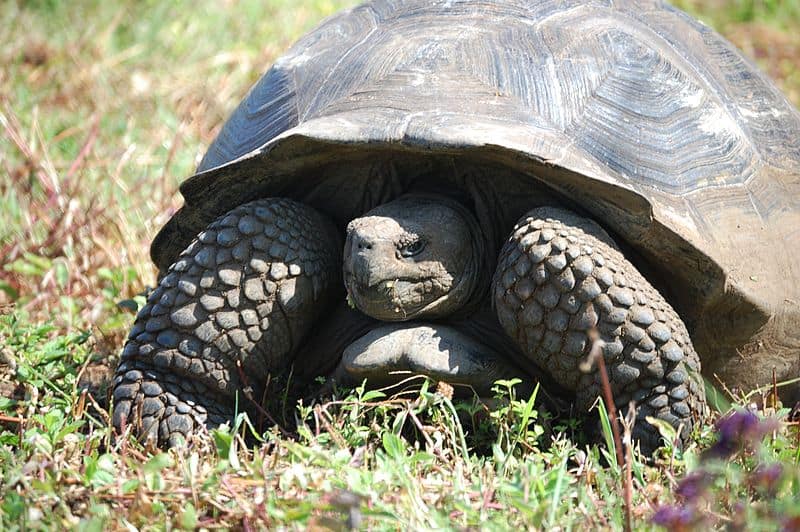
Aldabra giant tortoises can live for over 100 years.
©NOAA Photo Library / CC BY 2.0, Flickr – Original / License
The Path to Becoming a National Park
As tourism to the Seychelles became more common in the 1980s, people began eyeing Moyenne as a potential target for luxury development. Some stories say investors, possibly even a Saudi prince, offered Grimshaw up to $50 million to sell Moyenne.
Grimshaw refused to sell the island. He felt a deep sense of environmental stewardship and knew that, in anyone else’s hands, his hard work would be completely destroyed. However, Grimshaw began to wonder what would happen to the island in the event that he passed away. He had no spouse or children who could care for the island, and he didn’t want the island to end up being torn apart and built on.
To ensure that didn’t happen, Grimshaw set up the Moyenne Island Foundation Society in 1998. Later, after Lafortune passed away in 2007, Grimshaw set up a trust to help maintain the island. In 2009, Grimshaw also signed an agreement with the Seychelles’ Ministry of Environment that designated Moyenne Island as both part of Ste Anne Marine Park and as having its own special protections as the smallest national park in the world.
Brendon Grimshaw’s Incredible Legacy
In 2012, Brendon Grimshaw passed away at 86 years old. He was buried on Moyenne Island next to his father, who had come to live with him after Grimshaw’s mother passed away, as well as two unnamed pirates who had been buried on the island before Grimshaw arrived.
The island is still managed by the Moyenne Island Foundation and remains relatively untouched, though it now includes a small museum, a restaurant, and two tortoise hatcheries. Although Grimshaw has passed, his legacy lives on. Moyenne Island is lush with flora and fauna, and fifty to one hundred Aldabra tortoises still live on its shores today. The BBC also states that, by some estimates, Moyenne has more plant species per square mile than any other national park worldwide.
His dedication to rewilding the island is truly impressive and shows how much can be accomplished through conservation efforts and a deep-seated belief that nature is worth protecting.