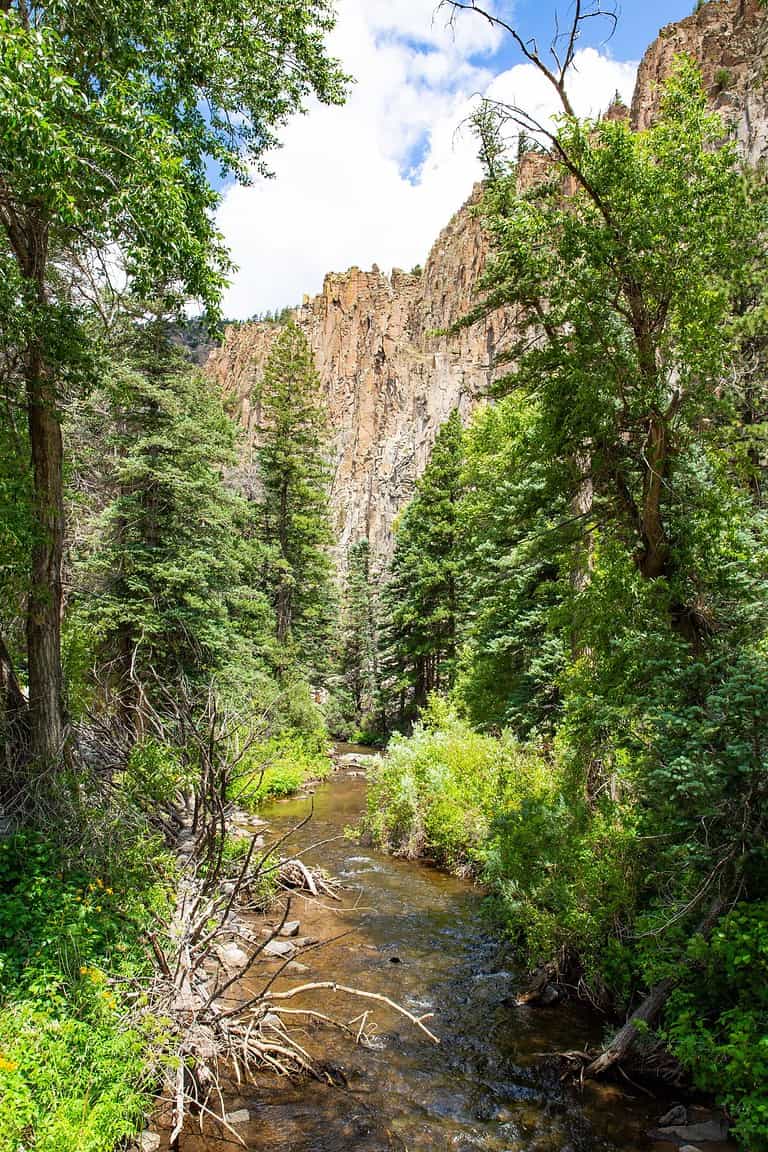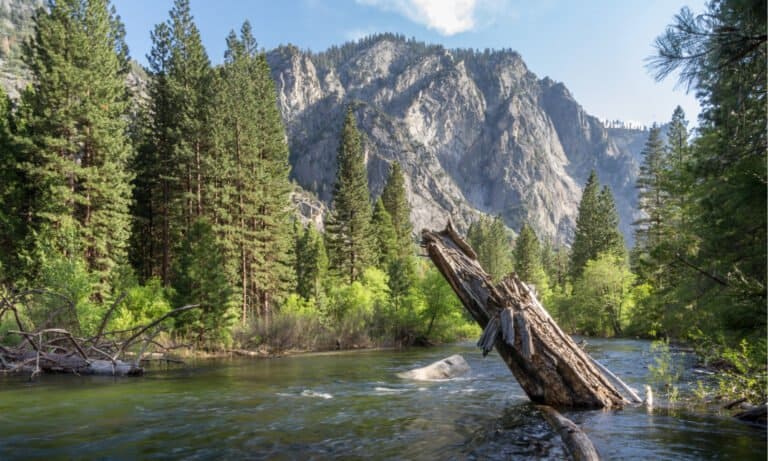

This iconic American trail takes hikers over 200 miles through some of California’s most beautiful and remote country. The John Muir Trail’s northern trailhead begins at Yosemite National Park and ends at the highest peak of Mt. Whitney. The trail runs through the Sierra Nevada Mountains, passing through Yosemite, Sequoia National Park, Sierra National Forest, Ansel Adams Wilderness, and other designated wildernesses. It’s named after conservationist John Muir, who was a leading advocate for the creation of national parks in the United States and co-founded the Sierra Club. Hikers on the John Muir Trail may encounter a diverse array of mammals, fish, amphibians, reptiles, and birds. We couldn’t list every one of those species here, but we’ve rounded up some of the most noteworthy animals you might spot along the John Muir Trail.
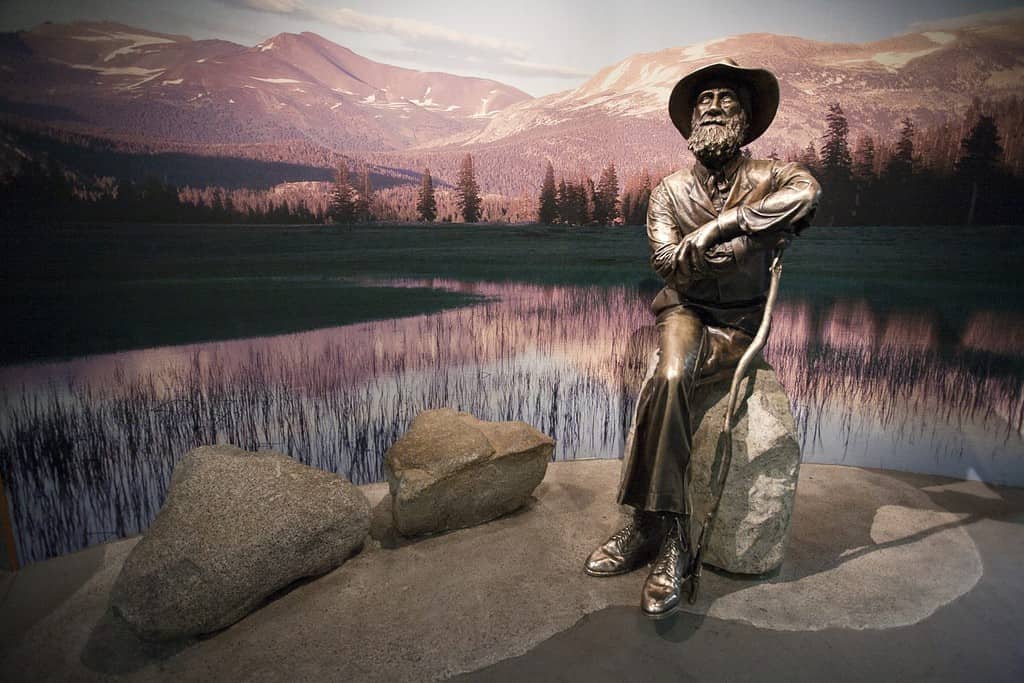
The John Muir Trail was completed in 1938 and named after the American conservationist, John Muir.
©Harmony Gerber/Shutterstock.com
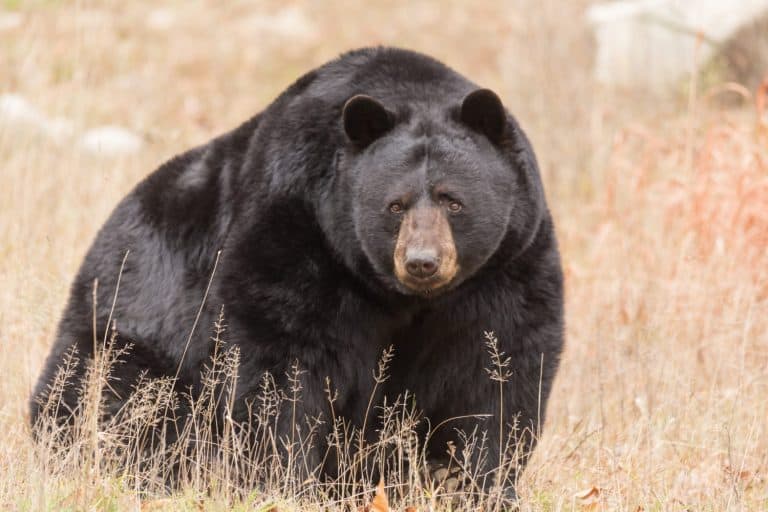
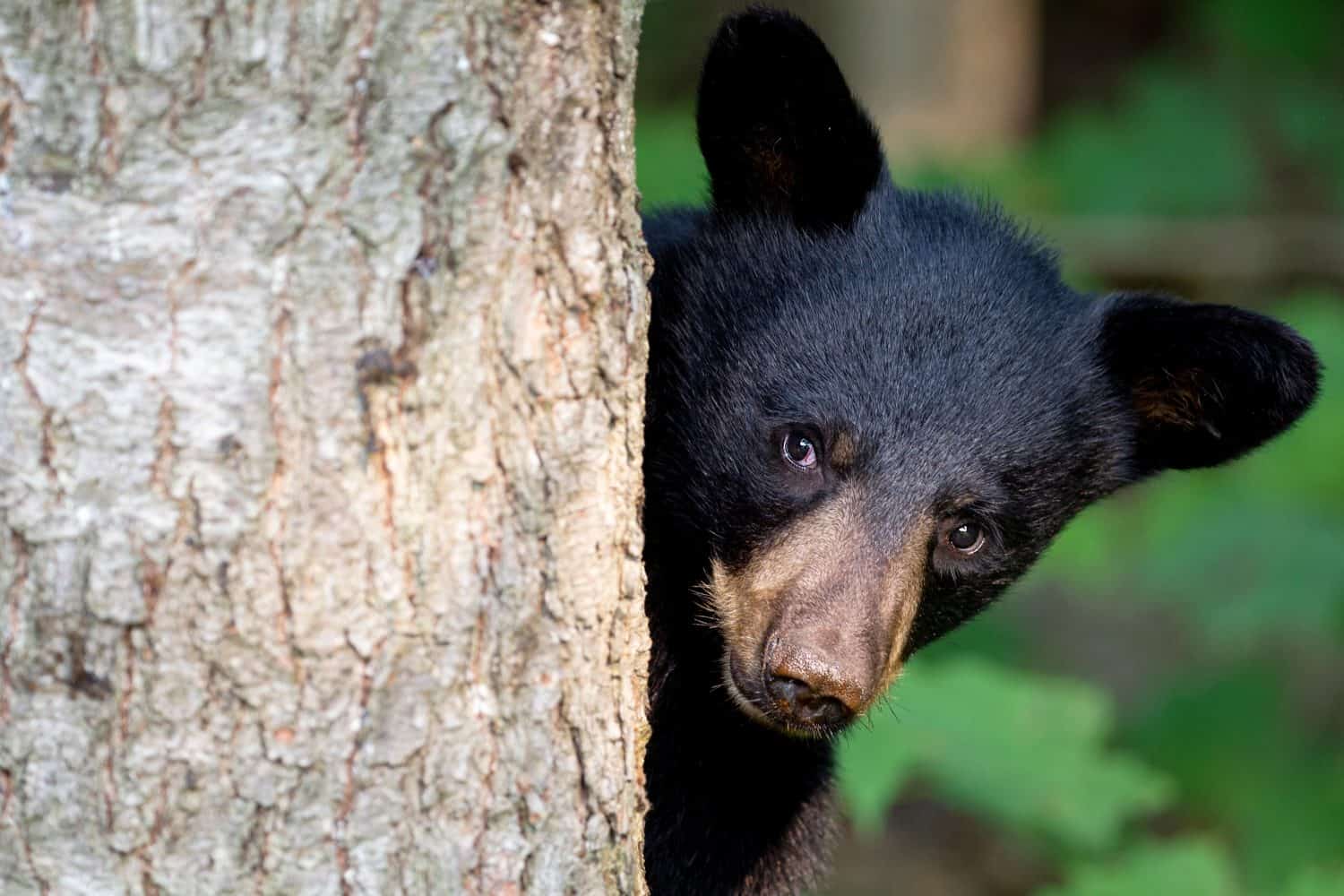
1. American Black Bear
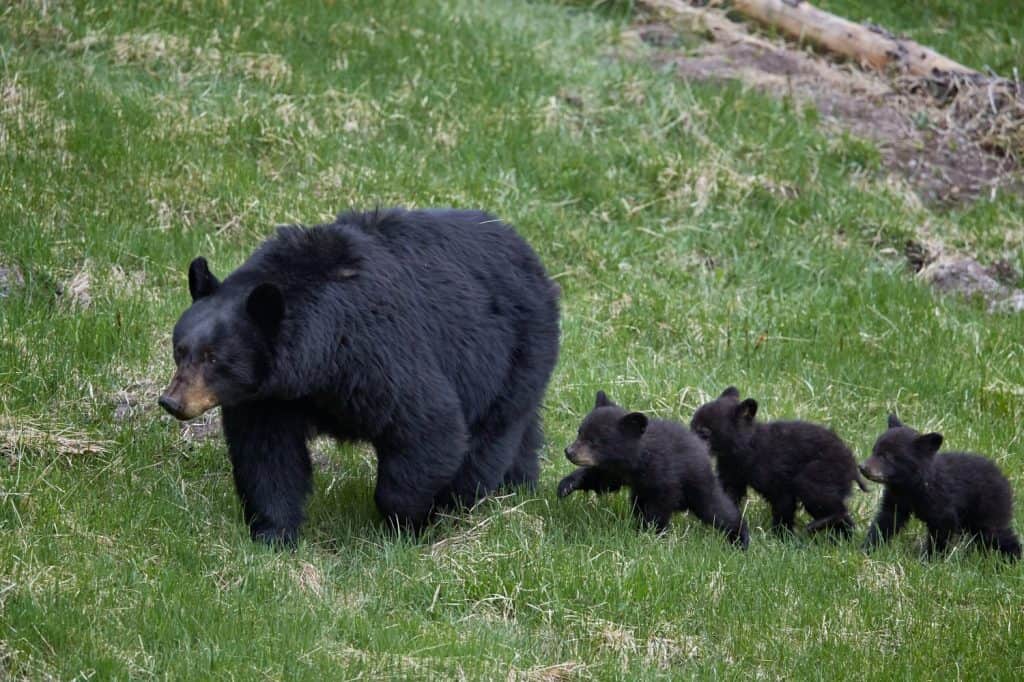
Black bears usually have one to three cubs, and they take care of them until they are around 18 months old.
©Robert Harding Video/Shutterstock.com
According to the JMT Wilderness Conservancy, black bears (Ursus americanus) “abound in the Sierra.” However, black bears usually don’t want to have much to do with people. That is, unless food is involved. Bears may be around, but you’ll probably never see one. However, they will try to get into your food if they can smell it. It’s required to carry a bear-resistant canister on the John Muir Trail. Anything with a scent, in addition to food, must go in the canister. Bears can even detect scented toiletry products such as soap and toothpaste.
The recommendation for what to do if you spot a bear changes based on where you are. In developed areas, like campgrounds, park rangers recommend the following when a bear approaches a group of people: “Scare the bear away by yelling aggressively and as loudly as possible until the bear leaves.” However, when you see a bear outside of a developed area and it’s not approaching you, it’s best to keep your distance. You can get more safety tips about Yosemite wildlife from the National Park Service.
2. Western Rattlesnake
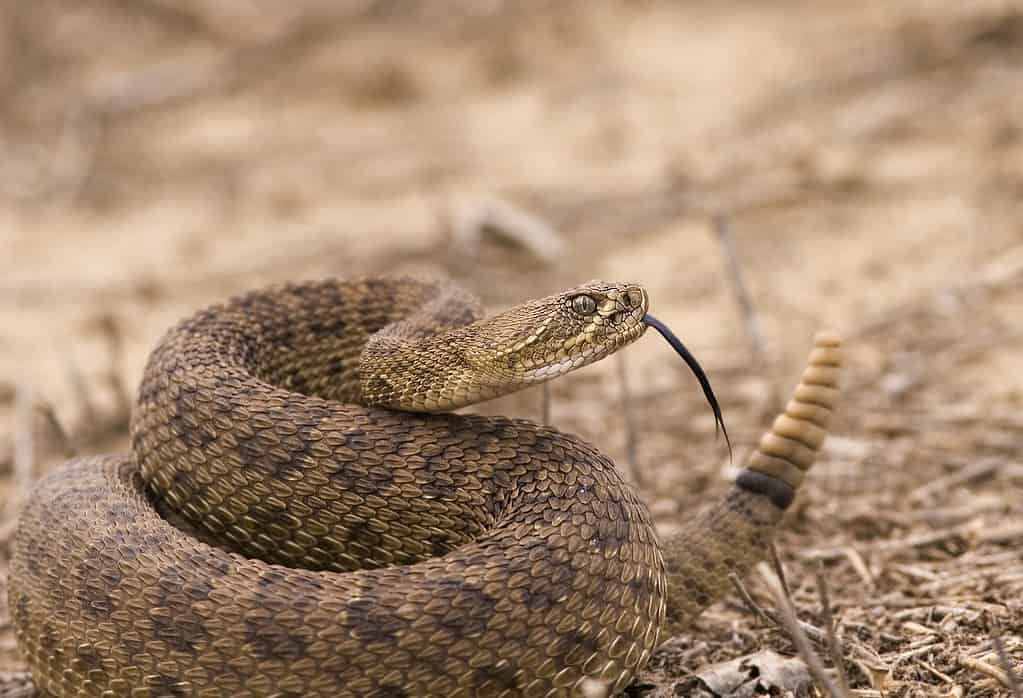
Western rattlesnakes rattle their tails as a warning to predators.
©Steve Mcsweeny/iStock via Getty Images
Although you’re most likely to spot a harmless gartersnake along the John Muir Trail, the area is also home to the Western rattlesnake (Crotalus oreganus), also known as the northern Pacific rattlesnake. People are sometimes afraid of venomous snakes, but rattlesnakes are an important part of ecosystems. Without predators such as snakes, rodent populations could grow out of control.
A bite from a rattlesnake can be dangerous and needs medical treatment immediately. However, bites from Western rattlesnakes are rare, as this shy reptile typically tries to avoid people. If you are bitten by a snake, stay calm and get to the nearest medical facility as soon as possible. You can see the California Department of Fish and Wildlife’s list of snake safety tips here.
3. Mule Deer
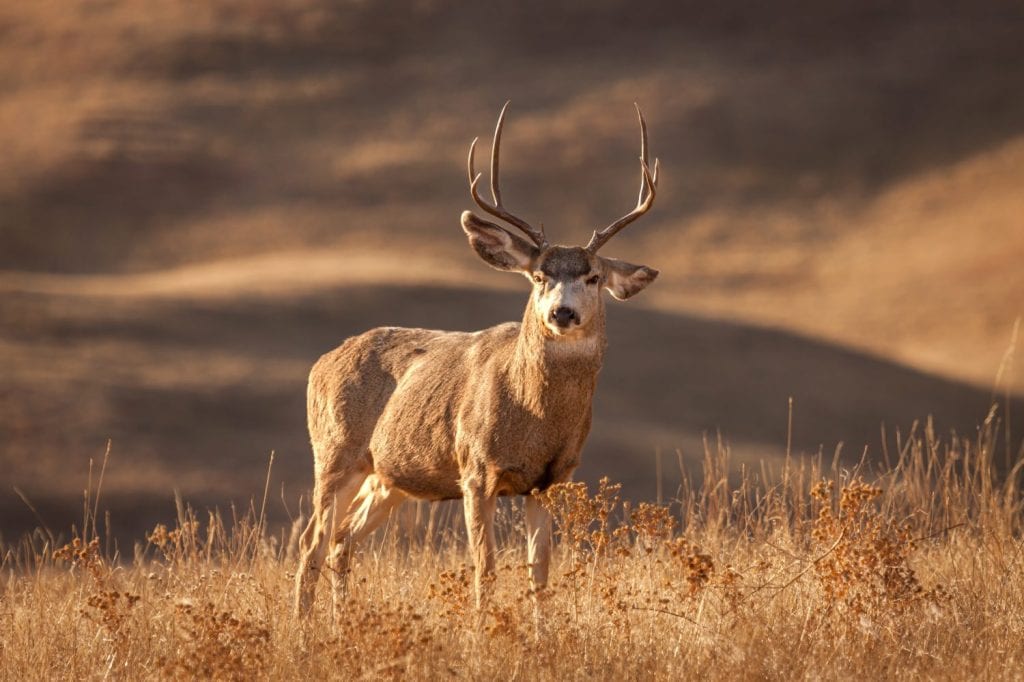
Mule deer are known for their large ears, which look a little bit like a mule’s ears.
©Dennis Laughlin/Shutterstock.com
Mule deer (Odocoileus hemionus) are wild animals and should not be approached. They are common along the John Muir Trail. However, it’s best to leave this mammal alone and keep your distance. The National Park System reports that mule deer cause more injuries, with even one death, than those caused by bears or any other wildlife in Yosemite Park.
Mule deer are skittish and have sharp antlers and hooves, which they use to protect themselves. People usually get hurt when they try to feed or approach these jumpy animals. Don’t feed mule deer when you see them, regardless of how cute and approachable they may seem. They are even more dangerous during rutting season, when males can grow aggressive.
4. Bobcat
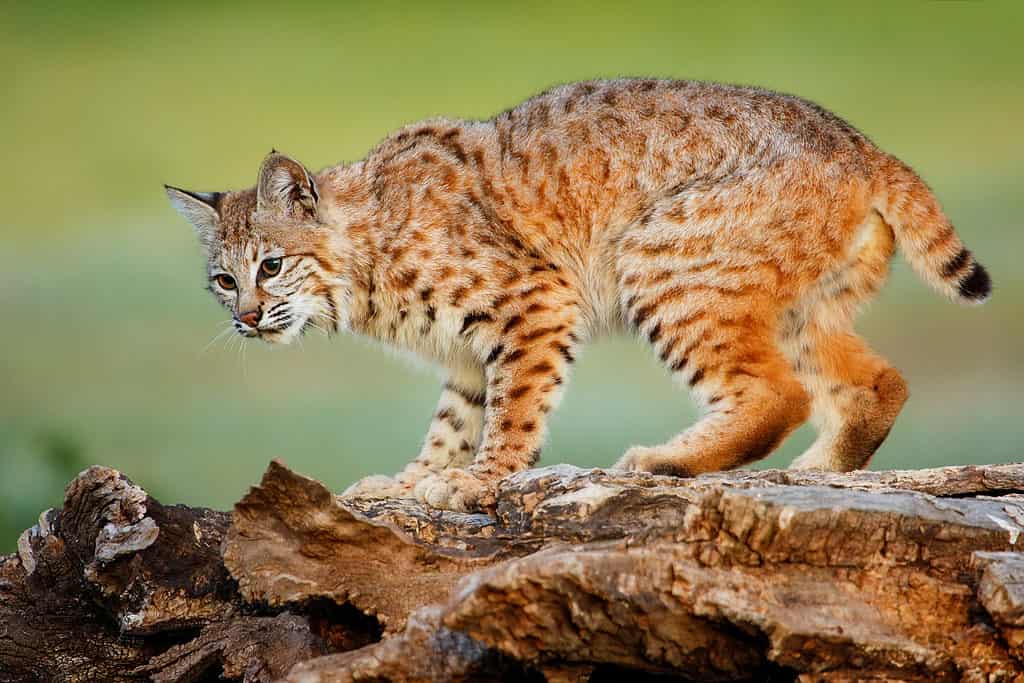
Bobcats are solitary animals, living alone except when a mother is caring for her kittens.
©Don Mammoser/Shutterstock.com
Bobcats (Lynx rufus) are smaller than mountain lions, but about two to three times larger than a domestic house cat. They are named for their bobbed tails, which are shorter than both house cats and mountain lions. Bobcats are nocturnal and shy around people. Your best chance of seeing one along the John Muir Trail is during dusk or dawn when they are most active.
Although they pose no threat to people, bobcats will hunt and prey on pets and small livestock. To keep pets safe, don’t let them out unsupervised in areas where bobcats roam. If you see a bobcat, count yourself lucky to get to observe this elusive animal in the wild, but keep your distance.
5. Mountain Lion
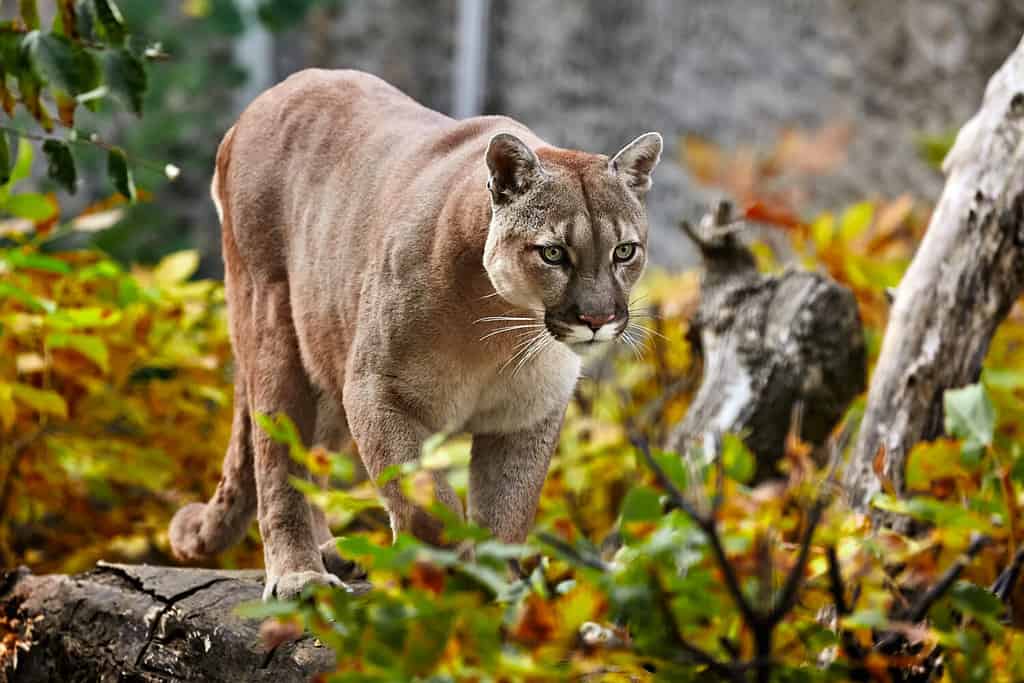
Pumas, or mountain lions, ambush their prey, striking before the animal even knows they are being hunted.
©Evgeniyqw/Shutterstock.com
Mountain lions (Puma concolor) are known by many names. They may be called panthers, cougars, pumas, or wildcats. Much larger than bobcats, the males may weigh up to 170 pounds and be 30 inches high at their shoulders. They are the second-largest cat in North America, after jaguars. They are solitary and roam in territories that can range from 300 to 500 square miles.
Although they live in the areas where the John Muir Trail passes, they are elusive and tend to avoid people. Mountain lions may be spotted during the day, but are most often active at night, as well as at dusk and dawn. They prey on large animals, including bighorn sheep and mule deer, and also smaller animals such as rabbits, rodents, raccoons, and wild pigs. Unfortunately, they will also prey on livestock. Here’s what the U.S. Fish & Wildlife Service says to do if you run into one of these big cats: “If you encounter a cougar, make yourself appear larger, more aggressive. Open your jacket, raise your arms, and throw stones, branches, etc., without turning away. Wave raised arms slowly, and speak slowly, firmly, loudly to disrupt and discourage predatory behavior.”
6. Botta’s Pocket Gopher
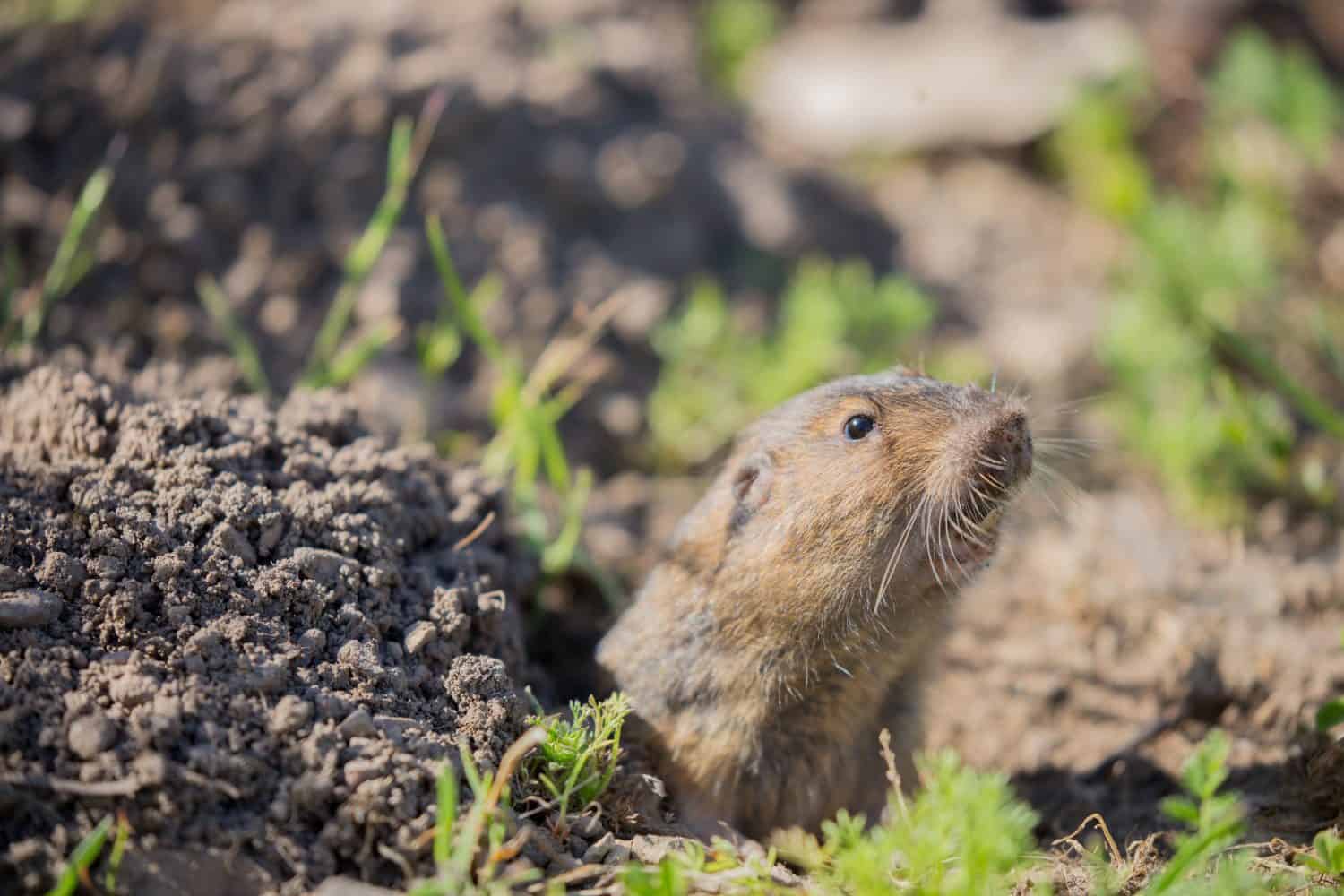
The little Botta’s pocket gopher is said to resemble a furry potato.
©yhelfman/Shutterstock.com
Not every animal you will encounter along the John Muir Trail has the potential to be dangerous. Botta’s Pocket Gopher (Thomomys bottae), an herbivore native to North America, is about the shape and size of a potato. If you’d like to spot one of these “furry potatoes,” keep an eye out for the entrances to their tunnels. If you see an open hole with a fresh pile of dirt, it could mean a gopher is currently digging and may pop its head out anytime.
These little rodents don’t live together in groups unless a mother is raising her young. Males can be aggressive in defending their territory against other males. They eat only plants, but they are prey for many animals, including hawks, rattlesnakes, and weasels.
7. Bighorn Sheep
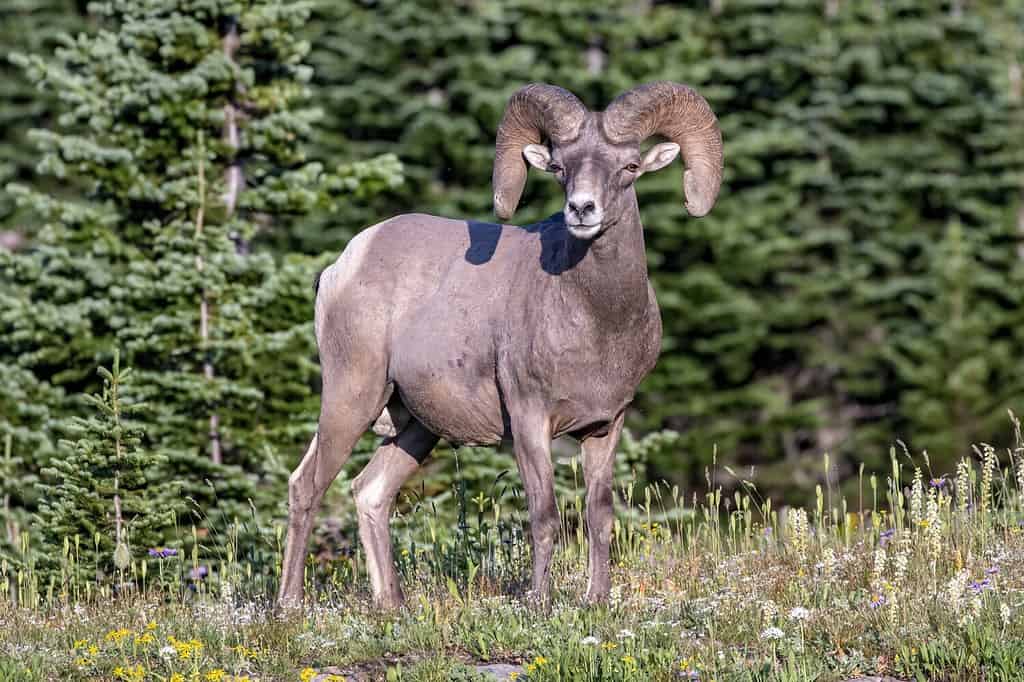
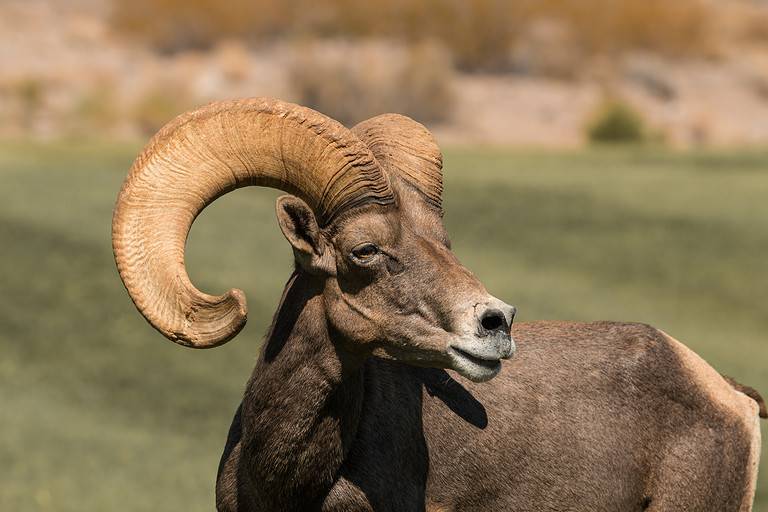
Conservationist John Muir wrote lovingly of the rugged bighorn sheep he encountered as he hiked the Sierra Nevada.
©Wirestock Creators/Shutterstock.com
While hiking the John Muir Trail, you may encounter a subspecies of bighorn sheep, the Sierra Nevada bighorn sheep (Ovis canadensis sierrae). Sierra Nevada bighorn sheep migrate up the mountains in the summer, where they are safest from predators at the highest peaks. In the winter, they head lower to the foothills to find food. They are perfectly adapted to scale the rugged mountainside with their specialized hooves for gripping rocks.
When conservationist John Muir roamed the area in the 1870s, which today has become the John Muir Trail, he observed and wrote about the numerous herds of bighorn sheep he spotted. Sadly, today, the Sierra Nevada bighorn sheep is classified as endangered under Federal and California law. California Fish and Wildlife is working on the Sierra Nevada Bighorn Sheep Recovery Program in hopes of restoring the populations of this rugged and unique wild sheep.
Bighorn sheep will usually avoid humans, but there has been the occasional report of a bighorn sheep acting aggressively. They are wild animals and will get defensive if they feel threatened. Like other wildlife, it’s best to keep your distance.
8. Western Fence Lizard
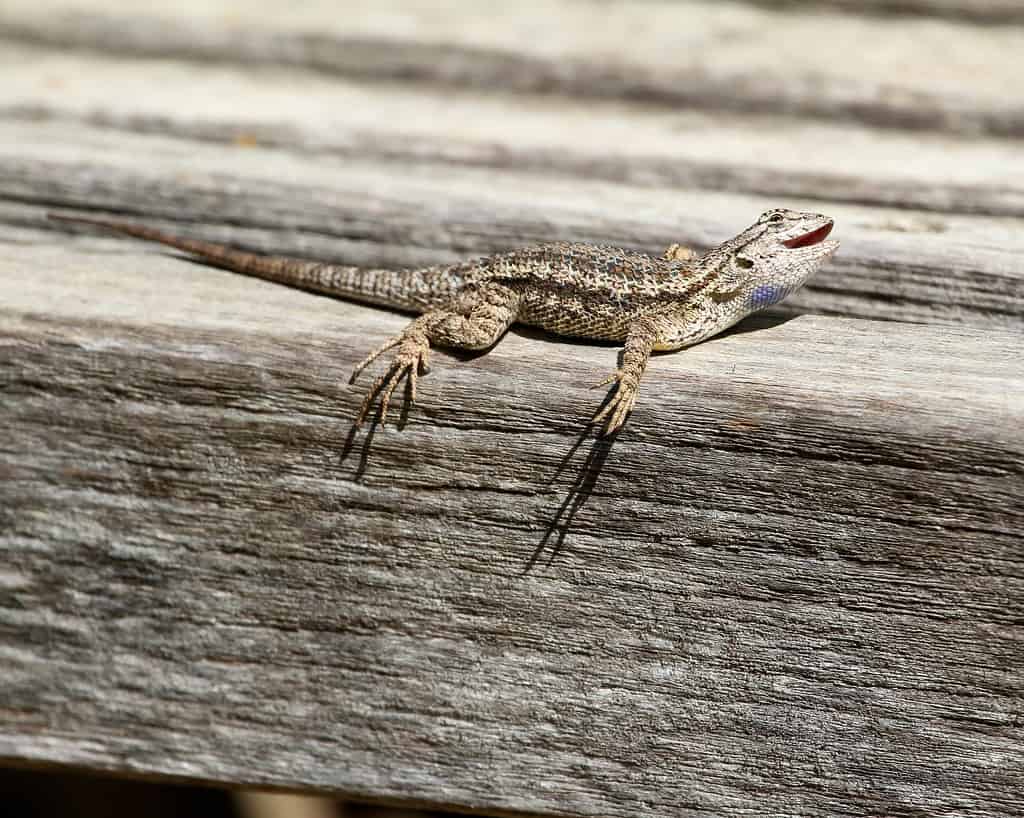
You may spot the western fence lizard sunning itself on a log or a rock during the day.
©A. Viduetsky/Shutterstock.com
While you’re watching for big mammals along the trail, like mountain lions and bighorn sheep, don’t forget to keep your eyes on the path in front of you. You may spot the little western fence lizard (Sceloporus occidentalis) scurrying at your feet. It’s also sometimes called the blue belly lizard because of the sparkling patch of blue scales on the bellies of the males.
Interestingly, western fence lizards have a protein in their blood that can kill the Lyme disease bacterium in ticks. A 1998 study showed that when ticks feast on the blood of the fence lizard, it can kill the bacteria that cause Lyme disease and cure the tick. Scientists believe it could be partly due to the western fence lizard that Lyme disease is less common in the Western U.S.
9. Golden Eagle

It’s a majestic sight to see a golden eagle soaring overhead as you hike the John Muir Trail.
©alberto clemares exposito/Shutterstock.com
One of the fastest and largest birds in North America is the golden eagle (Aquila Chrysaetos). Golden eagles are federally protected by the Bald and Golden Eagle Protection Act. These powerful birds of prey mainly hunt smaller mammals such as rabbits, prairie dogs, and ground squirrels. However, they are sometimes known to attack livestock, especially young animals like lambs.
Most of the time, when you see a golden eagle, it will be soaring above your head. In a very rare case, a golden eagle attacked several people, including a toddler in Norway. Golden eagles have sharp talons that can cause wounds and deep scratches. However, officials said they believed this bird had a behavioral disorder causing the aggression.
10. Coyote
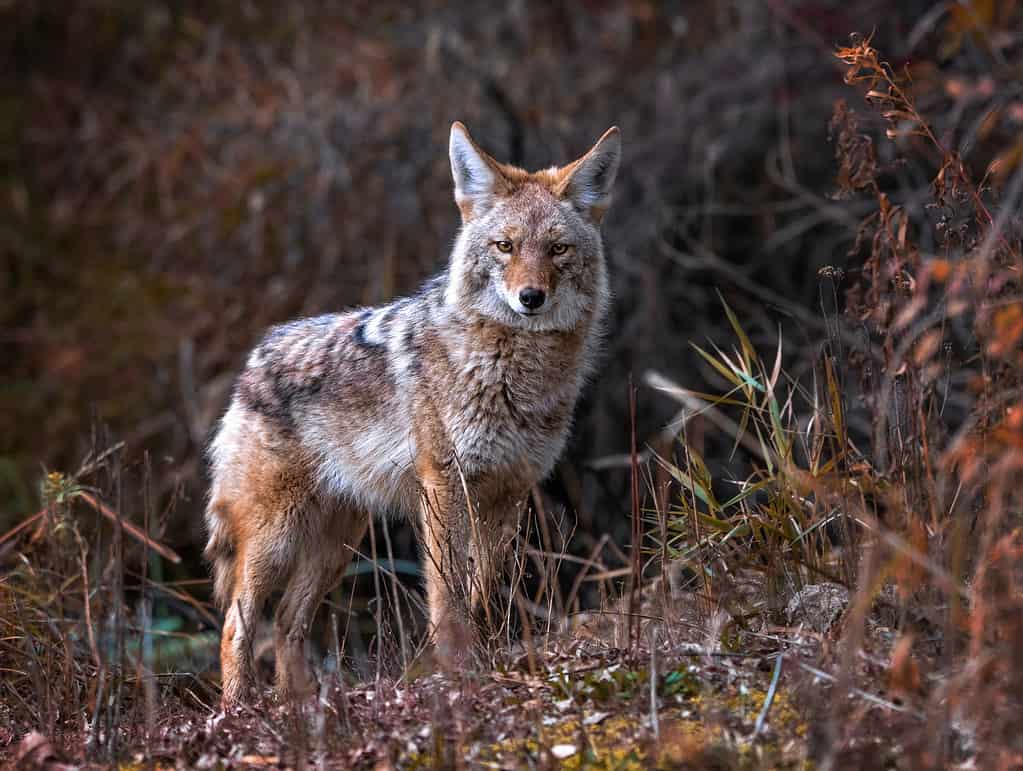
Coyotes may live alone or in small family groups.
©graphicphoto/iStock via Getty Images
Coyotes (Canis latrans) are common throughout the U.S. They are opportunistic feeders and will eat plants along the trails, such as prickly pear fruits, manzanita berries, and juniper berries. Coyotes also hunt for a variety of animals such as gophers, pikas, rabbits, and reptiles.
They are mostly active at night, and you may hear their howls starting as the sun sets. They’re around the size of a dog, weighing around 15 to 46 pounds. Coyotes are shy around humans and will typically stay away from people. They will hunt pets and small livestock, such as calves, lambs, and chickens. Coyote attacks on people are very rare. If you see a coyote, don’t run away, or it might mistake you for prey. Keep a safe distance or back away slowly. If it keeps approaching, make yourself tall and yell to scare it away.
11. Pika
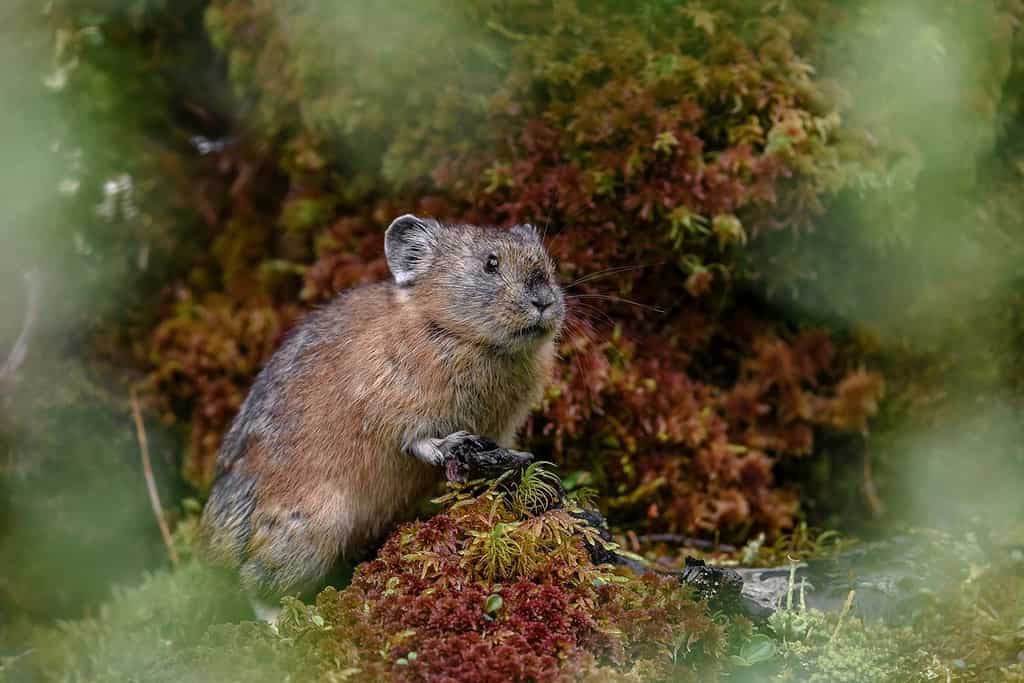
Pikas may look like adorable, furry rodents, but they are actually closer in relation to rabbits.
©Anaredif/Shutterstock.com
Another small animal you may see along the John Muir Trail is the American Pika (Ochotona princeps). Closely related to rabbits, pikas live in high elevations in rocky mountain environments, like the Sierra Nevada. They may look like adorable, fluffy animals, but pikas are incredibly hardy. They can survive above the treeline in the harshest mountain conditions. Pikas gather flowers and grasses all summer to store away for the harsh winter.
American pikas are highly vulnerable to climate change. Much like the polar bear, higher temperatures are causing their habitat to change. Conservationists are pushing to get the American pika classified as threatened under the Endangered Species Act to help focus conservation efforts before the little animal goes extinct.