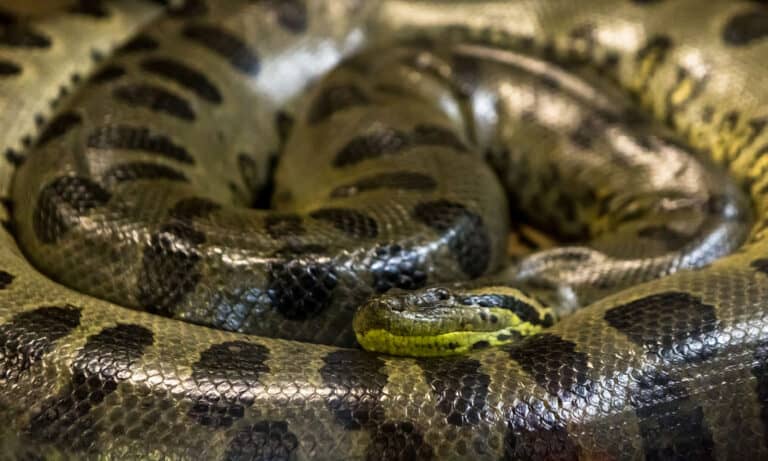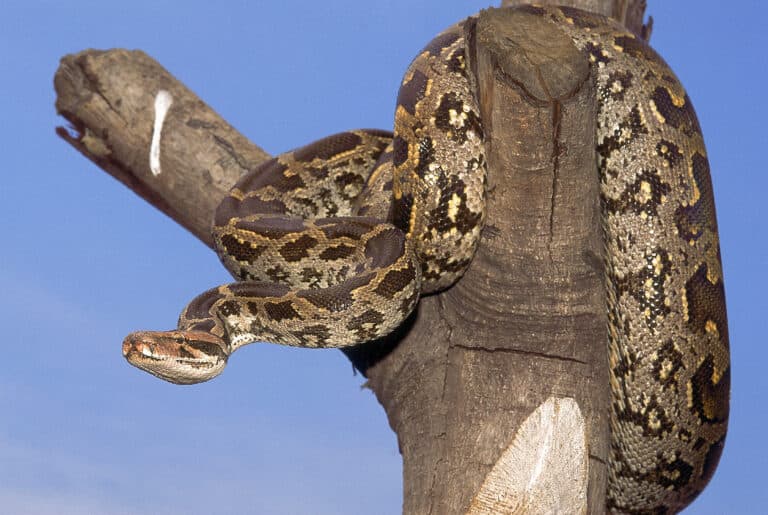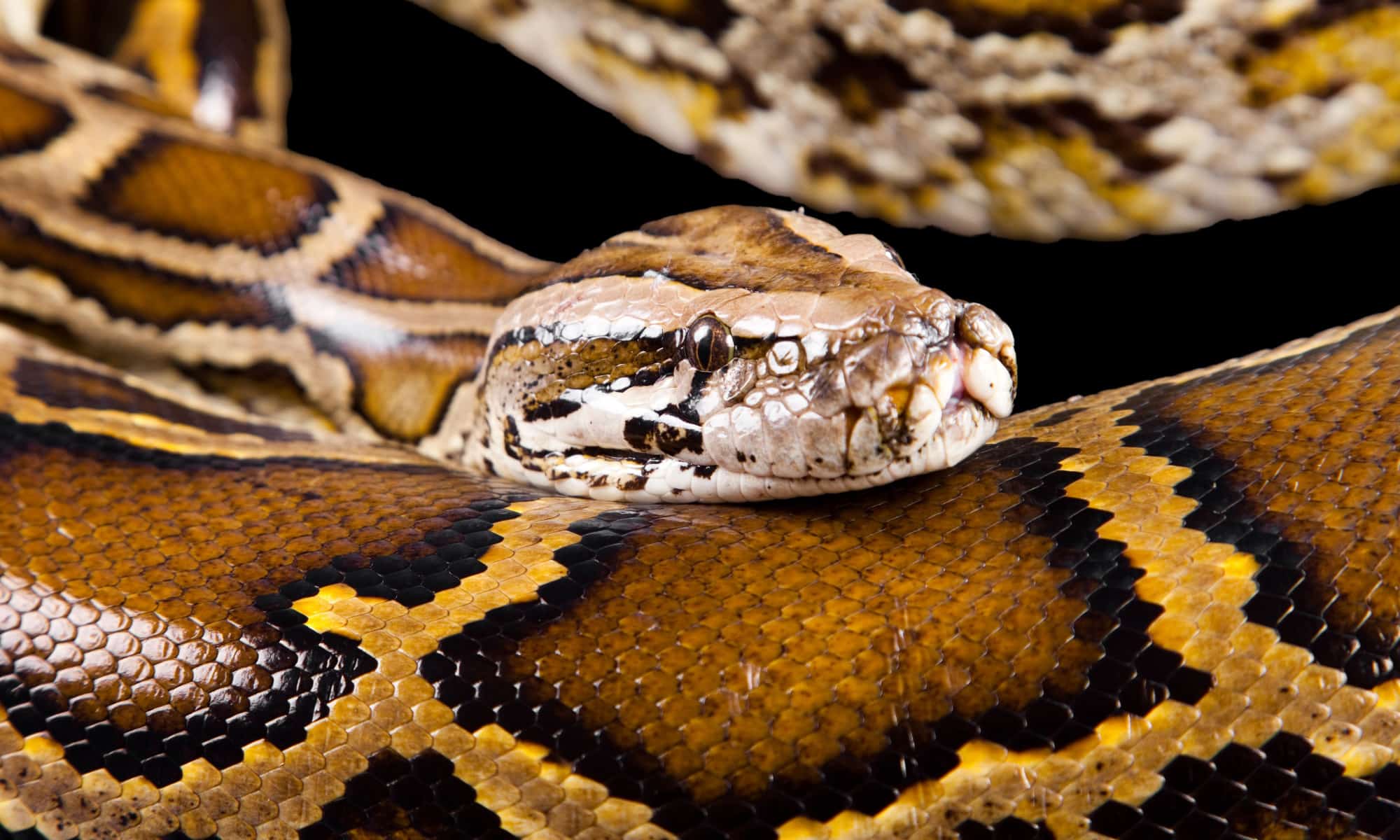

Can you imagine a thick, 18-foot-long Burmese python slithering past your golf cart in Florida? It could happen! Burmese pythons are not native to Florida, but they have an established population in the Everglades and continue to expand. There are an estimated 100,000 to as many as 300,000 pythons in Florida. The problem, besides living with enormous snakes, is that they are wreaking havoc on the ecosystem.
These huge snakes prey on the local animals and have eliminated vast numbers of the cottontail rabbits, foxes, raccoons, and opossums. In an effort to control the population, researchers try to catch and eliminate as many female pythons as they can to prevent them from reproducing. Read on to find out about the massive 18-foot Florida python that became the largest U.S. snake ever found.
What is a Burmese Python?
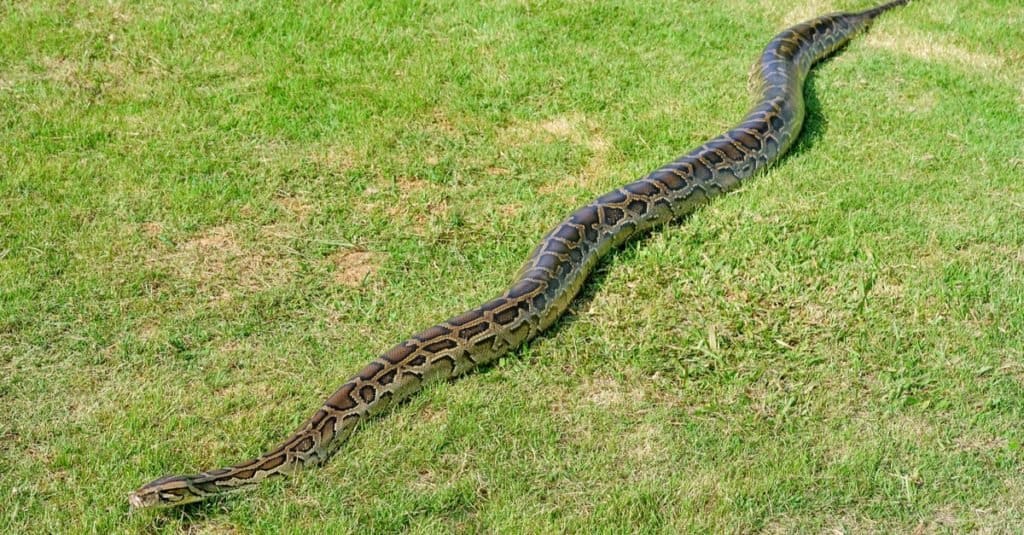
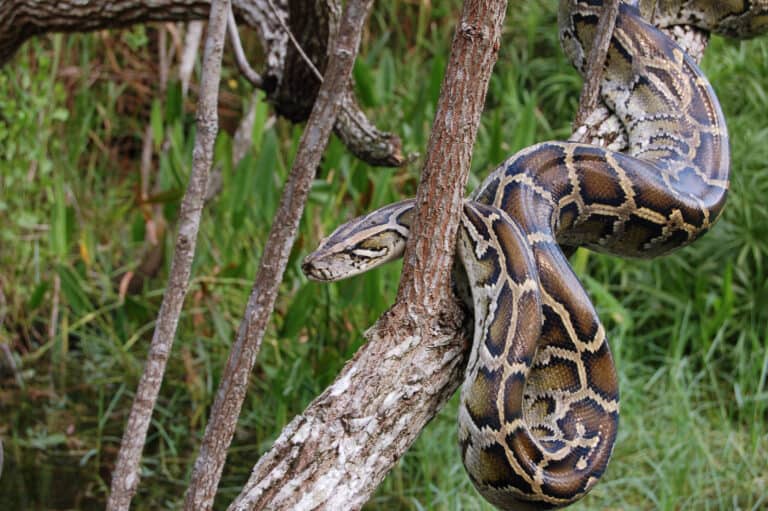
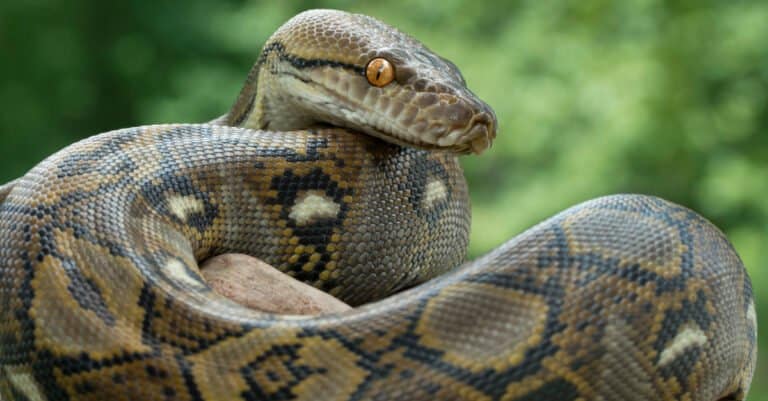
Burmese pythons are not native to Florida, but they have been there since the 70s.
©Yatra/Shutterstock.com
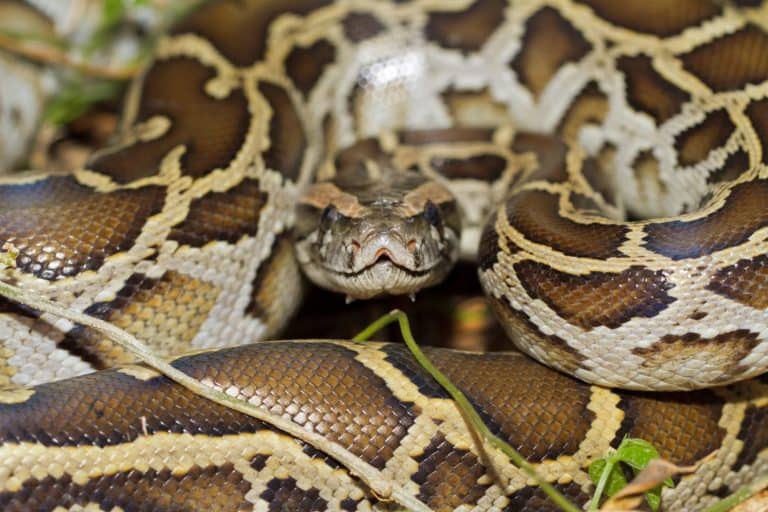
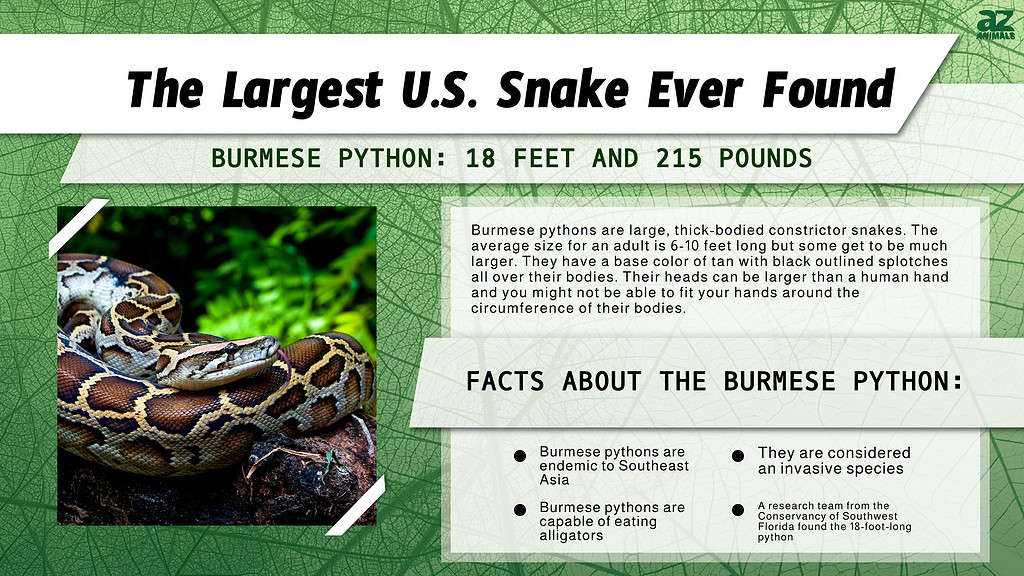
Burmese pythons are large, thick-bodied constrictor snakes. The average size for an adult is six to 10 feet long, but some get to be much larger. They have a base color of tan with black-outlined splotches all over their bodies. Their heads can be larger than a human hand, and you might not be able to fit your hands around the circumference of their bodies.
Burmese pythons are not native to the U.S.; they are from Southeast Asia. As constrictor snakes, they attack their prey, holding them in their teeth and then wrapping their long, muscular body around it and squeezing until the prey dies. They then swallow the prey whole. Burmese pythons are even capable of eating alligators.
Who Found the 18-Foot Python?
Two researchers and an intern from the Conservancy of Southwest Florida found the 18-foot-long python. Researchers Ian Bartoszek, Ian Easterling, and intern Kyle Findley didn’t just stumble across this large python. They have been using a system of finding females by using male pythons outfitted with GPS trackers. The 18-foot-long Burmese python weighed 215 lbs. That explains why the photo of the capture shows three adults holding the giant snake up. Each carried about 70 pounds!
How Do Researchers Find Burmese Pythons Using GPS Trackers?
Researchers are focusing on eliminating more female Burmese pythons because they can have 50 to 100 babies at a time. Therefore, they developed a system of using male Burmese pythons to find females, and then they capture the females. By outfitting males with a GPS tracker, they can follow their quest to find the females that alert the males by releasing a special pheromone. For this 18-foot-long python, the researchers used an experienced male named Dionysus (Dion) who was probably disappointed with how his romantic evening ended. They brought Dion back to the research facility to use for a future date night.
What is the Problem with Burmese Pythons in Florida?
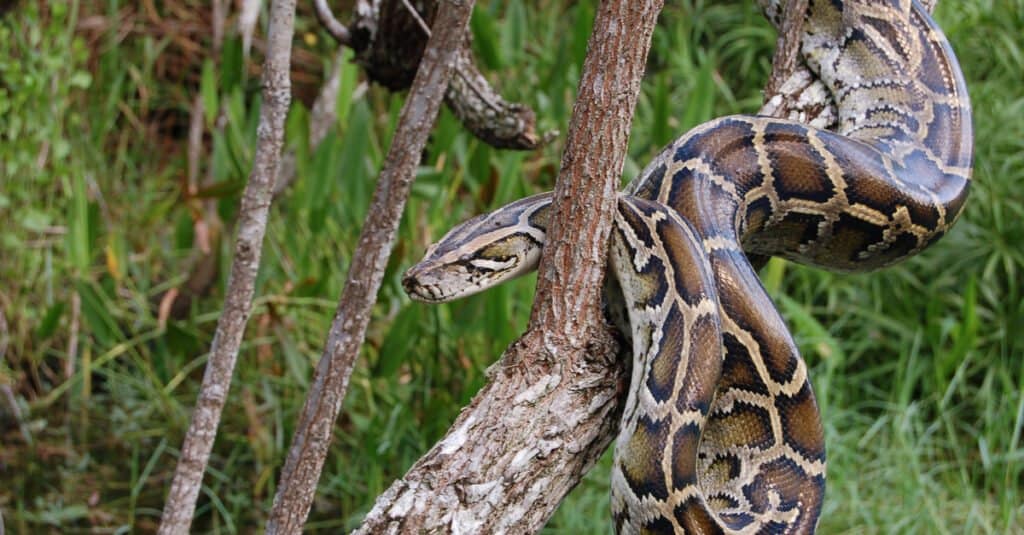
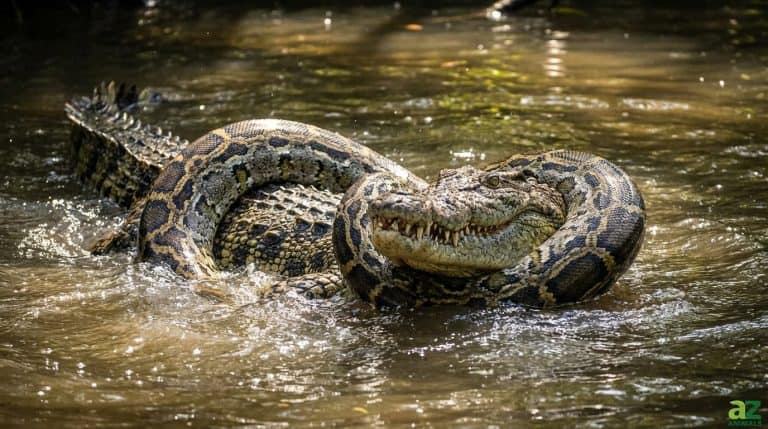
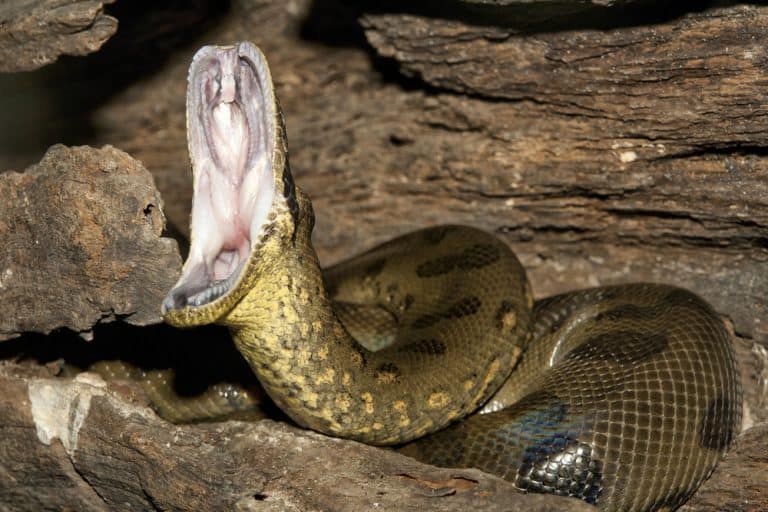
Burmese pythons are an invasive species that compete for food with other animals and have almost eliminated certain mammal populations in the Everglades.
©Heiko Kiera/Shutterstock.com
Burmese pythons are an invasive species. They are killing and eating animals that are native and competing for food with other animals, including a few endangered ones like the Key Largo woodrat. According to the USGS U.S. Department of the Interior, “In a 2012 study, populations of raccoons had dropped 99.3 percent, opossums 98.9 percent, and bobcats 87.5 percent since 1997. Marsh rabbits, cottontail rabbits, and foxes effectively disappeared.” As the only predators of the pythons are humans and alligators, their numbers have gone unchecked for years and are difficult to control.
What are Conservationists Doing About the Invasive Burmese Pythons?
Conservationists and researchers are trying multiple strategies to control the Burmese python population in Florida. Besides the male GPS tracking program, other strategies include driving along the roads in the Everglades looking for ones basking in the sun, and allowing people to hunt and kill pythons without a permit. They have also organized a Python Patrol that goes out on regular hunts to locate and eliminate pythons.
What is the Python Patrol?
The Python Patrol is organized by the Florida Fish and Wildlife Conservation Commission. It is a program that includes training anyone who wants to learn how to identify and report sightings of the pythons or learn how to hunt and humanely eliminate the pythons.
Burmese pythons are not venomous and do not usually attack, so they are not particularly dangerous to humans, but there are risks in purposefully going out looking for them. Want more information? Check here for the training schedule. Virtual training is also available.
What is the Florida Python Challenge®?
A clever way to encourage more volunteer hunters is the Florida Python Challenge®. It is a 10-day contest to see who can catch the most Burmese pythons in Florida. There are prizes for the most caught and the longest. The competition is typically held in August, and there is a professional and novice division.
Last year, the prize money was $10,000, and the ultimate grand prize went to Ronald Kiger for removing 20 pythons, which averages to two per day. Overall, there were 857 people who participated in the challenge, and altogether they rounded up 195 Burmese pythons.
What is the Longest Snake in the World on Record?
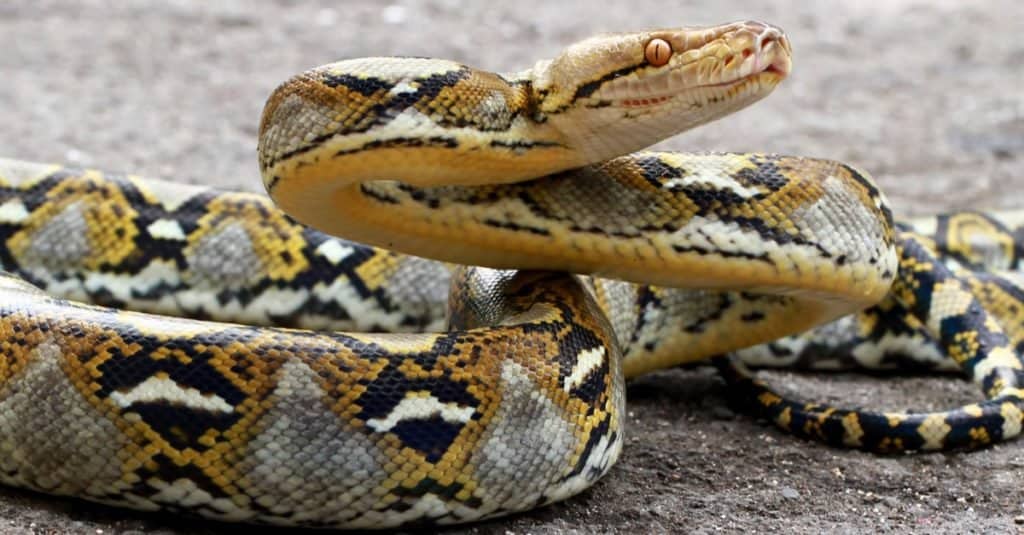
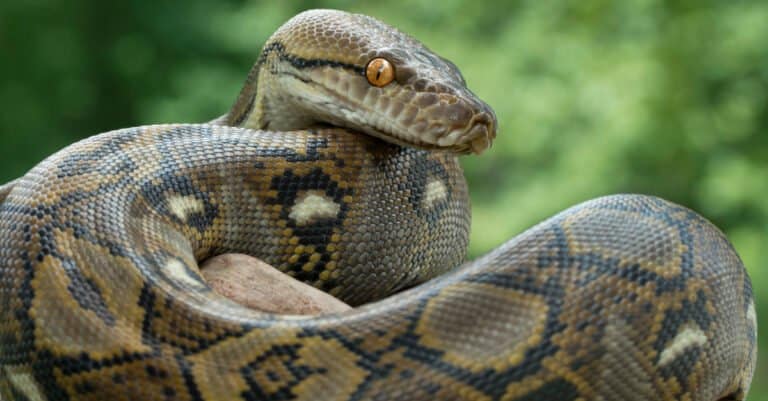
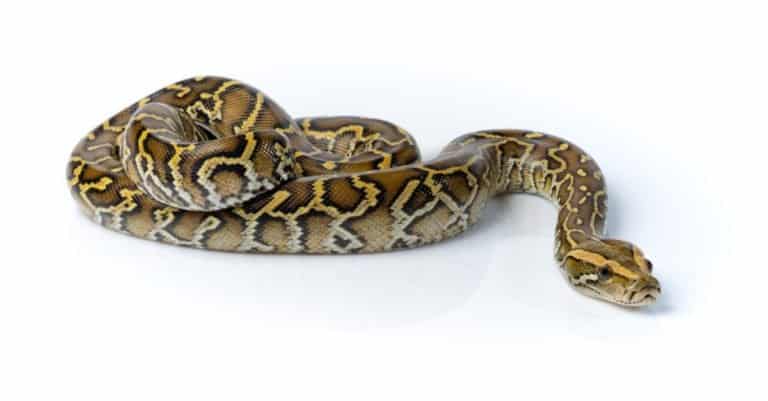
The longest snakes in the world are reticulated pythons which can get to be more than 20 feet. The longest ever was 32 ft. 9.5 inches long.
©Opayaza12/Shutterstock.com
According to the Guinness World Records, the longest snakes in the world are reticulated pythons. They can get to be longer than 20 feet. Luckily, reticulated pythons do not live in Florida; they are native to southeast Asia, Indonesia, and the Philippines. The official world record for the longest snake in the world goes to a reticulated python from Celebes, Indonesia in 1912. The record-breaker was 32 ft 9.5 in.
Other Record-Breaking Snakes
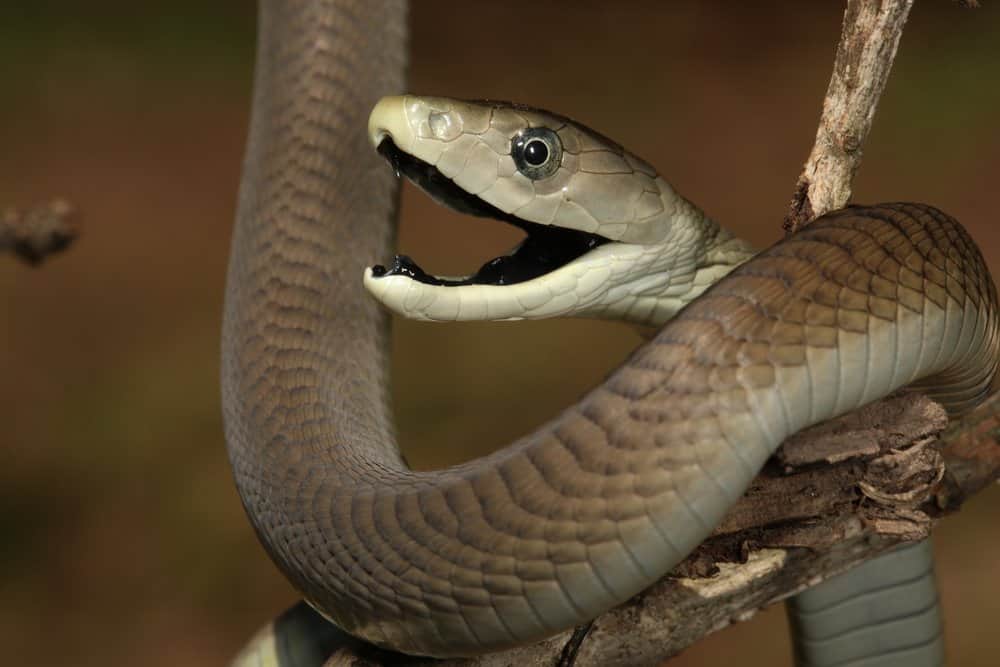
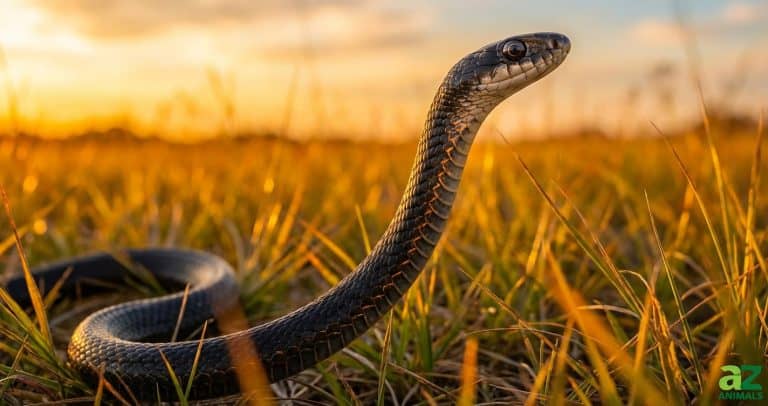
Black mambas are native to Africa and are one of the most venomous snakes in the world.
©NickEvansKZN/Shutterstock.com
In keeping with the theme of large, terrifying snakes, you may want to direct your attention to our next article on the largest black mamba ever recorded. Black mambas are one of the most venomous snakes in the world and can grow over 12 feet in length and move at speeds of up to 12.5 mph.
Native to Africa, the black mamba is actually seldom black. Their colors range from yellow-brown, light tan, olive, and gunmetal grey, which can reflect a purple hue. Their open mouths, however, reveal a terrifying black cavernous void and an inky flicking black tongue. Black mambas will hiss loudly and spread their necks into a hood before they stand like a cobra to unleash a series of potentially deadly strikes. Whenever this snake hunts, it waits for the venom to paralyze its victim and then swallows the animal whole.