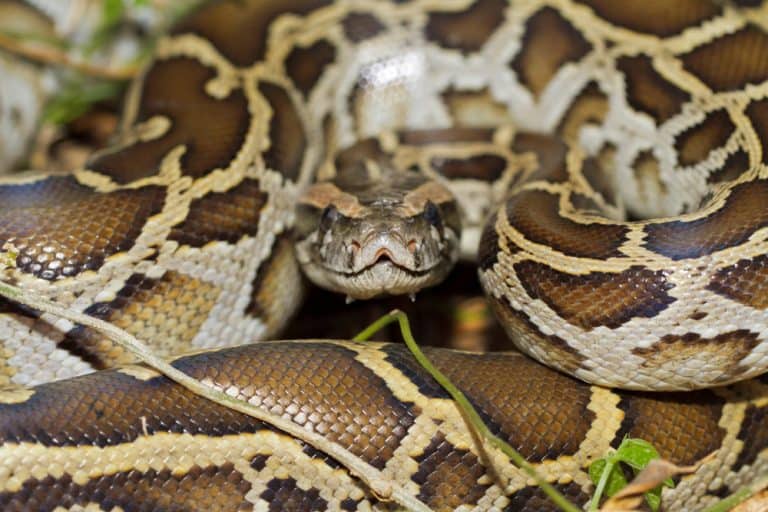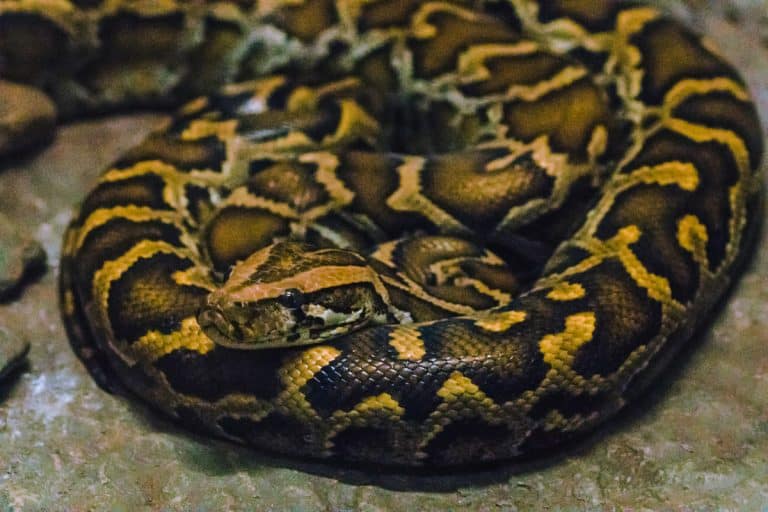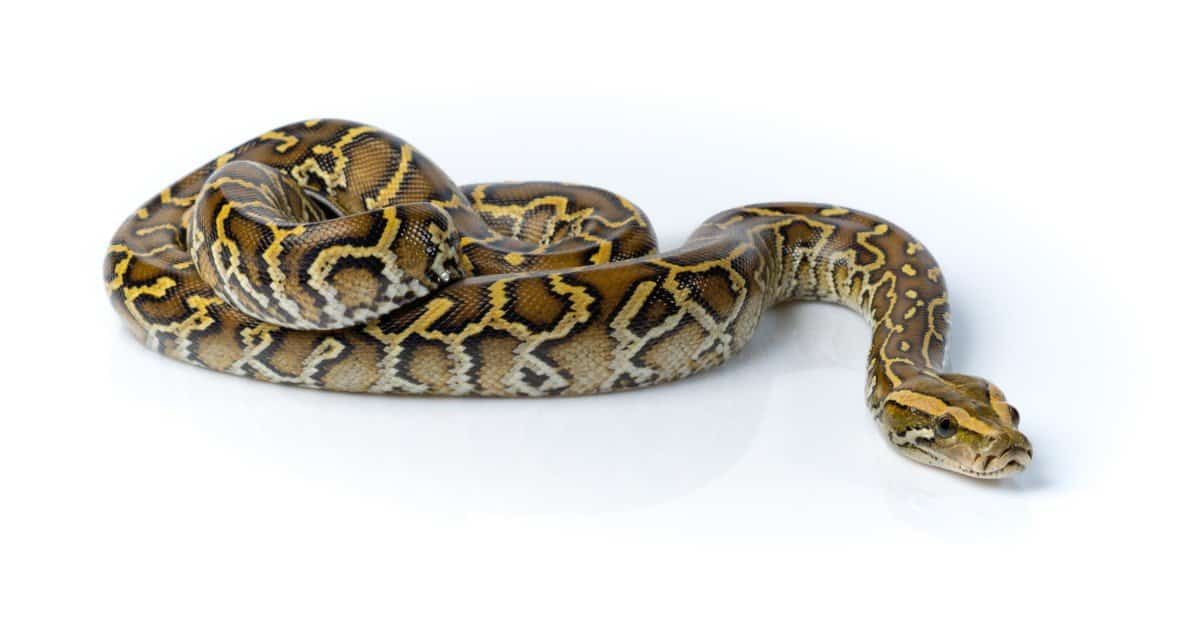

Florida’s fight against invasive Burmese pythons has taken some unusual turns. The latest involves solar-powered “robot rabbits” designed to lure these massive snakes into detection zones. It may sound like science fiction, but it is just one part of a decades-long battle to protect the Everglades and surrounding landscapes from a predator that has thrived where it never should have been
How Burmese Pythons Came to Florida
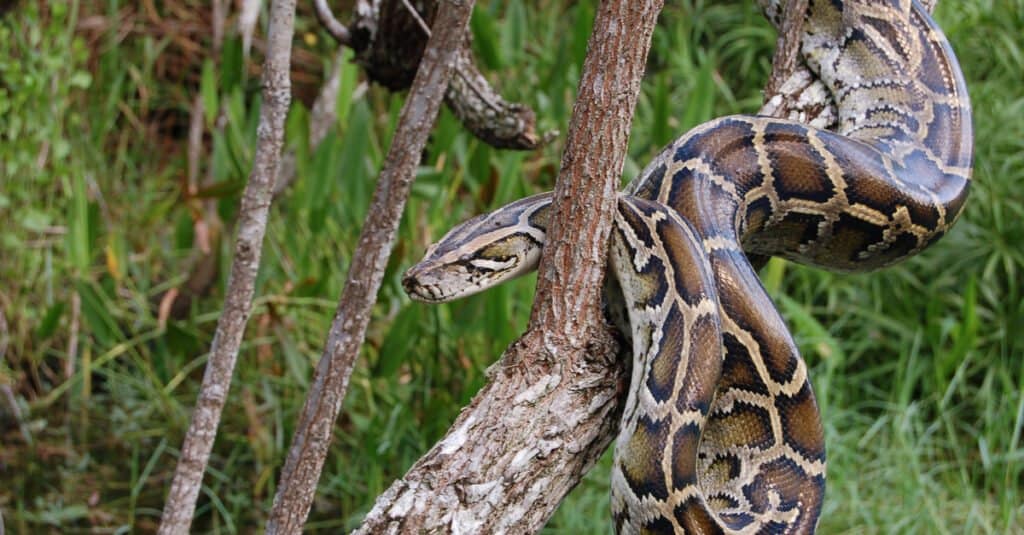
The exotic pet trade can be blamed for the invasion of the Burmese python in the United States.
©Heiko Kiera/Shutterstock.com
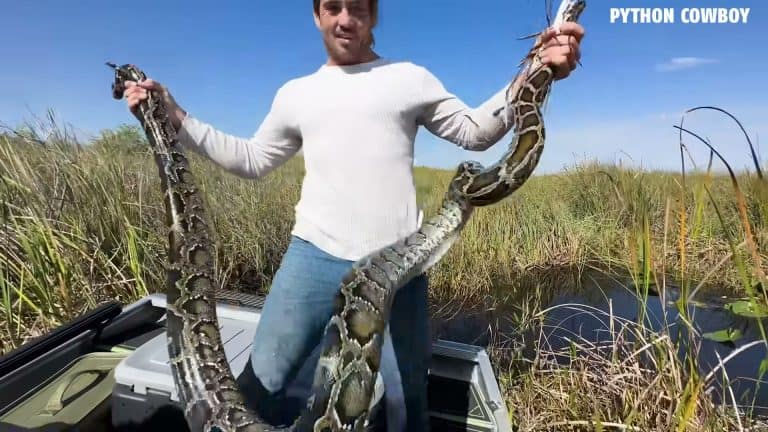
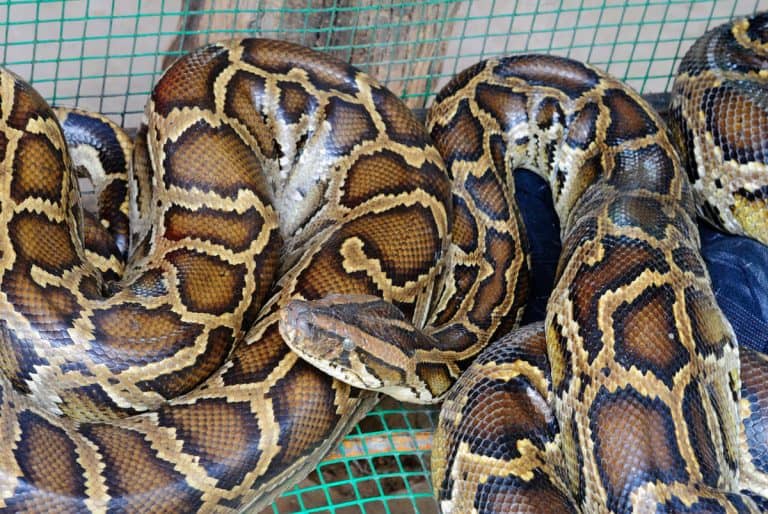
The Burmese python (Python bivittatus) is native to Southeast Asia but began appearing in Florida in the late 20th century. Many were imported through the exotic pet trade in the 1980s and 1990s. Their rapid growth—often reaching 10 to 16 feet—quickly overwhelmed owners, leading to accidental and intentional releases into nature. Anecdotal reports also say that in 1992, Hurricane Andrew destroyed a reptile breeding facility, releasing additional pythons into the wild.
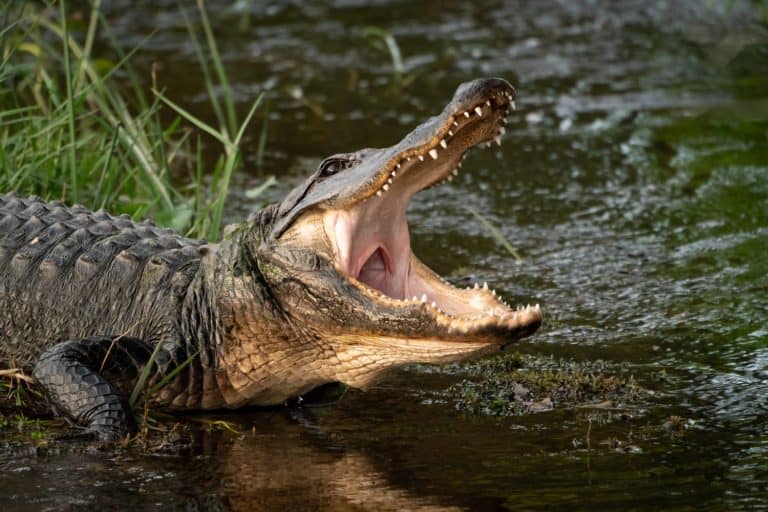
South Florida’s subtropical climate provides year-round warmth, wetlands, and abundant food. It is literally a snake’s paradise. Without natural predators, they have multiplied exponentially to challenge the indigenous American alligator for the position of apex predator.
Population and Impact
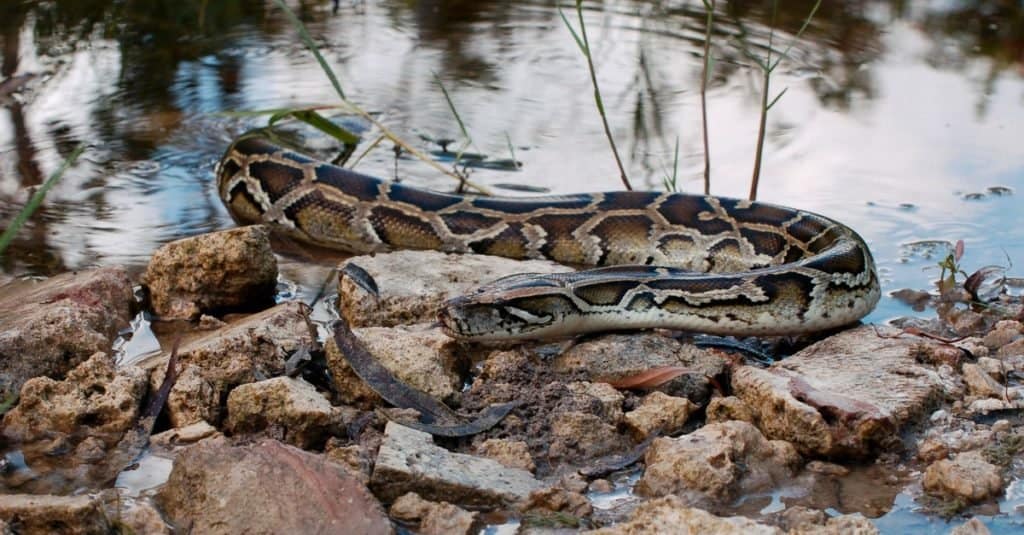
A large Burmese python emerges from the water of the Everglades.
©Heiko Kiera/Shutterstock.com
Over the past 25 years, more than 23,000 pythons have been removed from the Everglades, but that doesn’t even make a dent in the problem. Exact numbers are hard to pin down, but experts estimate the invasive python population now numbers between 30,000 and 150,000. They lay clutches of 20-100 eggs every year, so each female left uncaptured multiplies the problem.
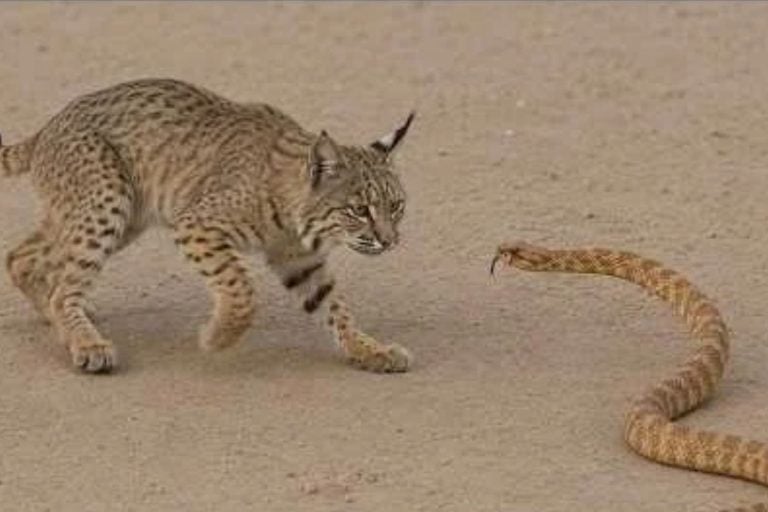
The ecological consequences are staggering. Burmese pythons are powerful constrictors that have voraciously devoured muskrats, turtles, rabbits, foxes, deer, and even alligators. In some areas, populations of small mammals like raccoons, opossums, and marsh rabbits have collapsed by more than 90 percent, leaving far less prey available for native predators such as bobcats and panthers. Bird populations have also declined, showing just how much the Everglades’ delicate balance has been disrupted. In some parts of the ecosystem, python populations seem to be plateauing, indicating that they are literally eating themselves out of house and home.
What Happens if the Problem Goes Unchecked?
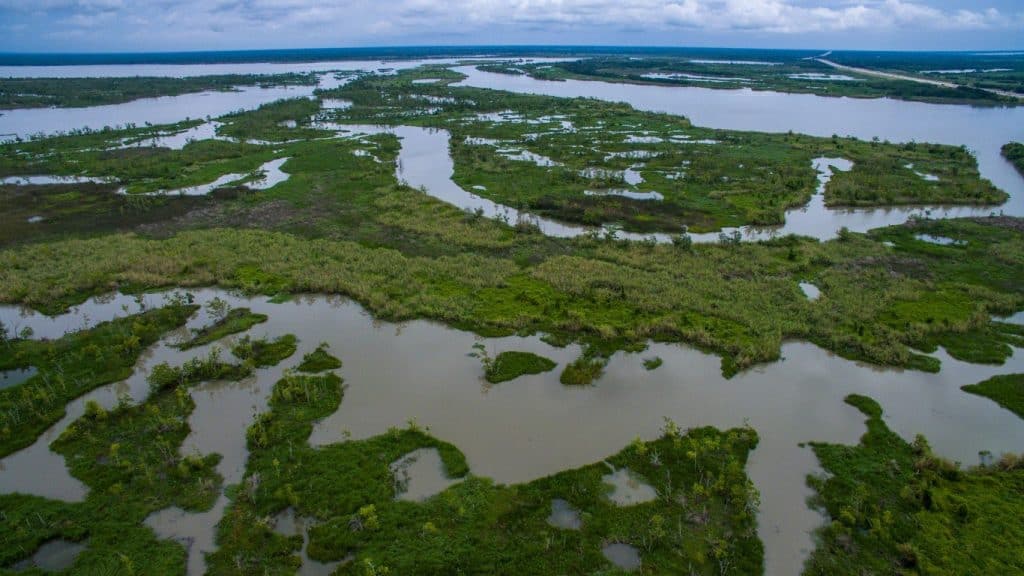
Pythons could cause the Everglades to become a much less biodiverse ecosystem.
©RoschetzkyIstockPhoto / iStock via Getty Images
The greatest danger of unchecked Burmese pythons is the collapse of the Everglades’ biodiversity. As top predators, they consume everything from rabbits to deer and even alligators, stripping food away from native species and unraveling the swamp’s natural balance. Without intervention, the Everglades risks becoming a far emptier ecosystem.
As prey runs out, pythons are likely to push beyond the swamp and closer to people. They have already been reported near homes, and growing numbers could threaten pets and, in rare cases, small children, as a few such incidents have been reported in Southeast Asia. The bigger question is how far they might spread. Scientists once feared they could spread as far north as the Carolinas and as far west as Texas, but now most think they are unlikely to be able to survive outside of southern Florida. However, climate change could expand the area where the temperature is in their favor.
Hunting Pythons
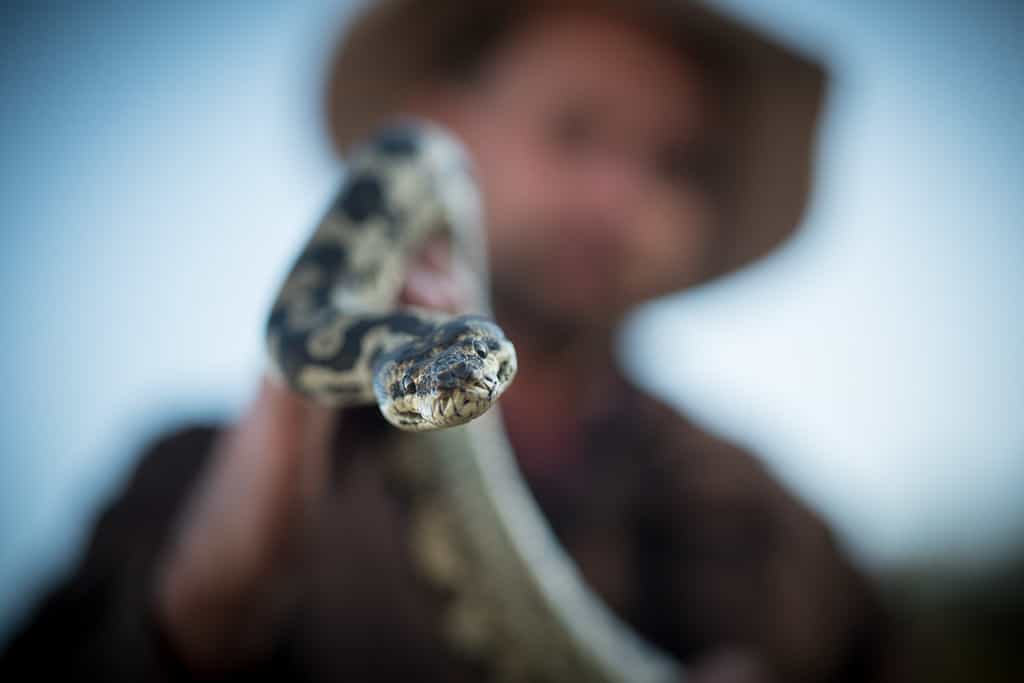
The state has tried to get rid of pythons by incentivizing people to hunt them.
©Janelle Lugge/Shutterstock.com
The stakes are high, so Florida has thrown nearly every idea it can at the Burmese python problem, with mixed results. One of the main efforts is the Python Elimination Program, which pays trained contractors to search public lands and remove snakes. A similar initiative, the Python Action Team Removing Invasive Constrictors, sends qualified hunters into the field to track down and humanely kill pythons. These programs have removed tens of thousands of snakes, but the population remains enormous.
The state has also incentivized private citizens to hunt pythons in the annual Python Challenge. Hunters receive cash prizes for the longest, heaviest, and most pythons captured. In 2024, over 200 pythons were removed. The hunt does not remove significant enough numbers to take care of the problem decisively, but it publicizes the situation statewide and beyond. This helps Floridians understand the scale of the issue and support other conservation measures.
Tracking Methods
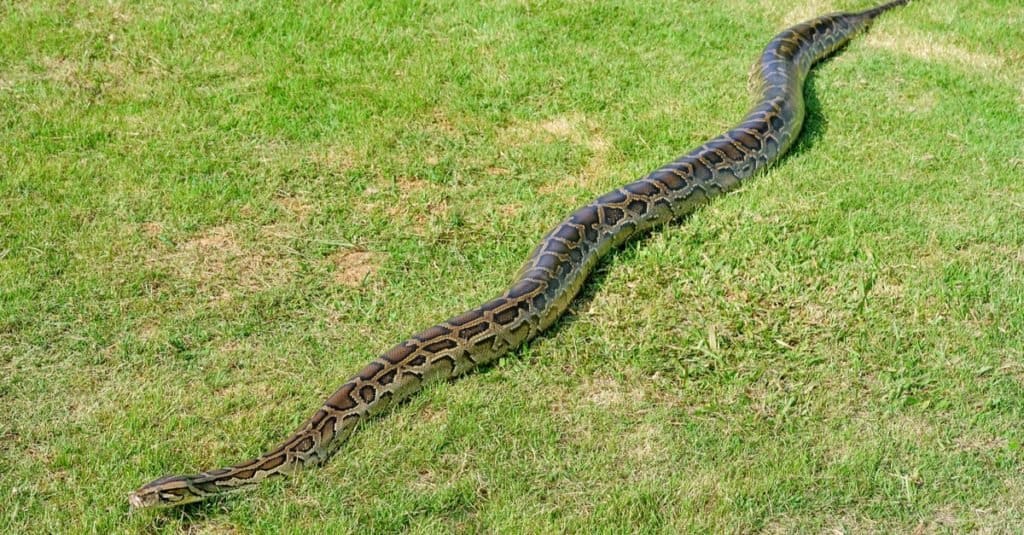
Male pythons fitted with radio transmitters can lead researchers to the largest females.
©Yatra/Shutterstock.com
Alongside open hunts, scientists and wildlife managers employ various means of locating well-camouflaged snakes in dense brush. Environmental DNA testing can detect python presence in water samples. Researchers have used detector dogs to sniff them out. Thermal and infrared cameras are another method that can reveal well-concealed pythons.
An even more targeted approach involves fitting male snakes with radio transmitters and releasing them during breeding season. Drawn to females, these “scout snakes” lead researchers straight to breeding grounds. This method has helped locate some of the largest females—sometimes 15 feet long or more—capable of laying enormous clutches of eggs. Removing just one large female can prevent dozens of hatchlings a year from entering the ecosystem.
Robot Rabbits: Technology Meets Wildlife Management
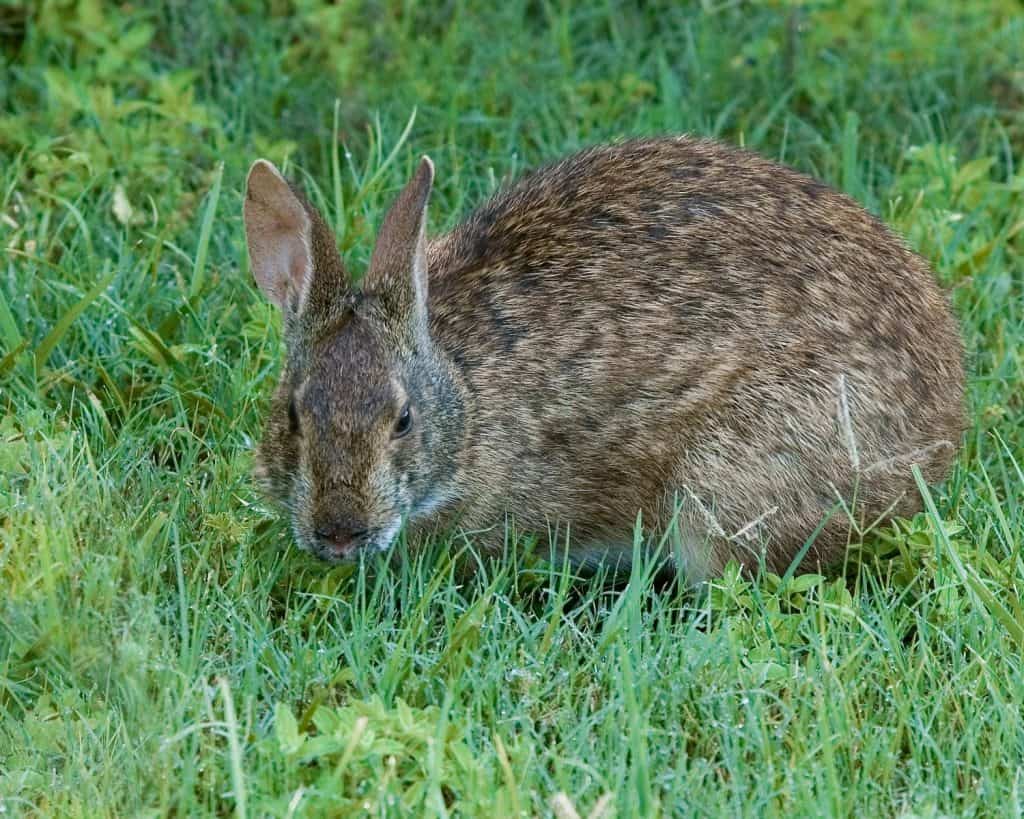
Florida’s latest strategy is to deploy robot rabbits designed to mimic the living one pictured here.
©Donna Bollenbach/Shutterstock.com
In summer 2025, Florida officials began testing an unusual new tool in the fight against invasive Burmese pythons: robot rabbits. The program is being spearheaded by the South Florida Water Management District in partnership with the University of Florida. It is designed to mimic one of the snakes’ favorite prey species, the marsh rabbit. The hope is that these decoys will lure the snakes out of hiding, giving rangers and researchers a better chance to locate and remove them from the Everglades.
The robot rabbits are more than simple decoys. They are built from toy rabbit bodies retrofitted to give off heat, scent, and subtle movement, making them appear alive to a hunting python. They are powered by solar panels and can be switched on and off remotely. Each rabbit is placed in a small enclosure monitored by cameras, so when a snake approaches, the system can alert conservation staff. At about $4,000 each, they are a significant investment, but officials see them as a promising way to overcome the challenge of finding snakes that are otherwise almost invisible in dense vegetation.
How Effective Are They?
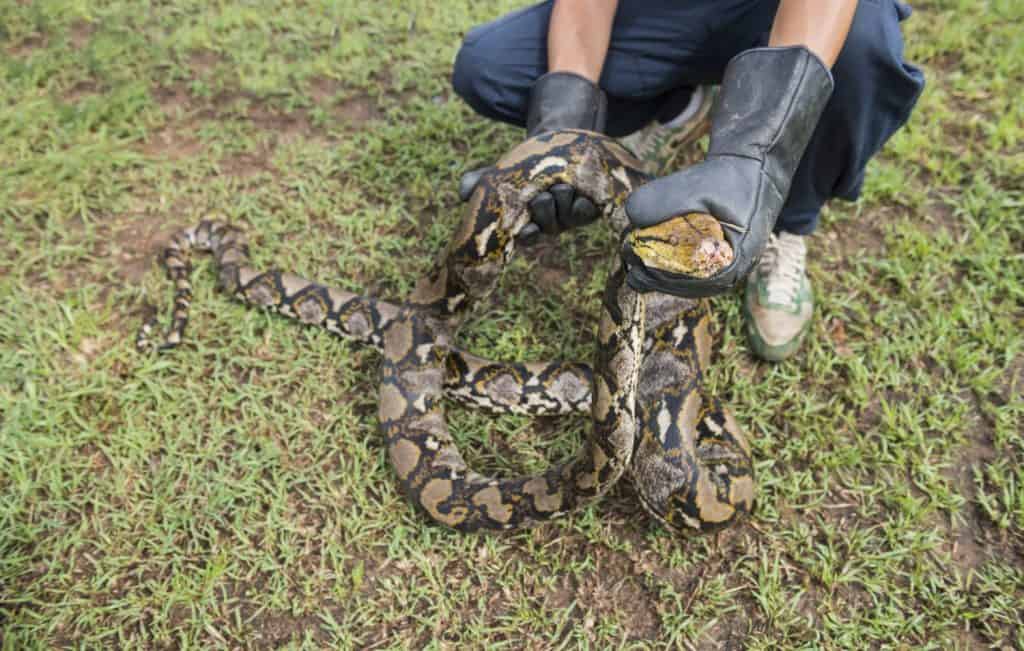
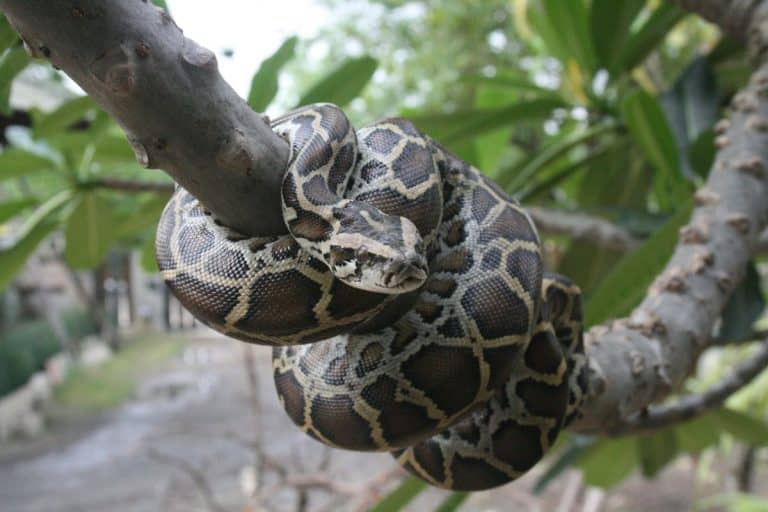
Pythons are exceptionally well-camouflaged against mottled backgrounds of grass, soil, and leaves.
©doctor_k/Shutterstock.com
So far, around 120 robot rabbits have been deployed across the Everglades. The program is still in its early stages. There are no official numbers yet on exactly how many snakes have been caught thanks to the decoys. However, the devices are already showing potential by drawing attention to python movements and making it easier for rangers to spot snakes before they disappear back into the marsh. The ultimate goal is to see whether this approach can be scaled up. If the pilot program proves effective, more robot rabbits will likely be deployed. This will offer a creative new strategy to combat one of the most damaging invasive species in the Everglades.
Future Biocontrol Approaches

Genetic engineering to control pythons is still years in the future, if it is ever used at all.
©Natali _ Mis/Shutterstock.com
Controlling an invasive species through biological means is a problematic approach. Ultimately, it may prove to be the direction Florida will have to go to deal with this problem decisively. While many species feed on young pythons, there is no apex predator other than humans that can be introduced to reliably dispatch adults. Alligators and pythons eat one another; who wins depends largely on the size of the individuals.
Broad poisons are off the table because they would kill or poison non-target wildlife, pets, and scavengers, contaminate water, and leave toxic carcasses. Federal and state rules also tightly restrict toxicants on public lands. Moreover, snakes are solitary creatures so diseases do not spread through their population as easily as in social animals like rabbits or cattle.
Genetic fixes remain theoretical. Gene drives and similar ideas are being studied for fast-breeding pests in labs, but snakes pose major hurdles. These include long generation times, solitary mating, difficulty getting engineered genes into wild populations, and huge ethical, regulatory, and ecological concerns. Any workable genetic program would take many years of research, rigorous testing, and broad oversight before it could even be considered. And who knows, the cure might turn out to be an even worse problem.
Lessons Beyond Florida
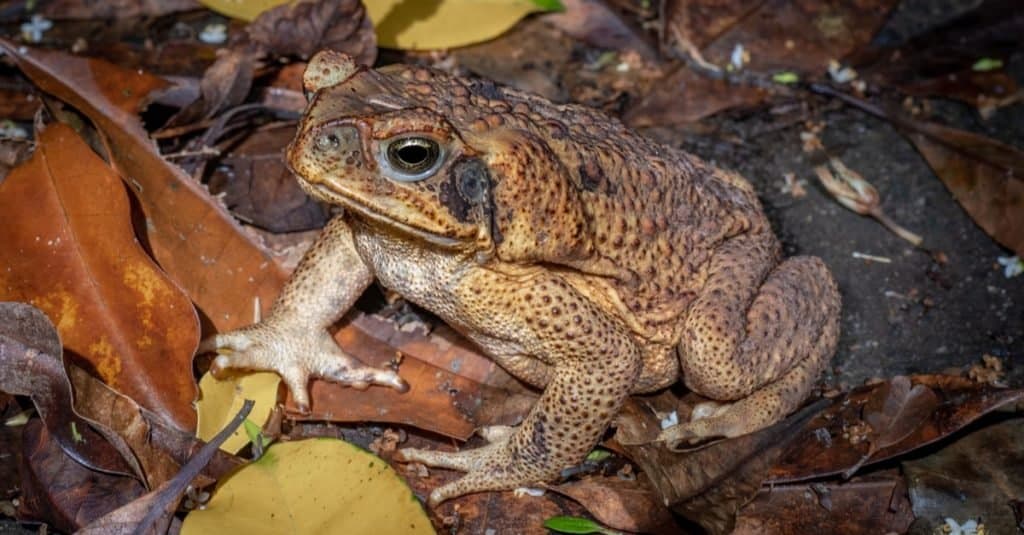
Lessons learned from struggling with one invasive species might help with controlling others.
©Peter Yeeles/Shutterstock.com
Florida’s python problem illustrates the larger dangers of invasive species worldwide. From zebra mussels in the Great Lakes to cane toads in Australia, nonnative animals can alter ecosystems dramatically when introduced into environments without natural checks. Florida’s combination of subtropical climate, international trade, and a thriving exotic pet market made it especially vulnerable.
The state’s fight is not just about pythons. It is about the bigger question of how human beings should manage the environment. How do we not only protect endangered species but ethically control those that are overpopulating, especially in an environment where they don’t belong? As humanity continues to develop the planet with consequences like deforestation and climate change, researchers, policymakers, and citizens will have to adapt their methods to help nature maintain its balance.