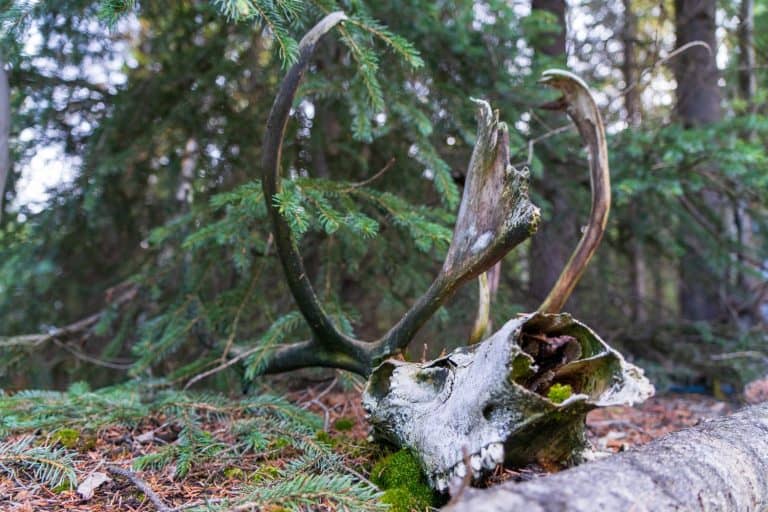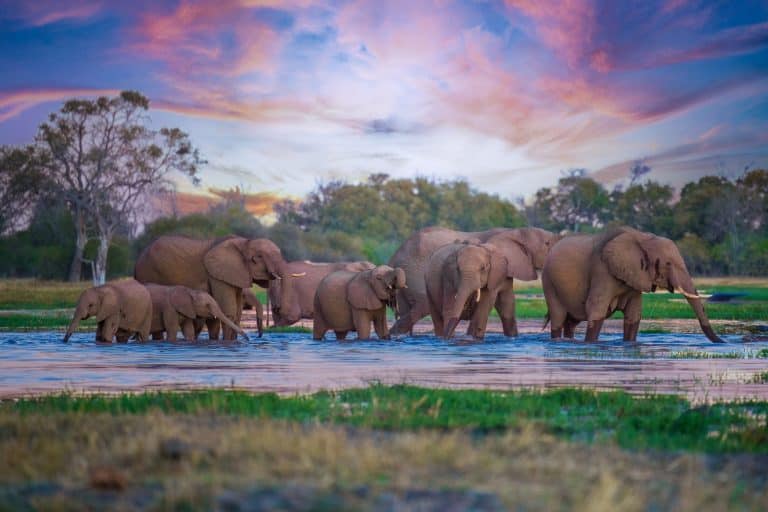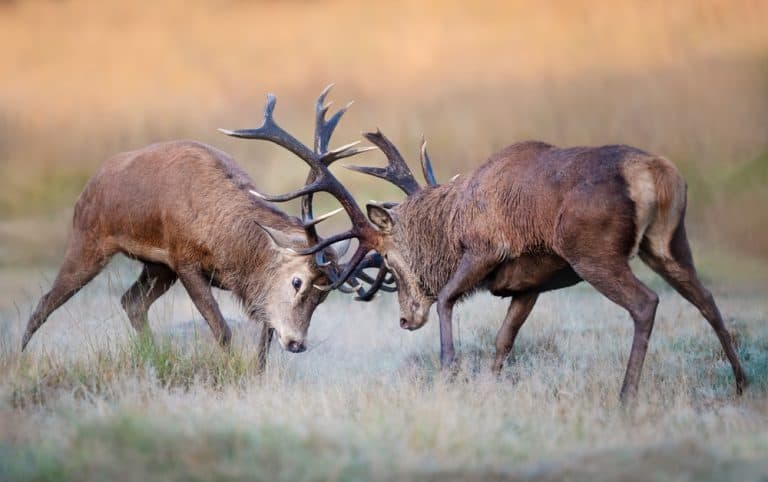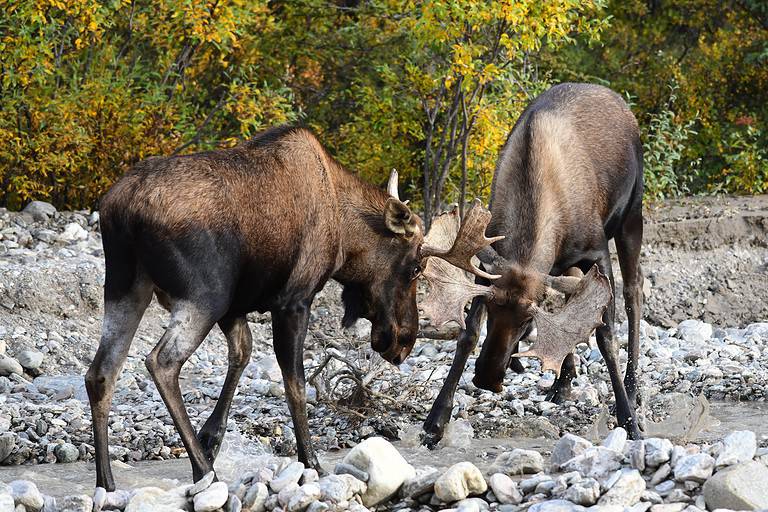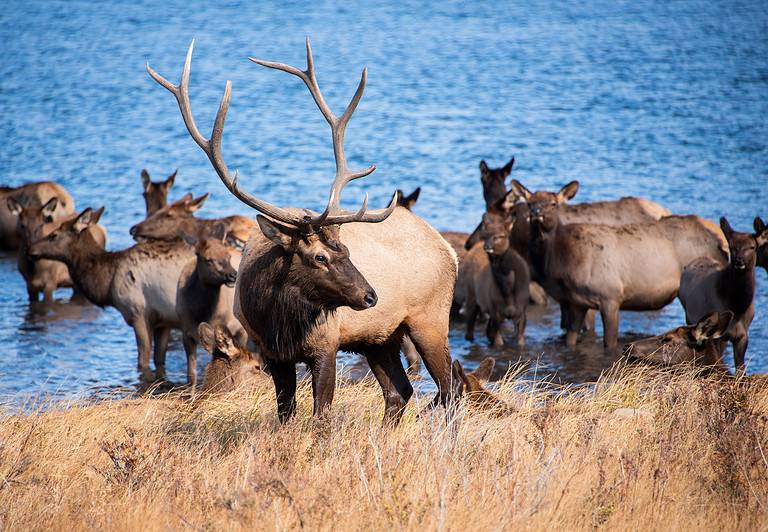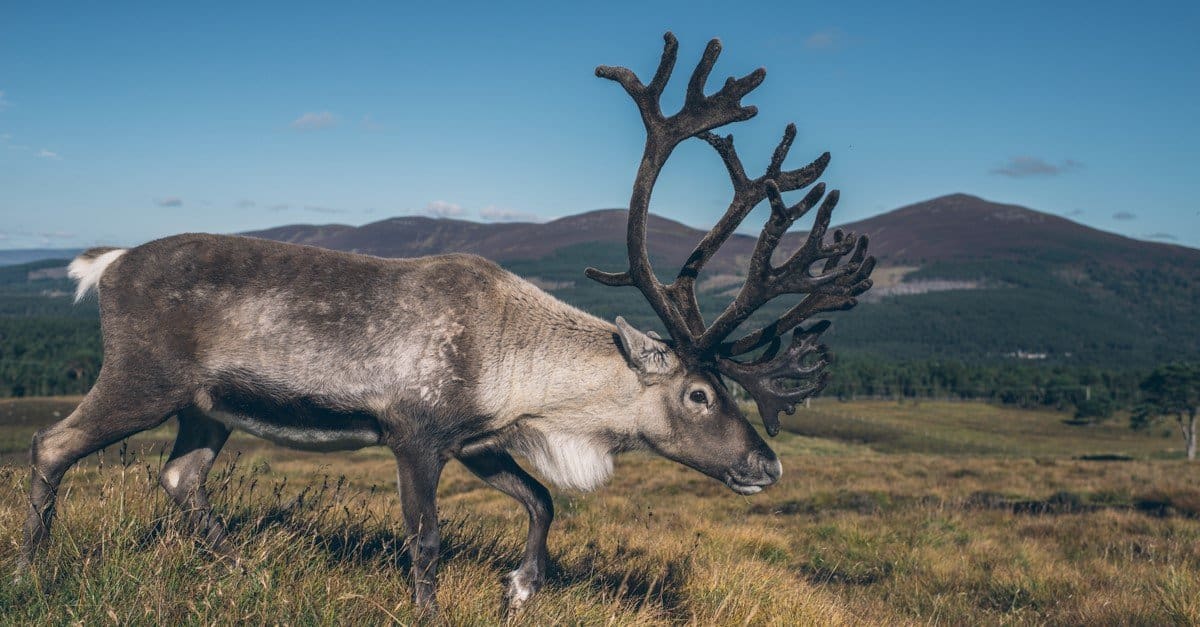

Caribou, also known as reindeer, are large mammals. You can find them living in areas of Europe, Asia, North America, and Greenland. The most common misconception is that caribou and reindeer are two different animals. This is incorrect, as they are actually the same species. Europeans call them reindeer, while North Americans call them caribou when they’re wild and reindeer when they’re domesticated. Let’s explore 10 of the most interesting caribou facts below!
1. Caribou Hooves Can Change With Seasons
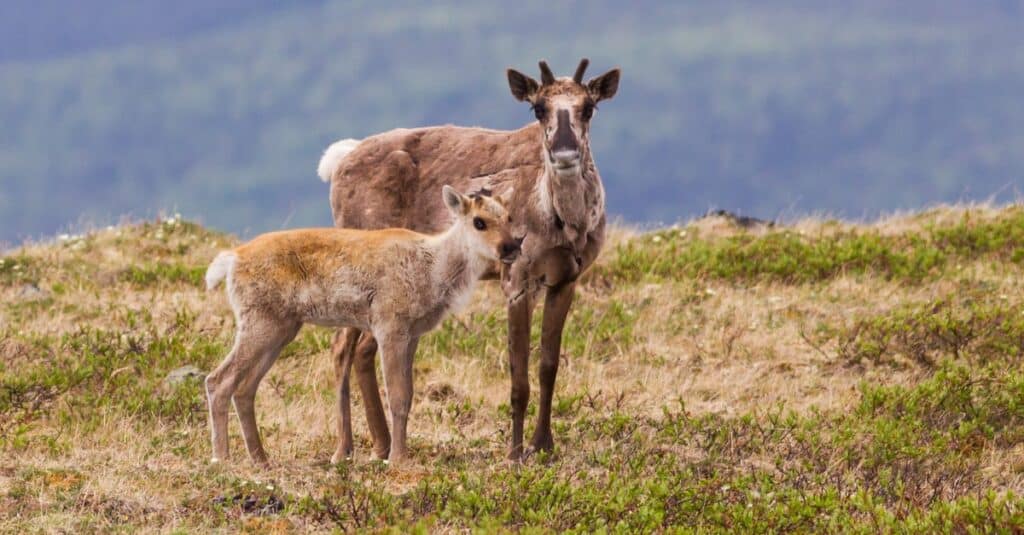
Also known as reindeer, caribou have very large feet.
©Jukka Jantunen/Shutterstock.com
Caribou hooves are quite fascinating. To survive the environment, they undergo incredible adaptations. Caribou have very large feet with four toes, two of which are known as dew claws. The remaining two toes are quite strong and help support the caribou’s weight.
In the winter, the hoof pads of the caribou will shrink, exposing the rims of the hoof, which help them walk over ice and snow. Long hair will grow between the toes to protect the pads, and they will only walk on the hoof rims. Once summertime hits, these footpads will then start to become more sponge-like and soft, allowing them to cross over different terrains.
2. Caribou Participate In One Of The Largest Migrations On Earth
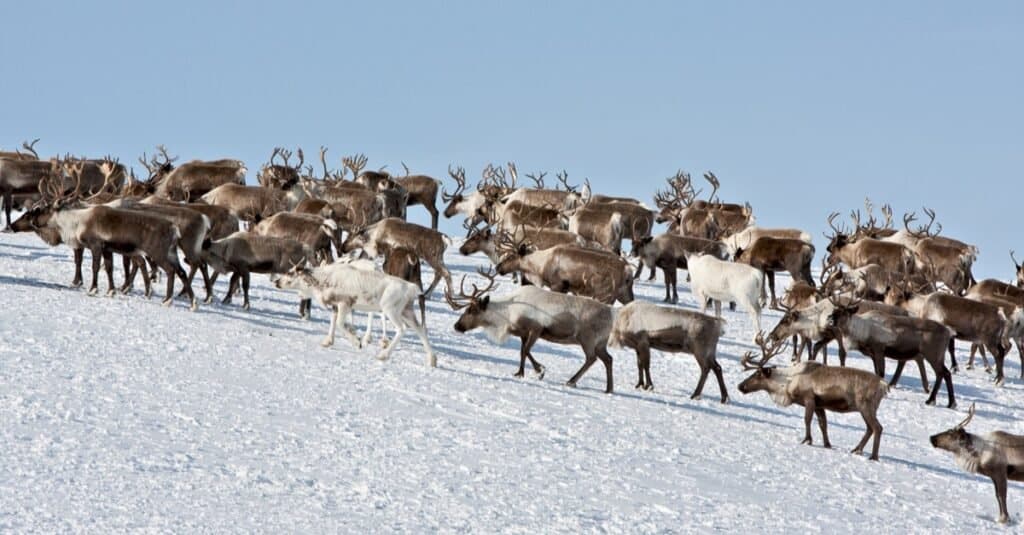
Caribou migration is known as the longest land migration on our planet.
©Sergey Krasnoshchokov/Shutterstock.com
During the summer, caribou will migrate north in one of the biggest animal migrations in the world. They can travel more than 600 miles and create their own routes. In just one day, a caribou can travel up to 23 miles. Collectively, caribou can travel over 1,500 miles in just one year once they begin to travel south for the winter. Their strong legs and incredible endurance enable them to travel such long distances.
3. Caribou Have A Four-Chambered Stomach
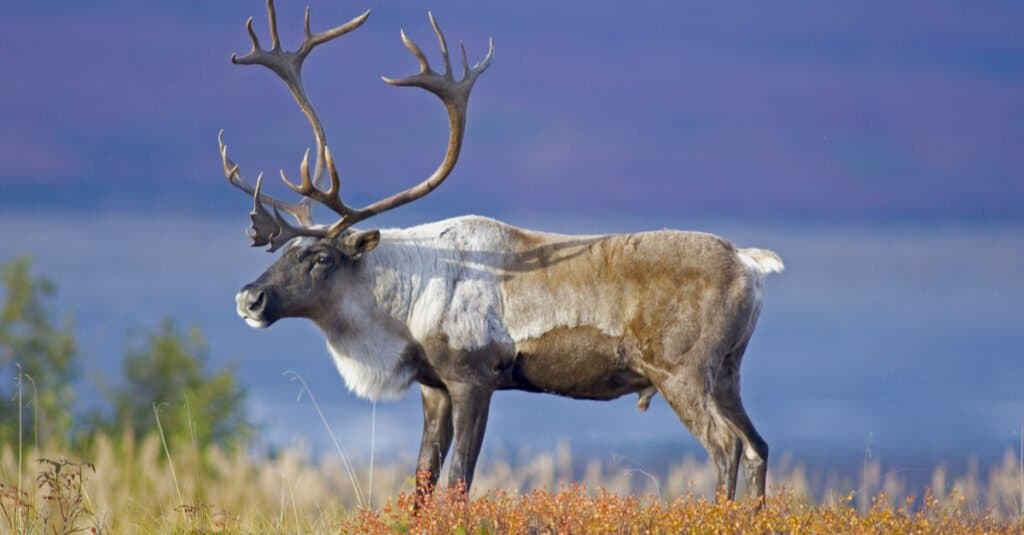
Caribou’s special stomachs help them obtain more nutrients from their food.
©Jeff McGraw/Shutterstock.com
The caribou has an incredibly unique and complex digestive system. A caribou’s stomach has four compartments: the rumen, reticulum, omasum, and abomasum. The rumen happens to be the largest chamber in a caribou’s stomach and can hold many liters of food. Reindeer consume a lot of lichen, which is also called reindeer moss. When they eat, their stomach allows them to take in every bit of nutrients from the food that they are digesting.
Caribou are herbivores, and their diet consists of a lot of vegetation. However, a fascinating caribou fact is that they have been known to participate in some odd eating behaviors. According to an article in Real Clear Science, in some situations, reindeer can cannibalize other reindeer’s antlers before they shed theirs, as they are osteophagous and consume shed antlers as dietary supplements.
4. Both Male And Female Caribou Have Antlers
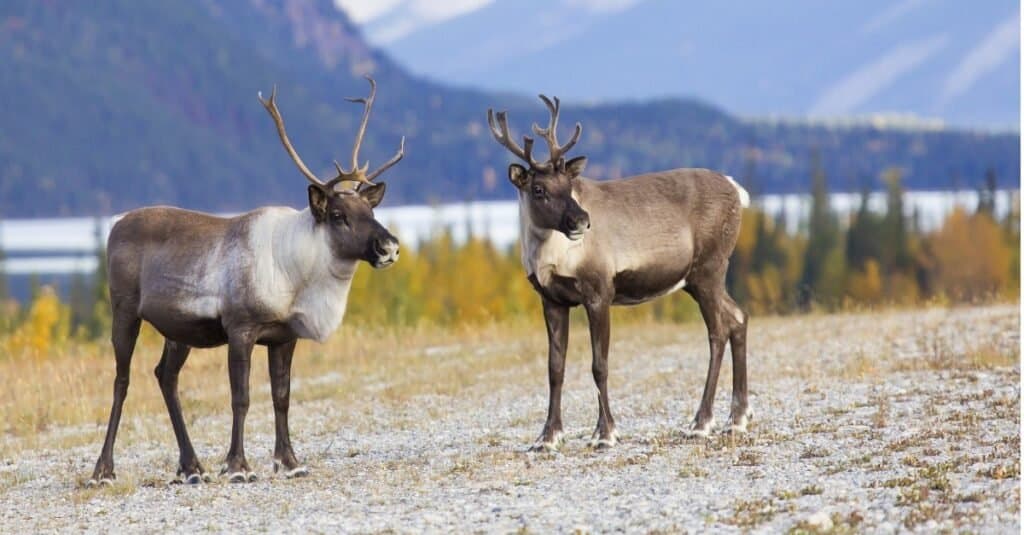
In North America, reindeer are also called caribou. Both males and females grow antlers.
©iStock.com/RichardSeeley
Caribou are the only species of deer in which both sexes can grow antlers. Male caribou tend to use their antlers to assist in fights, while female caribou will use theirs to defend their food and scrape away snow. For caribou, their large antlers also allow for the regulation of body temperature when they are growing and even act as a sort of status symbol, attracting mates.
5. Caribou Are the Only Deer Species to Have Hair Covering Their Nose
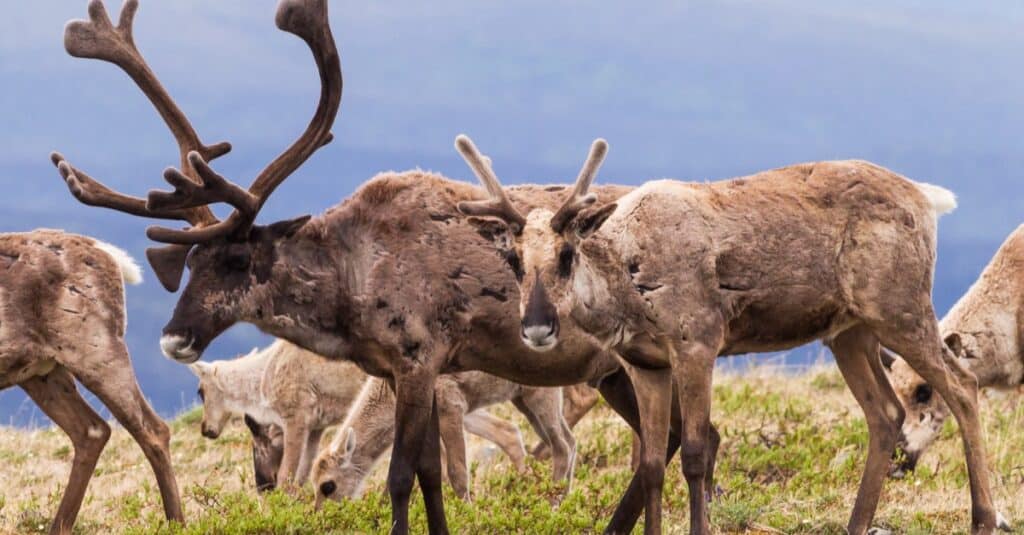
Caribou use their noses to find food underneath layers of snow and can even remember directions.
©Jukka Jantunen/Shutterstock.com
The caribou is the only deer species whose noses are completely covered in specialized, dense hairs. These hairs help warm the air in the harsh, cold environment before the caribou breathe it in.
Caribou also have an incredibly gifted sense of smell. They use their noses to find food underneath layers of snow and can even remember directions. They do this by picking up scents that may travel with the wind.
6. Caribou Have Two Layers of Fur
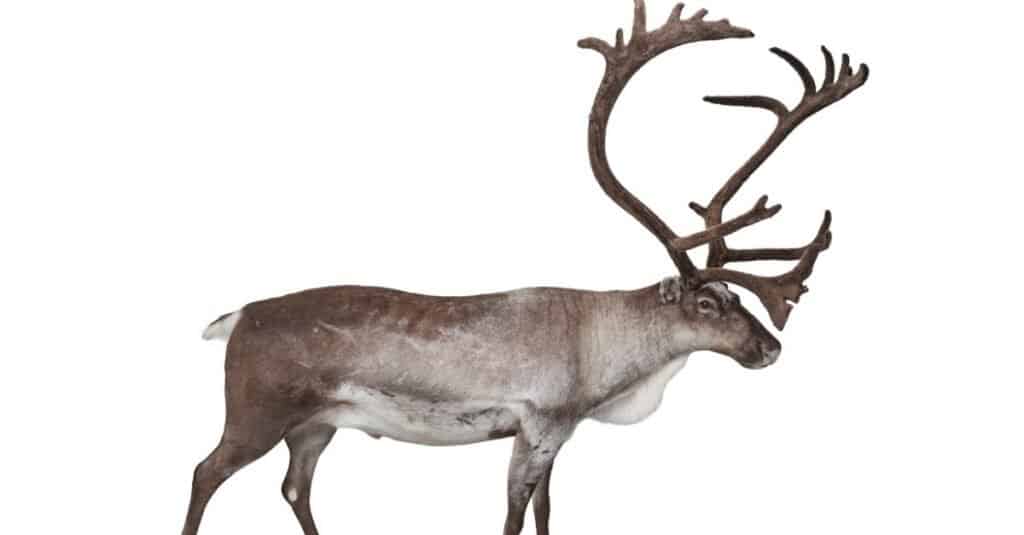
Caribou’s layers of fur help keep them extra warm.
©iStock.com/klikk
Since they live in extremely cold environments, caribou have two layers of fur. The undercoat consists of thick wool, while the hair on the top layer is longer and more hollow. The top layer consists of hollow hairs that trap air and act as insulation to keep them warm. Caribou winter coats can be up to three inches thick.
7. Caribou Are Excellent Swimmers

Caribou can swim roughly five miles per hour.
©iStock.com/mountinez
Since caribou migrate over such a vast area, it is only natural that they might find themselves near water. This does not faze them in the slightest, as they are incredible swimmers. Adult caribou can swim at around five miles per hour. Their hollow fur enables them to float when swimming. Additionally, their long legs and hooves make them strong swimmers with great endurance.
8. Caribou Actually Produce Milk

Barren-ground caribou grazing in Alaska.
©Tom Tietz/Shutterstock.com
Caribou milk is known for being extremely nutritious and rich. It has a fat content of 22%, as well as 10% protein. Some indigenous communities raise domesticated caribou to sell and drink their milk. Female caribou can only produce 1 to 2 cups daily, which is why those who herd them will have multiple females to collect their milk. Reindeer milk is most commonly consumed in smaller amounts and adds flavoring to other sour-milk products.
9. Male Caribou Can Weigh Up to 700 Pounds
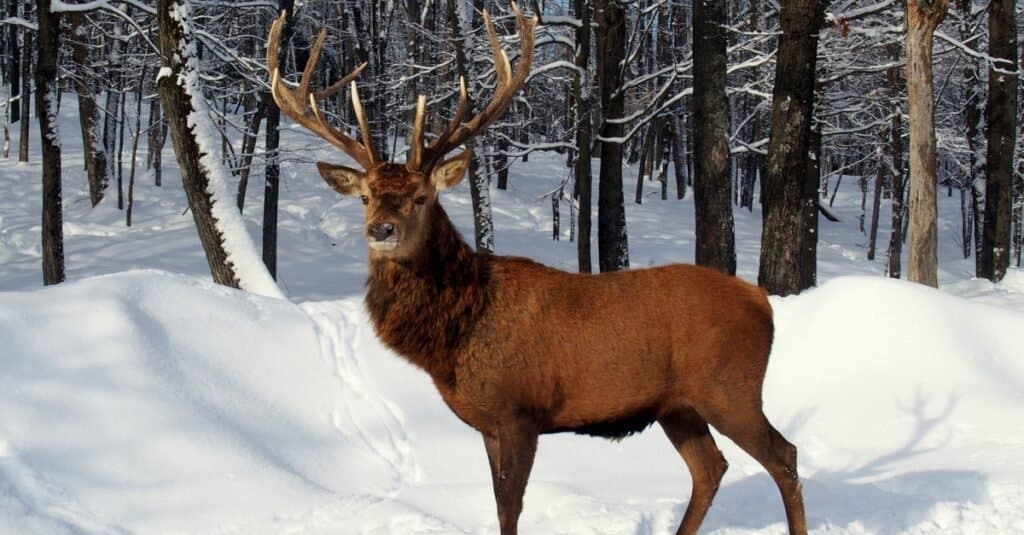
Caribou bucks weigh several hundred pounds.
©Nick Couckuyt/Shutterstock.com
Another fascinating fact is that male caribou weigh between 300 to 400 pounds on average, but some males have been said to weigh up to 700 pounds. Females are significantly smaller, coming in at around 150 to 250 pounds.
Weight and size are one way you can tell the difference between a male and a female caribou. However, caribou males also have large white spots around their necks and larger antlers, while females have straighter antlers with a less curved shape.
10. Caribou Perform Ruts During Mating Season
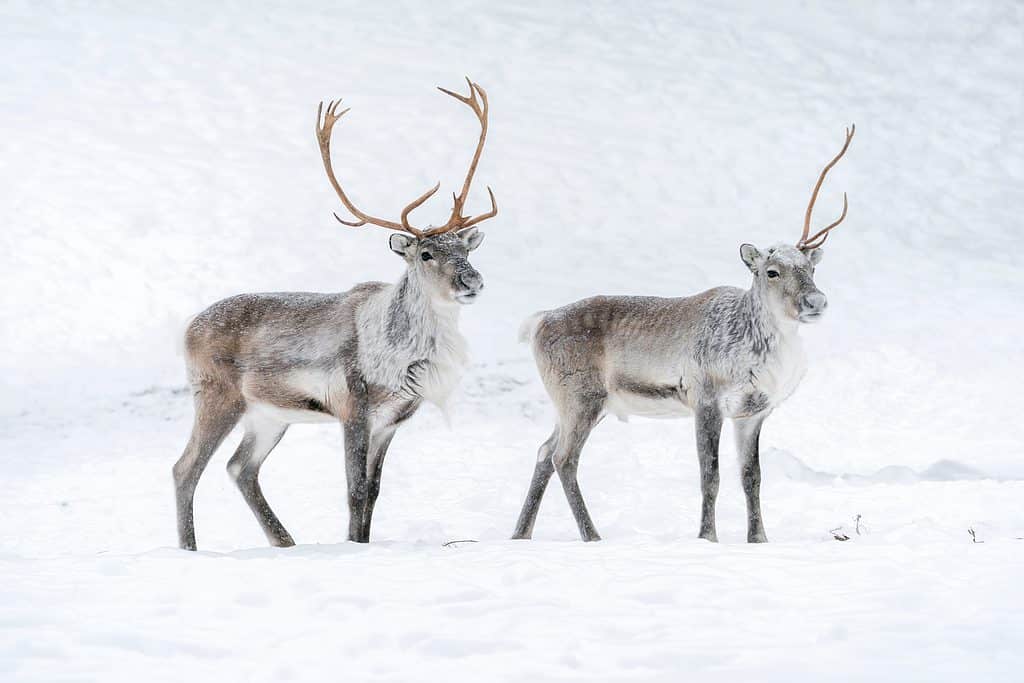
Caribou will rut to try to win over females.
©Tam and Trace Photography/Shutterstock.com
Once mating season approaches, male caribou will begin to rut. A rut is when two males establish dominance by running into each other and locking antlers. The purpose of this is to attract female caribou, allowing the dominant male to mate with as many females as possible. These groups of females are known as harems and can have anywhere between 6 and 15 females.