
Quick Take
- A driver stopped to break up the attack, though the real danger may not have been the snake or the deer. See the driver's intervention →
- Most giant snakes spotted in Florida aren't what people assume, and that difference matters more than you'd think. See the species breakdown →
- Reticulated pythons can swallow prey that seems physically impossible to fit, and their anatomy offers a strange explanation for how. Explore their swallowing anatomy →
- Dangerous animal encounters rarely happen where people expect them, which changes how you should respond. Understand the safety risks →
Typically, when people think of dangerous animal encounters, they imagine them happening in remote wild places. In reality, they can happen almost anywhere — including along roadsides and near neighborhoods where wildlife and people overlap.
Knowing how to respond when you encounter a wild animal is important for your safety. Most wild animals avoid humans when possible, but getting too close or interfering can create a dangerous situation for both people and animals.
Reticulated Python Sighting
The short YouTube clip above appears to show a large python constricting a deer on the side of a road in Florida. The video was shared by the Peeper Loves Animals YouTube channel, which reposts animal footage from a variety of sources.
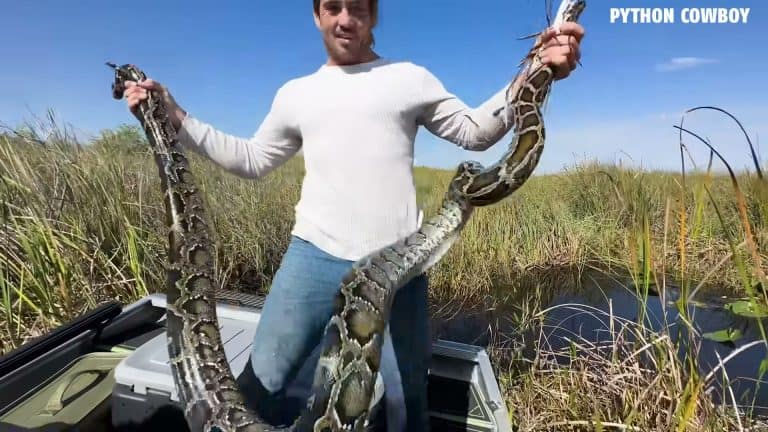
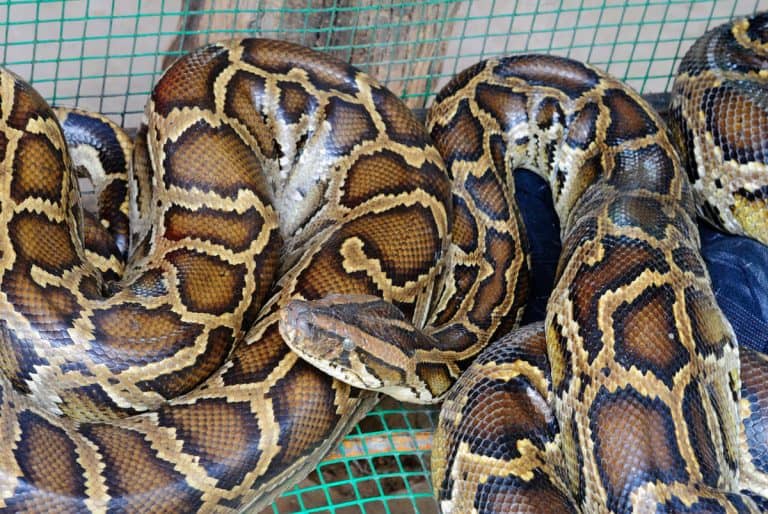
One commenter claims the video was filmed in Florida. In the Sunshine State, Burmese pythons are the large invasive snakes most commonly associated with the state, especially in South Florida. Reticulated pythons have also been reported in southeast Florida, but wildlife officials say those are generally escaped or released pets rather than an established wild population.
Python Constricting Its Prey
As the video begins, the snake appears to have already captured the deer and is in the process of constricting it. Reticulated pythons are nonvenomous constrictors that kill prey by coiling around it and tightening their grip until the animal can no longer breathe or its blood circulation stops.
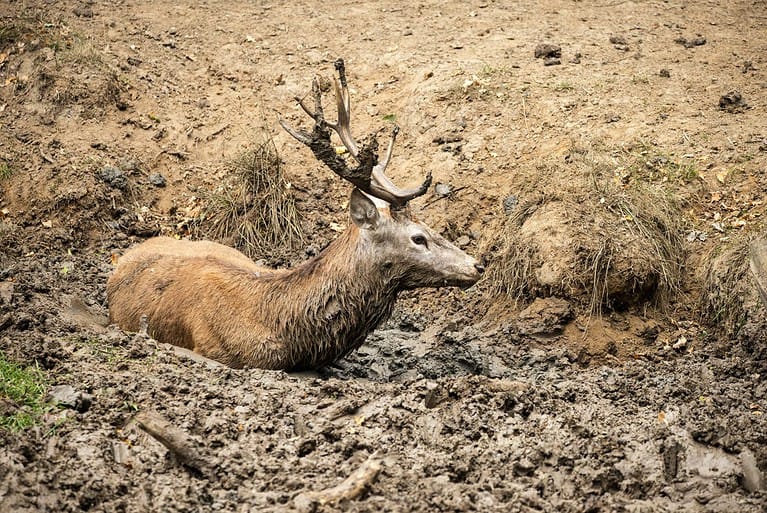
A driver then gets out of a vehicle, grabs a long branch, and strikes at the snake from a distance. The disturbance causes the snake to uncoil and retreat, releasing the deer. Although the man may have been trying to help, approaching a large constrictor so closely was risky. Large pythons are powerful animals, and interfering with one during a feeding attempt can be dangerous.
What Do Reticulated Pythons Eat?
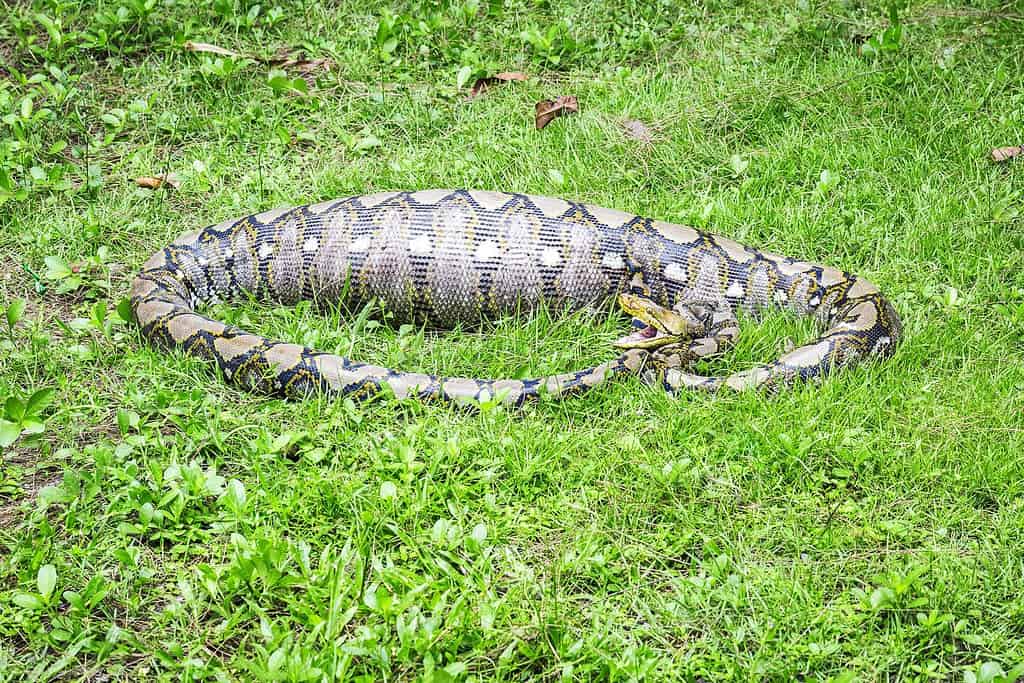
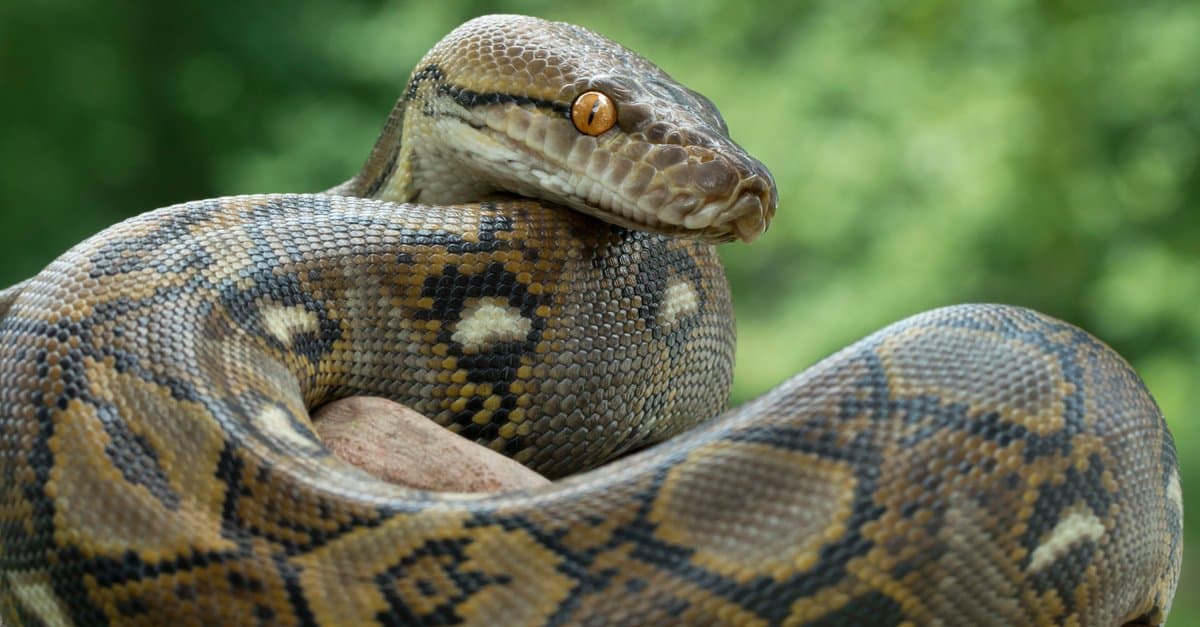
The reticulated python can live up to 25 years in the wild.
©tanoochai/Shutterstock.com
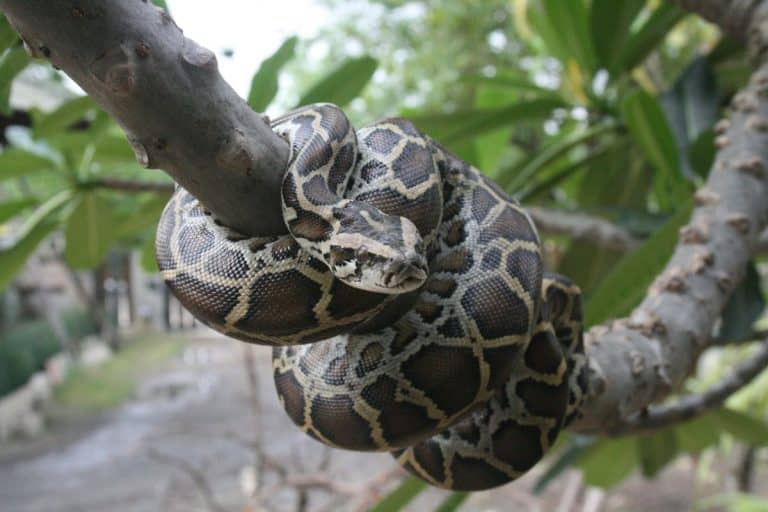
Reticulated pythons (Malayopython reticulatus) are carnivores that eat a wide range of prey, including birds and mammals. Depending on their size, they may consume rats and other small mammals, but can also take much larger prey such as deer, wild boar, and primates.
Reticulated pythons are widely recognized as the longest snake species in the world, with many individuals growing well over 10 feet and some exceptional specimens exceeding 20 feet. Like other large snakes, they have flexible skull bones and stretchy ligaments that allow them to swallow prey much larger than their heads.