
Quick Take
- Glass kills over a billion birds a year in the US, and your windows are likely part of the problem. Prevent window collisions →
- When a bird hits your window, it's important to bring it to a licensed rehabilitation center. Handle injured birds safely →
- Migrating birds funnel through one stretch of New Jersey, where the landscape humans built there turns it into a gauntlet. About this migratory hotspot →
Recently, The Raptor Trust, a New Jersey-based wild bird rehabilitation center, reported that it admitted 190 birds (and counting) in four days, with 114 birds in just one day. Unfortunately, wild bird injuries and fatalities are common during peak fall migration. However, it sheds light on the often-unrecognized risk of glass collisions and other dangerous hazards.
We spoke with Christopher D. Soucy, EdM, Executive Director of The Raptor Trust, about the organization. Learn more about its process and important ways to prevent collisions in your area.
About The Raptor Trust
The Raptor Trust is a high-volume raptor and wild bird rehabilitation center. The organization has provided free medical care to wild birds since 1983. In addition to rehabilitation, the organization also offers a variety of educational programs.
Due to the center’s location, they often see an influx of wild bird admissions during peak migration season.
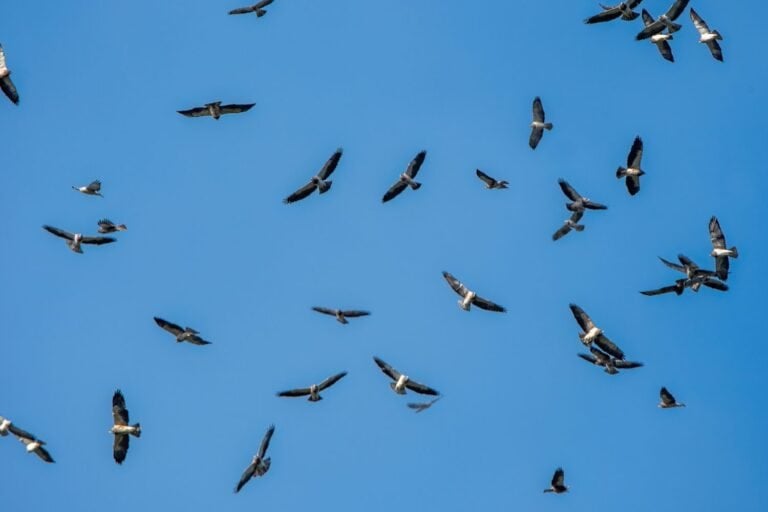
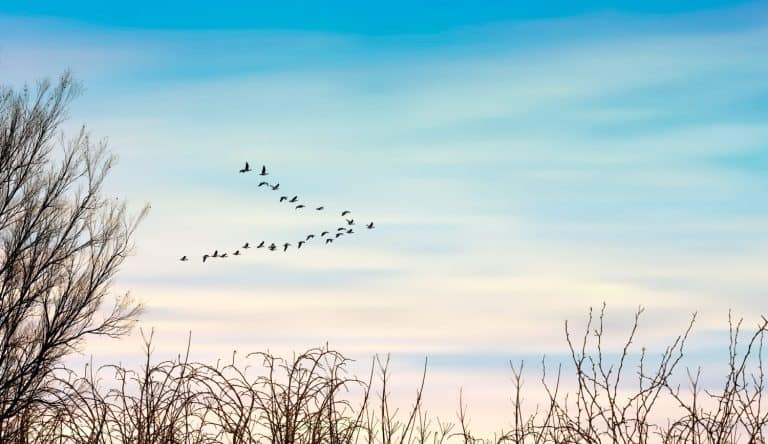
“We are located in New Jersey between two major migratory flyways: the coastal flyway to the east and the Appalachian Mountain flyway to the west,” says Soucy. “Millions of birds use these natural highways for migration in the spring and fall. Along the coastal flyway, humans have populated the landscape with tall, reflective, glass buildings and artificial lights, which are hazardous for birds migrating at night.”
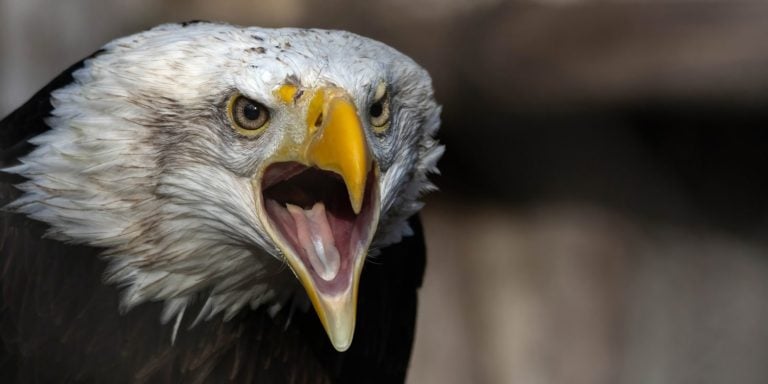
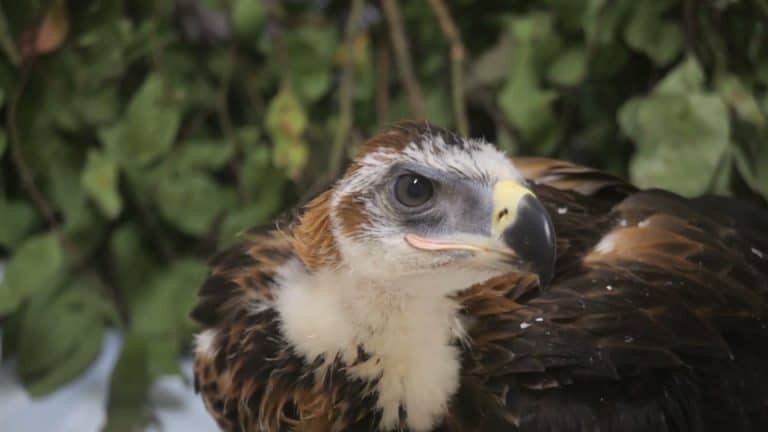
The Raptor Trust often treats wild birds that have been injured by glass collisions.
©SnapTPhotography/Shutterstock.com
Unfortunately, according to Soucy, glass collisions often occur in large quantities during this time of the year.
“We admit as many as 100 birds a day during peak fall migration—all birds that have collided with the glass,” he shares. “The injuries, as well as rescue efforts when birds are collected and put into carriers for transport to us, are stressful for the birds.”
The Raptor Trust’s Rehabilitation Process
Anyone who finds an injured wild bird can schedule an appointment with The Raptor Trust to admit the animal. Once the organization accepts an injured bird, they conduct a thorough evaluation of its injuries and determine the necessary level of care required.
“The first thing we do is put patients in a warm, dark, quiet enclosure to de-stress for about an hour,” Soucy explains. “After that, they are given a preliminary medical exam, looking for signs of broken bones, head trauma, and other injuries.”
Depending on the severity of the injuries, the team will then move the bird either to the critical care wing for further assessment and immediate care or to an outdoor enclosure.
“Sometimes birds are simply stunned after a glass collision, but not always seriously injured,” Soucy explains. “These birds may go right outside into a larger enclosure to determine their flight capabilities and readiness for release. Whether it is a quick turnaround or a long stay in rehab, all birds are carefully evaluated and observed before they are ‘cleared for takeoff.’”
What To Do If You Find an Injured Bird
The Raptor Trust admits injured birds seven days a week. If you find an injured bird in the wild, you can contact the infirmary to schedule an appointment.
Their staff recommends the following steps for transporting an injured bird:
- Use a cardboard box with holes punched in the sides and line the box with a soft towel or T-shirt.
- Approach the bird with caution and secure it by tossing a large towel or blanket over it. Then, carefully lift and lower the covered bird into the box. (You can find more detailed instructions for handling here.)
- Place the bird in a warm, dark, and quiet environment with as little disturbance as possible.
- Do not attempt to feed the bird or give it water.
- Bring the bird to a licensed rehabilitator like The Raptor Trust as soon as possible.
How Homeowners Can Prevent Collisions
As mentioned earlier, one of the main hazards wild birds face is glass. Unfortunately, glass collisions are incredibly common and can severely injure or kill a bird. In fact, according to the American Bird Conservancy, over one billion birds die from striking glass every year in the U.S. alone.
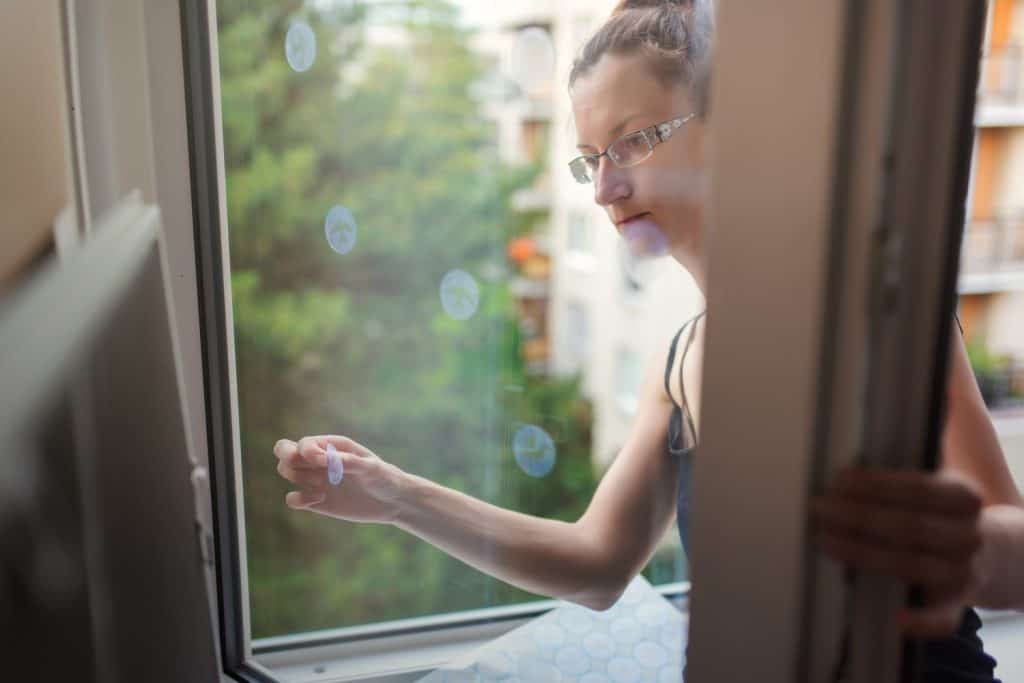
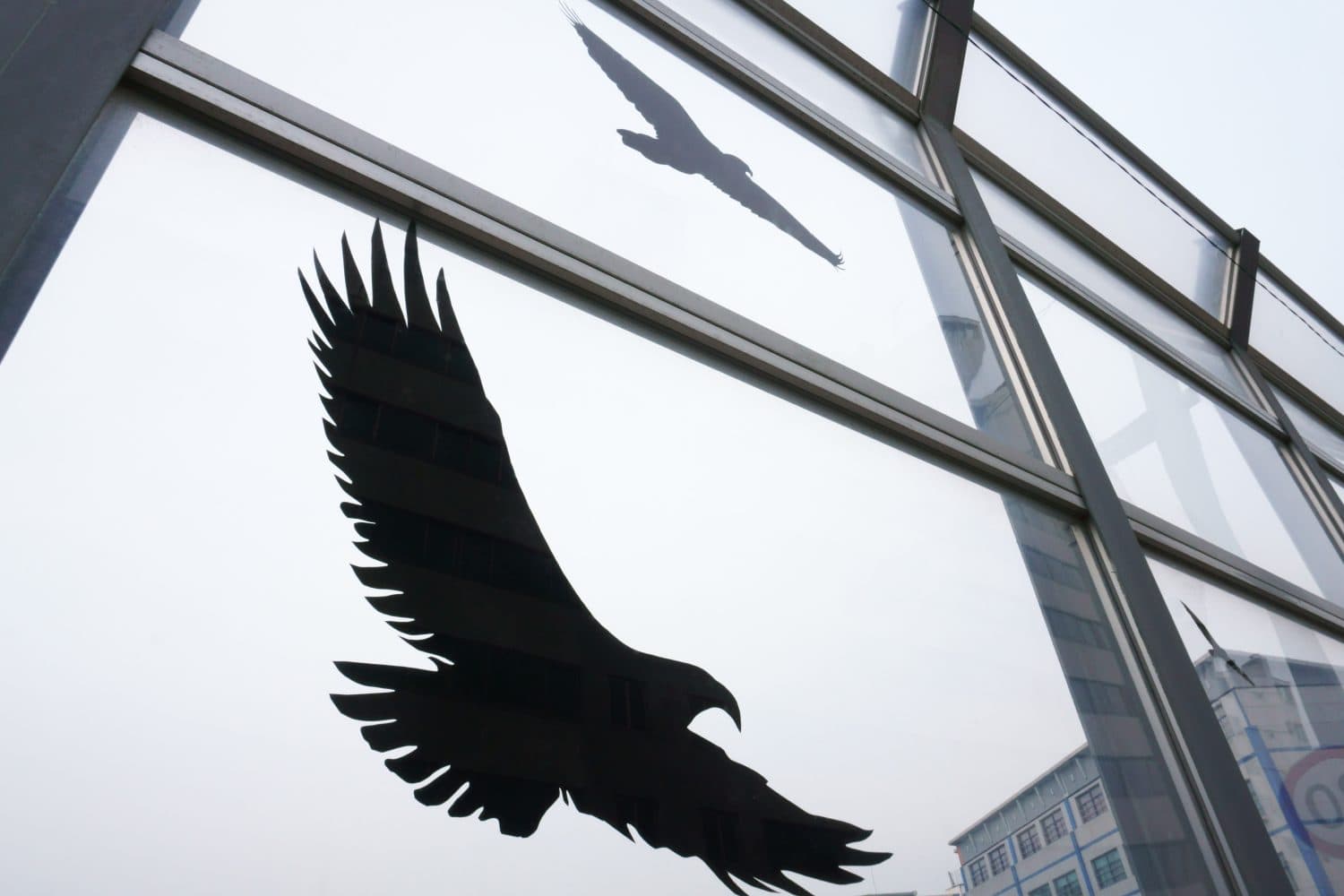
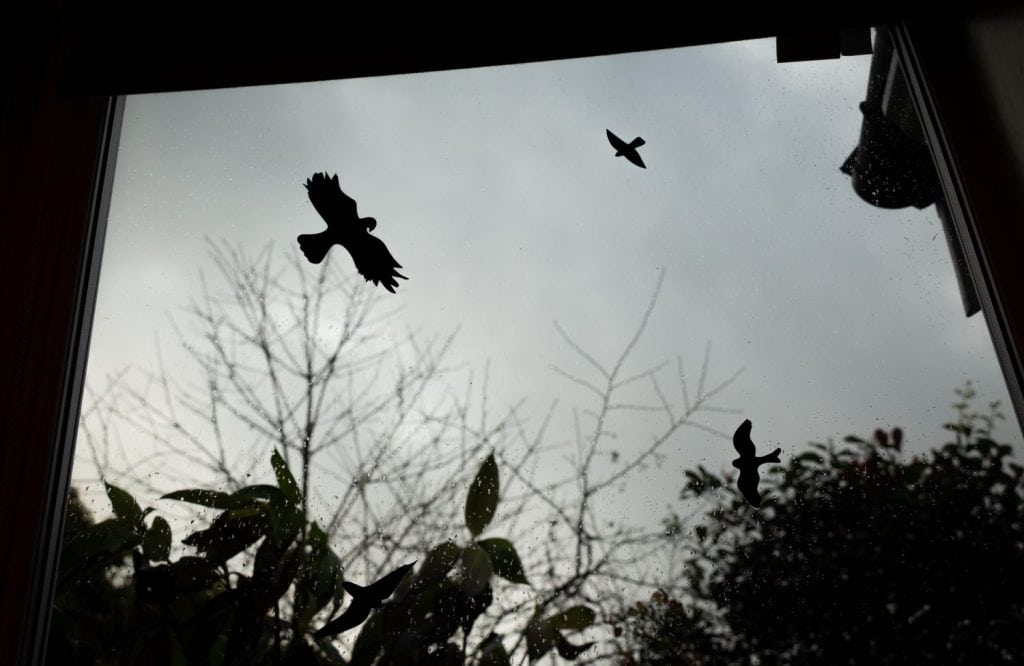
You can stick decals on your windows to help prevent wild birds from accidentally striking the glass.
©JDzacovsky/Shutterstock.com
To prevent such occurrences, The Raptor Trust recommends keeping your environment bird-safe by disarming windows and glass doors. Birds often don’t see glass as a solid object, so adding some decoration can help them notice windows and doors and avoid collisions. For example, you can place streamers or a decorative windsock in front of the window, hang light-colored string across it, use UV-reflective “bird-safe” decals, or even hang stained-glass ornaments.
If you’re looking to support wild birds or give back to The Raptor Trust, visit this page for more information.