Quick Take
- Scientists expected vocal-learning birds to sound more like us than innate singers, but the results told a very different story. See the surprising results →
- Birds and humans produce sound with completely different anatomy, yet three specific vocal patterns keep showing up in both, and mimicry is not the explanation. Explore the shared patterns →
- The real reason birds end their phrases the way they do may have less to do with communication than with something far more basic about being alive. Discover the physical explanation →
- Researchers hand-annotated over 70,000 bird vocalizations across 52 human languages, and the pattern they found hiding in all of them wasn't on their radar at the start. See the study methodology →
Is it possible for birds to imitate people? Certain bird species make excellent mimics, and the vocal abilities of our feathered friends continue to surprise us. In fact, McGill University researchers have identified vocal patterns shared across hundreds of bird species that also appear in human speech and song from around the world.
The shared patterns may seem subtle at first, but they include small changes in pitch from one sound to the next, with regular and predictable rhythms alongside elongated ending phrases, much like how humans speak. The team analyzed recordings from more than 350 bird species and compared them with human speech and songs in 52 languages, according to a McGill release.
From these findings, researchers suggest the overlap in vocal patterns may reflect shared physical constraints on how animals produce and process sound. But what does this look like in practice, especially compared to humans? Here is a complete overview of the study, including what it compared, what it found, and why scientists think these patterns could arise independently in birds and humans alike.
The Birds of the Study: Comparing Different Species
The team behind this unique research studied four different groups of birds, including songbirds and hummingbirds, as well as two closely related groups: suboscines and nightjars. The recordings came from an organization known as xeno-canto, a citizen-science website that collects wildlife sounds from around the world.

Hummingbirds were one species included in this study, as they tend to learn vocal patterns through mimicry.
©Cavan Images/iStock via Getty Images
Researchers annotated each and every one of the files by hand, which produced about 70,000 vocal units for analysis. For the human side of the experiment, they drew on publicly accessible databases of speech and song covering 52 languages. There was far more of a focus on which bird species to choose as opposed to using humans from particular places.
70,000
vocal units annotated by hand from more than 350 bird species
For example, songbirds and hummingbirds are vocal learners, meaning they pick up their vocalizations by imitating others, as humans do, which is the primary reason these types of birds were chosen. Suboscines and nightjars produce vocalizations that are innate, making their abilities unique and not nearly as traceable as humans or songbirds.

Songbirds have demonstrated similar vocal patterns as humans, new research finds.
©Dee Carpenter Originals/Shutterstock.com
According to the research, this is the first study of birdsong patterns to include both of these kinds of species, and the first to compare those patterns directly with a global collection of human speech and song.
Which Vocal Patterns Do Birds and Humans Share?
When the study concluded, three patterns jumped out at the researchers. The first is small pitch intervals: birds and humans rarely make large jumps in pitch from one note to the next, so this was a natural comparison. The second is the presence of a regular, predictable rhythm in the timing of sounds. Finally, phrase elongation, where the final sound of a phrase is longer than the ones that come before it, tied birds and human beings closer together than ever before.

Birds and humans both tend to have predictable rhythm in their sounds.
©narikan/Shutterstock.com
Logan James, the first author of the study and a postdoctoral fellow in McGill’s Department of Biology, said large pitch jumps are unlikely in both groups because they are difficult to produce. He said phrase-final elongation in birds and humans “could be due to breathing patterns when we vocalize.” However, James also noted that the shared patterns may stem from common vocal production mechanisms or biases.
could be due to breathing patterns when we vocalize.
Explaining the Similarities Between Birds and Humans
Because human speech and song are both learned behaviors, the team predicted that vocal-learning birds would sound more like humans than birds with innate vocalizations. That’s why they chose a mix of species; half of the birds are mimics, and the other half have innate abilities. However, the researchers found very little evidence for that prediction.

There are multiple groups of birds with similar vocal patterns as humans.
©photosla/Shutterstock.com
The vocal similarities appeared across all of the bird groups studied, including those whose songs are innate, so imitation alone doesn’t explain their sounds. Senior author Jon Sakata, a professor of biology at McGill, said the team hopes the findings will inspire work on bird groups that do not learn their vocalizations, which scientists have historically overlooked.
It’s fascinating to observe these birds behaving in such a way, but why might this be the case?
Independent Patterns: Vocal Awareness of Birds
The researchers’ proposal for why these patterns exist centers on shared production mechanisms rather than a common evolutionary origin for the patterns themselves. Birds and humans sit on distant branches of the vertebrate family tree and make sound with different anatomy, but both work within physical limits on how fast pitch can change and how breathing paces a series of sounds. With this in mind, similar limits could produce similar patterns separately in each lineage.
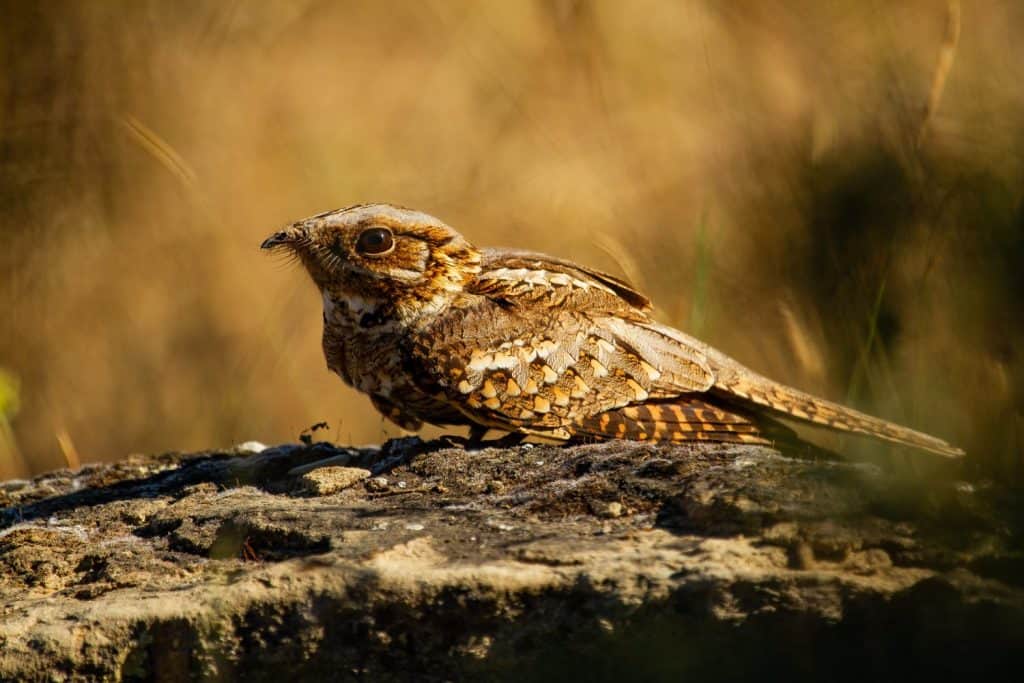
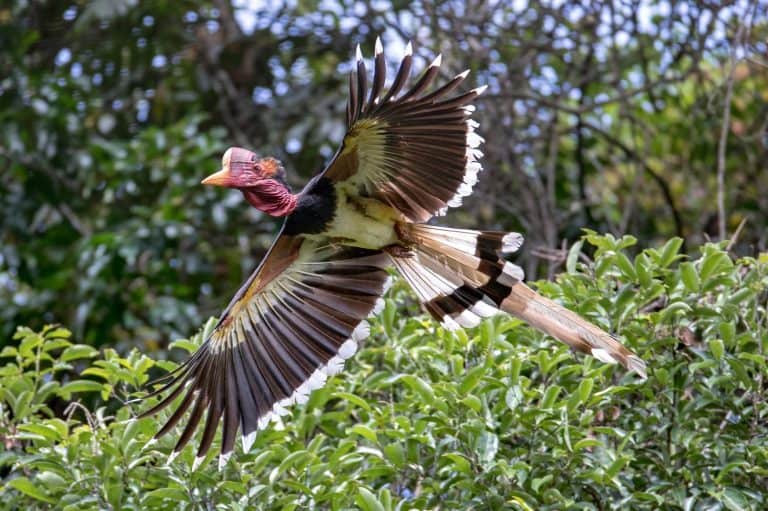
Nightjars have innate sounds, but their vocal patterns still align with humans.
©Wirestock Creators/Shutterstock.com
Before this particular study, McGill’s other research points to this concept. In a 2021 study in Current Biology, birds that had not been tutored by their parents produced individual sounds that were very different from typical birds, but the way they arranged the sounds were indistinguishable from those of normally raised birds. This research also noted that the brain mechanisms regulating breathing and vocal muscles seem to be organized in similar ways in birds and humans, which could explain some of our speech patterns.
Current Biology, 2021 Peer-reviewed
Birds that had not been tutored by their parents produced individual sounds very different from typical birds, but arranged those sounds in ways indistinguishable from normally raised birds.
Birds and Humans Speaking the Same Language
With more than 350 bird species and 52 languages in this study, it gives researchers a much broader acoustic baseline for testing than ever before. Further study is necessary to determine whether shared physical constraints explain these patterns or if there’s something else entirely.
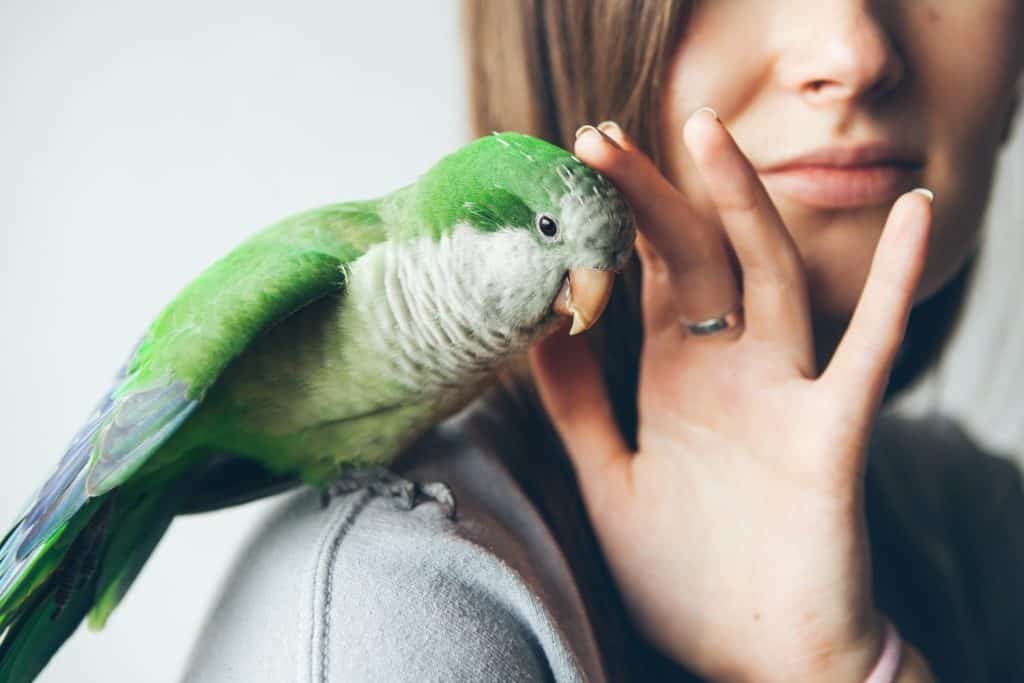
Humans and birds may be more similar than we’ve ever expected.
©Veera/Shutterstock.com
The authors of this research paper expect their next study subjects to be birds that have rarely been studied, especially those whose songs are innate. With further research, we’ll hopefully glean more about the similarities between human speech and birdsong.