
Quick Take
- The AKC only recognizes two boxer colors, yet a third exists that can't compete in shows and comes with some unexpected health trade-offs. White boxer health trade-offs →
- Every brindle boxer is technically something else in disguise, a fact whose genetic explanation is more surprising than most owners realize. Brindle genetics explained →
- People swear they've seen black boxers, but whether a purebred can actually be black is more complicated than a simple yes or no. Can boxers be black? →
- White boxers look rare, but the actual number in the breed population might surprise you. What makes a white boxer different from a true albino is equally surprising. White vs. albino boxers →
The boxer breed originated in late 19th-century Germany as a versatile hunting and working dog, developed by crossing the now-extinct Bullenbeisser with the English bulldog. Boxers were first brought to the United States in the early 1900s, but skyrocketed in popularity following World War II, when returning soldiers brought them home as family companions. Boxers are classified as a medium-to-large breed. Male boxers stand 23 to 25 inches tall at the shoulder and weigh between 65 and 80 pounds. Female boxers are significantly smaller, standing 21.5 to 23.5 inches tall and weighing 50 to 65 pounds. Boxers have only two officially recognized coat colors according to the American Kennel Club (AKC), which is typical for many purebred dog breeds. Continue reading to learn about all boxer colors, from the most common to the rarest.
Fawn
The AKC recognizes two standard coat colors for boxers: fawn and brindle. While white boxers exist, white is not considered a standard color and is disqualified from conformation shows.
The classic fawn coat is the most common color seen in the boxer breed. Fawn actually includes a wide range of shades, from pale gold or yellow-tan to deep, burnished red and rich mahogany.
Fawn serves as the base color for the breed, so even brindle boxers are technically fawn dogs with black stripes layered over the base color. Standard fawn boxers typically sport a stark black mask around the eyes and muzzle, and they are frequently seen with striking white markings on their chest, belly, and paws, which are called flashes.

Fawn boxers are the most commonly seen and the color most people associate with the breed.
©iStock.com/michael_lofenfeld
Brindle
The brindle coat is the second of the two official colors of the boxer breed. Brindle is characterized by a striking pattern of dark black stripes over a lighter fawn base.
This pattern varies widely from dog to dog, ranging from light brindle with sparse, thin stripes to reverse or sealed brindle, where the black striping is so dense that the underlying fawn coat is almost completely obscured.
Genetically, the brindle pattern is dominant over solid fawn, meaning a puppy only needs to inherit the brindle gene from one parent to display these markings. Like their fawn counterparts, brindle boxers typically feature a distinct black mask on their muzzle and often showcase flashy white markings on their chest, face, and paws.
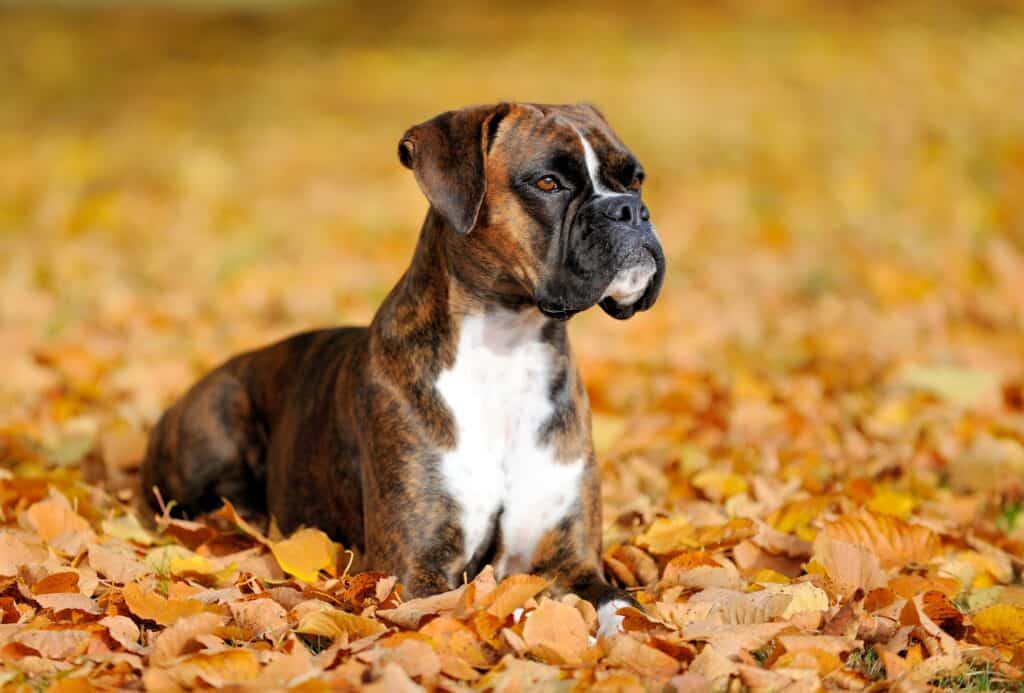
Fawn coats with black stripes are called brindle, which is a common boxer coat pattern.
©larstuchel/Shutterstock.com
The AKC breed standard specifies that the fawn color must be clearly visible, so the dogs cannot appear all-black.
White
The least common coat color for boxers is white, but it is not exceptionally rare. White boxers are less common than fawn or brindle, making up about 18% to 20% of the boxer population.
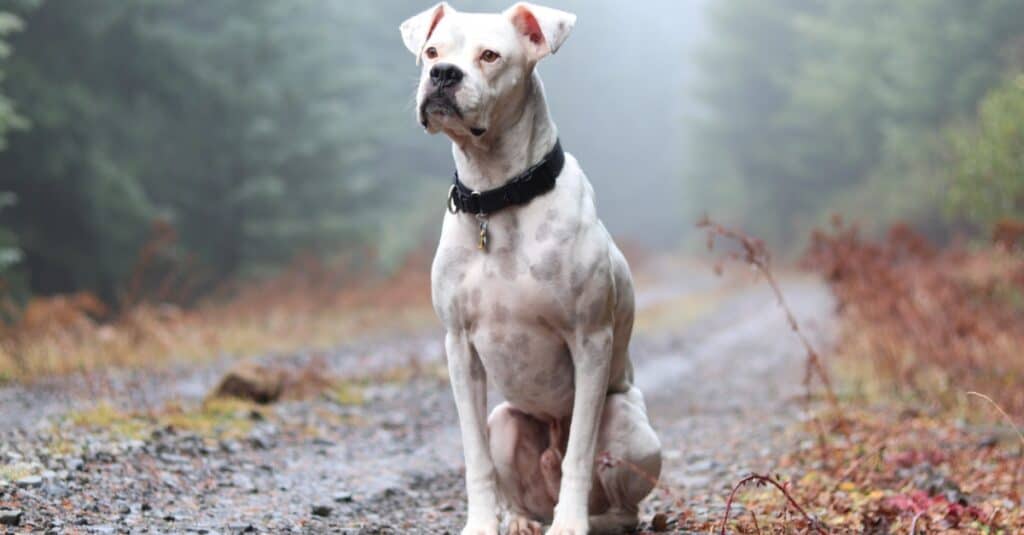
The least common coat color in boxers is white.
©iStock.com/Amanda Woldt Photography
White isn’t a standard boxer color according to the AKC. However, white boxers can still be registered as purebreds, but are disqualified from shows.
White boxers do not have more health issues than fawn or brindle boxers, but they are at increased risk of deafness and may get sunburned more easily. However, all boxers are susceptible to sunburn due to their short fur. It’s important to protect your boxer from sun damage as it can cause skin cancer.
True albinism is extremely rare in boxers. Albino boxers are the result of a rare genetic mutation. An albino boxer completely lacks melanin, resulting in pink noses, pink skin, and translucent pink or very light blue eyes.
Boxer Markings
Boxers may have white markings, known as flashes, on their faces, chests, legs, and paws. These markings should not cover more than one-third of the dog’s coat. White markings are undesirable on the flanks and back, however.

Boxers can have full black masks, as pictured above, or black masks with a white marking down the center.
©iStock.com/Brandon Anderson
A black mask is a desirable feature according to breed standards, but it is not required for all boxers. The black mask marking surrounds a boxer’s eyes and may cover the muzzle as well.
This marking may be interrupted by a white line between the eyes or even white reaching down to the muzzle.
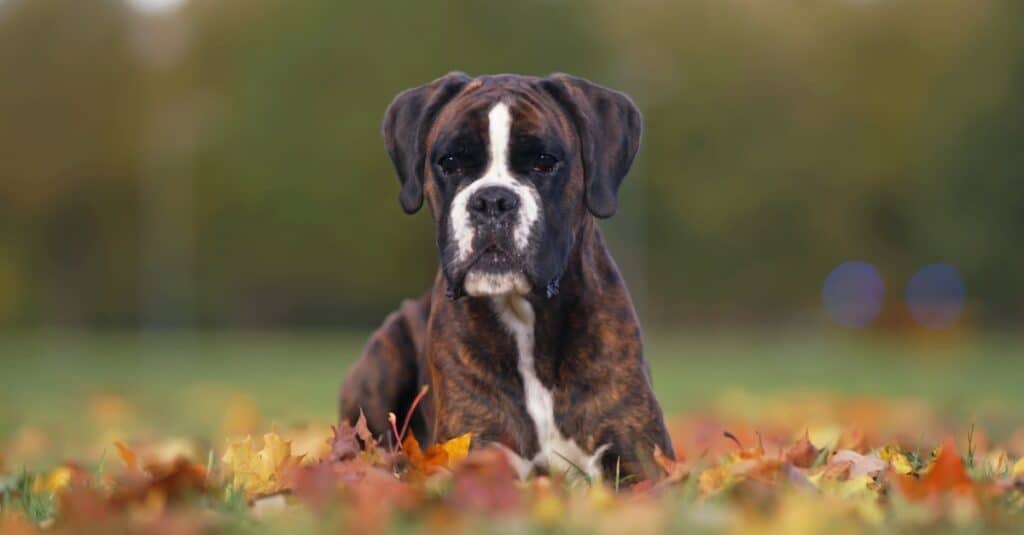
This boxer is an example of a black mask interrupted by a white stripe.
©Eudyptula/Shutterstock.com
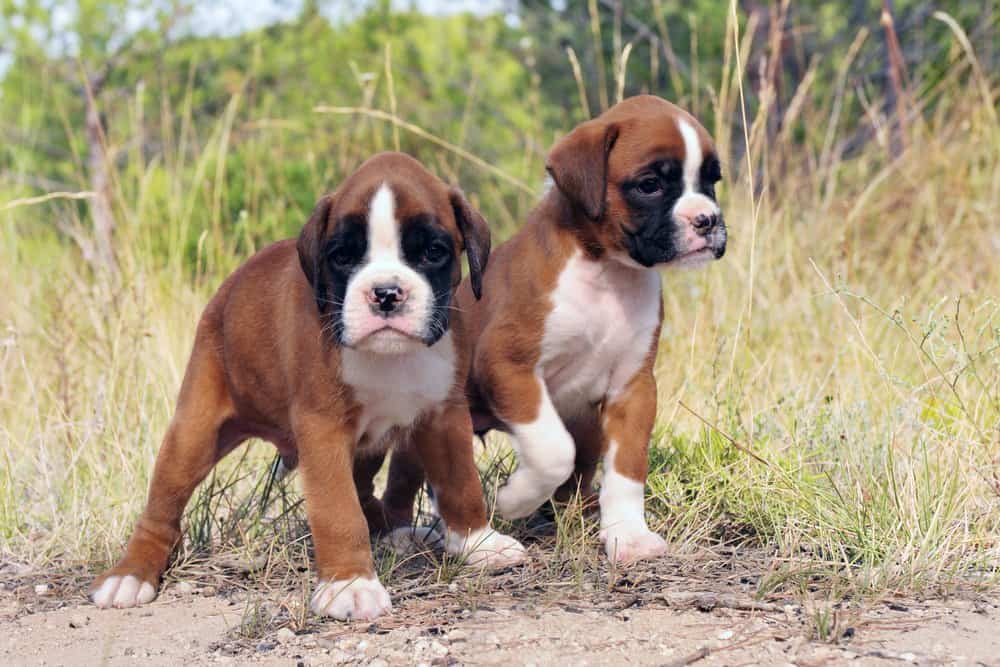
White markings are most common on the face, chest, and feet, but uncommon on a boxer’s flanks and back.
©cynoclub/Shutterstock.com
It is more common for boxers to have white markings than not.

You may see fawn markings on white boxers.
©vito natale/Shutterstock.com
Fawn markings aren’t accepted by AKC breed standards unless they are part of a brindle coat pattern, but they are possible.
Boxers with brindle patches on a predominantly white coat do not meet breed standards and are less common. These dogs have patches of brindle pattern on a primarily white coat, rather than a full brindle coat.
Can Boxers be Black?
Purebred boxers are not black but may have black mask markings on their faces. Brindle boxers also have black stripes in their coats and may even have more black fur than fawn fur–but they won’t be solid black or black with white markings as you may see in mixed breeds.
Boxer mixes may be solid black or mostly black and may look very similar to purebred boxers. These mixes may be primarily boxer or may have inherited more traits from their boxer ancestry.
Fun Facts About Boxer Coats
- Boxers have short fur, which exposes their skin to the elements. This makes them more prone to skin issues, including sunburn and allergies.
- Their coats are low-maintenance, and a quick, occasional brushing is all that’s needed to reduce shedding and keep the coat healthy.
- Boxers don’t shed heavily, which is a plus for those who dislike cleaning up pet hair!