









B
Species Profile

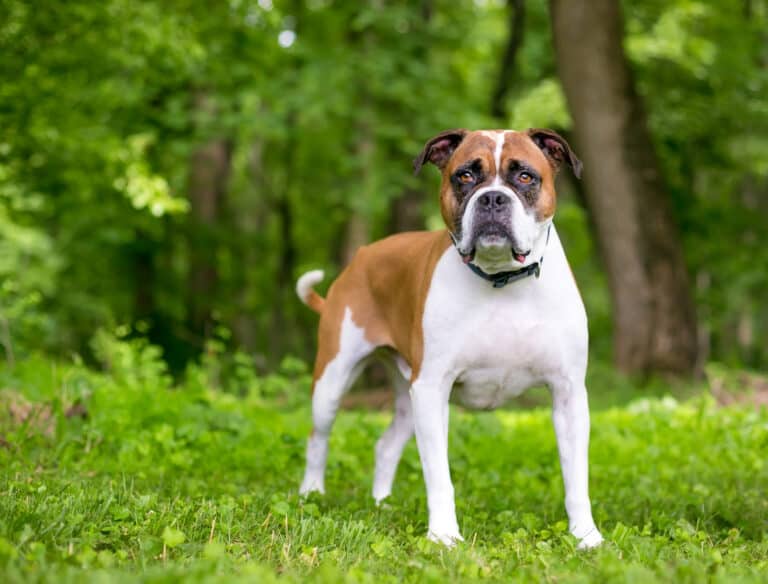
Boxer Mix

Canis lupus familiaris

Big heart, bouncy Boxer spirit
Ipek Morel/Shutterstock.com

Boxer Mix Distribution

Click a location to explore more animals from that region

Origin Location

This map shows the native origin of the Boxer Mix. As a domesticated species, they are now found worldwide.

Loading map...

Found in 1 country

Size Comparison

Human 5'8"
Boxer Mix 1 ft 9 in

Boxer Mix stands at 31% of average human height.

Bullboxer 1

At a Glance

Domesticated
Also Known As Boxer cross, Boxer crossbreed, Boxer mutt, Boxer hybrid, Boxer-type dog
Diet Omnivore
Activity Diurnal+
Lifespan 4 years
Weight 41 lbs
Status Not Evaluated
Did You Know?

Because it's mixed-breed, a "Boxer mix" can inherit a wide range of coat types, sizes, and energy levels depending on the other parent breed(s).

Scientific Classification

A domestic dog of mixed ancestry in which the Boxer (a German working breed) is a known or suspected contributor. Traits vary widely depending on the other breed(s) involved.

Kingdom
Animalia
Phylum
Chordata
Class
Mammalia
Order
Carnivora
Family
Canidae
Genus
Canis
Species
Canis lupus

Distinguishing Features

  • Mixed-breed variability; often retains some Boxer-like traits (short coat, athletic build, square muzzle, deep chest) but not consistently
  • May show brachycephalic tendency (shorter muzzle) depending on mix, affecting heat tolerance and respiration
  • Temperament commonly described as energetic, social, and people-oriented, but strongly influenced by individual genetics and upbringing
  • Size typically medium to large, but can vary with the other contributing breed(s)

Physical Measurements

Males and females differ in size

Height
♂ 1 ft 11 in (1 ft 9 in – 2 ft 1 in)
♀ 1 ft 8 in (1 ft 6 in – 1 ft 10 in)
Length
♀ 3 ft 3 in (2 ft 9 in – 3 ft 7 in)
Weight
♂ 68 lbs (60 lbs – 79 lbs)
♀ 53 lbs (40 lbs – 66 lbs)
Tail Length
♂ 12 in (10 in – 1 ft 2 in)
♀ 12 in (8 in – 1 ft 4 in)
Top Speed
28 mph
Often fast but varies

Appearance

Primary Colors
Secondary Colors
Skin Type Short, close coat like a Boxer, often one layer though some mixes have a thicker undercoat. Skin can be a bit loose with mild wrinkles and may be sensitive or allergy-prone.
Distinctive Features
  • Mixed-breed domestic dog with known or suspected Boxer ancestry; appearance and temperament can vary substantially based on the other breed(s) involved.
  • Compared with the base species (domestic dog overall), Boxer-derived mixes commonly show a more athletic, muscular, square-built outline; deep chest; strong forequarters; and a short, sleek coat when Boxer coat type predominates.
  • Head often moderately broad with a pronounced stop; muzzle length varies from short (more brachycephalic) to medium depending on mixing-shorter muzzles can increase snoring and heat/airway sensitivity.
  • Facial features may include a dark/black mask and expressive brow; lips/jowls can be looser than many other dogs, sometimes leading to drooling.
  • Ears may be natural (fold/rose) or appear semi-erect; cropping is cosmetic and not inherent. Tail length/carriage varies; docking is cosmetic and not inherent.
  • Common movement style: energetic, springy gait; strong jumping/playing drive typical of many Boxer-influenced dogs.
  • Human-associated habitat: thrives as a companion in homes; best suited to living indoors with frequent human interaction and structured activity (product of domestication and selective breeding, unlike wild canids).
  • Care requirements: needs daily exercise and mental enrichment (training games, scent work, structured play); benefits from early socialization and consistent positive-reinforcement training due to strength and exuberance.
  • Care requirements: short coat usually low-maintenance (weekly brushing), but monitor for skin irritation; bathe as needed; routine nail/ear/dental care is important.
  • Environmental care: if short-muzzled and/or short-coated, more prone to overheating-avoid intense exercise in heat/humidity, provide shade/water, and use cautious, gradual conditioning.
  • Health considerations often seen in Boxer-derived mixes (risk varies by individual): brachycephalic obstructive airway issues if the muzzle is short; heat intolerance; gastrointestinal bloat risk in deep-chested medium-to-large dogs.
  • Orthopedic risks common in medium-large mixes: hip dysplasia, elbow issues, cranial cruciate ligament injury, and general joint wear-maintain lean body condition and consider joint-friendly exercise.
  • Cardiac risks sometimes associated with Boxer lineage: arrhythmias/cardiomyopathy and subaortic/aortic stenosis-periodic veterinary screening may be advised, especially for athletic dogs.
  • Cancer risk may be elevated in some Boxer lines (e.g., mast cell tumors/other neoplasias); monitor skin lumps and seek prompt veterinary evaluation.
  • Allergies/dermatitis can be common: watch for itchiness, recurrent ear infections, and paw licking; diet trials and veterinary dermatology support may be beneficial.

Sexual Dimorphism

Typical domestic-dog sexual dimorphism: males are often larger and more muscular; females often slightly smaller with a more refined build. Degree varies widely because 'Boxer mix' is not a standardized breed and body size depends strongly on the other ancestry.

♂
  • Often heavier bone and broader head/neck when Boxer build dominates.
  • May carry more overall muscle mass and chest width.
  • Average size tends to skew larger than females within the same mix, though overlap is common.
♀
  • Often slightly smaller frame with a narrower head/neck and less pronounced musculature.
  • May appear more lightly built and agile at similar heights.
  • Heat cycles and mammary development are the primary sex-linked physical differences; spay status affects appearance and coat/weight tendencies.

Did You Know?

Because it's mixed-breed, a "Boxer mix" can inherit a wide range of coat types, sizes, and energy levels depending on the other parent breed(s).

Many Boxer-derived mixes keep the Boxer's signature "wiggle-butt" body language and exuberant greetings.

Some Boxer mixes inherit a shorter muzzle (brachycephalic traits), while others have a longer snout-this can greatly change exercise tolerance and heat sensitivity.

Boxer ancestry often contributes a strong play drive and a tendency to use the front paws during play (the classic "boxing" gesture).

Like all domestic dogs (Canis lupus familiaris), Boxer mixes are highly tuned to human cues; many excel at reading pointing and facial expressions.

Common coat colors seen in Boxer-influenced mixes include fawn/tan, brindle striping, and white markings, but mixes can show many patterns.

In shelters and rescues, "Boxer mix" is sometimes a best-guess label based on head shape and build-DNA tests can confirm or surprise.

Unique Adaptations

  • Domestication-linked social cognition: like other dogs, they're adapted for cooperative living with humans (attention to voice, gestures, and training cues).
  • Boxer lineage often contributes a deep chest and athletic musculature, supporting sprinting, jumping, and vigorous play-though exact build varies by mix.
  • Facial structure variability: mixes with shorter muzzles may have increased airway resistance; longer-muzzled mixes may dissipate heat more efficiently.
  • Short coat is common in Boxer mixes, which can reduce grooming needs but may increase sensitivity to cold and sun exposure.
  • Strong affiliative behavior toward people is common, reflecting selection in many working/companion lineages for human-focused temperaments.

Interesting Behaviors

  • "Kidney bean" body wiggles and full-body tail wags when greeting familiar people.
  • Play style that includes pawing, bouncing, and short bursts of zoomies-often followed by a dramatic flop/nap.
  • Leaning or "velcro dog" behavior: many prefer close contact and will sit on feet or press against legs.
  • Mouthy play (gentle grabbing of toys/hands) can appear, especially in young dogs; early training helps channel it appropriately.
  • Alert-but-friendly watchdog tendencies: will often bark to announce arrivals, then seek attention once introduced.
  • High sensitivity to human routines-may shadow family members and anticipate walk/meal times precisely.

Cultural Significance

A Boxer mix (mixed-breed dog with Boxer ancestry) lives with people in homes and cities and is prized for family companionship, playfulness, and loyalty. Boxers descend from German working dogs (Bullenbeisser), giving an image of athletic, devoted home guardians.

Myths & Legends

The Boxer's name is commonly linked to the breed's tendency to rear up and paw during play, resembling a boxer's stance-an enduring naming story in dog lore and breed histories.

German stories say the Boxer came from Bullenbeisser hunting and catch dogs, then became companions to butchers and workers. These origin tales make Boxer mixes seem like sturdy helpers turned family dogs.

In ancient Egyptian tradition, the jackal-headed Anubis guided souls in the afterlife; broader "dog-as-guardian/guide" symbolism often carries into how domestic dogs are culturally framed as loyal protectors.

Greek mythology tells of Cerberus, the multi-headed dog guarding the Underworld-an influential European image behind the idea of dogs as threshold guardians.

Norse myth includes Garmr, a fearsome hound associated with the realm of the dead, reinforcing the long-standing theme of dogs as watchers between worlds.

In Mesoamerican belief (including Aztec tradition), the dog-often linked with Xolotl and the xoloitzcuintli-was associated with guiding souls on their journey after death, a cultural motif that elevated dogs beyond mere animals into spiritual companions.

Conservation Status

NE Not Evaluated

Has not yet been evaluated against the criteria.

Population Stable

Life Cycle

Birth 6 pups
Lifespan 4 years

Lifespan

In the Wild
1–8 years
In Captivity
8–15 years

Reproduction

Mating System Polygynandry
Social Structure Managed Domestic
Breeding Pattern Transient
Fertilization Internal Fertilization
Birth Type Internal_fertilization

Canis lupus familiaris (Boxer mix): dogs naturally mate with multiple partners; litters can have mixed paternity. Pair bonds are brief and fertilization is internal. Humans usually control breeding (neutering, chosen mates, or artificial insemination).

Behavior & Ecology

Social Pack Group: 4
Activity Diurnal, Crepuscular, Cathemeral
Diet Omnivore Meat-forward, highly palatable foods (e.g., beef/chicken-based kibble or wet food; many Boxer mixes show strong preference for savory, high-protein items).

Temperament

People-oriented, affiliative companion/guardian profile typical of domestic dogs, often amplified by Boxer ancestry (seeks interaction, follows family members, thrives on engagement rather than independent roaming).
High-energy, playful, and often "clownish"; commonly shows bouncy movement and pawing/"boxing" behaviors. Requires daily aerobic exercise plus training games (sniffing, puzzle feeders, obedience/skills) to prevent nuisance behaviors (jumping, mouthing, destructiveness).
Social with many dogs but can be over-exuberant; may need coaching for polite greetings and arousal control. Variation: some mixes are very gregarious, others are selective or reactive depending on genetics, socialization, and past experiences.
Protective/alert tendencies are common (watchdog barking, body-blocking, territoriality). Best outcomes with early, ongoing socialization and reward-based training to avoid fear-based defensiveness.
Trainability is typically good with positive reinforcement, but many are distractible or stubborn; consistency and short, frequent sessions work well. Food and play motivation are often strong.
Boxer mix dogs with Boxer-like short faces may overheat and tire quickly, so exercise in cooler times. Watch for hip/elbow problems, skin allergies, and possible heart disease that can cause irritability.
Short-coat care is usually low-maintenance, but many need regular nail/ear care and skin monitoring. Emotional care: many do best with predictable routines, enrichment, and gradual alone-time training to reduce separation-related stress.

Communication

Barking (alerting, demand, play), often frequent if under-stimulated or under-trained.
Growls and grumbles during play or guarding contexts; important to read alongside body language.
Whining/whimpering for attention, excitement, or distress; common in highly social individuals.
Howling is variable and often less common than in some other mixes, but may appear with certain ancestry or in response to sirens.
Body language: play bows, bouncy approaches, pawing/"boxing," leaning, and whole-body wiggles; can be friendly but intense.
Facial signals: direct eye contact with soft face in affiliative contexts; lip-licking/yawning/head turns as calming or stress signals.
Mouth-based communication: mouthing during play and greeting; needs early bite-inhibition training and reinforcement of alternative behaviors.
Scent communication: urine marking and investigation; more frequent in intact dogs and in novel environments.
Thermoregulatory/respiratory signals: panting increases with excitement or heat; if Boxer-like short muzzle is present, loud snorting/snuffling can accompany arousal and may indicate overheating risk in hot/humid conditions.

Habitat

Biomes:
Temperate Forest Temperate Grassland Mediterranean Boreal Forest (Taiga) Tundra Alpine Desert Hot Desert Cold Savanna Tropical Dry Forest Tropical Rainforest Wetland Freshwater +7
Terrain:
Plains Valley Coastal Hilly Mountainous Plateau Island Riverine Rocky Sandy Muddy +5
Elevation: Up to 16404 ft 3 in

Ecological Role

Human-associated mesopredator/omnivorous scavenger (companion animal) that can also act as an incidental small-prey predator when free-ranging; compared with wild canids, diet is far more human-provisioned and behavior is shaped by training and household routines.

companionship and social support to humans deterrence/alerting (watchdog function) localized pest control via predation on rodents (when present) scavenging of edible waste in free-ranging contexts (can reduce some organic refuse, though also creates conflict risks)

Diet Details

Main Prey:
Rodents Rabbits and hares Squirrel Ground-nesting birds and eggs Small reptiles and amphibians Invertebrates Carrion +1
Other Foods:
Grasses Berries and fallen fruit Root vegetables and starchy plants Leafy vegetables Fungi Human-associated food scraps

Human Interaction

Domestication Status

Domesticated

Canis lupus familiaris (domestic dog) comes from gray wolves (Canis lupus) after thousands of years of people breeding for work and companionship. A Boxer mix is a mixed-breed dog with Boxer ancestry, often showing athletic, people-friendly traits, short coat, and a short muzzle. Humans keep them as pets, sport/working partners, therapy animals, or shelter dogs.

Danger Level

Moderate
  • Mouthy play, jumping, and accidental knocks/bites due to exuberance-more likely in adolescents or undertrained dogs
  • Defensive or fear-based biting in poorly socialized individuals or those with prior trauma (common risk factor in any dog, sometimes more represented in rehomed populations)
  • Dog-to-dog conflict risk may be elevated in some individuals depending on the other breed(s), sex, and socialization; human injury can occur when breaking up fights
  • Brachycephalic-leaning anatomy in some Boxer mixes can increase heat-stress risk; a distressed dog may react unpredictably when handled during overheating or pain
  • As with all dogs: pain/illness (e.g., ear infections, orthopedic pain) can lower bite threshold

As a Pet

Suitable as Pet

Legality: Boxer mixes are usually legal as pets, but some places have breed-specific laws or housing/insurance rules based on how the dog looks and local rules that can affect bully-type mixes. Check local rules, leases, and insurance companies.

Care Level: Moderate

Purchase Cost: Up to $2,500
Lifetime Cost: $15,000 - $50,000

Economic Value

Uses:
Companion animal Pet services market Working/sport dog (individual-dependent) Rescue/adoption sector
Products:
  • adoption or purchase fees (often shelters/rescues; sometimes private rehoming/breeders of mixes)
  • veterinary care and preventive medicine (vaccines, parasite control, dental care)
  • training/behavior services (puppy classes, obedience, behavior consults)
  • pet insurance
  • food (often moderate-to-high consumption depending on size/activity)
  • equipment (crate, leash/harness, enrichment toys)
  • grooming (generally low-to-moderate; nails/ears/skin care)
  • boarding/daycare (common due to high sociability/energy)

Relationships

Ecological Equivalents 4

Animals that fill a similar ecological role in their ecosystem

Boxer
Boxer Canis lupus familiaris Closest behavioral match because Boxer mixes often show Boxer traits: athletic, people-friendly, protective, short coat, and sometimes a shortened muzzle. Can have breathing, heat, allergy, and heart risks; needs training, daily gentle exercise, and careful management of weight and heat exposure.
American Pit Bull Terrier-type mixes Canis lupus familiaris Boxer mixes often fill the same niche: medium-large, muscular pet and guard dog, playful and short-coated. They need early socialization, treat-based training for impulse control, a secure yard, and regular exercise. A strong chest and neck can place strain on joints if overweight.
Labrador Retriever mixes Canis lupus familiaris Common mixed-breed comparison for the companion/family-dog niche and trainability. Compared with many Labrador-type mixes, Boxer-mix dogs may show more 'bouncy' exuberance and guarding/alert tendencies, while still requiring similar daily aerobic activity, enrichment, and preventive care (dental care, weight management, parasite control).
Dingo
Dingo Canis lupus dingo Ecological analogue: a free-ranging canid occupying a human-adjacent, generalist niche. Highlights the core canid behavioral toolkit—opportunistic predation and scavenging, and social flexibility—that can underlie prey drive and roaming if a Boxer-mix is under-exercised or poorly contained.

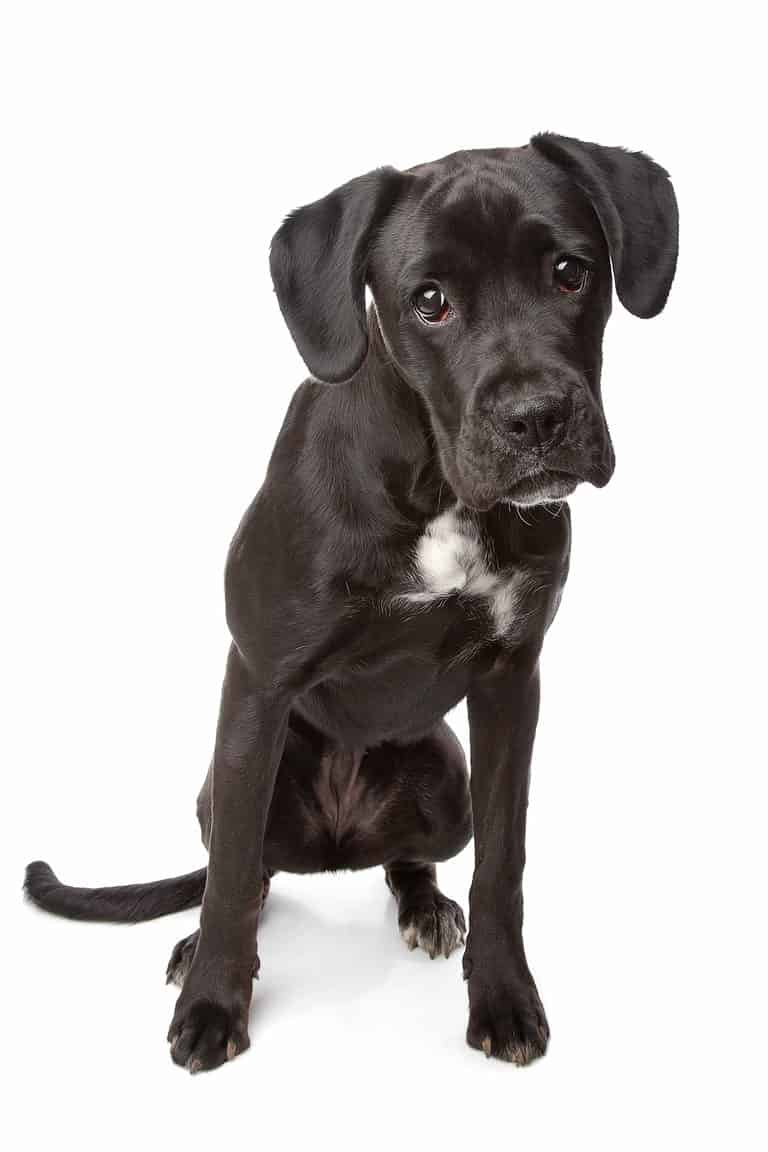
Boxers are affectionate, loyal, and high-energy dogs that need tons of attention. They’re also intelligent but have a stubborn streak. However, with the proper training, these dogs can be well-behaved. In addition, despite their intimidating appearance, they aren’t particularly vicious or aggressive.

Boxers tend to focus on their loved ones, making them good watchdogs. And, while you can count on a Boxer to let you know something’s wrong, they generally like people (including strangers), so they don’t make the best guard dogs unless trained from a young age. But by crossbreeding this pup, owners can have the best of both worlds. This article will concentrate on the Boxador, a boxer and Labrador mix. However, before delving into the Boxador’s traits, personality, and trainability, let’s look at other popular boxer mixes.

Types of Boxer Mixes

While the boxer is already adorable, mixing this dog with other breeds often produces something even cuter! Here are some of the most popular boxer breeds around.

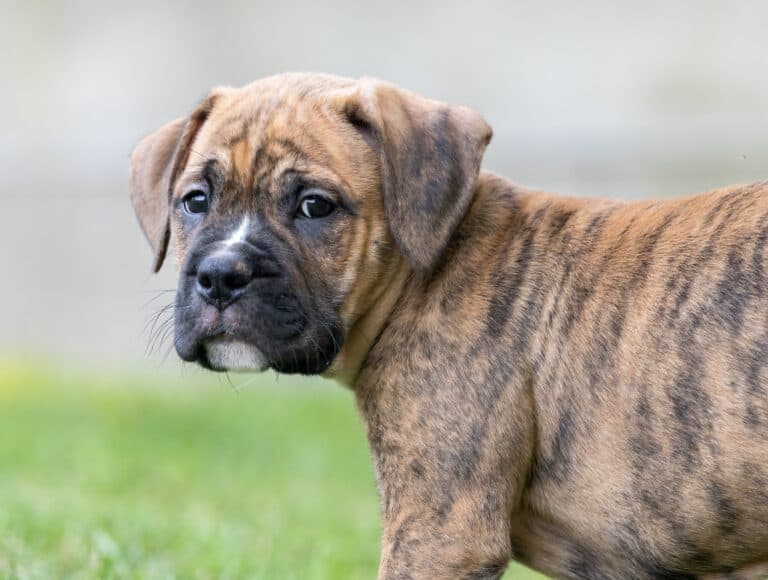
Bulloxer (Boxer and English Bulldog Mix)

Bulloxers are a mix between the boxer and English bulldog. Both breeds have interesting histories, as they were used as fighting, hunting, and working dogs. Therefore, these are two highly intelligent and incredibly athletic breeds, traits this hybrid inherits.

While boxers are generally tall and lean, bulldogs tend to be incredibly stocky and muscular. As a result, this boxer and bulldog mix often inherits the best of both their parents, becoming a lean, tall, long, and athletic canine. 
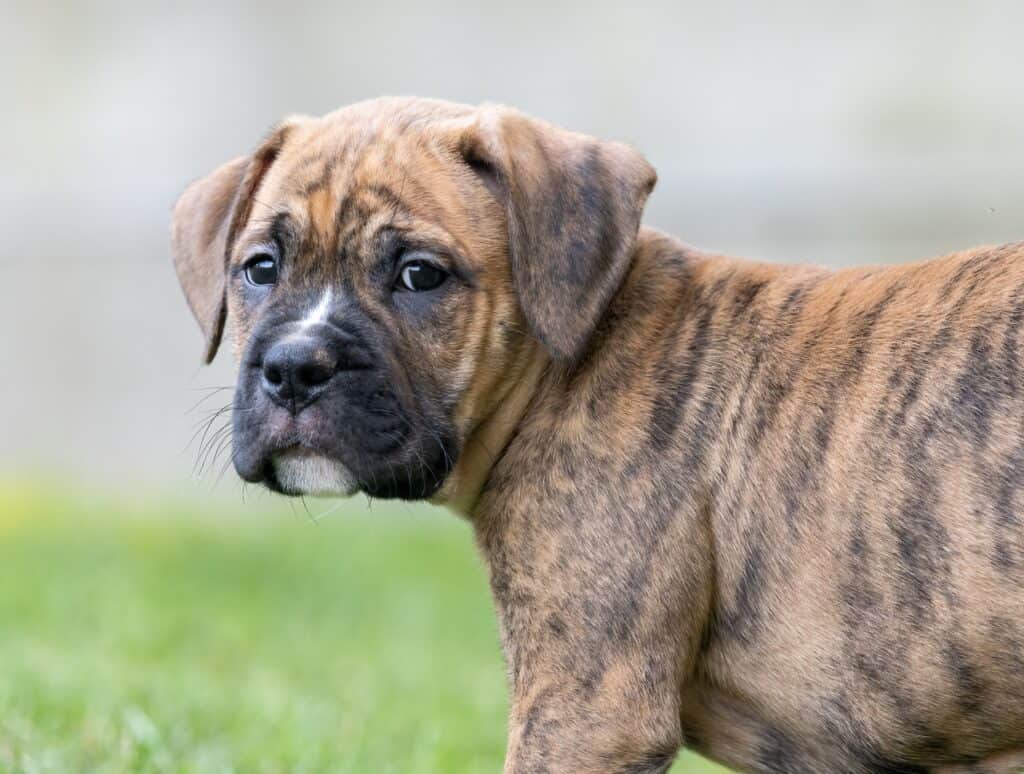
A boxer bulldog (bull-boxer) puppy

Bulloxers are a combination of a bulldog and a boxer.

Boxweiler (Boxer and Rottweiler Mix)

A Boxweiler is a cross between a Rottweiler and a boxer, so there’s no doubt they will become a large dog. They are solid and sturdy with personalities to match. These hybrids usually inherit characteristics from both parents, making them playful and protective. In addition, they make great dogs for experienced owners familiar with firm training who can give them the attention they need to stay happy and healthy. Therefore, active families with older kids are ideal for the energetic boxweiler.

Boxweiler, Rottweiler and Boxer mixed-breed dog eating corn

The Boxweiler is a cross between a boxer and a Rottweiler.

Golden Boxer (Boxer and Golden Retriever Mix)

The golden boxer breed is a combination of the golden retriever and the boxer. This hybrid can inherit its appearance from either parent breed, so it’s hard to say what it will look like once fully grown. The golden boxer is gentle, friendly, and playful. In addition, they are very tolerant, making them an excellent choice for families with children.

Boggle (Boxer and Beagle Mix)

The boggle is a cross between a boxer and a beagle. They also go by the name boxer beagle mix. This interesting boxer mix is a medium-sized dog that typically measures between 15 and 25 inches tall and weighs around 40 to 60 pounds. In addition, the boggle has a lifespan of about 10 to 15 years. This hybrid is a great family dog thanks to its cheerful, lively, and energetic nature.
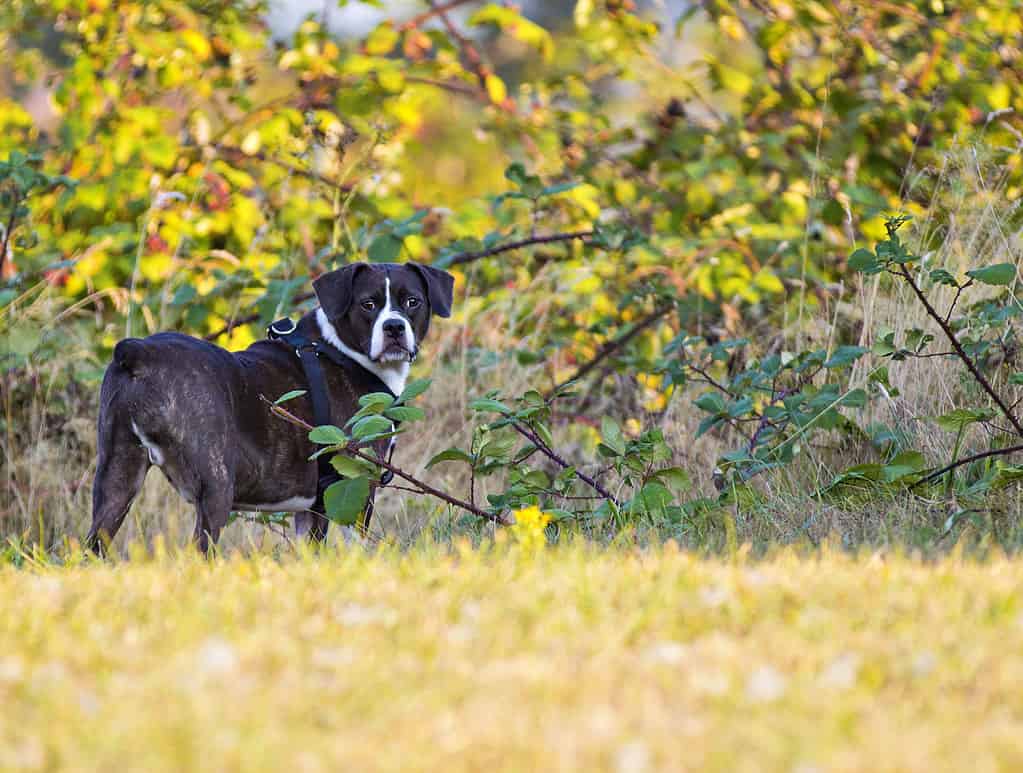
boggle

A boggle is a cross between a boxer and a beagle.

Boxita (Boxer and Akita Mix)

If you’re looking for a unique dog breed, then the boxita is the dog for you. This hybrid breed is a mix between the boxer and the Akita. As both parent breeds are large and powerful dogs who take their guarding responsibilities very seriously, the Boxita also makes a fantastic guard dog.

This high-energy breed has plenty of stamina and will exercise all day if you allow it. So, if you have an active family and are looking for a canine companion to join you, the boxita is an excellent choice. However, this hybrid is not for everyone due to its large size, high energy needs, and protective nature, so they need an experienced dog owner for training.

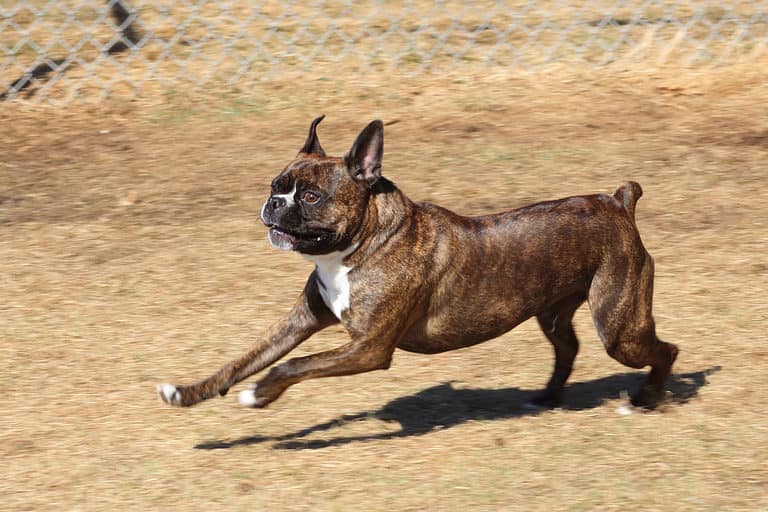
Miniature Boxer (Boxer and Boston Terrier Mix)

These beautiful boxer mixes are social creatures that do well with children and other animals. While miniature boxers aren’t usually aggressive, they are devoted to their families and can be incredible guardians if they feel their loved ones are under threat. Therefore, you can depend on this hybrid if your family is ever in danger. Because of their social nature, they love to be part of family activities. However, the only downside to this breed is that they don’t do well when left alone for long periods, and their separation anxiety can lead to destructive behavior.
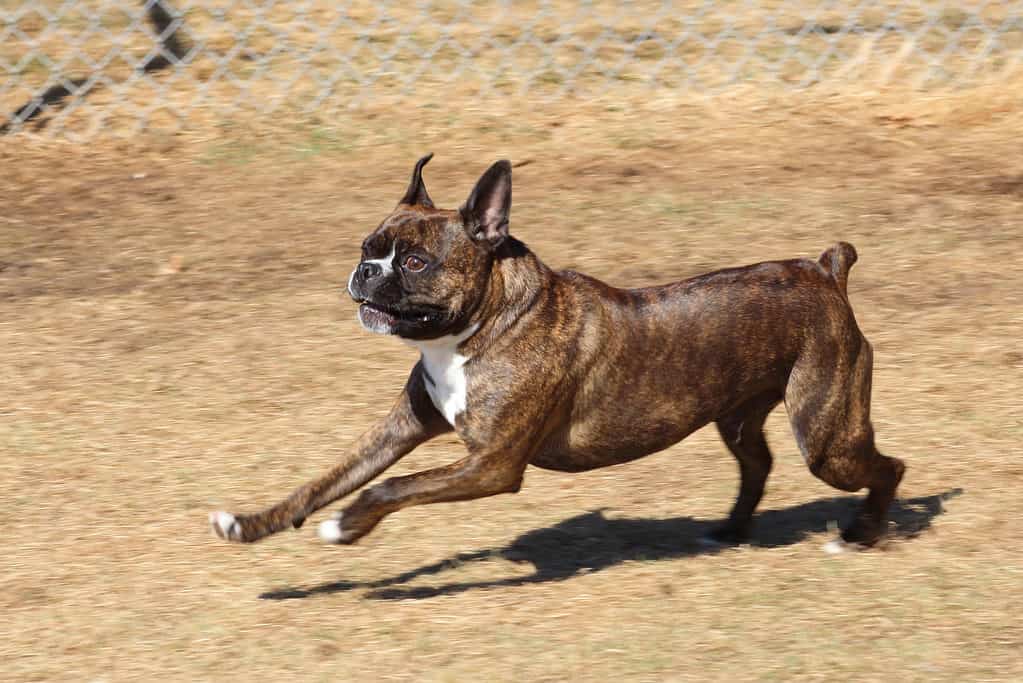
Miniature boxer running

Miniature boxers are a cross between a boxer and a Boston terrier.

Pros and Cons of Owning a Boxer Mix

ProsCons
The boxador is highly intelligentThese hybrids are heavy shedders
They are easy to trainThey love their food but are prone to obesity
The boxador is relatively low-maintenanceBoxadors suffer from separation anxiety if left alone for long periods.

The Best Dog Food for a Boxer Mix

Boxadors need a diet formulated for medium to large-sized dogs or dog food for an active breed. They are prone to excessive weight gain if overfed, so do not free-feed them. Instead, give them three to four smaller meals daily. In addition, treats should only be given in moderation. Furthermore, this boxer mix’s dietary needs will change from puppy to adult and eventually senior, so choose a dog food specifically formulated for their age. Therefore, you should ask your local veterinarian about your boxador’s diet, as there is a wide variation between mixed breeds, including their weight, energy levels, and health, and you will need a specific recommendation.

Size and Weight

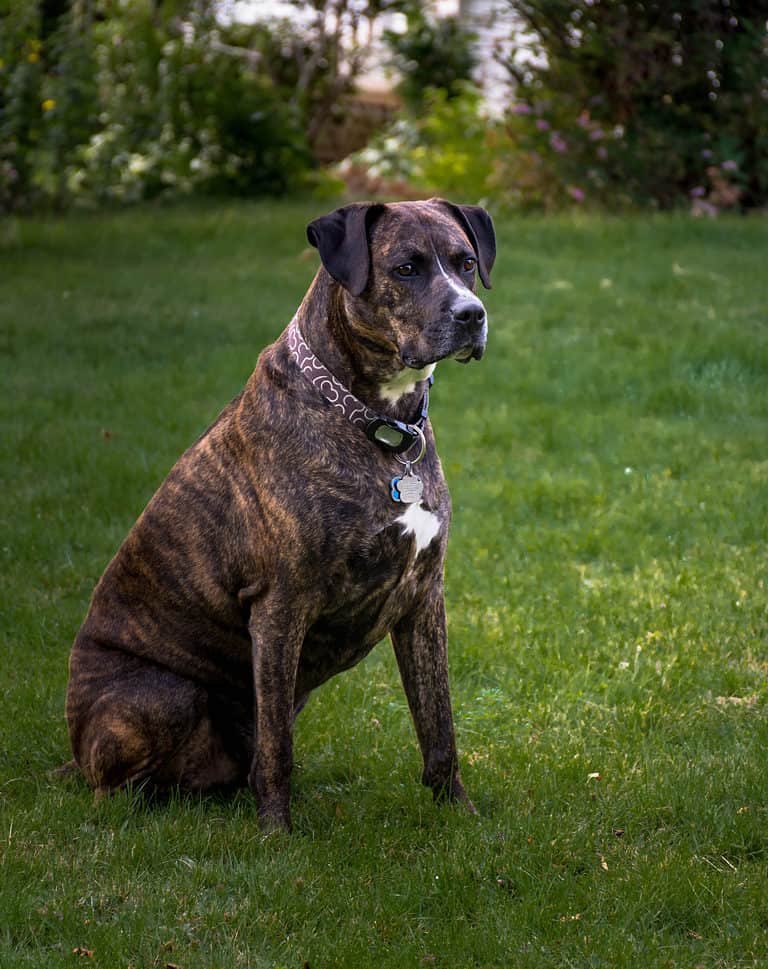
The boxador is a relatively new hybrid, so there are few regulations regarding its size. However, they are a cross between a boxer and a Labrador retriever, so you can expect them to be medium to large-sized dogs.

Most boxadors weigh between 50 and 110 pounds, and their height ranges from 23 to 25 inches at the shoulder. However, depending on which parent breed they take after, they can be smaller or bigger. In addition, boxador males are generally larger than females.

Boxador lying down

Boxadors are medium to large-sized dogs.

Common Health Issues

This boxer mix is exposed to the same conditions that the Boxer and Labrador face. While they are generally healthy, some may be prone to a few health issues, so it is essential to take good care of them and visit your trusted veterinarian regularly for check-ups.

Some common boxador health problems may include:

While it’s great to spoil your canine, excessive treats can lead to obesity, so keeping their weight stable is one of the best things you can do for your dog. Instead of rich food, treat your boxador with healthier foods like carrots and celery.

Life Expectancy

If cared for properly, boxadors can live for 10 to 15 years.

Temperament

A boxador can inherit its temperament from either parent breed. However, they are generally intelligent but can exhibit the boxer’s stubbornness, which makes training challenging. So, some boxer mixes are eager to please, while others will need time to ease into things. But either way, training from a young age is vital.

Boxadors are usually energetic and playful. These hybrids do well with larger families and plenty of playtime. However, they can also suffer from separation anxiety, so the boxador will thrive with families who have tons of free time to spend with them. But, if left alone for extended periods, they start to exhibit destructive behavior, so someone must be home full-time until they are properly crate-trained.

These dogs should get along with most pets as they don’t have very strong prey instincts, so if you have a cat, this might be the dog for you. However, boxadors have been known to be aloof around other dogs, but if socialized from a young age, it’s possible to curb this behavior.

How to Take Care of a Boxer Mix

Taking care of this boxer mix is not hard for active families. They have very few grooming needs and mainly require lots of exercise. However, this does not mean they don’t require any care.

Grooming

Luckily, boxadors’ coats are very easy to groom. A good brushing once a week is more than enough. In fact, they are very hygienic dogs and generally clean themselves.

Due to their short coats, the boxador is not suited to extreme weather and will require a doggie jersey if exposed to freezing temperatures during the winter. Additionally, they are susceptible to the sun’s powerful rays during the warmer months. Therefore, they will need sunscreen specifically formulated for dogs, especially on their ears, noses, tummies, and areas with little-to-no fur.

Training

Like most canines, Boxadors need early socialization — for example, exposure to various people, sounds, sights, and experiences from a young age. By socializing your Boxador, you ensure they grow up to be well-rounded, friendly, and outgoing.

This hybrid is highly intelligent and eager to please its loved ones, which makes training them a breeze. However, they always need to know who’s boss and respond best to positive reinforcement.

Exercise

The boxador has moderate to high energy levels because they are working dogs and always need something to do. Therefore, they need at least half an hour of exercise every day, including a high-powered walk, a game of fetch, or any activity that gets your pup panting. While these sessions should take place twice a day, the boxador will also find time to engage in light play throughout the day. In addition, these hybrids need a large fenced yard where they have space to run and explore. Furthermore, because of their intellect, they need a lot of mental stimulation. You can keep their minds sharp with obedience training, puzzle toys, and even games like hide-and-seek. This is also an enjoyable way to get children to bond with the boxador. However, adults should always supervise these bonding experiences. If your boxer mix is getting a lot of exercise but still has bundles of energy, they need more mental stimulation.

Puppies

Boxadors can produce a litter size of four to nine pups. These puppies are as energetic as their parents and can be quite a handful.

Cost

This boxer mix can cost between $200 to $500. The price will depend on the breeders, location, and pedigree. However, finding a boxador in a shelter might be possible. You can ask them to call you if they ever come across one. Additionally, you could approach boxer and Labrador rescues, as they often rescue these respective breeds’ hybrids as well.

Boxer Mix and Children

While boxadors are tolerant and great with children, it’s essential to teach kids how to interact with dogs, and an adult should always supervise play sessions to prevent bad behavior on both parts. Additionally, the boxador is excellent with other dogs and cats. It’s essential to teach children never to approach a dog when they are at their food bowls or try to remove the food from the dog.

View all 453 animals that start with B

Sources

  1. The Labrador Site / Accessed December 30, 2022
  2. Love Your Dog / Accessed December 30, 2022
  3. Daily Paws / Accessed December 30, 2022
Chanel Coetzee

About the Author

Chanel Coetzee

Chanel Coetzee is a writer at A-Z Animals, primarily focusing on big cats, dogs, and travel. Chanel has been writing and researching about animals for over 10 years. She has also worked closely with big cats like lions, cheetahs, leopards, and tigers at a rescue and rehabilitation center in South Africa since 2009. As a resident of Cape Town, South Africa, Chanel enjoys beach walks with her Stafford bull terrier and traveling off the beaten path.
Connect:

Thank you for reading! Have some feedback for us?


Boxer Mix FAQs (Frequently Asked Questions)

German, English, and American boxers.