Quick Take
- African wild dogs have one of the highest hunting success rates of any predator on Earth, and yet they're still vanishing. Discover the human threats →
- Wild dog packs use a bizarre democratic ritual involving sneezes to make group decisions before a hunt. Explore their social rituals →
- Unlike nearly every other apex predator, African wild dogs almost never fight over food, and the reason behind this behavior reveals something unexpected about their social hierarchy. See how they share food →
Did you know that August 26 is World Wild Dog Day?
Today, only about 6,600 African wild dogs (Lycaon pictus) remain in the wild, with only about 1,400 of those being mature adults. These animals face a variety of threats, including human persecution, disease, and habitat fragmentation. Thankfully, conservation efforts are in place to help protect the endangered creatures. This celebratory awareness day helps highlight the wonder of wild dogs and the ongoing threats they face.
In honor of their dedicated international day, let’s learn more about these remarkable yet misunderstood pack hunters and all their unique features. Additionally, stick around until the end of the article for information on conservation—and how you can help.
Continue reading
African Wild Dogs: Remarkable Pack Hunters
African wild dogs are often referred to as painted dogs or painted wolves, thanks to their mottled brown, black, yellow, and white coats. Native to sub-Saharan Africa, they’re the largest wild canine species in Africa. However, they are facing a massive population decline.
These wild dogs are highly social creatures and remarkable pack hunters. In fact, their hunting success rate is between 60%-90%, according to Global Conservation. This makes them incredibly important for population control within Africa. Using their high stamina and cooperative pack efforts, they rally together before chasing, tiring out, and isolating their prey. While they’re incredibly fast, these animals rely on their endurance to take down victims. Pack members take turns chasing their prey, sometimes persisting for hours until the animal is exhausted.
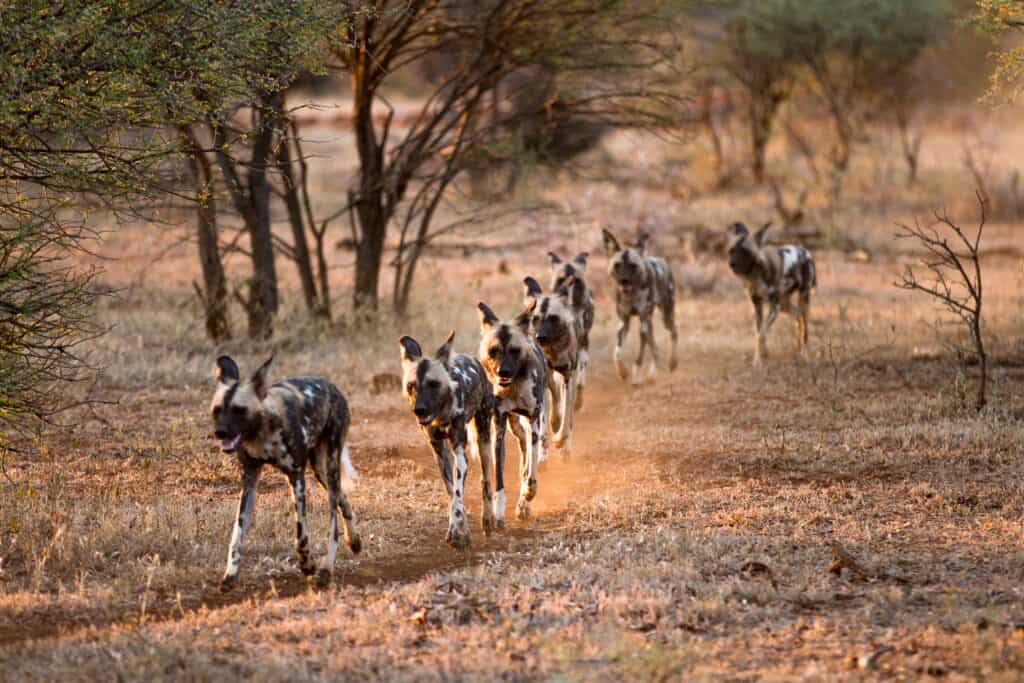
African wild dogs hunt in packs, using their stamina and cooperative behavior to their benefit.
©charles Hopkins/Shutterstock.com
In terms of appearance, African wild dogs have large, round ears and mottled coats. They are medium-sized with long legs, weighing an average of 53 lbs. On average, they stand 2 ft 2 in tall at the shoulder and measure 4 ft 2 in long. These dogs also have massive, sharp premolars that help them consume prey. Unlike other canids, they only have four toes per foot.
The Complex Social Structures of African Wild Dogs
As noted before, African wild dogs are highly social creatures. These animals live in packs of between five and 20 members, each with a dominant, monogamous male and female breeding pair. Pack members engage in various social rituals, such as pre-hunt rallies and “sneeze votes” to decide when to hunt. They are rarely aggressive with one another, but they will work as a team to take down prey. These apex predators engage in group hunting within their highly coordinated packs.
Young females leave their packs to start or join new ones, while males typically remain in their birth packs. Adult pack members work together to raise and protect pups and take care of vulnerable members. Their behavior is nurturing and family-oriented. In fact, they don’t even tend to fight over food. Often, they will prioritize vulnerable members first, so competition within packs is uncommon.
Members of unrelated packs may become competitors if they encroach on each other’s territory, while related packs often share overlapping territories peacefully.
African Wild Dogs Conservation Efforts
As stated earlier, African wild dogs are classified as Endangered by the World Wildlife Fund and the IUCN Red List. As of June 2025, their population was still declining. Around 6,600 African wild dogs are left in the wild, with only 1,400 of them being mature.
There are many reasons for the declining population of wild dogs, most of which are caused by human activity. Some of their top threats include habitat loss and fragmentation, human-animal conflict, diseases like rabies and distemper from domestic dogs, poaching, hunting competition, and more.
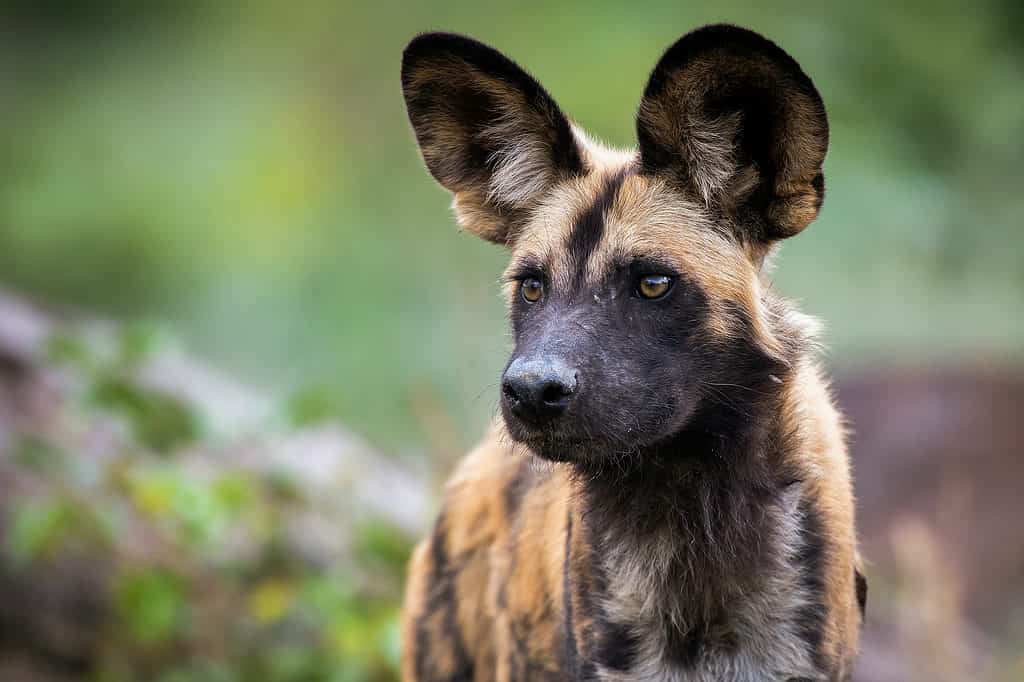
Wild dogs hunt in packs so they can take on larger animals.
©Richard Juilliart/Shutterstock.com
With so many pressing concerns, it’s no wonder their population is declining. Thankfully, many individuals and groups (like anti-poaching teams and community members) have put many conservation strategies into place to help address their endangerment. Efforts such as intentional relocation and vaccinating domestic dogs are steps in the right direction.
African wild dog conservation isn’t just important for the dogs themselves. These animals play an important role in maintaining the continent’s ecosystem. As apex predators, they target vulnerable prey—such as animals that are old or sick—which helps control prey populations.
In honor of World Wild Dog Day, consider ways you can help support the conservation of this endangered species. Donate to conservation groups like Painted Dog Conservation, mitigate human-wildlife conflict when applicable, support eco-tourism, and spread awareness in ways that feel right to you. Take advantage of World Wild Dog Day to inform others of this beautiful apex predator and their contribution to Africa’s ecosystem.