
Quick Take
- Unlike nearly every other penguin species, the hoiho refuses to breed in a colony, and that unconventional choice comes with a hidden danger most people wouldn't predict. Discover solitary nesting →
- A single wrong move by a nearby human can trigger a chain reaction that leaves hoiho chicks starving, and most visitors have no idea they're causing it. See human disturbance risks →
- Introduced predators have been capable of wiping out an entire hoiho breeding area in a single season, and the species' own nesting strategy is part of the reason why. Explore predator vulnerability →
- The hoiho population has been shrinking for decades, and the most recent count suggests the window to reverse that trend may be closing faster than anyone expected. See the population decline →
As September rolls around in New Zealand, winter gives way to spring, and something wonderful begins: The breeding period for the yellow-eyed penguin. Also known as the hoiho, this penguin species is found only in one place on Earth, making it one of the rarest penguins in existence. For the hoiho, the arrival of spring means returning to familiar nesting territories, reconnecting with a mate, and preparing for the arrival of a new generation. This may seem like standard operating procedure for many bird species, but the hoiho has a breeding strategy that sets it apart from many other penguins.
Rather than gathering by the hundreds or thousands in noisy colonies, yellow-eyed penguins are solitary breeders. A pair may establish its nest in vegetation near the coast, hidden from view and separated from neighboring penguins. This unique breeding technique is intriguing, but it’s also a bit dangerous. Since they don’t breed near other penguins, it can be easier for people to walk too close to the nest or for a predator to stumble across it. Plus, there may be a shortage of food near the nest. Let’s dive deeper into this unique species and the challenges it faces today.
A Truly Unique Penguin
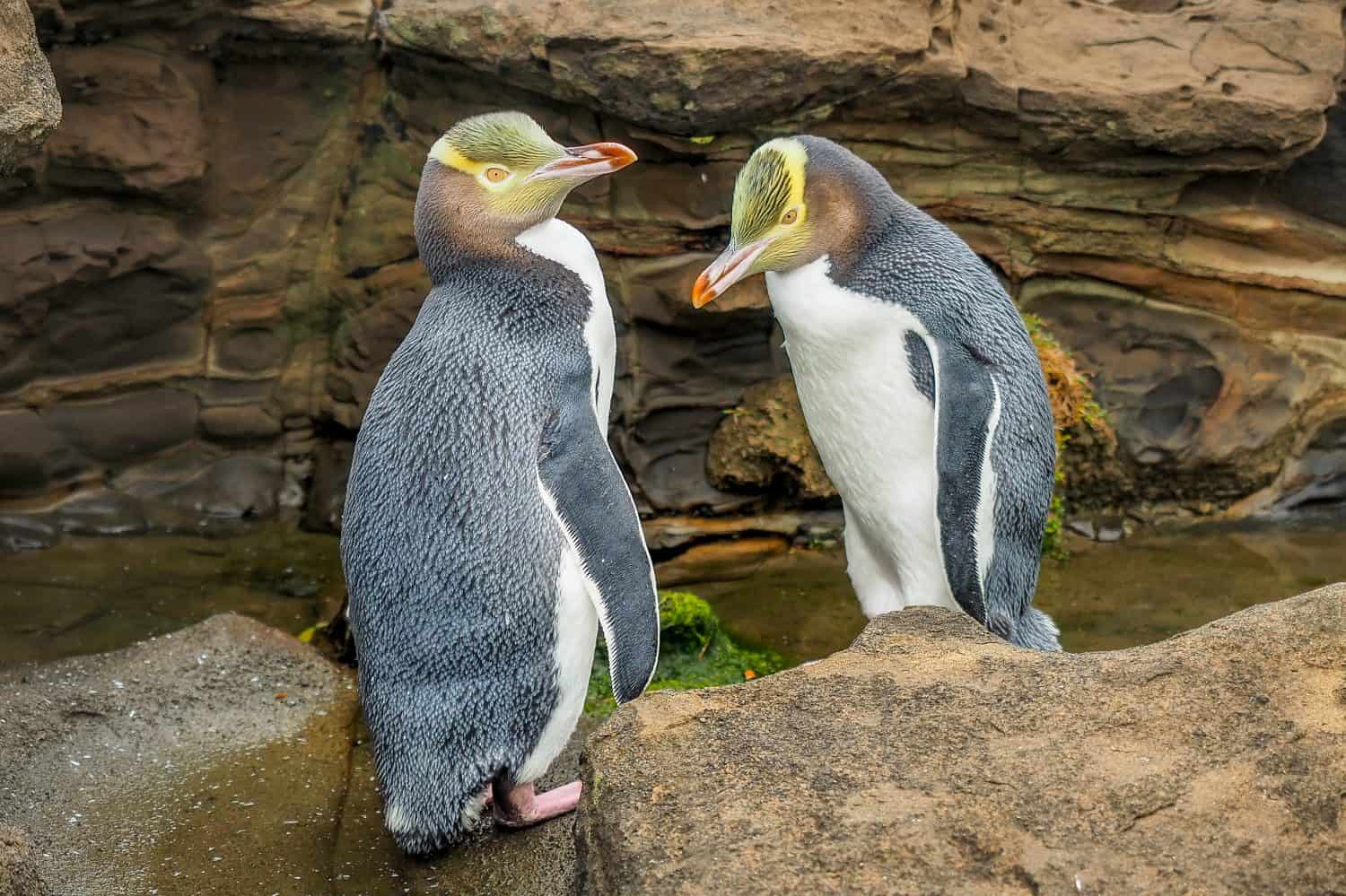
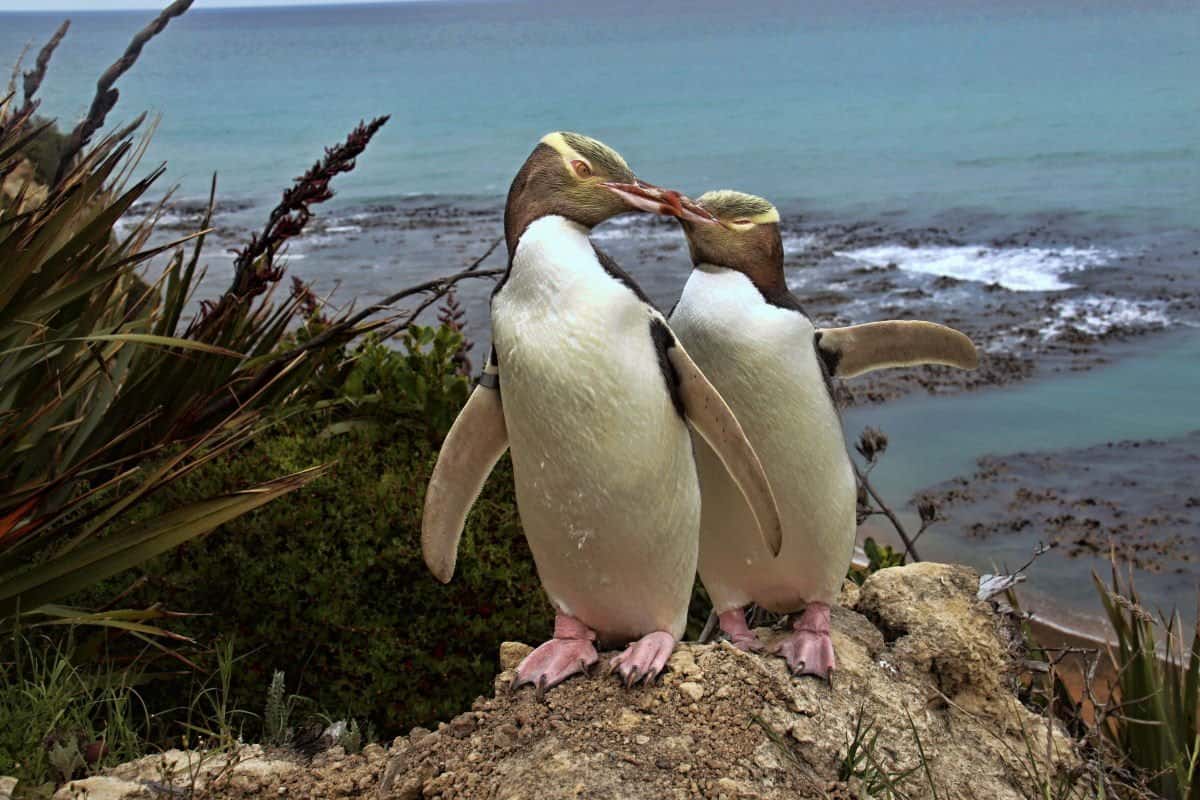
Yellow-eyed penguins are very unique and located only in one country, so they must be protected.
©Robert CHG/Shutterstock.com
The uniquely named yellow-eyed penguin gets its name from its distinctive yellow eyes and a yellow band of feathers that extends around the back of the head. Its other name, hoiho, is a Māori name meaning “noise shouter,” due to the distinctive sound it makes near its breeding sites.
The hoiho likes to breed in solitude. It typically nests in vegetation, often in a coastal forest or similar area with dense vegetation. Though they are colorful birds, they build modest nests, which observers often describe as a smooth bowl of bare dirt built up with twigs, grass, and leaf litter.
The bird nests in vegetation primarily for privacy. However, this setup offers other benefits. Dense vegetation can provide shelter from the elements and help conceal adults, eggs, and chicks. It can also reduce direct competition with neighboring pairs.
The disadvantage is the lack of safety in numbers. A traditional colonial penguin species may have thousands of adults in one location. However, a solitary breeder like the hoiho has fewer neighbors available to provide collective protection or warning. A single predator entering a nesting area can pose a danger to eggs or chicks.
The New Zealand Department of Conservation notes that introduced mammals such as stoats and ferrets are major threats to mainland chicks. Cats can also prey on young birds, while dogs can kill both chicks and adults. DOC notes that introduced predators have even been capable of wiping out a breeding area in a single season. These constant threats are why this species is considered one of the rarest penguins in the world.
Two Eggs and a Long Wait
Once penguins find a breeding site, they settle in and lay their greenish-white eggs, typically two at a time. Next, the penguins undergo the most time-consuming part of the process: incubation. Incubation lasts roughly six weeks, and both parents take turns sitting on the eggs. Hoiho are marine predators, and they cannot simply stop eating for the entire incubation period. While one parent watches the eggs, the other heads out to forage, then they switch roles.
During the six-month incubation period, the eggs must remain warm and protected. The adults must exchange incubation duties without leaving the eggs vulnerable for too long. The foraging parent must find enough food to maintain its own condition and eventually return to feed its partner. Weather can also make foraging and surviving more difficult. In the end, the lives of these penguins depend on the conditions along the coast and far beneath the surface of the ocean.
The Eggs Hatch
During the first several weeks after hatching, hoiho chicks remain closely guarded. One parent stays with the chicks while the other goes fishing, and the adults take turns providing food. This is commonly referred to as the guard stage, and it typically lasts 40 to 50 days. When a returning parent arrives, the adults engage in a distinctive greeting involving calls and trills before feeding the chicks.
Eventually, the chicks grow large enough that both parents must spend more time at sea finding food. By roughly six or seven weeks old, young hoiho have become demanding eaters, requiring both adults to make regular feeding trips. The penguins, which are born covered in soft brown down, lose this layer of feathers and prepare for life beyond the nest.
Threats to the Rarest Penguins
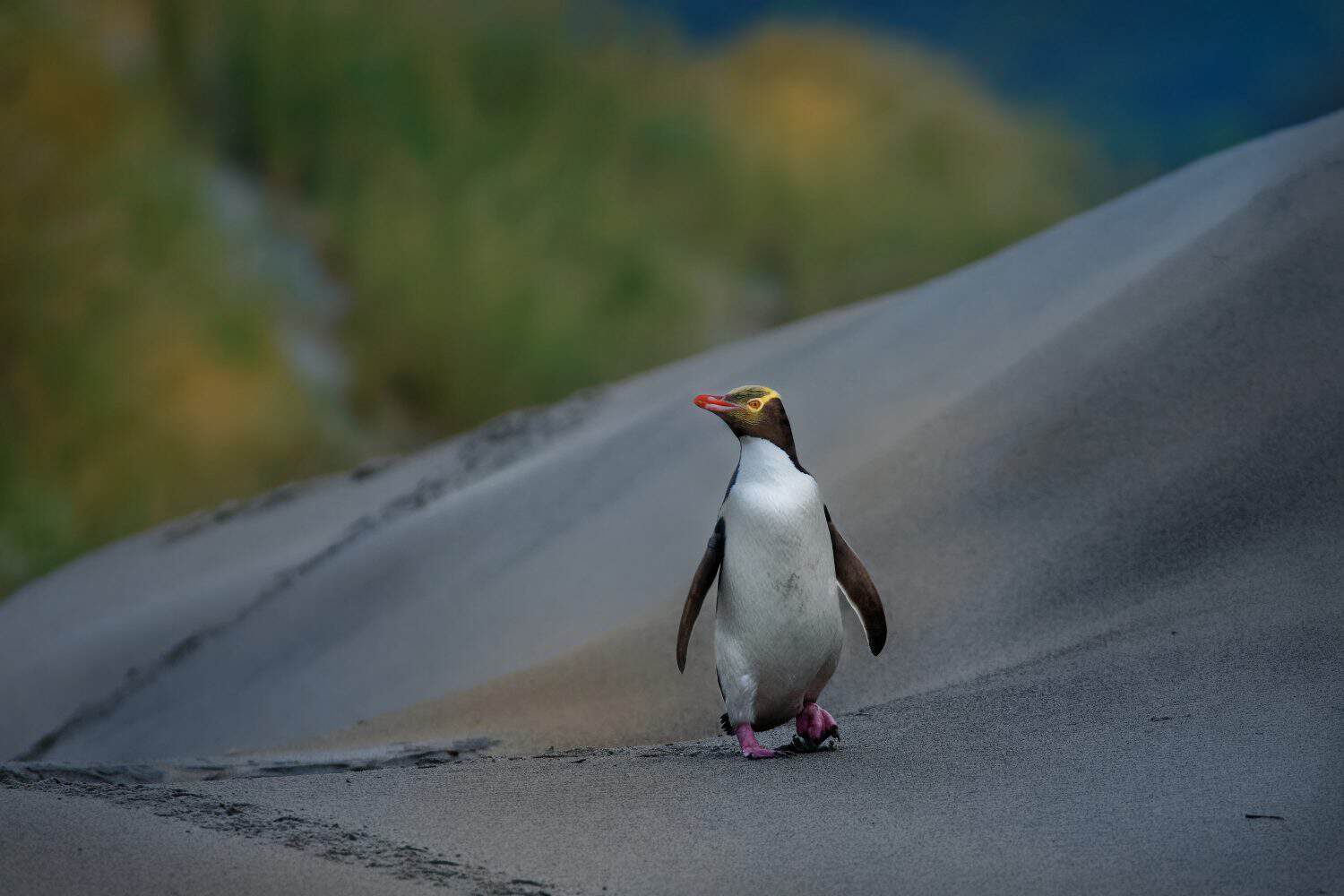
The hoiho penguins face many threats so learning more about them is a key to their survival.
©Martin Pelanek/Shutterstock.com
Because of environmental threats and their nesting behaviors, the yellow-eyed penguin has faced a dramatic decline over the years. The NZ Department of Conservation reports that in 1999, there were approximately 741 breeding pairs in the area. By 2019, that number had dropped to 265 pairs. Recently, in 2025, experts found only 143 known nests in the northern population. Experts warn that without a major turnaround, the hoiho could become locally extinct on the mainland within two decades. Let’s elaborate further on some of the threats to these rare penguins.
Food Availability
One of the biggest challenges facing mainland hoiho is finding enough food. The birds depend on marine ecosystems for fish and other prey, and changes in the ocean can profoundly affect their survival. While some blame global warming, local fisheries also pose a threat. Tactics like bottom trawling can trap the birds and cause them harm.
Predators, Habitats, and Humans
For a long time, New Zealand’s hoiho population had few natural predators. However, introduced animals like stoats, ferrets, dogs, and cats have threatened both adults and eggs. To address the problem, conservationists have been working hard to trap and control predators near breeding habitats.
Habitat loss is another major concern, but conservationists are on the case, actively planting native vegetation to restore areas of habitat that have been lost or degraded. Improved fencing also prevents livestock from trampling nests.
Humans could also be considered a form of predator. While catching a glimpse of one of the world’s rarest penguins is truly something for the bucket list, experts in the area recommend people stay at least 50 meters away and use binoculars instead of approaching the birds. If the yellow-eyed penguin is searching for food and sees a human nearby, it may abort the mission, and as a result, its chick could go hungry.
An Important Breeding Season
The yellow-eyed penguin’s breeding season in New Zealand is extremely important. By giving the bird space and supporting conservation projects, people around the world can help ensure many more years for this solitary nester.