
Quick Take
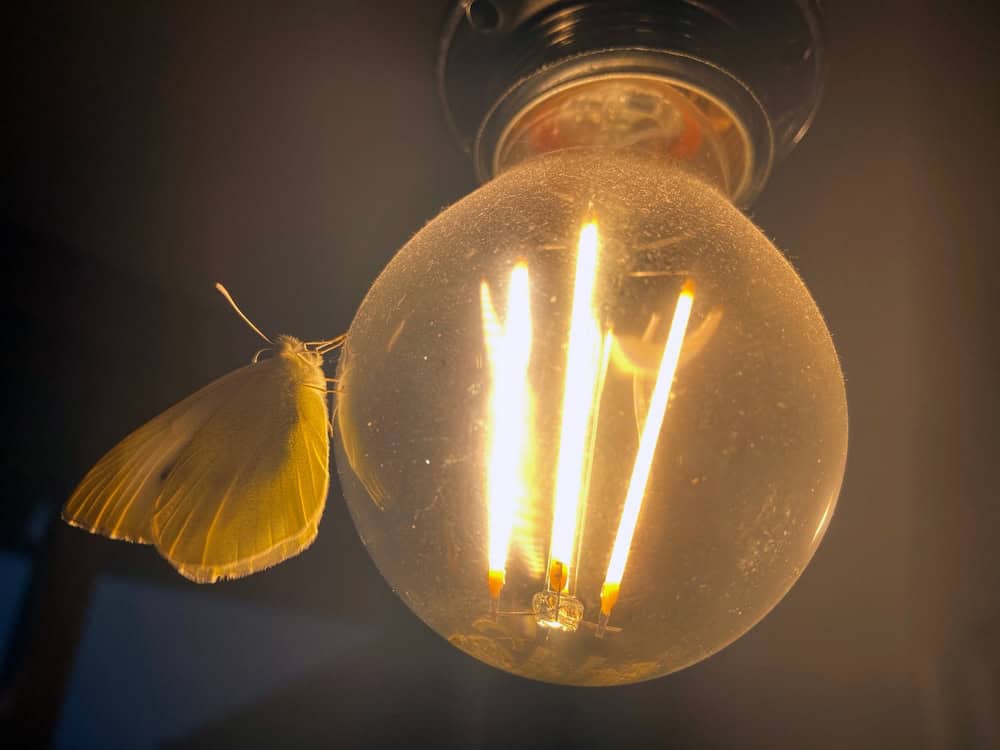
- Not all moths are attracted to light, but many are, as are many other flying insects.
- Over the years, there have been several theories to explain this, including attraction to infrared and making an attempt to escape.
- New research has confirmed that moths orient themselves with their backs (dorsal sides) towards light, which would usually be the night sky.
- When they try to do this to an artificial light, they get stuck in an endless right-angle path and are effectively trapped.
The concept of moths being attracted to light is so established that it’s found in poems, song lyrics, and folklore. These days, moths fly around lightbulbs, but in the past, it would be a naked flame; if they got too close, they died. One myth claimed that if a moth lands on a lamp and extinguishes the flame, it indicates that someone in the home will die! Their attraction to light can also be useful. Artificial light has been used to trap insects since at least Roman times, based on the earliest written records. But, until recently, science had failed to explain exactly why moths appear to find light so irresistible. Some new research may have changed that.
Are All Moths Attracted to Light?
Moths that are attracted to light are described as positively phototactic, but not all of them behave in this way. For example, some moth species are much less attracted to light than others. Clothes moths such as Tineola bisselliella typically avoid light and stay in dark areas, while Indianmeal moths (Plodia interpunctella) are often attracted to lights indoors. These moths tend to be weak flyers and spend their time hiding away in dark areas of your house.
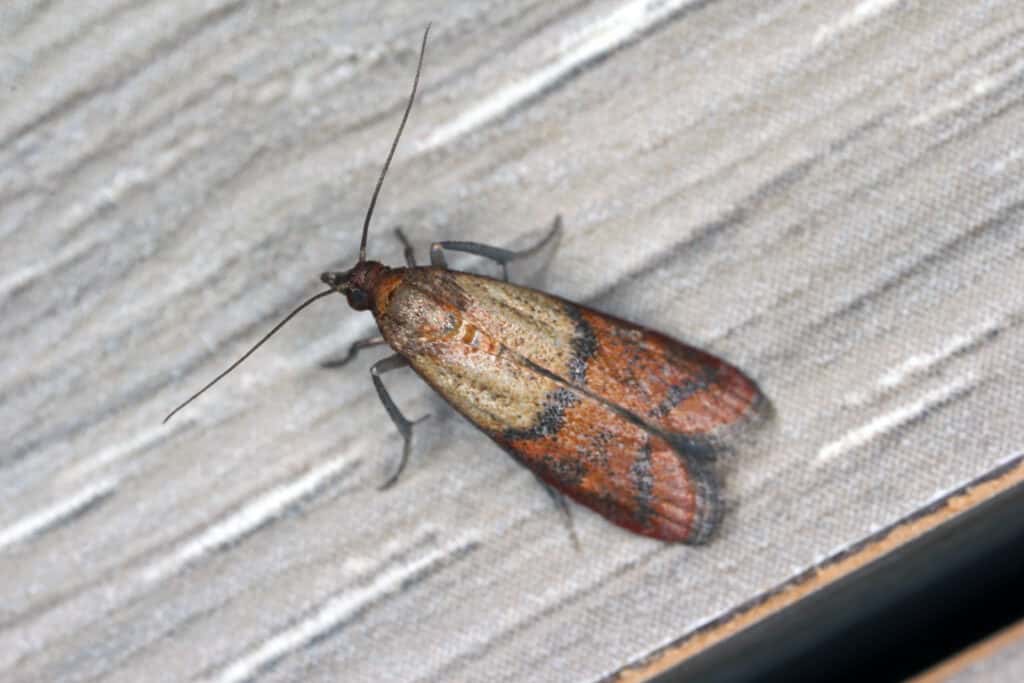
Indianmeal moths are not attracted to light.
©Tomasz Klejdysz/Shutterstock.com
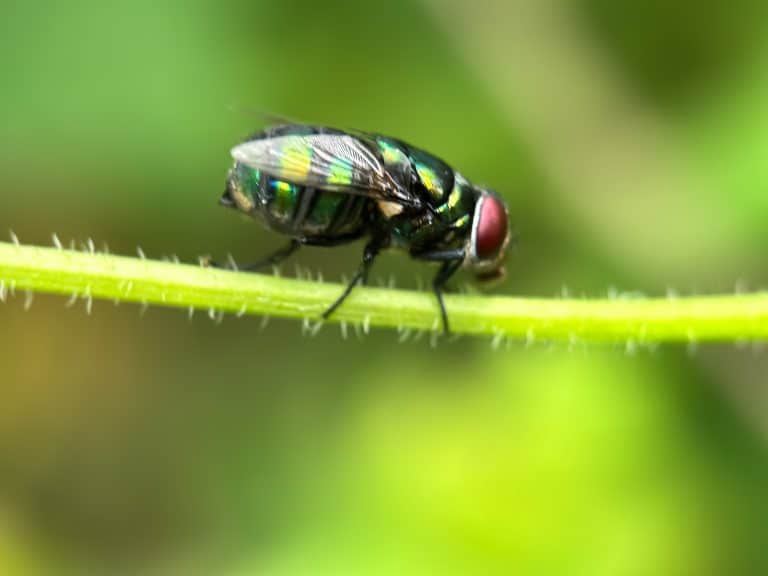
Additionally, moths are not the only animals attracted to lights. You will also find insects such as mosquitoes, midges, and sand flies gathered around lights.
Moth to a Flame – The Theories
Over the years, there have been several proposed theories on why moths are attracted to light.
The Escape Theory
One of the early theories on moth-to-light attraction, dating from the 1960s scientific literature, is that it is part of an escape mechanism. The moths aim for a patch of light in the same way as they would aim for a gap in foliage to escape from dense vegetation.
The Moon Theory
In this theory, moths use the moon as a navigational tool to find their way around. They simply mistake the artificial light source for the moon – and get a lot closer to it! Research conducted in the 1970s found that the flight orientation of moths was not affected by wind.
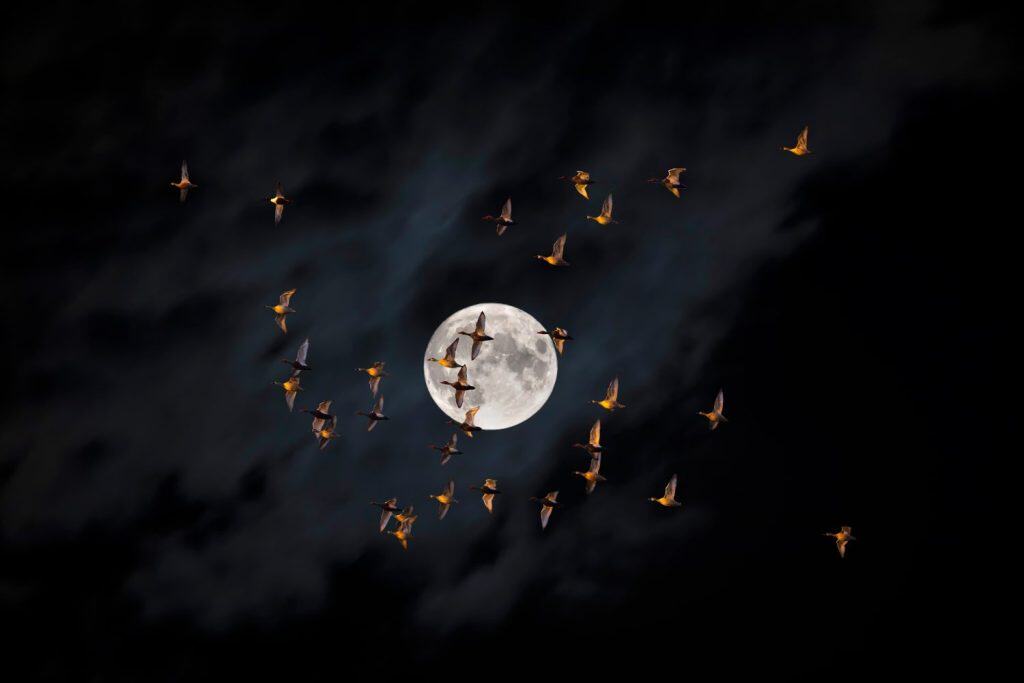
The moon provides light for nighttime creatures.
©smutan/Shutterstock.com
However, they did use the moon as an orientation cue. When there was no moon, they oriented using stars about 95 ° from the pole star. When the moths were in complete darkness or if their eyes were painted over, they were disoriented.
The Thermal Radiation Theory
Flames and bulbs do not just give off visible light; they also emit infrared radiation. A further theory from the 1960s was that the night-adapted eye of nocturnal moths detects the longer infrared frequencies. This theory, however, has since been found to be flawed.
The Blind Crash Theory
Two theories suggest that the moths crash into lamps by accident. The first theory proposes that they are simply dazzled by the light and don’t know where they are going. The second is that moths fly toward a region adjacent to the lamp because they are attracted to Mach bands in that region in an effort to escape. Mach bands are optical illusions that exaggerate the contrast between differing shades of gray.
Latest Research on Moth Attraction to Light
Researchers used high-resolution motion capture in the laboratory and stereo-videography in the field to reconstruct the 3D kinematics of insect flights around artificial lights. They already knew that insects needed a method of orienting themselves in relation to the ground. The brightest object for them would be the sky, even at night. Most flying insects have what is called a dorsal light response. This means that they keep their top side towards the brightest area (the sky).
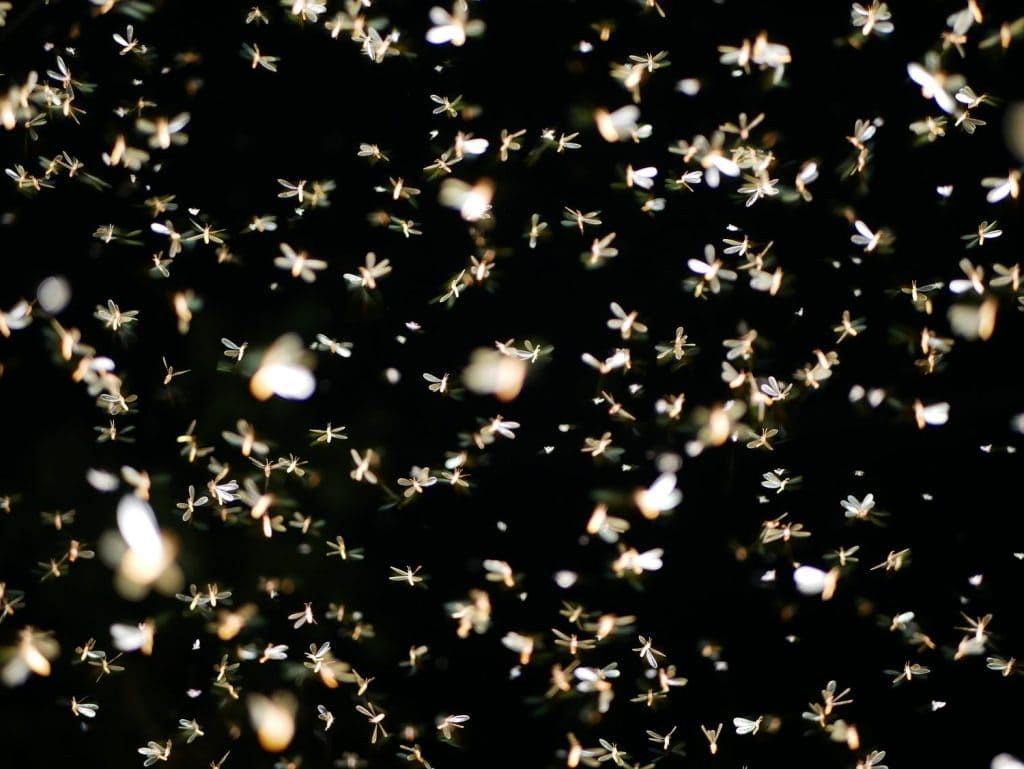
Moths get trapped in journeys around lights.
©buddhawut/Shutterstock.com
The new study showed that insects did not fly directly at the light source. Rather, they fly at right angles to it. This leads them to fly around the light, stall their flights, or even fly back the way they have come. The research confirmed that insects point their top sides (dorsal sides) towards the light. This suggests that they are shifting their orientation. Instead of flying with their backs to the sky, they fly with their backs to the light. They get trapped in an endless journey around the light and fail to move forward.
The new study suggests this is the most plausible explanation for why many flying insects gather at artificial lights.
Why Is This Important?
This research is important for our understanding of the impact of manmade light sources on flying insects such as moths. Previous research has shown that moths from urban populations have reduced flight-to-light behavior, meaning that they are not so keen to gather around light. This new behavior in ‘city moths’ may increase their survival in manmade environments. However, it may also come with reduced mobility, which would affect their ability to forage and colonize new areas.
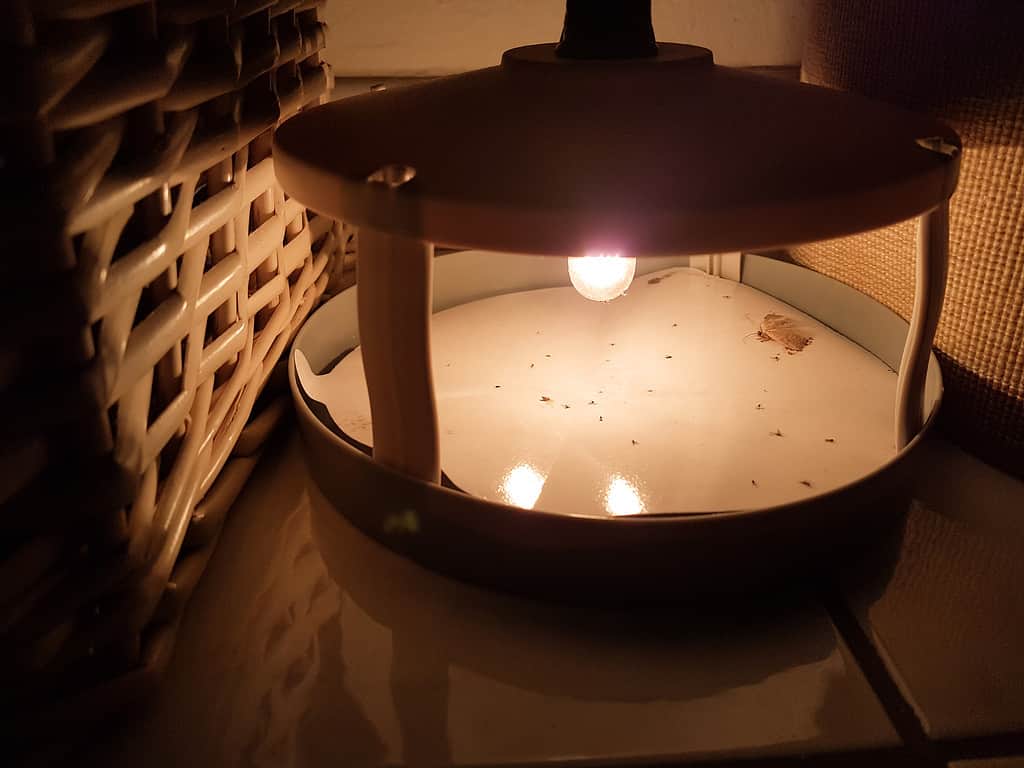
Light traps are used to attract and control some insects.
©summerphotos/iStock via Getty Images
Understanding why insects are attracted to light is also useful for the construction of light traps. These play a crucial role in disease surveillance by tracking the presence and abundance of vector species. Mosquitoes are a typical example. It may even be possible to develop domestic lights that are less attractive to biting insects so they stay away from our homes!