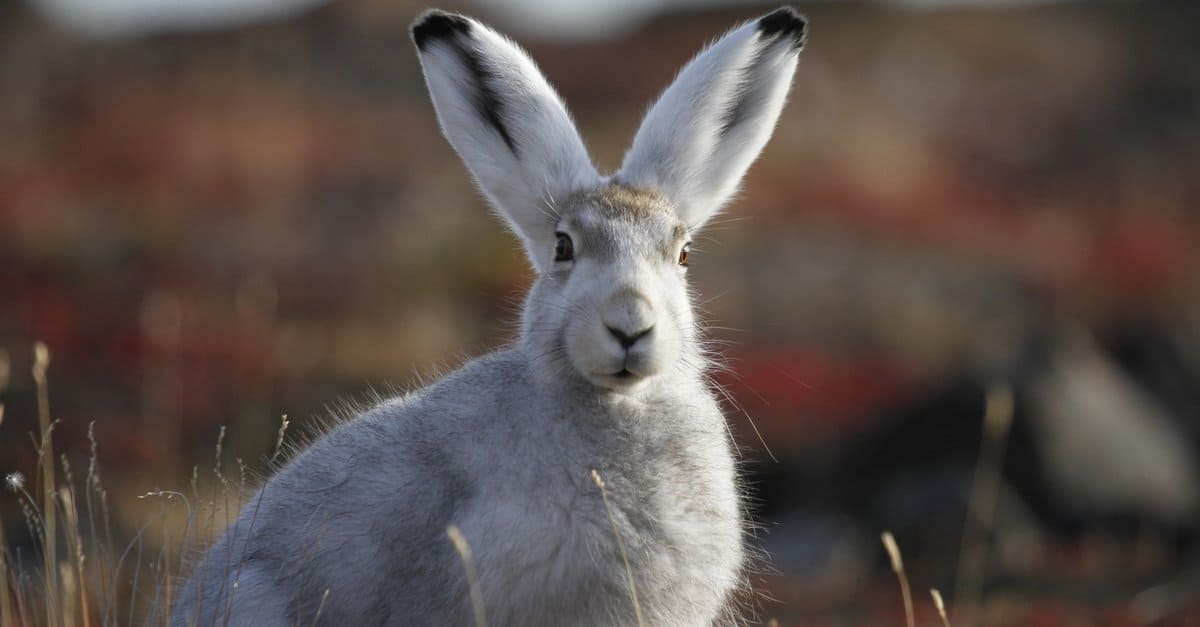

America is home to many animals, including beautiful, ugly, cute, dangerous, wild, and domesticated species. Among these animals is the Arctic hare, the largest hare in North America. The Arctic hare has large claws on all four feet, but the ones on its hind legs are unusually long, allowing it to dig into packed ice and snow and build a hole for protection as it flees danger and predators. Arctic hares can run at speeds of up to 40 miles per hour using all four legs to escape predators. Arctic hares are either brown or blue-gray in the summer and white in the winter to help them blend in with the snow. That’s not all there is to know about them, though, so below are some incredible facts about Arctic hares.
1. Arctic Hares Can Be More Than 2 Feet Long!
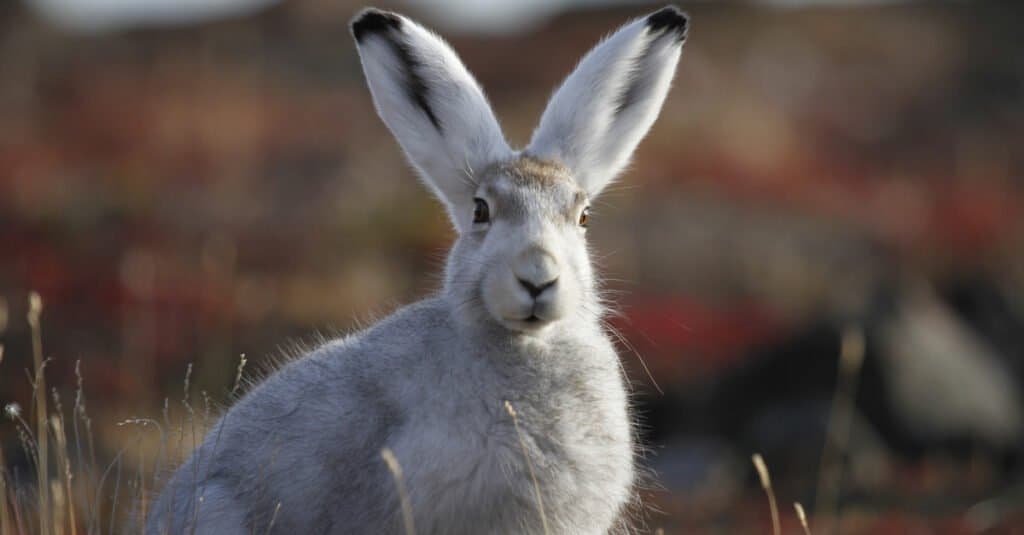
Arctic hares are the largest hares in North America.
©Sophia Granchinho/Shutterstock.com
As we’ve just mentioned, Arctic hares are the largest hares in North America, meaning they grow to impressive sizes. Arctic hares can actually be as much as 28 inches long, not including their tail. They typically weigh six to 12 pounds, although some can reach 15 pounds.
2. Arctic Hares Split Up During the Mating Season
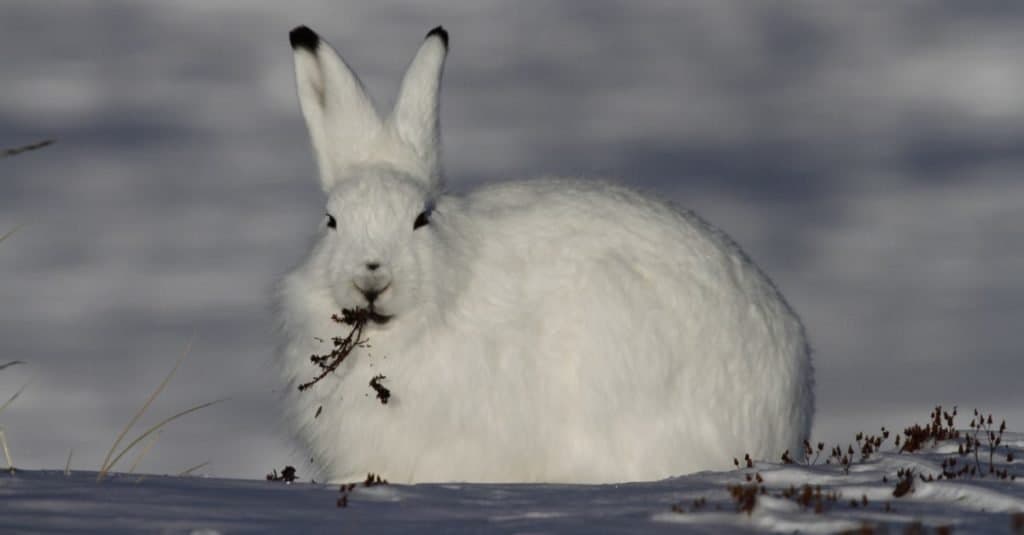
The mating season for Arctic hares is in April or May.
©Sophia Granchinho/Shutterstock.com
Like every other animal, Arctic hares mate, and the mating season for Arctic hares is in April or May. Although these hares frequently congregate in big groups for food and warmth, they disperse during mating and establish individual territories. During this period, males (known as bucks) may spar with females (known as does). Males spar to attract the attention of females, but this behavior also occurs when females try to fend off unwanted advances from males.
3. Arctic Hares Are Born With a Full Fur Coat, and Their Eyes Open
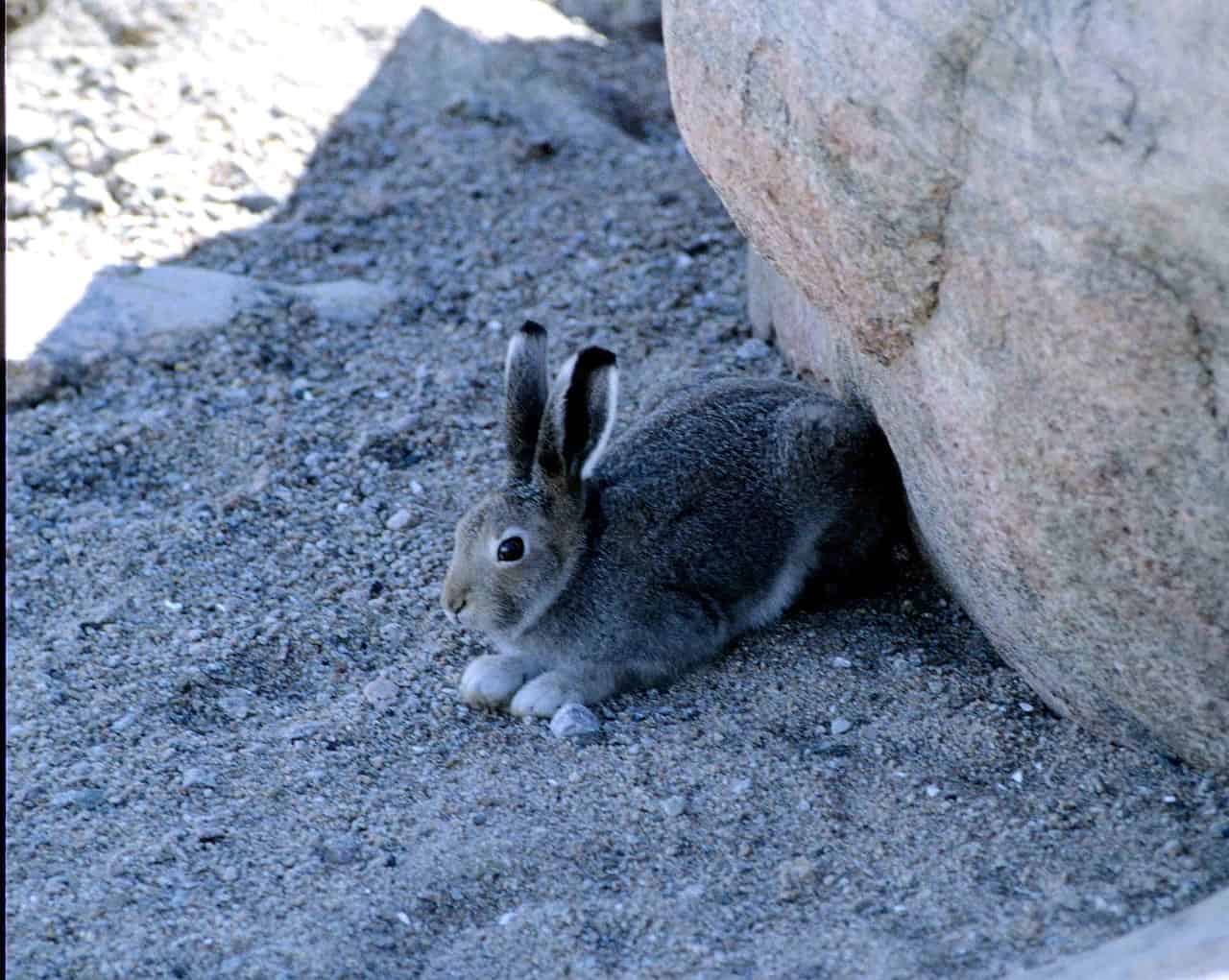
Baby Arctic hares are born with full coats of hair that are light brown.
©Ansgar Walk, CC BY-SA 2.5, via Wikimedia Commons – Original / License
In contrast to rabbit babies, which are born naked and blind, Arctic hare newborns are born with a full fur coat, and their eyes open. They can jump within a few minutes of birth. This allows them to avoid predators from a young age. For the first few days, the mother stays with her newborns, known as leverets, but the young are increasingly left to their own devices when their mother wanders out in search of food.
4. Arctic Hares are Herbivores

Arctic hares are classified as herbivores since their diet consists primarily of plants. Their typical diet consists of moss, lichen, and other woody plants. Depending on the season, they will also eat berries, buds, roots, leaves, and bark.
5. Northern Arctic Hares Retain Their White Color
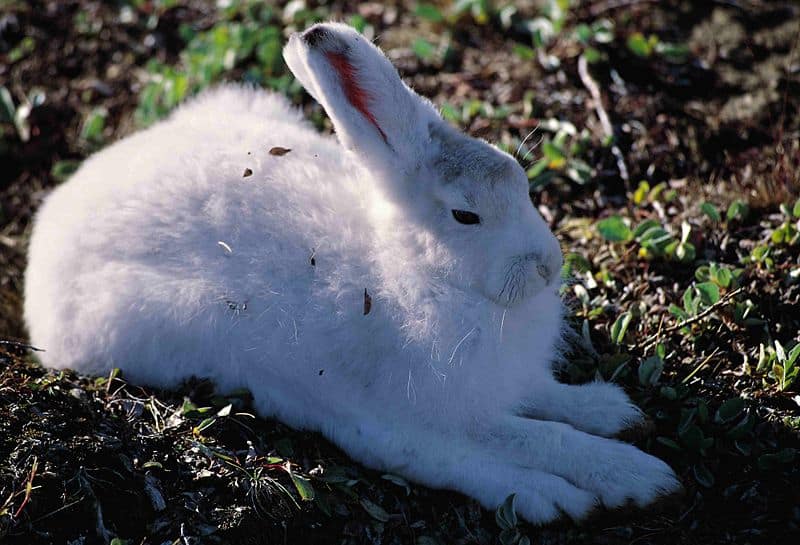
Arctic hares located in the extreme north retain their white fur year-round.
©Ansgar Walk (talk · contribs), CC BY-SA 3.0, via Wikimedia Commons – Original / License
Some people wonder whether Arctic hares are always white or not. Well, hares in the extreme north of the Arctic stay white all year, whereas those in the south molt and replace their white fur with brown fur for more camouflage during the summer.
6. Arctic Hares Can Reach 40 MPH
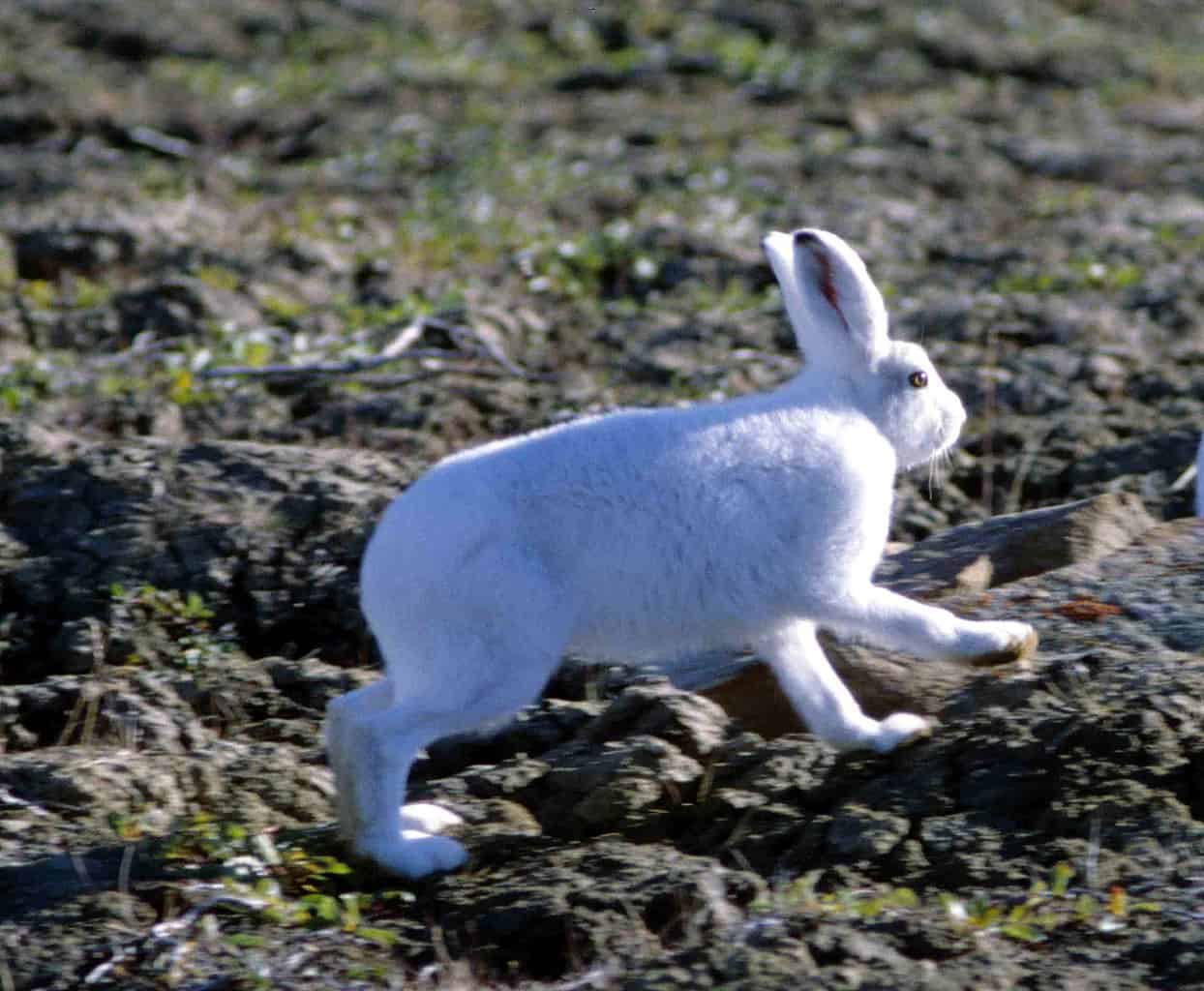
Arctic hares are swift and can run at speeds of up to 40 miles per hour.
©Ansgar Walk, CC BY-SA 2.5, via Wikimedia Commons – Original / License
Hares are somewhat bigger than rabbits, with longer hind legs and longer ears. Arctic hares, like other hares and rabbits, are swift and can run at speeds of up to 40 miles per hour. They are not easily caught. In addition to speed, they have a bright white coat in the winter, which offers good concealment in the country of ice and snow. In the spring, their bright white fur changes to resemble local rocks and plants. This excellent feature somewhat keeps them safe from predators.
7. Arctic Hares Spend Most of Their Time Above the Northern Tree Line on the Tundra
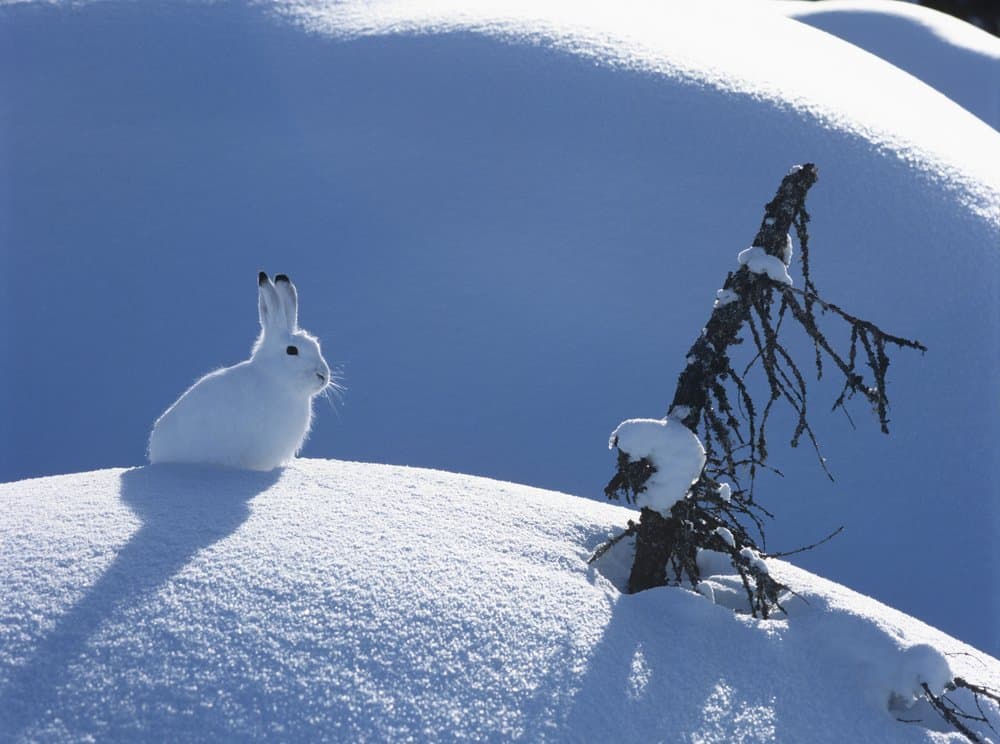
The Arctic hare prefers to stay above the northern tree line on the tundra.
©sirtravelalot/Shutterstock.com
Arctic hares spend most of their time above the northern tree line on the tundra; some migrate below the tree line in the winter. They may live at altitudes of up to 900 meters. They are not found on sea ice since they are herbivores that rely on terrestrial vegetation for nourishment.
8. Arctic Hares Have Thick Protective Fur
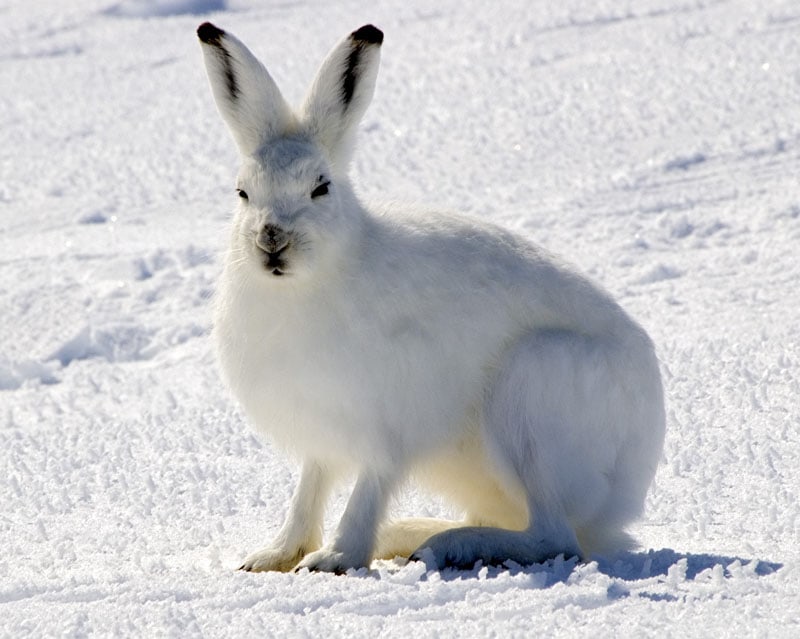
The thick, insulated coat of an Arctic hare helps it survive in the cold climate it lives in.
The coat of Arctic hares is constantly thick and insulating, helping them adapt to cold regions. Those hares in the southern sections of their range develop two separate coats for a year, mostly white in the winter and blue-gray in the summer, to help them blend into the terrain all year. Hares in the northern sections of their range keep their white fur.
9. Arctic Hares Dig Burrows Under the Ground or Snow
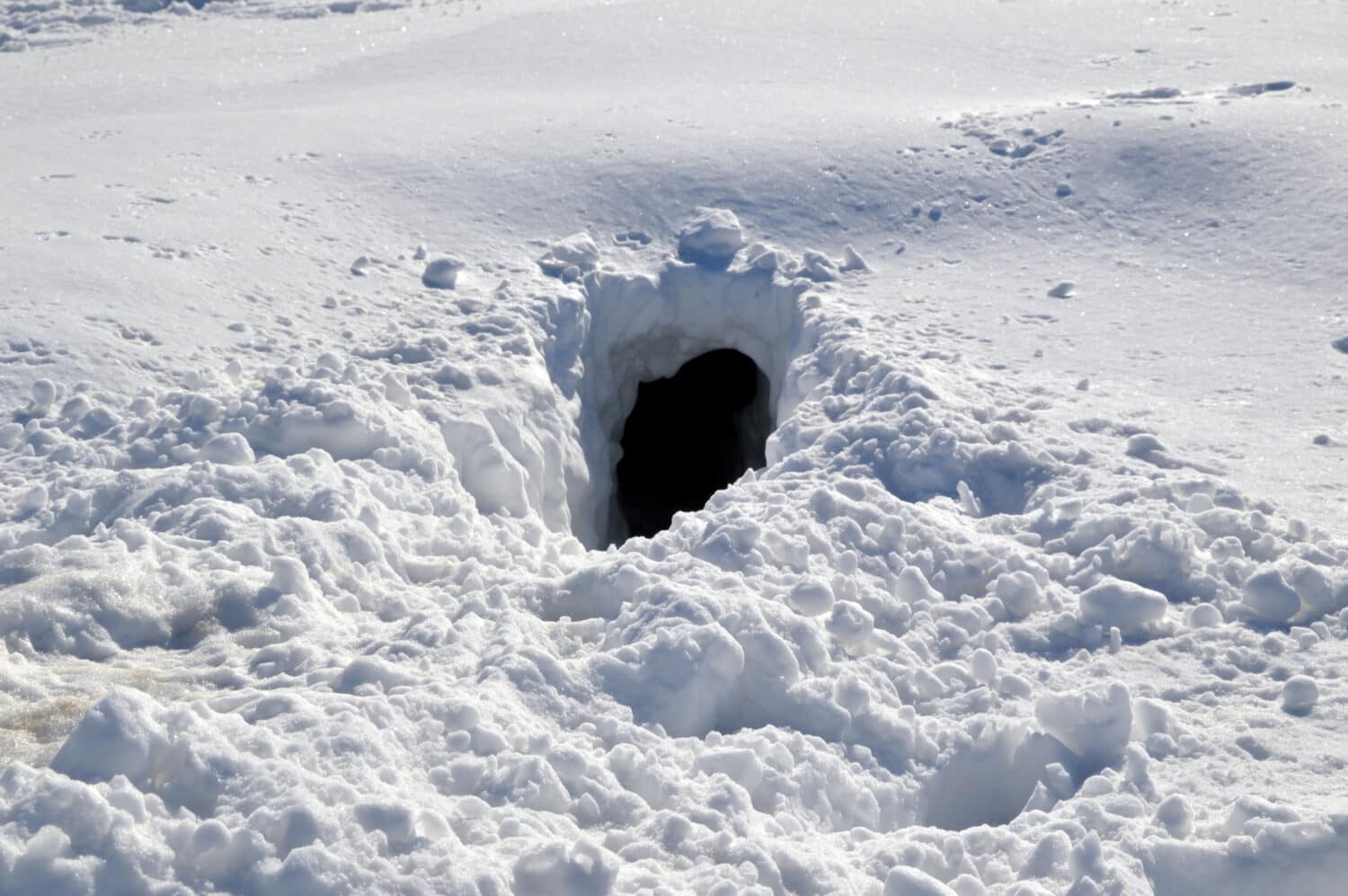
In extremely cold conditions, Arctic hares will dig snow burrows to keep warm.
©Tanya_Terekhina/Shutterstock.com
During extremely cold weather, they seek refuge in tunnels dug into the earth or beneath the snow to avoid the cold wind and get more insulation from the cold. This is a simple but effective way to escape the worst of the weather. While the temperature in the snow hole is still around freezing, it can be significantly higher than outside and, of course, protect them from the wind.
10. Arctic Hares Are Social in Winter
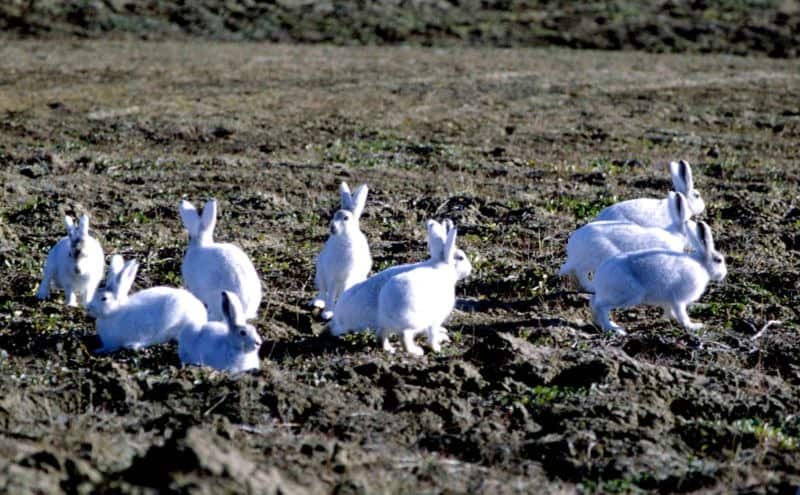
In the winter, Arctic hares mostly live in groups.
©Ansgar Walk, CC BY-SA 3.0, via Wikimedia Commons – Original / License
In the winter, Arctic hares mostly live in groups, and in the worst cold temperatures, living in groups allows Arctic hares to huddle for warmth. This union also allows them to see predators coming up on them and elude them. Once they see a predator, they would run in their numbers, leaving the predator confused about which hare to chase after. This tactic can also tire out the predator and make a successful hunt less likely. These gatherings typically consist of anything from 10 to more than 100 individuals. A group moves and changes direction simultaneously as it is on the move. When the mating season begins in the spring, they scatter once more.