
Rottweiler vs. Wolf; who’s the toughest?
Rottweilers are renowned for their loyalty and work ethic, and wolves have impressive hunting abilities. Both of these animals have a long history of coexisting with humans, and they’ve played important roles throughout history. However, by studying each species’ strengths and fighting tactics, we can see them in a new light.
Hypothetical animal battles are growing in popularity. It’s a great way of comparing each species’ physical characteristics and survival skills. Follow along as we learn more about wolves and Rottweilers to determine who would win in an imaginary fight.
Top 7 Key Points
Here are seven key points about the comparison between Rottweilers and wolves:
- Whether or not a Rottweiler could overpower a wolf would depend on the situation.
- Wolves can live in various habitats across North America, Europe, and Asia, showcasing their adaptability.
- Rottweilers were originally bred as Roman cattle dogs and were selectively bred in Rottweil, Germany, to create their distinctive appearance.
- Rottweilers are known for their strength, agility, and work ethic, and they are often used as police and military dogs, as well as for search and rescue missions.
- Rottweilers have a playful side and require exercise and mental stimulation to stay happy and healthy.
- Rottweilers are loyal and protective of their families, but proper training and socialization are important to ensure they use their protective instincts appropriately.
- Wolves care deeply for the other members of their pack and have unique cultures that involve communication, education, and knowledge transfer.
Overview: Wolf
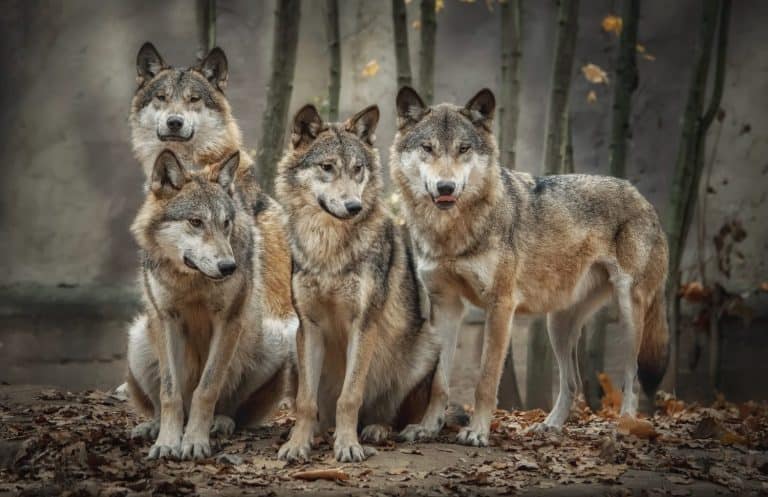
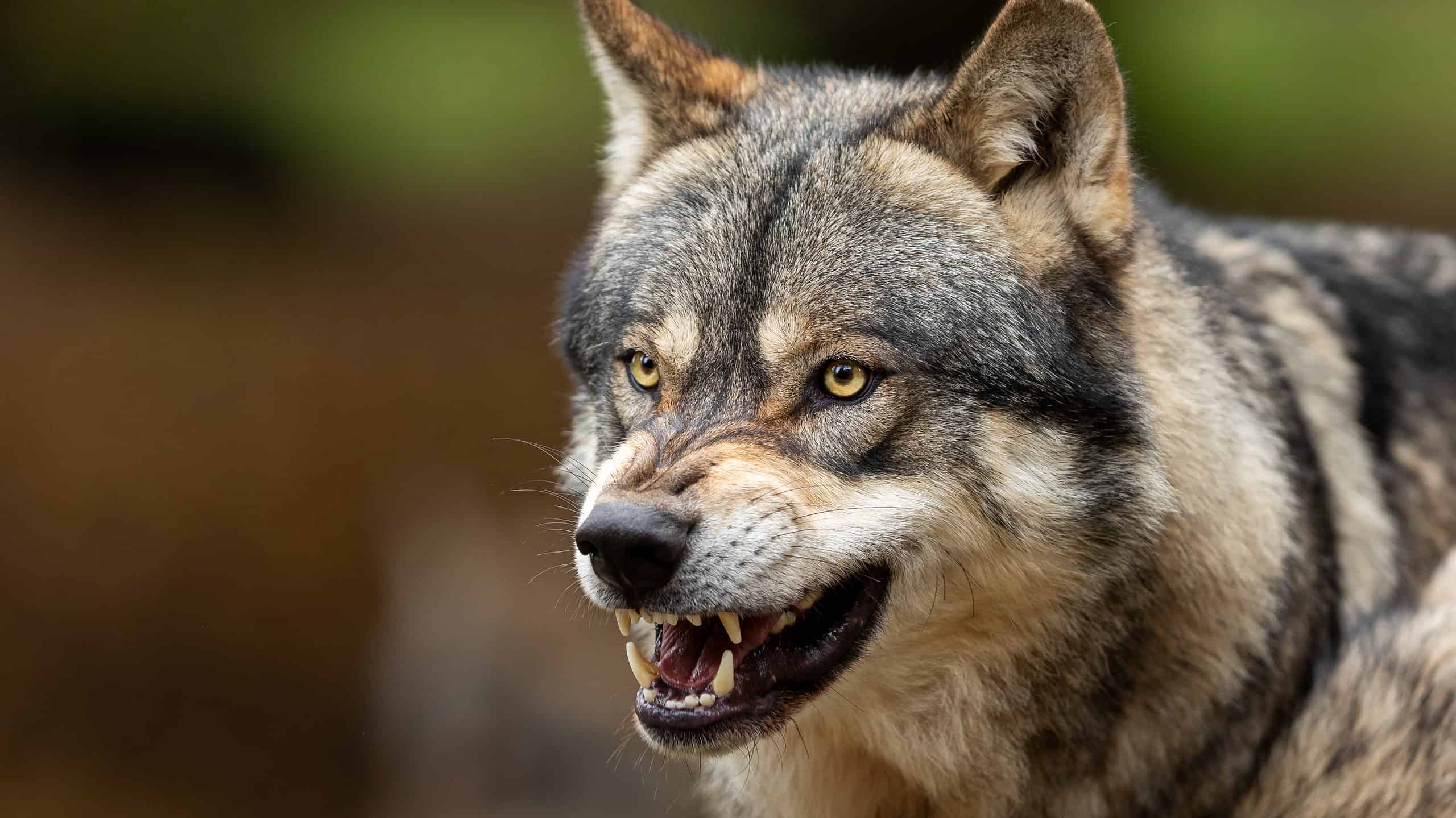
Our first competitor is a full-grown adult gray wolf. Gray wolves can live in various habitats across North America, Europe, and Asia. Their ability to live in temperate forests, grasslands, deserts, mountains, and tundra reflects the species’ adaptability. Yellowstone Park currently has around 100 to 500 wild wolves roaming the forests.
Wolves are social creatures that form strong emotional bonds with their packmates. The dynamics of their social hierarchy are complex. Each wolf plays a different role based on age, gender, and experience. And they talk to each other in different ways. Body language, vocalization, and scent marking are just a few ways wolves communicate.
The likelihood of a wolf vs. Rottweiler battle in real life is low. Wolves play an important ecological role by maintaining prey populations like deer and rabbits. Wolves don’t regularly target domestic dogs as prey. They usually only fight with them if they see the canine as a competition.
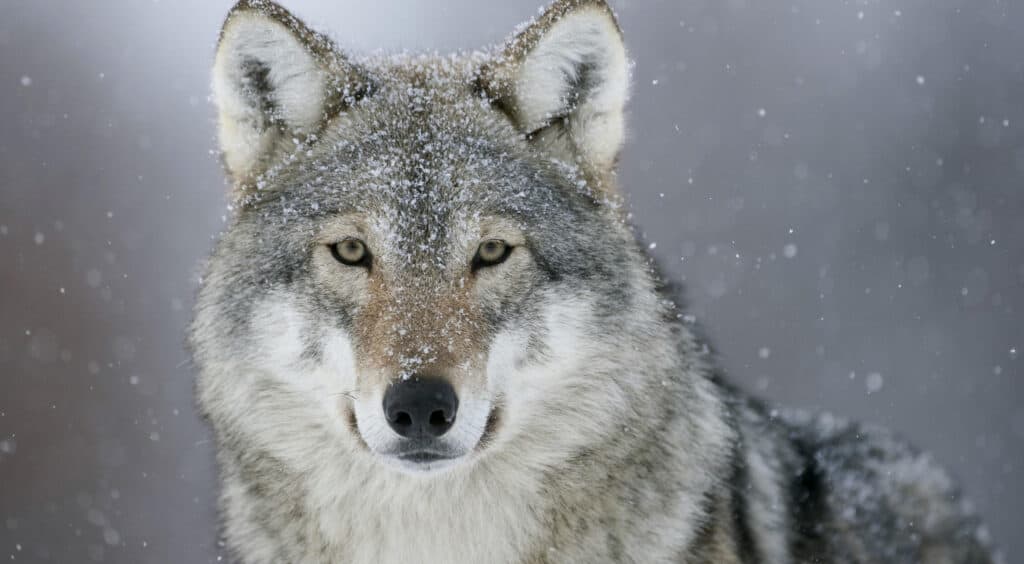
Wolves can live in various habitats across North America, Europe, and Asia, showcasing their adaptability.
©nataliatamkovich/Shutterstock.com
Overview: Rottweiler
Our second competitor is a large Rottweiler. These dogs are easy to identify with their large muscular bodies and black and tan coats. Their distinctive appearance includes a broad head, short ears, and sometimes a docked tail. Rottweilers almost always portray tough, mean dogs in TV shows and movies. But there’s a lot more to this breed; they have a rich history.
Did you know that Rottweilers used to be Roman cattle dogs? This breed was initially bred to herd cattle and guard livestock. These dogs were selectively bred in Rottweil, Germany, to create the famous Rottweiler look. These dogs are highly capable of military and police dogs and even assist with search and rescue missions.
They’re not all muscle and teeth. Rottweilers also have a playful side. They like playing with toys, acting goofy, and rolling around. These dogs have a lot of energy and require exercise and mental stimulation to say happy and healthy.
You could describe Rottweilers as loyal too. They are productive and will defend their family if they feel a threat. But that doesn’t mean they’re naturally aggressive. Proper training and socialization allow Rottweilers to use their protective instincts appropriately.
If a rabid gray wolf stumbled into Rottie’s backyard, there would be a fight. A Rottweiler wouldn’t hesitate to defend their family, even if it meant sustaining severe injuries.
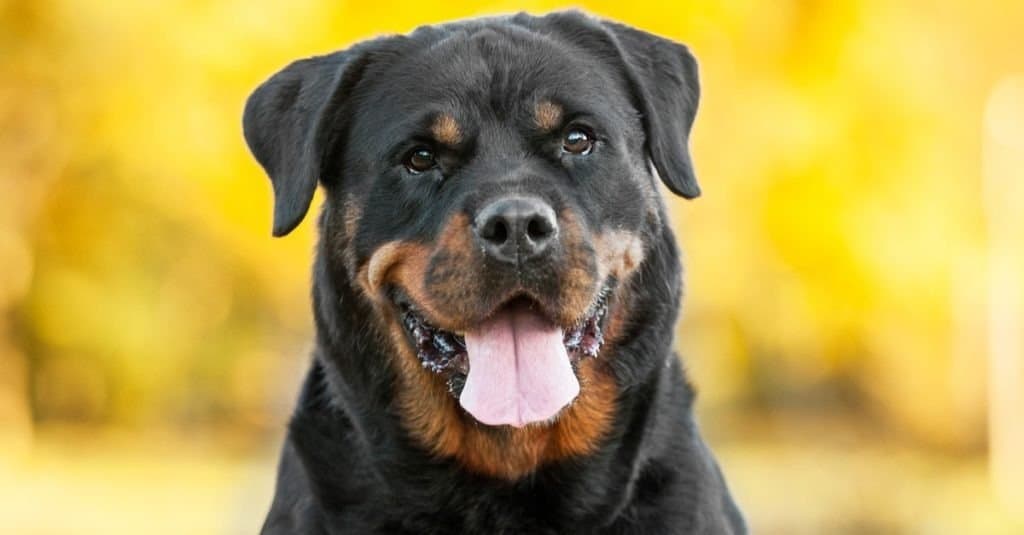
Rottweilers are easy to identify with their large muscular bodies and black and tan coats.
©Rita_Kochmarjova/Shutterstock.com
True Nature of Rottweilers and Wolves
We’ve all heard of the big bad wolf and rough and tough Rottweilers. And both species are indeed powerful in more ways than one. But it’s important to see the full picture and not generalize animals just because they’re a certain species or breed. There’s a lot more to these canines than the scary characters they often portray.
Rottweilers and wolves are intelligent and emotional creatures. Before we compare their physical characteristics and strengths, let’s talk more about their mindset. The way an animal thinks influences how they respond to a threat.
Rottweilers work hard, solve problems, and have a lot of stamina. They’re also highly intuitive and can sense when their owner needs extra care.
In a Rottweiler vs. wolf battle, the Rottweiler’s mind will be fixed on protecting its loved ones. They’ll be able to approach the situation with high energy and fierce focus.
Wolves care deeply for the other members of their pack. When one member is injured, the others help care for them. And the entire pack grieves if they lose a pack mate. If the wolf in this fight isn’t alone, the Rottweiler won’t stand a chance.
Wolfpack culture helps with communication, education, and knowledge transfer. These canines can pass down information and survival skills across multiple generations. One of the skills they teach us is how to hunt, which will be useful when the gray wolf is facing off against a Rottweiler.
Physical Characteristics and Strengths of Rottweilers
Rottweilers are a powerful medium to large dog breed. They usually weigh between 80 and 130 pounds, with females weighing slightly less than males. The average shoulder height for both sexes is 24 to 27 inches. This breed has a distinctive black coat with tan-colored markings on its face, chest, and legs. They’re also recognizable by their broad brachycephalic head and muscular neck.
Is the Rottweiler strong enough to overpower a wolf? It would depend on the situation. Rottweilers are known for their agility and strength; it’s one of the things that makes them excellent working dogs. They’re a highly trainable breed that can perform various tasks such as search and rescue, police work, and hurting. Their protective instincts also make them excellent guard dogs.
Rottweilers have a reputation for never giving up. They’re known for their endurance. They can keep going and going without getting tired. This would be useful if the Rottweiler had to defend itself against the gray wolf. Gray wolves are used to chasing their prey until it tires them out. But it’ll take a lot of work to wear out this energetic Rottweiler.
Rottweiler Bite Force
For centuries, Rottweilers have been bred to be protective and fearless. Once this dog can attack the wolf, it’ll go at it with full force. The Rottweiler would likely use its bite force multiple times to inflict the most damage.
If the Rottweiler lands a bite on the wolf, it’ll be able to inflict a lot of damage. This breed has a powerful bite force of 328 PSI. The strength of their bite is thanks to the shape of their head, powerful jaws, and muscular build.
Rottweilers are a type of brachycephalic dog breed. That means the skull bones are shortened in length. Research shows brachycephalic dogs have a higher bite force than dolichocephalic and mesocephalic dogs. This is because the upper jaw determines bite force, making the shortened skull bones advantageous.
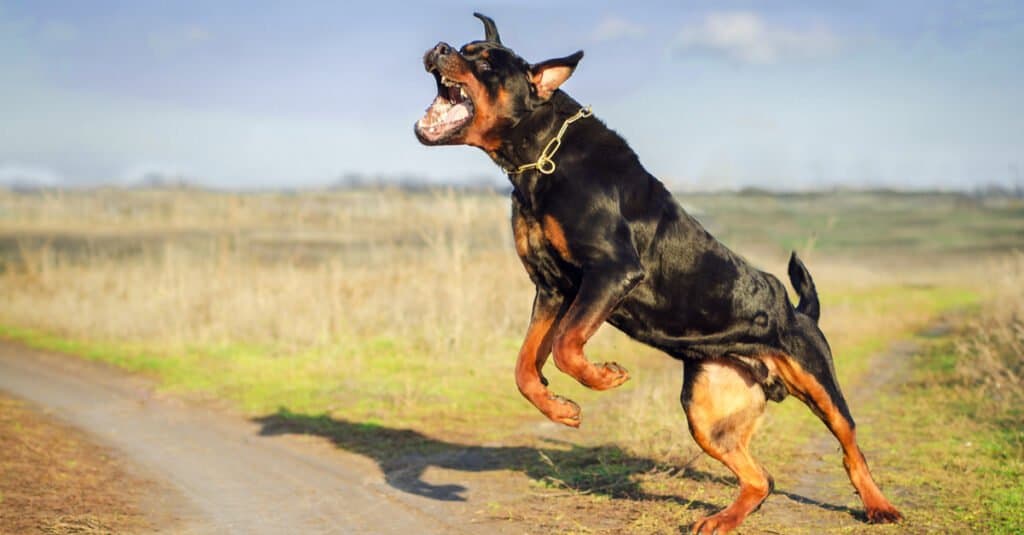
For centuries, Rottweilers have been bred to be protective and fearless.
©Olexandr Andreiko/Shutterstock.com
Physical Characteristics and Strengths of Wolves
Wolves are the largest members of the Canidae family. They usually weigh between 40 to 175 pounds and have a shoulder height of 3 feet. You can identify gray wolves by their long, bushy tail and thick fur. The fur can be gray, gray-brown, or other variations. The wolves’ large ears, sharp teeth, and pointed snout are perfectly adapted for hunting.
Wolves are known for their strength and agility, allowing them to take down prey much bigger than themselves. They can run at speeds of 40 mph, jump 20 feet, and even swim to catch prey. These capable swimmers can cross rivers and lakes when they need to.
Wolve’s Bite Force
Wolves have one of the strongest bite forces of any land animal. It’s much stronger than the Rottweilers. A wolf’s bite force can range from 400 PSI up to 1,000 PSI. That’s three times as strong as the Rottweilers bite force.
Wolves are intelligent hunters that use different tactics to ambush their prey. Sometimes they chase them in packs, wearing the animal down long distances. Once the animal appears tired, they go in for the kill.
Wolves kill prey by crushing their neck or spine using their strong bite force. Sometimes they suffocate them by clamping their jaws around the nose or mouth. It would only take one bite from the wolf to win this animal matchup.
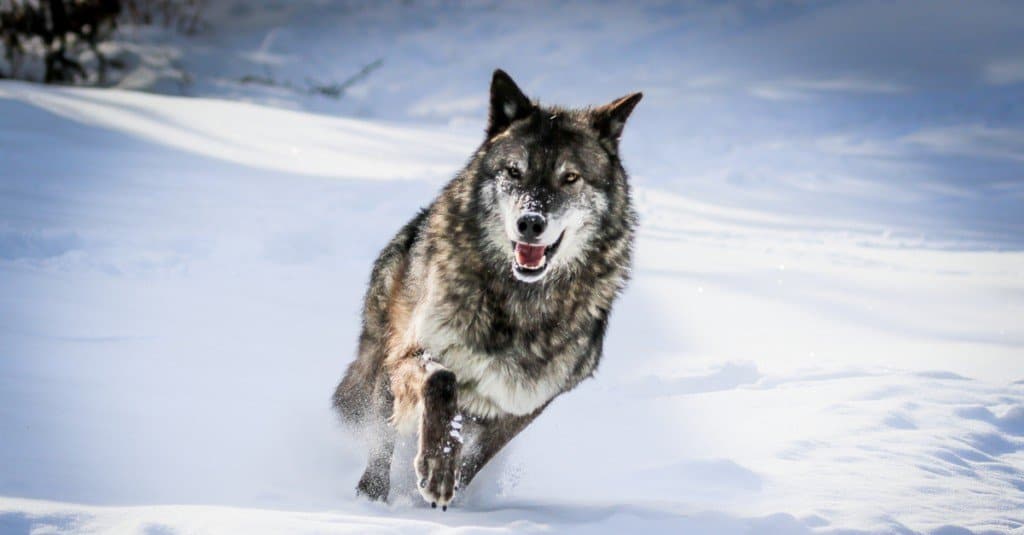
Wolves are known for their strength and agility, allowing them to take down prey much bigger than themselves.
©Holly S Cannon/Shutterstock.com
Fighting Tactics in a Rottweiler vs. Wolf Fight
What would the fight look like if a gray wolf targets a Rottweiler? A gray wolf could see a domestic dog as competition. In this situation, the Rottweiler will be at an immediate disadvantage. Even though this breed is strong, agile, and intelligent, they’re less experienced at wrestling than the wolf.
Wrestling
Rottweilers aren’t usually trained in wrestling, but wolves engaging play wrestling as pups. Play wrestling helps pups develop social skills; sometimes, adult wolves play wrestle to maintain social bonds within the pack.
Play wrestling is usually non-aggressive and doesn’t cause injuries. It does, however, help the wolves practice necessary fighting and hunting skills — the type of skills they can use against the Rottweiler.
Can Rotweilers Hunt?
Can Rottweilers hunt? Rottweilers are a working dog breed originally bred to herd cattle and guard livestock. But they can also help on a hunt.
Rottweilers don’t have a lot of patience for pointing, and their sense of smell isn’t as evolved as other breeds. But despite all of this, they can still make it efficient hunting dogs. Rottweilers enjoy retrieving tasks and can learn to track them given enough time.
Nose Ninja
Dogs track by using their sense of smell, and their nose can pick up on a lot more than humans. A dog’s nose has 300 million scent receptors, while a human only has 5 million. Their olfactory abilities let them detect smells miles away. They can pick up on scent trails ranging from sweat, urine, skin cells, and other bodily fluids.
While tracking, the dog lowers their head, sniffs the ground, and picks up scent particles. Then they can separate the different scents so they know what sense they’re tracking. As they track, they notice whether or not there are any changes in scent. The dog knows if a person or animal changes direction or stops moving.
Even though the Rottweiler’s sense of smell isn’t as keen as other dog breeds, it’s still highly evolved. They’d be able to detect the wolf before ever seeing it. The Rottweiler would be prepared if the wolf changed direction or were close enough to attack.
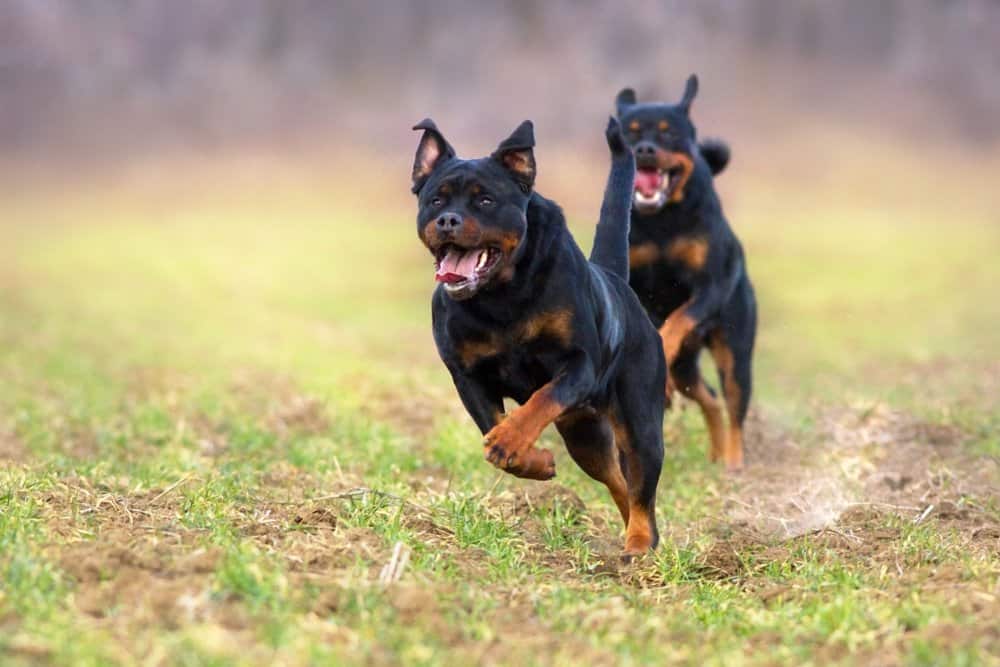
Rottweilers are a working dog breed originally bred to herd cattle and guard livestock. But they can also help on a hunt.
©Callipso/Shutterstock.com
How Wolves Hunt
A big chunk of a wolf’s life is spent hunting. They use their powerful sense of smell to track prey, picking up scents miles away. Once they detect an animal worth their time, the pack moves as a group. They stealthily stalk the prey until they are close enough to attack.
When the prey is within sight, the wolfpack begins to close in on them. Together they distract and tire out the animal using feints and coordinated attacks. Using their powerful bite force, they usually target the prey’s underbelly. All it takes is one bite from a wolf to kill the animal, and when multiple pack members are attacking, the prey never stands a chance.
After the hunt, you can hear the pack howling and celebrating. They’re letting the other pack members know the hunt was a success!
The Feint Fake Out
Wolves use feints to trick prey, getting them to move into a compromising position. Feints are deceptive movements meant to deceive an observer. They’re helpful in sports and one-on-one competitions.
Feints happen in sports when one player wants to mislead a member of the other team. They use a maneuver to trick the other player into thinking they’ll take a certain action. But they’re really about to execute a different maneuver.
In martial arts, feints trick opponents into exposing themselves to attack. They can also create an opening for a counterattack. When athletes master feinting skills, they become unpredictable and more effective in their attacks. This is evident when you see a wolf hunt. Their experts at faking out the prey, making them think they’re going in one direction when they’re really about to go another.
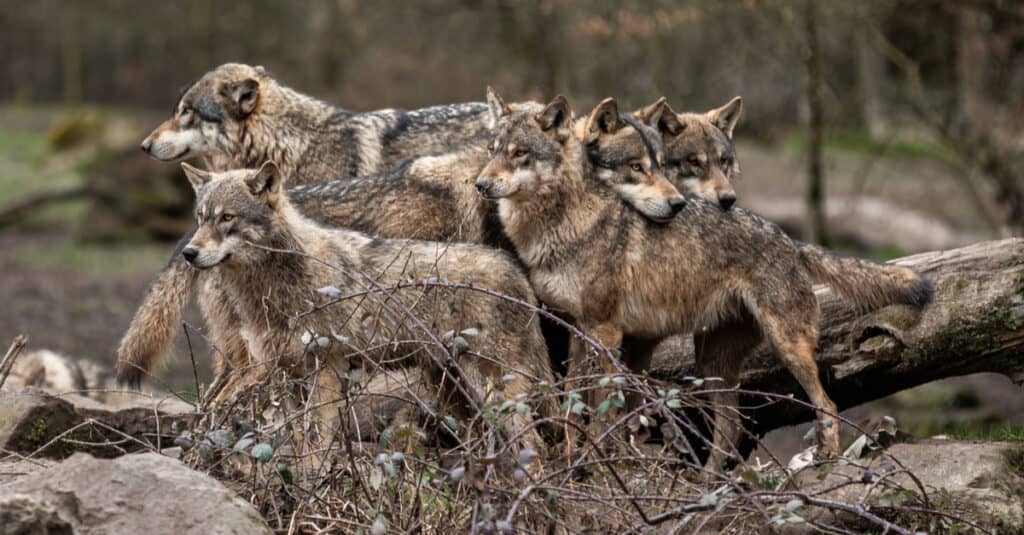
Wolves care deeply for the other members of their pack and have unique cultures that involve communication, education, and knowledge transfer.
©AB Photographie/Shutterstock.com
What Would Cause a Rottweiler vs. Wolf Fight?
What would cause a Rottweiler vs. Wolf fight? Since Rottweilers are domesticated dogs and wolves are wild animals, they aren’t likely to come into contact with each other.
But what if the Rottweiler wandered into a wilderness area, such as a force known for having wolves?Or what if the wolf entered a suburban area and came across a Rottweiler playing in their yard? Would these two species fight on sight?
Once the Rottweiler and wolf see each other, they will size up the situation. Is the wolf hungry? If yes, it could see the Rottweiler as prey and take the opportunity to attack. An attack becomes even more likely if the wolf is injured, sick, or rabid.
If the Rottweiler intrudes on the wolf’s home turf, it’ll react aggressively. But it can still pursue the Rottweiler over a short distance. The Rottweiler could have a chance to flee the scene, retreating to a safe location.
Who Is the Winner in a Rottweiler vs. Wolf Battle?
The wolf is the winner. A Rottweiler vs. Wolf matchup could be a close call. Both species are strong, intelligent, and fearless. They have seemingly endless stamina and powerful bite forces. However, the wolf has an advantage in almost every aspect of this animal matchup. They’re much bigger, stronger, and more experienced at killing.
The biggest key factor in this animal matchup is each species’ lifestyle. Rottweilers are domesticated animals, and wolves are wild hunters. Since the wolf practices wrestling, fighting, and hunting, it’ll have a distinct advantage over the Rottweiler. Even if the Rottweiler is trained, it will have a different real-world experience than the wolf.
Studying the similarities and differences between these two breeds helps deepen our appreciation for the canine world. Wolves have emotional death and a complex social hierarchy. They play an essential ecological role as apex predators by maintaining balance and diversity within their habitat. Rottweilers are loyal, protective dogs sensitive to how their owner feels. Even though the Rottweiler couldn’t win this animal matchup, they’ve still won a place in our hearts.