
Quick Take
- Basset hounds' lovable build hides a serious delivery risk that makes unsupervised home birth a dangerous gamble. See delivery risks →
- Something basset hound mothers do instinctively in the first weeks after birth can fatally harm their own puppies. Learn about supervision risks →
- Feeding a pregnant basset hound more isn't always better. Getting the timing wrong can actually put her life at risk during delivery. See feeding warnings →
- Natural mating for basset hounds is far more complicated than most owners expect, and many breeders never attempt it. Explore mating challenges →
The basset hound is a short-legged scent hound bred in France by medieval monks to track small game, such as rabbits. Basset hounds may require attentive management during breeding and pregnancy due to their body structure, but they are not generally difficult to breed compared to some other breeds. Caring for a pregnant basset hound can be both exciting and somewhat stressful. Understanding what to expect during their gestation period ensures a smooth delivery for these endearing companions, renowned for their laid-back temperament and family-friendly nature. Continue reading to learn what to expect when your basset hound is expecting.
How Does a Basset Hound Reproduce?
A basset hound pregnancy is rarely unexpected because owners are typically involved in managing the entire breeding process from the beginning. Because natural mating is physically challenging for basset hounds, owners often schedule veterinary visits to coincide with ovulation, pay for artificial insemination, and closely monitor the female.
Owners are highly invested from the outset due to the financial costs and physical effort required to achieve a successful pregnancy.
Owners must know the exact due date to arrange for an emergency veterinarian or schedule a planned C-section, as basset hounds face a high risk of life-threatening delivery complications.
Gestation Period: How Long Are Basset Hounds Pregnant?
The gestation period for a basset hound is approximately 63 days. Around 63 days after conception, the pregnant hound will begin whelping (labor), preparing for the birth of six to eight puppies.ght puppies.
While basset hounds can be at increased risk for delivery complications due to their body structure, most can deliver naturally. Veterinarians may recommend a C-section if complications are anticipated, but it is not universally advised for all basset hounds.
Pregnancy Care for Basset Hounds
Pregnant basset hounds are prone to bloat, so it’s a good idea to divide their food into four smaller meals per day instead of two larger ones. Overfeeding is strongly discouraged because if a dog is overweight, it could lead to delivery complications.
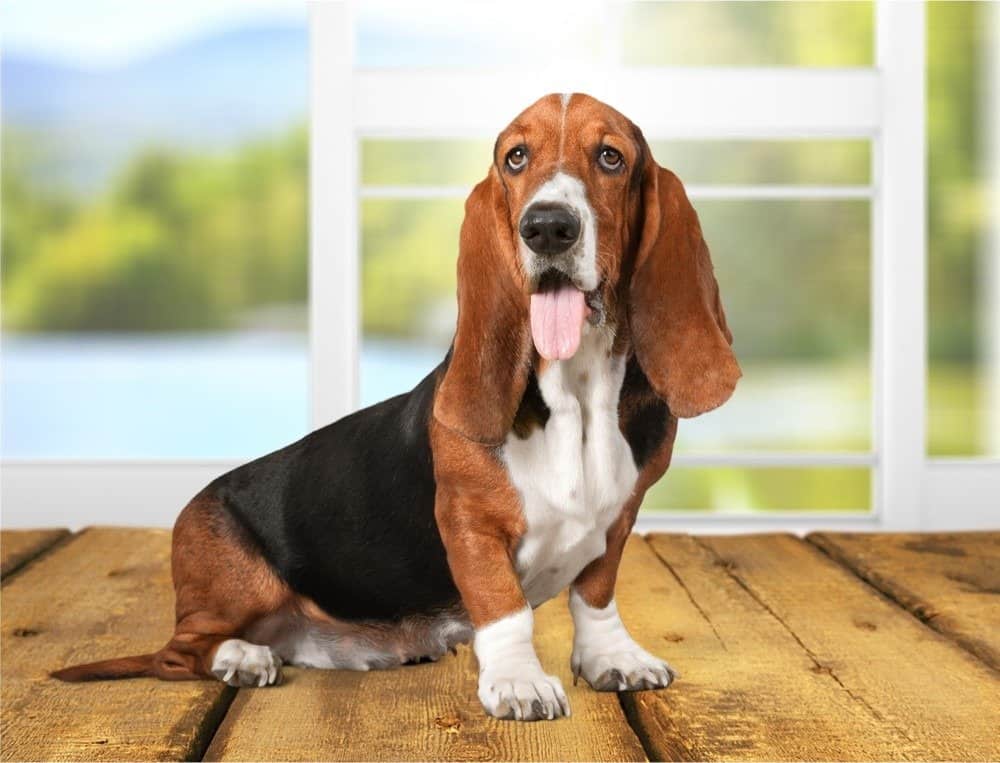
Some veterinarians may recommend C-sections for basset hounds if there are signs of complications, but it is not standard for most pregnancies in this breed.
©Billion Photos/Shutterstock.com
What to Expect in Week One
Once a female basset hound has either mated or been inseminated, she will begin to experience hormonal fluctuations. However, the owner may not notice any changes.
What to Expect in Week Two
The goal for week two is to maintain the basset’s weight. Early weight gain is not advised for a healthy pregnancy. It is recommended that the dog gain no more than 10% of its regular weight until it reaches the 8-week mark. Also, the female’s energy levels should not be affected yet because the embryos are still quite small.
What to Expect in Week Three
Week three will not bring significant physical changes to your pregnant basset hound, and there is still no need to change your dog’s routine. However, the expectant mother may have a bigger appetite. During week three, owners may begin to slightly increase the amount of food provided.
What to Expect in Week Four
When your basset hound is between 25 days and four weeks pregnant, a veterinary check-up is recommended. The vet will likely perform an ultrasound to assess the size and health of the litter, the mother’s condition, and estimate the due date.
What to Expect in Week Five
In week five of a basset hound’s pregnancy, the embryos become fetuses, indicating that organ development has begun. At this stage, the female will begin to gain weight and will require more food.
What to Expect in Week Six
In week six, the fetuses develop distinct organs, tissue, and claws. At this stage of her pregnancy, the mother will need a diet that is rich in minerals, healthy protein, and high-quality ingredients. However, she might have a decreased appetite due to discomfort. To help with this, she should be offered smaller, more frequent meals to ensure she gets enough nutrition to maintain her health and support her developing litter.
What to Expect in Week Seven
In week seven, you can expect conditions similar to those in week six. It is vital to keep the expectant mother comfortable and eating well.
What to Expect in Week Eight
Week eight of a basset hound’s pregnancy will be similar to weeks six and seven, but the mother will become increasingly uncomfortable. She may also have a decreased appetite due to her discomfort.
What to Expect in Week Nine
In the final week, the puppies are almost fully developed. The mother may begin nesting, searching for a place to give birth. You may also notice her nipples becoming more prominent, and they may discharge some milky fluid. At this stage, the mother will be quite large, and you may be able to see or feel the puppies moving.
How to Prepare for Labor and Delivery
Preparing for labor and delivery begins with setting up a whelping box for your basset hound. The box should be placed in a quiet, easily accessible area. The mother should be introduced to the box in advance so she can become accustomed to it. First-time breeders should consult their veterinarian for guidance on assisting with the process.

Basset Hound Puppies are typically born in litters of six to eight.
©Lynn_Bystrom/ via Getty Images
Items that may be useful during labor include a newspaper, clean dry towels, paper towels, a thermometer, sterilized scissors, iodine, a heat lamp, a baby scale, and your veterinarian’s phone number in case of emergency. A few days before giving birth, the mother may stop eating and begin trying to build a nest. As delivery approaches, many dogs begin to pant, and their rectal temperature typically drops 8 to 24 hours before giving birth. The water sac usually appears about an hour before the first puppy is born.
However, it is generally not recommended for a basset hound to give birth entirely unassisted at home. Due to their heavy bone structure and long, narrow bodies, basset hounds have a higher risk of complications during labor and delivery. Many owners choose to schedule a cesarean section (C-section) or have a veterinarian on standby during delivery.
How to Care For Your Basset Hound Afterward
After the mother has given birth, it is crucial to supervise her constantly for the first two to three weeks, as basset hounds are known to accidentally lie on their puppies and suffocate them. It is also important to keep the mother clean and dry. Some discharge after birth is normal.
She should be wiped down with a warm, damp cloth but not bathed, to avoid exposing the new pups to soap residue.
Her teats need to be checked regularly, and if you notice any swelling, discoloration, or redness, you should take her to the vet.
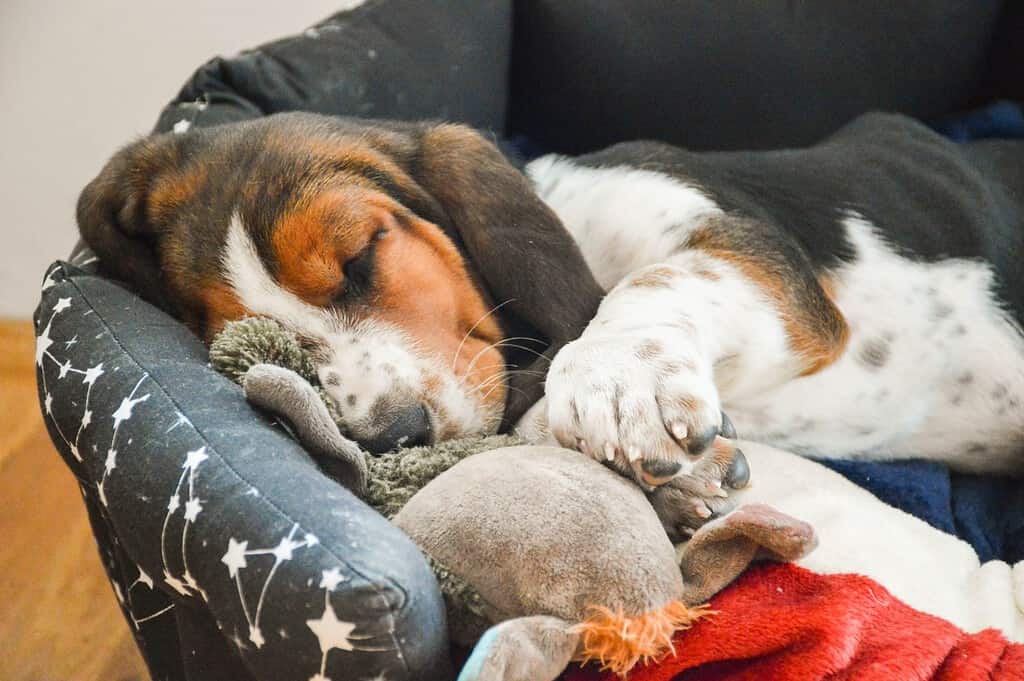
Basset hound puppies will sleep a lot in the first weeks.
©sandra.zivkovic/Shutterstock.com
The mother will be exhausted after giving birth and will need plenty of clean drinking water to rehydrate and produce milk for her pups.
A lactating dog needs adequate nutrition to produce milk for her litter while maintaining her own health. She will continue to require smaller, more frequent meals.
The mother will initially be very protective of her puppies and may not want to leave them. However, she must take short 5 to 10-minute breaks to relieve herself. Mother bassets are generally capable of caring for their puppies, but owners should continue to monitor both the mother and her puppies closely during the first few weeks.
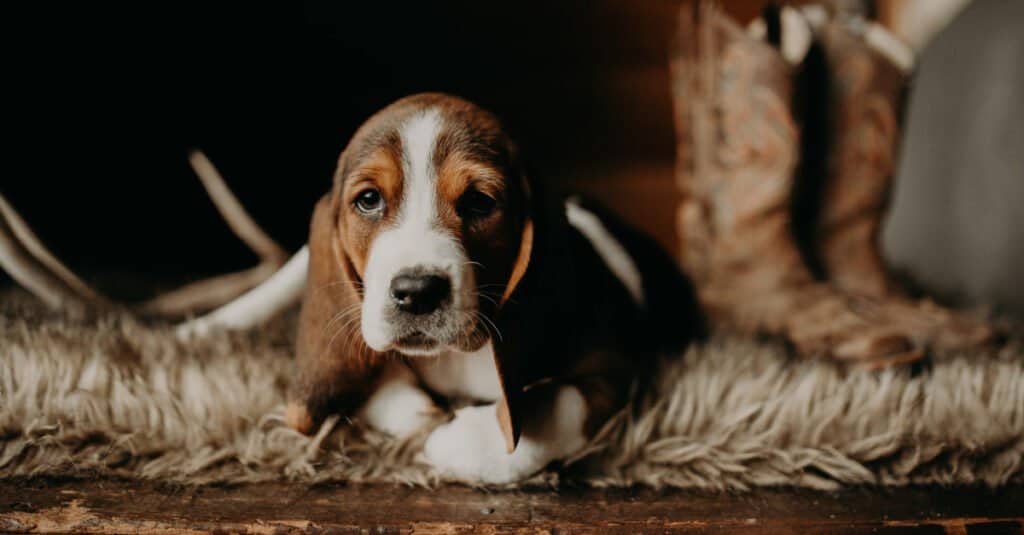
After the mother has given birth, it is crucial to supervise her all the time for the first two to three weeks, as Basset hounds are known to lie on their puppies and suffocate them.
©iStock.com/Jessica Nystrom