
Quick Take
- Sperm whales are social animals with matriarchal social structures.
- To ensure the safety and health of baby calves, sperm whales take care of each other during birth.
- They have one of the longest gestation periods of mammals, lasting roughly 14 to 16 months.
Community is important, and humans aren’t the only animals that need community; sea creatures do as well! One great example is the sperm whale. This species works together to help expectant mothers deliver calves. Documenting this group effort is rare, but fortunately, scientists were recently able to record the extraordinary process. This YouTube video by the Associated Press features the incredible footage. Read on to learn more about this remarkable team effort.
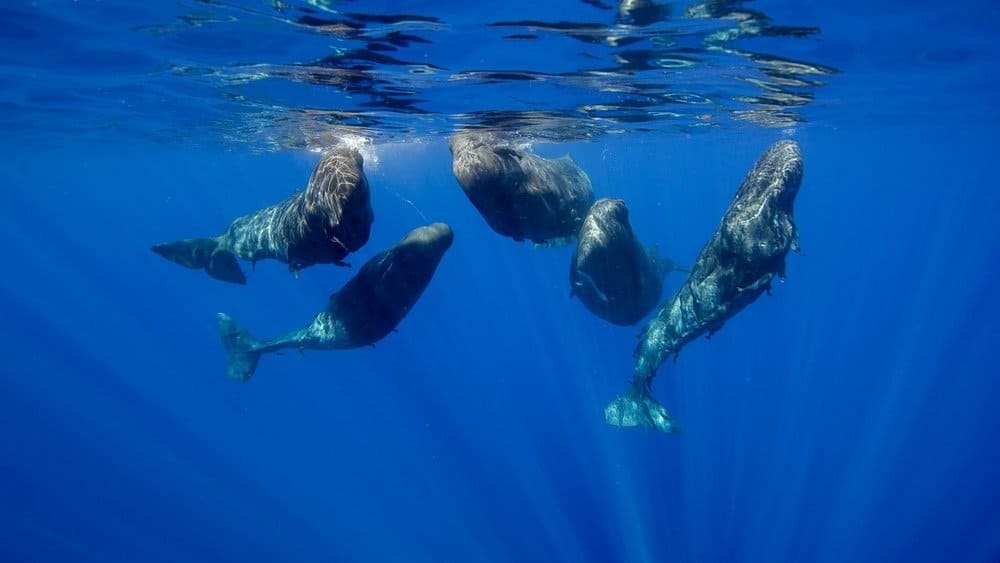
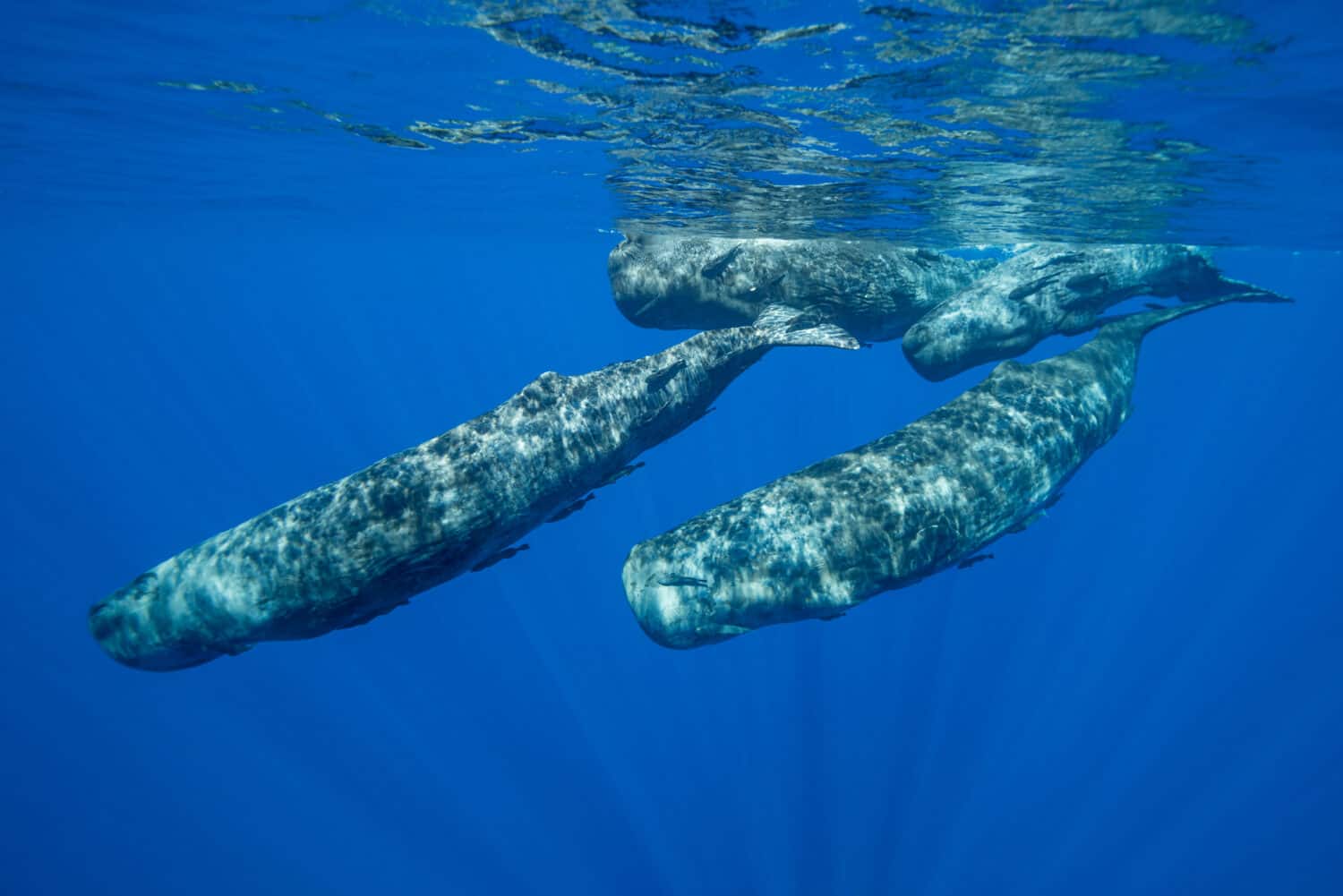
Sperm whales are highly social animals whose social structure is matriarchal, with bonds that often last a lifetime.
©wildestanimal/Shutterstock.com
Why Sperm Whales Work Together
In the amazing video, a group of sperm whales surround a pregnant female as she goes into labor. They swim around the mother during the difficult process, offering her support in many different ways. The video is a rare look at this coordinated practice. By surrounding the pregnant female, the whales form a protective circle to support the new baby. This group usually consists solely of female whales. Sperm whales are social creatures with a tight-knit, matriarchal family unit. This means that grandmothers, mothers, and daughters all take care of each other, especially in times of birth. Each whale does its best to ensure the health and safety of the newborn.
Taking care of the newborn can be difficult. The group helps by supporting the baby’s body as it emerges tail first, preventing it from sinking, and lifting it to the surface so it can breathe. As marine mammals, sperm whales breathe oxygen at the surface. Since newborns lack full body coordination, birth is a particularly dangerous time in their lives. Thankfully, the other whales present act as midwives for the mother, lifeguards for the baby, and bodyguards against predators. Since these events are rarely seen or recorded, we know very little about this process. While animals like dolphins or other whale species also show cooperative care, sperm whales are one of the few species associated with such a high level of assistance during birth.
About Sperm Whale Pregnancies
Sperm whales have one of the longest gestation periods of mammals in the world. This period is roughly 14 to 16 months. The birthing process—including labor and aftercare—can last for hours; in this case, scientists observed the whales for six hours. Baby sperm whales are weak swimmers who need time to get acclimated. They are roughly 13 feet long and, due to the density of their bodies, tend to sink, which is one reason it’s important for other whales to be present. Until the baby gains enough strength to swim independently, the other whales help support it so it can breathe and move. This amazing birthing process reminds us of the importance of community care, especially for marine mammals like sperm whales.