
Quick Take
- The rarest Bullmastiff coat color wasn't bred for looks. Gamekeepers had a very specific tactical reason for favoring it. Discover the camouflage history →
- Picking a Bullmastiff puppy by coat color could leave you surprised, because their coloring may change. See how colors change →
- Some Bullmastiffs look like an entirely different color than they actually are, which is something breed standards have a nuanced take on. Explore fawn coat nuances →
- Bathing your Bullmastiff too often can backfire because their coat has a built-in protection system most owners don't account for. Learn about coat protection →
The Bullmastiff, a breed developed in 19th-century England as a guard dog, originated from a cross between 60% Mastiff and 40% Old English Bulldog. Although it was originally a crossbreed, the Bullmastiff has been recognized as a purebred dog for over a century. The American Bullmastiff Association (ABA) sets the breed standards for coat colors, which are approved and recorded by the American Kennel Club (AKC). The official ABA/AKC standard recognizes only three coat colors: red, fawn, or brindle. A small white spot on the chest is allowed, but white markings on the toes, feet, or throat are highly undesirable. Continue reading to learn more about bullmastiff coat colors, from rarest to most common.
Brindle
British gamekeepers originally bred bullmastiffs to protect estates from poachers, and their preferred color was brindle, as it provided excellent camouflage for nighttime. Brindle is also the least common of the three standard bullmastiff coat colors. of the bullmastiff coat colors. A brindle coat features varying shades of red with black or brown stripes. The shading can be so subtle that darker brindle dogs may appear almost completely black, even though they still have visible stripes and markings.
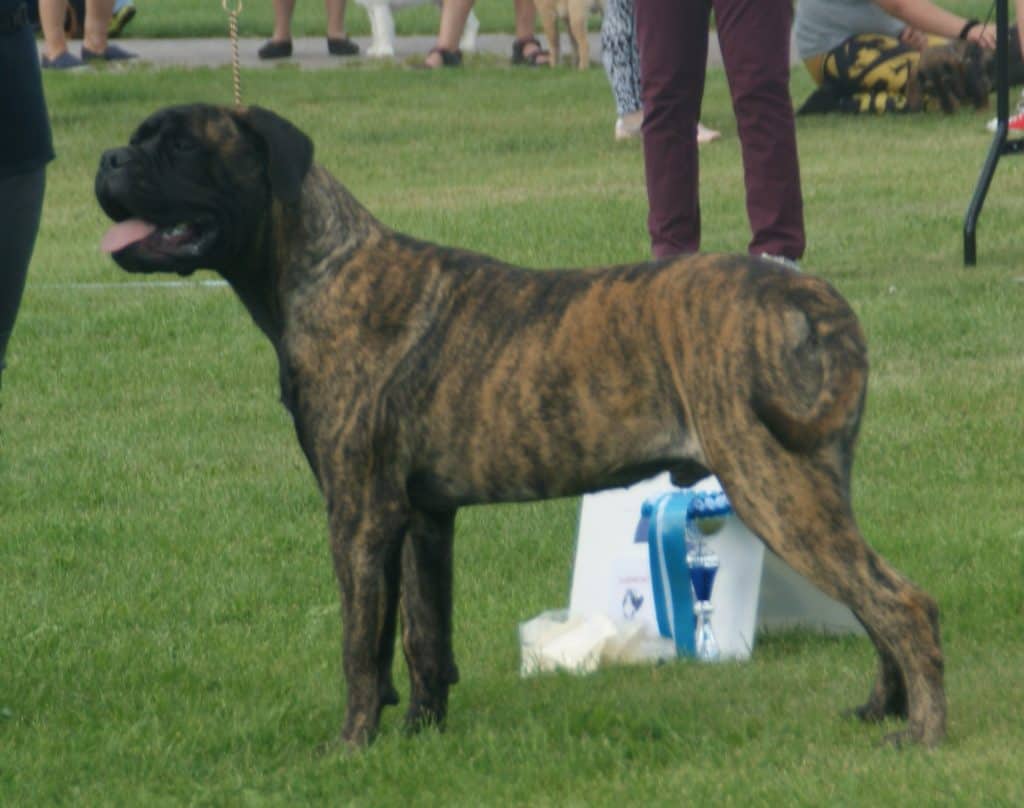
Male bullmastiffs stand 25 to 27 inches tall at the shoulder and weigh between 100 and 130 pounds, while females are slightly smaller, standing 24 to 26 inches tall and weighing up to 120 pounds.
Red
Bullmastiffs may also have a red coat, which is the breed’s second most common coat color. However, there are variations of the red coat, ranging from light red-fawn to a dark, rich brown/rusty color. While brindle was historically preferred by gamekeepers for its camouflage, red was commonly chosen for working dogs.
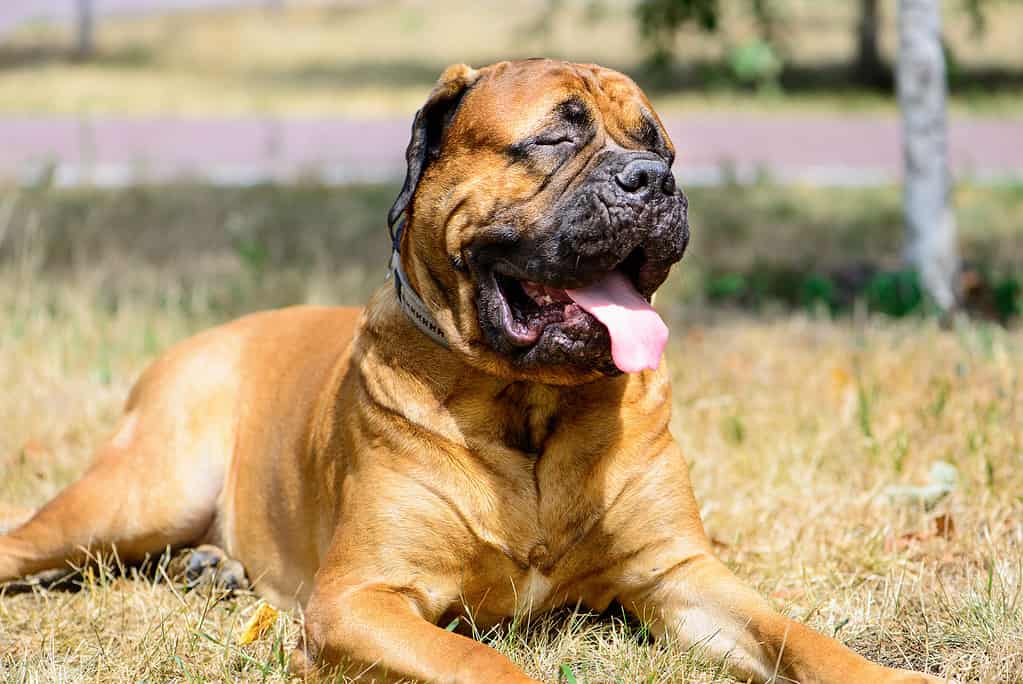
Some red bullmastiffs have a patch of white on their chest, between their forelegs. While this meets the standards of the AKC, the patch can’t be too big, or it’s classified as a fault.
©iStock.com/Astakhova
Fawn
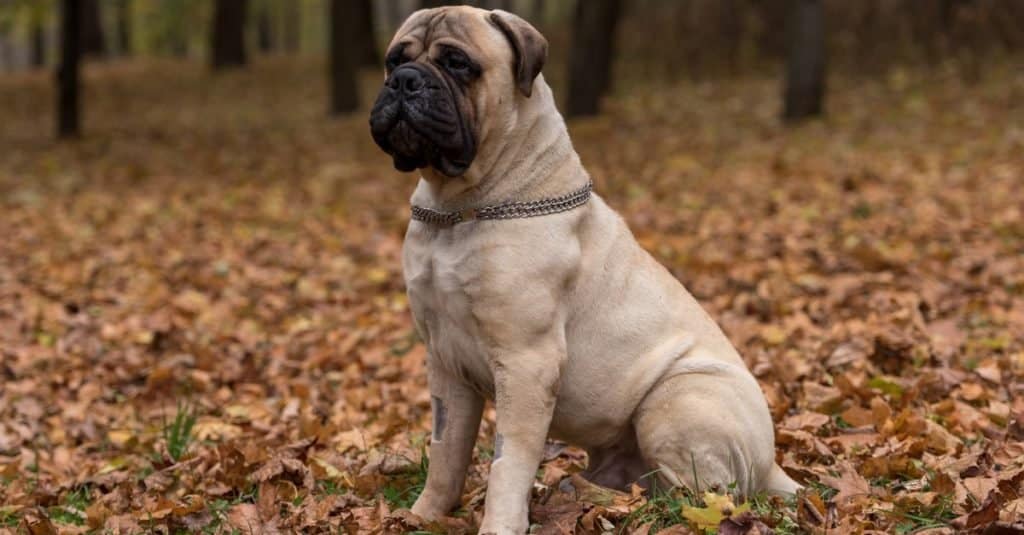
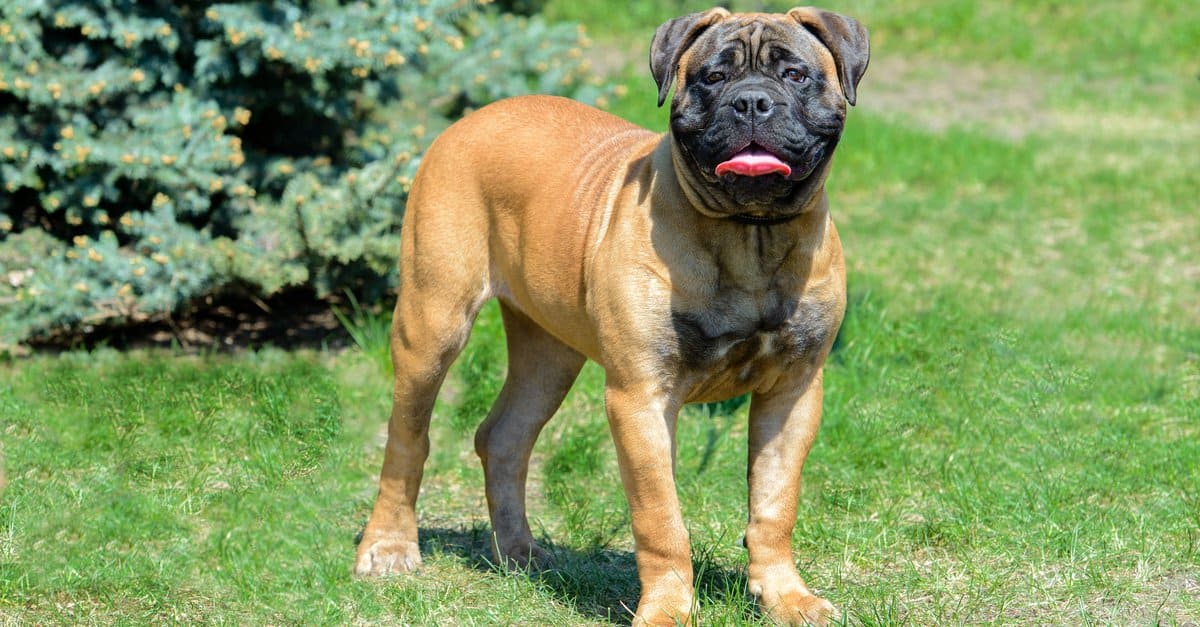
Bullmastiffs with fawn coats are the most common.
©photosounds/Shutterstock.com
Fawn is the most common bullmastiff color, ranging from light brown to reddish-brown. They will often have noticeably different shading on the chest, belly, and legs. They have a black mask, which is one of their most popular distinguishing features.
Bullmastiff Puppy Colors
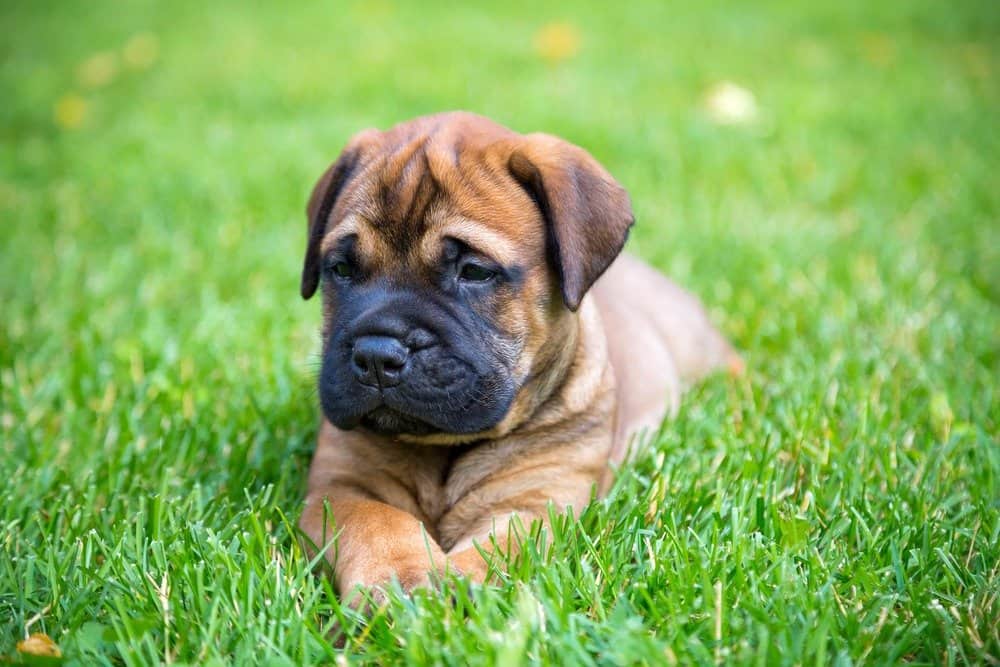
A bullmastiff puppy should be chosen based on its temperament and health.
©Sergey Lavrentev/Shutterstock.com
A bullmastiff puppy’s coat color changes as it grows. A deep red pup might grow up to be light brown or fawn, and vice versa. Puppy markings can either fade or become more prominent. Therefore, it isn’t recommended to select a pup based solely on its coloring. Instead, the decision should be based on the puppy’s temperament and overall health.
Bullmastiffs Coat
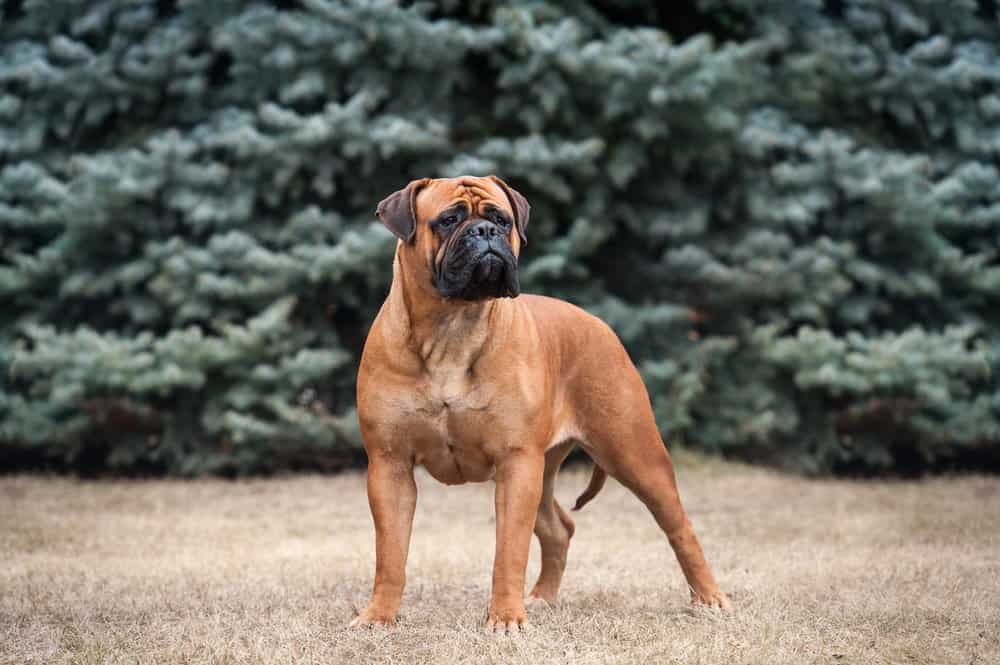
In terms of grooming, bullmastiffs are low-maintenance dogs.
©BORINA OLGA/Shutterstock.com
The bullmastiff has a short, dense, weather-resistant coat. It often includes a thick, protective undercoat that helps shield the dog from harsh weather. Although a bullmastiff’s undercoat is not always obvious, it is present, especially in well-bred dogs. In terms of grooming, bullmastiffs are low-maintenance, and weekly brushing is generally enough to keep their coat healthy.
Bullmastiffs do not need to be bathed often. Over-bathing can strip away the natural oils that protect and moisturize a Bullmastiff’s skin, which may result in flaky, itchy skin.