
Quick Take
- Ohio winter bird feeding turns backyards into hubs for a diverse mix of winter bird species.
- Using multiple feeder styles and foods attracts a wider range of species, including chickadees, titmice, finches, and juncos.
- Keep feeders clean and dry, discard spoiled seed, and position feeders to reduce disease risk.
Ohio’s winters may not be the harshest in the country, but between cold temperatures, long stretches of gray sky, and periodic snow, they still reshape the rhythm of bird life across the state. When insect activity drops and natural seed sources get buried or exhausted, backyard feeders suddenly become important gathering hubs. Winter feeding can reveal a steady parade of species you might not notice otherwise. This article will feature some of the birds you’re most likely to see — and how they use your feeders to get through the cold months.
Is Feeding Birds a Good Idea?
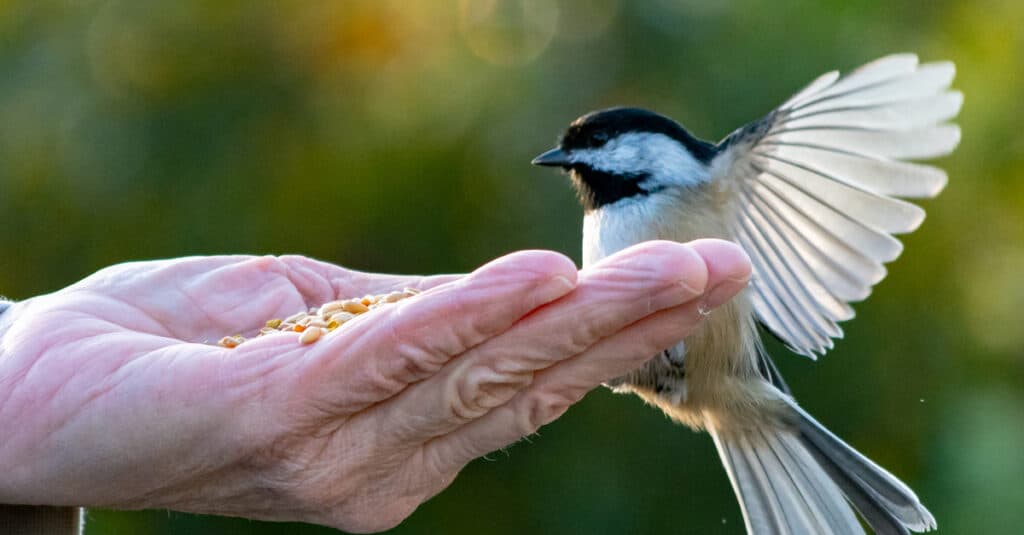
Birds can lose their natural wariness of humans and may become dependent if they are regularly fed by people.
©Rino Falvo/Shutterstock.com
Feeding birds can be genuinely helpful when it’s done well. In winter, when insects and natural seeds are scarce or buried under snow, feeders give birds an energy boost that can improve survival during cold snaps. Species like chickadees, nuthatches, cardinals, and finches benefit from the steady access to high-quality food, which helps them maintain body heat and conserve energy. Feeders also support migrating birds during early spring cold spells, and they offer people meaningful chances to observe wildlife, which often leads to greater awareness and conservation efforts.
But feeding birds can also create problems if it alters natural behaviors or disrupts local ecosystems. Crowding too many birds into one spot can spread disease more easily, and reliable feeders can artificially inflate local populations beyond what the habitat can support. Feeders may draw predators — hawks, outdoor cats, and even opportunistic mammals — that learn to hunt or scavenge around them. Inconsistent feeding can also be harmful: when birds adjust their routines around a dependable food source that suddenly disappears, they may struggle to find enough natural food in harsh conditions. In some cases, long-term feeding can shift normal foraging habits or create dependency patterns that leave birds more vulnerable when conditions change.
Tufted Titmouse (Baeolophus bicolor)
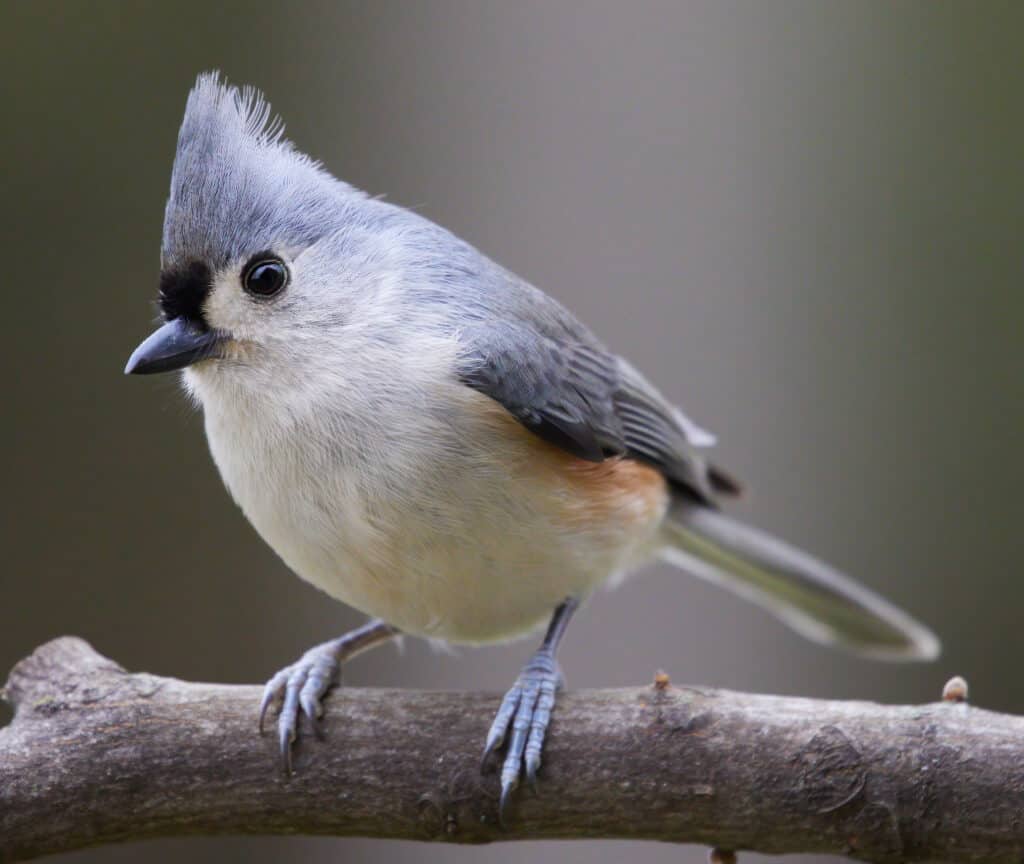
Tufted titmouse (Baeolophus bicolor)
©Rich Waite/Shutterstock.com
The tufted titmouse is a compact, energetic little bird that becomes very noticeable once you learn its shape and voice. With a gray back, pale underside, soft peach wash along the flanks, and a pointed crest that gives it a distinctive look, the titmouse brings a lively presence to winter feeding stations. The large dark eye adds to its bright, alert expression.
Titmice live year-round throughout much of Ohio, especially in woodlands, river bottoms, suburban yards, and older neighborhoods with mature trees. During winter, they often move in small mixed flocks with chickadees and nuthatches, making repeated short visits to feeders throughout the day. They especially enjoy sunflower seeds, peanuts, and suet, and they often carry single seeds away to crack open or stash for later. Their clear “peter-peter-peter” whistle often announces them long before they land.
Purple Finch (Haemorhous purpureus)
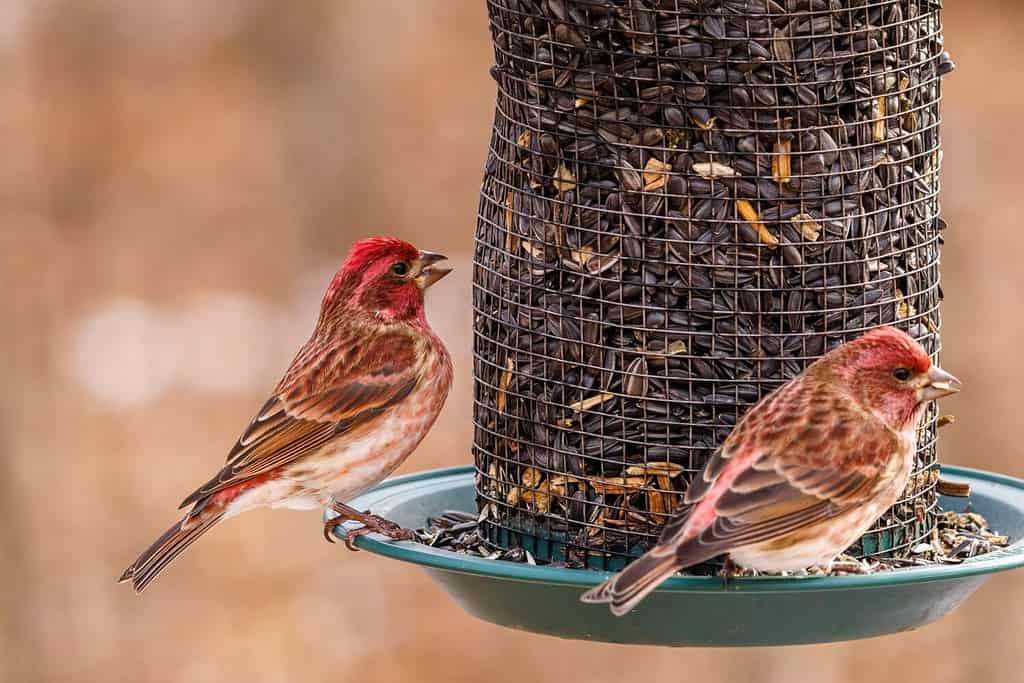
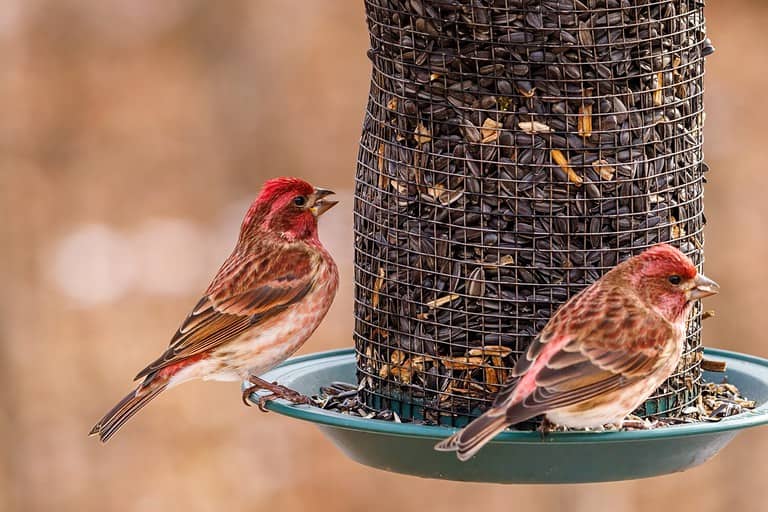
Two purple finches (Haemorhous purpureus)
©Aaron J Hill/Shutterstock.com
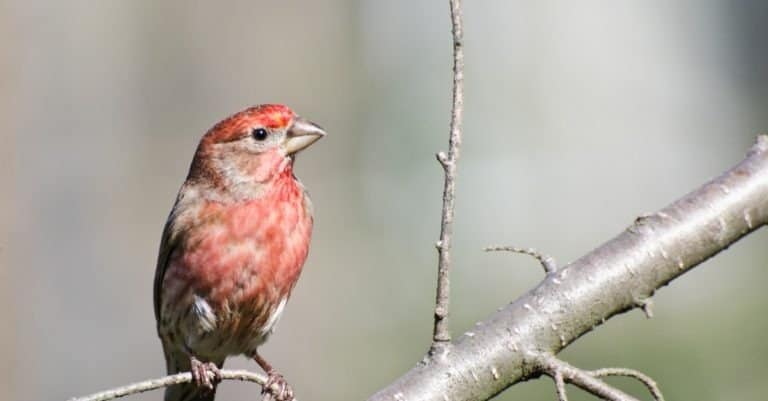
Purple finches are winter visitors whose numbers vary from year to year. When they show up, they add gorgeous color to Ohio’s feeder flocks. Male purple finches have a rosy, raspberry-red color that covers the head, chest, and upper back before blending into brown wings and tail feathers. Females, on the other hand, are brown, heavily streaked, and show a bold pale eyebrow pattern that helps distinguish them from female house finches.
Purple finches breed farther north and in conifer-rich forests, but they move into Ohio in winter — especially when food crops in their breeding areas are poor. They visit tube and hopper feeders for sunflower seeds and occasionally nyjer. Their presence can shift dramatically depending on the year, but when they arrive, they bring an unusual and beautiful flash of color to winter birdwatching.
American Goldfinch (Spinus tristis)
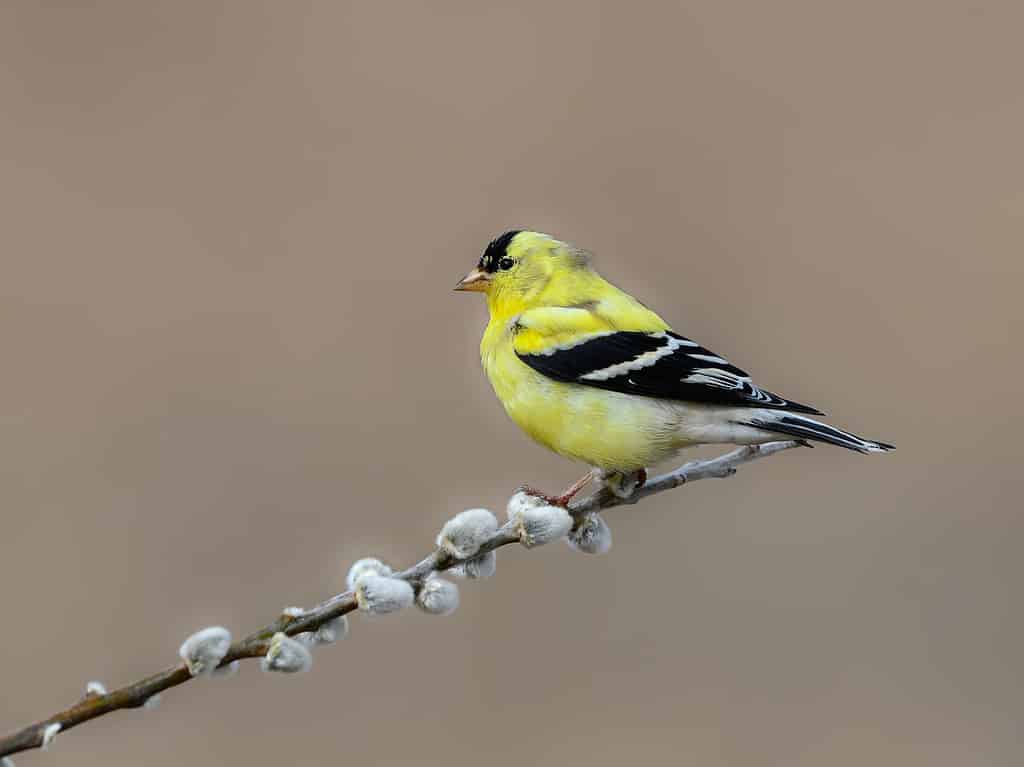
American goldfinch (Spinus tristis)
©FotoRequest/Shutterstock.com
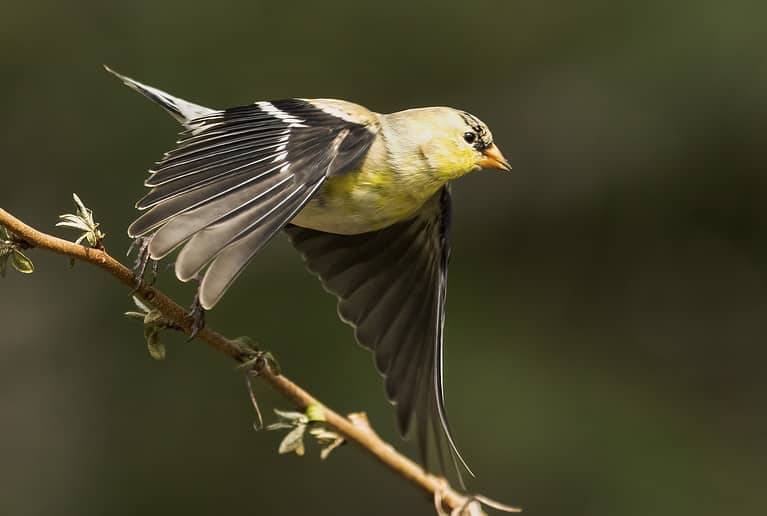
The American goldfinch remains one of Ohio’s most familiar little birds, even though its winter look is almost unrecognizable compared to the bright yellow males of summer. In the cold months, both males and females shift into softer olive-brown feathers with pale underparts and clean wing bars. This change comes from a complete molt in late summer, which is more extensive than the partial molts many other small songbirds undergo before winter. Even in their quieter colors, goldfinches stay lively and social, bunching up into roaming winter flocks that chatter nonstop as they bounce between feeders and weedy fields. Their gentle call notes help the flock keep track of one another, giving winter yards a soft background soundtrack.
Goldfinches stick around Ohio all year, but they wander more in winter depending on where the best seed patches are. Unlike many birds that switch to insects when the weather turns harsh, goldfinches stick with seeds no matter how cold it gets. That’s why they’re such fans of nyjer-filled tube feeders and small sunflower pieces. After feeding, they return to natural food sources such as dried coneflowers and asters, provided these plants are left standing in the garden. Their combination of dramatic seasonal color change, flock-based wandering, and strict seed-only diet makes their winter behavior quirky and enjoyable to observe.
Dark-Eyed Junco (Junco hyemalis)
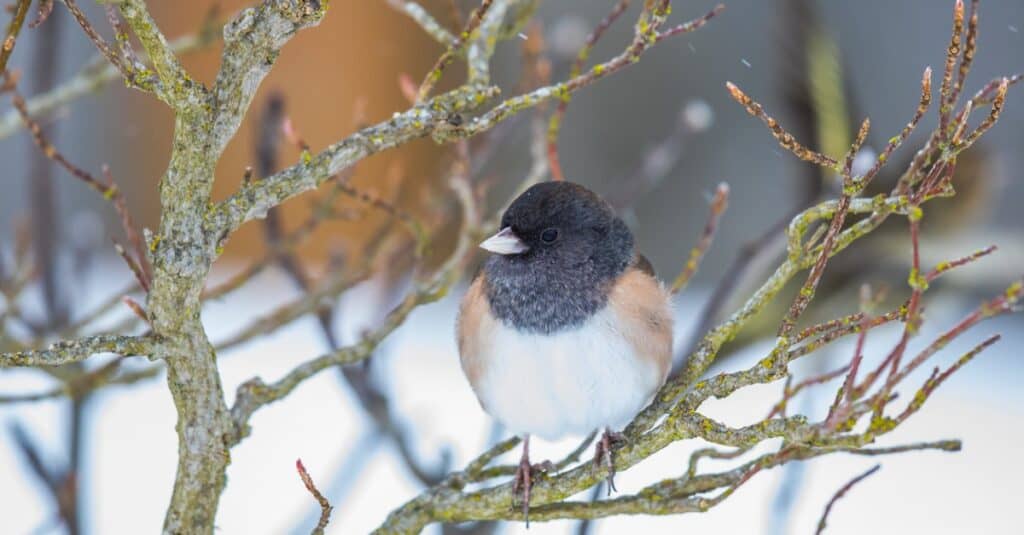
Dark-eyed junco (Junco hyemalis)
©iStock.com/Jeff Huth
The dark-eyed junco is often called a “snowbird” in Ohio, appearing when the cold settles in and leaving again in early spring. Most juncos you’ll see are slate-colored, with dark gray heads, backs, and breasts contrasted against white bellies and bright white outer tail feathers that flash when they fly.
These birds breed farther north and at higher elevations. When winter arrives, they spread across Ohio’s fields, wood edges, towns, and suburbs. Juncos prefer to feed on or near the ground, using a double-footed scratching motion to uncover seeds. Offering millet, cracked corn, or broken sunflower pieces on the ground or on low platform feeders will keep them coming back. Flocks often gather beneath shrubs, brush piles, or the edges of decks where they can move quickly between feeding and shelter.
Downy Woodpecker (Dryobates pubescens)
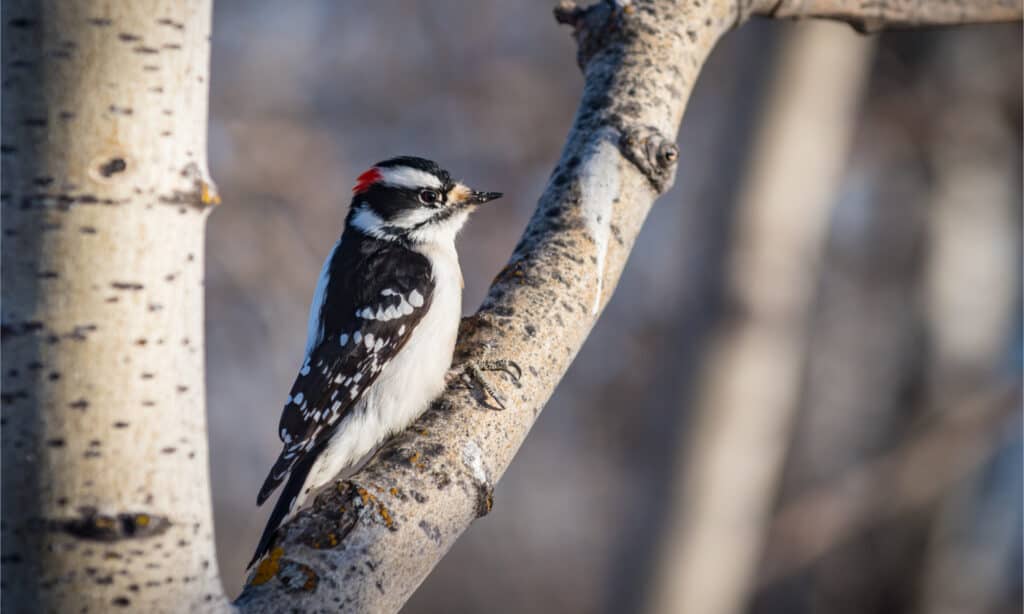
Downy woodpecker (Dryobates pubescens)
©BGSmith/Shutterstock.com
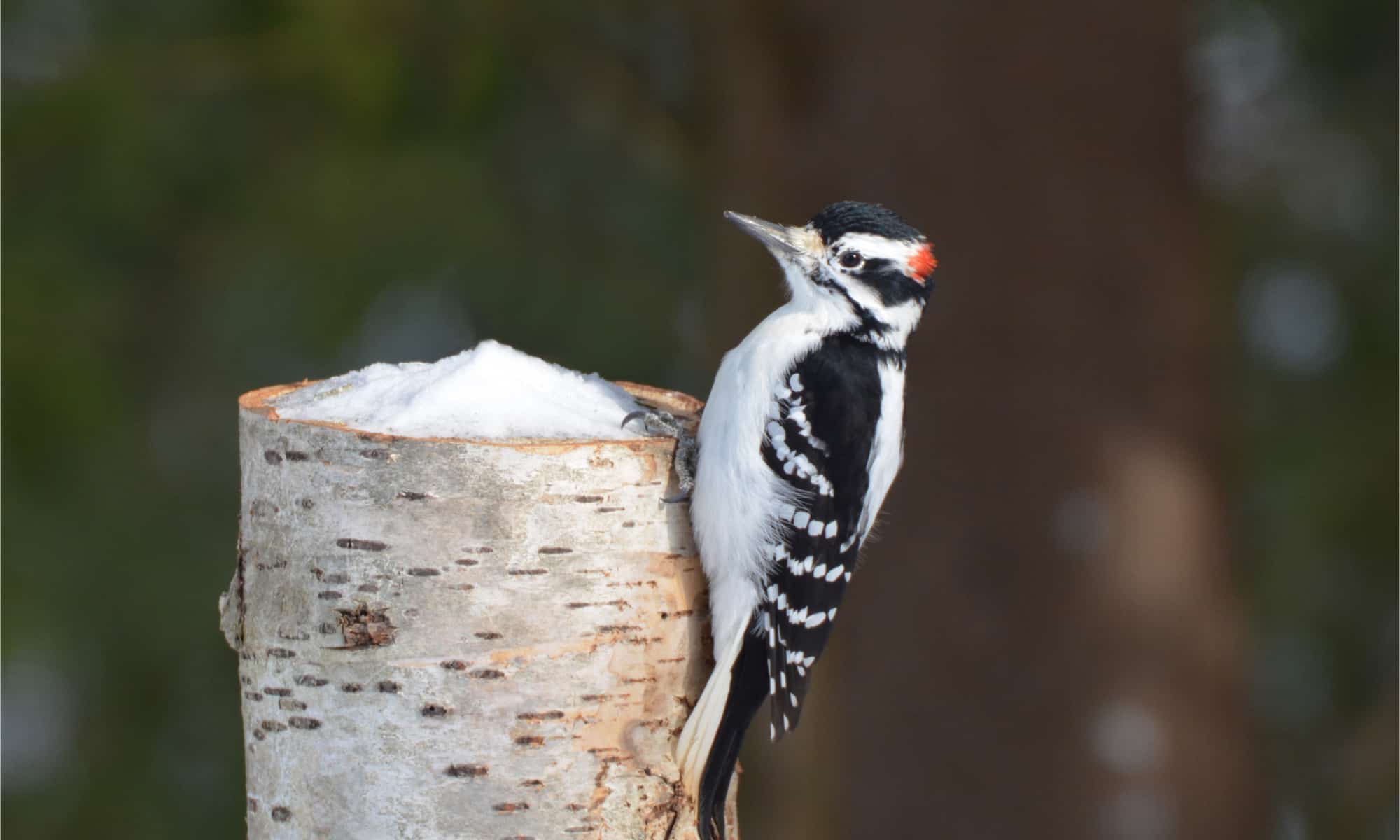
The downy woodpecker is a small, charming, and dependable visitor to winter feeders in Ohio. They are black and white with a checked back, white underparts, and white outer tail feathers. Males display a small red patch on the back of the head.
Downies live year-round throughout the state in forests, woodlots, suburban neighborhoods, and city parks. During winter, they spend plenty of time at suet feeders, hammering away at the high-energy food stores they rely on when insects are dormant. They’ll also take sunflower seeds and peanut pieces from the platform and hopper feeders. Their short bill distinguishes them from the larger hairy woodpecker. Downies often travel with chickadees and titmice, making them a familiar part of mixed winter feeding groups.
Northern Cardinal (Cardinalis cardinalis)
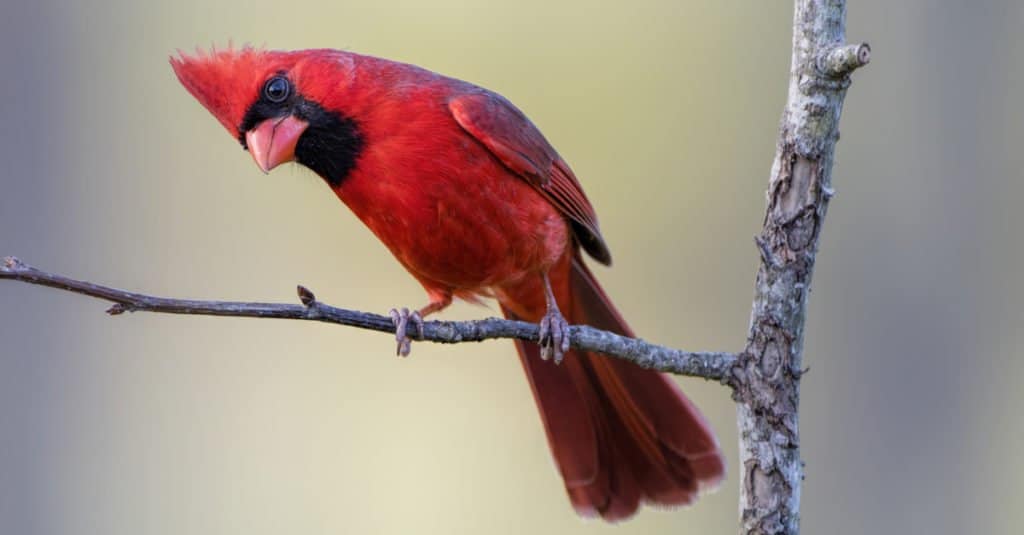
Northern cardinal (Cardinalis cardinalis)
©Bonnie Taylor Barry/Shutterstock.com
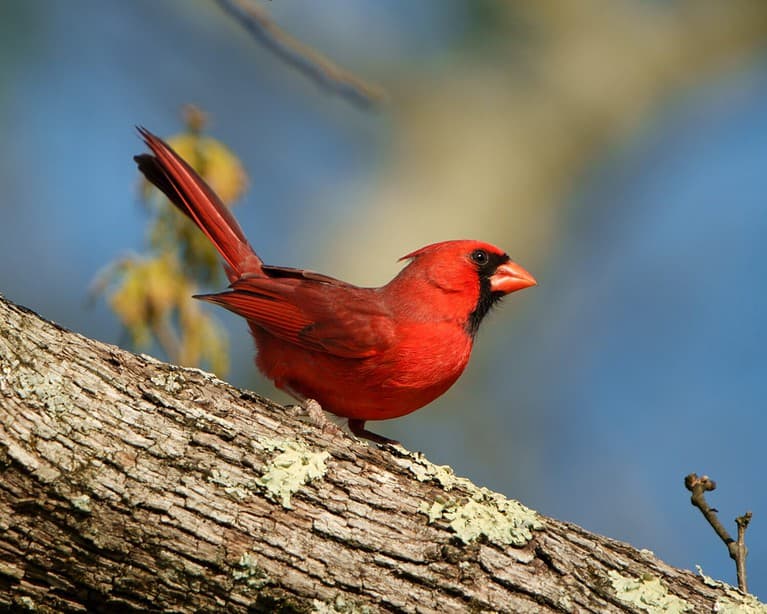
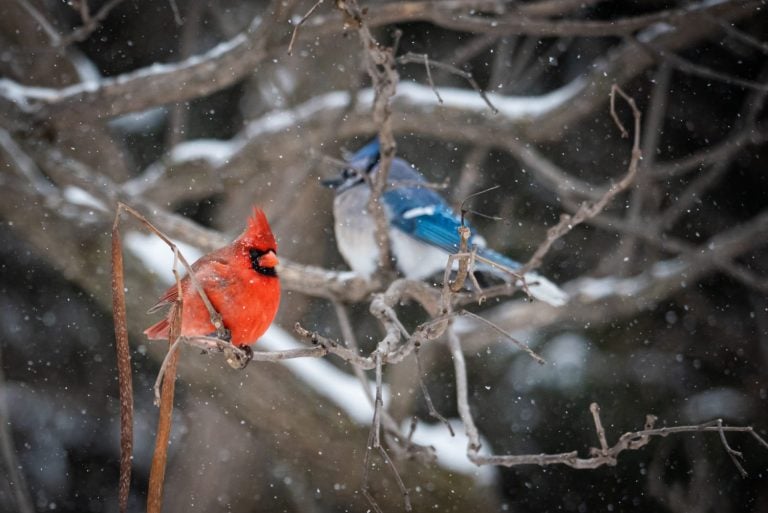
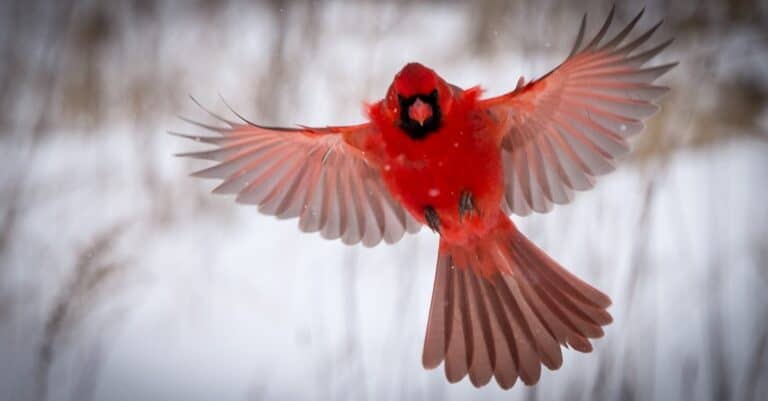
One of the most iconic winter birds in Ohio, the northern cardinal brings a burst of color to gray, snowy days. Males are vivid red with black face masks and tall crests, while females wear warm brown with soft red touches along the wings and tail. Both have strong orange bills perfect for cracking large seeds. Cardinals live year-round across the state, especially in places with brushy edges, thickets, hedgerows, and yards full of shrubs or small trees. In winter, they visit platform and hopper feeders for sunflower seeds, safflower, or mixed seed blends. They are most active at dawn and dusk, and their clear whistles often echo through quiet mornings long before you see them.
Even though male cardinals look like bright red targets in the snow, that color doesn’t make them as vulnerable as it seems. Many mammal predators can’t see red well, so the male’s plumage often looks more like a dull brown to them. Hawks and owls can see red, but they focus more on movement than color, and cardinals avoid that by staying deep in shrubs and freezing when danger is near. Females, who handle nesting, are naturally better camouflaged, and nests are hidden in dense cover. These behaviors help cardinals thrive, even with their conspicuous winter plumage.
Red-Bellied Woodpecker (Melanerpes carolinus)
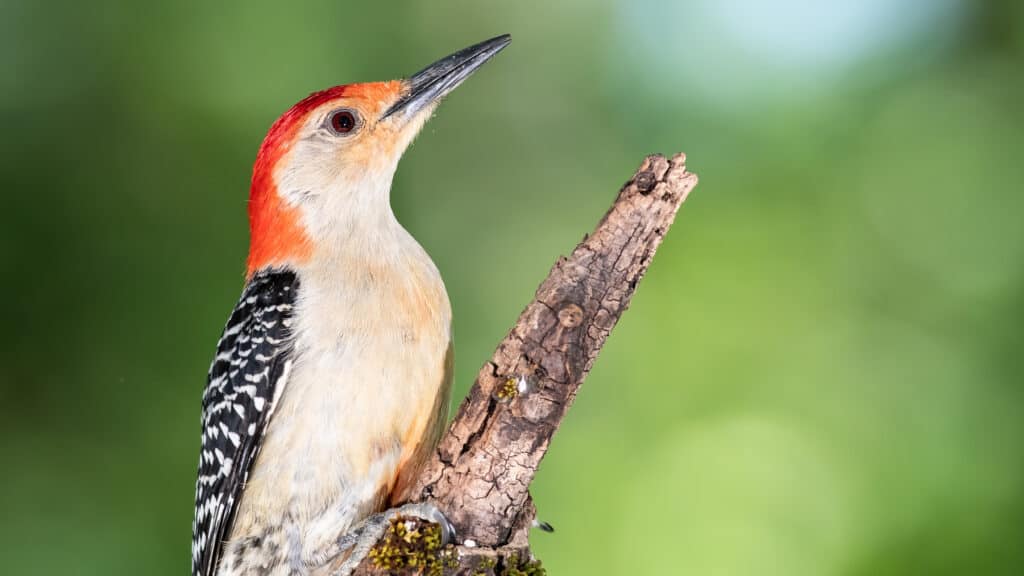
Red-bellied woodpecker (Melanerpes carolinus)
©rck_953/Shutterstock.com
The red-bellied woodpecker has become steadily more common across Ohio and now shows up statewide. With its bold black-and-white barred back, pale underparts touched with a faint reddish wash, and a bright red cap that stretches from the nape to the crown, it’s one of the easiest woodpeckers to recognize — especially in winter light.
Even though they’re perfectly capable of digging insects out of tree bark, winter makes that job a lot tougher. Insects hide deeper, sap freezes, and dead wood hardens. That’s where backyard feeders come in. Red-bellied woodpeckers quickly learn that suet is basically a high-calorie shortcut — soft, energy-rich, and easy to grab compared to chiseling into frozen wood. They also enjoy sunflower seeds, peanuts, and even bits of fruit when they find them. Once a red-bellied starts visiting regularly, it becomes a standout character in the yard: loud rolling calls, bold flights between trees, and a confident personality that makes every visit feel like a small performance.
Blue Jay (Cyanocitta cristata)
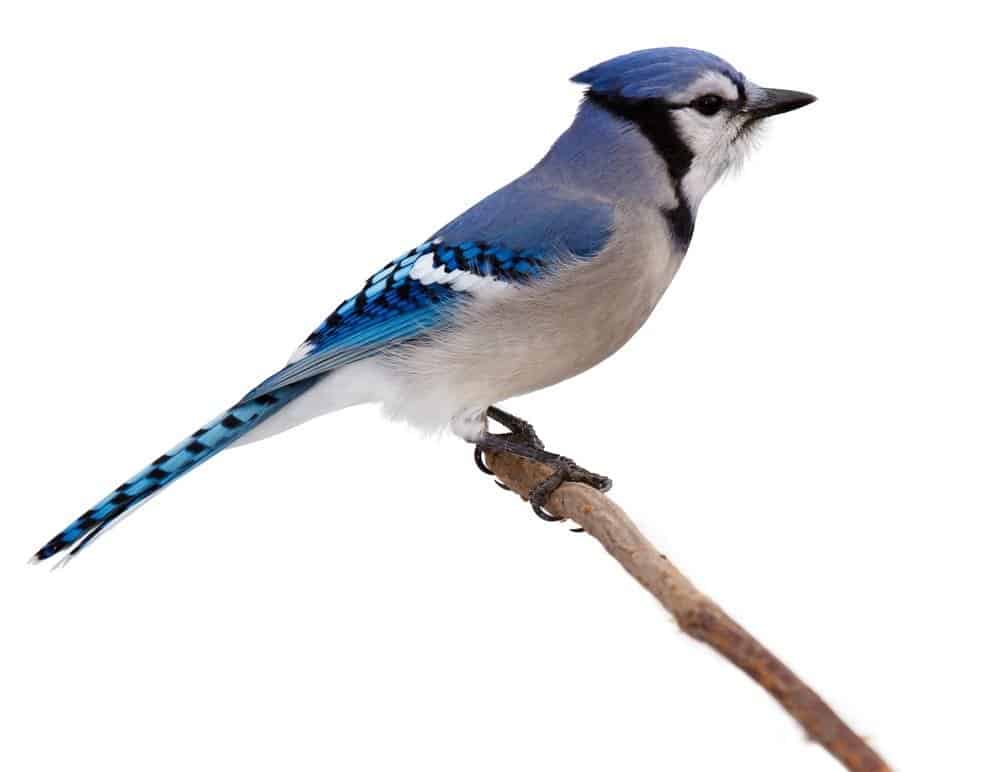
Blue jay (Cyanocitta cristata)
©Mike Truchon/Shutterstock.com
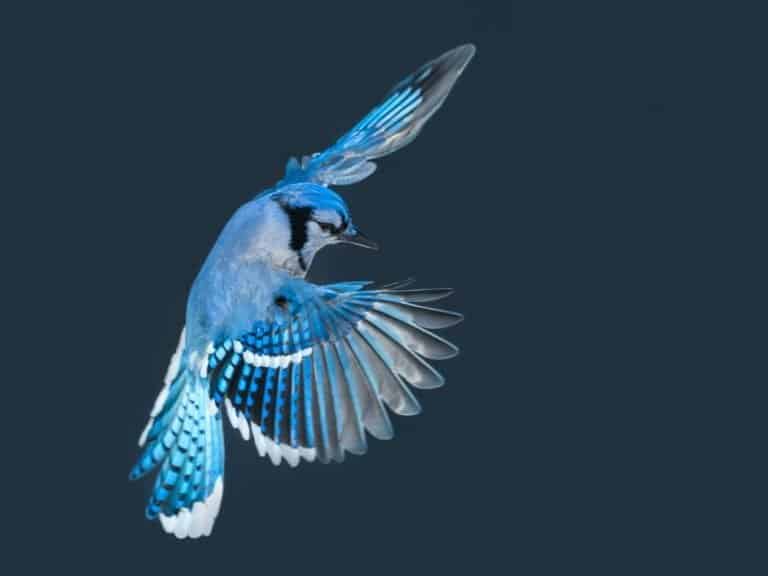
The blue jay is large, colorful, and unmistakable with its bright blue upperparts, white face, black collar, and expressive crest. Interestingly, blue is actually a rare color in birds — not because it’s unusual to see, but because almost no birds produce blue pigment. Blue jays get their color through structural coloration, meaning microscopic structures in their feathers scatter light in a way that makes them appear blue. If you crushed a jay’s feather, it wouldn’t stay blue at all. And while they look vivid to us, that blue can act as a kind of camouflage in treetops: against sky, shadow, and winter branches, the color breaks up their outline more than you’d expect.
Found year-round throughout Ohio, blue jays bring a bold presence and plenty of personality to backyard feeders. They often travel in small social groups and have an impressive range of vocalizations, from sharp alarm calls to gentle murmurs, even mimicking hawks when it suits them. In natural habitats, they gather and store acorns and nuts, helping forests regenerate. At feeders, they especially love whole peanuts, sunflower seeds, and corn. Though they can be assertive and may briefly scatter smaller birds, their intelligence, curiosity, and nonstop antics make them some of the most entertaining winter visitors.
Best Practices for Winter Bird Feeding
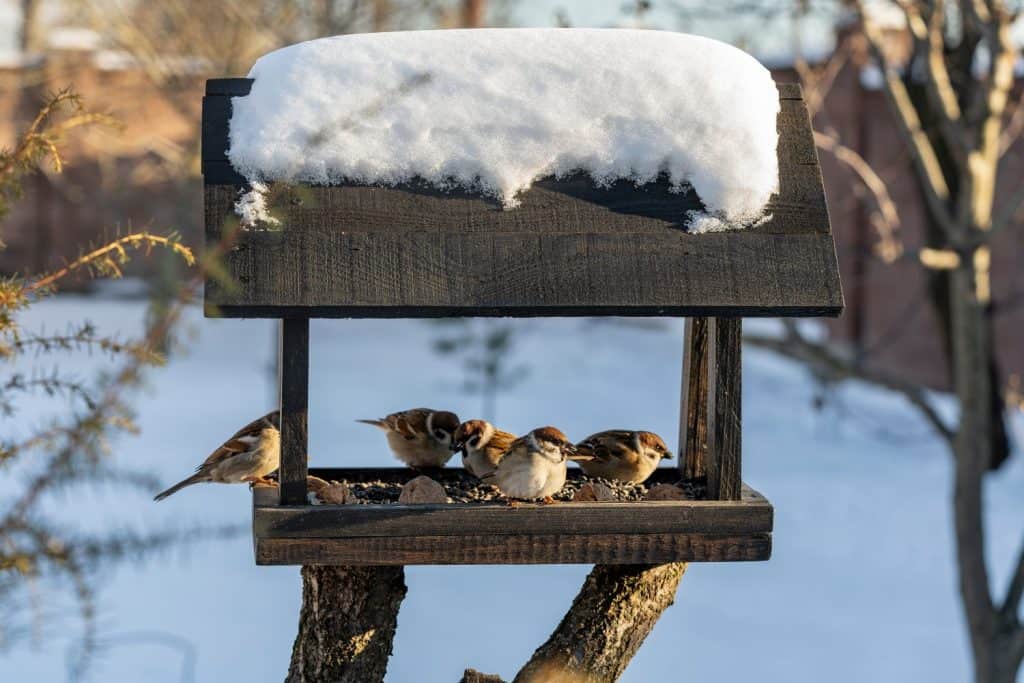
Keeping bird feeders clean helps prevent the spread of disease between birds densely packed and eating from the same source.
©OlegD/Shutterstock.com
Feeding birds through winter works best when feeders stay clean, well-stocked, and placed with care. Because birds crowd together in cold weather, hygiene matters: wash feeders regularly with a mild bleach solution, rinse well, let them dry completely, and throw out any seed that’s damp, moldy, or clumped.
If you prefer a single feeder and one type of seed, a hopper feeder filled with black oil sunflower seeds is the best all-purpose option, attracting cardinals, chickadees, titmice, nuthatches, finches, and even woodpeckers. As a simple add-on, a single suet cage dramatically boosts visits from woodpeckers and nuthatches. For more variety, sunflower seed, nyjer, suet, and ground mixes each draw different species. Place feeders near natural cover but not right beside dense brush where predators can hide. To reduce window strikes, break up reflections with decals and keep feeders either very close to windows or more than ten to twelve feet away.
By keeping feeders clean, providing fresh food, and making your setup safer, you support these birds during one of the toughest seasons of the year — and you get daily moments of joy and connection with the wildlife that shares your space.